
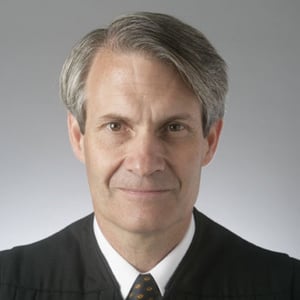
Special Counsel, Hunton Andrews Kurth
After serving on the United State Court of Appeals for the D. C. Circuit from 2005, Judge Griffith stepped down from the bench in 2020. Currently he is a Lecturer on Law at Harvard Law School, a Fellow at the Wheatley Institute at Brigham Young University, and Special Counsel in the Washington, DC office of the law firm of Hunton Andrews Kurth. Most recently, he was a member of President Biden's Commission on the Supreme Court. He is the author of Civic Charity and the Constitution , and the co-author, along with former judges Michael Luttig and Michael McConnell, of Lost, Not Stolen: The Conservative Case that Trump Lost and Biden Won the 2020 Presidential Election. https://lostnotstolen.org/ . Before being appointed to the D. C. Circuit, Judge Griffith was the General Counsel at BYU; Senate Legal Counsel, the non-partisan chief legal officer of the U. S. Senate; and a partner at Wiley, Rein & Fielding. Long active in rule-of-law programs in former communist nations, Judge Griffith is a member of the international advisory board of the CEELI Institute in Prague. He is a graduate of BYU and the University of Virginia School of Law and is a member of the American Law Institute.
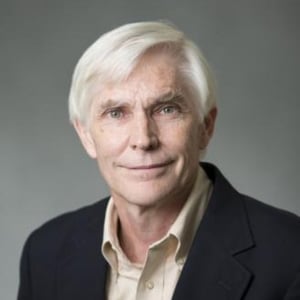
Senior Fellow, Manhattan Institute
Peter Huber, who died in 2021, was a senior fellow at the Manhattan Institute, where he wrote on drug development, energy, technology, and the law. He was the author of The Cure in the Code: How 20th Century Law Is Undermining 21st Century Medicine (2013); The Bottomless Well: The Twilight of Fuel, the Virtue of Waste, and Why We Will Never Run Out of Energy (2005), coauthored with Mark P. Mills, which Bill Gates said “is the only book I’ve ever seen that really explains energy, its history and what it will be like going forward”; and Hard Green: Saving the Environment from the Environmentalists (2000), which William F. Buckley, Jr., called “the richest contribution ever made to the greening of the political mind” and which set out a new conservative manifesto on the environment that advocates a return to conservation and environmental policy based on sound science and market economics.
Huber’s other books included Judging Science: Scientific Knowledge and the Federal Courts (1999), Law and Disorder in Cyberspace: Abolish the FCC and Let Common Law Rule the Telecosm (1997), Orwell’s Revenge: The 1984 Palimpsest (1994), Galileo’s Revenge: Junk Science in the Courtroom (1991), and Liability: The Legal Revolution and Its Consequences (1988). He published articles in scholarly journals, such as the Harvard Law Review and Yale Law Journal, and in such publications as Science, Wall Street Journal, Reason, Regulation, and National Review. He appeared on numerous TV and radio programs, including Face the Nation and The NewsHour with Jim Lehrer.
Before joining MI, Huber was an associate professor at MIT. He clerked on the D.C. Circuit Court of Appeals for Ruth Bader Ginsburg and on the U.S. Supreme Court for Sandra Day O’Connor. Huber was a partner at the Washington, D.C., law firm Kellogg, Huber, Hansen and Todd. He held a J.D. from Harvard University and a Ph.D. in mechanical engineering from MIT.
Special Counsel, Irell & Manella LLP
Lindsay Kelly is Special Counsel in the Los Angeles office of Irell & Manella LLP. Ms. Kelly's practice encompasses complex commercial litigation, including patent litigation, at both the trial court and appellate levels, as well as government investigations and white collar criminal defense.
Prior to joining Irell, Ms. Kelly was an Assistant United States Attorney in the Eastern District of Virginia, where she specialized in intellectual property and computer crimes. During her time as a prosecutor, Ms. Kelly served as lead counsel or co-counsel on five trials, including four jury trials, was lead author of several appellate briefs, and argued before the U.S. Court of Appeals for the Fourth Circuit. Ms. Kelly also presented on trademark counterfeiting at training sessions for federal agents and prosecutors, and received awards from the heads of several government agencies and Inspectors General offices.
Previously, Ms. Kelly practiced at Kellogg, Huber, Hansen, Todd, Evans & Figel PLLC in Washington, D.C., where she worked on complex commercial litigation, internal corporate investigations, and matters before the U.S. Supreme Court. At her previous firm, Ms. Kelly served as co-counsel on two trials and was a team member on a large patent infringement jury trial.
Ms. Kelly served as a law clerk to Chief Judge Paul R. Michel of the U.S. Court of Appeals for the Federal Circuit. Prior to law school, Ms. Kelly worked as a strategic management consultant. Ms. Kelly is also a Chartered Financial Analyst (CFA).
Partner, Covington & Burling LLP
Gerald Masoudi is a partner in the firm’s Washington, DC office and co-chair of the Food and Drug practice group.
Before joining Covington in 2009, Mr. Masoudi served as Chief Counsel of the Food and Drug Administration. In that capacity he was responsible for supervising FDA’s involvement in civil and criminal litigation and investigations; providing legal review of warning letters, guidances and regulations; and providing advice to the FDA commissioner and senior leadership on matters relating to the products regulated by FDA. Before joining the FDA, Mr. Masoudi served as Deputy Assistant Attorney General for international, policy and appellate matters in the Antitrust Division at the Department of Justice. He also served as Principal Deputy Chief Counsel for the FDA in 2004 and 2005. Before entering government service, Mr. Masoudi had a decade of experience in private practice in the areas of antitrust, telecommunications, patent law and energy.
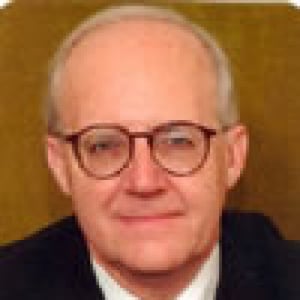
U.S. Court of Appeals, Sixth Circuit
Danny Julián Boggs is a Judge on the United States Court of Appeals for the Sixth Circuit. He was appointed to a newly created seat on that court on January 29, 1986 by President Ronald Reagan, confirmed by the U.S. Senate on March 3, and received his commission on March 25. He served as the Chief Judge of the Sixth Circuit from 2003 to 2009.
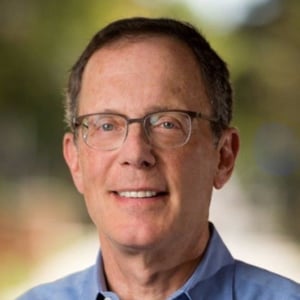
Professor of the Practice of Law, Stanford Law School
Doug Melamed practiced law for 43 years before spending the 2014-15 academic year at the Law School as the Herman Phleger Visiting Professor of Law. He was appointed Professor of the Practice of Law in 2015.
From 2009 until 2014, Professor Melamed was Senior Vice President and General Counsel of Intel Corporation and was responsible for overseeing Intel’s legal, government affairs and corporate affairs departments. Prior to joining Intel in 2009, he was a partner in the Washington, D.C., office of WilmerHale, a global law firm in which he served as a chair of the Antitrust and Competition Practice Group. His practice included appellate and trial court litigation, counseling, and representing clients in matters before government law enforcement and regulatory agencies. He joined WilmerHale’s predecessor in 1971. From 1996 to 2001, Professor Melamed served in the U.S. Department of Justice as Acting Assistant Attorney General in charge of the Antitrust Division and, before that, as Principal Deputy Assistant Attorney General.
Professor Melamed has received numerous professional awards and honors. He has been the Distinguished Visitor from Practice and an adjunct professor at the Georgetown University Law Center, and he has authored numerous articles on antitrust and on law and economics. He is a member of the boards of directors of the Nasdaq exchanges and the American Law Institute and a Contributing Editor of the Antitrust Law Journal. He was for many years a member of the Yale University Council and a member of the board of trustees of Sidwell Friends School in Washington, D.C. After graduating from law school, he clerked for Judge Charles M. Merrill of the U.S. Court of Appeals for the Ninth Circuit.
Professor of Law, Boston University School of Law
The son of an economics professor, Michael Meurer knew by the time he was 13 that he, too, wanted to teach at the university level. An S.B., J.D. and Ph.D. later, he became an economics professor at Duke University and later a law professor at the University of Buffalo. He came to Boston University School of Law in 1999, where he has taught courses in patents, intellectual property and public policy toward the high-tech industry. "It's a special privilege to be able to speak three times a week to an attentive and thoughtful audience," he says.
Professor Meurer has received several grants and fellowships, including two grants from the Pew Charitable Trust, a Ford Foundation grant, an Olin Faculty Fellowship at Yale Law School and a postdoctoral fellowship at AT&T Bell Labs. He has served as an expert witness for the Federal Trade Commission on a merger case presenting issues related to patent licensing. He also has consulted with government officials from developing countries about antitrust law, and taught short courses in American intellectual property law at the law faculties of the University of Victoria and the National University of Singapore. "I'm excited by the prospect of having a positive influence on American technology law and policy," Professor Meurer says. Outside of work, he enjoys playing and watching basketball.
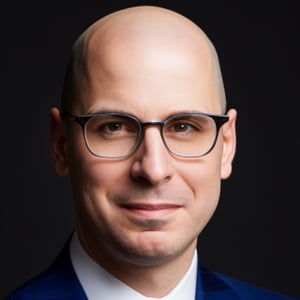
Partner and Lecturer
Adam Mortara graduated from the University of Chicago in 1996 with a B.Sc. in chemistry. He then attended Magdalene College, Cambridge, where he received a masters degree in astrophysics on a British Marshall Scholarship.
Mr. Mortara graduated from the University of Chicago Law School with highest honors in 2001. Following graduation, he clerked for Judge Patrick Higginbotham of the U.S. Court of Appeals for the Fifth Circuit and then for Justice Clarence Thomas of the Supreme Court of the United States. After his clerkships, he was a Temple Bar Scholar of the American Inns of Court.
From 2003 to 2020, Mr. Mortara was with Bartlit Beck LLP where he tried high stakes intellectual property cases and, more notably, Students For Fair Admissions v. Harvard. He retired from Bartlit Beck and founded Lawfair LLC, a civil and voting rights firm. He has been a Lecturer in Law at the University of Chicago Law School since 2007, where he teaches Federal Habeas Corpus, Federal Jurisdiction, Criminal Procedure, and Writing for the Judiciary.
Vice President - Chief IP Counsel, Intellectual Ventures
Phyllis T. Turner-Brim is Vice President, Chief IP Counsel of Intellectual Ventures headquartered in Bellevue, WA.
In this role, Phyllis is responsible for managing and coordinating legal services supporting patent asset acquisitions and divestitures, licensing, prosecution and related transactions. Phyllis’ current team consists of over fifty-five attorneys, para-professionals, assistants and clerks. Immediately prior to this post, Phyllis was Licensing Attorney Director – Program Development at IV.
Prior to joining IV, Phyllis had dual legal and business roles as IP Counsel and Director of RFID Strategy and Licensing at Intermec Technologies Corporation. In her legal role as IP Counsel, Phyllis had responsibility for managing and providing a full spectrum of intellectual property services and related legal counseling including, managing the IP Legal budget, selecting and managing outside prosecution counsel, managing and developing licensing programs, docketing and litigation support. In her business role as Director of RFID Strategy and Licensing, Phyllis had the general management responsibility for Intermec’s RFID BU. In this regard, Phyllis was responsible for driving RFID revenue, developing and implementing product strategy and roadmaps, managing internal and external partner relationships, developing and managing budget, and managing all business unit functions and personnel.
From 2000 to 2004, Phyllis was Associate General Counsel – Intellectual Property at Cabot Microelectronics Corporation. In this position, Ms. Turner-Brim established a full service intellectual property department as part of a corporate “spin-off,” and had responsibility for the corporate intellectual property function worldwide. In addition, Phyllis was responsible for providing legal counseling in the areas of Labor and Employment, Product Stewardship, Environmental Law, and Immigration.
Prior to her post at Intermec, Phyllis served briefly as Assistant General Counsel, Intellectual Property for Wal-Mart Stores, Inc. in Bentonville, Arkansas. She has also served as Intellectual Property Attorney for Amoco Corporation (now BP), and as an associate attorney at the IP boutique firm of McAndrews, Held and Malloy, Ltd.
Phyllis is a 1993 graduate of the University of Cincinnati Law School, and a 1986 honors graduate of the Illinois Institute of Technology (B.S. Chemical Engineering). She has served as a lecturer/presenter on several topics including, developing business focused licensing programs, diversity in the law, recruitment and retention of minorities and women in technical professions, chemical patent drafting, IP strategy development, career development and personal risk taking. Phyllis accepted an invitation to join the Board of Trustees for the AIPLEF in 2013. She has also been a member of the Board of Trustees for the Snohomish County YMCA since 2012 and in 2011, she was elected to Board of Trustees for Trinity Lutheran College in Everett, WA. Prior to pursuing a career in the law, Ms. Turner-Brim held technical management positions with General Electric Co. and Procter and Gamble Co.
U.S. Court of Appeals, Sixth Circuit
Danny Julián Boggs is a Judge on the United States Court of Appeals for the Sixth Circuit. He was appointed to a newly created seat on that court on January 29, 1986 by President Ronald Reagan, confirmed by the U.S. Senate on March 3, and received his commission on March 25. He served as the Chief Judge of the Sixth Circuit from 2003 to 2009.
Professor of the Practice of Law, Stanford Law School
Doug Melamed practiced law for 43 years before spending the 2014-15 academic year at the Law School as the Herman Phleger Visiting Professor of Law. He was appointed Professor of the Practice of Law in 2015.
From 2009 until 2014, Professor Melamed was Senior Vice President and General Counsel of Intel Corporation and was responsible for overseeing Intel’s legal, government affairs and corporate affairs departments. Prior to joining Intel in 2009, he was a partner in the Washington, D.C., office of WilmerHale, a global law firm in which he served as a chair of the Antitrust and Competition Practice Group. His practice included appellate and trial court litigation, counseling, and representing clients in matters before government law enforcement and regulatory agencies. He joined WilmerHale’s predecessor in 1971. From 1996 to 2001, Professor Melamed served in the U.S. Department of Justice as Acting Assistant Attorney General in charge of the Antitrust Division and, before that, as Principal Deputy Assistant Attorney General.
Professor Melamed has received numerous professional awards and honors. He has been the Distinguished Visitor from Practice and an adjunct professor at the Georgetown University Law Center, and he has authored numerous articles on antitrust and on law and economics. He is a member of the boards of directors of the Nasdaq exchanges and the American Law Institute and a Contributing Editor of the Antitrust Law Journal. He was for many years a member of the Yale University Council and a member of the board of trustees of Sidwell Friends School in Washington, D.C. After graduating from law school, he clerked for Judge Charles M. Merrill of the U.S. Court of Appeals for the Ninth Circuit.
Professor of Law, Boston University School of Law
The son of an economics professor, Michael Meurer knew by the time he was 13 that he, too, wanted to teach at the university level. An S.B., J.D. and Ph.D. later, he became an economics professor at Duke University and later a law professor at the University of Buffalo. He came to Boston University School of Law in 1999, where he has taught courses in patents, intellectual property and public policy toward the high-tech industry. "It's a special privilege to be able to speak three times a week to an attentive and thoughtful audience," he says.
Professor Meurer has received several grants and fellowships, including two grants from the Pew Charitable Trust, a Ford Foundation grant, an Olin Faculty Fellowship at Yale Law School and a postdoctoral fellowship at AT&T Bell Labs. He has served as an expert witness for the Federal Trade Commission on a merger case presenting issues related to patent licensing. He also has consulted with government officials from developing countries about antitrust law, and taught short courses in American intellectual property law at the law faculties of the University of Victoria and the National University of Singapore. "I'm excited by the prospect of having a positive influence on American technology law and policy," Professor Meurer says. Outside of work, he enjoys playing and watching basketball.
Partner and Lecturer
Adam Mortara graduated from the University of Chicago in 1996 with a B.Sc. in chemistry. He then attended Magdalene College, Cambridge, where he received a masters degree in astrophysics on a British Marshall Scholarship.
Mr. Mortara graduated from the University of Chicago Law School with highest honors in 2001. Following graduation, he clerked for Judge Patrick Higginbotham of the U.S. Court of Appeals for the Fifth Circuit and then for Justice Clarence Thomas of the Supreme Court of the United States. After his clerkships, he was a Temple Bar Scholar of the American Inns of Court.
From 2003 to 2020, Mr. Mortara was with Bartlit Beck LLP where he tried high stakes intellectual property cases and, more notably, Students For Fair Admissions v. Harvard. He retired from Bartlit Beck and founded Lawfair LLC, a civil and voting rights firm. He has been a Lecturer in Law at the University of Chicago Law School since 2007, where he teaches Federal Habeas Corpus, Federal Jurisdiction, Criminal Procedure, and Writing for the Judiciary.
Vice President - Chief IP Counsel, Intellectual Ventures
Phyllis T. Turner-Brim is Vice President, Chief IP Counsel of Intellectual Ventures headquartered in Bellevue, WA.
In this role, Phyllis is responsible for managing and coordinating legal services supporting patent asset acquisitions and divestitures, licensing, prosecution and related transactions. Phyllis’ current team consists of over fifty-five attorneys, para-professionals, assistants and clerks. Immediately prior to this post, Phyllis was Licensing Attorney Director – Program Development at IV.
Prior to joining IV, Phyllis had dual legal and business roles as IP Counsel and Director of RFID Strategy and Licensing at Intermec Technologies Corporation. In her legal role as IP Counsel, Phyllis had responsibility for managing and providing a full spectrum of intellectual property services and related legal counseling including, managing the IP Legal budget, selecting and managing outside prosecution counsel, managing and developing licensing programs, docketing and litigation support. In her business role as Director of RFID Strategy and Licensing, Phyllis had the general management responsibility for Intermec’s RFID BU. In this regard, Phyllis was responsible for driving RFID revenue, developing and implementing product strategy and roadmaps, managing internal and external partner relationships, developing and managing budget, and managing all business unit functions and personnel.
From 2000 to 2004, Phyllis was Associate General Counsel – Intellectual Property at Cabot Microelectronics Corporation. In this position, Ms. Turner-Brim established a full service intellectual property department as part of a corporate “spin-off,” and had responsibility for the corporate intellectual property function worldwide. In addition, Phyllis was responsible for providing legal counseling in the areas of Labor and Employment, Product Stewardship, Environmental Law, and Immigration.
Prior to her post at Intermec, Phyllis served briefly as Assistant General Counsel, Intellectual Property for Wal-Mart Stores, Inc. in Bentonville, Arkansas. She has also served as Intellectual Property Attorney for Amoco Corporation (now BP), and as an associate attorney at the IP boutique firm of McAndrews, Held and Malloy, Ltd.
Phyllis is a 1993 graduate of the University of Cincinnati Law School, and a 1986 honors graduate of the Illinois Institute of Technology (B.S. Chemical Engineering). She has served as a lecturer/presenter on several topics including, developing business focused licensing programs, diversity in the law, recruitment and retention of minorities and women in technical professions, chemical patent drafting, IP strategy development, career development and personal risk taking. Phyllis accepted an invitation to join the Board of Trustees for the AIPLEF in 2013. She has also been a member of the Board of Trustees for the Snohomish County YMCA since 2012 and in 2011, she was elected to Board of Trustees for Trinity Lutheran College in Everett, WA. Prior to pursuing a career in the law, Ms. Turner-Brim held technical management positions with General Electric Co. and Procter and Gamble Co.
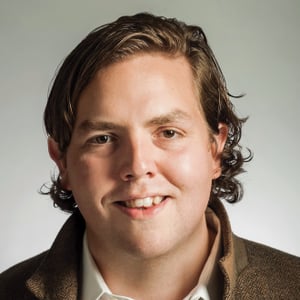
Harry Kalven, Jr. Professor of Law & Faculty Director, Constitutional Law Institute, University of Chicago Law School
William Baude is a Professor of Law and the Faculty Director of the Constitutional Law Institute at the University of Chicago Law School, where he teaches federal courts, constitutional law, and conflict of laws. His current research interests include different aspects of the Fourteenth Amendment (particularly both Section One and Section Three) and the nature of judicial discretion.
Among his other activities Baude is: the co-editor of two textbooks, The Constitution of the United States and Hart & Wechsler's Federal Courts in the Federal System; an Affiliated Scholar at the Center for the Study of Constitutional Originalism; a founding member of the Academic Freedom Alliance; a member of the American Law Institute; an occasional blogger at The Volokh Conspiracy; and a podcaster on Divided Argument. He also recently served on the Presidential Commission on the Supreme Court of the United States.
Professor Baude received his BS in Mathematics from the University of Chicago and his JD from Yale Law School. He then clerked for then-Judge Michael McConnell on the United States Court of Appeals, and Chief Justice John Roberts on the United States Supreme Court. Before joining the Chicago faculty, he was a fellow at the Stanford Constitutional Law Center, and a lawyer in Washington, DC.
Associate, Covington & Burling LLP
Kathryn Bi is an Associate at Covington & Burling LLP. She graduated from the University of Chicago Law School in 2015 and from Dartmouth College in 2009 where she earned Bachelor of Engineering and Bachelor of Arts degrees. Prior to law school Kathryn worked for three years as a chemical engineer at DuPont Corporation in Palo Alto and Genzyme Corporation in Boston.
Senior Associate to the President and Secretary of the University of Arizona
Jon Dudas has served as the Senior Associate to the President and Secretary of the University of Arizona since July 2014.
Mr. Dudas spent fourteen years in service to the U.S. Government, and as head of the USPTO, he led a performance-based government agency with 9,000 employees and a nearly $2 billion annual budget. During his tenure, the USPTO achieved record-level performance in meeting key annual objectives, and led key patent cooperation and development missions with China, India, Europe, Brazil and several other countries.
In addition to holding his post as Director of the USPTO from 2004 – 2009, Mr. Dudas’s public sector experience includes serving as Counsel for Legal Policy and Senior Floor Assistant for The Speaker of the House for the U.S. House of Representatives and Staff Director and Deputy General Counsel for the Committee on the Judiciary. After his appointment as Director of the USPTO, Mr. Dudas was a partner at Foley & Lardner LLP in Washington D.C. and then President of FIRST (For Inspiration and Recognition of Science and Technology), a national nonprofit that works to educate and inspire children to pursue careers in technology, science and innovation. He also served as a member of the Board of Directors for Conversant Intellectual Property Management, Inc., of Ottowa, Ontario. Mr. Dudas holds a J.D. from the University of Chicago and a bachelor’s degree in finance from the University of Illinois.
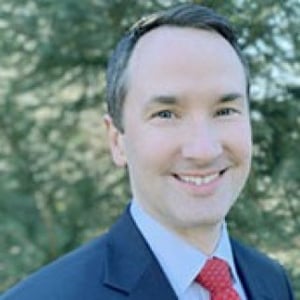
Chief Counsel, U.S. Chamber Litigation Center
Steven P. Lehotsky has significant experience developing and executing litigation strategies to help businesses and trade associations address their most important regulatory and public-policy challenges.
Before founding Lehotsky Keller LLP, Mr. Lehotsky directed the litigation strategy of the U.S. Chamber of Commerce, the world's leading business federation, where he worked from 2013-2021. While at the U.S. Chamber’s Litigation Center, he served as chief litigation counsel. Mr. Lehotsky led the Chamber's efforts to bring successful challenges to federal, state, and local regulations of business. He also directed the U.S. Chamber's efforts to defend pro-growth regulatory reforms. Mr. Lehotsky also led and implemented the U.S. Chamber’s strategies for filing hundreds of amicus curiae briefs in the U.S. Supreme Court, federal appellate and district courts, and state supreme and appellate courts. He is a frequent speaker at events and conferences on litigation and regulatory trends.
Mr. Lehotsky previously was an attorney at WilmerHale LLP in both the Washington D.C. and Boston offices, where he practiced government and regulatory litigation, appellate litigation, and counseling on constitutional, statutory, and regulatory issues for clients across a wide variety of industry sectors. He also previously practiced as a commercial litigator at Goodwin Procter LLP in Boston.
In addition, Mr. Lehotsky was an Attorney-Adviser in the Office of Legal Counsel of the U.S. Department of Justice from 2006-2009, advising the White House and executive departments and agencies on constitutional and statutory issues relating to national security, immigration, international sanctions under the International Emergency Economic Powers Act and other programs, the response to the 2008 financial crisis, pandemic influenza and infectious-disease mitigation, cybersecurity, and congressional investigations, among many other subjects.
Mr. Lehotsky was a law clerk for Justice Antonin Scalia of the Supreme Court of the United States and Chief Judge Douglas H. Ginsburg of the U.S. Court of Appeals for the District of Columbia Circuit.
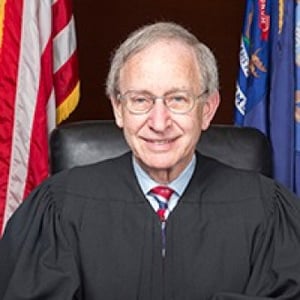
Justice, Michigan Supreme Court
Stephen Markman was appointed Justice of the Michigan Supreme Court on October 1, 1999. He served as the Chief Justice from 2017-2019. Before his appointment, he served as Judge on the Michigan Court of Appeals from 1995-1999. Prior to this, he practiced law with the firm of Miller, Canfield, Paddock & Stone in Detroit.
From 1989-1993, Justice Markman served as United States Attorney, or federal prosecutor, in Michigan, after having been nominated by President George H. W. Bush and confirmed by the United States Senate. From 1985-1989, he served as Assistant Attorney General of the United States, after having been nominated by President Ronald Reagan and confirmed by the United States Senate. In that position, he headed the Department of Justice’s Office of Legal Policy, which served as the principal policy development office within the Department, and which coordinated the federal judicial selection process. Prior to this, he served for seven years as Chief Counsel of the United States Senate Subcommittee on the Constitution, and as Deputy Chief Counsel of the United States Senate Judiciary Committee.
Justice Markman has authored articles for such publications as the University of Michigan Journal of Law Reform, the Detroit College of Law Review, the Stanford Law Review, the University of Chicago Law Review, the American Criminal Justice Law Review, the Barrister’s Law Journal, the Harvard Journal of Law & Public Policy, and the American University Law Review. He has also served as a contributing editor of National Review magazine, and has authored chapters in such books as “In the Name of Justice: The Aims of the Criminal Law,” “Still the Law of the Land,” and “Originalism: A Quarter Century of Debate.”
Justice Markman has taught constitutional law at Hillsdale College since 1993. He has served on the Board of Directors of the Western Michigan University Thomas M. Cooley Law School. He traveled to Ukraine on two occasions on behalf of the State Department, to provide assistance in the development of that nation’s post-Soviet constitution. He is a Fellow of the Michigan Bar Foundation, a Master of the Bench of the Inns of Court, and a member of the One Hundred Club. He has spoken before hundreds of youth, civic, charitable, and legal groups throughout Michigan and nationally, and has coached Little League baseball and basketball. He lives with his wife Mary Kathleen in Mason, and has two sons, James and Charles.
Justice Markman was re-elected to the Supreme Court in 2000, 2004, and 2012. His present term expires January 1, 2021.
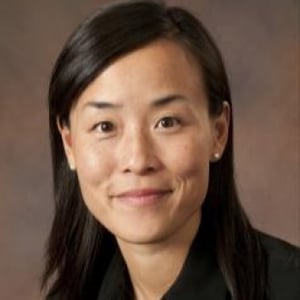
Professor of Law, University of Chicago Law School
Jennifer Nou is Professor of Law at the University of Chicago Law School. Nou’s main research interests are in administrative law, executive branch dynamics, regulatory policy, and constitutional separation-of-powers. Prior to joining the faculty, she was a Public Law Fellow at the Law School and also worked as a policy analyst and special assistant at the Office of Information and Regulatory Affairs. Nou is a graduate of Yale College and Yale Law School, and received an MPhil in Politics from Oxford University as a Marshall Scholar. After law school, she was a law clerk to Judge Richard Posner of the US Court of Appeals for the Seventh Circuit and then to Justice Stephen Breyer of the US Supreme Court. She is currently a public member of the Administrative Conference of the United States.
Harry Kalven, Jr. Professor of Law & Faculty Director, Constitutional Law Institute, University of Chicago Law School
William Baude is a Professor of Law and the Faculty Director of the Constitutional Law Institute at the University of Chicago Law School, where he teaches federal courts, constitutional law, and conflict of laws. His current research interests include different aspects of the Fourteenth Amendment (particularly both Section One and Section Three) and the nature of judicial discretion.
Among his other activities Baude is: the co-editor of two textbooks, The Constitution of the United States and Hart & Wechsler's Federal Courts in the Federal System; an Affiliated Scholar at the Center for the Study of Constitutional Originalism; a founding member of the Academic Freedom Alliance; a member of the American Law Institute; an occasional blogger at The Volokh Conspiracy; and a podcaster on Divided Argument. He also recently served on the Presidential Commission on the Supreme Court of the United States.
Professor Baude received his BS in Mathematics from the University of Chicago and his JD from Yale Law School. He then clerked for then-Judge Michael McConnell on the United States Court of Appeals, and Chief Justice John Roberts on the United States Supreme Court. Before joining the Chicago faculty, he was a fellow at the Stanford Constitutional Law Center, and a lawyer in Washington, DC.
Associate, Covington & Burling LLP
Kathryn Bi is an Associate at Covington & Burling LLP. She graduated from the University of Chicago Law School in 2015 and from Dartmouth College in 2009 where she earned Bachelor of Engineering and Bachelor of Arts degrees. Prior to law school Kathryn worked for three years as a chemical engineer at DuPont Corporation in Palo Alto and Genzyme Corporation in Boston.
Senior Associate to the President and Secretary of the University of Arizona
Jon Dudas has served as the Senior Associate to the President and Secretary of the University of Arizona since July 2014.
Mr. Dudas spent fourteen years in service to the U.S. Government, and as head of the USPTO, he led a performance-based government agency with 9,000 employees and a nearly $2 billion annual budget. During his tenure, the USPTO achieved record-level performance in meeting key annual objectives, and led key patent cooperation and development missions with China, India, Europe, Brazil and several other countries.
In addition to holding his post as Director of the USPTO from 2004 – 2009, Mr. Dudas’s public sector experience includes serving as Counsel for Legal Policy and Senior Floor Assistant for The Speaker of the House for the U.S. House of Representatives and Staff Director and Deputy General Counsel for the Committee on the Judiciary. After his appointment as Director of the USPTO, Mr. Dudas was a partner at Foley & Lardner LLP in Washington D.C. and then President of FIRST (For Inspiration and Recognition of Science and Technology), a national nonprofit that works to educate and inspire children to pursue careers in technology, science and innovation. He also served as a member of the Board of Directors for Conversant Intellectual Property Management, Inc., of Ottowa, Ontario. Mr. Dudas holds a J.D. from the University of Chicago and a bachelor’s degree in finance from the University of Illinois.
Chief Counsel, U.S. Chamber Litigation Center
Steven P. Lehotsky has significant experience developing and executing litigation strategies to help businesses and trade associations address their most important regulatory and public-policy challenges.
Before founding Lehotsky Keller LLP, Mr. Lehotsky directed the litigation strategy of the U.S. Chamber of Commerce, the world's leading business federation, where he worked from 2013-2021. While at the U.S. Chamber’s Litigation Center, he served as chief litigation counsel. Mr. Lehotsky led the Chamber's efforts to bring successful challenges to federal, state, and local regulations of business. He also directed the U.S. Chamber's efforts to defend pro-growth regulatory reforms. Mr. Lehotsky also led and implemented the U.S. Chamber’s strategies for filing hundreds of amicus curiae briefs in the U.S. Supreme Court, federal appellate and district courts, and state supreme and appellate courts. He is a frequent speaker at events and conferences on litigation and regulatory trends.
Mr. Lehotsky previously was an attorney at WilmerHale LLP in both the Washington D.C. and Boston offices, where he practiced government and regulatory litigation, appellate litigation, and counseling on constitutional, statutory, and regulatory issues for clients across a wide variety of industry sectors. He also previously practiced as a commercial litigator at Goodwin Procter LLP in Boston.
In addition, Mr. Lehotsky was an Attorney-Adviser in the Office of Legal Counsel of the U.S. Department of Justice from 2006-2009, advising the White House and executive departments and agencies on constitutional and statutory issues relating to national security, immigration, international sanctions under the International Emergency Economic Powers Act and other programs, the response to the 2008 financial crisis, pandemic influenza and infectious-disease mitigation, cybersecurity, and congressional investigations, among many other subjects.
Mr. Lehotsky was a law clerk for Justice Antonin Scalia of the Supreme Court of the United States and Chief Judge Douglas H. Ginsburg of the U.S. Court of Appeals for the District of Columbia Circuit.
Justice, Michigan Supreme Court
Stephen Markman was appointed Justice of the Michigan Supreme Court on October 1, 1999. He served as the Chief Justice from 2017-2019. Before his appointment, he served as Judge on the Michigan Court of Appeals from 1995-1999. Prior to this, he practiced law with the firm of Miller, Canfield, Paddock & Stone in Detroit.
From 1989-1993, Justice Markman served as United States Attorney, or federal prosecutor, in Michigan, after having been nominated by President George H. W. Bush and confirmed by the United States Senate. From 1985-1989, he served as Assistant Attorney General of the United States, after having been nominated by President Ronald Reagan and confirmed by the United States Senate. In that position, he headed the Department of Justice’s Office of Legal Policy, which served as the principal policy development office within the Department, and which coordinated the federal judicial selection process. Prior to this, he served for seven years as Chief Counsel of the United States Senate Subcommittee on the Constitution, and as Deputy Chief Counsel of the United States Senate Judiciary Committee.
Justice Markman has authored articles for such publications as the University of Michigan Journal of Law Reform, the Detroit College of Law Review, the Stanford Law Review, the University of Chicago Law Review, the American Criminal Justice Law Review, the Barrister’s Law Journal, the Harvard Journal of Law & Public Policy, and the American University Law Review. He has also served as a contributing editor of National Review magazine, and has authored chapters in such books as “In the Name of Justice: The Aims of the Criminal Law,” “Still the Law of the Land,” and “Originalism: A Quarter Century of Debate.”
Justice Markman has taught constitutional law at Hillsdale College since 1993. He has served on the Board of Directors of the Western Michigan University Thomas M. Cooley Law School. He traveled to Ukraine on two occasions on behalf of the State Department, to provide assistance in the development of that nation’s post-Soviet constitution. He is a Fellow of the Michigan Bar Foundation, a Master of the Bench of the Inns of Court, and a member of the One Hundred Club. He has spoken before hundreds of youth, civic, charitable, and legal groups throughout Michigan and nationally, and has coached Little League baseball and basketball. He lives with his wife Mary Kathleen in Mason, and has two sons, James and Charles.
Justice Markman was re-elected to the Supreme Court in 2000, 2004, and 2012. His present term expires January 1, 2021.
Professor of Law, University of Chicago Law School
Jennifer Nou is Professor of Law at the University of Chicago Law School. Nou’s main research interests are in administrative law, executive branch dynamics, regulatory policy, and constitutional separation-of-powers. Prior to joining the faculty, she was a Public Law Fellow at the Law School and also worked as a policy analyst and special assistant at the Office of Information and Regulatory Affairs. Nou is a graduate of Yale College and Yale Law School, and received an MPhil in Politics from Oxford University as a Marshall Scholar. After law school, she was a law clerk to Judge Richard Posner of the US Court of Appeals for the Seventh Circuit and then to Justice Stephen Breyer of the US Supreme Court. She is currently a public member of the Administrative Conference of the United States.
Co-Founder, Able Lending
Evan Baehr is the cofounder of Able, an online lender to small businesses. It launched June 2014 with the Wall Street Journal'sWeekend Interview and on TechCrunch. His passion at Able is to serve the Fortune 5 Million – the 5.8 million small businesses that represent the backbone of the American economy. His previous startup was Outbox, a consumer internet company aiming to takeover the US Postal Service and backed by venture capitalists Peter Thiel and Mike Maples, featured on Fox News, CNN, TechCrunch, FastCompany, Wall Street Journal, INC, the New York Times, and on Jay Leno.
He has worked on the Facebook platform under Sheryl Sandberg, helping shape a vision to make life better by making it social, and for Peter Thiel building a political data company. He’s an honors graduate of Princeton’s Woodrow Wilson School, Yale Divinity School, and Harvard Business School.
He has worked for the American Enterprise Institute’s Charles Murray, the Ethics and Public Policy Center, the Becket Fund for Religious Liberty, and the White House Office of Faith-Based Initiatives, served as a legislative aid on the House Appropriations Committee under Rep. Frank Wolf, was Chief of Staff on the Congressional Human Rights Caucus, under which he wrote the International Marriage Broker Regulation Act, and was the failed candidate for Princeton’s City Council, despite receiving more votes than George W. Bush.
He has served on the board of the Manhattan Institute’s Adam Smith Society, the New Canaan Society, the Rivendell Institute, and Harvard Business School's FIELD Program, and is a mentor with First Round Capital's Dorm Room Fund. He cofounded the Hoover Institute’s Rising Fellows Program, Harvard Business School’s Ideas@Work, Princetonians in the Nation’s Service, and the Yale Forum on Faith and Politics. He is the recipient of the Lily Endowment Thesis Prize, the Blackstone Legal Fellowship, and Princeton’s James Madison Fellowship. He lives in Austin, TX, with his wife, Kristina Scurry Baehr, a patent litigator, and children Cooper and Madeleine.
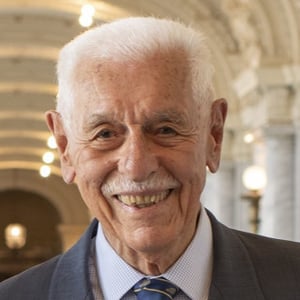
Judge, United States Court of Appeals, Ninth Circuit
Judge Carlos Bea serves as a judge on the United States Court of Appeals for the Ninth Circuit. He received his Bachelor's Degree from Stanford University in 1956 and his J.D. from Stanford Law School in 1958. Judge Bea was born in San Sebastian, Spain, and immigrated with his family to Cuba in 1939. In 1952, he represented Cuba on the Cuban National basketball team in the Helsinki Olympics. Judge Bea became a naturalized citizen of the United States in 1958. He engaged in private practice in San Francisco, principally in the area of civil trials (jury and non-jury), from 1959-75 at Dunne, Phelps & Mills and from 1975-90 at Carlos Bea, A Law Corporation. He taught courses in civil litigation advocacy at Hastings College of Law and Stanford Law School. From 1990 to 2003, Judge Bea served as a judge of the San Francisco Superior Court. He was nominated by President George W. Bush to the United States Court of Appeals for the Ninth Circuit and was confirmed in 2003.
Judge Bea and his wife Louise reside in San Francisco, where they raised their four sons, Sebastian, Alexander, Nicholas, and Dominic.
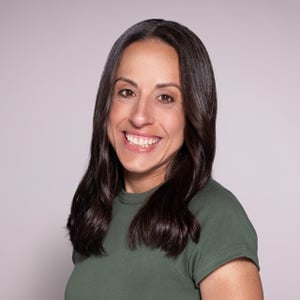
Chief Legal Officer, Paradigm
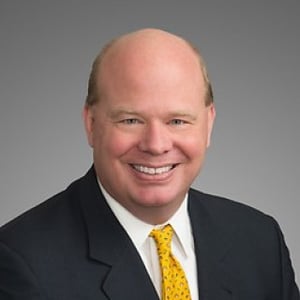
Principal, DeGroot Legal
Mr. DeGroot represents businesses in complex litigation, focusing on licensing, insurance, intellectual property, contract disputes, and toxic torts. He has experience in cases involving fraud, breach of contract, unfair competition, patents, business torts, mergers and acquisitions, creditors’ rights, and bankruptcy. He has extensive experience in all aspects of civil litigation, both in federal and state courts, including prejudgment remedies, discovery, trial, appeals, arbitration and mediation.
Mr. DeGroot works with clients in a variety of industries, including financial institutions, insurance, software, construction, semiconductors, and real estate.
Policy Counsel, Lyft
Associate Professor, University of Idaho College of Law
Stephen R. Miller joined the faculty of the University of Idaho College of Law in 2011. Prof. Miller received his undergraduate degree from Brown University, a master’s degree in city and regional planning from the University of California, Berkeley, and his J.D. from the University of California, Hastings College of Law. While in law school, Prof. Miller was senior articles editor of the Constitutional Law Quarterly. Prof. Miller also worked for a land use and environmental law firm in San Francisco, California prior to joining the faculty. His research interests include economic development, sustainable development, land use, environmental law, and local government law.
His academic works have been published by or are forthcoming from Cambridge University Press, Harvard Environmental Law Review, and a number of other law reviews and professional journals. In 2013, he was named Faculty Advisor of the Year by the Idaho Law Review and also received the Alumni Award for Faculty Excellence. In addition to his academic writings, Prof. Miller also blogs at Land Use Prof Blog, and writes an occasional column for the Idaho Statesman Business Insider.
Prof. Miller also runs the College of Law's Economic Development Clinic, which maintains the student-written blog Idaho NEXT. In 2013, the Clinic received the Planning Excellence Award for Best Practice from the Idaho chapter of the American Planning Association for Area of City Impact Agreements in Idaho. In 2014, the Clinic released Agritourism at the Rural-Urban Interface: A National Overview of Legal Issues with 20 Proposals for Idaho. In addition, the Clinic has been credited by state officials with popularizing the use of New Markets Tax Credits financing in Idaho, a financing tool that has already helped fund $50 million in investment in low income communities throughout the state.
Prof. Miller is also active in the community. He presently serves as a commissioner on the Boise City Planning and Zoning Commission and as a board member of the Joyce Ivy Foundation, which provides educational opportunities for talented high school students.
Harry Kalven, Jr. Professor of Law & Faculty Director, Constitutional Law Institute, University of Chicago Law School
William Baude is a Professor of Law and the Faculty Director of the Constitutional Law Institute at the University of Chicago Law School, where he teaches federal courts, constitutional law, and conflict of laws. His current research interests include different aspects of the Fourteenth Amendment (particularly both Section One and Section Three) and the nature of judicial discretion.
Among his other activities Baude is: the co-editor of two textbooks, The Constitution of the United States and Hart & Wechsler's Federal Courts in the Federal System; an Affiliated Scholar at the Center for the Study of Constitutional Originalism; a founding member of the Academic Freedom Alliance; a member of the American Law Institute; an occasional blogger at The Volokh Conspiracy; and a podcaster on Divided Argument. He also recently served on the Presidential Commission on the Supreme Court of the United States.
Professor Baude received his BS in Mathematics from the University of Chicago and his JD from Yale Law School. He then clerked for then-Judge Michael McConnell on the United States Court of Appeals, and Chief Justice John Roberts on the United States Supreme Court. Before joining the Chicago faculty, he was a fellow at the Stanford Constitutional Law Center, and a lawyer in Washington, DC.
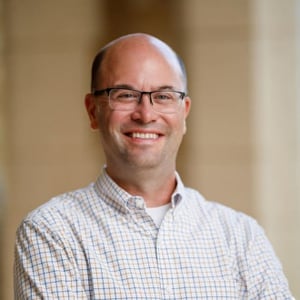
Paul J. Schierl Professor of Law, University of Notre Dame Law School
Professor Richard W. Garnett teaches and writes in the areas of constitutional law, criminal law, the First Amendment, and law and religion. He is a leading authority on questions and debates regarding religious freedom and church-state relations, and is the founding director of Notre Dame Law School’s Program on Church, State, and Society.
Garnett clerked for the late Chief Justice of the United States, William H. Rehnquist, and also for the late Chief Judge of the United States Court of Appeals for the Eighth Circuit, Richard S. Arnold. He earned his J.D. from Yale Law School in 1995 and his B.A., summa cum laude, from Duke University in 1990. He joined the faculty in 1999 after practicing law in Washington, D.C. with Miller, Cassidy, Larroca & Lewin.
William Fairfield Warren Distinguished Professor of Boston Unive, Boston University School of Law
Keith Hylton, a William Fairfield Warren Professor of Boston University and Professor of Law at Boston University School of Law, joined the BU Law faculty in 1995 after teaching for six years and receiving tenure at Northwestern University School of Law. He is a prolific scholar who is widely recognized for his work across a broad spectrum of topics in law and economics, including tort law, antitrust, labor law, intellectual property, civil procedure, and empirical legal analysis. He has published four books and more than 100 articles in numerous law and economics journals, and serves as a contributing editor of the Antitrust Law Journal, co-editor of Competition Policy International and editor of the Social Science Research Network's Torts and Products Liability Law Abstracts. He is a former chair of the Section on Torts and Compensation Systems of the American Association of Law Schools, a former chair of the Section on Antitrust and Economic Regulation of the American Association of Law Schools, a former director of the American Law and Economics Association, a former Secretary of the American Bar Association Labor and Employment Law Section, a former member of the editorial board of the Journal of Legal Education, current chair of the Law and Economics section of the American Association of Law Schools, and a current member of the American Law Institute.
Assistant Professor of Law, Case Western Reserve University School of Law
Charles R. Korsmo is an Assistant Professor of Law at Case Western Reserve University School of Law. Following time spent in private practice at Sullivan & Cromwell in New York City, Mr. Korsmo was a Visiting Assistant Professor at Brooklyn Law School from 2009 until 2011. Previously, Mr. Korsmo worked at the Environmental Protection Agency in the Office of Policy, Economics and Innovation, helping to create programs intended to promote innovative environmental technology. He also served on the staff of the House Select Committee on Homeland Security, where he helped design and pass legislation to spur the development of new bioterrorism countermeasures. Mr. Korsmo earned his bachelor’s degree in Physics from the Massachusetts Institute of Technology, and his J.D. from Yale Law School.
Professor of Law, Northwestern University School of Law
James Lindgren is a law professor at Northwestern University, with a BA from Yale and a JD and a PhD in (quantitative) sociology from the University of Chicago. He is a cofounder of the Section on Scholarship of the Association of American Law Schools and a former chair of its Section on Social Science and the Law. He has published in the Yale Law Journal and the Harvard, Stanford, Columbia, University of Chicago, University of Pennsylvania, California, Northwestern, Georgetown, and UCLA Law Reviews, among others. His work includes "Fall from Grace: Arming America and the Bellesiles Scandal " (Yale Law Journal, 2002) and "Term Limits for the Supreme Court: Life Tenure Reconsidered " (Harvard Journal of Law & Public Policy, 2006). In Evans v. US (1992), the US Supreme Court adopted Lindgren's view of the overlap of bribery and federal extortion. He blogs at the Washington Post.
Assistant Professor of Law, Brooklyn Law School
Minor Myers joined the faculty at Brooklyn Law School after serving as a visiting assistant professor of law at the school from 2007 to 2009, teaching corporate law and property. His research interests include corporate law and local government law, and his most recent scholarship addresses the decisions of corporate special litigation committees.
Previously, Professor Myers was in private practice in the corporate and litigation departments at Debevoise & Plimpton in New York. Following law school, he clerked for Judge Peter W. Hall and then Judge Ralph K. Winter of the U.S. Court of Appeals for the Second Circuit.
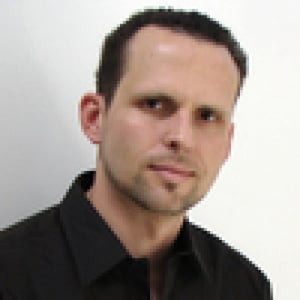
Assistant Professor, George Mason University School of Law
Assistant Professor Christopher M. Newman graduated magna cum laude from the University of Michigan Law School in 1999, where he served as book review editor for the Michigan Law Review and received Michigan's highest law school award, the Henry M. Bates Memorial Scholarship. He also holds a BA in classical liberal arts awarded by St. John's College in Annapolis, Maryland.
Following law school, Professor Newman was a clerk for the Honorable Alex Kozinski of the U.S. Court of Appeals for the Ninth Circuit, with whom he co-published What's So Fair About Fair Use?, 46 J. Copyright Soc'y 513 (1999). From 2000-2007, he was a litigation associate with Irell & Manella LLP in Los Angeles, where he represented clients in disputes involving contracts, business torts, intellectual property, corporate and securities litigation, and appellate matters, as well as pro bono family and criminal law matters. Professor Newman left practice at the beginning of 2007 to serve an Olin/Searle Fellowship in Law at the UCLA School of Law, where he focused on his research and writing in the areas of property theory and intellectual property, and from January 2008 until his arrival at Mason Law served as a research fellow of UCLA's Intellectual Property Project.
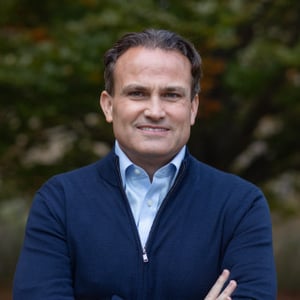
Professor of Law, University of Michigan Law School
Christopher J. Walker is a Professor of Law at the University of Michigan. Prior to joining Michigan law faculty in 2022, he spent a decade teaching at The Ohio State University Moritz College of Law. He previously clerked for Justice Anthony Kennedy of the U.S. Supreme Court, worked on the Civil Appellate Staff at the U.S. Department of Justice, and served on the Senate Judiciary Committee staff for the Gorsuch Supreme Court confirmation. Professor Walker’s research focuses on administrative law, regulation, and law and policy at the agency level. Outside the law school, he chaired the American Bar Association’s Section of Administrative Law and Regulatory Practice in 2020-21 and served as one of forty Public Members of the Administrative Conference of the United States from 2016-2022, and he continues to serve in both organizations in various capacities. He also works of counsel at the U.S. Chamber Litigation Center. In 2022, he received the Federalist Society’s Joseph Story Award.
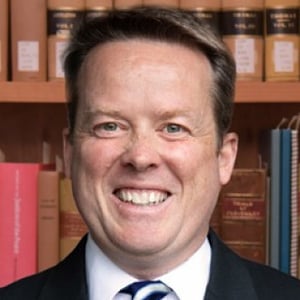
Knights of Columbus Professor of Law and the Catholic Tradition, The Catholic University of America Columbus School of Law
Kevin C. Walsh teaches and writes in the areas of federal jurisdiction, constitutional law, and the U.S. Supreme Court. His scholarship explores the doctrines that define—and delimit—the scope of federal judicial power.
Professor Walsh graduated from Harvard Law School, where he was Articles Chair for Volume 115 of the Harvard Law Review. After graduation, he clerked for Judge Paul V. Niemeyer of the United States Court of Appeals for the Fourth Circuit and Associate Justice Antonin Scalia of the Supreme Court of the United States. He then practiced law at Hunton & Williams LLP and taught as a visiting assistant professor at Villanova University School of Law. Walsh received his A.B. from Dartmouth College, and an M.A. in Theological Studies from the University of Notre Dame. He taught at the University of Richmond School of Law for thirteen years prior to joining The Catholic University of America, where he currently resides.
In early 2011, Professor Walsh filed two amicus curiae briefs addressing jurisdictional issues in the State challenges to the individual mandate in the federal healthcare reform legislation: a brief in Virginia v. Sebelius (United States Court of Appeals for the Fourth Circuit), and a brief in Florida v. HHS (United States Court of Appeals for the Eleventh Circuit).
Harry Kalven, Jr. Professor of Law & Faculty Director, Constitutional Law Institute, University of Chicago Law School
William Baude is a Professor of Law and the Faculty Director of the Constitutional Law Institute at the University of Chicago Law School, where he teaches federal courts, constitutional law, and conflict of laws. His current research interests include different aspects of the Fourteenth Amendment (particularly both Section One and Section Three) and the nature of judicial discretion.
Among his other activities Baude is: the co-editor of two textbooks, The Constitution of the United States and Hart & Wechsler's Federal Courts in the Federal System; an Affiliated Scholar at the Center for the Study of Constitutional Originalism; a founding member of the Academic Freedom Alliance; a member of the American Law Institute; an occasional blogger at The Volokh Conspiracy; and a podcaster on Divided Argument. He also recently served on the Presidential Commission on the Supreme Court of the United States.
Professor Baude received his BS in Mathematics from the University of Chicago and his JD from Yale Law School. He then clerked for then-Judge Michael McConnell on the United States Court of Appeals, and Chief Justice John Roberts on the United States Supreme Court. Before joining the Chicago faculty, he was a fellow at the Stanford Constitutional Law Center, and a lawyer in Washington, DC.
Paul J. Schierl Professor of Law, University of Notre Dame Law School
Professor Richard W. Garnett teaches and writes in the areas of constitutional law, criminal law, the First Amendment, and law and religion. He is a leading authority on questions and debates regarding religious freedom and church-state relations, and is the founding director of Notre Dame Law School’s Program on Church, State, and Society.
Garnett clerked for the late Chief Justice of the United States, William H. Rehnquist, and also for the late Chief Judge of the United States Court of Appeals for the Eighth Circuit, Richard S. Arnold. He earned his J.D. from Yale Law School in 1995 and his B.A., summa cum laude, from Duke University in 1990. He joined the faculty in 1999 after practicing law in Washington, D.C. with Miller, Cassidy, Larroca & Lewin.
William Fairfield Warren Distinguished Professor of Boston Unive, Boston University School of Law
Keith Hylton, a William Fairfield Warren Professor of Boston University and Professor of Law at Boston University School of Law, joined the BU Law faculty in 1995 after teaching for six years and receiving tenure at Northwestern University School of Law. He is a prolific scholar who is widely recognized for his work across a broad spectrum of topics in law and economics, including tort law, antitrust, labor law, intellectual property, civil procedure, and empirical legal analysis. He has published four books and more than 100 articles in numerous law and economics journals, and serves as a contributing editor of the Antitrust Law Journal, co-editor of Competition Policy International and editor of the Social Science Research Network's Torts and Products Liability Law Abstracts. He is a former chair of the Section on Torts and Compensation Systems of the American Association of Law Schools, a former chair of the Section on Antitrust and Economic Regulation of the American Association of Law Schools, a former director of the American Law and Economics Association, a former Secretary of the American Bar Association Labor and Employment Law Section, a former member of the editorial board of the Journal of Legal Education, current chair of the Law and Economics section of the American Association of Law Schools, and a current member of the American Law Institute.
Assistant Professor of Law, Case Western Reserve University School of Law
Charles R. Korsmo is an Assistant Professor of Law at Case Western Reserve University School of Law. Following time spent in private practice at Sullivan & Cromwell in New York City, Mr. Korsmo was a Visiting Assistant Professor at Brooklyn Law School from 2009 until 2011. Previously, Mr. Korsmo worked at the Environmental Protection Agency in the Office of Policy, Economics and Innovation, helping to create programs intended to promote innovative environmental technology. He also served on the staff of the House Select Committee on Homeland Security, where he helped design and pass legislation to spur the development of new bioterrorism countermeasures. Mr. Korsmo earned his bachelor’s degree in Physics from the Massachusetts Institute of Technology, and his J.D. from Yale Law School.
Professor of Law, Northwestern University School of Law
James Lindgren is a law professor at Northwestern University, with a BA from Yale and a JD and a PhD in (quantitative) sociology from the University of Chicago. He is a cofounder of the Section on Scholarship of the Association of American Law Schools and a former chair of its Section on Social Science and the Law. He has published in the Yale Law Journal and the Harvard, Stanford, Columbia, University of Chicago, University of Pennsylvania, California, Northwestern, Georgetown, and UCLA Law Reviews, among others. His work includes "Fall from Grace: Arming America and the Bellesiles Scandal " (Yale Law Journal, 2002) and "Term Limits for the Supreme Court: Life Tenure Reconsidered " (Harvard Journal of Law & Public Policy, 2006). In Evans v. US (1992), the US Supreme Court adopted Lindgren's view of the overlap of bribery and federal extortion. He blogs at the Washington Post.
Assistant Professor of Law, Brooklyn Law School
Minor Myers joined the faculty at Brooklyn Law School after serving as a visiting assistant professor of law at the school from 2007 to 2009, teaching corporate law and property. His research interests include corporate law and local government law, and his most recent scholarship addresses the decisions of corporate special litigation committees.
Previously, Professor Myers was in private practice in the corporate and litigation departments at Debevoise & Plimpton in New York. Following law school, he clerked for Judge Peter W. Hall and then Judge Ralph K. Winter of the U.S. Court of Appeals for the Second Circuit.
Assistant Professor, George Mason University School of Law
Assistant Professor Christopher M. Newman graduated magna cum laude from the University of Michigan Law School in 1999, where he served as book review editor for the Michigan Law Review and received Michigan's highest law school award, the Henry M. Bates Memorial Scholarship. He also holds a BA in classical liberal arts awarded by St. John's College in Annapolis, Maryland.
Following law school, Professor Newman was a clerk for the Honorable Alex Kozinski of the U.S. Court of Appeals for the Ninth Circuit, with whom he co-published What's So Fair About Fair Use?, 46 J. Copyright Soc'y 513 (1999). From 2000-2007, he was a litigation associate with Irell & Manella LLP in Los Angeles, where he represented clients in disputes involving contracts, business torts, intellectual property, corporate and securities litigation, and appellate matters, as well as pro bono family and criminal law matters. Professor Newman left practice at the beginning of 2007 to serve an Olin/Searle Fellowship in Law at the UCLA School of Law, where he focused on his research and writing in the areas of property theory and intellectual property, and from January 2008 until his arrival at Mason Law served as a research fellow of UCLA's Intellectual Property Project.
Professor of Law, University of Michigan Law School
Christopher J. Walker is a Professor of Law at the University of Michigan. Prior to joining Michigan law faculty in 2022, he spent a decade teaching at The Ohio State University Moritz College of Law. He previously clerked for Justice Anthony Kennedy of the U.S. Supreme Court, worked on the Civil Appellate Staff at the U.S. Department of Justice, and served on the Senate Judiciary Committee staff for the Gorsuch Supreme Court confirmation. Professor Walker’s research focuses on administrative law, regulation, and law and policy at the agency level. Outside the law school, he chaired the American Bar Association’s Section of Administrative Law and Regulatory Practice in 2020-21 and served as one of forty Public Members of the Administrative Conference of the United States from 2016-2022, and he continues to serve in both organizations in various capacities. He also works of counsel at the U.S. Chamber Litigation Center. In 2022, he received the Federalist Society’s Joseph Story Award.
Knights of Columbus Professor of Law and the Catholic Tradition, The Catholic University of America Columbus School of Law
Kevin C. Walsh teaches and writes in the areas of federal jurisdiction, constitutional law, and the U.S. Supreme Court. His scholarship explores the doctrines that define—and delimit—the scope of federal judicial power.
Professor Walsh graduated from Harvard Law School, where he was Articles Chair for Volume 115 of the Harvard Law Review. After graduation, he clerked for Judge Paul V. Niemeyer of the United States Court of Appeals for the Fourth Circuit and Associate Justice Antonin Scalia of the Supreme Court of the United States. He then practiced law at Hunton & Williams LLP and taught as a visiting assistant professor at Villanova University School of Law. Walsh received his A.B. from Dartmouth College, and an M.A. in Theological Studies from the University of Notre Dame. He taught at the University of Richmond School of Law for thirteen years prior to joining The Catholic University of America, where he currently resides.
In early 2011, Professor Walsh filed two amicus curiae briefs addressing jurisdictional issues in the State challenges to the individual mandate in the federal healthcare reform legislation: a brief in Virginia v. Sebelius (United States Court of Appeals for the Fourth Circuit), and a brief in Florida v. HHS (United States Court of Appeals for the Eleventh Circuit).
Senior Fellow and Research Coordinator, American Enterprise Institute
Karlyn Bowman compiles and analyzes American public opinion using available polling data on a variety of subjects, including the economy, taxes, the state of workers in America, environment and global warming, attitudes about homosexuality and gay marriage, NAFTA and free trade, the war in Iraq, and women’s attitudes. In addition, Ms. Bowman has studied and spoken about the evolution of American politics because of key demographic and geographic changes. She has often lectured on the role of think tanks in the United States and writes a weekly column for Forbes.com.
B.A., University of Wisconsin
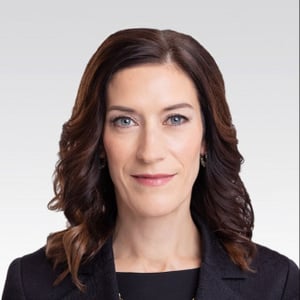
Executive Vice President of Global Governance, Chief Legal Officer and Corporate Secretary, Walmart Inc.
Rachel Brand is Walmart’s executive vice president of global governance, chief legal officer, and corporate secretary. She oversees the company’s global legal, compliance, ethics, corporate governance, digital citizenship, aviation, investigative, and corporate security functions, including Walmart’s Emergency Operations Center.
Immediately before joining Walmart, Rachel served as the United States Associate Attorney General and holds the distinction of being the first woman to serve in this role. She had previously served in the U.S. Department of Justice as the Assistant Attorney General for the Office of Legal Policy during President George W. Bush’s administration. Her other government service includes an appointment by President Obama to serve as a Member of the U.S. Privacy and Civil Liberties Oversight Board, service as an Associate Counsel to the President at the White House, and judicial clerkships with Justice Charles Fried of the Supreme Judicial Court of Massachusetts and Justice Anthony Kennedy at the Supreme Court of the United States. In the private sector, Rachel was a lawyer in private practice at two law firms in Washington, D.C. and served as the Vice President and Chief Counsel for Regulatory Litigation at the U.S. Chamber of Commerce Litigation Center.
Rachel serves on the board of directors for the Walmart Foundation and is the executive sponsor for Walmart’s Tribal Voices Associate Resource Group. Outside of Walmart, she serves on the board of directors for the International Justice Mission and is a member of The American Law Institute.
Rachel earned her Bachelor of Arts degree from the University of Minnesota-Morris and her J.D. from Harvard Law School.
Lanny J. Davis & Associates, LLC
Lanny J. Davis counsels individuals, corporations and government contractors, and those under congressional scrutiny, on crisis management and legal issues by developing legal, media and legislative strategies that are designed to best produce a successful result for the client. He has experience in securities fraud and SEC investigations as well, and has found that utilizing such an integrated legal/media/lobbying approach can lead to quicker and less expensive settlements or even successfully litigated outcomes. Senior officials of public companies have also hired Lanny and his crisis group to defend themselves successfully against "short and distort" attacks and other market manipulations. For 25 years prior to 1996, before his tenure as special counsel to President Clinton, Lanny was a commercial, antitrust, government contracts and False Claims Act litigator (both in defense as well as plaintiff). He has argued numerous appellate cases in the U.S. courts of appeals.
In June 2005, President Bush appointed Lanny to serve on the five-member Privacy and Civil Liberties Oversight Board, created by the U.S. Congress as part of the 2005 Intelligence Reform Act. In that capacity, he received the highest level security clearances so that he could be fully briefed and "read in" to the various anti-terrorist surveillance and financial tracking programs at the highest classified level. From 1996 to 1998, Lanny served as special counsel to the president in the White House and was a spokesperson for the president and the White House on matters concerning campaign finance investigations and other legal issues. Lanny has participated in national, state and local politics for almost 30 years. He has served three terms (1980 to 1992) on the Democratic National Committee representing the state of Maryland, and during that period he served on the DNC Executive Committee and as chairman of the Eastern Region Caucus. In Montgomery County, Maryland, he served as chairman of the Washington Suburban Transit Commission.
Lanny has authored several books and lectured throughout the United States and Europe on various political issues. Between 1990 and 1996, Lanny was a bimonthly commentator on Maryland politics for WAMU-88.5/FM, a Washington, D.C. local affiliate of National Public Radio. He has been a regular television commentator and has been a political and legal analyst for MSNBC, CNN, Fox Cable, CNBC and network TV news programs. He has published numerous op-ed/analysis pieces in the New York Times, the Wall Street Journal, the Washington Post and other national publications.
Lanny graduated from Yale Law School, where he won the prestigious Thurman Arnold Moot Court prize and served on the Yale Law Journal. A graduate of Yale University, Lanny served as chairman of the Yale Daily News.
Lanny is admitted to practice in the District of Columbia and Connecticut and before the Supreme Court of the United States and the U.S. Court of Appeals for the District of Columbia Circuit.
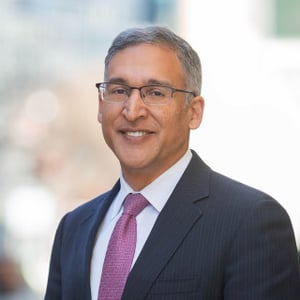
Partner, Millbank LLP
Mr. Katyal, the former Acting Solicitor General of the United States, focuses on appellate and complex litigation. He has argued 54 cases before the Supreme Court of the United States.
He has extensive experience in matters of antitrust, corporate, constitutional, securities, technology, criminal, patent, copyright, trademark, ERISA, products liability, labor, employment and tribal law. In the 2022-23 Supreme Court term, he argued five separate cases (nearly 10% of the docket), including winning the landmark voting case Moore v. Harper, which Judge Michael Luttig described as “the most important case for American democracy in the almost two and a half centuries since America’s founding.” Judge Luttig also said Mr. Katyal’s argument “was the single best oral argument I have ever heard made in the Supreme Court of the United States.” His cases include successfully striking down the Guantanamo military tribunals, successfully defending the constitutionality of the Voting Rights Act and successfully defending the Peace Cross in Maryland. His 2017 win in Bristol Myers Squibb v. Superior Court was a landmark victory for personal jurisdiction law and his 2006 win in Hamdan v. Rumsfeld was described by former Acting Solicitor General Walter Dellinger as “simply the most important decision on presidential power and the rule of law ever. Ever.”
From 2010 to 2011, Mr. Katyal served as Acting Solicitor General of the United States, where he argued several major Supreme Court cases involving a variety of issues, such as his successful defense of the constitutionality of the Voting Rights Act of 1965, his victorious defense of former Attorney General John Ashcroft for alleged abuses in the war on terror, his unanimous victory against eight states who sued the nation's leading power plants for contributing to global warming, and a variety of other matters. As Acting Solicitor General, he was responsible for representing the federal government of the United States in all appellate matters before the US Supreme Court and the Courts of Appeals throughout the nation. He served as Counsel of Record hundreds of times in the US Supreme Court. He was also the only head of the Solicitor General's office to argue a case in the US Court of Appeals for the Federal Circuit, on the important question of whether certain aspects of the human genome were patentable.
After graduating from Yale Law School, Mr. Katyal clerked for The Honorable Guido Calabresi of the US Court of Appeals for the Second Circuit as well as for The Honorable Justice Stephen G. Breyer of the US Supreme Court. He also served in the Deputy Attorney General's Office at the Justice Department as National Security Advisor and as Special Assistant to the Deputy Attorney General during 1998-1999.
Mr. Katyal is a best-selling New York Times author and has published dozens of scholarly articles in law journals (including several in the Harvard Law Review and Yale Law Journal), as well as many op-ed articles in publications such as the New York Times and the Washington Post. He has testified numerous times before various committees of both the US House of Representatives and the US Senate.
W. H. Brady Scholar, American Enterprise Institute
Charles Murray is a political scientist, author, and libertarian. He first came to national attention in 1984 with the publication of Losing Ground, which has been credited as the intellectual foundation for the Welfare Reform Act of 1996. His 1994 New York Times bestseller, The Bell Curve (Free Press, 1994), coauthored with the late Richard J. Herrnstein, sparked heated controversy for its analysis of the role of IQ in shaping America’s class structure. Murray's other books include What It Means to Be a Libertarian (1997), Human Accomplishment (2003), In Our Hands (2006), and Real Education (2008). His most recent book, Coming Apart (Crown Forum, 2012), describes an unprecedented divergence in American classes over the last half century.
Senior Fellow and Research Coordinator, American Enterprise Institute
Karlyn Bowman compiles and analyzes American public opinion using available polling data on a variety of subjects, including the economy, taxes, the state of workers in America, environment and global warming, attitudes about homosexuality and gay marriage, NAFTA and free trade, the war in Iraq, and women’s attitudes. In addition, Ms. Bowman has studied and spoken about the evolution of American politics because of key demographic and geographic changes. She has often lectured on the role of think tanks in the United States and writes a weekly column for Forbes.com.
B.A., University of Wisconsin
Executive Vice President of Global Governance, Chief Legal Officer and Corporate Secretary, Walmart Inc.
Rachel Brand is Walmart’s executive vice president of global governance, chief legal officer, and corporate secretary. She oversees the company’s global legal, compliance, ethics, corporate governance, digital citizenship, aviation, investigative, and corporate security functions, including Walmart’s Emergency Operations Center.
Immediately before joining Walmart, Rachel served as the United States Associate Attorney General and holds the distinction of being the first woman to serve in this role. She had previously served in the U.S. Department of Justice as the Assistant Attorney General for the Office of Legal Policy during President George W. Bush’s administration. Her other government service includes an appointment by President Obama to serve as a Member of the U.S. Privacy and Civil Liberties Oversight Board, service as an Associate Counsel to the President at the White House, and judicial clerkships with Justice Charles Fried of the Supreme Judicial Court of Massachusetts and Justice Anthony Kennedy at the Supreme Court of the United States. In the private sector, Rachel was a lawyer in private practice at two law firms in Washington, D.C. and served as the Vice President and Chief Counsel for Regulatory Litigation at the U.S. Chamber of Commerce Litigation Center.
Rachel serves on the board of directors for the Walmart Foundation and is the executive sponsor for Walmart’s Tribal Voices Associate Resource Group. Outside of Walmart, she serves on the board of directors for the International Justice Mission and is a member of The American Law Institute.
Rachel earned her Bachelor of Arts degree from the University of Minnesota-Morris and her J.D. from Harvard Law School.
Lanny J. Davis & Associates, LLC
Lanny J. Davis counsels individuals, corporations and government contractors, and those under congressional scrutiny, on crisis management and legal issues by developing legal, media and legislative strategies that are designed to best produce a successful result for the client. He has experience in securities fraud and SEC investigations as well, and has found that utilizing such an integrated legal/media/lobbying approach can lead to quicker and less expensive settlements or even successfully litigated outcomes. Senior officials of public companies have also hired Lanny and his crisis group to defend themselves successfully against "short and distort" attacks and other market manipulations. For 25 years prior to 1996, before his tenure as special counsel to President Clinton, Lanny was a commercial, antitrust, government contracts and False Claims Act litigator (both in defense as well as plaintiff). He has argued numerous appellate cases in the U.S. courts of appeals.
In June 2005, President Bush appointed Lanny to serve on the five-member Privacy and Civil Liberties Oversight Board, created by the U.S. Congress as part of the 2005 Intelligence Reform Act. In that capacity, he received the highest level security clearances so that he could be fully briefed and "read in" to the various anti-terrorist surveillance and financial tracking programs at the highest classified level. From 1996 to 1998, Lanny served as special counsel to the president in the White House and was a spokesperson for the president and the White House on matters concerning campaign finance investigations and other legal issues. Lanny has participated in national, state and local politics for almost 30 years. He has served three terms (1980 to 1992) on the Democratic National Committee representing the state of Maryland, and during that period he served on the DNC Executive Committee and as chairman of the Eastern Region Caucus. In Montgomery County, Maryland, he served as chairman of the Washington Suburban Transit Commission.
Lanny has authored several books and lectured throughout the United States and Europe on various political issues. Between 1990 and 1996, Lanny was a bimonthly commentator on Maryland politics for WAMU-88.5/FM, a Washington, D.C. local affiliate of National Public Radio. He has been a regular television commentator and has been a political and legal analyst for MSNBC, CNN, Fox Cable, CNBC and network TV news programs. He has published numerous op-ed/analysis pieces in the New York Times, the Wall Street Journal, the Washington Post and other national publications.
Lanny graduated from Yale Law School, where he won the prestigious Thurman Arnold Moot Court prize and served on the Yale Law Journal. A graduate of Yale University, Lanny served as chairman of the Yale Daily News.
Lanny is admitted to practice in the District of Columbia and Connecticut and before the Supreme Court of the United States and the U.S. Court of Appeals for the District of Columbia Circuit.
Partner, Millbank LLP
Mr. Katyal, the former Acting Solicitor General of the United States, focuses on appellate and complex litigation. He has argued 54 cases before the Supreme Court of the United States.
He has extensive experience in matters of antitrust, corporate, constitutional, securities, technology, criminal, patent, copyright, trademark, ERISA, products liability, labor, employment and tribal law. In the 2022-23 Supreme Court term, he argued five separate cases (nearly 10% of the docket), including winning the landmark voting case Moore v. Harper, which Judge Michael Luttig described as “the most important case for American democracy in the almost two and a half centuries since America’s founding.” Judge Luttig also said Mr. Katyal’s argument “was the single best oral argument I have ever heard made in the Supreme Court of the United States.” His cases include successfully striking down the Guantanamo military tribunals, successfully defending the constitutionality of the Voting Rights Act and successfully defending the Peace Cross in Maryland. His 2017 win in Bristol Myers Squibb v. Superior Court was a landmark victory for personal jurisdiction law and his 2006 win in Hamdan v. Rumsfeld was described by former Acting Solicitor General Walter Dellinger as “simply the most important decision on presidential power and the rule of law ever. Ever.”
From 2010 to 2011, Mr. Katyal served as Acting Solicitor General of the United States, where he argued several major Supreme Court cases involving a variety of issues, such as his successful defense of the constitutionality of the Voting Rights Act of 1965, his victorious defense of former Attorney General John Ashcroft for alleged abuses in the war on terror, his unanimous victory against eight states who sued the nation's leading power plants for contributing to global warming, and a variety of other matters. As Acting Solicitor General, he was responsible for representing the federal government of the United States in all appellate matters before the US Supreme Court and the Courts of Appeals throughout the nation. He served as Counsel of Record hundreds of times in the US Supreme Court. He was also the only head of the Solicitor General's office to argue a case in the US Court of Appeals for the Federal Circuit, on the important question of whether certain aspects of the human genome were patentable.
After graduating from Yale Law School, Mr. Katyal clerked for The Honorable Guido Calabresi of the US Court of Appeals for the Second Circuit as well as for The Honorable Justice Stephen G. Breyer of the US Supreme Court. He also served in the Deputy Attorney General's Office at the Justice Department as National Security Advisor and as Special Assistant to the Deputy Attorney General during 1998-1999.
Mr. Katyal is a best-selling New York Times author and has published dozens of scholarly articles in law journals (including several in the Harvard Law Review and Yale Law Journal), as well as many op-ed articles in publications such as the New York Times and the Washington Post. He has testified numerous times before various committees of both the US House of Representatives and the US Senate.
W. H. Brady Scholar, American Enterprise Institute
Charles Murray is a political scientist, author, and libertarian. He first came to national attention in 1984 with the publication of Losing Ground, which has been credited as the intellectual foundation for the Welfare Reform Act of 1996. His 1994 New York Times bestseller, The Bell Curve (Free Press, 1994), coauthored with the late Richard J. Herrnstein, sparked heated controversy for its analysis of the role of IQ in shaping America’s class structure. Murray's other books include What It Means to Be a Libertarian (1997), Human Accomplishment (2003), In Our Hands (2006), and Real Education (2008). His most recent book, Coming Apart (Crown Forum, 2012), describes an unprecedented divergence in American classes over the last half century.

Panel III: Innovation and Health Care
Thomas B. Griffith, Peter Huber, Lindsay Kelly, Gerald Masoudi
2015 National Student Symposium
Given that everyone is getting older and more prone to disease, medical innovation is one...
Panel II: Current Issues in Patent Law
Danny J. Boggs, A. Douglas Melamed, Michael J. Meurer, Adam K. Mortara, Phyllis Turner-Brim
2015 National Student Symposium
Our patent system has historically been thought to be an engine of innovation, but it...
Panel II: Current Issues in Patent Law
Danny J. Boggs, A. Douglas Melamed, Michael J. Meurer, Adam K. Mortara, Phyllis Turner-Brim
2015 National Student Symposium
Our patent system has historically been thought to be an engine of innovation, but it...
Panel I: Innovation and the Administrative State
William Baude, Kathryn Bi, Jon Dudas, Steven Lehotsky, Steve J. Markman, Jennifer Nou
2015 National Student Symposium
Regulation can be a significant barrier to innovation, protecting incumbents and making it harder to...
Panel I: Innovation and the Administrative State
William Baude, Kathryn Bi, Jon Dudas, Steven Lehotsky, Steve J. Markman, Jennifer Nou
2015 National Student Symposium
Regulation can be a significant barrier to innovation, protecting incumbents and making it harder to...
Government Regulation in the Sharing Economy
Evan Baehr, Carlos T. Bea, Katie Biber, David DeGroot, Andrea Ambrose Lobato, Stephen R. Miller
2015 Annual Western Chapters Conference
In the innovation economy, entrants often confront increased regulatory hurdles, particularly on a state level, as...
Young Legal Scholars Paper Presentations
William Baude, Richard W. Garnett, Keith N. Hylton, Charles Korsmo, James T. Lindgren, Minor Myers, Christopher Newman, Christopher J. Walker, Kevin C. Walsh
17th Annual Faculty Conference
In Memory of Prof. Dan Markel, Florida State University School of Law, Prawfsblawg Founder, and...
Young Legal Scholars Paper Presentations
William Baude, Richard W. Garnett, Keith N. Hylton, Charles Korsmo, James T. Lindgren, Minor Myers, Christopher Newman, Christopher J. Walker, Kevin C. Walsh
17th Annual Faculty Conference
In Memory of Prof. Dan Markel, Florida State University School of Law, Prawfsblawg Founder, and...
Showcase Panel IV: ROUNDTABLE: Is the Future of the American Dream Bright?
Karlyn Bowman, Rachel L. Brand, Lanny J. Davis, Neal K. Katyal, Charles Murray
2014 National Lawyers Convention
America has always been a forward-looking country. What is the future for our young –...
Showcase Panel IV: ROUNDTABLE: Is the Future of the American Dream Bright?
Karlyn Bowman, Rachel L. Brand, Lanny J. Davis, Neal K. Katyal, Charles Murray
2014 National Lawyers Convention
America has always been a forward-looking country. What is the future for our young –...