
Senior Research Fellow (Wolfson College); Fellow (Lauterpacht Centre for International Law), Faculty of Law, University of Cambridge
Over twenty years' experience as legal adviser, advocate, and strategist in complex multi-jurisdiction matters across several substantive fields, including public international law, international investment protection, trade law, and law of the sea. Academic writings on international arbitration, international organizations, use of force, State immunity, State succession, recognition of States, artificial intelligence, law & technology.
Stevenson Bernard Professor, George Washington University Law School
The Honorable F. Scott Kieff is the Stevenson Bernard Professor at George Washington University Law School and a Visiting Fellow at Stanford University’s Hoover Institution.
He served as Commissioner of the U.S. International Trade Commission from 2013-2017. He also served during the Bush, Obama, and Trump Administrations in the part-time leadership of the national security defense-intelligence community.
He was previously a professor of law and medicine at Washington University in Saint Louis and a Senior Fellow at Hoover. A former law clerk to U.S. Circuit Judge Giles S. Rich, he is a graduate of Penn Law School and MIT, where he studied molecular biology and microeconomics. He was elected to the European Academy of Sciences and Arts in 2012 and the Academia Europaea in 2024.
His private sector work through Kieff Strategies LLC (www.kieffstrategies.com) provides neutral services including mediation and compliance, and expert services including crisis management, advising, and testimony.
Senior Fellow, Brookings Institution
Dr. Meltzer is a senior fellow at the Brookings Institution in Washington D.C., where he is an expert on international trade law and policy issues, including digital trade, emerging technologies and AI. At Brookings, Meltzer leads the Digital Economy and Trade Project and co-leads the Forum for Cooperation on AI. Meltzer has testified before the U.S. Congress, the U.S. International Trade Commission and the European Parliament on trade issues. He has been an expert witness in litigation on data flows and privacy issues in the EU and a consultant to the World Bank on trade and privacy matters. He is also a member of Australia’s National Data Advisory Council. Meltzer teaches digital trade law at Melbourne University Law School and at the University of Toronto Law School, where he is an adjunct professor. Meltzer also teaches ecommerce and digital trade at the UK Foreign, Commonwealth and Development Office diplomatic academy. Before joining Brookings, Meltzer was posted as a diplomat at the Australian Embassy in Washington D.C. and prior to that was an international trade negotiator in Australia’s Department of Foreign Affairs and Trade. Meltzer has appeared in print and news media, including the Economist, the New York Times, the Washington Post, CNN, Bloomberg, MSNBC, CBS, Fox, the Asahi Shimbun and China Daily. Meltzer holds an S.J.D. and LL.M. from the University of Michigan Law School in Ann Arbor and law and commerce degrees from Monash University in Melbourne, Australia.
CoFounder, RightsClick
Steven’s extensive background in IP law and policy began as an attorney for the U.S. Senate Judiciary Committee, after which, he served as senior counsel for Policy and International Affairs at the U.S. Copyright Office and then as Chief Intellectual Property Counsel for the Global Intellectual Property Center of the U.S. Chamber of Commerce. Before co-founding RightsClick, he started the IP consultancy Sentinel Worldwide, and teaches copyright law at George Washington University Law School.
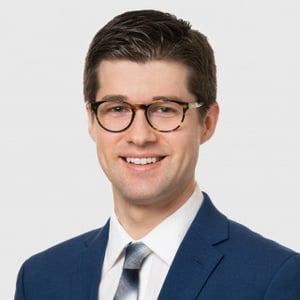
Director, Americas Program, Center for Strategic and International Studies
Ryan C. Berg is director of the Americas Program and head of the Future of Venezuela Initiative at the Center for Strategic and International Studies. He is also an adjunct professor at the Catholic University of America and a course coordinator at the United States Foreign Service Institute. His research focuses on U.S.-Latin America relations, strategic competition and defense policy, authoritarian regimes, armed conflict and transnational organized crime, and trade and development issues. Previously, Dr. Berg was a research fellow at the American Enterprise Institute, where he helped lead its Latin America Studies Program, as well as visiting research fellow at the University of Oxford’s Changing Character of War Programme. Dr. Berg was a Fulbright scholar in Brazil and is a Council on Foreign Relations Term Member. He has been published in a variety of peer-reviewed academic and policy-oriented journals, including The Lancet, Migration and Development, the SAIS Review of International Affairs, and the Georgetown Security Studies Review. His articles have appeared in Foreign Affairs, Foreign Policy, CNN.com, Los Angeles Times, and World Politics Review, among other outlets. He routinely testifies before the Senate Foreign Relations Committee and the House Foreign Affairs Committee. Dr. Berg obtained a PhD and an MPhil in political science and an MSc in global governance and diplomacy from the University of Oxford, where he was a Senior Hulme Fellow. Earlier, he obtained a BA in government and theology from Georgetown University. He is fluent in Spanish and Portuguese and is conversational in Slovenian.
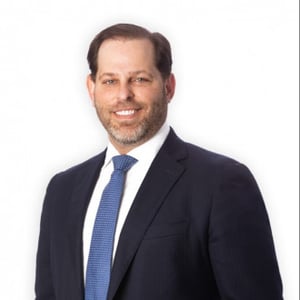
Partner, SFS Law
Michael Nadler counsels and defends corporations and individuals on a broad range of regulatory, criminal, and civil matters, including claims involving the Foreign Corrupt Practices Act (FCPA), money laundering, healthcare fraud, securities law violations, and white-collar criminal defense.
Prior to joining Stumphauzer, Foslid, Sloman, Ross & Kolaya, Michael was a federal prosecutor for almost ten years in the Southern District of Florida. Michael has extensive courtroom and trial experience. During his time at the United States Attorney’s Office, he successfully tried over twenty-five federal jury trials and argued before the United States Court of Appeals for the Eleventh Circuit.
While at the United States Attorney’s Office, Michael specialized in prosecutions and investigations involving sophisticated international and domestic money laundering and FCPA cases. Michael was selected to be part of a newly-created group targeting money laundering and foreign corruption. His cases covered the world. ranging from cases involving corrupt officials in Venezuela, the Middle East, Africa, and Europe. and extending to large scale financial investigations involving European banks and foreign nationals. He was lead prosecutor in some of the highest profile, largest money laundering and FCPA prosecutions in the history of South Florida. In one case alone, Michael’s prosecution of the former treasurer of Venezuela resulted in a one billion-dollar forfeiture, one of the largest forfeiture amounts ever ordered.
As an Assistant U.S. Attorney, Michael also led hundreds of complex investigations and prosecutions against individuals and corporations for violations of federal health care statutes, large scale narcotics trafficking, firearms offenses, murder for hire, tax fraud, aggravated identity theft, securities fraud and elder fraud.
Throughout his time at the U.S. Attorney’s office Michael travelled extensively throughout South America and Europe. He built partnerships and relationships with numerous law enforcement agencies both domestic and international, officials and foreign lawyers. Michael participated in several summits whose participants included officials from Lichtenstein, Italy, Bulgaria, Spain, Portugal, Argentina, Luxemburg, Switzerland, Colombia, Panama, Mexico, Honduras, Equator and Guatemala on bilateral efforts to combat organized transnational crime involving money laundering, foreign corruption and narco- trafficking. Michael has also lectured federal law enforcement agencies on complex money laundering investigations and weapons of mass destruction.
Prior to his service with the federal government, Michael served as an Assistant Miami-Dade County Attorney at the Miami-Dade County Attorney’s Office. As an Assistant County Attorney, Michael was the trial attorney on a wide variety of civil cases and trials in federal and state court, including tort cases, medical malpractice, section 1983 civil rights cases and employment cases where he represented numerous County departments, including the Miami Dade Fire Department, Building Department, and the Port of Miami. Michael drafted appellate briefs and conducted several successful oral arguments before the United States Court of Appeals for the Eleventh Circuit and the Florida Third District Court of Appeal.
Earlier in his career, Michael worked in the financial and securities litigation group in Sidley Austin LLP’s Chicago office. As an associate there, he built a reputation for successfully representing clients on white collar investigations involving securities violations and accountant liability.
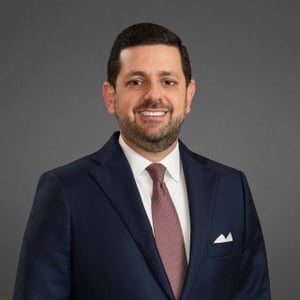
Of Counsel, DLA Piper LLP (US)
Harout J. Samra – a Board Certified Specialist in International Law – focuses his practice on international dispute resolution and arbitration matters, including international civil litigation in US courts.
Harout has represented clients from both the public and private sectors, including foreign governments, public officials and clients from a variety of industries. He has experience in international arbitrations administered under the International Chamber of Commerce (ICC), International Centre for Dispute Resolution (ICDR), United Nations Commission on International Trade Law (UNCITRAL), China International Economic and Trade Arbitration Commission (CIETAC), Bogota Chamber of Commerce, Madrid Court of Arbitration and International Centre for Settlement of Investment Disputes (ICSID) arbitration rules.
Harout currently serves as a member of the Florida Supreme Court Judicial Nominating Commission, by appointment of Governor Ron DeSantis. He previously served, by appointment of Governor Rick Scott, as a member of the Florida Third District Court of Appeal Judicial Nominating Commission, and was elected as Chair of the Commission from 2018-2019.
Former Lieutenant Governor, Louisiana
Paul Jude Hardy (born October 18, 1942) is a Baton Rouge attorney who was the first Republican to have been elected lieutenant governor of Louisiana since Reconstruction. He served in the second-ranking post from 1988-1992.
Hardy's parents were Florent Hardy, Sr., (1913-2003) and the former Agnes Angelle. He graduated from Cecilia High School in St. Martin Parish in 1960 and from the University of Louisiana at Lafayette (then the University of Southwestern Louisiana), in 1965. While Hardy was on the USL track team, he won the Gulf States Conference high jump competition two years in a row.
In 1966, Hardy received his law degree from Loyola University in New Orleans, and at the age of 23 he began practicing law in St. Martinville with the firm Willis and Hardy.
In 1972 he was elected in an upset as a Democratic state senator for Iberia and St. Martin parishes. The defunct Baton Rouge State Times named him the “Outstanding Newcomer” of the year after his first legislative session.
In 1975, he was elected, again as a Democrat, as secretary of state in another upset. An opening appeared when Secretary of State Wade O. Martin, Jr., who was then a Democrat but later switched to the Republican Party, stepped down to launch an unsuccessful gubernatorial attempt. Hardy came from behind to beat his fellow Democratic opponent, State Representative P.J. Mills of Shreveport. In the primary, Mills had led with 49 percent of the vote. Hardy prevailed in the runoff -- officially the general election in Louisiana. He polled 388,780 votes (51.5 percent) to Mills' 366,510 (48.5 percent).
Because he is fluent in French, Hardy was invited to represent the United States in an international government seminar in Quebec, Canada, in 1976.
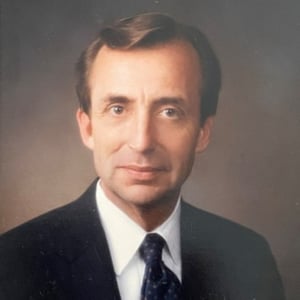
Partner, Montgomery Barnett
Harvey Charles Koch, Jr, a native of Hammond La. and a resident of New Orleans for 80 years, was born on August 15, 1934, and died peacefully on July 13, 2020, from cancer at age 85.
Mr. Koch's practice included complex commercial litigation, litigation management, insurance coverage and extra-contractual defense litigation, the construction process, construction litigation and arbitration, contract interpretation, sports and entertainment law, fidelity, surety and financial institution bonds, lawyer's malpractice, errors and omissions, life and long term care and fine arts coverages.
Mr. Koch participated in negotiations in Egypt after the Yom Kippur War leading to removal of ships sunk in the Suez Canal; represented a consortium of companies involved in reconstructing Kuwait and its oil fields after Operation Desert Storm; represented a major international insurance company in developing indemnity agreements, construction bonds, and guarantees for use with contractors in twelve foreign countries; represented the lead insurer in the adjustment of the business interruption claims of the Titan IV rockets manufacturer when the solid rocket fuel manufacturing plant supplying that missile program was destroyed in an explosion. And Mr. Koch has defended parties in complex litigation involving nuclear power and fossil fuel plants; the shipping industry; the former Louisiana Sunday Closing laws; and the resurfacing of both runways of the New Orleans International Airport (MSY) in the 1980's. Mr. Koch currently represents the international construction management firm managing all construction at the New Orleans Louis Armstrong International Airport (MSY).
As an appellate practitioner, Mr. Koch briefed the United States Supreme Court on the Insurance Industry's position on coverage issues regarding the Security Dealer's Blanket Bond, and the New Zealand Supreme Court on the interpretation by United States Courts on coverage issues related to the Financial Institution Bond.
Mr. Koch was listed in Best Lawyers in America (Construction), was a Fellow of the American College of Construction Lawyers (Founder and Former Chair of its Insurance Industry Committee and a former member of its Board of Governors), and was a consultative member of the American Law Institute. Mr. Koch chaired the American Bar Association's Fidelity and Surety Law Committee, Co-Chaired the ABA's first three National Institutes of the Forum on the Construction Industry, chaired six ABA National Law Institutes, founded and served as first Chair of the Louisiana Bar Association's Section on Construction, Fidelity and Surety Law, served as a Vice Chair of the Fidelity and Surety Law Committee of the International Association of Defense Counsel, served on both the Surety Claims Institute Board of Governors and the Advisory Council of the Chief Judge of the Court of Federal Claims in Washington, D.C., was a Trustee of the Federalist Society, was a member of the National Bond Claims Association, was one of the four Advisors Emeritus of the Fidelity Law Association and was a Life Fellow of both the American and Louisiana Bar Foundations.

David McIntosh is a leader for the principles of limited constitutional government and individual freedom. He is president of the Club for Growth, the leading advocate for economic liberty.
Former Congressman David McIntosh represented Indiana's 2nd Congressional District in the United States Congress from 1995-2001. As a Freshman, David chaired the Subcommittee on Regulatory Relief. He passed the Congressional Review Act and held extensive oversight and field hearings to build a record of public support for regulatory relief initiatives in energy, biotechnology, pharmaceutical, healthcare, transportation and technology sectors. Another issue that he championed was the elimination of the marriage penalty in the Federal Tax Code.
David served during the Reagan administration as special assistant to Attorney General Edwin Meese III, and as special assistant to President Reagan for Domestic Affairs. During the first Bush administration, he served as executive director of the President's Council on Competitiveness and assistant to the Vice President. The Competitiveness Council coordinated the cost/benefit review of major regulations and promoted legal reform measures.
David is a co-founder of the Federalist Society for Law and Public Policy and serves on the Board of Directors. He remains active with several free market and conservative think tanks and grassroots organizations. David has also had stints at the Hudson Institute and as a Professor of Economics at Ball State School of Business.
Prior to the Club for Growth, David was a partner at Mayer Brown, LLP in Washington, DC.
David graduated from the University of Chicago Law School in 1983, and Yale University, BA, cum laude, in 1980. He and his wife, Ruthie, are the proud parents of Ellie age 17 and Davey age 13.
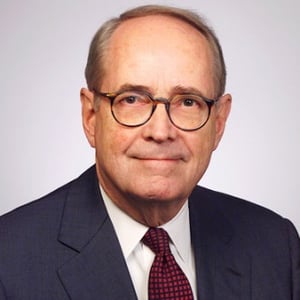
Former United States Attorney General
Richard Lewis Thornburgh was born on July 16, 1932 in Pittsburgh, Pennsylvania. He graduated with a bachelor’s degree in engineering from Yale University in 1954 and earned his LL.B degree from the University of Pittsburgh in 1957. Mr. Thornburgh also holds honorary degrees from 31 colleges and universities.
Following law school, Mr. Thornburgh worked in private industry until 1959 when he joined the Pittsburgh law firm then known as Kirkpatrick & Lockhart. In 1967, he was elected as a delegate to the Pennsylvania Constitutional Convention. From 1969 to 1975, Mr. Thornburgh was the U.S. Attorney for the Western District of Pennsylvania and was appointed Assistant Attorney General for the Criminal Division in 1975, serving two years in Washington, D.C. in that role before returning to private practice as a partner at Kirkpatrick & Lockhart. Pennsylvania elected Mr. Thornburgh governor in 1979 and he served two terms. Mr. Thornburgh also taught courses at the Harvard University Kennedy School of Government and directed that school’s Institute of Politics from 1987 to 1988.
Appointed by President Reagan, Richard Thornburgh was sworn in as Attorney General on August 12, 1988. President George H.W. Bush reinstated him as Attorney General in 1989 and he served until 1991. In 1992, the American Legion honored Mr. Thornburgh with its highest award, the “Distinguished Services Medal.” He published his autobiography in 2003 entitled, Where the Evidence Leads: The Autobiography of Dick Thornburgh.
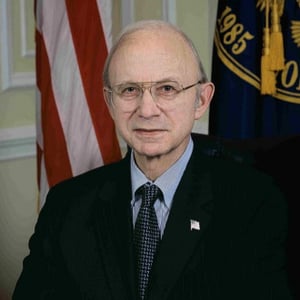
Former Archivist of the United States
Allen Weinstein (September 1, 1937 – June 18, 2015) was an American historian, educator, and federal official who served in several different offices. He was, under the Reagan administration, cofounder of the National Endowment for Democracy in 1983. He served as the Archivist of the United States from February 16, 2005, until his resignation on December 19, 2008. After his resignation, he returned to the International Foundation for Electoral Systems as a senior strategist and was a visiting faculty member at the University of Maryland.
Former Lieutenant Governor, Louisiana
Paul Jude Hardy (born October 18, 1942) is a Baton Rouge attorney who was the first Republican to have been elected lieutenant governor of Louisiana since Reconstruction. He served in the second-ranking post from 1988-1992.
Hardy's parents were Florent Hardy, Sr., (1913-2003) and the former Agnes Angelle. He graduated from Cecilia High School in St. Martin Parish in 1960 and from the University of Louisiana at Lafayette (then the University of Southwestern Louisiana), in 1965. While Hardy was on the USL track team, he won the Gulf States Conference high jump competition two years in a row.
In 1966, Hardy received his law degree from Loyola University in New Orleans, and at the age of 23 he began practicing law in St. Martinville with the firm Willis and Hardy.
In 1972 he was elected in an upset as a Democratic state senator for Iberia and St. Martin parishes. The defunct Baton Rouge State Times named him the “Outstanding Newcomer” of the year after his first legislative session.
In 1975, he was elected, again as a Democrat, as secretary of state in another upset. An opening appeared when Secretary of State Wade O. Martin, Jr., who was then a Democrat but later switched to the Republican Party, stepped down to launch an unsuccessful gubernatorial attempt. Hardy came from behind to beat his fellow Democratic opponent, State Representative P.J. Mills of Shreveport. In the primary, Mills had led with 49 percent of the vote. Hardy prevailed in the runoff -- officially the general election in Louisiana. He polled 388,780 votes (51.5 percent) to Mills' 366,510 (48.5 percent).
Because he is fluent in French, Hardy was invited to represent the United States in an international government seminar in Quebec, Canada, in 1976.
Partner, Montgomery Barnett
Harvey Charles Koch, Jr, a native of Hammond La. and a resident of New Orleans for 80 years, was born on August 15, 1934, and died peacefully on July 13, 2020, from cancer at age 85.
Mr. Koch's practice included complex commercial litigation, litigation management, insurance coverage and extra-contractual defense litigation, the construction process, construction litigation and arbitration, contract interpretation, sports and entertainment law, fidelity, surety and financial institution bonds, lawyer's malpractice, errors and omissions, life and long term care and fine arts coverages.
Mr. Koch participated in negotiations in Egypt after the Yom Kippur War leading to removal of ships sunk in the Suez Canal; represented a consortium of companies involved in reconstructing Kuwait and its oil fields after Operation Desert Storm; represented a major international insurance company in developing indemnity agreements, construction bonds, and guarantees for use with contractors in twelve foreign countries; represented the lead insurer in the adjustment of the business interruption claims of the Titan IV rockets manufacturer when the solid rocket fuel manufacturing plant supplying that missile program was destroyed in an explosion. And Mr. Koch has defended parties in complex litigation involving nuclear power and fossil fuel plants; the shipping industry; the former Louisiana Sunday Closing laws; and the resurfacing of both runways of the New Orleans International Airport (MSY) in the 1980's. Mr. Koch currently represents the international construction management firm managing all construction at the New Orleans Louis Armstrong International Airport (MSY).
As an appellate practitioner, Mr. Koch briefed the United States Supreme Court on the Insurance Industry's position on coverage issues regarding the Security Dealer's Blanket Bond, and the New Zealand Supreme Court on the interpretation by United States Courts on coverage issues related to the Financial Institution Bond.
Mr. Koch was listed in Best Lawyers in America (Construction), was a Fellow of the American College of Construction Lawyers (Founder and Former Chair of its Insurance Industry Committee and a former member of its Board of Governors), and was a consultative member of the American Law Institute. Mr. Koch chaired the American Bar Association's Fidelity and Surety Law Committee, Co-Chaired the ABA's first three National Institutes of the Forum on the Construction Industry, chaired six ABA National Law Institutes, founded and served as first Chair of the Louisiana Bar Association's Section on Construction, Fidelity and Surety Law, served as a Vice Chair of the Fidelity and Surety Law Committee of the International Association of Defense Counsel, served on both the Surety Claims Institute Board of Governors and the Advisory Council of the Chief Judge of the Court of Federal Claims in Washington, D.C., was a Trustee of the Federalist Society, was a member of the National Bond Claims Association, was one of the four Advisors Emeritus of the Fidelity Law Association and was a Life Fellow of both the American and Louisiana Bar Foundations.
David McIntosh is a leader for the principles of limited constitutional government and individual freedom. He is president of the Club for Growth, the leading advocate for economic liberty.
Former Congressman David McIntosh represented Indiana's 2nd Congressional District in the United States Congress from 1995-2001. As a Freshman, David chaired the Subcommittee on Regulatory Relief. He passed the Congressional Review Act and held extensive oversight and field hearings to build a record of public support for regulatory relief initiatives in energy, biotechnology, pharmaceutical, healthcare, transportation and technology sectors. Another issue that he championed was the elimination of the marriage penalty in the Federal Tax Code.
David served during the Reagan administration as special assistant to Attorney General Edwin Meese III, and as special assistant to President Reagan for Domestic Affairs. During the first Bush administration, he served as executive director of the President's Council on Competitiveness and assistant to the Vice President. The Competitiveness Council coordinated the cost/benefit review of major regulations and promoted legal reform measures.
David is a co-founder of the Federalist Society for Law and Public Policy and serves on the Board of Directors. He remains active with several free market and conservative think tanks and grassroots organizations. David has also had stints at the Hudson Institute and as a Professor of Economics at Ball State School of Business.
Prior to the Club for Growth, David was a partner at Mayer Brown, LLP in Washington, DC.
David graduated from the University of Chicago Law School in 1983, and Yale University, BA, cum laude, in 1980. He and his wife, Ruthie, are the proud parents of Ellie age 17 and Davey age 13.
Former United States Attorney General
Richard Lewis Thornburgh was born on July 16, 1932 in Pittsburgh, Pennsylvania. He graduated with a bachelor’s degree in engineering from Yale University in 1954 and earned his LL.B degree from the University of Pittsburgh in 1957. Mr. Thornburgh also holds honorary degrees from 31 colleges and universities.
Following law school, Mr. Thornburgh worked in private industry until 1959 when he joined the Pittsburgh law firm then known as Kirkpatrick & Lockhart. In 1967, he was elected as a delegate to the Pennsylvania Constitutional Convention. From 1969 to 1975, Mr. Thornburgh was the U.S. Attorney for the Western District of Pennsylvania and was appointed Assistant Attorney General for the Criminal Division in 1975, serving two years in Washington, D.C. in that role before returning to private practice as a partner at Kirkpatrick & Lockhart. Pennsylvania elected Mr. Thornburgh governor in 1979 and he served two terms. Mr. Thornburgh also taught courses at the Harvard University Kennedy School of Government and directed that school’s Institute of Politics from 1987 to 1988.
Appointed by President Reagan, Richard Thornburgh was sworn in as Attorney General on August 12, 1988. President George H.W. Bush reinstated him as Attorney General in 1989 and he served until 1991. In 1992, the American Legion honored Mr. Thornburgh with its highest award, the “Distinguished Services Medal.” He published his autobiography in 2003 entitled, Where the Evidence Leads: The Autobiography of Dick Thornburgh.
Former Archivist of the United States
Allen Weinstein (September 1, 1937 – June 18, 2015) was an American historian, educator, and federal official who served in several different offices. He was, under the Reagan administration, cofounder of the National Endowment for Democracy in 1983. He served as the Archivist of the United States from February 16, 2005, until his resignation on December 19, 2008. After his resignation, he returned to the International Foundation for Electoral Systems as a senior strategist and was a visiting faculty member at the University of Maryland.
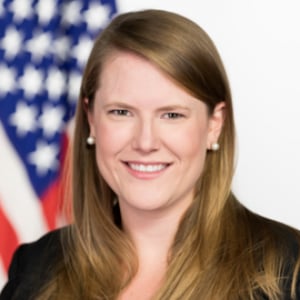
Deputy Policy Director, U.S. Senate Committee on Commerce, Science & Transportation
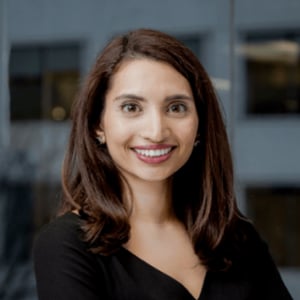
Director, Government Affairs, Semiconductor Industry Association
Maryam Cope is director of government affairs at SIA. In this role, Maryam works closely with industry, Congress, and the Administration to advance key legislative and regulatory priorities related to semiconductor research and technology, high-skilled immigration, and product security.
Maryam brings over a decade of technology policy and advocacy experience to SIA. Prior to SIA, she was managing partner for the technology practice at GoldsteinCope Policy Solutions. She also established the technology policy practice at the American Hotel & Lodging Association. Maryam also worked at the Information Technology Industry Council, where she led advocacy efforts in the areas of cybersecurity, encryption, and supply chain security.
Maryam began her career with Sen. Kay Bailey Hutchison. As professional staff for the United States Senate Committee on Commerce, Science, and Transportation, she focused on innovation, cybersecurity, emerging technologies, and R&D, including the reauthorization of the America COMPETES Act of 2010.
Maryam holds a Bachelor’s degree in Biology from Northwestern University, and a graduate certificate from Stanford’s Graduate School of Business Executive Program for Women Leaders.
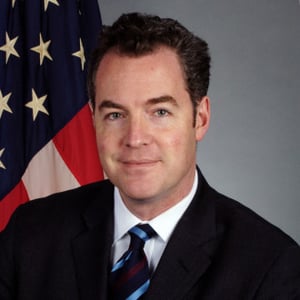
President and Founder, JKC Consulting LLC
John Kneuer is the President and Founder of JKC Consulting LLC. He sits on multiple public and private company boards.
Prior to starting Kneuer LLC, Mr. Kneuer served as the Assistant Secretary of Commerce for Communications and Information. In this capacity Mr. Kneuer was the principal advisor to the President of the United States on telecommunications policy and the Administrator of the National Telecommunications and Information Administration ("NTIA").In addition to representing the Executive Branch in domestic and international telecommunications and information policy activities, NTIA also manages the federal use of spectrum; performs cutting edge telecommunications research and engineering, including resolving technical telecommunications issues for the federal government and private sector; and administers infrastructure and public telecommunications facilities grants.
Prior to his service at NTIA, Mr. Kneuer served as a Senior Associate at the law firm of Piper Rudnick in Washington, D.C., providing regulatory and legislative representation to corporate clients in the telecommunications, defense, and transportation industries. Earlier in his career, Mr. Kneuer served as the Executive Director for Government Relations at the Industrial Telecommunications Association, and prior to that served as an Attorney-Advisor in the Commercial Wireless Division of the Federal Communications Commission's Wireless Bureau. Mr. Kneuer received B.A. and J.D. degrees from the Catholic University of America.
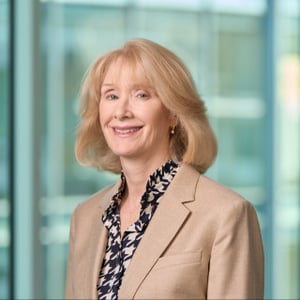
Partner, HWG LLP
Patricia Paoletta is a partner with the law firm of HWG LLP, where she specializes in telecommunications, trade and technology policy. Ms. Paoletta provides advice on regulatory, trade and legislative policy to clients before the FCC, Congress and the Administration. Her clients include providers of content, cloud, mobile broadband, VoIP, international telecommunications, small cells, cognitive radio, public safety and homeland security solutions. She serves on Advisory Boards for several entities engaged in information services, communications and technology.
Ms. Paoletta has accrued considerable experience with telecommunications trade and policy in the public sector. From 1990 to 1995, she was senior advisor to the International Bureau Chief and Office Director at the Federal Communications Commission. In the mid 1990s, Ms. Paoletta served as Director of Telecommunications Trade Policy in the Office of the U.S. Trade Representative, Executive Office of the President, where she worked on the WTO Information Technology Agreement (ITA) and the Basic Telecommunications Agreement. After USTR, Ms. Paoletta served as Majority Counsel to the House Energy and Commerce Committee. She then moved to Level 3 Communications, as Vice President, Government Relations.
Ms. Paoletta is on the Steering Committee of the Transatlantic Roundtable on Telecommunications and Information Technology of the European Institute. She is a member of the USTR Alumni Association, Washington International Trade Association, the Federal Communications Bar Association (FCBA), and Women in Technology. Ms. Paoletta has served on the Board of Advisors for the Inter-American Dialogue's Latin America Telecom Advisor, Co-Chairman of the American Bar Association International Communications Committee, and as a member of the U.S. Chamber of Commerce's Technology Policy Committee.
Ms. Paoletta served as a delegate in 2012 to the ITU-R's Study Group 6 Working Party 6A Meeting and in 2009 and 2010 to the ITU-R's Study Group I Working Party IB Meetings; the 2009 meetings of CITEL (the Committee on International Telecommunications at the Organization of American States) PCC-II; the International Telecommunication Union (ITU) World Telecommunications Standards Assembly (2000); the ITU Internet Protocol Telephony Experts Group and the ITU World Telecommunications Policy Forum in 2001; as Chairman of the National Reliability and Interoperability Council (NRIC) Steering Committee (2000-2001); as Board Member for the Voice on the Net Coalition (2001); as Co-Chairman of the FCBA's Annual Seminar Committee (2009-2011); as a member of the FCBA's Ad Hoc Speakers Committee (2006-2007); as Co-Chairman for the FCBA International Practice Committee (2001-2002 and 2005-2006); and as a Co-Chairman of the FCBA Legislative Practice Committee (1999-2000).
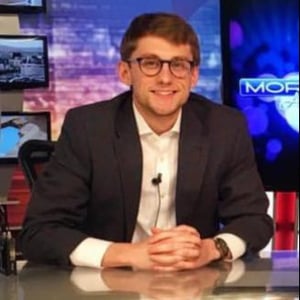
Policy Advisor, Federal Communications Commission
Gregory Watson serves as policy advisor to Federal Communications Commissioner Brendan Carr. Prior to joining Commissioner Carr’s office, Greg served as a Policy Advisor to the Chief Technology Officer of the United States in the White House Office of Science and Technology Policy where he led efforts to increase broadband access through the American Broadband Initiative. He was also involved with the Administration’s efforts to advance America’s leadership in 5G. Prior to his tenure at the White House, Greg was an advisor to Congressman Steve Scalise and the House Energy and Commerce Committee where he handled a broad range of communications and technology issues. Before moving to Washington, DC, he was a campaign aide to Congressman Fred Upton. Greg is a graduate of East Carolina University, where he studied History and Political Science.
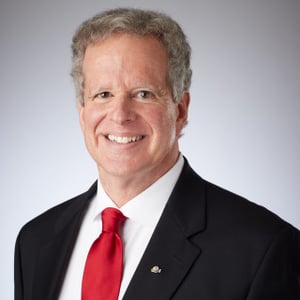
Director, Global Engagement; Vincent de Paul Professor of Law, DePaul University College of Law
Before joining DePaul, Dr. Alberto R. Coll served for five years as dean of the Center for Naval Warfare Studies, the U.S. Navy’s foremost strategic research center. A cum laude graduate from Princeton University in history, he earned his JD and PhD in government and foreign affairs from the University of Virginia. In 1982, Professor Coll joined the faculty at Georgetown University, and in 1986 was appointed secretary of the Navy Senior Research Fellow at the Naval War College. In 1989, he became the youngest holder of the Charles H. Stockton Chair of International Law, the college’s oldest chair. From 1990 to 1993, Professor Coll was principal deputy assistant secretary of defense, serving in the Pentagon office that oversaw the Defense Department’s policy, strategy and $3 billion budget for special operations forces and “low-intensity” conflict, including counterterrorism. For his work, he received the Secretary of Defense Medal for Outstanding Public Service. Professor Coll is the author of The Wisdom of Statecraft and editor of several other books on international relations and law. He is the author of prize-winning articles in the American Journal of International Law and the Naval War College Review, as well as articles in Foreign Policy, Washington Quarterly, Harvard Journal of International Law, the University of Pennsylvania Journal of International Law, and the UCLA Journal of International Law and Foreign Affairs. In 2004, Professor Coll received the Antonio Jose Irisarri Medal for his contribution to strengthening the rule of law and civilian control over the military in Guatemala. He has served as consultant to the Pew Charitable Trusts, the Ford Foundation, the Carnegie Council on Ethics and International Affairs, the Rand Corp., the United States Information Agency, and numerous defense and intelligence organizations. He is a frequent commentator on American foreign policy, U.S. relations with Cuba and Latin America, and international legal and political issues. Over the past 28 years he has lectured at more than 120 universities, think tanks, government agencies, and public forums in the United States, Latin America, Europe, Asia and South Africa. Professor Coll is a member of the Virginia Bar, the Council on Foreign Relations, and the Instituto de Estudios Juridicos y Politicos at the Universidad Complutense de Madrid. At DePaul, he teaches courses on international law, international human rights, U.S. foreign relations, terrorism, international trade and Latin America.
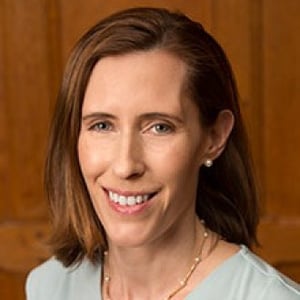
Gerard C. and Bernice Latrobe Smith Professor of International Law and Counselor to the Dean, Yale Law School
Oona A. Hathaway is the Gerard C. and Bernice Latrobe Smith Professor of International Law at Yale Law School, Professor of International Law and Area Studies at the Yale University MacMillan Center, Professor of the Yale University Department of Political Science, and Director of the Yale Law School Center for Global Legal Challenges. She is also Counselor to the Dean at Yale Law School. She has been a member of the Advisory Committee on International Law for the Legal Adviser at the United States Department of State since 2005. In 2014–15, she took leave to serve as Special Counsel to the General Counsel at the U.S. Department of Defense, where she was awarded the Office of the Secretary of Defense Award for Excellence. She is the Director of the annual Yale Cyber Leadership Forum. She has published more than 30 law review articles, and The Internationalists: How a Radical Plan to Outlaw War Remade the World (with Scott Shapiro, 2017).
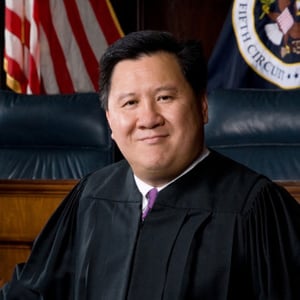
Judge, United States Court of Appeals, Fifth Circuit
James C. Ho is a Circuit Judge on the U.S. Court of Appeals for the Fifth Circuit. Before taking the bench on January 4, 2018, he was a partner and co-chair of the national Appellate and Constitutional Law practice group of Gibson, Dunn & Crutcher LLP.
As an appellate litigator for over a decade, including three years as the Solicitor General of Texas, Judge Ho presented 50 oral arguments in federal and state courts nationwide. He won numerous appeals, including three merits cases at the U.S. Supreme Court. He was routinely ranked among the nation’s leading lawyers by Benchmark, Chambers, Law360, The Legal 500, and The National Law Journal, among other publications. His work has been cited favorably by courts at every level of both the federal and state judiciaries. He won a Best Brief Award from the National Association of Attorneys General for every year that he served as solicitor general, and he is the only state solicitor general in history to be invited by the U.S. Supreme Court to express the views of a state.
Judge Ho has served in all three branches of the federal government. On the Senate Judiciary Committee, he served as chief counsel of the Subcommittees on the Constitution and Immigration under Senator John Cornyn. At the Justice Department, he served as Special Assistant to the Assistant Attorney General for Civil Rights and an attorney-advisor at the Office of Legal Counsel. He clerked for Judge Jerry E. Smith of the U.S. Court of Appeals for the Fifth Circuit and Justice Clarence Thomas of the U.S. Supreme Court.
His record of public service also includes appointments as vice chair of the Federal Judicial Evaluation Committee in Texas and co-chair of the National Asian Pacific American Bar Association Judiciary Committee, and as a member of the U.S. Magistrate Judge Merit Selection Panel for the Northern District of Texas, the U.S. delegation to the United Nations Committee on the Elimination of Racial Discrimination, and the Continuity of Government Commission.
In addition, Judge Ho has served as an Adjunct Professor of Law at the University of Texas School of Law, where he taught seminars on U.S. Supreme Court Litigation and Religious Liberty. He has authored numerous articles in respected law reviews nationwide, including an annual feature on exemplary judicial writing for The Green Bag Almanac & Reader. He previously served as senior editor of The Green Bag and as co-editor of Pub. L. Misc.
Judge Ho graduated from Stanford University with honors and a B.A. in Public Policy in 1995, and the University of Chicago Law School with high honors in 1999. Before law school, he was a legislative aide to California State Senator Quentin Kopp. He and his wife Allyson live in Dallas, Texas, with their twin daughter and son.
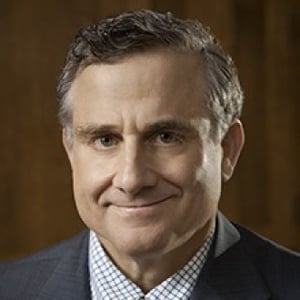
Sam Harris Professor of Corporate Law, Corporate Finance, and Securities Law, Yale Law School
Jonathan R. Macey is Sam Harris Professor of Corporate Law, Corporate Finance, and Securities Law at Yale University, and Professor in the Yale School of Management. From 1991 – 2004, Professor Macey was J. DuPratt White Professor of Law, Director of the John M. Olin Program in Law and Economics at Cornell Law School, and Professor of Law and Business at the Cornell University Johnson Graduate School of Business. Professor Macey earned his B.A. cum laude from Harvard in 1977, and his J.D. from Yale Law School in 1982, where he was Article and Book Review editor of The Yale Law Journal. In 1996, Professor Macey received a Ph.D. honoris causa from the Stockholm School of Economics. Following law school, Professor Macey was law clerk to Judge Henry J. Friendly on the U.S. Court of Appeals for the Second Circuit.
Professor Macey is the author of several books including the two-volume treatise, Macey on Corporation Laws, published in 1998 (Aspen Law & Business), and co-author of two leading casebooks, Corporations: Including Partnerships and Limited Liability Companies (2003 Thomson West), which is in its eighth edition, and Banking Law and Regulation (2002 Aspen Law & Business), which is now in its third edition. He also is the author of over 100 scholarly articles. His recent articles have appeared in the Banking Law Journal, the University of Chicago Law Review, the Stanford Law Review, The Yale Law Journal, the Cornell Law Review, the Journal of Law and Economics, and the Brookings Wharton Papers on Financial Institutions. He has published numerous editorials in such publications as The Wall Street Journal, Forbes, The Los Angeles Times, and The National Law Journal.
Professor Macey has taught at major universities throughout the world, including Bocconi University (Milan), the University of Tokyo; the University of Toronto; the University of Turin, the University of Amsterdam Department of Finance, and the Stockholm School of Economics, Department of Law. He also has been Professor of Law at the University of Chicago (1990) and Visiting Professor of Law at Harvard Law School (1999). Professor Macey is a Senior Research Fellow at the International Centre for Economic Research (ICER) in Turin, Italy. Professor Macey also serves on the Academic Advisory Board (Comitato Scientifico) of the Associazione Disiano Preite for the study of corporate law (per lo studio del diritto dell’impresa). In 1995, Professor Macey was awarded the Paul M. Bator prize for excellence in Teaching, Scholarship and Public Service by the Federalist Society for Law and Public Policy. In 1996, he received a Ph.D., honoris causa from the Stockholm School of Economics. And in 1998, he received the D.P. Jacobs prize for the most significant paper in volume 6 of the Journal of Financial Intermediation for his paper (co-authored with Maureen O’Hara), “The Law & Economics of Best Execution.”
In 1999 Professor Macey was made an honorary Fellow of the Society For Advanced Legal Studies. In 2000, Professor Macey became a member of the Legal Advisory Committee to the Board of Directors of the New York Stock Exchange. In 2001 Professor Macey was appointed a Bertil Daniellson Distinguished Visiting Professor in Banking and Finance at the Stockholm School of Economics. In 2002 Professor Macey was appointed to the Economic Advisory Board of the National Association of Securities Dealers (NASD). In 2004 Professor Macey was awarded a Teaching Award by the Yale Law Women in recognition of his “commitment to excellence in teaching, mentoring and inspiring.” In 2005 Professor Macey became a member of the Board of Editors of Thomson West Publishing Company.
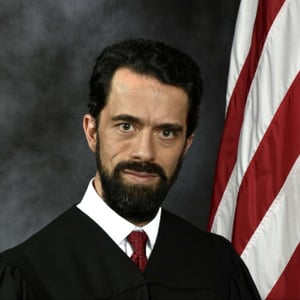
Judge, United States Court of Appeals, Third Circuit
Stephanos Bibas is a judge on the U.S. Court of Appeals for the Third Circuit. Judge Bibas was previously a professor of law and criminology at the University of Pennsylvania Law School. As director of the Penn Law Supreme Court Clinic, he argued six cases before the Supreme Court of the United States and filed briefs in dozens of others. He graduated summa cum laude and Phi Beta Kappa from Columbia University in 1989 with a B.A. in political theory and from Oxford University in 1991 with a B.A. in jurisprudence. He then earned his J.D. from Yale Law School in 1994.
After graduating from Yale Law, Judge Bibas clerked for Judge Patrick Higginbotham of the U.S. Court of Appeals for the Fifth Circuit and Justice Anthony Kennedy on the Supreme Court and was a litigation associate at Covington & Burling LLP in Washington, D.C. Thereafter, Judge Bibas served as an Assistant U.S. Attorney in the Southern District of New York, where he successfully prosecuted the world’s leading expert in Tiffany stained glass for hiring a grave robber to steal priceless Tiffany windows from cemeteries. Before his tenure at Penn Law, Judge Bibas taught at the University of Chicago Law School and the University of Iowa College of Law and was a research fellow at Yale Law School. He has published two books and seventy scholarly articles.
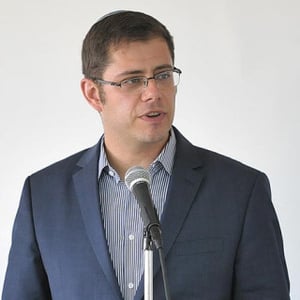
Professor of Law and Director, Center for the Middle East and International Law, George Mason University Antonin Scalia Law School
Professor of Law Eugene Kontorovich is one of the world’s preeminent experts on universal jurisdiction and maritime piracy, as well as international law and the Israel-Arab conflict. He is also the Director of Scalia Law School's Center for the Middle East and International Law. Professor Kontorovich joined the Scalia Law School from Northwestern University Pritzker School of Law where he was a Professor of Law from 2011 to 2018 and an Associate Professor from 2007 to 2011. Previously, he was a Visiting Professor at the University of Chicago from 2005 to 2007 and an Assistant Professor at George Mason School of Law from 2003 to 2007.
Professor Kontorovich has published over thirty major scholarly articles and book chapters in leading law reviews and peer-reviewed journals in the United States and Europe, including the American Journal of International Law, International Review of Law & Economics, Stanford Law Review, California Law Review, University of Pennsylvania Law Review, and Virginia Law Review. His scholarship has been cited in leading foreign relations and international law
His expertise is often sought out and quoted by major news organizations such the New York Times, Wall Street Journal, NPR News, The New Yorker, Los Angeles Times, and numerous television and radio programs. Prof. Kontorovich’s popular writings have appeared in the New York Times, Wall Street Journal, Los Angeles Times, POLITICO, Commentary, Haaretz, and numerous other leading publications. He is also a regular contributor to the Washington Post’s Volokh Conspiracy legal blog.
He attended the University of Chicago for college and law school. After law school, he clerked for Judge Richard Posner on the United States Court of Appeals for the Seventh Circuit. He has been honored with a fellowship at the Institute for Advanced Study in Princeton, in 2011-12, and with the Federalist Society’s prestigious Bator Award, given annually to a young scholar (under 40), for outstanding scholarship and teaching.

George C. Dix Professor in Constitutional Law, Northwestern University Pritzker School of Law
John O. McGinnis is a graduate of Harvard College and Harvard Law School where he was an editor of the Harvard Law Review. He also has an MA degree from Balliol College, Oxford, in philosophy and theology. Professor McGinnis clerked on the U.S. Court of Appeals for the District of Columbia. From 1987 to 1991, he was deputy assistant attorney general in the Office of Legal Counsel at the Department of Justice. He is the author of Accelerating Democracy: Transforming Government Through Technology (Princeton 2013) and Originalism and the Good Constitution (Harvard 2013) (with M. Rappaport). He is a past winner of the Paul Bator award given by the Federalist Society to an outstanding academic under 40. He has been listed by the United States on the roster of panelists who may be called upon to decide World Trade Organization Disputes.
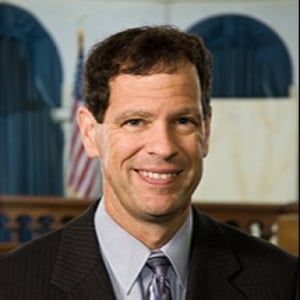
Warren Distinguished Professor of Law, University of San Diego School of Law
Michael D. Ramsey is Warren Distinguished Professor of Law at the University of San Diego School of Law, where he teaches and writes in the areas of Constitutional Law, Foreign Relations Law and International Law. He is the author of The Constitution’s Text in Foreign Affairs (Harvard University Press), co-editor of International Law in the U.S. Supreme Court: Continuity and Change (Cambridge University Press), and co-author of two casebooks, Transnational Law and Practice (2d ed., Aspen) and International Business Transactions: A Problem-Oriented Coursebook (14th ed., West). His scholarly articles have appeared in publications such as the Yale Law Journal, the University of Chicago Law Review, the Georgetown Law Journal and the American Journal of International Law. He received his B.A. magna cum laude from Dartmouth College and his J.D. summa cum laude from Stanford Law School. Prior to teaching, he served as a judicial clerk for Judge J. Clifford Wallace of the United States Court of Appeals for the Ninth Circuit and for Justice Antonin Scalia of the United States Supreme Court, and practiced law with the law firm of Latham & Watkins, where he specialized in international finance and investment. He has taught as a visiting professor at the University of California, San Diego, in the Department of Political Science and at the University of Paris – Sorbonne, in the Department of Comparative Law.
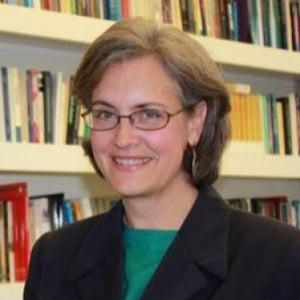
Andrea Mitchell University Professor in Law, Political Science and Business Ethics, Penn Law
Simmons is best known for her research on international political economy during the interwar years, policy diffusion globally, and her work demonstrating the influence that international law has on human rights outcomes around the world. Two of her books, Who Adjusts? Domestic Sources of Foreign Economic Policy During the Interwar Years (1994) and Mobilizing for Human Rights: International Law in Domestic Politics (2009) won the American Political Science Association’s Woodrow Wilson Award for the best book published in the United States on government, politics, or international affairs. The latter was also recognized by the American Society for International Law, the International Social Science Council and the International Studies Association as the best book of the year in 2010. She is currently conducting research in three areas: global performance assessments as informal governance mechanisms in international affairs; international border crossings, and especially evidence of their “thickening” in recent decades in many parts of the world; and international and transnational crime. Simmons has spent a year working at the International Monetary Fund, directed the Weatherhead Center for International Affairs at Harvard, is a past president of the International Studies Association, and has been elected to the National Academy of Sciences and the American Academy of Arts and Sciences.

Trade and Its Cross-Cutting Equities: New Horizons, New Challenges
Thomas D. Grant, F. Scott Kieff, Joshua Meltzer, Steven M. Tepp
Intellectual Property and International & National Security Law Practice Groups
The Trump Administration re-focused U.S. trade policy on the interests of several sectors of the...
Topics
Countering Extremism in the Military Must Avoid Extremes
On March 24, 2021, the House Armed Services Committee in full invited me to testify...
International Corruption and the Venezuela Indictments: The Case of Alex Saab
Ryan C. Berg, Michael Nadler, Harout J. Samra
One year ago, the United States Department of Justice announced a series of indictments against...
Topics
Annual Threat Assessment of the U.S. Intelligence Community
On April 9, 2021, the Office of the Director of National Intelligence released the Annual...
Welcome & Opening Address by Richard Thornburgh [Archive Collection]
Paul Hardy, Harvey C. Koch, David M. McIntosh, Richard Thornburgh, Allen Weinstein
1990 National Lawyers Convention
On November 30- December 1, 1990, the Federalist Society hosted its annual National Lawyers Convention...
Welcome & Opening Address by Richard Thornburgh [Archive Collection]
Paul Hardy, Harvey C. Koch, David M. McIntosh, Richard Thornburgh, Allen Weinstein
1990 National Lawyers Convention
On November 30- December 1, 1990, the Federalist Society hosted its annual National Lawyers Convention...
ICT Supply Chain Security: A Panel Discussion
Kelsey Guyselman, Maryam Khan Cope, John Kneuer, Patricia J. Paoletta, Gregory Watson
On February 24, 2021, President Biden signed an executive order (EO) on a whole-of-government strategy...
Courthouse Steps Decision Teleforum: Federal Republic of Germany v. Philipp
Alberto R. Coll
On February 3, 2021, the Supreme Court unanimously decided Federal Republic of Germany v. Philipp and Republic of...
Debate: Is More Global Governance Necessary?
Oona A. Hathaway, James C. Ho, Jonathan R. Macey
2021 National Student Symposium
Advocates of global governance argue that more decisions need to be taken at the international...
Panel IV: How Beneficial is International Human Rights Law?
Stephanos Bibas, Eugene Kontorovich, John O. McGinnis, Michael D. Ramsey, Beth Simmons
2021 National Student Symposium
International human rights law has expanded greatly since World War II. Its advocates see it...