

Associate, Jones Day
Katie Roholt Lane represents clients at critical stages of high-stakes regulatory and constitutional litigation. Her practice also consists of developing case strategy at the trial and appellate levels, briefing legal issues, and conducting motions practice. Katie currently represents clients in litigation arising under the Administrative Procedure Act (APA), the Telephone Consumer Protection Act (TCPA), and the Medicare Act.
In addition to her litigation practice, Katie provides strategic planning and regulatory compliance advice to companies seeking to navigate the complex U.S. regulations that impact domestic and international industries. She has represented clients in rulemakings and consultations before regulatory authorities, including the Federal Communications Commission (FCC) and the Federal Trade Commission (FTC) often seeking to eliminate the regulatory barriers to industry innovation.
Katie also maintains an active pro bono practice that focuses on briefing constitutional and statutory issues before the U.S. Supreme Court and federal appellate courts. She was part of the team that represented The American Legion in its landmark victory at the U.S. Supreme Court in The American Legion v. American Humanist Association, 139 S. Ct. 2067 (2019).
Katie is president of the Federalist Society's D.C. Young Lawyers Chapter.
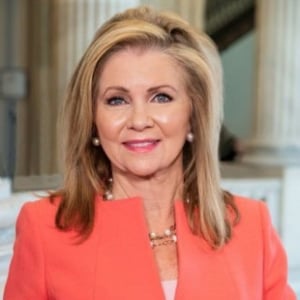
United States Senator, Tennessee
U.S. Senator Marsha Blackburn was sworn in to the Senate in January 2019. Marsha Blackburn was elected to the U.S. Senate in 2018, and is currently serving her first term representing the state of Tennessee. Before her election to the Senate, Marsha represented Tennessee’s 7th Congressional District.
Marsha’s public service is dedicated to promoting opportunities for women and making America a more prosperous place to live. Marsha’s leadership philosophy is based on her experiences in the private sector as a small business woman and author, as well as being a mother and grandmother.
Marsha went to college on a 4-H scholarship and worked her way through school selling books for the Southwestern Company as one of their first female sales associates, and later as one of their first female sales managers.
She then became Director of Retail Fashion and Special Events for the Castner Knott Company, which was a Nashville-based regional department store. Later, Marsha founded her own business, Marketing Strategies, which focused on the retail marketplace, as well as electronic and print media.
Marsha began her career in public service in 1995 when she was named executive director of the Tennessee Film, Entertainment, and Music Commission. In 1998, she was elected to the Tennessee State Senate. In the state legislature, she earned a reputation for fiscal responsibility and government accountability by identifying waste and offering realistic solutions to Tennessee’s budget challenges.
While serving in the Tennessee Senate, Marsha led a statewide grassroots campaign to defeat a proposed state income tax. The tax was defeated, and Marsha’s leadership earned her a reputation as an anti-tax champion. In 2014, the people of Tennessee passed an amendment to the state constitution to expressly prohibit a state income tax – a fitting cap to a 14-year battle.
In 2002, Marsha was elected to represent the people of Tennessee’s 7th Congressional District based on her record in the state legislature. She brought her Tennessee values to Washington, DC, and became a leader in the fight for small, efficient federal government that is accountable to its citizens. As a Congressman, Marsha was often selected by her colleagues to lead the charge for principled conservativism. Her congressional career was also noted for her Chairmanship of the Energy and Commerce Committee’s Subcommittee on Communications and Technology, as well as bipartisan expertise in defending songwriters’ and performers’ rights.
Marsha is a member of numerous charitable organizations and is an active member of her church, Christ Presbyterian.
Marsha and her husband Chuck live in Williamson County, Tennessee. They have two children, Mary Morgan (Paul) Ketchel and Chad (Hillary) Blackburn, and two grandsons. Originally from Laurel, Mississippi, Marsha is a graduate of Mississippi State University.

Partner, Schaerr | Jaffe LLP
Erik Jaffe has been involved in appeals on a broad range of legal issues, including First Amendment challenges to campaign finance reform, Commerce Clause challenges to Health Care Reform and other federal legislation, Equal Protection Clause challenges to affirmative action in education, First Amendment challenges to school vouchers, Fifth Amendment challenges to takings of property, Second Amendment challenges to restrictions on gun ownership, and a wide variety of cases involving patents, copyrights, ERISA, securities fraud, federal preemption, environmental regulation, and other state and federal constitutional and statutory matters. He has represented businesses and non-profit groups, Judges, Senators, former government officials, Nobel Prize winners, and a broad cross-section of private individuals. Mr. Jaffe has been involved in over 120 Supreme Court matters, including filing over 30 cert. petitions, representing half-a-dozen parties on the merits, and filing over 70 amicus briefs at both the cert. and merits stages.
A 1990 graduate of the Columbia University School of Law, Mr. Jaffe was a law clerk to Judge Douglas H. Ginsburg of the United States Court of Appeals for the District of Columbia Circuit from 1990 to 1991. Following that clerkship he spent five years in litigation practice with the Washington, D.C. law firm of Williams & Connolly. In the summer of 1996 he left Williams & Connolly to clerk for Supreme Court Justice Clarence Thomas. At the end of that clerkship he started his own practice, and he was a sole practitioner from 1997 to 2018. He joined the firm of Schaerr | Jaffe LLP in 2018.

Partner, Holtzman Vogel Josefiak Torchinsky PLLC
Matt Petersen is a former Chairman of the Federal Election Commission (FEC) with two decades of high-level legal experience in political and administrative law. Matt—who also previously served in senior staff positions in both houses of Congress—is recognized nationally for his expertise in campaign finance, elections, lobbying, free speech, and government ethics.
Matt was nominated to the FEC by President George W. Bush in 2008 and served as its Chairman in 2010 and 2016 and its Vice Chairman in 2009, 2015, and 2019. His FEC tenure coincided with several court cases that significantly changed campaign finance law, most notably the Supreme Court’s opinion in Citizens United v. FEC. Consequently, Matt played a large role in shaping the post-Citizens United legal framework governing Super PACs (and candidate involvement in their fundraising activities) and corporate and union political speech.
Matt was also a strong advocate for protecting the Internet as a tool for political speech and democratic participation and ensuring that emerging technologies can continue to flourish without being stymied by unnecessary regulation. Finally, Matt helped draft new procedures affording enhanced rights and protections for individuals and organizations involved in FEC enforcement matters, audits, and advisory opinion requests.
Prior to joining the FEC, Matt served as Republican chief counsel to the Senate Committee on Rules and Administration (2005-08) and as counsel to the U.S. House of Representatives Committee on House Administration (2002-05). He was extensively involved in the crafting of the Help America Vote Act of 2002—the sweeping election reform bill passed in the wake of the 2000 presidential recount—and was chief adviser to the Republican floor manager during the Senate debate on the Honest Leadership and Open Government Act of 2007, the most recent comprehensive revision of federal lobbying and government ethics laws.
Matt received his J.D. in 1999 from the University of Virginia School of Law, where he was a member of the Virginia Law Review, and graduated magna cum laude with a B.A. in philosophy from Brigham Young University in 1996. He also received an A.S. with high honors from Utah Valley University.

Vice President for Legal Strategy, Stand Together
Casey Mattox is Vice President for Legal Strategy at Stand Together and Senior Advisor at
Americans for Prosperity. In these roles he advocates for and creates strategies and
partnerships to ensure a constitutionally limited government that protects the civil liberties of all
Americans. Prior to joining Stand Together and AFP Casey’s legal career focused on defending
the First Amendment rights of students, faculty, healthcare workers and religious organizations.
Casey has a J.D. from Boston College School of Law and an undergraduate degree from the
University of Virginia. You can find him on Twitter at @CaseyMattox_ and on LinkedIn at
@Casey-Mattox-ST.
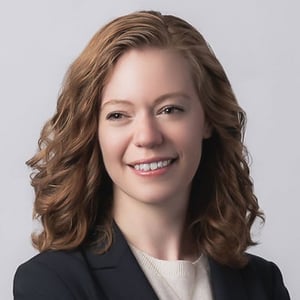
Associate, Wiley Rein LLP
Krystal represents and advises clients in a variety of complex litigation and appellate matters in state and federal courts. She has served in legal capacities in both public and private entities, including the U.S. Department of Justice and federal trial and appellate courts, and has extensive litigation experience ranging from pre-complaint investigations and discovery disputes to critical motions practice, trial preparation, and appeals. Krystal specializes in providing creative litigation solutions to give her clients a strategic advantage, both in and out of the courtroom.
Her experience spans a wide variety of practice areas, including government contracts, intellectual property, environment and product regulation, telecommunications, health care, as well as election law and government ethics. Krystal’s appellate work, including before the U.S. Supreme Court, has focused on significant First Amendment issues.
Krystal served as a law clerk for the Honorable Mark S. Davis on the U.S. District Court for the Eastern District of Virginia (the “Rocket Docket”). In addition, she served as a law clerk for the Honorable Alice M. Batchelder on the U.S. Court of Appeals for the Sixth Circuit.
Krystal also maintains an active pro bono practice, and for two consecutive years has won firm awards for her contributions. Most recently, she briefed and argued a multi-issue appeal of a trial verdict in the Ninth Circuit, and successfully obtained remand from the Board of Immigration Appeals after her client was denied protection under the U.N. Convention Against Torture.
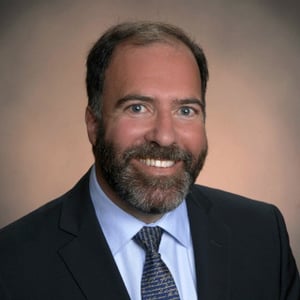
Professor of Law, Widener University Commonwealth Law School

Professor of Law, Notre Dame Law School
Professor Derek Muller is a nationally-recognized scholar in the field of election law. His research focuses on the role of states in the administration of federal elections, the constitutional contours of voting rights and election administration, the limits of judicial power in the domain of elections, and the Electoral College.
He has published more than two dozen academic works, and his op-eds have appeared in the New York Times, the Los Angeles Times, and the Wall Street Journal. He has testified before Congress, and he is a contributor at the Election Law Blog. He is a co-author on a Federal Courts casebook published by Carolina Academic Press. He is also the co-reporter on a new Restatement of the Law, Election Litigation, an effort led by the American Law Institute.
Professor Muller teaches Election Law, Civil Procedure, and Evidence.
Vice President for Legal Strategy, Stand Together
Casey Mattox is Vice President for Legal Strategy at Stand Together and Senior Advisor at
Americans for Prosperity. In these roles he advocates for and creates strategies and
partnerships to ensure a constitutionally limited government that protects the civil liberties of all
Americans. Prior to joining Stand Together and AFP Casey’s legal career focused on defending
the First Amendment rights of students, faculty, healthcare workers and religious organizations.
Casey has a J.D. from Boston College School of Law and an undergraduate degree from the
University of Virginia. You can find him on Twitter at @CaseyMattox_ and on LinkedIn at
@Casey-Mattox-ST.
Associate, Wiley Rein LLP
Krystal represents and advises clients in a variety of complex litigation and appellate matters in state and federal courts. She has served in legal capacities in both public and private entities, including the U.S. Department of Justice and federal trial and appellate courts, and has extensive litigation experience ranging from pre-complaint investigations and discovery disputes to critical motions practice, trial preparation, and appeals. Krystal specializes in providing creative litigation solutions to give her clients a strategic advantage, both in and out of the courtroom.
Her experience spans a wide variety of practice areas, including government contracts, intellectual property, environment and product regulation, telecommunications, health care, as well as election law and government ethics. Krystal’s appellate work, including before the U.S. Supreme Court, has focused on significant First Amendment issues.
Krystal served as a law clerk for the Honorable Mark S. Davis on the U.S. District Court for the Eastern District of Virginia (the “Rocket Docket”). In addition, she served as a law clerk for the Honorable Alice M. Batchelder on the U.S. Court of Appeals for the Sixth Circuit.
Krystal also maintains an active pro bono practice, and for two consecutive years has won firm awards for her contributions. Most recently, she briefed and argued a multi-issue appeal of a trial verdict in the Ninth Circuit, and successfully obtained remand from the Board of Immigration Appeals after her client was denied protection under the U.N. Convention Against Torture.
Professor of Law, Widener University Commonwealth Law School
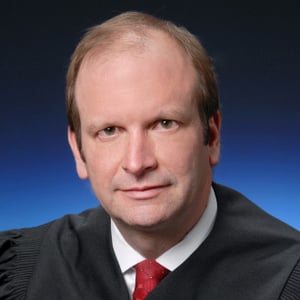
Associate Justice, Supreme Court of Ohio
Justice Pat DeWine began his six-year term on the Supreme Court of Ohio on Jan. 2, 2017, following his statewide election in November 2016. An excellent writer, Justice DeWine is known for the quality and thoroughness of his legal opinions. His opinions reflect his strong belief in judicial restraint and his respect for the constitutional roles of the other coequal branches of government.
Justice DeWine has served at all levels of the Ohio judiciary. Prior to his election to the Supreme Court, Justice DeWine served for four years on the First District Court of Appeals, and prior to that, for four years on the Hamilton County Common Pleas Court.
Justice DeWine has a strong commitment to furthering the rule of law through education. He is an adjunct professorat the University of Cincinnati College of Law where he teaches Appellate Practice and Procedure. In addition, he has taught undergraduate courses at the University of Cincinnati in Ohio Government & Politics and American Courts.
Justice DeWine has strong academic credentials. He graduated from the University of Michigan Law School in the top ten percent of his class with Order of the Coif honors. As an undergraduate student at Miami University, he maintained a perfect 4.0 grade point average and received summa cum laude honors. He was also a member of the Varsity Track and Cross Country teams.
After law school, he was selected for a clerkship on United States Court of Appeals for the Sixth Circuit. He served under the Honorable David A. Nelson, who had been appointed to the Sixth Circuit by President Ronald Reagan.
Justice DeWine understands the litigant’s perspective, having practiced law for 13 years with one of Cincinnati’s top law firms, Keating, Muething & Klekamp. He represented clients in appellate matters in Ohio and in federal courts across the country. He handled a diverse range of litigation matters, including mass tort bankruptcies, securities fraud litigation, and constitutional issues.
Other Public Service
Justice DeWine brings a unique perspective to the bench because of his public service as a County Commissioner and a member of Cincinnati City Council.
As a member of the Hamilton County Board of Commissioners, he focused on reforming County government, lowering the tax burden, eliminating unnecessary bureaucracy and promoting public safety. He led the citizens referendum that ultimately repealed the nearly $1 billion sales tax increase that was enacted by his colleagues on the Commission. The Reason Foundation named him an “Innovator in Action,” along with such leaders as Rudy Giuliani and Jeb Bush, for his efforts to reform County government.
On Cincinnati City Council, he was known as a taxpayer watchdog, successfully rooting out wasteful spending and abuse in city government. He helped eliminate unnecessary regulations, led the effort to crack down on quality of life issues affecting city neighborhoods and created a development fund that leveraged private capital to spur new housing development downtown and across city neighborhoods. He also led the Issue Four charter change that created a more accountable city government by allowing the city to hire the most qualified individuals for key positions in city government.
He was a founder of the Build Cincinnati reform group that successfully passed a charter amendment to allow Cincinnati voters to directly elect the Mayor.athon.
Sheila M. McDevitt Professor of Law and Faculty Director of the Election Law Center, Florida State University College of Law
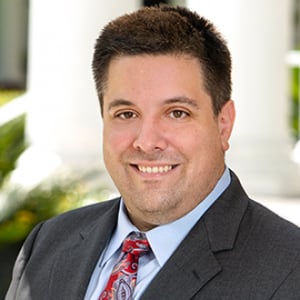
Professor Morley joined FSU Law in 2018, and teaches and writes in the areas of election law, constitutional law, remedies, and the federal courts. He is best known for his work on election emergencies and post-election litigation, nationwide and other defendant-oriented injunctions, the jurisdiction of the federal courts and their equitable powers more generally. He has testified before congressional committees, made presentations to election officials for the U.S. Election Assistance Commission and participated in bipartisan blue-ribbon groups to develop election reforms. The governor of Florida also appointed Professor Morley to the Criminal Punishment Code Task Force, to propose potential revisions to the legislature.
The U.S. Supreme Court has cited several of his articles, and he was counsel of record for the successful Petitioner in a landmark campaign finance case. Professor Morley has appeared on C-SPAN, Court TV, Fox News and numerous local news programs, and has been quoted in the Washington Post, Los Angeles Times, Roll Call, Politico, U.S. News and World Report, and a wide range of other national publications. His work has been published in many of the nation’s top law reviews, including the Georgetown Law Journal, Northwestern University Law Review, Boston University Law Review and Emory Law Journal.
Before joining FSU Law, Professor Morley was a Climenko Fellow and Lecturer in Law at Harvard Law School. Prior to his experience in academia, he served in government as special assistant to the General Counsel of the Army at the Pentagon, as well as a law clerk for Judge Gerald B. Tjoflat of the U.S. Court of Appeals for the Eleventh Circuit. During his tenure with the Army General Counsel’s office, he was awarded the Meritorious Civilian Service Award and the Army Staff Lapel Pin. He also worked as an associate at Williams & Connolly LLP and the Supreme Court & Appellate group of Winston & Strawn, LLP, both in Washington, D.C.
Professor Morley earned his J.D. from Yale Law School in 2003, where he was a senior editor on the Yale Law Journal; served on the moot court board; and received the Thurman Arnold Prize for Best Oralist in the Morris Tyler Moot Court of Appeals.

Sudler Family Professor of Constitutional Law, New York University School of Law
Richard H. Pildes is one of the nation’s leading scholars of constitutional law and a specialist in legal issues affecting democracy. He is a Member of the American Academy of Arts and Sciences and the American Law Institute, and has received recognition as a Guggenheim Fellow and a Carnegie Scholar. His acclaimed casebook, The Law of Democracy: Legal Structure of the Political Process (now in its fourth edition), helped create an entirely new field of study in the law schools. The Law of Democracy systematically explores legal and policy issues concerning the structure of democratic elections and institutions, such as the role of money in politics, the design of election districts, the regulation of political parties, the design of voting systems, the representation of minority interests in democratic institutions, and similar issues. He has written extensively on the rise of political polarization in the United States, the Voting Rights Act, the dysfunction of America’s political processes, the role of the Supreme Court in overseeing American democracy, the powers of the American President and Congress, and he has criticized excessively “romantic” understandings of democracy. In addition to his scholarship on these issues, he has written on national-security law, the design of the regulatory state, and American constitutional history and theory.
Respect for his expertise in these areas is reflected in frequent citations of his work in U.S. Supreme Court opinions, the translation of his work into many languages, and his frequent public lectures and appearances around the world, including his nomination with the NBC News Team for an Emmy Award for coverage of the 2000 Presidential election litigation.
His work has been translated and published in Chinese, French, Spanish, and Portuguese. In addition to his scholarship, Professor Pildes plays an active role litigating in these areas. He has won two cases before the United States Supreme Court, including a 2015 victory in Alabama Democratic Conference v. Alabama, a case involving race and redistricting. He served as counsel to a group of former chairmen of the Securities and Exchange Commission in litigation defending the constitutionality of the Sarbanes-Oxley Act; as counsel in election litigation to the Puerto Rico Electoral Commission; as counsel to the government of Puerto Rico; as a federal court-appointed independent expert on voting rights litigation; and as counsel in successful Supreme Court litigation that challenged the way the United States Tax Court operated. He was also a senior legal advisor to the 2008 and 2012 campaigns of President Obama.
Pildes received his A.B. in physical chemistry summa cum laude from Princeton, and his J.D. magna cum laude from Harvard, where he served as Supreme Court Note Editor on the Harvard Law Review. He clerked for Judge Abner J. Mikva of the U.S. Court of Appeals for the District of Columbia Circuit and for Justice Thurgood Marshall of the U.S. Supreme Court. After practicing law in Boston, he began his academic career at the University of Michigan Law School, before joining the NYU School of Law in 2001.

Chairman and Founder, Institute for Free Speech; Josiah H. Blackmore II/Shirley M. Nault Designated Professor of Law, Capital University Law School

Senior Fellow, Democracy, Conflict, and Governance Program, Carnegie Endowment for International Peace
Dr. Rachel Kleinfeld is a senior fellow at the Carnegie Endowment for International Peace, where she focuses on issues of rule of law, security, and governance in post-conflict countries, fragile states, and states in transition.
As the founding CEO of the Truman National Security Project, she spent nearly a decade leading a movement of national security, political, and military leaders working to promote people and policies that strengthen security, stability, rights, and human dignity in America and around the world. In 2011, former secretary of state Hillary Clinton appointed Kleinfeld to the Foreign Affairs Policy Board, which advises the secretary of state quarterly, a role she served through 2014.
Kleinfeld has consulted on rule of law reform for the World Bank, the European Union, the OECD, the Open Society Institute, and other institutions, and has briefed multiple government agencies in the United States and abroad. She is the author of Advancing the Rule of Law Abroad: Next Generation Reform (Carnegie, 2012), which was chosen by Foreign Affairs magazine as one of the best foreign policy books of 2012. Her writings have appeared in Relocating the Rule of Law (Hart, 2009), Promoting Democracy and the Rule of Law: American and European Strategies (Palgrave, 2009), The Future of Human Rights (Philadelphia UP, 2008), Promoting the Rule of Law: The Problem of Knowledge (Carnegie Endowment, 2006), With All Our Might (Rowen and Littlefield, 2006) and other publications. She has also co-authored Let There Be Light: Electrifying the Developing World with Markets and Distributed Generation (Truman Institute, 2012).
Named one of the top 40 Under 40 Political Leaders in America by Time magazine in 2010, Kleinfeld has been featured in the New York Times, the Wall Street Journal, Fox News, and other national television, radio, and print media. You can find out more about her work and activities on her website, rachelkleinfeld.com.
Associate Justice, Supreme Court of Ohio
Justice Pat DeWine began his six-year term on the Supreme Court of Ohio on Jan. 2, 2017, following his statewide election in November 2016. An excellent writer, Justice DeWine is known for the quality and thoroughness of his legal opinions. His opinions reflect his strong belief in judicial restraint and his respect for the constitutional roles of the other coequal branches of government.
Justice DeWine has served at all levels of the Ohio judiciary. Prior to his election to the Supreme Court, Justice DeWine served for four years on the First District Court of Appeals, and prior to that, for four years on the Hamilton County Common Pleas Court.
Justice DeWine has a strong commitment to furthering the rule of law through education. He is an adjunct professorat the University of Cincinnati College of Law where he teaches Appellate Practice and Procedure. In addition, he has taught undergraduate courses at the University of Cincinnati in Ohio Government & Politics and American Courts.
Justice DeWine has strong academic credentials. He graduated from the University of Michigan Law School in the top ten percent of his class with Order of the Coif honors. As an undergraduate student at Miami University, he maintained a perfect 4.0 grade point average and received summa cum laude honors. He was also a member of the Varsity Track and Cross Country teams.
After law school, he was selected for a clerkship on United States Court of Appeals for the Sixth Circuit. He served under the Honorable David A. Nelson, who had been appointed to the Sixth Circuit by President Ronald Reagan.
Justice DeWine understands the litigant’s perspective, having practiced law for 13 years with one of Cincinnati’s top law firms, Keating, Muething & Klekamp. He represented clients in appellate matters in Ohio and in federal courts across the country. He handled a diverse range of litigation matters, including mass tort bankruptcies, securities fraud litigation, and constitutional issues.
Other Public Service
Justice DeWine brings a unique perspective to the bench because of his public service as a County Commissioner and a member of Cincinnati City Council.
As a member of the Hamilton County Board of Commissioners, he focused on reforming County government, lowering the tax burden, eliminating unnecessary bureaucracy and promoting public safety. He led the citizens referendum that ultimately repealed the nearly $1 billion sales tax increase that was enacted by his colleagues on the Commission. The Reason Foundation named him an “Innovator in Action,” along with such leaders as Rudy Giuliani and Jeb Bush, for his efforts to reform County government.
On Cincinnati City Council, he was known as a taxpayer watchdog, successfully rooting out wasteful spending and abuse in city government. He helped eliminate unnecessary regulations, led the effort to crack down on quality of life issues affecting city neighborhoods and created a development fund that leveraged private capital to spur new housing development downtown and across city neighborhoods. He also led the Issue Four charter change that created a more accountable city government by allowing the city to hire the most qualified individuals for key positions in city government.
He was a founder of the Build Cincinnati reform group that successfully passed a charter amendment to allow Cincinnati voters to directly elect the Mayor.athon.
Senior Fellow, Democracy, Conflict, and Governance Program, Carnegie Endowment for International Peace
Dr. Rachel Kleinfeld is a senior fellow at the Carnegie Endowment for International Peace, where she focuses on issues of rule of law, security, and governance in post-conflict countries, fragile states, and states in transition.
As the founding CEO of the Truman National Security Project, she spent nearly a decade leading a movement of national security, political, and military leaders working to promote people and policies that strengthen security, stability, rights, and human dignity in America and around the world. In 2011, former secretary of state Hillary Clinton appointed Kleinfeld to the Foreign Affairs Policy Board, which advises the secretary of state quarterly, a role she served through 2014.
Kleinfeld has consulted on rule of law reform for the World Bank, the European Union, the OECD, the Open Society Institute, and other institutions, and has briefed multiple government agencies in the United States and abroad. She is the author of Advancing the Rule of Law Abroad: Next Generation Reform (Carnegie, 2012), which was chosen by Foreign Affairs magazine as one of the best foreign policy books of 2012. Her writings have appeared in Relocating the Rule of Law (Hart, 2009), Promoting Democracy and the Rule of Law: American and European Strategies (Palgrave, 2009), The Future of Human Rights (Philadelphia UP, 2008), Promoting the Rule of Law: The Problem of Knowledge (Carnegie Endowment, 2006), With All Our Might (Rowen and Littlefield, 2006) and other publications. She has also co-authored Let There Be Light: Electrifying the Developing World with Markets and Distributed Generation (Truman Institute, 2012).
Named one of the top 40 Under 40 Political Leaders in America by Time magazine in 2010, Kleinfeld has been featured in the New York Times, the Wall Street Journal, Fox News, and other national television, radio, and print media. You can find out more about her work and activities on her website, rachelkleinfeld.com.
Sheila M. McDevitt Professor of Law and Faculty Director of the Election Law Center, Florida State University College of Law
Professor Morley joined FSU Law in 2018, and teaches and writes in the areas of election law, constitutional law, remedies, and the federal courts. He is best known for his work on election emergencies and post-election litigation, nationwide and other defendant-oriented injunctions, the jurisdiction of the federal courts and their equitable powers more generally. He has testified before congressional committees, made presentations to election officials for the U.S. Election Assistance Commission and participated in bipartisan blue-ribbon groups to develop election reforms. The governor of Florida also appointed Professor Morley to the Criminal Punishment Code Task Force, to propose potential revisions to the legislature.
The U.S. Supreme Court has cited several of his articles, and he was counsel of record for the successful Petitioner in a landmark campaign finance case. Professor Morley has appeared on C-SPAN, Court TV, Fox News and numerous local news programs, and has been quoted in the Washington Post, Los Angeles Times, Roll Call, Politico, U.S. News and World Report, and a wide range of other national publications. His work has been published in many of the nation’s top law reviews, including the Georgetown Law Journal, Northwestern University Law Review, Boston University Law Review and Emory Law Journal.
Before joining FSU Law, Professor Morley was a Climenko Fellow and Lecturer in Law at Harvard Law School. Prior to his experience in academia, he served in government as special assistant to the General Counsel of the Army at the Pentagon, as well as a law clerk for Judge Gerald B. Tjoflat of the U.S. Court of Appeals for the Eleventh Circuit. During his tenure with the Army General Counsel’s office, he was awarded the Meritorious Civilian Service Award and the Army Staff Lapel Pin. He also worked as an associate at Williams & Connolly LLP and the Supreme Court & Appellate group of Winston & Strawn, LLP, both in Washington, D.C.
Professor Morley earned his J.D. from Yale Law School in 2003, where he was a senior editor on the Yale Law Journal; served on the moot court board; and received the Thurman Arnold Prize for Best Oralist in the Morris Tyler Moot Court of Appeals.
Sudler Family Professor of Constitutional Law, New York University School of Law
Richard H. Pildes is one of the nation’s leading scholars of constitutional law and a specialist in legal issues affecting democracy. He is a Member of the American Academy of Arts and Sciences and the American Law Institute, and has received recognition as a Guggenheim Fellow and a Carnegie Scholar. His acclaimed casebook, The Law of Democracy: Legal Structure of the Political Process (now in its fourth edition), helped create an entirely new field of study in the law schools. The Law of Democracy systematically explores legal and policy issues concerning the structure of democratic elections and institutions, such as the role of money in politics, the design of election districts, the regulation of political parties, the design of voting systems, the representation of minority interests in democratic institutions, and similar issues. He has written extensively on the rise of political polarization in the United States, the Voting Rights Act, the dysfunction of America’s political processes, the role of the Supreme Court in overseeing American democracy, the powers of the American President and Congress, and he has criticized excessively “romantic” understandings of democracy. In addition to his scholarship on these issues, he has written on national-security law, the design of the regulatory state, and American constitutional history and theory.
Respect for his expertise in these areas is reflected in frequent citations of his work in U.S. Supreme Court opinions, the translation of his work into many languages, and his frequent public lectures and appearances around the world, including his nomination with the NBC News Team for an Emmy Award for coverage of the 2000 Presidential election litigation.
His work has been translated and published in Chinese, French, Spanish, and Portuguese. In addition to his scholarship, Professor Pildes plays an active role litigating in these areas. He has won two cases before the United States Supreme Court, including a 2015 victory in Alabama Democratic Conference v. Alabama, a case involving race and redistricting. He served as counsel to a group of former chairmen of the Securities and Exchange Commission in litigation defending the constitutionality of the Sarbanes-Oxley Act; as counsel in election litigation to the Puerto Rico Electoral Commission; as counsel to the government of Puerto Rico; as a federal court-appointed independent expert on voting rights litigation; and as counsel in successful Supreme Court litigation that challenged the way the United States Tax Court operated. He was also a senior legal advisor to the 2008 and 2012 campaigns of President Obama.
Pildes received his A.B. in physical chemistry summa cum laude from Princeton, and his J.D. magna cum laude from Harvard, where he served as Supreme Court Note Editor on the Harvard Law Review. He clerked for Judge Abner J. Mikva of the U.S. Court of Appeals for the District of Columbia Circuit and for Justice Thurgood Marshall of the U.S. Supreme Court. After practicing law in Boston, he began his academic career at the University of Michigan Law School, before joining the NYU School of Law in 2001.
Chairman and Founder, Institute for Free Speech; Josiah H. Blackmore II/Shirley M. Nault Designated Professor of Law, Capital University Law School

Former President & CEO, The Federalist Society for Law and Public Policy Studies
Eugene B. Meyer, former President and CEO of the Federalist Society, has served as Executive Director, CEO, and/or President of the organization for more than 40 years. He is responsible for shepherding the organization from a small group of law students to a community of 90,000 lawyers, law students, academics, judges, and others interested in the rule of law. The Society now includes a Student Chapter at nearly every ABA-accredited law school in the country and Lawyers Chapters in 220 major cities across the nation. Gene earned his B.A. in history at Yale in 1975 and his M.A. in political science from the London School of Economics in 1976. Gene currently serves on the boards of the U.S. Chess Center, the Holman Foundation, the Sarah Scaife Foundation, and the advisory board of the Adam Smith Society. He holds the title of International Chess Master.
Nonresident Fellow, American Enterprise Institute
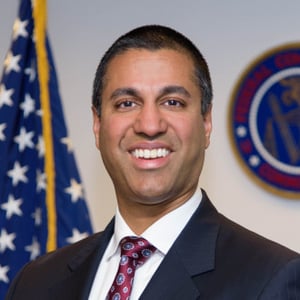
Ajit Pai, a former chairman of the Federal Communications Commission (FCC), is a nonresident fellow at the American Enterprise Institute, where he focuses on issues pertaining to technology and innovation, telecommunications regulatory policy, and market-based incentives for investment in broadband deployment. Concurrently, he is a partner at Searchlight Capital Partners, a global investment firm.
Mr. Pai’s distinguished career at the FCC includes two leadership roles following presidential appointments. He was appointed commissioner by President Barack Obama in 2012, designated chairman by President Donald Trump in 2017, and twice confirmed by the US Senate. While at the helm of the FCC, Mr. Pai had a transformative impact on the future of US technology and communications policy, implementing major initiatives to help close the digital divide; advance US leadership in 5G and other wireless technologies; promote innovation; protect consumers, public safety, and national security; and make the agency itself more open, transparent, and data-driven.
Earlier in his career, Mr. Pai served in various public-sector positions in the FCC’s Office of General Counsel, the US Department of Justice, the US Senate Judiciary Committee, and the US District Court for the Eastern District of Louisiana. He also worked as a partner at Jenner & Block and associate general counsel at Verizon Communications.
Mr. Pai graduated with honors from Harvard University, where he received a bachelor’s degree, and from the University of Chicago Law School, where he received a law degree and was an editor on the University of Chicago Law Review.

A Conversation with Senator Marsha Blackburn
Kaytlin Roholt Lane, Marsha Blackburn
DC Young Lawyers Chapter - Online Event
The DC Young Lawyers Chapter hosted Sen. Marsha Blackburn of Tennessee, a member of the...
Federalization of Elections
Erik S. Jaffe, Matthew Spencer Petersen
Election Law Teleforum Series
The United States, a constitutional republic, employs a decentralized election regulation system with decision making...
USAID v. Alliance for Society International, Inc. - Post-Decision SCOTUScast
Casey Mattox, Krystal Brunner Swendsboe
featuring Casey Mattox and Krystal B. Swendsboe
On June 29, 2020 the Supreme Court released its decision in United States Agency for...
Courthouse Steps Decision: The Limits of Robocalls, Barr v. American Association of Political Consultants, Inc.
Michael R. Dimino
In Barr v. American Association of Political Consultants, Inc., the Supreme Court held unconstitutional a...
Courthouse Steps Decision: CO Dept. of State v. Baca and Chiafalo v. WA
Derek T. Muller
In Chiafalo v. Washington and its companion case Colorado Department of State v. Baca, the Supreme Court...
Courthouse Steps Decision: USAID v. Alliance for Open Society International, Inc.
Casey Mattox, Krystal Brunner Swendsboe
On Monday, the Supreme Court released its decision in United States Agency for International Development...
The National Popular Vote v. the Electoral College [POLICYbrief]
Michael R. Dimino
Short video featuring Michael Dimino
What is the National Popular Vote Compact and how would it affect the election of...
COVID-19 and the 2020 Elections
Pat DeWine, Michael T. Morley, Richard H. Pildes, Bradley A. Smith, Rachel Kleinfeld
COVID-19 & the Law Conference
The second day of the Federalist Society's COVID-19 & the Law Conference commenced with a...
COVID-19 and the 2020 Elections
Pat DeWine, Rachel Kleinfeld, Michael T. Morley, Richard H. Pildes, Bradley A. Smith
COVID-19 & the Law Conference
The second day of the Federalist Society's COVID-19 & the Law Conference commenced with a...
Address by Ajit Pai
Eugene B. Meyer, Ajit V. Pai
COVID-19 & the Law Conference
Ajit Pai, Chairman of the U.S. Federal Communications Commission, gave an address at the Federalist...