
Kleinheinz Fellow, The Hoover Institution at Stanford University
Tyler Goodspeed is the Kleinheinz Fellow at the Hoover Institution at Stanford University. From 2020 to 2021 he served as Chairman of the Council of Economic Advisers, having been appointed by the President as a Member of the Council in 2019. In that role he advised the Administration’s economic response to the coronavirus pandemic, as well as subsequent economic recovery packages. He resigned from the Council on 7th January 2021, having previously served as Chief Economist for Macroeconomic Policy and Senior Economist for tax, public finance, and macroeconomics, playing an instrumental role in designing the 2017 Tax Cuts and Jobs Act.
Before joining the Council, Dr. Goodspeed was on the Faculty of Economics at the University of Oxford and was a lecturer in economics at King’s College London. He has published extensively on financial regulation, banking, and monetary economics, with particular attention to the role of access to credit in mitigating the effects of adverse aggregate shocks in historical contexts, especially exogenous environmental shocks. His research has appeared in three full-length monographs from academic presses, as well as numerous articles in peer-reviewed and edited journals. He received his B.A., M.A., and Ph.D. from Harvard University; and he received his M.Phil from the University of Cambridge, where he was a Gates Scholar. He is a current member of the American Economic Association and Economic History Association, and was previously a member of the Economic History Society and Royal Economic Society, as well as an adjunct scholar at the Cato Institute.
Partner, Davis Polk & Wardwell LLP
Mr. Guynn is head of Davis Polk’s Financial Institutions Group. He has been recognized as a thought-leader on financial regulatory reform and as one of the most widely consulted U.S. legal advisers during the financial crisis. See “In the Red Zone,”The American Lawyer, January 2009 and “For Davis Polk, Dodd-Frank Pays,” The American Lawyer, December 2010.
He has advised the Securities Industry and Financial Markets Association (SIFMA), the principal trade organization for U.S. banks, securities firms and asset managers, all of the U.S.’s six-largest banks and several foreign banks on the Dodd-Frank Act and its regulatory implementation.
His practice focuses on providing strategic bank and regulatory and enforcement advice and advising on M&A and capital markets transactions when the target or issuer is a banking organization or other financial institution. He also advises on bank failures and recapitalizations, corporate governance and internal controls, cross-border collateral transactions, credit risk management, securities settlement systems and payment systems.

Fellow in Economic Studies and Policy Director, Center on Regulation and Markets, Brookings Institution
Aaron Klein is a fellow in Economic Studies at the Brookings Institution, where he also serves as policy director of the Center on Regulation and Markets. He focuses on financial regulation and technology, macroeconomics, and infrastructure finance and policy. Previously, Klein directed the Bipartisan Policy Center’s Financial Regulatory Reform Initiative. Klein served as Deputy Assistant Secretary for Economic Policy at the U.S. Treasury Department from 2009-2012. While at Treasury, Klein worked on multiple issues ranging from implementing aspects of the financial recovery program to developing new policy for financial regulation, housing finance, transportation and infrastructure, and Native American issues.
Prior to his appointment, he served as Chief Economist of the Senate Banking, Housing and Urban Affairs Committee for Chairmen Chris Dodd (D-CT) and Paul Sarbanes (D-MD). While working in the Senate Klein played a key role in a series of major legislation including, the Economic Emergency Stabilization Act of 2008 (better known as TARP), the Housing and Economic Recovery Act of 2008, the SAFETEA Act of 2005 that re-wrote America's surface transportation policy, the Check Truncation Act of 2003, the Terrorism Risk Insurance Act of 2002, and the Sarbanes-Oxley Act of 2002. A graduate of Dartmouth College and Princeton University, Klein lives in his hometown of Silver Spring, MD with his wife and two daughters.
Vice President of Regulatory Affairs, Solidus Labs; Former Director, Consumer Financial Protection Bureau
The Honorable Kathleen L. Kraninger is the Vice President of Regulatory Affairs at Solidus Labs where she leads the firm’s regulatory strategy and works to advance market integrity and responsible innovation in digital asset markets. Solidus Labs is the first automated, comprehensive, and testable market surveillance and risk monitoring hub tailored for digital assets.
Previously, she served as the Senate-confirmed Director of the Consumer Financial Protection Bureau from December 2018 until January 2021, leading the 1,500-person independent, regulatory and law enforcement agency. She made her mark on all aspects of the agency’s mission and operations, particularly in facilitating innovation, promoting financial inclusion and leading through the economic uncertainty of the global pandemic. In addition, Kraninger served on the board of the Federal Deposit Insurance Corporation, the Financial Stability Oversight Board, and as chair of the Federal Financial Institutions Examinations Council.
Her distinguished public sector career spans senior roles at the Departments of Transportation and Homeland Security, the Office of Management and Budget, and in both the Senate and the House of Representatives. Kraninger graduated magna cum laude from Marquette University and earned a law degree from Georgetown University Law Center. She served as a U.S. Peace Corps Volunteer in Ukraine.
Partner, Mayer Brown
Andrew Olmem is a partner in Mayer Brown’s Washington DC office and a member of its Public Policy, Regulatory & Government Affairs, and Financial Services Regulatory & Enforcement practices. His practice focuses on complex financial services regulatory and public policy matters.
Andrew previously served as the Deputy Assistant to the President for Economic Policy and Deputy Director of the National Economic Council (NEC), where he oversaw the development and coordination of the administrations’ domestic economic policies, including for financial services, technology, telecom, energy, and infrastructure.
Earlier, he also served as the Republican Chief Counsel and Deputy Staff Director at the U.S. Senate Committee on Banking, Housing and Urban Affairs. Andrew began his legal career practicing corporate and securities law at Mayer Brown in New York City. Prior to attending law school, he served as an Assistant Economist at the Federal Reserve Bank of Richmond.

Partner, Klaros Group
Jonah Crane is an experienced advisor to financial technology companies with innovative products or business models. Jonah provides creative advice on business and product strategy, regulatory and compliance risk, and regulatory engagement. He excels where business model and product innovations don't fit easily within existing regulatory frameworks, and has helped companies such as Plaid and Monzo navigate complex regulatory frameworks. Jonah has also helped financial regulators around the World develop policy frameworks to facilitate innovation and financial inclusion, and led the drafting of the first comprehensive code of conduct for trading digital assets. Jonah served as a Senior Advisor and Deputy Assistant Secretary in the U.S. Treasury Department from 2013-2017, with responsibility for financial stability and regulatory coordination. Prior to that, Jonah was an advisor to U.S. Senator Chuck Schumer on financial regulatory policy, including the Dodd-Frank Act and JOBS Act. Jonah was previously a mergers and acquisitions lawyer at Milbank LLP in New York City.
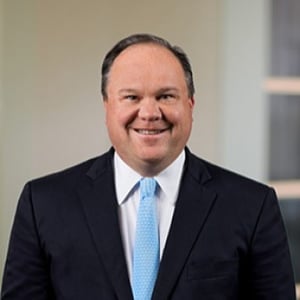
Counsel, BakerHostetler
Kevin Edgar’s extensive career in public policy, strategy, financial services and the macro-political process spans from work in the New York Stock Exchange to the United States House of Representatives. Kevin joined the firm after working for more than a decade on Capitol Hill, first as a senior counsel and then Chief Counsel of the House Financial Services Committee. He served on the Committee staff during the financial crisis and the enactment of the Dodd-Frank Wall Street Reform and Consumer Protection Act (P.L. 111-203). Kevin communicates public policy goals, analyzes and develops regulatory and legislative initiatives. He possesses a deep understanding of legislative and regulatory processes, and how government agencies interact with one another. Utilizing his substantial comprehension of financial laws and regulations, Kevin provides strategic advice and advises clients on compliance measures and industry best practices. Additionally, his market intel and broad network enable him to counsel clients on how the Congress and regulatory agencies can impact corporate governance, lending, investing, innovation and growth. With over 20 years of experience, Kevin brings a wealth of industry and public policy insight to his clients’ matters.
Partner, Mayer Brown
Andrew Olmem is a partner in Mayer Brown’s Washington DC office and a member of its Public Policy, Regulatory & Government Affairs, and Financial Services Regulatory & Enforcement practices. His practice focuses on complex financial services regulatory and public policy matters.
Andrew previously served as the Deputy Assistant to the President for Economic Policy and Deputy Director of the National Economic Council (NEC), where he oversaw the development and coordination of the administrations’ domestic economic policies, including for financial services, technology, telecom, energy, and infrastructure.
Earlier, he also served as the Republican Chief Counsel and Deputy Staff Director at the U.S. Senate Committee on Banking, Housing and Urban Affairs. Andrew began his legal career practicing corporate and securities law at Mayer Brown in New York City. Prior to attending law school, he served as an Assistant Economist at the Federal Reserve Bank of Richmond.
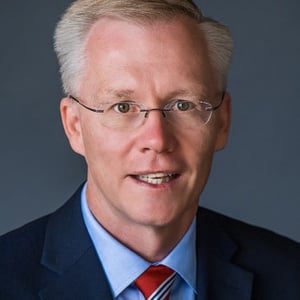
Executive Director, Milken Institute Center for Financial Markets
Michael S. Piwowar is the executive director of the Milken Institute Center for Financial Markets. Dr. Piwowar served as a Commissioner at the U.S. Securities and Exchange Commission from August 15, 2013 to July 6, 2018. He was first appointed to the SEC by President Barack Obama and was designated Acting Chairman of the Commission by President Donald Trump from January 23, 2017 to May 4, 2017. He was previously the Republican chief economist for the U.S. Senate Committee on Banking, Housing, and Urban Affairs under Senators Mike Crapo (R-ID) and Richard Shelby (R-AL) and served as the lead Republican economist on the four SEC-related titles of the Dodd-Frank Act and the JOBS Act. During the financial crisis and its immediate aftermath, Dr. Piwowar served in a one-year fixed-term position at the White House as a senior economist at the President’s Council of Economic Advisers (CEA) in both the George W. Bush and Barack Obama Administrations. Before joining the White House, Dr. Piwowar worked as a Principal at the Securities Litigation and Consulting Group (SLCG). He received a B.A. in Foreign Service and International Politics from the Pennsylvania State University, an M.B.A. from Georgetown University, and a Ph.D. in Finance from the Pennsylvania State University.
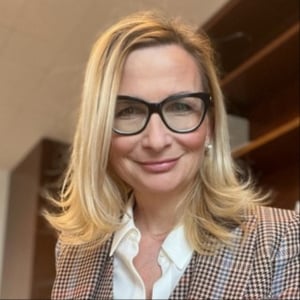
President, Corporate and External Affairs, Plaid
Jelena McWilliams is the former Managing Partner of the Washington, D.C. office of Cravath, Swaine, & Moore LLP and former Head of the Financial Institutions Group (FIG) Practice. She is a former Chairman of the Federal Deposit Insurance Corporation (FDIC). Ms. McWilliams focuses her practice on advising public and private companies, financial institutions, fintechs, and early-stage and venture companies on regulatory and corporate matters, as well as on mergers and acquisitions, IPO and other capital markets transactions.
While at the FDIC, Ms. McWilliams managed over 6,000 employees supervising approximately 5,000 banks, including through the COVID-19 pandemic. She participated in interagency negotiations, policy developments and joint agency rulemakings both as agency principal and as a voting member of the Financial Stability Oversight Council (FSOC). Ms. McWilliams chaired the Resolution Group at the Financial Stability Board (FSB); chaired and served on the Federal Financial Institutions Examination Council (FFIEC); and served on the Financial and Banking Information Infrastructure Committee (FBIIC). She testified before U.S. Congress on numerous occasions and engaged extensively with U.S. and international regulators, including the Basel Committee on Banking Supervision and the International Association of Deposit Insurers. She established the agency’s first office of innovation to implement technological advancements through supervisory channels and collaborative partnerships between banks and fintechs. Ms. McWilliams also spearheaded the agency’s effort to develop prudential banking policy on digital assets, including through a “crypto sprint” with the Office of the Currency Comptroller (OCC) and the Federal Reserve Board (FRB), and in collaboration with the President’s Working Group multiagency effort on stablecoins. She envisioned and created Mission Driven Bank Fund, a novel private/public partnership investment fund to support investments in low- and moderate-income communities served by the Minority Depository Institutions and Community Development Financial Institutions.
Ms. McWilliams is a frequent speaker on trends and topics in the financial services sector, including bank regulatory policy, governance trends, digital assets, fintechs and early-stage company regulatory policy. She is a member of the Economic Council of Washington, D.C., and serves on the Board of Trustees of the Southwestern Graduate School of Banking Foundation at Southern Methodist University.
Ms. McWilliams was born in Belgrade, Serbia. She received her B.A. with highest honors from the University of California, Berkeley in 1999 and her J.D. from the University of California, Berkeley, School of Law in 2002.
Partner, Mayer Brown
Andrew Olmem is a partner in Mayer Brown’s Washington DC office and a member of its Public Policy, Regulatory & Government Affairs, and Financial Services Regulatory & Enforcement practices. His practice focuses on complex financial services regulatory and public policy matters.
Andrew previously served as the Deputy Assistant to the President for Economic Policy and Deputy Director of the National Economic Council (NEC), where he oversaw the development and coordination of the administrations’ domestic economic policies, including for financial services, technology, telecom, energy, and infrastructure.
Earlier, he also served as the Republican Chief Counsel and Deputy Staff Director at the U.S. Senate Committee on Banking, Housing and Urban Affairs. Andrew began his legal career practicing corporate and securities law at Mayer Brown in New York City. Prior to attending law school, he served as an Assistant Economist at the Federal Reserve Bank of Richmond.

Professor of Law, Hofstra University School of Law
 Professor Colombo joined the Hofstra University School of Law faculty in the Fall of 2006. He teaches courses in corporate, securities, and contract law. His research and scholarship focuses primarily on corporate and securities law and, more specifically, the application of non-economic principles and norms to these fields.
Before coming to Hofstra, Professor Colombo served in the Complex Global Litigation Group of Morgan Stanley & Co., Inc., as vice president and counsel. In this position, Professor Colombo supervised investigations, litigations, and regulatory inquiries affecting Morgan Stanley's investment banking franchise. Prior to that, Professor Colombo practiced as a litigation associate at the New York office of Sullivan & Cromwell, where, among other things, he represented corporate and banking clients in civil and criminal investigations conducted by the S.E.C., the U.S. Attorney's Office, and the Federal Reserve Bank; in matters before state courts, federal courts, and arbitration panels; and in appeals before the Third Circuit, the D.C. Circuit, and the U.S. Supreme Court. From 2000-2003, Professor Colombo also served on the Committee on Professional and Judicial Ethics of the Association of the Bar of the City of New York.
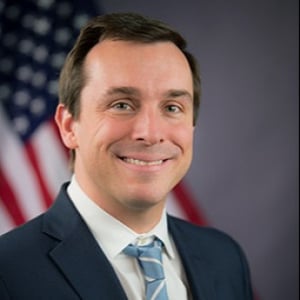
Professor of Law, New York University School of Law
Robert J. Jackson, Jr. is Professor of Law, Co-Director of the Institute for Corporate Governance and Finance, and Director of the Program on Corporate Law and Policy at the New York University School of Law. He was nominated and unanimously confirmed by the Senate to be Commissioner of the U.S. Securities and Exchange Commission in 2017 and served in that role until February 2020. Commissioner Jackson was an outspoken advocate for protecting investors, consistently calling for more transparency in capital markets and championing evidence-driven policymaking.

Partner, Norton Rose Fulbright
Steven Lofchie advises financial institutions on regulatory issues and financial instruments.
In his regulatory practice, Steven counsels clients on securities laws, the CEA, and related bankruptcy issues. His transactional practice focuses on securities credit and derivative transactions.
Steven is the founder and manager of an acclaimed legal website (now renamed Fried Frank Regulatory Intelligence) that has been endorsed by former chairpersons of both the SEC and CFTC. Subscribers to the website include government regulators and major buy- and sell-side firms.
Chambers USA has ranked Steven in Band 1 for eight years running, for both financial services regulation and derivatives. He is the only lawyer in the country to be top-ranked in both of those categories. Steven was also part of the team that was named 2020 Regulatory Team of the Year by IFLR Americas. The Best Lawyers in America recognized Steven as “Lawyer of the Year” for Administrative/Regulatory Law in New York in 2017, and U.S. News and World Report ranked him as the best regulatory lawyer in New York for 2014. In 2012, a derivatives transaction developed by Steven was cited as the best international structured product of the year by International Financial Law Review.

Wayne A. Abernathy, Wild Bells
Wayne A. Abernathy is a former U.S. Treasury Assistant Secretary for Financial Institutions under President George W. Bush, receiving the Alexander Hamilton Award in recognition of his service. In that office he was also a member of the Board of Directors of the Securities Investor Protection Corporation. Prior to his work at the Treasury, Mr. Abernathy served as Staff Director of the Senate Banking Committee, under Chairman Phil Gramm.
Following his service at the Treasury, Mr. Abernathy worked for 15 years on the staff of the American Bankers Association, as Executive Vice President for Financial Institutions Policy and Regulatory Affairs.
Previous experience with the Senate Banking Committee includes serving as Staff Director of the Subcommittee on Securities during 1995-1998. From 1989 until 1994, Mr. Abernathy was a Republican economist for the committee. He previously worked as a senior legislative assistant for Senator Gramm during 1987-1989 and as an economist for the Banking Committee’s Subcommittee on International Finance and Monetary Policy during 1981-1986, under Chairman Jake Garn.
Mr. Abernathy earned his bachelor’s degree in International Studies from The Johns Hopkins University in 1978. In 1980, he received a master’s degree in International Studies from the School of Advanced International Studies of The Johns Hopkins University.

Managing Partner, Federal Financial Analytics, Inc.
Karen Shaw Petrou is the co-founder and Managing Partner of Federal Financial Analytics, Inc., a privately-held company that, since 1985, has provided analytical and advisory services on legislative, regulatory, and public-policy issues affecting financial services companies doing business in the U.S. and abroad. The firm’s practice is a unique blend of strategic advice and policy analysis that does not include lobbying or any other projects that would compromise its objectivity and independence. This, Petrou believes, gives boards of directors, senior management and regulators the best advice on emerging issues on which to base their own strategic planning and advocacy.
Ms. Petrou is a frequent speaker on topics affecting the financial services industry. In addition to presentations to Congress, foreign legislatures and government agencies, she has spoken before such organizations as the Japanese Diet, the Office of the Comptroller of the Currency, various Federal Reserve Banks, the Economist’s Buttonwood conference, the Securities Industry and Financial Markets Association, the American Bankers Association, The Clearing House, the Financial Services Roundtable, the Institute of International Bankers, the Conference of State Bank Supervisors, the American Bar Association, the Brookings Institution, the American Institute of Certified Public Accountants, the National Association of Manufacturers, and many other industry, academic and policy-maker audiences. She has also authored numerous articles in professional publications such as the American Banker and International Economy, as well as general-interest media like The New York Times and Wall Street Journal. Ms. Petrou appears frequently in the media as an expert on banking legislation and regulation.
Prior to founding her own firm in 1985, Ms. Petrou worked in Washington as an officer at Bank of America, where she began her career in 1977. She is an honors graduate in Political Science from Wellesley College and also was a special student in an honors program at the Massachusetts Institute of Technology. She earned an M.A. in that subject from the University of California at Berkeley, and was a doctoral candidate there. She has served on the boards of banking organizations and sits as a director on the board of the Foundation Fighting Blindness and the Fidelco Guide Dog Foundation. She is also an advisory member of the board of the Morin Center for Banking and Financial Law.
Wayne A. Abernathy, Wild Bells
Wayne A. Abernathy is a former U.S. Treasury Assistant Secretary for Financial Institutions under President George W. Bush, receiving the Alexander Hamilton Award in recognition of his service. In that office he was also a member of the Board of Directors of the Securities Investor Protection Corporation. Prior to his work at the Treasury, Mr. Abernathy served as Staff Director of the Senate Banking Committee, under Chairman Phil Gramm.
Following his service at the Treasury, Mr. Abernathy worked for 15 years on the staff of the American Bankers Association, as Executive Vice President for Financial Institutions Policy and Regulatory Affairs.
Previous experience with the Senate Banking Committee includes serving as Staff Director of the Subcommittee on Securities during 1995-1998. From 1989 until 1994, Mr. Abernathy was a Republican economist for the committee. He previously worked as a senior legislative assistant for Senator Gramm during 1987-1989 and as an economist for the Banking Committee’s Subcommittee on International Finance and Monetary Policy during 1981-1986, under Chairman Jake Garn.
Mr. Abernathy earned his bachelor’s degree in International Studies from The Johns Hopkins University in 1978. In 1980, he received a master’s degree in International Studies from the School of Advanced International Studies of The Johns Hopkins University.
Managing Partner, Federal Financial Analytics, Inc.
Karen Shaw Petrou is the co-founder and Managing Partner of Federal Financial Analytics, Inc., a privately-held company that, since 1985, has provided analytical and advisory services on legislative, regulatory, and public-policy issues affecting financial services companies doing business in the U.S. and abroad. The firm’s practice is a unique blend of strategic advice and policy analysis that does not include lobbying or any other projects that would compromise its objectivity and independence. This, Petrou believes, gives boards of directors, senior management and regulators the best advice on emerging issues on which to base their own strategic planning and advocacy.
Ms. Petrou is a frequent speaker on topics affecting the financial services industry. In addition to presentations to Congress, foreign legislatures and government agencies, she has spoken before such organizations as the Japanese Diet, the Office of the Comptroller of the Currency, various Federal Reserve Banks, the Economist’s Buttonwood conference, the Securities Industry and Financial Markets Association, the American Bankers Association, The Clearing House, the Financial Services Roundtable, the Institute of International Bankers, the Conference of State Bank Supervisors, the American Bar Association, the Brookings Institution, the American Institute of Certified Public Accountants, the National Association of Manufacturers, and many other industry, academic and policy-maker audiences. She has also authored numerous articles in professional publications such as the American Banker and International Economy, as well as general-interest media like The New York Times and Wall Street Journal. Ms. Petrou appears frequently in the media as an expert on banking legislation and regulation.
Prior to founding her own firm in 1985, Ms. Petrou worked in Washington as an officer at Bank of America, where she began her career in 1977. She is an honors graduate in Political Science from Wellesley College and also was a special student in an honors program at the Massachusetts Institute of Technology. She earned an M.A. in that subject from the University of California at Berkeley, and was a doctoral candidate there. She has served on the boards of banking organizations and sits as a director on the board of the Foundation Fighting Blindness and the Fidelco Guide Dog Foundation. She is also an advisory member of the board of the Morin Center for Banking and Financial Law.

Partner, Steptoe LLP
Shannen W. Coffin is a partner in Steptoe’s Washington office, where co-chairs the firm’s appellate practice and is a member of the regulatory litigation practice group. He frequently represents clients in trial and appellate courts in matters involving constitutional and administrative law challenges to state and federal government regulatory action.
Mr. Coffin previously served as a senior lawyer in the Executive Branch. He was Counsel to Vice President Cheney in the Office of the Vice President of the United States, where, among other things, he served on the White House’s judicial selection committee. Before that, Mr. Coffin served as Deputy Assistant Attorney General in the US Justice Department’s Civil Division, where he was responsible for overseeing and coordinating trial litigation on behalf of the federal government for constitutional challenges to federal statutes, statutory and constitutional challenges to agency programs, and defense of national security and anti-terrorism programs.
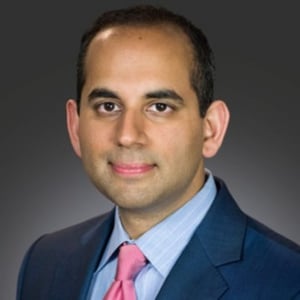
General Counsel, TRM Labs
Sujit Raman joined Sidley Austin after nearly a dozen years as a federal prosecutor, culminating in his service as Associate Deputy Attorney General at the U.S. Department of Justice (DOJ). In that role, he personally advised the Attorney General and Deputy Attorney General in their oversight of the nation’s cyber-related criminal and national security investigations and prosecutions. Sujit also led DOJ’s policy formulation in a number of critical areas, including cybersecurity, cross-border data transfers and protection, 5G/supply chain security, and emerging technologies such as facial recognition, cryptocurrency, and encryption. He brings clients a deep understanding of substantive and procedural issues involved in white collar defense, corporate internal investigations, cyber/data protection, and national security matters.
Sujit was a lead U.S. representative in high-profile international data-sharing negotiations with the United Kingdom, Australia, and the European Union. He also coordinated DOJ’s response to the Schrems II decision of the EU Court of Justice and, from 2018–2020, chaired the Attorney General’s Cyber-Digital Task Force, leading formulation of DOJ’s policy and operational response to transnational cybercrime, nation-state-sponsored malign cyber activity, and online foreign influence operations. Sujit was instrumental in drafting the legislation for the Clarifying Lawful Overseas Use of Data (CLOUD) Act and led the team that worked with industry and Capitol Hill to secure the legislation’s bipartisan passage.
In addition to his extensive experience in cybersecurity, data protection, and national security issues, Sujit served for over eight years as an Assistant United States Attorney in Maryland where he led numerous complex white collar fraud and public corruption investigations, and tried six cases to jury verdict. He also served as the office’s chief of appeals, supervising the appellate work of over 80 federal prosecutors across the spectrum of federal criminal law, arguing 20 cases in the federal court of appeals, and personally litigating matters of first impression in areas as diverse as export control and economic sanctions compliance; the RICO statute; the border search doctrine and the third-party doctrine as they apply to electronic evidence; and other leading issues at the intersection of law, technology, and privacy.
Sujit is a sought-after speaker and thinker on international regulatory and geopolitical issues and has appeared in national media and testified before the U.S. Senate on these topics. His professional achievements and service to the legal community have earned him public recognition, including the “Attorney General’s Award for Distinguished Service” (2018), the National Asian Pacific American Bar Association “Best Lawyers Under 40” Award (2015), the National South Asian Bar Association “Cornerstone Award” (2015), and the U.S. Secret Service “Director’s Award” (2013).
A term member of the Council on Foreign Relations, Sujit is a graduate of Harvard College, Harvard Law School, and the University of Bristol (UK), where he studied as a Marshall Scholar and served as head coach of the women’s varsity rowing program.
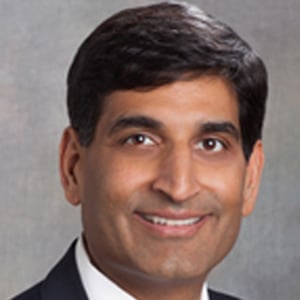
Head of Risk, cLabs
Jai Ramaswamy is the Head of Risk, Compliance and Regulatory Policy at cLabs, working on Celo, an open source, distributed ledger protocol designed to support the global development of financial tools to create a more accessible financial system. Before joining cLabs, Jai was the Head of Enterprise Risk Management at Capital One and the Global Head of AML Compliance Risk Management at Bank of America/Merrill Lynch.
Jai served in the United States Department of Justice for over a decade before moving to the private sector, most recently as the Chief of the Asset Forfeiture and Money Laundering Section in the Criminal Division. In that role, he oversaw the criminal enforcement of the Bank Secrecy Act and federal money laundering laws. He also investigated and prosecuted complex white collar crime as the Assistant United States Attorney in the Southern District of New York and pursued cybercriminal syndicates and supported the government's critical infrastructure protection efforts with DOJ's Computer Crime and Intellectual Property Section.
Jai has an undergraduate degree in government and economics from Harvard University, a law degree from the University of Pennsylvania Law School and a doctorate in social and political science from Cambridge University, U.K.
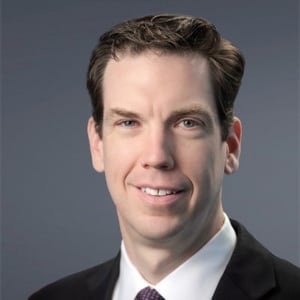
Partner, Fusion Law, PLLC
Paul is the founding partner of Fusion Law, PLLC. He has extensive experience with state, federal, and global regulators building coalitions and implementing policies to promote innovation in financial services. He is responsible for designing and implementing the first state (Arizona) and federal (CFPB) FinTech sandboxes in the United States. He also designed the CFPB no-action letter and trial disclosure policies. He helped found the first global regulatory innovation coalition (Global Financial Innovation Network) and led the founding of the first U.S. regulatory innovation coalition (American Consumer Financial Innovation Network). He served on the Financial Stability Oversight Council subcommittee on digital assets. He also has drafted state-level laws on blockchain and utility tokens.
Paul also has significant enforcement and litigation experience. He led many multi-state consumer protection enforcement matters as Civil Litigation Division Chief at the Arizona Attorney General’s Office.
Prior to his government service, Paul practiced law in the areas of securities litigation and transactional work for approximately six years at two well-known law firms. He also clerked on the U.S. Court of Appeals for the Fourth Circuit.

Topics
Don’t Fear Volatility in Cryptocurrency Prices; Fear Regulations that Will Harm America’s Crypto Lead
After a massive runup since the beginning of the year, the cryptocurrency market finally experienced...
Panel 2: What Should be the Future of Financial Regulation?
Tyler Beck Goodspeed, Randall D. Guynn, Aaron Klein, Kathy Kraninger, Andrew Olmem
Sponsored by the Financial Services & E-Commerce Practice Group
From the 1970’s to the passage of the Gramm-Leach-Bliley Act in 1998, financial regulation in...
Panel 1: Did Dodd-Frank Live Up to Its Promise?
Jonah Crane, Kevin R. Edgar, Andrew Olmem, Michael Piwowar
Sponsored by the Financial Services & E-Commerce Practice Group
Ten years after its passage, the Dodd-Frank Act remains the subject of much debate. The...
Keynote Speaker: Jelena McWilliams
Jelena McWilliams, Andrew Olmem
Chairman, Federal Deposit Insurance Corporation
Jelena McWilliams was sworn in as the 21st Chairman of the FDIC on June 5,...
Topics
Regulation By Enforcement Is Stifling Cryptocurrency
One of the few things that can make an industry demand more regulation is the...
Gamestop, Robinhood, and Regulation
Ronald J. Colombo, Robert J. Jackson, Steven Lofchie
There is an ongoing debate over what caused the Gamestop-Robinhood events of recent months, and whether the events illustrate the need...
Topics
Stressing Banks and the Economy
In about six months, the term of the Federal Reserve Board’s Vice Chairman for Supervision...
Deep Dive Episode 170 – Engine of Inequality: The Fed and the Future of Wealth in America
Wayne A. Abernathy, Karen Shaw Petrou
Regulatory Transparency Project's Fourth Branch Podcast
In her landmark book, financial services doyenne Karen Petrou explains how, despite better intentions, Federal...
Engine of Inequality: The Fed and the Future of Wealth in America
Wayne A. Abernathy, Karen Shaw Petrou
In her landmark book, financial services doyenne Karen Petrou explains how, despite better intentions, Federal...
Virtual Currencies and the Rule of Law
Shannen W. Coffin, Sujit Raman, Jaikumar Ramaswamy, Paul N. Watkins
During the last weeks of the Trump Administration’s Treasury Department, the Financial Crimes Enforcement Network...