
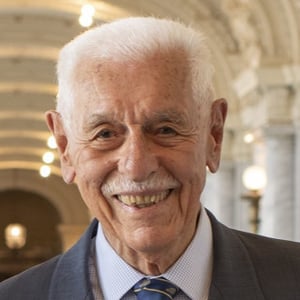
Judge, United States Court of Appeals, Ninth Circuit
Judge Carlos Bea serves as a judge on the United States Court of Appeals for the Ninth Circuit. He received his Bachelor's Degree from Stanford University in 1956 and his J.D. from Stanford Law School in 1958. Judge Bea was born in San Sebastian, Spain, and immigrated with his family to Cuba in 1939. In 1952, he represented Cuba on the Cuban National basketball team in the Helsinki Olympics. Judge Bea became a naturalized citizen of the United States in 1958. He engaged in private practice in San Francisco, principally in the area of civil trials (jury and non-jury), from 1959-75 at Dunne, Phelps & Mills and from 1975-90 at Carlos Bea, A Law Corporation. He taught courses in civil litigation advocacy at Hastings College of Law and Stanford Law School. From 1990 to 2003, Judge Bea served as a judge of the San Francisco Superior Court. He was nominated by President George W. Bush to the United States Court of Appeals for the Ninth Circuit and was confirmed in 2003.
Judge Bea and his wife Louise reside in San Francisco, where they raised their four sons, Sebastian, Alexander, Nicholas, and Dominic.
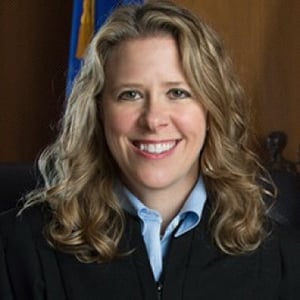
Justice, Wisconsin Supreme Court
Justice Rebecca Grassl Bradley, a Milwaukee native, was elected to the Supreme Court in 2016 after being appointed by Gov. Scott Walker in 2015. She is the first Wisconsin Supreme Court Justice to have served as an intermediate appellate court judge as well as a circuit court judge. Before joining the Supreme Court, Justice Bradley served as a District I Court of Appeals judge (appointed 2015), a Milwaukee County Circuit Court Judge (appointed 2012, elected 2013) and worked as an attorney in private practice (1996-2012), including serving as vice president of legal operations for a global software company.
Justice Bradley graduated from Marquette University in 1993 with an honors B.S. in Business Administration and Business Economics and received her juris doctor from the University of Wisconsin Law School in 1996.
Justice Bradley is a member of the Supreme Court Finance Committee and chairs the Supreme Court Legislative Committee as the Chief Justice's designee. She is a member of the Board of Advisors and past president of the Milwaukee Lawyers Chapter of the Federalist Society; serves on the Wisconsin State Advisory Committee of the U.S. Commission on Civil Rights; and is a member of the Bench and Bar Committee of the Wisconsin State Bar. She previously served on the Board of Governors of the St. Thomas More Lawyers Society; the Wisconsin Juvenile Jury Instructions Committee; the Wisconsin Juvenile Benchbook Committee; and as a member of the Milwaukee Trial Judges Association and the Wisconsin Trial Judges Association. While in private practice, Justice Bradley served as an American Arbitration Association Arbitrator and Chairman of the State Bar Business Law Section.
Justice Bradley's current term expires July 31, 2026.

Justice, Supreme Court of Pennsylvania
David N. Wecht is a Pennsylvania Supreme Court justice. Wecht is one of three Democrats elected to the Pennsylvania Supreme Court in November 2015. He was sworn in to office on January 7, 2016, for a term that expires on January 4, 2026.
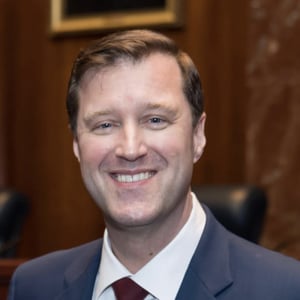
Justice, Texas Supreme Court
Evan Young is a Justice of the Supreme Court of Texas. Governor Greg Abbott, who appointed Young to fill an unexpired term, swore him into office on November 10, 2021. Justice Young was elected to a full term in November 2022.
Young graduated summa cum laude from Duke University in 1999, where he was inducted into Phi Beta Kappa. He was a British Marshall Scholar at Oxford University, where he completed his studies in 2001 and earned a First Class Honours degree in Modern History, focusing on British constitutional history. He earned his law degree from Yale Law School in 2004.
Young then worked as a lawyer in the judicial and executive branches of the federal government. He first served as a law clerk to Judge J. Harvie Wilkinson III of the U.S. Court of Appeals for the Fourth Circuit, and then to Justice Antonin Scalia at the U.S. Supreme Court. In 2006, after his clerkship with Justice Scalia ended, Justice Young became Counsel to the Attorney General at the U.S. Department of Justice, serving in the Office of the Attorney General under Attorneys General Alberto R. Gonzales and Michael B. Mukasey. While on the Attorney General’s staff, he accepted a detail to the U.S. Embassy in Baghdad, Iraq, where he was the Deputy Rule of Law Coordinator. In that position he worked to assist the Iraqi government in its efforts to strengthen its legal regime, including, for example, its courts and prison system.
Young returned to Texas and joined the Austin office of Baker Botts L.L.P. in 2009. His practice focused on trial and appellate litigation. He argued cases before both the Supreme Court of the United States and the Supreme Court of Texas, as well as many federal and state appellate courts. He represented clients across the country before every level of the state and federal judiciary.
Before joining the Texas Supreme Court, Young was appointed in 2017 by Governor Abbott and confirmed by the Texas Senate to serve as a member of the Texas Judicial Council, which is the policy-making body for the Texas Judiciary. In 2015, the Texas Supreme Court appointed him to the Supreme Court Advisory Committee, which assists the Court in drafting the rules that govern litigation in Texas courts. He served on both until his elevation to the bench.
Justice Young is an elected member of the American Law Institute and a member of the Texas Philosophical Society. He has been an adjunct law professor for many years at the University of Texas School of Law, where he has frequently taught the Federal Courts and Religious Liberty courses. He also has been an adjunct professor at the University of Mississippi School of Law, where he has taught multiple courses involving U.S. Supreme Court history. He served as Chair of the State Bar of Texas Business Law Section, Chair of the National Center for Missing and Exploited Children's Texas Regional Office, and Trustee of the Texas Supreme Court Historical Society.
Justice Young and his wife, Tobi, live in Austin with their daughter.
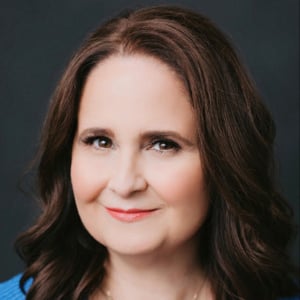
Chief Judge, United States Court of Appeals, Fifth Circuit
Jennifer Walker Elrod is the Chief Judge of the United States Court of Appeals for the Fifth Circuit. She was nominated to the Fifth Circuit in 2007, and she served as a Circuit Judge on the court until assuming the role of Chief Judge in October 2024. Prior to serving as a Circuit Judge, Chief Judge Elrod was appointed and then twice elected Judge of the 190th District Court of Harris County, Texas, where she spent over five years presiding over more than 200 jury and non-jury trials.
Chief Judge Elrod graduated cum laude from Harvard Law School, where she was an active member of the Harvard Federalist Society, an Ames Moot Court finalist, and a Senior Editor of the Harvard Journal of Law & Public Policy. She clerked for the Honorable Sim Lake in the Southern District of Texas. Before serving as a judge, Chief Judge Elrod worked in private practice, focusing on civil litigation, antitrust, and employment matters.
She has been repeatedly recognized for her work as a jurist, as well as for her pro bono work and contributions to the community. She has been named the 2022 Texas Review of Law & Politics’ Jurist of the Year, the 2018 Harvard Federalist Society’s Alumni of the Year, the 2016–17 Texas Association of Civil Trial and Appellate Specialists’ Appellate Judge of the Year, and the 2008 Mexican-American Bar Association of Texas’s Judge of the Year.
Chief Judge Elrod is actively engaged in the academic and legal communities. Chief Judge Elrod currently serves on the Board of Directors and as the Jurist-in-Residence at the South Texas College of Law, where she teaches civil procedure and First Amendment law. She is also a member of the American Law Institute and of the Board of Advisors for the Harvard Journal of Law & Public Policy, and she is a former member of the Board of Regents of her alma mater, Baylor University, and the Board of Visitors at Brigham Young University Law School. She previously served as the Chair of the Codes of Conduct Committee for the Judicial Conference of the United States. She has also served as the M.D. Anderson Visiting Public Service Professor at the Texas Tech University School of Law and as Jurist-in-Residence at Brigham Young University Law School, and she has taught legal writing at the University of Houston Law Center. She presented the Lewis F. Powell, Jr. Distinguished Lecture at the Washington and Lee University School of Law and is a frequent speaker on the topics of trial and appellate procedure, ethics, employment law, and constitutional law. Chief Judge Elrod also serves on the board of the Garland R. Walker Inn of Court, and co-produces an annual musical CLE, for which her pupilage group has won multiple national awards.
Chief Judge Elrod’s publications include: Trial by Siri: AI Comes to the Courtroom; Don’t Mess with Texas Judges: In Praise of the State Judiciary; For Good: Enriching Your Practice and Your Life Through Pro Bono and Community Service; Is the Jury Still Out?: A Case for the Continued Viability of the American Jury; and W(h)ither the Jury? The Diminishing Role of the Jury Trial in our Legal System.
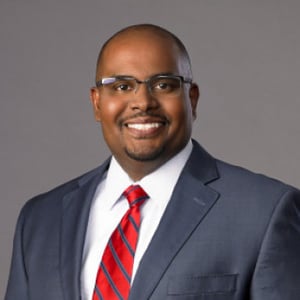
Principal, Kyle George Law Group
Kyle George previously served as Nevada’s First Assistant Attorney General under Attorney General Aaron Ford, where he supervised over 100 attorneys across 9 divisions responsible for legal representation of Nevada’s State Agencies, Boards, and Commissions, as well as civil litigation and regulatory and administrative proceedings.
George has served as General Counsel to the Nevada Governor, counsel and policy advisor to two Members of Congress, a Chief Deputy District Attorney, and as a litigator in private practice. He currently advises clients on state and federal regulatory matters, and government affairs and relations.
George earned his J.D. from Georgetown University Law Center, and he holds bachelor’s and master’s degrees in Chemistry from the University of Nevada, Las Vegas. While at UNLV, he was active in student government and served as President of the Graduate and Professional Student Association.
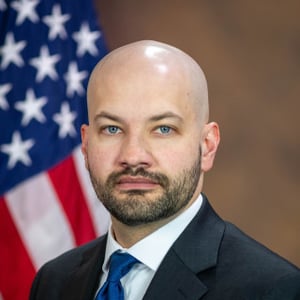
Deputy Assistant Attorney General, U.S. Department of Justice
Eric Hamilton serves as the Deputy Assistant Attorney General for the Federal Programs Branch of the Civil Division. He previously served as the Solicitor General for the State of Nebraska and as an Assistant Solicitor General in the Texas Attorney General’s Office. During the first Trump Administration, Eric worked as an Associate Counsel to the President in the Office of White House Counsel. Earlier in his career, he was in private practice in Washington, D.C. and clerked for Judge Thomas M. Hardiman on the U.S. Court of Appeals for the Third Circuit.
Eric is a graduate of Stanford Law School, where he served on the Stanford Law Review. He holds an undergraduate degree from the University of Nebraska-Lincoln.
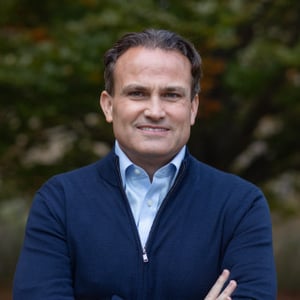
Professor of Law, University of Michigan Law School
Christopher J. Walker is a Professor of Law at the University of Michigan. Prior to joining Michigan law faculty in 2022, he spent a decade teaching at The Ohio State University Moritz College of Law. He previously clerked for Justice Anthony Kennedy of the U.S. Supreme Court, worked on the Civil Appellate Staff at the U.S. Department of Justice, and served on the Senate Judiciary Committee staff for the Gorsuch Supreme Court confirmation. Professor Walker’s research focuses on administrative law, regulation, and law and policy at the agency level. Outside the law school, he chaired the American Bar Association’s Section of Administrative Law and Regulatory Practice in 2020-21 and served as one of forty Public Members of the Administrative Conference of the United States from 2016-2022, and he continues to serve in both organizations in various capacities. He also works of counsel at the U.S. Chamber Litigation Center. In 2022, he received the Federalist Society’s Joseph Story Award.
Chief Judge, United States Court of Appeals, Fifth Circuit
Jennifer Walker Elrod is the Chief Judge of the United States Court of Appeals for the Fifth Circuit. She was nominated to the Fifth Circuit in 2007, and she served as a Circuit Judge on the court until assuming the role of Chief Judge in October 2024. Prior to serving as a Circuit Judge, Chief Judge Elrod was appointed and then twice elected Judge of the 190th District Court of Harris County, Texas, where she spent over five years presiding over more than 200 jury and non-jury trials.
Chief Judge Elrod graduated cum laude from Harvard Law School, where she was an active member of the Harvard Federalist Society, an Ames Moot Court finalist, and a Senior Editor of the Harvard Journal of Law & Public Policy. She clerked for the Honorable Sim Lake in the Southern District of Texas. Before serving as a judge, Chief Judge Elrod worked in private practice, focusing on civil litigation, antitrust, and employment matters.
She has been repeatedly recognized for her work as a jurist, as well as for her pro bono work and contributions to the community. She has been named the 2022 Texas Review of Law & Politics’ Jurist of the Year, the 2018 Harvard Federalist Society’s Alumni of the Year, the 2016–17 Texas Association of Civil Trial and Appellate Specialists’ Appellate Judge of the Year, and the 2008 Mexican-American Bar Association of Texas’s Judge of the Year.
Chief Judge Elrod is actively engaged in the academic and legal communities. Chief Judge Elrod currently serves on the Board of Directors and as the Jurist-in-Residence at the South Texas College of Law, where she teaches civil procedure and First Amendment law. She is also a member of the American Law Institute and of the Board of Advisors for the Harvard Journal of Law & Public Policy, and she is a former member of the Board of Regents of her alma mater, Baylor University, and the Board of Visitors at Brigham Young University Law School. She previously served as the Chair of the Codes of Conduct Committee for the Judicial Conference of the United States. She has also served as the M.D. Anderson Visiting Public Service Professor at the Texas Tech University School of Law and as Jurist-in-Residence at Brigham Young University Law School, and she has taught legal writing at the University of Houston Law Center. She presented the Lewis F. Powell, Jr. Distinguished Lecture at the Washington and Lee University School of Law and is a frequent speaker on the topics of trial and appellate procedure, ethics, employment law, and constitutional law. Chief Judge Elrod also serves on the board of the Garland R. Walker Inn of Court, and co-produces an annual musical CLE, for which her pupilage group has won multiple national awards.
Chief Judge Elrod’s publications include: Trial by Siri: AI Comes to the Courtroom; Don’t Mess with Texas Judges: In Praise of the State Judiciary; For Good: Enriching Your Practice and Your Life Through Pro Bono and Community Service; Is the Jury Still Out?: A Case for the Continued Viability of the American Jury; and W(h)ither the Jury? The Diminishing Role of the Jury Trial in our Legal System.
Principal, Kyle George Law Group
Kyle George previously served as Nevada’s First Assistant Attorney General under Attorney General Aaron Ford, where he supervised over 100 attorneys across 9 divisions responsible for legal representation of Nevada’s State Agencies, Boards, and Commissions, as well as civil litigation and regulatory and administrative proceedings.
George has served as General Counsel to the Nevada Governor, counsel and policy advisor to two Members of Congress, a Chief Deputy District Attorney, and as a litigator in private practice. He currently advises clients on state and federal regulatory matters, and government affairs and relations.
George earned his J.D. from Georgetown University Law Center, and he holds bachelor’s and master’s degrees in Chemistry from the University of Nevada, Las Vegas. While at UNLV, he was active in student government and served as President of the Graduate and Professional Student Association.
Deputy Assistant Attorney General, U.S. Department of Justice
Eric Hamilton serves as the Deputy Assistant Attorney General for the Federal Programs Branch of the Civil Division. He previously served as the Solicitor General for the State of Nebraska and as an Assistant Solicitor General in the Texas Attorney General’s Office. During the first Trump Administration, Eric worked as an Associate Counsel to the President in the Office of White House Counsel. Earlier in his career, he was in private practice in Washington, D.C. and clerked for Judge Thomas M. Hardiman on the U.S. Court of Appeals for the Third Circuit.
Eric is a graduate of Stanford Law School, where he served on the Stanford Law Review. He holds an undergraduate degree from the University of Nebraska-Lincoln.
Professor of Law, University of Michigan Law School
Christopher J. Walker is a Professor of Law at the University of Michigan. Prior to joining Michigan law faculty in 2022, he spent a decade teaching at The Ohio State University Moritz College of Law. He previously clerked for Justice Anthony Kennedy of the U.S. Supreme Court, worked on the Civil Appellate Staff at the U.S. Department of Justice, and served on the Senate Judiciary Committee staff for the Gorsuch Supreme Court confirmation. Professor Walker’s research focuses on administrative law, regulation, and law and policy at the agency level. Outside the law school, he chaired the American Bar Association’s Section of Administrative Law and Regulatory Practice in 2020-21 and served as one of forty Public Members of the Administrative Conference of the United States from 2016-2022, and he continues to serve in both organizations in various capacities. He also works of counsel at the U.S. Chamber Litigation Center. In 2022, he received the Federalist Society’s Joseph Story Award.
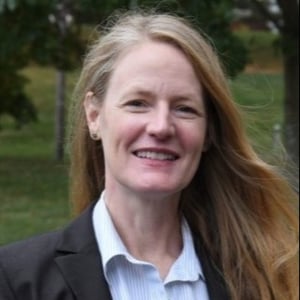
Professor of Law, University of Cincinnati College of Law
Professor Stephanie Hunter McMahon has taught courses in tax law and legal history at the University of Cincinnati College of Law since 2008, and while doing so has won two of the law school’s teaching awards, its faculty excellence award, and its award for scholarship.
To date, much of her scholarship explores the relationship between taxation and the public’s perception of taxation with respect to families and the application of administrative law to tax. Her interest in the development of tax policy led her to write Principles of Tax Policy for West’s Concise Hornbook Series. In the last two years, she has begun scholarship focusing on the tax treatment of disadvantaged groups, both women seeking abortions in states that do not provide access to care and the discriminatory tax treatment of inmate labor.
Her writings have been published in peer-reviewed journals, The Tax Lawyer (ABA journal), Florida Tax Review, and the Virginia Tax Review, as well as student-reviewed journals, such as Northwestern Law Review, Washington Law Review, and Michigan State Law Review. Professor McMahon received her J.D. from Harvard Law School and PhD in American history from the University of Virginia. Following law school, Professor McMahon practiced in the New York offices of Cravath, Swaine & Moore and Skadden, Arps, Slate, Meagher & Flom.
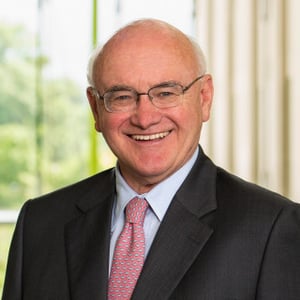
Partner, Jones Day
Ray Wiacek is one of the world’s leading international tax lawyers. He represents multinational corporations on cross-border financings, international acquisitions and reorganizations, and transfer pricing. He is particularly skilled at global planning involving intellectual property. Ray also defends his advice, favorably resolving tax disputes ranging from the proper pricing of foreign autos to the effectiveness of an agreement to share R&D costs worldwide. He is currently challenging the IRS’ anti-inversion regulations in court.
Ray negotiated and closed billions of dollars of cross-border financings for Bank of America against many of the leading banks in Europe. He led the worldwide team integrating Warner-Lambert and Pharmacia with Pfizer after Pfizer’s overhaul of those companies. This included the disposition of nonstrategic assets, such as Schick and Wilkinson Sword to Energizer and Chiclets and Dentyne to Cadbury. Ray also led the team that implemented a worldwide business and tax plan for Halliburton.
In addition to Bank of America, Pfizer, and Halliburton, representative clients have included Bridgestone/Firestone, Celgene, Dow Corning, H.J. Heinz, Isuzu Motors, JP Morgan, Transworld Oil, and United Coal.
Ray has testified many times on international tax matters before Congress and the Internal Revenue Service. He has been listed every year in the Chambers guide to best lawyers, with clients describing him as “pragmatic and deal oriented,” “an excellent negotiator,” with “superb technical skills and analytic ability.”
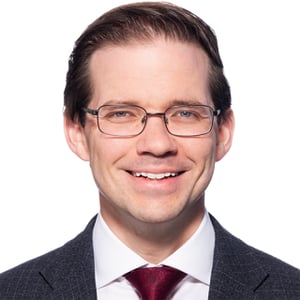
Of Counsel, Covington & Burling LLP
The Honorable Paul J. Ray is currently Of Counsel at Covington & Burling LLP where he advises clients on regulatory opportunities and challenges and helps them formulate and execute advocacy strategies for their regulatory policy priorities before the executive branch and Congress.
During the first Trump Administration, Paul held various senior positions at the Office of Information and Regulatory Affairs (OIRA) within the White House’s Office of Management and Budget, including as acting, and then Senate-confirmed, head of the office. As OIRA Administrator (the "regulations czar"), Paul supervised the review of hundreds of regulations from across the government, drafted numerous executive orders governing the regulatory process, and led the Administration’s regulatory reform effort. As a result of this experience, Paul is well-positioned to help clients understand and achieve regulatory policy priorities in the context of the government’s regulatory agenda and ongoing reform efforts.
Most recently, Paul was also the Director of the Roe Institute for Economic Policy Studies at The Heritage Foundation. In that role, he supervised the formulation of the Foundation’s economic and regulatory policy recommendations and provided technical assistance to congressional committees and staff regarding legislative changes to the regulatory process. In addition to his role at The Heritage Foundation, Paul also served as a Senior Advisor at a strategic advisory firm. Before his time in government, Paul practiced law at a law firm in Washington, specializing in administrative law matters.
Prior to his role at the White House, Paul was Counselor to the Secretary at the U.S. Department of Labor. There he led departmental efforts in high-profile rulemakings and helped formulate the Department’s legal positions and strategy.
Paul served as a law clerk to Supreme Court Justice Samuel Alito and as a law clerk to the Honorable Debra Livingston of the U.S. Court of Appeals for the Second Circuit.
Paul is a thought leader in the conservative legal movement and is a frequent commentator and speaker on regulatory policy and reform matters, including at law schools, professional gatherings, and other venues. He is the Chairman of Innovations in Peacebuilding International and the Regulatory Process Working Group of the Federalist Society’s Regulatory Transparency Project and a public member of the Administrative Conference of the United States. Paul is also an adjunct lecturer at the Hillsdale College School of Government.
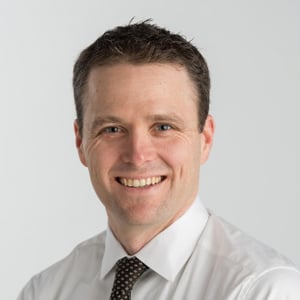
Professor of Law, University of Michigan Law School
Professor Nicholas Bagley teaches and writes in the areas of administrative law, regulatory theory, and health law. Prior to joining the Law School faculty, he was an attorney with the appellate staff in the Civil Division at the U.S. Department of Justice, where he argued a dozen cases before the U.S. Courts of Appeals and acted as lead counsel in many more. Professor Bagley also served as a law clerk to Justice John Paul Stevens of the U.S. Supreme Court and to the Hon. David S. Tatel of the U.S. Court of Appeals, District of Columbia Circuit. Professor Bagley holds a BA in English from Yale University and received his JD, summa cum laude, from New York University School of Law. Before entering law school, he joined Teach For America and taught eighth-grade English at a public school in South Bronx. Professor Bagley's work has appeared in the Harvard Law Review, the Columbia Law Review, the Georgetown Law Journal, the New England Journal of Medicine, and the Journal of Health Politics, Policy, and Law. In 2012, he was the recipient of the Law School's L. Hart Wright Award for Excellence in Teaching. He is a frequent contributor to The Incidental Economist, a prominent health policy blog.
Professor of Law, University of Michigan Law School
Christopher J. Walker is a Professor of Law at the University of Michigan. Prior to joining Michigan law faculty in 2022, he spent a decade teaching at The Ohio State University Moritz College of Law. He previously clerked for Justice Anthony Kennedy of the U.S. Supreme Court, worked on the Civil Appellate Staff at the U.S. Department of Justice, and served on the Senate Judiciary Committee staff for the Gorsuch Supreme Court confirmation. Professor Walker’s research focuses on administrative law, regulation, and law and policy at the agency level. Outside the law school, he chaired the American Bar Association’s Section of Administrative Law and Regulatory Practice in 2020-21 and served as one of forty Public Members of the Administrative Conference of the United States from 2016-2022, and he continues to serve in both organizations in various capacities. He also works of counsel at the U.S. Chamber Litigation Center. In 2022, he received the Federalist Society’s Joseph Story Award.

Professor, University of Minnesota Law School
Ilan Wurman is the Julius E. Davis Professor of Law at the University of Minnesota, where he teaches administrative law and constitutional law. He previously taught at Arizona State University. He writes primarily on the Fourteenth Amendment, administrative law, separation of powers, and constitutionalism. His academic writing has appeared in the Yale Law Journal, the Stanford Law Review, the University of Chicago Law Review, the University of Pennsylvania Law Review, the Virginia Law Review, the Duke Law Journal, the Minnesota Law Review, the Notre Dame Law Review, and the Texas Law Review among other journals.
Professor Wurman is the author of a casebook, Administrative Law Theory and Fundamentals: An Integrated Approach (Foundation Press 2d ed. 2024). He is also the author of A Debt Against the Living: An Introduction to Originalism (Cambridge 2017), and The Second Founding: An Introduction to the Fourteenth Amendment (Cambridge 2020). His next book, The Constitution of 1789: A New Introduction, is also forthcoming with Cambridge University Press.
Professor Wurman practices law with the firm Tully Bailey. He has litigated a variety of administrative law and constitutional law cases, including cases involving COVID-19 restrictions, transmission lines, and Appointments Clause challenges. He also devised winning public nuisance theories to force city governments to address the increasingly challenging public camping crises throughout the country.
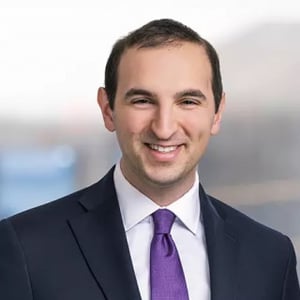
Associate, Covington & Burling LLP
Eli Nachmany is an associate at Covington & Burling LLP in the Washington, DC, office. He clerked for Judge Steven J. Menashi of the U.S. Court of Appeals for the Second Circuit. Eli graduated magna cum laude from Harvard Law School, where he was Editor-in-Chief of the Harvard Journal of Law & Public Policy. Prior to law school, Eli served as the speechwriter to the U.S. Secretary of the Interior and as a domestic policy aide in the White House Office of American Innovation. He graduated summa cum laude from New York University with a B.S. in Sports Management. Eli’s scholarship on administrative law and executive power has appeared in the BYU Law Review, George Mason Law Review, Wake Forest Law Review, and Yale Law Journal Forum.
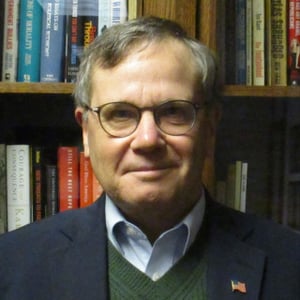
Senior Fellow in Constitutional Jurisprudence, Independence Institute
Professor Robert G. Natelson is a constitutional scholar and author.
Rob’s constitutional scholarship has been cited repeatedly by justices and parties at the U.S. Supreme Court—as well as by federal appeals courts, and at least 18 state supreme courts.
Rob’s research into the Constitution’s original meaning has carried him to libraries throughout the United States and in Britain, including four months at Oxford University. His books and articles span many different parts of the Constitution, including groundbreaking studies of the Necessary and Proper Clause, the Indian Commerce Clause, federalism, Founding-Era interpretation, regulation of elections, and the amendment process of Article V. He created the first-ever online bibliography for 18th century materials used in constitutional research. He is a contributing author to the Encyclopedia of the Supreme Court of the United States (on Magna Carta). He contributed eight essays to the third edition of the Heritage Guide to the Constitution: five on the amendment procedure and one each on the Guarantee Clause, the Postal Clause, and the Recess Appointments Clause.
U.S. Supreme Court justices have relied explicitly on Rob’s research in 41 citations in 13 separate cases.
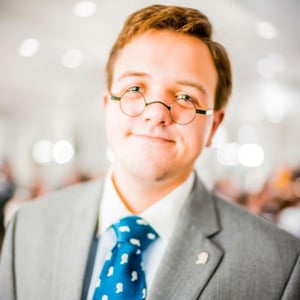
Adam Griffin is a graduate of the University of North Carolina School of Law. During law school, he served as a research assistant to Professor Stephen E. Sachs and UNC Law Dean Martin Brinkley. After law school, Adam spent two years litigating for liberty at the Institute for Justice as an inaugural Law and Liberty Fellow. He then served as a law clerk to Chief Judge Richard E. Myers in the United States District Court for the Eastern District of North Carolina, and previously worked at Pacific Legal Foundation and the Civil Rights Division of the Department of Justice.

Richard and Frances Mallery Professor of Law and Faculty Director, Constitutional Law Center, Stanford Law School
Michael W. McConnell is the Richard and Frances Mallery Professor and Faculty Director of the Constitutional Law Center at Stanford Law School, and a Senior Fellow at the Hoover Institution. From 2002 to 2009, he served as a Circuit Judge on the United States Court of Appeals for the Tenth Circuit. He was nominated by President George W. Bush, a Republican, and confirmed by a Democratic Senate by unanimous consent. McConnell has previously held chaired professorships at the University of Chicago and the University of Utah, and visiting professorships at Harvard and NYU. He teaches courses on constitutional law, constitutional history, First Amendment, and interpretive theory. He has published widely in the fields of constitutional law and theory, especially church and state, equal protection, and separation of powers. His book, “The President Who Would Not Be King: Executive Power Under the Constitution,” was published by Princeton University Press in 2020, based on the Tanner Lectures in Human Values, which he delivered at Princeton in 2019. His latest book, co-authored with Nathan Chapman, “Agreeing to Disagree: How the Establishment Clause Protects Religious Diversity and Freedom of Conscience,” was published by Oxford University Press in mid-2023. McConnell has argued sixteen cases in the United States Supreme Court, most recently Carney v. Adams (2020). defending a provision of the Delaware Constitution requiring political balance on that state’s courts. More recently, he was co-counsel in Gonzalez v. Google. He earned his B.A. from Michigan State University and his J.D. from the University of Chicago, and has received honorary degrees from Notre Dame University and Michigan State. He served as law clerk to Supreme Court Justice William J. Brennan, Jr. and D.C. Circuit Chief Judge J. Skelly Wright. He has been Assistant General Counsel of the Office of Management & Budget, Assistant to the Solicitor General of the Department of Justice, and a member of the President’s Intelligence Oversight Board. He is Senior of Counsel to the law firm Wilson, Sonsini, Goodrich & Rosati, and is co-chair of Meta’s Oversight Review Board.
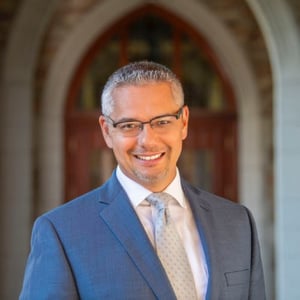
Tocqueville Associate Professor Department of Political Science and Concurrent Associate Professor of Law, University of Notre Dame Law School
Vincent Phillip Muñoz is the Tocqueville Associate Professor of Religion & Public Life in the Department of Political Science at the University of Notre Dame. He is the founding director of Notre Dame's undergraduate minor in Constitutional Studies and directs Notre Dame's Tocqueville Program for Inquiry into Religion and Public Life.
Muñoz writes and teaches across the fields of constitutional law, American politics, and political philosophy with a focus on religious liberty and the American Founding. His first book, God and the Founders: Madison, Washington, and Jefferson (Cambridge University Press, 2009) won the Hubert Morken Award from the American Political Science Association for the best publication on religion and politics in 2009 and 2010. His First Amendment church-state case reader, Religious Liberty and the American Supreme Court: The Essential Cases and Documents (Rowman & Littlefield) was first published in 2013 (revised edition, 2015) and is being used at Notre Dame and other leading universities.
Muñoz's current project is a scholarly monograph on the natural right of religious liberty and the original meaning of the First Amendment's Religion Clauses. Articles from that project have appeared in American Political Science Review, The Harvard Journal of Law and Public Policy, Notre Dame Law Review, American Political Thought, and the University of Pennsylvania's Journal of Constitutional Law.
Adam Griffin is a graduate of the University of North Carolina School of Law. During law school, he served as a research assistant to Professor Stephen E. Sachs and UNC Law Dean Martin Brinkley. After law school, Adam spent two years litigating for liberty at the Institute for Justice as an inaugural Law and Liberty Fellow. He then served as a law clerk to Chief Judge Richard E. Myers in the United States District Court for the Eastern District of North Carolina, and previously worked at Pacific Legal Foundation and the Civil Rights Division of the Department of Justice.
Richard and Frances Mallery Professor of Law and Faculty Director, Constitutional Law Center, Stanford Law School
Michael W. McConnell is the Richard and Frances Mallery Professor and Faculty Director of the Constitutional Law Center at Stanford Law School, and a Senior Fellow at the Hoover Institution. From 2002 to 2009, he served as a Circuit Judge on the United States Court of Appeals for the Tenth Circuit. He was nominated by President George W. Bush, a Republican, and confirmed by a Democratic Senate by unanimous consent. McConnell has previously held chaired professorships at the University of Chicago and the University of Utah, and visiting professorships at Harvard and NYU. He teaches courses on constitutional law, constitutional history, First Amendment, and interpretive theory. He has published widely in the fields of constitutional law and theory, especially church and state, equal protection, and separation of powers. His book, “The President Who Would Not Be King: Executive Power Under the Constitution,” was published by Princeton University Press in 2020, based on the Tanner Lectures in Human Values, which he delivered at Princeton in 2019. His latest book, co-authored with Nathan Chapman, “Agreeing to Disagree: How the Establishment Clause Protects Religious Diversity and Freedom of Conscience,” was published by Oxford University Press in mid-2023. McConnell has argued sixteen cases in the United States Supreme Court, most recently Carney v. Adams (2020). defending a provision of the Delaware Constitution requiring political balance on that state’s courts. More recently, he was co-counsel in Gonzalez v. Google. He earned his B.A. from Michigan State University and his J.D. from the University of Chicago, and has received honorary degrees from Notre Dame University and Michigan State. He served as law clerk to Supreme Court Justice William J. Brennan, Jr. and D.C. Circuit Chief Judge J. Skelly Wright. He has been Assistant General Counsel of the Office of Management & Budget, Assistant to the Solicitor General of the Department of Justice, and a member of the President’s Intelligence Oversight Board. He is Senior of Counsel to the law firm Wilson, Sonsini, Goodrich & Rosati, and is co-chair of Meta’s Oversight Review Board.
Tocqueville Associate Professor Department of Political Science and Concurrent Associate Professor of Law, University of Notre Dame Law School
Vincent Phillip Muñoz is the Tocqueville Associate Professor of Religion & Public Life in the Department of Political Science at the University of Notre Dame. He is the founding director of Notre Dame's undergraduate minor in Constitutional Studies and directs Notre Dame's Tocqueville Program for Inquiry into Religion and Public Life.
Muñoz writes and teaches across the fields of constitutional law, American politics, and political philosophy with a focus on religious liberty and the American Founding. His first book, God and the Founders: Madison, Washington, and Jefferson (Cambridge University Press, 2009) won the Hubert Morken Award from the American Political Science Association for the best publication on religion and politics in 2009 and 2010. His First Amendment church-state case reader, Religious Liberty and the American Supreme Court: The Essential Cases and Documents (Rowman & Littlefield) was first published in 2013 (revised edition, 2015) and is being used at Notre Dame and other leading universities.
Muñoz's current project is a scholarly monograph on the natural right of religious liberty and the original meaning of the First Amendment's Religion Clauses. Articles from that project have appeared in American Political Science Review, The Harvard Journal of Law and Public Policy, Notre Dame Law Review, American Political Thought, and the University of Pennsylvania's Journal of Constitutional Law.

Vice President, yes. every kid. foundation.
Michael Donnelly is vice president for yes. every kid. foundation., guiding national legal strategy and education transformation initiatives to advance family first learner centered educational freedom.
Prior to joining Yes Foundation, Donnelly was HSLDA Senior Counsel and Director of Global Outreach coordinating support of homeschooling freedom around the world where he also founded the Global Home Education Exchange, a global network dedicated to education freedom for all. He has participated in litigation in state, national and international tribunals. Donnelly has extensive legislative advocacy experience improving homeschool laws in numerous states and countries and has testified before many legislative committees at state, national and international levels.
Donnelly was an adjunct professor of government at Patrick Henry College where he taught constitutional law and is an adjunct professor of law at Regent University teaching international human rights law and international criminal law. He served in combat as a cavalry officer in the United States Army during the first Persian Gulf War after which he ran a successful FirstService franchise, founded a nationally ranked internet marketing firm, and worked in private legal practice.
In addition to being a frequent contributor in national media, Donnelly has authored hundreds of web and print articles along with scholarly publications regarding educational freedom, homeschooling, parental rights, and human rights. His published articles and chapters appear in The Journal of Law and Education, The International Journal of Human Rights, Homeschooling in the 21st Century, International Journal of School Choice and Reform, Homeschooling in New View, Balancing Freedom, Autonomy, and Accountability in Education, Religious Freedom in Education, The International Journal of Religious Freedom, Homeschooling in America and Europe: A Litmus Test of Democracy, and Parental Rights in Peril.
He holds a juris doctor with honors from the Boston University School of Law as a Paul J. Liacos Scholar and an LLM with merit in Constitutional and Human Rights Law from the London School of Economics. He is a member of six federal and state bars.
Mike and his wife Patricia are homeschooling parents of seven children and one grandchild (so far).
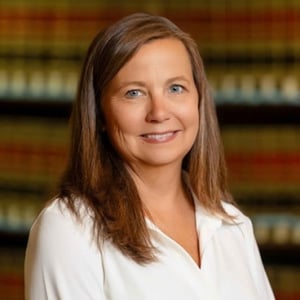
John P. Murphy Foundation Professor of Law and Associate Dean for External Engagement, University of Notre Dame Law School
Nicole Stelle Garnett is the John P. Murphy Foundation Professor of Law at Notre Dame Law School, where she also serves as the Associate Dean for External Engagement and directs the Notre Dame Education Law Project. Her teaching and research focus on education law and policy, religious liberty, and topics related to property law (especially land use and urban development policies). In addition to dozens of articles on these subjects, she is the author of Lost Classroom, Lost Community: Catholic Schools' Importance in Urban America (University of Chicago Press, 2014) and Ordering the City: Land Use, Policing and the Restoration of Urban America (Yale University Press, 2009).
Garnett received her B.A. with distinction in Political Science from Stanford University and her J.D. from Yale Law School. After law school, she clerked for the Honorable Morris S. Arnold of the United States Court of Appeals for the Eighth Circuit and for Associate Justice Clarence Thomas of the Supreme Court of the United States. Before joining the law school faculty in 1999, she worked for two years as a staff attorney at the Institute for Justice, a non-profit public-interest law firm in Washington, D.C., where she helped to defend the constitutionality of the nation's first private-school-choice programs.
At Notre Dame, Garnett is a faculty fellow in the Institute for Educational Initiatives, Kellogg Institute for International Studies, Fitzgerald Institute for Real Estate, and deNicola Center for Ethics and Culture. She also is an elected member of the American Law Institute and a Senior Fellow at the Manhattan Institute.

Senior National Advisor for Legal Affairs, National Alliance for Public Charter Schools
Renita Thukral is the Senior National Advisor for Legal Affairs for the National Alliance for Public Charter Schools, where she leads and grows the Alliance of Public Charter School Attorneys; addresses civil rights, fiscal equity, and labor/employment issues confronting charter schools; assists with federal legal questions challenging the charter school community; provides legal technical assistance to state partners considering litigation; and offers support to state partners seeking to improve their regulatory and authorizing environments. Prior to her work with the National Alliance, she was the policy director at the Louisiana Association of Public Charter Schools and, prior to that, the director of policy and advocacy at New Schools for New Orleans. Renita was an adjunct professor at Loyola University New Orleans College of Law and has been invited to speak at Harvard Law School, Columbia University Teachers College, and Johns Hopkins School of Education. In 2010, she published a law review article in the Loyola Journal of Public Interest Law titled “The Unique System of Charter Schools in New Orleans after Hurricane Katrina: Distinctive Structure, Familiar Challenges,” which examined the New Orleans charter school community. In 2013, she published a law review article in the ABA Journal of Labor and Employment Law titled “Federal Regulations of State Pension Plans: The Governmental Plan Revisited,” which explored the impact of federal rulemaking on the eligibility of quasi-public entities to offer state pension benefits to their employees. Before entering the charter school world, Renita was a public defender in New York City, practicing at the trial and appellate levels in state and federal courts. She clerked for the Honorable Robert W. Sweet in federal district court in the Southern District of New York. She earned her juris doctorate from Yale Law School and her Bachelor of Arts from Stanford University, where she was inducted into Phi Beta Kappa during her junior year. She taught junior high school math in Los Altos, California, before attending law school. Renita proudly serves on three nonprofit boards. She is a founding board member of Harmony School of Excellence-DC, a charter school based in Washington, D.C. She serves on the board of Charter Board Partners, a national nonprofit that designs and drives high-quality governance for charter school operators around the country. And she is the vice president of the board of Global Charity Foundation, a United States-based nonprofit that provides health care and education services to women and children in India.
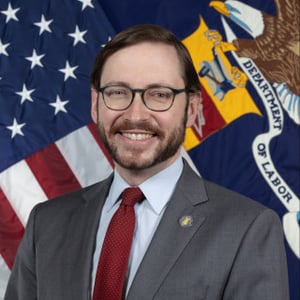
Solicitor, U.S. Department of Labor
Jonathan Berry is Solicitor at the U.S. Department of Labor, in service to President Trump’s agenda to put American workers first. He leads the Department’s lawyers in advising the Secretary and agency leadership on all aspects of law and in representing the Department in court. He was previously managing partner at Boyden Gray PLLC, where he provided strategic counsel and litigated on issues at the intersection of law, politics, and public policy. Earlier, he headed the regulatory office at Labor, and also served at the Department of Justice, in the first Trump Administration. Mr. Berry served as a law clerk to Judge Jerry E. Smith of the United States Court of Appeals for the Fifth Circuit, and to Associate Justice Samuel A. Alito, Jr., of the Supreme Court of the United States.

Hoover Fellow, Hoover Institution, Stanford University
Michael T. Hartney is a Fellow at Stanford University’s Hoover Institution, an adjunct fellow at
the Manhattan Institute, and an associate professor of political science at Boston College.
Hartney’s scholarly expertise is in American politics and public policy. His work has been
published in top academic journals such as the American Political Science Review, the American
Journal of Political Science and Perspectives on Politics and garnered media coverage from
the Economist, New York Times, Washington Post, and Wall Street Journal. Hartney also writes
regularly for popular outlets including City Journal, Education Next, National Review, and the
Washington Post.
Hartney’s first book, How Policies Make Interest Groups: Governments, Unions, and American
Education was published late last year by the University of Chicago Press. The book examines
the origins, power, and activities of America’s teachers’ unions and shows how governments
have long subsidized the unions’ political organizing efforts, enabling them to wield outsized
influence in American education. Before his academic career, he worked as a policy analyst for
the National Governors Association, where he provided analysis to state policymakers on a wide
range of school reform issues, from teacher and principal quality to high school redesign.
Hartney earned his Ph.D. from the University of Notre Dame and his bachelor’s degree from
Vanderbilt University.
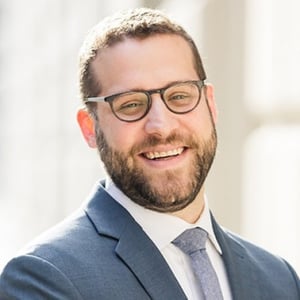
President and General Counsel, The Fairness Center
David R. Osborne is President & General Counsel of the Fairness Center. David helped to launch the Fairness Center in 2014 and provides advice and counsel to clients, directs the Fairness Center’s legal strategy, and oversees all litigation efforts. Prior to joining the Fairness Center, David practiced law in Florida, where he had previously served as clerk to a Florida Supreme Court justice.
David received his Juris Doctorate from the Florida State University College of Law, graduating magna cum laude. He enrolled in law school after working as official staff for a Member of Congress from Orlando, Florida.
David is a member of the Pennsylvania and Florida state bars and has been admitted to the federal District Court for the Middle District of Pennsylvania. He is based in central Pennsylvania, where he is also president of the Harrisburg Chapter of the Federalist Society and a State Advisory Committee Member for the U.S. Commission on Civil Rights. David and his wife have been happily married for 11 years and have four children together.

Senior Fellow and Director of Constitutional Studies, Manhattan Institute
Ilya Shapiro is a senior fellow and director of constitutional studies at the Manhattan Institute and a contributing editor of City Journal. Previously he was executive director and senior lecturer at the Georgetown Center for the Constitution, and before that a vice president of the Cato Institute.
Shapiro is the author of Lawless: The Miseducation of America’s Elites (2025) and Supreme Disorder: Judicial Nominations and the Politics of America’s Highest Court (2020), coauthor of Religious Liberties for Corporations? (2014), and editor of 11 volumes of the Cato Supreme Court Review (2008-18). He has contributed to a variety of academic, popular, and professional publications, including the Wall Street Journal, Harvard Journal of Law & Public Policy, Washington Post, Los Angeles Times, USA Today, National Review, and Newsweek. He also regularly provides commentary for various media outlets, writes the Shapiro’s Gavel newsletter on Substack, and once appeared on the Colbert Report.
Shapiro has testified many times before Congress and state legislatures and has filed more than 500 amicus curiae “friend of the court” briefs in the Supreme Court. He lectures regularly on behalf of the Federalist Society, is a member of the board of fellows of the Jewish Policy Center, was an inaugural Washington Fellow at the National Review Institute, and has been an adjunct law professor at the George Washington University and University of Mississippi. He is also the chairman of the board of advisers of the Mississippi Justice Institute, a barrister in the Edward Coke Appellate Inn of Court, and a former member of the Virginia Advisory Committee to the U.S. Commission on Civil Rights.
Earlier in his career, Shapiro was a special assistant/adviser to the Multi-National Force in Iraq on rule-of-law issues and practiced at Patton Boggs and Cleary Gottlieb. Before entering private practice, he clerked for Judge E. Grady Jolly of the U.S. Court of Appeals for the Fifth Circuit. He holds an AB from Princeton University, an MSc from the London School of Economics, and a JD from the University of Chicago Law School.
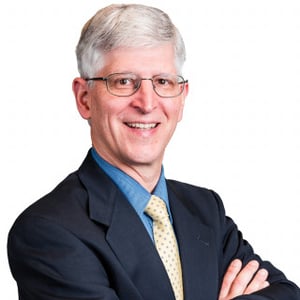
Eric Stahlfeld has been Chief Litigation Counsel and head of the legal team since 2018 for the Freedom Foundation, whose mission is to free public sector employees from union bondage. Eric graduated in 1992 from the Marshall-Wythe School of Law at the College of William and Mary in Virginia, after which he moved to Washington State to practice law. Prior to law school, Eric worked in the Office of Presidential Personnel under President Ronald Reagan.
Eric and his wife, Susan, live outside Seattle. They have two children, daughter Marta teaches American and world history, and son Karl who is a law student. Eric’s principal hobby involves birds: watching them, taking pictures of them, shooting them, and eating them.

The Judiciary's Federalist Revival
Carlos T. Bea, Rebecca Bradley, David N. Wecht, Evan A. Young
2023 National Lawyers Convention
In recent years, the U.S. Supreme Court has emphasized the federalist nature of our national...
Do States Enjoy a Special Solicitude?
Jennifer Walker Elrod, Kyle George, Eric Hamilton, Christopher J. Walker
2023 National Lawyers Convention
Over the last two decades, states have played an important and increasing role in federal...
Do States Enjoy a Special Solicitude?
Jennifer Walker Elrod, Kyle George, Eric Hamilton, Christopher J. Walker
2023 National Lawyers Convention
Over the last two decades, states have played an important and increasing role in federal...
Regulation and Red Tape: Tax Inversions: Unpacking the Pfizer Case
Stephanie McMahon, Raymond Wiacek, Paul J. Ray
A Regulatory Transparency Project Fourth Branch Video
In 2014, the pharmaceutical company Pfizer initiated a restructuring, only to encounter impediments from the...
Deep Dive Episode 285 - Loper Bright and the Next Steps for Chevron Deference at the Supreme Court
Nicholas Bagley, Christopher J. Walker, Ilan Wurman, Eli Nachmany
Regulatory Transparency Project's Fourth Branch Podcast
This Term, the Supreme Court will hear Loper Bright Enterprises v. Raimondo—a case concerning judicial...
The False Doctrine of Inherent Sovereign Authority
Robert G. Natelson
Federalist Society Review, Volume 24
This essay examines the hypothesis that the federal government and its departments and officials hold...
Talks with Authors: Agreeing to Disagree: How the Establishment Clause Protects Religious Diversity and Freedom of Conscience
Adam F. Griffin, Michael W. McConnell, Vincent Phillip Munoz
Agreeing to Disagree: How the Establishment Clause Protects Religious Diversity and Freedom of Conscience investigates...
Talks with Authors: Agreeing to Disagree: How the Establishment Clause Protects Religious Diversity and Freedom of Conscience
Adam F. Griffin, Michael W. McConnell, Vincent Phillip Munoz
Agreeing to Disagree: How the Establishment Clause Protects Religious Diversity and Freedom of Conscience investigates...
Plenary Session #2 Religious Charter Schools: Protected or Prohibited by the First Amendment?
Michael Donnelly, Nicole Stelle Garnett, Renita K. Thukral
2023 Education Law & Policy Conference
Supporters of charter schools argue that their popularity and proven effectiveness in improving learning outcomes...
Plenary Session #1 Teacher Unions: Roadblocks to Education Reform or Defenders of Teacher and Student Interests?
Jonathan Berry, Michael Hartney, David R. Osborne, Ilya Shapiro, Eric Stahlfeld
2023 Education Law & Policy Conference
The COVID-19 pandemic demonstrated the powerful influence of teacher unions in public education. As a...