

Former President & CEO, The Federalist Society for Law and Public Policy Studies
Eugene B. Meyer, former President and CEO of the Federalist Society, has served as Executive Director, CEO, and/or President of the organization for more than 40 years. He is responsible for shepherding the organization from a small group of law students to a community of 90,000 lawyers, law students, academics, judges, and others interested in the rule of law. The Society now includes a Student Chapter at nearly every ABA-accredited law school in the country and Lawyers Chapters in 220 major cities across the nation. Gene earned his B.A. in history at Yale in 1975 and his M.A. in political science from the London School of Economics in 1976. Gene currently serves on the boards of the U.S. Chess Center, the Holman Foundation, the Sarah Scaife Foundation, and the advisory board of the Adam Smith Society. He holds the title of International Chess Master.

Chief Judge, United States Court of Appeals, Sixth Circuit
JEFFREY S. SUTTON is the Chief Judge of the United States Court of Appeals for the Sixth Circuit. He has served as Chair of the Federal Judicial Conference Committee on Rules of Practice and Procedure, Chair of the Advisory Committee on Appellate Rules, and Chair of the Supreme Court Fellows Commission. He currently serves as Chair of the Executive Committee of the Judicial Conference of the United States. Since 1993, Chief Judge Sutton has been an adjunct professor at The Ohio State University College of Law, where he teaches seminars on State Constitutional Law, the United States Supreme Court, and Appellate Advocacy. He also teaches a class on State Constitutional Law at Harvard Law School. Among other publications, he is the author of Who Decides? States as Laboratories of Constitutional Experimentation and 51 Imperfect Solutions: States and the Making of American Constitutional Law. He is the co-author of a casebook, State Constitutional Law: The Modern Experience, as well as The Law of Judicial Precedent. He is also the co-editor of The Essential Scalia: On the Constitution, the Courts, and the Rule of Law. In 2006, Chief Judge Sutton was elected to the American Law Institute, and in 2017 he was elected to its Council.
Former President & CEO, The Federalist Society for Law and Public Policy Studies
Eugene B. Meyer, former President and CEO of the Federalist Society, has served as Executive Director, CEO, and/or President of the organization for more than 40 years. He is responsible for shepherding the organization from a small group of law students to a community of 90,000 lawyers, law students, academics, judges, and others interested in the rule of law. The Society now includes a Student Chapter at nearly every ABA-accredited law school in the country and Lawyers Chapters in 220 major cities across the nation. Gene earned his B.A. in history at Yale in 1975 and his M.A. in political science from the London School of Economics in 1976. Gene currently serves on the boards of the U.S. Chess Center, the Holman Foundation, the Sarah Scaife Foundation, and the advisory board of the Adam Smith Society. He holds the title of International Chess Master.
Chief Judge, United States Court of Appeals, Sixth Circuit
JEFFREY S. SUTTON is the Chief Judge of the United States Court of Appeals for the Sixth Circuit. He has served as Chair of the Federal Judicial Conference Committee on Rules of Practice and Procedure, Chair of the Advisory Committee on Appellate Rules, and Chair of the Supreme Court Fellows Commission. He currently serves as Chair of the Executive Committee of the Judicial Conference of the United States. Since 1993, Chief Judge Sutton has been an adjunct professor at The Ohio State University College of Law, where he teaches seminars on State Constitutional Law, the United States Supreme Court, and Appellate Advocacy. He also teaches a class on State Constitutional Law at Harvard Law School. Among other publications, he is the author of Who Decides? States as Laboratories of Constitutional Experimentation and 51 Imperfect Solutions: States and the Making of American Constitutional Law. He is the co-author of a casebook, State Constitutional Law: The Modern Experience, as well as The Law of Judicial Precedent. He is also the co-editor of The Essential Scalia: On the Constitution, the Courts, and the Rule of Law. In 2006, Chief Judge Sutton was elected to the American Law Institute, and in 2017 he was elected to its Council.
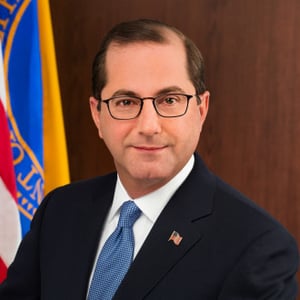
Secretary, U.S. Department of Health & Human Services
Alex M. Azar II was sworn in as the Secretary of Health and Human Services on Jan. 29, 2018. Azar has spent his career working in both the public and private sectors, as an attorney and in senior leadership roles focused on advancing healthcare reform, research and innovation.
From 2001 to 2007, Azar served at the U.S. Department of Health and Human Services – first as its General Counsel (2001–2005) and then as Deputy Secretary. During his time as Deputy Secretary, Azar was involved in improving the department’s operations; advancing its emergency preparedness and response capabilities as well as its global health affairs activities; and helping oversee the rollout of the Medicare Part D prescription drug program.
In 2007, Azar rejoined the private sector as senior vice president for corporate affairs and communications at Eli Lilly and Co. From 2012 to 2017, he served as president of Lilly USA LLC, the company’s largest affiliate.
Azar clerked for U.S. Supreme Court Justice Antonin Scalia prior to practicing law for several years.
Azar graduated summa cum laude with a bachelor’s degree in economics and government from Dartmouth College and earned his law degree from Yale University.
For the past 10 years, Azar has lived in Indiana with his wife and their two children.

Executive Vice President, The Federalist Society
Dean Reuter is Executive Vice President at the Federalist Society for Law and Public Policy Studies. He has served in two federal government agency Offices of the Inspector General, as Counsel to the Inspector General and Deputy Inspector General, responsible for policing the use of federal funds granted and contracted through those agencies. As such, he helped conduct and oversee criminal investigations across the country. He is the principal author of the non-fiction book, The Hidden Nazi: The Untold Story of America's Deal with the Devil, and editor of Liberty’s Nemesis: The Unchecked Expansion of the State and Confronting Terror: 9/11 and the Future of American National Security. He was appointed by the President and served as Vice-Chairman of the Board of Directors of the Corporation for National and Community Service, and recently served as an appointee on the U.S. Commission on Presidential Scholars. He is a graduate of Hood College (BA with Honors) and the University of Maryland School of Law.
Secretary, U.S. Department of Health & Human Services
Alex M. Azar II was sworn in as the Secretary of Health and Human Services on Jan. 29, 2018. Azar has spent his career working in both the public and private sectors, as an attorney and in senior leadership roles focused on advancing healthcare reform, research and innovation.
From 2001 to 2007, Azar served at the U.S. Department of Health and Human Services – first as its General Counsel (2001–2005) and then as Deputy Secretary. During his time as Deputy Secretary, Azar was involved in improving the department’s operations; advancing its emergency preparedness and response capabilities as well as its global health affairs activities; and helping oversee the rollout of the Medicare Part D prescription drug program.
In 2007, Azar rejoined the private sector as senior vice president for corporate affairs and communications at Eli Lilly and Co. From 2012 to 2017, he served as president of Lilly USA LLC, the company’s largest affiliate.
Azar clerked for U.S. Supreme Court Justice Antonin Scalia prior to practicing law for several years.
Azar graduated summa cum laude with a bachelor’s degree in economics and government from Dartmouth College and earned his law degree from Yale University.
For the past 10 years, Azar has lived in Indiana with his wife and their two children.
Executive Vice President, The Federalist Society
Dean Reuter is Executive Vice President at the Federalist Society for Law and Public Policy Studies. He has served in two federal government agency Offices of the Inspector General, as Counsel to the Inspector General and Deputy Inspector General, responsible for policing the use of federal funds granted and contracted through those agencies. As such, he helped conduct and oversee criminal investigations across the country. He is the principal author of the non-fiction book, The Hidden Nazi: The Untold Story of America's Deal with the Devil, and editor of Liberty’s Nemesis: The Unchecked Expansion of the State and Confronting Terror: 9/11 and the Future of American National Security. He was appointed by the President and served as Vice-Chairman of the Board of Directors of the Corporation for National and Community Service, and recently served as an appointee on the U.S. Commission on Presidential Scholars. He is a graduate of Hood College (BA with Honors) and the University of Maryland School of Law.
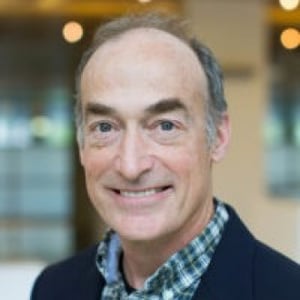
Professor of Law, Georgetown Law
William W. Buzbee is a professor of law at Georgetown University Law Center. In his teaching and scholarship, he specializes in environmental law, legislation and regulation, and administrative law. Recent publications focus on climate regulation, deregulation and law governing agency policy change, and federalism. He also offers seminars on advanced environmental, regulatory, and constitutional law subjects, with his most recent seminar focused on “The Art of Regulatory War.”
Professor Buzbee’s books include the recently published Fighting Westway: Environmental Law, Citizen Activism, and the Regulatory War that Transformed New York City (Cornell University Press 2014) and Preemption Choice: The Theory, Law and Reality of Federalism’s Core Question(Cambridge University Press, hardcover 2009, paperback 2011) (William W. Buzbee editor and contributor). He has been a co-author of the 5th , 6th, 7th and forthcoming 8th editions of Environmental Protection: Law and Policy (Aspen/Wolters Kluwer). Law review scholarship includes publications in New York University Law Review, University of Pennsylvania Law Review, Michigan Law Review, Stanford Law Review (co-authored), Cornell Law Review (co-authored), Duke Law Journal (forthcoming), George Washington Law Review, Iowa Law Review, The Journal of Law and Politics and in an array of other journals, books, news outlets, and blogs. Three of his articles have been named among the 10 best environmental or land use law articles of that year and republished in the Land Use and Environment Law Review. He regularly assists with appellate and Supreme Court environmental, federalism, and regulatory litigation, and also has testified before congressional committees on environmental and regulatory matters. He has published op-eds on regulatory and environmental issues with The New York Times, The Hill, CNN, and been quoted and interviewed by numerous press and media outlets.
Professor Buzbee joined Georgetown from Emory Law School, where he was a professor of law and directed its Environmental and Natural Resources Law Program. He also co-directed Emory’s Center on Federalism and Intersystemic Governance. He has been a visiting professor of law at Columbia, Cornell and Illinois law schools. He has also served as a professor for the Leiden-Amsterdam-Columbia Law School Summer Program in American Law. Professor Buzbee is a founding Member Scholar of the Center for Progressive Reform, a Washington D.C.-based regulatory think tank. Professor Buzbee was awarded the 2007-2008 Emory Williams Teaching Award for excellence in teaching. Professor Buzbee clerked for United States Judge Jose A. Cabranes, and before becoming a professor was an attorney-fellow at the Natural Resources Defense Council, and did environmental, land use and litigation work for the New York City law firm, Patterson, Belknap, Webb & Tyler. JD, Columbia Law School, 1986; BA, Amherst College, magna cum laude, 1983.

Dr. John Eastman is the former Henry Salvatori Professor of Law & Community Service and former Dean at Chapman University's Dale E. Fowler School of Law, where he had been a member of the faculty since 1999, specializing in Constitutional Law, Legal History, and Property. He is a founding director of the Center for Constitutional Jurisprudence, a public interest law firm affiliated with the Claremont Institute that he founded in 1999. He has a Ph.D. in Government from the Claremont Graduate School and a J.D. from the University of Chicago Law School, and a B.A. in Politics and Economics from the University of Dallas. He serves as the Chairman of the Board of the National Organization for Marriage.
Prior to joining the Chapman law faculty, Dr. Eastman served as a law clerk to the Honorable Clarence Thomas, Associate Justice, Supreme Court of the United States, and to the Honorable J. Michael Luttig, Judge, United States Court of Appeals for the Fourth Circuit and practiced law with the national law firm of Kirkland & Ellis. Dr. Eastman has also represented numerous clients in important constitutional law matters and has argued before the Supreme Court. On behalf of the Claremont Institute Center for Constitutional Jurisprudence, he has participated as amicus curiae before the Supreme Court of the United States, U.S. Courts of Appeals, and State Supreme Courts in more than one hundred cases of constitutional significance, including Boy Scouts of America v. Dale, Zelman v. Simmons-Harris (the school vouchers case), Kelo v. New London, Ct. (eminent domain), and Van Orden v. Perry (the 10 Commandments case). He has also appeared as an expert legal commentator on numerous television and radio programs, including C-SPAN, Fox News, PBS, NewsHour, and The O'Reilly Factor.
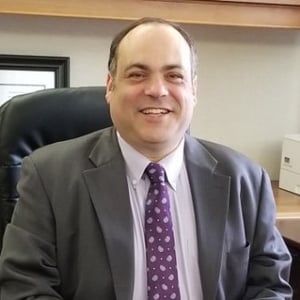
Special Counsel, Office of Special Counsel
Henry Kerner graduated from Harvard Law School and spent 18 years working as a career prosecutor in California. In 2011, he joined the staff of the House Committee on Oversight and Government Reform, the chief investigative committee of the United States House of Representatives. Under Chairman Darrell Issa, and later, Chairman Jason Chaffetz, he led investigations of the federal bureaucracy and fought on behalf of whistleblowers to protect American taxpayers. Mr. Kerner was also the staff director under Ranking Member Sen. John McCain of the Senate Permanent Subcommittee on Investigations, the lead investigative committee of the Senate. He left the Hill in early 2016 and joined Cause of Action Institute as assistant vice president for investigations. Cause of Action is a nonpartisan oversight group committed to exposing waste, fraud and abuse in the federal government. It has worked with whistleblowers and good government groups throughout the country.
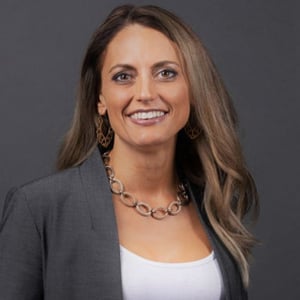
Judge, U.S. Court of Appeals for the Third Circuit
Hon. Jennifer Mascott served as Associate Professor of Law and Director of the Separation of Powers Institute at The Catholic University of America’s Columbus School of Law before her appointment to the federal bench. On July 16, 2025, President Donald J. Trump nominated her to the U.S. Court of Appeals for the Third Circuit (Delaware), and she was confirmed on October 9, 2025.
Prior to her confirmation, Judge Mascott wrote extensively in administrative and constitutional law, statutory interpretation, and the separation of powers. Her scholarship—published in leading journals including the Stanford Law Review, Notre Dame Law Review, and Supreme Court Review—was cited by the U.S. Supreme Court and multiple federal courts. She also contributed Supreme Court commentary for NBC Universal.
Before joining Catholic Law, she was an Assistant Professor and Co-Director of The C. Boyden Gray Center at George Mason University’s Antonin Scalia Law School. In 2022 she became co-author of Beermann, Cass & Diver’s Administrative Law: Cases and Materials (9th ed.). In 2023 she received the Justice Joseph Story Award for excellence in scholarship, teaching, and advancing the rule of law.
Judge Mascott also served as a Council Member of the ABA’s Administrative Law Section and as a Public Member of the Administrative Conference of the United States. She frequently testified before Congress on executive power, regulatory reform, and judicial jurisdiction, and participated in multiple Supreme Court confirmation hearings.
From 2019 to 2021, she took leave from academia to serve as Deputy Assistant Attorney General in the Department of Justice’s Office of Legal Counsel and later as Associate Deputy Attorney General, where she argued federal cases and assisted with Justice Amy Coney Barrett’s confirmation. Earlier in her career, she clerked for Justice Clarence Thomas and for then-Judge Brett M. Kavanaugh on the D.C. Circuit.
Judge Mascott earned her J.D. summa cum laude from the George Washington University Law School and her B.A. from the same institution.
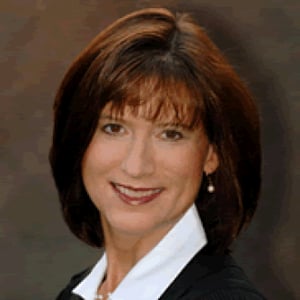
Judge, United States Court of Appeals, Seventh Circuit
Judge Sykes was nominated to the Seventh Circuit by President George W. Bush and confirmed by the Senate in 2004. Prior to her appointment to the federal bench, Judge Sykes served as a justice on the Wisconsin Supreme Court. Governor Tommy G. Thompson appointed her in September 1999 to fill a mid-term vacancy on the state supreme court, and she was elected to a full ten-year term in April 2000. From 1992-1999, Judge Sykes served on the state trial bench in Milwaukee County (elected in 1992 and re-elected in 1998). From 1985-1992, Judge Sykes practiced law with the Milwaukee firm of Whyte & Hirschboeck, S.C., and from 1984-1985, was a law clerk to Federal Judge Terence T. Evans.
Born and raised in the Milwaukee area, Judge Sykes earned a bachelor’s degree in journalism from Northwestern University in 1980 and a law degree from Marquette University Law School in 1984. Between college and law school, Judge Sykes worked as a reporter for The Milwaukee Journal.
Judge Sykes has two sons.
Professor of Law, Georgetown Law
William W. Buzbee is a professor of law at Georgetown University Law Center. In his teaching and scholarship, he specializes in environmental law, legislation and regulation, and administrative law. Recent publications focus on climate regulation, deregulation and law governing agency policy change, and federalism. He also offers seminars on advanced environmental, regulatory, and constitutional law subjects, with his most recent seminar focused on “The Art of Regulatory War.”
Professor Buzbee’s books include the recently published Fighting Westway: Environmental Law, Citizen Activism, and the Regulatory War that Transformed New York City (Cornell University Press 2014) and Preemption Choice: The Theory, Law and Reality of Federalism’s Core Question(Cambridge University Press, hardcover 2009, paperback 2011) (William W. Buzbee editor and contributor). He has been a co-author of the 5th , 6th, 7th and forthcoming 8th editions of Environmental Protection: Law and Policy (Aspen/Wolters Kluwer). Law review scholarship includes publications in New York University Law Review, University of Pennsylvania Law Review, Michigan Law Review, Stanford Law Review (co-authored), Cornell Law Review (co-authored), Duke Law Journal (forthcoming), George Washington Law Review, Iowa Law Review, The Journal of Law and Politics and in an array of other journals, books, news outlets, and blogs. Three of his articles have been named among the 10 best environmental or land use law articles of that year and republished in the Land Use and Environment Law Review. He regularly assists with appellate and Supreme Court environmental, federalism, and regulatory litigation, and also has testified before congressional committees on environmental and regulatory matters. He has published op-eds on regulatory and environmental issues with The New York Times, The Hill, CNN, and been quoted and interviewed by numerous press and media outlets.
Professor Buzbee joined Georgetown from Emory Law School, where he was a professor of law and directed its Environmental and Natural Resources Law Program. He also co-directed Emory’s Center on Federalism and Intersystemic Governance. He has been a visiting professor of law at Columbia, Cornell and Illinois law schools. He has also served as a professor for the Leiden-Amsterdam-Columbia Law School Summer Program in American Law. Professor Buzbee is a founding Member Scholar of the Center for Progressive Reform, a Washington D.C.-based regulatory think tank. Professor Buzbee was awarded the 2007-2008 Emory Williams Teaching Award for excellence in teaching. Professor Buzbee clerked for United States Judge Jose A. Cabranes, and before becoming a professor was an attorney-fellow at the Natural Resources Defense Council, and did environmental, land use and litigation work for the New York City law firm, Patterson, Belknap, Webb & Tyler. JD, Columbia Law School, 1986; BA, Amherst College, magna cum laude, 1983.
Dr. John Eastman is the former Henry Salvatori Professor of Law & Community Service and former Dean at Chapman University's Dale E. Fowler School of Law, where he had been a member of the faculty since 1999, specializing in Constitutional Law, Legal History, and Property. He is a founding director of the Center for Constitutional Jurisprudence, a public interest law firm affiliated with the Claremont Institute that he founded in 1999. He has a Ph.D. in Government from the Claremont Graduate School and a J.D. from the University of Chicago Law School, and a B.A. in Politics and Economics from the University of Dallas. He serves as the Chairman of the Board of the National Organization for Marriage.
Prior to joining the Chapman law faculty, Dr. Eastman served as a law clerk to the Honorable Clarence Thomas, Associate Justice, Supreme Court of the United States, and to the Honorable J. Michael Luttig, Judge, United States Court of Appeals for the Fourth Circuit and practiced law with the national law firm of Kirkland & Ellis. Dr. Eastman has also represented numerous clients in important constitutional law matters and has argued before the Supreme Court. On behalf of the Claremont Institute Center for Constitutional Jurisprudence, he has participated as amicus curiae before the Supreme Court of the United States, U.S. Courts of Appeals, and State Supreme Courts in more than one hundred cases of constitutional significance, including Boy Scouts of America v. Dale, Zelman v. Simmons-Harris (the school vouchers case), Kelo v. New London, Ct. (eminent domain), and Van Orden v. Perry (the 10 Commandments case). He has also appeared as an expert legal commentator on numerous television and radio programs, including C-SPAN, Fox News, PBS, NewsHour, and The O'Reilly Factor.
Special Counsel, Office of Special Counsel
Henry Kerner graduated from Harvard Law School and spent 18 years working as a career prosecutor in California. In 2011, he joined the staff of the House Committee on Oversight and Government Reform, the chief investigative committee of the United States House of Representatives. Under Chairman Darrell Issa, and later, Chairman Jason Chaffetz, he led investigations of the federal bureaucracy and fought on behalf of whistleblowers to protect American taxpayers. Mr. Kerner was also the staff director under Ranking Member Sen. John McCain of the Senate Permanent Subcommittee on Investigations, the lead investigative committee of the Senate. He left the Hill in early 2016 and joined Cause of Action Institute as assistant vice president for investigations. Cause of Action is a nonpartisan oversight group committed to exposing waste, fraud and abuse in the federal government. It has worked with whistleblowers and good government groups throughout the country.
Judge, U.S. Court of Appeals for the Third Circuit
Hon. Jennifer Mascott served as Associate Professor of Law and Director of the Separation of Powers Institute at The Catholic University of America’s Columbus School of Law before her appointment to the federal bench. On July 16, 2025, President Donald J. Trump nominated her to the U.S. Court of Appeals for the Third Circuit (Delaware), and she was confirmed on October 9, 2025.
Prior to her confirmation, Judge Mascott wrote extensively in administrative and constitutional law, statutory interpretation, and the separation of powers. Her scholarship—published in leading journals including the Stanford Law Review, Notre Dame Law Review, and Supreme Court Review—was cited by the U.S. Supreme Court and multiple federal courts. She also contributed Supreme Court commentary for NBC Universal.
Before joining Catholic Law, she was an Assistant Professor and Co-Director of The C. Boyden Gray Center at George Mason University’s Antonin Scalia Law School. In 2022 she became co-author of Beermann, Cass & Diver’s Administrative Law: Cases and Materials (9th ed.). In 2023 she received the Justice Joseph Story Award for excellence in scholarship, teaching, and advancing the rule of law.
Judge Mascott also served as a Council Member of the ABA’s Administrative Law Section and as a Public Member of the Administrative Conference of the United States. She frequently testified before Congress on executive power, regulatory reform, and judicial jurisdiction, and participated in multiple Supreme Court confirmation hearings.
From 2019 to 2021, she took leave from academia to serve as Deputy Assistant Attorney General in the Department of Justice’s Office of Legal Counsel and later as Associate Deputy Attorney General, where she argued federal cases and assisted with Justice Amy Coney Barrett’s confirmation. Earlier in her career, she clerked for Justice Clarence Thomas and for then-Judge Brett M. Kavanaugh on the D.C. Circuit.
Judge Mascott earned her J.D. summa cum laude from the George Washington University Law School and her B.A. from the same institution.
Judge, United States Court of Appeals, Seventh Circuit
Judge Sykes was nominated to the Seventh Circuit by President George W. Bush and confirmed by the Senate in 2004. Prior to her appointment to the federal bench, Judge Sykes served as a justice on the Wisconsin Supreme Court. Governor Tommy G. Thompson appointed her in September 1999 to fill a mid-term vacancy on the state supreme court, and she was elected to a full ten-year term in April 2000. From 1992-1999, Judge Sykes served on the state trial bench in Milwaukee County (elected in 1992 and re-elected in 1998). From 1985-1992, Judge Sykes practiced law with the Milwaukee firm of Whyte & Hirschboeck, S.C., and from 1984-1985, was a law clerk to Federal Judge Terence T. Evans.
Born and raised in the Milwaukee area, Judge Sykes earned a bachelor’s degree in journalism from Northwestern University in 1980 and a law degree from Marquette University Law School in 1984. Between college and law school, Judge Sykes worked as a reporter for The Milwaukee Journal.
Judge Sykes has two sons.
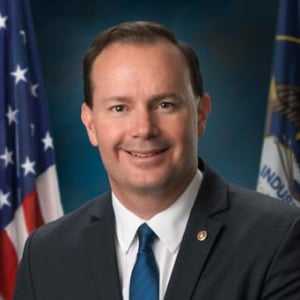
United States Senator, Utah
Elected in 2010 as Utah's 16th Senator, Mike Lee has spent his career defending the basic liberties of Americans and Utahns as a tireless advocate for our founding constitutional principles.
Senator Lee acquired a deep respect for the Constitution early on. His father, Rex Lee, who served as the Solicitor General under President Ronald Reagan, would often discuss varied aspects of judicial and constitutional doctrine around the kitchen table, from Due Process to the uses of Executive Plenary Power. He attended most of his father's arguments before the U.S. Supreme Court, giving him a unique, hands-on experience and understanding of government up close.
Lee graduated from Brigham Young University with a Bachelor of Science in Political Science, and served as BYU's Student Body President in his senior year. He graduated from BYU's Law School in 1997 and went on to serve as law clerk to Judge Dee Benson of the U.S. District Court for the District of Utah, and then with future Supreme Court Justice Judge Samuel A. Alito, Jr. on the U.S. Court of Appeals for the Third Circuit.
Lee spent several years as an attorney with the law firm Sidley & Austin specializing in appellate and Supreme Court litigation, and then served as an Assistant U.S. Attorney in Salt Lake City arguing cases before the U.S. Court of Appeals for the Tenth Circuit.
Lee served the state of Utah as Governor Jon Huntsman's General Counsel and was later honored to reunite with Justice Alito, now on the Supreme Court, for a one-year clerkship. He returned to private practice in 2007.
Throughout his career, Lee earned a reputation as an outstanding practitioner of the law based on his sound judgment, abilities in the courtroom, and thorough understanding of the Constitution.
Today, Lee fights to preserve America's proud founding document in the United States Senate. He advocates efforts to support constitutionally limited government, fiscal responsibility, individual liberty, and economic prosperity.
Lee is a member of the Judiciary Committee, and serves as Chairman of the Antitrust, Competition Policy and Consumer Rights Subcommittee protecting business competition and personal freedom.
He also oversees issues critical to Utah as the Chairman of the Water and Power Subcommittee of the Energy and Natural Resources Committee. He serves on the Commerce Committee and the Joint Economic Committee, as well.
In the 114th Congress, Lee also began his tenure as Chairman of the Senate Steering Committee, where he works with his Republican colleagues in the Senate to introduce bold and innovative solutions to issues facing the American people.
Lee and his wife Sharon live in Alpine, Utah, with their three children. He is a member of The Church of Jesus Christ of Latter-day Saints and served a two-year mission for the Church in the Texas Rio Grande Valley.

Co-Chairman, The Federalist Society for Law and Public Policy Studies
Leonard is Co-Chairman and former Executive Vice President of the Federalist Society, joining the organization over 25 years ago. Since that time he has been instrumental in helping the organization top 70,000, focusing on the growth of lawyers membership, operations and activities advancing limited, constitutional government. In addition to his work at the Society, Leonard has advised President Trump on judicial selection, assisted with the Gorsuch and Kavanaugh Supreme Court selection and confirmation process, and served as a member of the transition team. He also organized the outside coalition efforts in support of the Roberts and Alito U.S. Supreme Court confirmations. Leonard was appointed by President George W. Bush to three terms to the U.S. Commission on International Religious Freedom as chairman. He was also a U.S. Delegate to the UN Council and UN Commission on Human Rights during the Bush Administration. Leonard was the recipient of the 2009 Bradley Prize, along with the other founders and directors of the Federalist Society, for his work in advancing freedom and the rule of law. He is the coeditor of Presidential Leadership: Rating the Best and the Worst in the White House, as well as the author of opinion editorials in the New York Times,The Wall Street Journal, and Washington Post. Leonard holds degrees from Cornell University and Cornell Law School. He presently resides in Northern Virginia, where he and his wife Sally have raised their seven children.
United States Senator, Utah
Elected in 2010 as Utah's 16th Senator, Mike Lee has spent his career defending the basic liberties of Americans and Utahns as a tireless advocate for our founding constitutional principles.
Senator Lee acquired a deep respect for the Constitution early on. His father, Rex Lee, who served as the Solicitor General under President Ronald Reagan, would often discuss varied aspects of judicial and constitutional doctrine around the kitchen table, from Due Process to the uses of Executive Plenary Power. He attended most of his father's arguments before the U.S. Supreme Court, giving him a unique, hands-on experience and understanding of government up close.
Lee graduated from Brigham Young University with a Bachelor of Science in Political Science, and served as BYU's Student Body President in his senior year. He graduated from BYU's Law School in 1997 and went on to serve as law clerk to Judge Dee Benson of the U.S. District Court for the District of Utah, and then with future Supreme Court Justice Judge Samuel A. Alito, Jr. on the U.S. Court of Appeals for the Third Circuit.
Lee spent several years as an attorney with the law firm Sidley & Austin specializing in appellate and Supreme Court litigation, and then served as an Assistant U.S. Attorney in Salt Lake City arguing cases before the U.S. Court of Appeals for the Tenth Circuit.
Lee served the state of Utah as Governor Jon Huntsman's General Counsel and was later honored to reunite with Justice Alito, now on the Supreme Court, for a one-year clerkship. He returned to private practice in 2007.
Throughout his career, Lee earned a reputation as an outstanding practitioner of the law based on his sound judgment, abilities in the courtroom, and thorough understanding of the Constitution.
Today, Lee fights to preserve America's proud founding document in the United States Senate. He advocates efforts to support constitutionally limited government, fiscal responsibility, individual liberty, and economic prosperity.
Lee is a member of the Judiciary Committee, and serves as Chairman of the Antitrust, Competition Policy and Consumer Rights Subcommittee protecting business competition and personal freedom.
He also oversees issues critical to Utah as the Chairman of the Water and Power Subcommittee of the Energy and Natural Resources Committee. He serves on the Commerce Committee and the Joint Economic Committee, as well.
In the 114th Congress, Lee also began his tenure as Chairman of the Senate Steering Committee, where he works with his Republican colleagues in the Senate to introduce bold and innovative solutions to issues facing the American people.
Lee and his wife Sharon live in Alpine, Utah, with their three children. He is a member of The Church of Jesus Christ of Latter-day Saints and served a two-year mission for the Church in the Texas Rio Grande Valley.
Co-Chairman, The Federalist Society for Law and Public Policy Studies
Leonard is Co-Chairman and former Executive Vice President of the Federalist Society, joining the organization over 25 years ago. Since that time he has been instrumental in helping the organization top 70,000, focusing on the growth of lawyers membership, operations and activities advancing limited, constitutional government. In addition to his work at the Society, Leonard has advised President Trump on judicial selection, assisted with the Gorsuch and Kavanaugh Supreme Court selection and confirmation process, and served as a member of the transition team. He also organized the outside coalition efforts in support of the Roberts and Alito U.S. Supreme Court confirmations. Leonard was appointed by President George W. Bush to three terms to the U.S. Commission on International Religious Freedom as chairman. He was also a U.S. Delegate to the UN Council and UN Commission on Human Rights during the Bush Administration. Leonard was the recipient of the 2009 Bradley Prize, along with the other founders and directors of the Federalist Society, for his work in advancing freedom and the rule of law. He is the coeditor of Presidential Leadership: Rating the Best and the Worst in the White House, as well as the author of opinion editorials in the New York Times,The Wall Street Journal, and Washington Post. Leonard holds degrees from Cornell University and Cornell Law School. He presently resides in Northern Virginia, where he and his wife Sally have raised their seven children.
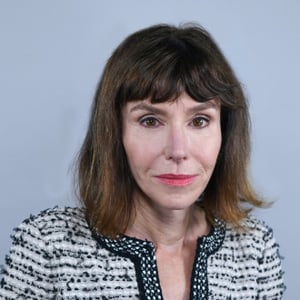
Executive Director, Justice and Society Program, The Aspen Institute
Meryl Justin Chertoff is Executive Director of The Aspen Institute’s Justice and Society Program. She directs its summer seminar in Aspen, its speaker series in New York, Washington and Aspen, and the Inclusive America Project, on religious pluralism in America. She is also an adjunct professor of law at Georgetown Law, where she teaches about state government. She is an opinion contributor for The Hill, and also writes for the Huffington Post and the Aspen Idea.
From 2006-2009, Ms. Chertoff was Director of the Sandra Day O’Connor Project on the State of the Judiciary at Georgetown Law, studying and educating the public about federal and state courts. At Georgetown Law, she developed educational programs for visiting judges and other government officials from overseas.
She served in the Office of Legislative Affairs at the Federal Emergency Management Agency (FEMA), participating in the agency’s transition into the Department of Homeland Security in 2003. Ms. Chertoff has been a legislative relations professional, Director of New Jersey’s Washington, D.C. Office under two governors, and legislative counsel to the Chair of the New Jersey State Assembly Appropriations Committee.
Her undergraduate and law degrees are from Harvard. She and her husband have two adult children.
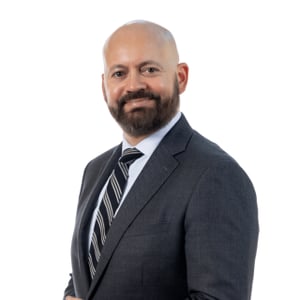
Milton R. Underwood Chair in Free Enterprise, Vanderbilt University Law School
Brian Fitzpatrick is the Milton R. Underwood Chair in Free Enterprise and Professor of Law at Vanderbilt Law School, where his research focuses on class action litigation, federal courts, judicial selection, and constitutional law. He is best known for his empirical studies of class action settlements as well as his book The Conservative Case for Class Actions (University of Chicago Press, 2019). Professor Fitzpatrick joined Vanderbilt's law faculty in 2007 after serving as the John M. Olin Fellow at New York University School of Law. He graduated first in his class from Harvard Law School and went on to clerk for Judge Diarmuid O'Scannlain on the U.S. Court of Appeals for the Ninth Circuit and Justice Antonin Scalia on the U.S. Supreme Court. After his clerkships, Professor Fitzpatrick practiced commercial and appellate litigation for several years at Sidley Austin in Washington, D.C., and served as Special Counsel for Supreme Court Nominations to U.S. Senator John Cornyn. Before earning his law degree, Fitzpatrick graduated summa cum laude with a bachelor's of science in chemical engineering from the University of Notre Dame. He has received the Hall-Hartman Outstanding Professor Award, which recognizes excellence in classroom teaching, for his Civil Procedure and Federal Courts courses.
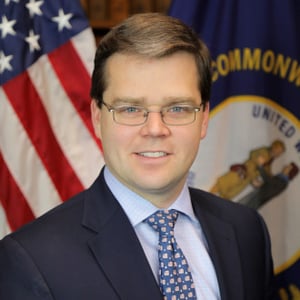
United States District Judge, Eastern District of Kentucky
Chad served as solicitor general from 2019 to 2021, overseeing all civil and criminal appellate litigation involving the commonwealth, and leading a team of nearly 30 appellate lawyers.
Chad has also served as the chief deputy general counsel (2015-2019) to the governor of Kentucky. In that role, he represented the governor in litigation and advised the governor and other executive branch officials on a wide variety of legal and policy issues.
After graduating law school, he clerked for Judge John M. Rogers on the US Court of Appeals for the Sixth Circuit, and also for Judge Amul R. Thapar on the US District Court for the Eastern District of Kentucky.
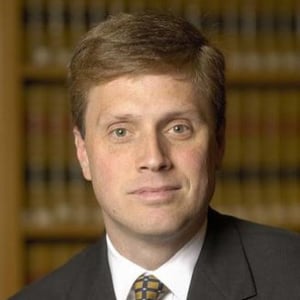
Partner, Ransdell Roach & Royse PLLC
John Roach is a former Kentucky Supreme Court Justice who also served as General Counsel to Governor Ernie Fletcher. Recently, John served as General Counsel in the Transition of Governor Matt Bevin. In addition to a vigorous trial practice, John has successfully argued cases before the Kentucky Court of Appeals, Kentucky Supreme Court and U.S. Court of Appeals for the Sixth Circuit. Since returning to private practice, John has represented a diverse group of individuals and businesses including Toyota Motor Manufacturing Kentucky, Harrison Memorial Hospital, Bayer Properties (developers of The Summit at Fritz Farm), Dominion Enterprises, and Greer Companies (major franchisee of Cheddar’s Casual Café). John is an avid horseracing fan with a genuine passion for the sport and the Commonwealth’s role as the epicenter of the thoroughbred world. He has represented a number of domestic and foreign clients in all aspects of thoroughbred breeding and racing. John is currently the Vice Chairman of the Kentucky Horse Racing Commission. Among the many equine transactions and litigation matters in which Mr. Roach has participated, he is proud to have served as lead counsel in the stallion syndication of PIONEEROF THE NILE, sire of Triple Crown Winner and Breeders’ Cup Champion AMERICAN PHAROAH. He has been included in The Best Lawyers in America® for numerous years and is AV Preeminent® Peer Review Rated by Martindale-Hubbell®. His practice primarily focuses on commercial litigation, appellate advocacy, labor and employment law and litigation, equine law, and corporate transactions for businesses and entrepreneurs.

18th Annual Barbara K. Olson Memorial Lecture
Eugene B. Meyer, Jeffrey S. Sutton
2018 National Lawyers Convention
On September 11, 2001, at the age of 45 and at the height of her...
18th Annual Barbara K. Olson Memorial Lecture
Eugene B. Meyer, Jeffrey S. Sutton
2018 National Lawyers Convention
On September 11, 2001, at the age of 45 and at the height of her...
Address by Alex Azar
Alex M. Azar, Dean Reuter
2018 National Lawyers Convention
On November 16, 2018, Secretary Alex Azar offered an address on the unintended consequences of...
Address by Alex Azar
Alex M. Azar, Dean Reuter
2018 National Lawyers Convention
On November 16, 2018, Secretary Alex Azar offered an address on the unintended consequences of...
Independent Agencies: How Independent is Too Independent?
William W. Buzbee, John C. Eastman, Henry J. Kerner, Jenn L. Mascott, Diane S. Sykes
2018 National Lawyers Convention
Justice Scalia put it bluntly in Morrison v. Olson: “There are now no lines.” Morrison,...
Independent Agencies: How Independent is Too Independent?
William W. Buzbee, John C. Eastman, Henry J. Kerner, Jenn L. Mascott, Diane S. Sykes
2018 National Lawyers Convention
Justice Scalia put it bluntly in Morrison v. Olson: “There are now no lines.” Morrison,...
Opening Address by Mike Lee
Mike S. Lee, Leonard A. Leo
2018 National Lawyers Convention
On November 15, 2018, Sen. Mike Lee (UT) gave the opening address at the Federalist...
Opening Address by Mike Lee
Mike S. Lee, Leonard A. Leo
2018 National Lawyers Convention
On November 15, 2018, Sen. Mike Lee (UT) gave the opening address at the Federalist...
Topics
Florida Voters Join Chevron Revolt And Strike A Blow Against Judicial Bias
What has already been a very good year for Chevron reform just got even better....
Judicial Selection in Kentucky
Meryl J. Chertoff, Brian T. Fitzpatrick, S. Chad Meredith, John C. Roach
2018 Kentucky Chapters Conference
On October 29, 2018, the Federalist Society's Kentucky lawyers chapters hosted the second annual Kentucky...