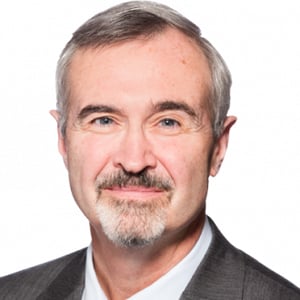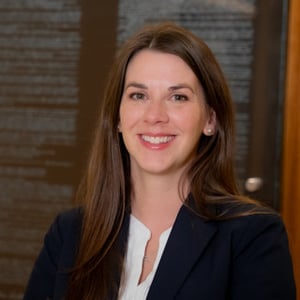
Professor Emeritus, Paul M. Hebert Law Center, Louisiana State University
In memoriam
Dr. John Baker is Professor Emeritus of Law, and previously the Dale E. Bennett Professor of Law, at Louisiana State University Law School. He is currently Visiting Professor at Peking University School of Transnational Law (via Zoom) and has been Visiting Professor at The Center for the Constitution, Georgetown Law School (2013-2020). He has also been a Visiting Fellow at Oriel College, the University of Oxford (2012-2014) and taught at Blackfriars Hall, Oxford in 2014. Dr. Baker has also been an adjunct Fellow at the Heritage Foundation (Spring, 2008) and a Distinguished Scholar at the Catholic University of America Law School (2011-12). He has taught at Tulane Law School, George Mason Law School, Pepperdine Law School, New York Law School, Hong Kong University, and the University of Dallas, School of Management and also taught and/or lectured in 17 foreign countries. Notable among his foreign visits are the
following: Visiting Professor at the University of Lyon III (France) (1999-2011); Visiting Professor at the Universidad de los Andes, Chile (2012), as a Fulbright Specialist (2006); and a Fulbright Scholar at various universities in the Philippines. Dr. Baker received his J.D., with honors, from the University of Michigan Law School and his B.A., magna cum laude, from the University of Dallas. He also earned a Ph.D. in Political Thought from the University of London. Baker has taught over a dozen different subjects, mostly courses in public law. His main areas of interest are Constitutional Law (particularly federalism and separation of powers), Criminal Law, Anti-Terrorism Law, International Law, Health Care Law, Mediation, and Comparative Law.
In addition to law review articles and book chapters, Dr. Baker’s academic publications include Hall's Criminal Law: Cases and Materials (with Benson, Force and George; 5th ed. Michie, 1993); An Introduction to the Law of the United States (ed. with Levasseur; University Press of America, 1992). He has also published on Forbes.com, FoxNews.com, in The Washington Times, and a number of times in The Wall Street Journal. He argues in federal court, including two oral arguments in the U.S. Supreme Court. For many years, he co-taught courses for the Federalist Society on separation of powers with the late Supreme Court Justice Antonin Scalia. In September 2016, he co-taught a Supreme Court seminar in China with Justice Samuel Alito. Following law school, he served as a law clerk in federal district court and as an assistant district attorney in New Orleans before joining LSU in 1975. While a professor, he has been as a consultant to USAID, USIA (since rolled into the State Department), the Justice Department, the U.S. Senate Judiciary Subcommittee on Separation of Powers, and the Office of Planning in the White House. He served on an ABA Task Force which issued the report, The Federalization of Crime (1998) and later as a consultant to the “Bi-Partisan Task Force on the Over- federalization of Crime” (2012-2014) created by the U.S. House Judiciary Subcommittee on Crime. Dr. Baker was a co-founder of the first iteration (1995) of Stratfor Inc., a global intelligence agency. He co-authored its first book: The Intelligence Edge (with Friedman, Friedman and Chapman; Crown Books/Random House 1997). In 2022, he began a short, weekly video podcast available on YouTube and Rumble, The Baker Brief.
Partner, Johns & Counsel PLLC
Chris Johns advocates for people and causes he believes in. He represents individuals and businesses as they confront powerful interests on the other side: property owners in eminent-domain cases, people and organizations seeking to exercise constitutional rights, and others with a just cause in a civil trial or appeal.
Chris has won cases for clients in courts across the country—from state and federal trial and appellate courts to the United States Supreme Court. He is also an adjunct professor at the University of Texas School of Law, where he teaches the course on eminent domain and private-property rights.
Chris grew up and attended public schools in Buckhannon, West Virginia. He went to Brigham Young University on academic and piano scholarships and, after his first year of college, served for two years as a full-time volunteer for his church in Oakland and San Francisco. Chris spent most of his time in neighborhoods unlike anything he’d ever seen in rural West Virginia. Still, he can’t imagine a better education: speaking with thousands of people about life, hopes, fears, and spiritual paths; becoming fluent in Spanish; observing communities that thrived and others that failed; and making friends with individuals from many countries and many walks of life, from gang members to high-level government officials. Chris decided during his volunteer service that he eventually wanted to become a lawyer and advocate. He studied English upon return to BYU, graduating magna cum laude in 1997.
Chris received his J.D. with high honors from the University of Texas School of Law. There, he was editor in chief of the Texas Law Review, a member of the Chancellors honor society, and a member of the Order of the Coif. He received Dean’s Achievement Awards in several of his classes. After graduation, Chris clerked for the Honorable Phyllis A. Kravitch of the United States Court of Appeals for the Eleventh Circuit.
He then attended the University of Oxford, where he received a postgraduate law degree and authored a frequently cited dissertation analyzing the relationship between property and the law of obligations.
Chris entered private practice at Weil, Gotshal & Manges LLP, where he worked with former Texas Solicitor General Greg Coleman in the firm’s national Supreme Court and appellate practice. He and three of his law-school classmates founded Johns Marrs Ellis & Hodge LLP, a trial and appellate boutique, and practiced together for nearly nine years.
In March 2018, Chris opened Johns & Counsel PLLC with a small, elite team dedicated to the clients and causes that mean most to him and the other members of the firm.
Chris appears on the 2018 and 2019 list of The Best Lawyers in America, a peer-selected honor. Texas Super Lawyers Magazine named him to its 2014, 2015, 2016, 2017, and 2018 lists of “Super Lawyers” and to its 2013 and 2014 lists of “Rising Stars.” He is also a barrister in the Lloyd Lochridge American Inn of Court. Chris has testified about property rights on invitation from the Texas Legislature, is a regular speaker at national and state CLE conferences, has received multiple pro bono service awards, helped train UT’s moot-court teams, and has appeared as a legal commentator on television news programs.
Chris is licensed in Texas and New York and is admitted to practice before the Supreme Court of the United States, the U.S. Courts of Appeals for the Fourth, Fifth, and Federal Circuits, the U.S. Court of Appeals for the Federal Circuit, the U.S. District Courts for the Eastern, Southern, and Western Districts of Texas, the U.S. Court of Federal Claims, several other federal courts across the country, and all state courts in Texas.
Partner, Foley & Lardner LLP
Jeffrey A. Simmons is a partner and member of Foley & Lardner’s Business Litigation & Dispute Resolution Practice, where he focuses on complex litigation matters. Mr. Simmons was lead counsel in one of the largest insurance rehabilitations in U.S. history, In the Matter of the Rehabilitation of Segregated Account of Ambac Assurance Corporation, Case No. 10-cv-1576 (Dane Co., Wis.). A large portion of his practice is also devoted to trademark, copyright, patent and trade secret disputes. He currently serves on the Seventh Circuit Court of Appeals’ subcommittee responsible for rewriting the circuit’s pattern jury instructions for trademark and copyright cases.
Prior to joining Foley, Mr. Simmons served as a law clerk to the Hon. John W. Reynolds, U.S. District Court for the Eastern District of Wisconsin.
Director, Damon Key Leong Kupchak Hastert
Robert H. Thomas is a land use and appellate lawyer, and focuses on regulatory takings, eminent domain, water rights, and election and political law cases. He has tried cases and appeals in Hawaii, California, and the federal courts. For a list of reported cases in which he’s been involved, go here.
Robert is also the inaugural Joseph T. Waldo Visiting Chair in Property Rights Law at the William & Mary Law School in Williamsburg, Virginia, where he teaches courses on eminent domain, property rights, and other property-related courses.
Robert received his LLM, with honors, from Columbia Law School where he was a Harlan Fiske Stone Scholar, and his JD from the University of Hawaii School of Law where he served as editor of the Law Review. Robert taught law at the University of Santa Clara School of Law, and was an exam grader and screener for the California Committee of Bar Examiners.
He was the Chair (2017-18) of the American Bar Association’s Section on State & Local Government Law, was the long-time Chair of the Section’s Eminent Domain Law Committee, and currently chairs the Regulatory Takings Committee.
He is the Hawaii member of Owners’ Counsel of America, a national network of the most experienced eminent domain and property rights lawyers. Membership in OCA is by invitation only, and is limited to a single attorney from each state. He is also the Co-Planning Chair of the American Law Institute-CLE’s annual three-day conference on condemnation law, Eminent Domain and Land Valuation Litigation. Robert is also the Managing Attorney for the Pacific Legal Foundation Hawaii Center, and is listed in Best Lawyers in Eminent Domain and Condemnation Law, and Land Use & Zoning Law, and in Super Lawyers in Appellate Law, Land Use/Zoning, and Government/Cities/Municipalities.
He is also a frequent speaker on land use and eminent domain issues in Hawaii and nationwide. Robert regularly publishes scholarly and practical articles in his area of practice. For a partial list, go here. His blog on land use, property, and takings law, inversecondemnation.com, is one of the most widely-read blogs on those subjects.
Professor of Law, Notre Dame Law School
Professor Derek Muller is a nationally-recognized scholar in the field of election law. His research focuses on the role of states in the administration of federal elections, the constitutional contours of voting rights and election administration, the limits of judicial power in the domain of elections, and the Electoral College.
He has published more than two dozen academic works, and his op-eds have appeared in the New York Times, the Los Angeles Times, and the Wall Street Journal. He has testified before Congress, and he is a contributor at the Election Law Blog. He is a co-author on a Federal Courts casebook published by Carolina Academic Press. He is also the co-reporter on a new Restatement of the Law, Election Litigation, an effort led by the American Law Institute.
Professor Muller teaches Election Law, Civil Procedure, and Evidence.
Founder and Partner, Dowd Scheffel PLLC
Matthew Dowd focuses his skills on complex appellate and trial litigation, with an emphasis on patent and intellectual property issues. Through his years of practice, Mr. Dowd has successfully worked on numerous high-stakes and eclectic legal matters, focusing primarily on all stages of complex patent matters (AIA proceedings, litigation, prosecution, and counseling). Mr. Dowd's expertise and leadership are regularly consulted, as he is frequently asked to comment in the press on leading intellectual property issues.
Mr. Dowd has substantial experience with Hatch-Waxman litigation, including all stages of opinion analysis, litigation, and appeals. His technical background in medicinal chemistry is ideally suited for litigating pharmaceutical patents. He has represented clients in a range of trial forums for patent disputes, such as the Eastern District of Texas and the District of Delaware, as well as the Patent Trial and Appeal Board at the USPTO.
He has argued and briefed numerous appeals before the U.S. Court of Appeals for the Federal Circuit and other courts involving issues such as patent law, Hatch-Waxman, administrative law, Fifth Amendment takings, contract claims, government employment issues, and criminal law. In 2018, Mr. Dowd is co-counsel with the Hon. Richard Posner (ret.) of U.S. Court of Appeals for the Seventh Circuit in an appeal before the U.S. Court of Appeals for the Fourth Circuit.
In 2013, Mr. Dowd represented Nobel Laureate James Watson, co-discoverer of the DNA double helix, as amicus curiae in the groundbreaking 2013 Supreme Court gene patent case. Mr. Dowd has over 15 years of experience representing clients before the U.S. Patent and Trademark Office.
Mr. Dowd is also well-known for his successful pro bono representation in the "free-range kids" case. The case was widely reported in the national, local, and international news.
Mr. Dowd attended The George Washington University Law School, graduating with high honors and being awarded Order of the Coif. While attending law school and before, Mr. Dowd worked full-time as a registered patent agent at the renowned IP boutique Sterne, Kessler, Goldstein & Fox.
After law school, Mr. Dowd clerked for the Honorable Paul R. Michel, Chief Judge (ret.) of the U.S. Court of Appeals for the Federal Circuit. While a law clerk, Mr. Dowd gained an insider's perspective on the appellate process. Understanding the appellate process is critical to maximizing success at the earlier stages of a case.
Mr. Dowd is currently appointed as a Professorial Lecturer in Law at The George Washington University Law School. He teaches appellate advocacy and is the coach for the student moot court team for the AIPLA Giles Sutherland Rich Moot Court Competition.
Prior to his legal career, Mr. Dowd spent four years in a Ph.D. program in medical chemistry, studying organic chemistry, pharmacology, and pharmaceutical drug design. During his Ph.D. program, Mr. Dowd's research discovered a novel structure-activity relationship for nicotinic ligands with potential utility in treating Alzheimer's and Parkinson's diseases. Mr. Dowd attended The College of William and Mary, in Williamsburg, VA, and Regis High School in New York City.
Professor of Law, St. Mary's University Law School
Adam MacLeod is a Professor at St. Mary's University School of Law. He has been a visiting fellow in the James Madison Program in American Ideals and Institutions at Princeton University, a fellow of the Center for Religion, Culture and Democracy, and a Senior Scholar and Thomas Edison Fellow in the Center for Intellectual Property x Innovation Policy at George Mason University. He is co-editor of Christie & Martin's Jurisprudence (4th ed. West 2020) and author of Property and Practical Reason (Cambridge University Press 2015). He has written two other books, dozens of scholarly articles, and more than one hundred essays and book reviews.
Professor MacLeod received his B.A., summa cum laude, from Gordon College and his J.D., magna cum laude, from the University of Notre Dame Law School. After law school, he served as law clerk to Chief Justice Christopher Armstrong and Justice Benjamin Kaplan of the Massachusetts Appeals Court and to Chief Judge Lewis Babcock of the United States District Court for the District of Colorado. He practiced law in the Boston area and has held appointment as a special Deputy Attorney General of Alabama and a lecturer in the Alabama Judicial College. He also serves as an Operational Auxiliarist in the U.S. Coast Guard, advising and providing operational training to Auxiliary and active-duty personnel.
Vice President and Director of Litigation, EdChoice
Thomas M. Fisher served as a Deputy Attorney General for 22 years and as Indiana’s first Solicitor General from 2005-2023. In that role he handled high profile litigation for the State, defended state statutes against constitutional attack, advised the Attorney General on a range of legal policy issues, and managed the State’s U.S. Supreme Court docket. A two-time recipient of the National Association of Attorneys General Best Brief Award, Fisher has argued five times before the High Court.
His U.S. Supreme Court experience also includes authorship of dozens of cert-stage and merits-stage amicus curiae briefs on a wide range of issues. In addition, Fisher has argued dozens of important and high-profile cases before both the Indiana Supreme Court and the Seventh Circuit U.S. Court of Appeals. Fisher is a Fellow of the American Academy of Appellate Lawyers and was recently named a Sagamore of the Wabash by Governor Eric Holcomb.
A native Hoosier, Fisher is a graduate of Wabash College and Indiana University Maurer School of Law, where he serves as an Adjunct Professor of Law.
Attorney, Competitive Enterprise Institute
Devin Watkins is an attorney at the Competitive Enterprise Institute. Devin Watkins previously worked at the Cato Institute as a legal associate and interned at the Institute for Justice. At the Cato Institute, Watkins worked on a variety of Supreme Court cases, and one of the briefs he worked on was cited by the Court. His op-eds have appeared in National Review Online, The Hill, Time, and The Federalist among others.
Watkins holds a Juris Doctor cum laude from George Mason University's Antonin Scalia Law School, where he was the development editor on the Mason Law Review. Prior to his legal career Watkins was a senior software developer at Intel and WebMD. He graduated with a Bachelor of Science in Computer Science from Stevens Institute of Technology in Hoboken, New Jersey.
Watkins is a member of the Virginia State Bar, the District of Columbia Bar, the U.S. District Court for the District of Columbia Bar, and the U.S. Court of Appeals for the District of Columbia Circuit Bar.
Vice President, Edwin Meese III Institute for the Rule of Law, Advancing American Freedom
John G. Malcolm oversees Advancing American Freedom’s work to increase understanding of the Constitution and the rule of law as Vice President of the organization’s Edwin Meese III Institute for the Rule of Law. Malcolm brings to the challenge a wealth of legal expertise and experience in both the public and private sectors.
Prior to joining Advancing American Freedom in 2025, Malcolm was the Vice President of the Institute for Constitutional Government and the Director of the Meese Center for Legal and Judicial Studies at the Heritage Foundation. Prior to joining Heritage in 2012, Malcolm was general counsel at the U.S. Commission on International Religious Freedom, as well as a distinguished practitioner in residence at Pepperdine Law School. From 2004 to 2009, Malcolm was executive vice president and director of worldwide anti-piracy operations for the Motion Picture Association.
Malcolm served as a deputy assistant attorney general in the Department of Justice’s Criminal Division from 2001 to 2004, where he oversaw sections on computer crime and intellectual property, domestic security, child exploitation and obscenity, and special investigations. Immediately prior to that, he was a founding partner in the Atlanta law firm of Malcolm & Schroeder, LLP.
From 1990 to 1997, Malcolm was an assistant U.S. attorney in Atlanta, assigned to the fraud and public corruption section, and also an associate independent counsel, investigating fraud and abuse in the Department of Housing and Urban Development. He was honored with the Director’s Award for Superior Performance for his work in connection with the successful prosecution of Walter Leroy Moody Jr., who assassinated an 11th Circuit judge and the head of the Savannah chapter of the NAACP.
A graduate of Harvard Law School and Columbia College, Malcolm began his career as a law clerk to a federal district court judge and a federal appellate court judge, and as an associate at the Atlanta-based law firm of Sutherland, Asbill & Brennan (new Eversheds Sutherland).
Malcolm, who resides in Washington, D.C., serves on the Board of Trustees of the Washington National Opera and is a Senate-confirmed member of the Board of Directors of the Legal Services Corporation, the largest funder of civil legal aid in the United States.

Emanuel S. Heller Professor of Law, University of California at Berkeley; Senior Research Fellow, School of Civic Leadership, Civitas Institute, University of Texas at Austin; Nonresident Senior Fellow, American Enterprise Institute
John Yoo is the Emanuel Heller Professor of Law. He is also Distinguished Visiting Scholar, School of Civic Leadership and Senior Research Fellow, Civitas Institute, at the University of Texas at Austin. He is also a Nonresident Senior Fellow at the American Enterprise Institute.
His most recent book, The Politically Incorrect Guide to the Supreme Court, co-authored with Robert Delahunty, was published in 2023. Professor Yoo’s other books include Defender-in-Chief: Trump’s Fight for Presidential Power; Striking Power: How Cyber, Robots, and Space Weapons Change the Rules for War, Point of Attack: Preventive War, International Law, and Global Welfare, and Crisis and Command: A History of Executive Power from George Washington to George Bush.
Professor Yoo has published more than 100 articles in academic journals on subjects including national security, constitutional law, international law, and the Supreme Court. He also regularly contributes to the editorial pages of the Wall Street Journal, New York Times, Washington Post, Los Angeles Times, and National Review, among others.
Professor Yoo has served in all three branches of government. He was an official in the U.S. Department of Justice, where he worked on national security and terrorism issues after the 9/11 attacks. He served as general counsel of the U.S. Senate Judiciary Committee. He has been a law clerk for Supreme Court Justice Clarence Thomas and federal appeals Judge Laurence Silberman. He has been a visiting professor at Seoul National University in South Korea, the Interdisciplinary Center in Israel, Keio University in Japan, Trento University in Italy, the University of Chicago, and the Free University of Amsterdam.
Professor Yoo supervises the Public Law and Policy Program and the California Constitution Center. He also serves on the boards of the Pacific Legal Foundation, the Federalist Society’s Separation of Powers and Federalism Division, the Universidad Cientifica del Sur Law School, and the Asia-Pacific Law Institute at Seoul National University. He is a winner of the Federalist Society’s Paul Bator award and been the Edwin Meese III Originalism Lecturer at the Heritage Foundation.
Professor Yoo graduated from Yale Law School and summa cum laude from Harvard College.
Topics
Powers Reserved to the States
Below are the first three paragraphs to the newly published article in the Federalist Society...
Topics
Deference and Independent Agencies
During the last week of its just-ended term, the Supreme Court handed down its much...
Courthouse Steps Decision: The Census Citizenship Question, Department of Commerce v. New York
John S. Baker
On June 27, the Supreme Court decided Department of Commerce v. New York, the legal challenge...
Is “Possess Now, Pay Later” Constitutional in Private Pipeline Takings?
Chris Johns, Jeffrey A. Simmons, Robert H. Thomas
The U.S. Supreme Court will soon consider the third of several petitions for certiorari asking...
Rucho v. Common Cause and Lamone v. Benisek - Post-Argument SCOTUScast
Derek T. Muller
SCOTUScast featuring Derek Muller
On March 26, 2019, the Supreme Court heard argument in Rucho v. Common Cause and...
Courthouse Steps Decision Teleforum: Return Mail v. US Postal Service
Matthew J. Dowd, Adam MacLeod
In Return Mail v. US Postal Service, the Supreme Court held that the United States...
Courthouse Steps: Supreme Court Overrules Nevada v. Hall Establishing Sister State Sovereign Immunity
Thomas M. Fisher, Devin Watkins
Federalism & Separation of Powers Practice Group
In Franchise Tax Board of California v. Hyatt, the Supreme Court has overturned a 40-year-old precedent in...
Executive Privilege and Congressional Oversight
John G. Malcolm, John C. Yoo
What is the proper balance between Congressional oversight and Executive privilege? As it becomes clear...
Topics
Nuggets of Gold from the Executive Branch Review Conference
Yesterday I attended the Federalist Society’s Executive Branch Review Conference. This is becoming a must...
Topics
Mueller Report Fireworks – And It Isn’t Even the Fourth of July
And the drama continues! On Wednesday, Attorney General William Barr appeared before the Senate Judiciary...