
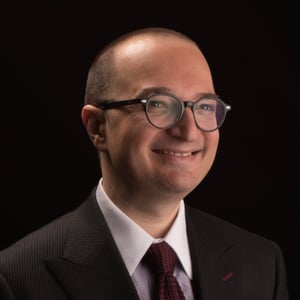
Professor of Law, University of Baltimore School of Law (on leave); Senior Counsel, U.S. Department of Justice
Professor Dolin’s scholarship centers on patent law with a specific focus on how the patent regime affects innovation, especially in bio-pharmaceutical areas. His work in these areas includes a number of scholarly articles, presentations, amicus briefs, and congressional testimony.
Dr. Dolin is currently on leave from his academic duties while he serves as Senior Counsel in the Civil Rights Division of the United States Department of Justice.
From January 2020 to January 2022, Professor Dolin served as a resident Associate Justice of the Supreme Court of the Republic of Palau. In this role, he (together with other members of the Court) heard appeals in civil, criminal, administrative, and constitutional law matters.
Prior to joining the University of Baltimore School of Law, Professor Dolin held visiting appointments in other law schools. He also served as a law clerk to the Hon. Pauline Newman, of the U.S. Court of Appeals for the Federal Circuit and the late Hon. H. Emory Widener Jr., of the U.S. Court of Appeals for the Fourth Circuit.
Rumors that he has a real Russian bear in his office are entirely true.
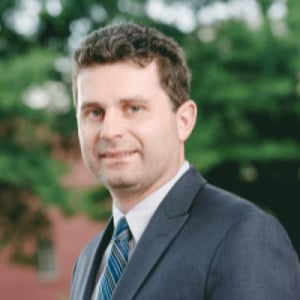
Associate Professor of Law, George Washington University Law School
Dmitry Karshtedt's primary research interest is in patent law. His legal scholarship has been published in the Vanderbilt Law Review, Washington University Law Review, and Iowa Law Review, among other outlets, and cited in three of the leading patent law casebooks, a casebook on intellectual property, and three treatises. Professor Karshtedt's academic work has won several awards, including the Samsung-Stanford Patent Prize and the scholarship grant for judicial clerks sponsored by the University of Houston Law Center Institute for Intellectual Property and Information Law.
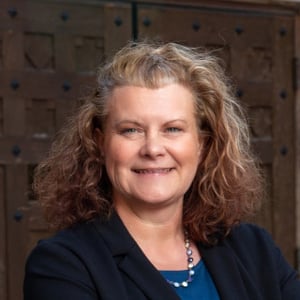
Associate Dean for Academic Affairs, Austin E. Owen Research Scholar & Professor of Law, The University of Richmond School of Law
Dean Kristen Jakobsen Osenga teaches and writes in the areas of patent law, antitrust, and legislation and regulation. Some of her recent scholarship focuses on standard development organizations, patent eligible subject matter, patent licensing firms, litigation and remedies for patent infringement, and patent law reform. She has written numerous law review articles on these and other topics, as well as book chapters and op eds on various aspects of patent law. Additionally, she has spoken on these issues at many academic conferences and bar events. Dean Osenga is Chief Policy Counselor for the Inventors Defense Alliance, as well as an active member of the Federal Circuit Bar Association and the American Intellectual Property Law Association.
Dean Osenga received a B.S. degree in Biomedical Engineering from the University of Iowa, an M.S. degree in Electrical Engineering from Southern Illinois University – Carbondale, and a J.D. from the University of Illinois College of Law, where she graduated magna cum laude. After law school, she practiced at the law firm of Finnegan, Henderson, Farabow, Garrett, & Dunner LLP, (now Finnegan) where she did patent prosecution and litigation. She then clerked for the Judge Richard Linn of the U.S. Court of Appeals for the Federal Circuit. After clerking, she entered academia, teaching first at Chicago-Kent College of Law and then at the University of Richmond, where she has been since 2006. She has also been a Visiting Professor at Emory University School of Law and at William & Mary School of Law.
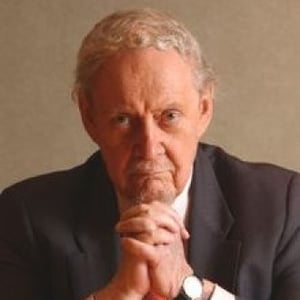
Former Judge, U.S. Court of Appeals, DC Circuit
Robert Heron Bork served as Solicitor General, acting Attorney General, and judge for the United States Court of Appeals for the District of Columbia Circuit. Judge Bork passed away in December 2012.
Tribute to Judge Robert Bork by John McGinnis - Event Audio/Video
Celebration of the Life of Robert Heron Bork 1927-2012
Judge Robert H. Bork: His Life and Legacy - Practice Group Podcast
A Conference Discussing the Contributions of Judge Robert H. Bork - June 26, 2007
President, The Free Press
Erwin A. Glikes was a leading publisher of nonfiction books for a quarter-century, whose authors included some of the most prestigious figures in American intellectual life.
Former Judge, U.S. Court of Appeals, DC Circuit
Robert Heron Bork served as Solicitor General, acting Attorney General, and judge for the United States Court of Appeals for the District of Columbia Circuit. Judge Bork passed away in December 2012.
Tribute to Judge Robert Bork by John McGinnis - Event Audio/Video
Celebration of the Life of Robert Heron Bork 1927-2012
Judge Robert H. Bork: His Life and Legacy - Practice Group Podcast
A Conference Discussing the Contributions of Judge Robert H. Bork - June 26, 2007
President, The Free Press
Erwin A. Glikes was a leading publisher of nonfiction books for a quarter-century, whose authors included some of the most prestigious figures in American intellectual life.
Vice President and Counsel for Public Policy, D.R. Horton, Inc.
Charbel J Barakat is Vice President and Counsel for Public Policy, with D.R. Horton, Inc., the nation's largest homebuilder, where he coordinates the company’s interactions with federal and state governments.
Previously, for over 10 years, he served as Chief Counsel for the company’s Florida, Gulf Coast, and Mid-Atlantic Regions. During that time, he oversaw legal affairs for an area that included 9 states and 2,000+ employees.
He was formerly associated with Akerman LLP in Miami and Milbank LLP in New York City, where he specialized in complex corporate, real estate, and project finance transactions.
Charbel currently serves as a member of the University of South Florida Board of Trustees and the Florida Supreme Court Judicial Nominating Commission, positions to which he was appointed by Governor Ron DeSantis in February 2025 and July 2023, respectively.
From July 2023 to February 2025, Charbel served as Vice Chair and acting Chair of the Board of Supervisors for the Central Florida Tourism Oversight District (the special district governing Walt Disney World Resort). As acting board chair, he presided over the successful settlement of litigation challenging the District’s governing structure and the subsequent negotiation of a 15-year, $17 billion theme park master development agreement.
He previously served on the board of directors of the Florida Development Finance Corporation, a state authorized issuer of industrial revenue bonds, and as Chair of the 2nd District Court of Appeal Judicial Nominating Commission.
Since 2022, he has served as an advisor to the Board of Directors of the Tampa Hispanic Bar Association.
In 2023, Florida Trend magazine recognized Charbel as one of 11 inaugural “Notable General Counsel” throughout the state. In 2018 and 2019, Charbel was recognized by the Tampa Bay Business Journal as one of the city’s Top Corporate Counsel.
Active in his church and community, Charbel is a member of the Knights of the Holy Sepulchre, a Catholic order of chivalry dedicated to charitable support of Christians in the Holy Land, and of the Krewe of the Knights of Sant’ Yago, dedicated to the preservation and enhancement of Tampa's rich Latin heritage and culture.
Charbel is a graduate of the New York University School of Law and The Johns Hopkins University. While in law school, he was a founding managing editor of the NYU Journal of Law and Liberty.
In 2018, Charbel became a Jeopardy! champion.
A native Floridian, Charbel lives in Tampa with his wife, Daira, and their three children.
Attorney General, Florida
Attorney General Ashley Moody, a fifth generation Floridian, was born and raised in Plant City, Florida. She attended the University of Florida where she earned her bachelors and masters degrees in accounting and juris doctorate. She later attended Stetson University College of Law earning a masters of law in international law. In 2018, she was elected the 38th Attorney General of Florida.
General Moody joined the United States Attorney’s Office prosecuting drug, firearm, and fraud offenses. While a federal prosecutor, Ashley was commended by the DEA for prosecutorial excellence and outstanding initiative in drug law enforcement. She was also recognized by the Florida Department of Law Enforcement for her lead of “Operation Round-Up,” a targeted prosecution of violent and repeat offenders.
In 2006, at the age of 31, General Moody became the youngest judge in Florida when she was elected Circuit Court Judge of the 13th Judicial Circuit in Hillsborough County. As a judge, she founded the Attorney Ad Litem program recruiting volunteer attorneys to stand in the place of parents who did not appear in court with their children. She also developed a mentoring program for at-risk children within the juvenile delinquency system.
Ashley is married to Justin, a federal law enforcement agent. They have two sons, Connor and Brandon. Their eldest son Brandon is serving in the United States Army.
Vice President and Counsel for Public Policy, D.R. Horton, Inc.
Charbel J Barakat is Vice President and Counsel for Public Policy, with D.R. Horton, Inc., the nation's largest homebuilder, where he coordinates the company’s interactions with federal and state governments.
Previously, for over 10 years, he served as Chief Counsel for the company’s Florida, Gulf Coast, and Mid-Atlantic Regions. During that time, he oversaw legal affairs for an area that included 9 states and 2,000+ employees.
He was formerly associated with Akerman LLP in Miami and Milbank LLP in New York City, where he specialized in complex corporate, real estate, and project finance transactions.
Charbel currently serves as a member of the University of South Florida Board of Trustees and the Florida Supreme Court Judicial Nominating Commission, positions to which he was appointed by Governor Ron DeSantis in February 2025 and July 2023, respectively.
From July 2023 to February 2025, Charbel served as Vice Chair and acting Chair of the Board of Supervisors for the Central Florida Tourism Oversight District (the special district governing Walt Disney World Resort). As acting board chair, he presided over the successful settlement of litigation challenging the District’s governing structure and the subsequent negotiation of a 15-year, $17 billion theme park master development agreement.
He previously served on the board of directors of the Florida Development Finance Corporation, a state authorized issuer of industrial revenue bonds, and as Chair of the 2nd District Court of Appeal Judicial Nominating Commission.
Since 2022, he has served as an advisor to the Board of Directors of the Tampa Hispanic Bar Association.
In 2023, Florida Trend magazine recognized Charbel as one of 11 inaugural “Notable General Counsel” throughout the state. In 2018 and 2019, Charbel was recognized by the Tampa Bay Business Journal as one of the city’s Top Corporate Counsel.
Active in his church and community, Charbel is a member of the Knights of the Holy Sepulchre, a Catholic order of chivalry dedicated to charitable support of Christians in the Holy Land, and of the Krewe of the Knights of Sant’ Yago, dedicated to the preservation and enhancement of Tampa's rich Latin heritage and culture.
Charbel is a graduate of the New York University School of Law and The Johns Hopkins University. While in law school, he was a founding managing editor of the NYU Journal of Law and Liberty.
In 2018, Charbel became a Jeopardy! champion.
A native Floridian, Charbel lives in Tampa with his wife, Daira, and their three children.
Attorney General, Florida
Attorney General Ashley Moody, a fifth generation Floridian, was born and raised in Plant City, Florida. She attended the University of Florida where she earned her bachelors and masters degrees in accounting and juris doctorate. She later attended Stetson University College of Law earning a masters of law in international law. In 2018, she was elected the 38th Attorney General of Florida.
General Moody joined the United States Attorney’s Office prosecuting drug, firearm, and fraud offenses. While a federal prosecutor, Ashley was commended by the DEA for prosecutorial excellence and outstanding initiative in drug law enforcement. She was also recognized by the Florida Department of Law Enforcement for her lead of “Operation Round-Up,” a targeted prosecution of violent and repeat offenders.
In 2006, at the age of 31, General Moody became the youngest judge in Florida when she was elected Circuit Court Judge of the 13th Judicial Circuit in Hillsborough County. As a judge, she founded the Attorney Ad Litem program recruiting volunteer attorneys to stand in the place of parents who did not appear in court with their children. She also developed a mentoring program for at-risk children within the juvenile delinquency system.
Ashley is married to Justin, a federal law enforcement agent. They have two sons, Connor and Brandon. Their eldest son Brandon is serving in the United States Army.
United States District Judge, United States District Court for the Middle District of Florida
In November 2020, the Senate confirmed Kathryn Kimball Mizelle as a United States District Judge for the Middle District of Florida. At age 33, she became the youngest Article III judge in the country. Prior to her confirmation, Judge Mizelle was in private practice at Jones Day, where she focused on complex civil and criminal litigation and appeals. Judge Mizelle previously served at the United States Department of Justice in the Office of the Associate Attorney General, in the Southern Criminal Enforcement Section of the Tax Division, and in the United States Attorney’s Office for the Eastern District of Virginia. Judge Mizelle has also taught as an adjunct professor of law at the University of Florida Levin College of Law and at George Mason University’s Antonin Scalia Law School.
Judge Mizelle earned her B.A., summa cum laude, from Covenant College, and her J.D., summa cum laude, from the University of Florida Levin College of Law. After graduation, Judge Mizelle served as a law clerk at every level of the federal judiciary: at the Supreme Court for Justice Clarence Thomas, at the D.C. Circuit for Judge Gregory G. Katsas, at the Eleventh Circuit for Chief Judge William H. Pryor Jr., and at the Middle District of Florida for Judge James S. Moody Jr.
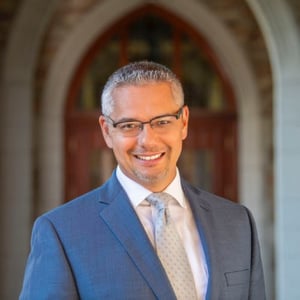
Tocqueville Associate Professor Department of Political Science and Concurrent Associate Professor of Law, University of Notre Dame Law School
Vincent Phillip Muñoz is the Tocqueville Associate Professor of Religion & Public Life in the Department of Political Science at the University of Notre Dame. He is the founding director of Notre Dame's undergraduate minor in Constitutional Studies and directs Notre Dame's Tocqueville Program for Inquiry into Religion and Public Life.
Muñoz writes and teaches across the fields of constitutional law, American politics, and political philosophy with a focus on religious liberty and the American Founding. His first book, God and the Founders: Madison, Washington, and Jefferson (Cambridge University Press, 2009) won the Hubert Morken Award from the American Political Science Association for the best publication on religion and politics in 2009 and 2010. His First Amendment church-state case reader, Religious Liberty and the American Supreme Court: The Essential Cases and Documents (Rowman & Littlefield) was first published in 2013 (revised edition, 2015) and is being used at Notre Dame and other leading universities.
Muñoz's current project is a scholarly monograph on the natural right of religious liberty and the original meaning of the First Amendment's Religion Clauses. Articles from that project have appeared in American Political Science Review, The Harvard Journal of Law and Public Policy, Notre Dame Law Review, American Political Thought, and the University of Pennsylvania's Journal of Constitutional Law.
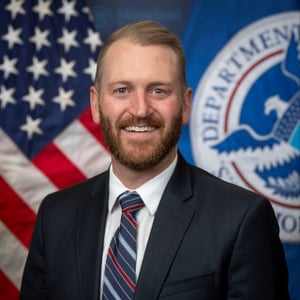
General Counsel, U.S. Department of Homeland Security
James H. Percival graduated from the University of California, Santa Barbara and the University of Virginia School of Law. Before his work at the Department of Homeland Security, he was Chief of Staff to then Florida Attorney General Ashley Moody. James previously served in a number of other roles for Attorney General Moody and as Senior Counsel at the U.S. Department of Justice. Before beginning his public service, James worked for a global law firm and clerked for Judge Emmett Ripley Cox of the U.S. Court of Appeals for the Eleventh Circuit. In between college and law school, James worked as a substitute teacher and as a missionary in South America.
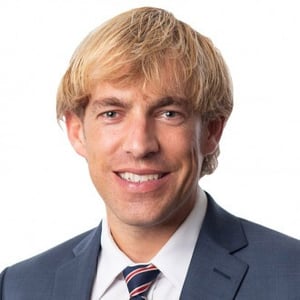
Principal, Spero Law LLC
Christopher Mills is the founder of Spero Law LLC. He was previously a partner at a national law firm and a Constitutional Law Fellow at the Becket Fund for Religious Liberty. He served as a law clerk to Justice Clarence Thomas on the U.S. Supreme Court during October Term 2018. He also clerked for the Honorable David B. Sentelle, then-Chief Judge of the U.S. Court of Appeals for the D.C. Circuit. He has authored briefs and motions in the Supreme Court, courts of appeals, and trial courts, and successfully argued before the D.C. Circuit. He has served as special counsel to South Carolina Governor Henry McMaster, and is an Adjunct Professor at the Charleston School of Law.
A 2012 magna cum laude graduate of Harvard Law School, Christopher was a senior editor of the Harvard Law Review, an editor of the Harvard Journal of Law and Public Policy, and served on the Executive Board of the Harvard Federalist Society. In 2009, he graduated Phi Beta Kappa and summa cum laude with a degree in economics from Furman University.
Christopher lives in Charleston, South Carolina with his wife, children, and golden retriever.
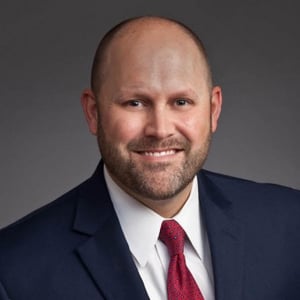
Vice President & General Counsel, Paligen Technologies
Eliot Peace is Vice President and General Counsel at Paligen Technologies, a worldwide leader in the manufacture of energetic materials; the design and production of munitions, aerospace, and naval products; and the production of metal components for defense and commercial operations. In this role, he leads the Legal and Compliance departments and provides full-spectrum legal support to the company.
Previously, he was the Deputy General Counsel for General Dynamics Ordnance and Tactical Systems. In this role, he served as legal advisor to a multi-billion-dollar global aerospace/defense business unit, where he was responsible for government and commercial contracts; litigation and disputes; government enforcement and investigations; and regulatory, international, and trade compliance.
Prior to joining GD-OTS in 2020, he worked as an attorney for an AmLaw 100 law firm in Tampa, FL, handling commercial litigation and government enforcement/investigations in the aerospace/defense, manufacturing, and firearms industries. From 2012-2017, he served as a member of the US Air Force Judge Advocate General’s Corps. He remains a major in the US Air Force Reserve.
Prior to accepting his commission, he clerked for Justice John W. Kittredge at the South Carolina Supreme Court and Judge Timothy M. Cain on the United States District Court for the District of South Carolina. He is Chair of the Second District Court of Appeal Judicial Nominating Commission, a member of the Florida Polytechnic University Board of Trustees, and a previous member of the Executive Committee of the Florida Defense Contractors Association. A graduate of the University of Georgia and the University of South Carolina School of Law, he and his wife have five children and live in Dunedin, FL.
Principal, Spero Law LLC
Christopher Mills is the founder of Spero Law LLC. He was previously a partner at a national law firm and a Constitutional Law Fellow at the Becket Fund for Religious Liberty. He served as a law clerk to Justice Clarence Thomas on the U.S. Supreme Court during October Term 2018. He also clerked for the Honorable David B. Sentelle, then-Chief Judge of the U.S. Court of Appeals for the D.C. Circuit. He has authored briefs and motions in the Supreme Court, courts of appeals, and trial courts, and successfully argued before the D.C. Circuit. He has served as special counsel to South Carolina Governor Henry McMaster, and is an Adjunct Professor at the Charleston School of Law.
A 2012 magna cum laude graduate of Harvard Law School, Christopher was a senior editor of the Harvard Law Review, an editor of the Harvard Journal of Law and Public Policy, and served on the Executive Board of the Harvard Federalist Society. In 2009, he graduated Phi Beta Kappa and summa cum laude with a degree in economics from Furman University.
Christopher lives in Charleston, South Carolina with his wife, children, and golden retriever.
United States District Judge, United States District Court for the Middle District of Florida
In November 2020, the Senate confirmed Kathryn Kimball Mizelle as a United States District Judge for the Middle District of Florida. At age 33, she became the youngest Article III judge in the country. Prior to her confirmation, Judge Mizelle was in private practice at Jones Day, where she focused on complex civil and criminal litigation and appeals. Judge Mizelle previously served at the United States Department of Justice in the Office of the Associate Attorney General, in the Southern Criminal Enforcement Section of the Tax Division, and in the United States Attorney’s Office for the Eastern District of Virginia. Judge Mizelle has also taught as an adjunct professor of law at the University of Florida Levin College of Law and at George Mason University’s Antonin Scalia Law School.
Judge Mizelle earned her B.A., summa cum laude, from Covenant College, and her J.D., summa cum laude, from the University of Florida Levin College of Law. After graduation, Judge Mizelle served as a law clerk at every level of the federal judiciary: at the Supreme Court for Justice Clarence Thomas, at the D.C. Circuit for Judge Gregory G. Katsas, at the Eleventh Circuit for Chief Judge William H. Pryor Jr., and at the Middle District of Florida for Judge James S. Moody Jr.
Tocqueville Associate Professor Department of Political Science and Concurrent Associate Professor of Law, University of Notre Dame Law School
Vincent Phillip Muñoz is the Tocqueville Associate Professor of Religion & Public Life in the Department of Political Science at the University of Notre Dame. He is the founding director of Notre Dame's undergraduate minor in Constitutional Studies and directs Notre Dame's Tocqueville Program for Inquiry into Religion and Public Life.
Muñoz writes and teaches across the fields of constitutional law, American politics, and political philosophy with a focus on religious liberty and the American Founding. His first book, God and the Founders: Madison, Washington, and Jefferson (Cambridge University Press, 2009) won the Hubert Morken Award from the American Political Science Association for the best publication on religion and politics in 2009 and 2010. His First Amendment church-state case reader, Religious Liberty and the American Supreme Court: The Essential Cases and Documents (Rowman & Littlefield) was first published in 2013 (revised edition, 2015) and is being used at Notre Dame and other leading universities.
Muñoz's current project is a scholarly monograph on the natural right of religious liberty and the original meaning of the First Amendment's Religion Clauses. Articles from that project have appeared in American Political Science Review, The Harvard Journal of Law and Public Policy, Notre Dame Law Review, American Political Thought, and the University of Pennsylvania's Journal of Constitutional Law.
Vice President & General Counsel, Paligen Technologies
Eliot Peace is Vice President and General Counsel at Paligen Technologies, a worldwide leader in the manufacture of energetic materials; the design and production of munitions, aerospace, and naval products; and the production of metal components for defense and commercial operations. In this role, he leads the Legal and Compliance departments and provides full-spectrum legal support to the company.
Previously, he was the Deputy General Counsel for General Dynamics Ordnance and Tactical Systems. In this role, he served as legal advisor to a multi-billion-dollar global aerospace/defense business unit, where he was responsible for government and commercial contracts; litigation and disputes; government enforcement and investigations; and regulatory, international, and trade compliance.
Prior to joining GD-OTS in 2020, he worked as an attorney for an AmLaw 100 law firm in Tampa, FL, handling commercial litigation and government enforcement/investigations in the aerospace/defense, manufacturing, and firearms industries. From 2012-2017, he served as a member of the US Air Force Judge Advocate General’s Corps. He remains a major in the US Air Force Reserve.
Prior to accepting his commission, he clerked for Justice John W. Kittredge at the South Carolina Supreme Court and Judge Timothy M. Cain on the United States District Court for the District of South Carolina. He is Chair of the Second District Court of Appeal Judicial Nominating Commission, a member of the Florida Polytechnic University Board of Trustees, and a previous member of the Executive Committee of the Florida Defense Contractors Association. A graduate of the University of Georgia and the University of South Carolina School of Law, he and his wife have five children and live in Dunedin, FL.
General Counsel, U.S. Department of Homeland Security
James H. Percival graduated from the University of California, Santa Barbara and the University of Virginia School of Law. Before his work at the Department of Homeland Security, he was Chief of Staff to then Florida Attorney General Ashley Moody. James previously served in a number of other roles for Attorney General Moody and as Senior Counsel at the U.S. Department of Justice. Before beginning his public service, James worked for a global law firm and clerked for Judge Emmett Ripley Cox of the U.S. Court of Appeals for the Eleventh Circuit. In between college and law school, James worked as a substitute teacher and as a missionary in South America.
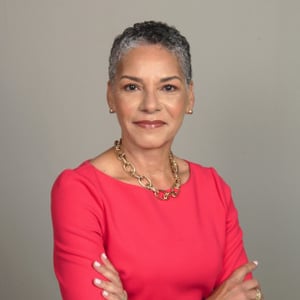
Secretary, Florida Department of Juvenile Justice
Simone Marstiller is the secretary of the Florida Department of Juvenile Justice. Prior to being appointed secretary in January 2019 by Governor Ron DeSantis, Simone was Of Counsel with Gunster, Yoakley, Stewart, P.A., in the firm’s Tallahassee and Tampa offices, where her practice areas included appellate consulting and litigation, government affairs, procurement, and ethics and elections. She joined Gunster in 2017 after retiring from the First District Court of Appeal, where she served as a judge for six years.
In 2001, Simone served as Assistant General Counsel to Governor Jeb Bush. In that position, she assisted the Governor’s General Counsel in overseeing the legal operations of the Governor’s agencies and advising the Governor on a wide variety of legal and policy issues.
Simone was selected in 2002 to serve as General Counsel for the Department of Management Services (DMS), the administrative agency for state government. There, she managed all legal affairs for the agency, including matters related to government procurement, outsourcing, state facility management, and collective bargaining. While serving in this capacity, Governor Bush appointed her Interim Secretary of the agency.
From DMS, Simone returned to the Governor’s Office in 2003 to serve as Deputy Chief of Staff. In 2004, Governor Bush appointed her State Chief Information Officer to head state government’s central technology planning and policy organization, and in 2005 she became Secretary of the Department of Business and Professional Regulation, the state’s largest regulatory agency.
In 2007, Attorney General Bill McCollum appointed Simone Associate Deputy Attorney General for the State of Florida. In addition to serving on the executive management team for the Office of the Attorney General, she was the agency’s General Counsel and was responsible for overseeing four agency divisions, including the Civil Rights and Opinions Divisions. When appointed to the appellate court in 2010, Simone was serving as Executive Director for the Florida Elections Commission.
Simone was born in Monrovia, Liberia, and grew up in St. Petersburg, Florida. She earned her Bachelor of Business Administration degree in 1988 from Stetson University in DeLand, Florida and her Juris Doctor, cum laude, in 1996 from Stetson University College of Law in Gulfport, Florida.

Senior Fellow, Law and Justice, America First Policy Institute
Chad Mizelle serves as a senior fellow for law and justice at AFPI. Mizelle most recently served as chief of staff and acting associate attorney general at the Department of Justice (DOJ). He previously served as acting general counsel at the Department of Homeland Security (DHS), where he managed more than 2,200 lawyers and directed all legal activities related to the agency's broad mission. Before that, he was chief of staff at DHS. Mizelle also served at the White House as associate counsel to the president and at the DOJ as counsel to the deputy attorney general.
Mizelle clerked for the Honorable David B. Sentelle of the D.C. Circuit. He received his J.D. from Cornell Law School and his B.A. from the University of Florida. He lives in Florida with his wife and children.
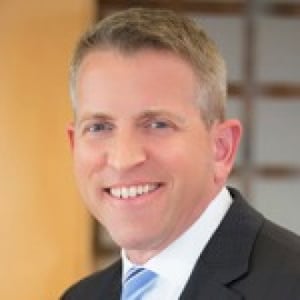
Member, Florida House of Representatives
Rep. Paul Renner (R-Palm Coast) serves as State Representative to District 24 in the Florida House of Representatives and is slated to become House Speaker in 2022. He is currently Chair of the Rules Committee and also serves on the Appropriations Committee. Rep. Renner is a military veteran, former prosecutor, and business attorney. He began his legal career as an Assistant State Attorney, during which he prosecuted serious felony offenses. Since 1998, he has represented individuals and businesses as their advocate in a broad range of commercial settings.
In addition to his legal practice, Rep. Renner has served as a naval officer, both on active duty and in the reserves. Earlier in his career, he served in Operation Desert Storm during combat operations onboard the USS McInerney (FFG-8) and later during combat operations in Afghanistan in 2011.
Rep. Renner was raised in Northeast Florida, where he attended public school. He earned his Juris Doctorate at the University of Florida, Levin College of Law, and his Bachelor of Arts in history at Davidson College in North Carolina. He lives in Palm Coast with his wife and daughter.
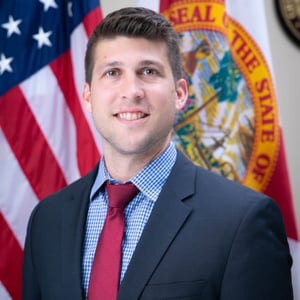
Attorney General, Florida
James Uthmeier is the Attorney General of the State of Florida. Before this, he served as Chief of Staff to Governor Ron DeSantis. Previously, he was General Counsel to the Governor, overseeing litigation and judicial nominations. He also served as a senior advisor at the U.S. Department of Commerce. A Georgetown Law graduate, Uthmeier is an adjunct professor at Florida State University College of Law and co-teaches religious education in Tallahassee.
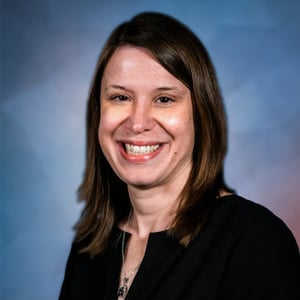
Senior Director of Strategic Partnerships, First Liberty Institute
Lisa Budzynski Ezell is the former Vice President and Director of the Federalist Society’s Lawyers Chapters. In this role, she managed a growing network of over 90 lawyers chapters nationwide, including oversight of leadership recruitment, chapter programming, state conferences, civics education outreach, and young lawyers activities. She holds a Bachelor of Arts degree from Saint Mary’s College in Political Science and History and a Master of Public Policy from George Mason University.
Senior Director of Strategic Partnerships, First Liberty Institute
Lisa Budzynski Ezell is the former Vice President and Director of the Federalist Society’s Lawyers Chapters. In this role, she managed a growing network of over 90 lawyers chapters nationwide, including oversight of leadership recruitment, chapter programming, state conferences, civics education outreach, and young lawyers activities. She holds a Bachelor of Arts degree from Saint Mary’s College in Political Science and History and a Master of Public Policy from George Mason University.
Secretary, Florida Department of Juvenile Justice
Simone Marstiller is the secretary of the Florida Department of Juvenile Justice. Prior to being appointed secretary in January 2019 by Governor Ron DeSantis, Simone was Of Counsel with Gunster, Yoakley, Stewart, P.A., in the firm’s Tallahassee and Tampa offices, where her practice areas included appellate consulting and litigation, government affairs, procurement, and ethics and elections. She joined Gunster in 2017 after retiring from the First District Court of Appeal, where she served as a judge for six years.
In 2001, Simone served as Assistant General Counsel to Governor Jeb Bush. In that position, she assisted the Governor’s General Counsel in overseeing the legal operations of the Governor’s agencies and advising the Governor on a wide variety of legal and policy issues.
Simone was selected in 2002 to serve as General Counsel for the Department of Management Services (DMS), the administrative agency for state government. There, she managed all legal affairs for the agency, including matters related to government procurement, outsourcing, state facility management, and collective bargaining. While serving in this capacity, Governor Bush appointed her Interim Secretary of the agency.
From DMS, Simone returned to the Governor’s Office in 2003 to serve as Deputy Chief of Staff. In 2004, Governor Bush appointed her State Chief Information Officer to head state government’s central technology planning and policy organization, and in 2005 she became Secretary of the Department of Business and Professional Regulation, the state’s largest regulatory agency.
In 2007, Attorney General Bill McCollum appointed Simone Associate Deputy Attorney General for the State of Florida. In addition to serving on the executive management team for the Office of the Attorney General, she was the agency’s General Counsel and was responsible for overseeing four agency divisions, including the Civil Rights and Opinions Divisions. When appointed to the appellate court in 2010, Simone was serving as Executive Director for the Florida Elections Commission.
Simone was born in Monrovia, Liberia, and grew up in St. Petersburg, Florida. She earned her Bachelor of Business Administration degree in 1988 from Stetson University in DeLand, Florida and her Juris Doctor, cum laude, in 1996 from Stetson University College of Law in Gulfport, Florida.
Senior Fellow, Law and Justice, America First Policy Institute
Chad Mizelle serves as a senior fellow for law and justice at AFPI. Mizelle most recently served as chief of staff and acting associate attorney general at the Department of Justice (DOJ). He previously served as acting general counsel at the Department of Homeland Security (DHS), where he managed more than 2,200 lawyers and directed all legal activities related to the agency's broad mission. Before that, he was chief of staff at DHS. Mizelle also served at the White House as associate counsel to the president and at the DOJ as counsel to the deputy attorney general.
Mizelle clerked for the Honorable David B. Sentelle of the D.C. Circuit. He received his J.D. from Cornell Law School and his B.A. from the University of Florida. He lives in Florida with his wife and children.
Member, Florida House of Representatives
Rep. Paul Renner (R-Palm Coast) serves as State Representative to District 24 in the Florida House of Representatives and is slated to become House Speaker in 2022. He is currently Chair of the Rules Committee and also serves on the Appropriations Committee. Rep. Renner is a military veteran, former prosecutor, and business attorney. He began his legal career as an Assistant State Attorney, during which he prosecuted serious felony offenses. Since 1998, he has represented individuals and businesses as their advocate in a broad range of commercial settings.
In addition to his legal practice, Rep. Renner has served as a naval officer, both on active duty and in the reserves. Earlier in his career, he served in Operation Desert Storm during combat operations onboard the USS McInerney (FFG-8) and later during combat operations in Afghanistan in 2011.
Rep. Renner was raised in Northeast Florida, where he attended public school. He earned his Juris Doctorate at the University of Florida, Levin College of Law, and his Bachelor of Arts in history at Davidson College in North Carolina. He lives in Palm Coast with his wife and daughter.
Attorney General, Florida
James Uthmeier is the Attorney General of the State of Florida. Before this, he served as Chief of Staff to Governor Ron DeSantis. Previously, he was General Counsel to the Governor, overseeing litigation and judicial nominations. He also served as a senior advisor at the U.S. Department of Commerce. A Georgetown Law graduate, Uthmeier is an adjunct professor at Florida State University College of Law and co-teaches religious education in Tallahassee.
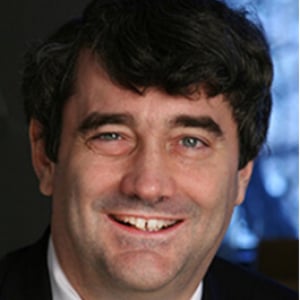
Clayton J. and Henry R. Barber Professor of Law, Northwestern University Pritzker School of Law and Co-Chairman, Board of Directors, The Federalist Society
STEVEN GOW CALABRESI is the Clayton J. & Henry R. Barber Professor at Northwestern Pritzker School of Law. He has also co-taught in the Fall semester at Yale Law School from 2013 to the present. Calabresi clerked for Justice Antonin Scalia and Judges Robert H. Bork and Ralph K. Winter. He was a Special Assistant to Attorney General Meese from 1985 to 1987 and worked with Ken Cribb as his deputy in 1987 on the second floor of the West Wing of the Reagan White House. Calabresi has written books on presidential power and comparative constitutional law and the origins of judicial review. He and Gary Lawson are the co-editors of a casebook on U.S. Constitutional Law, and Calabresi is also the co-editor of a casebook on comparative constitutional law. He has written over seventy law review articles since 1990.
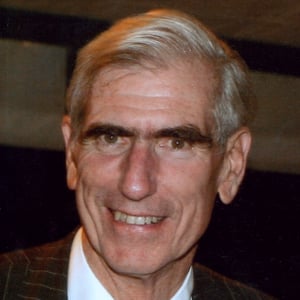
Founding Partner, Boyden Gray & Associates
Ambassador C. Boyden Gray is the founding partner of Boyden Gray & Associates, a law and strategy firm in Washington, D.C., focused on constitutional and regulatory issues.
Mr. Gray worked in the White House for twelve years, first as counsel to the Vice President during the Reagan administration and then as White House Counsel to President George H.W. Bush. In the Reagan administration, he was Counsel to the Presidential Task Force on Regulatory Relief, for which he wrote the original Executive Order 12291 requiring cost-benefit analysis and White House review of regulations (later renumbered as current EO 12866). In the George H.W. Bush Administration, Mr. Gray was in charge of judicial selection and was also instrumental in the enactment of the Clean Air Act Amendments of 1990, the Energy Policy Act of 1992, and a cap-and-trade system for acid rain emissions. In 1993, he received the Presidential Citizens Medal. Under President George W. Bush, Mr. Gray was U.S. Ambassador to the European Union and U.S. Special Envoy to Europe for Eurasian Energy.
Mr. Gray practiced law for 25 years at the law firm of Wilmer, Cutler & Pickering and was chairman of the Administrative Law and Regulatory Practice Section of the American Bar Association from 2000 to 2002. Early in his career, Mr. Gray helped to develop the Business Roundtable and served as its first counsel. He is an adjunct professor at Antonin Scalia Law School and a former adjunct professor at NYU Law School (teaching energy and environmental law). Mr. Gray is on the Board of Directors of the Atlantic Council, the Federalist Society, Reason Foundation, and the Trust for the National Mall.
Mr. Gray earned his A.B. magna cum laude from Harvard, where he was an editor of the Crimson, and his J.D. with high honors from the University of North Carolina at Chapel Hill, where he was editor-in-chief of the Law Review. Mr. Gray served in the United States Marine Corps, and after law school, he clerked for Earl Warren, Chief Justice of the United States Supreme Court.

Courthouse Steps Oral Argument Webinar: United States v. Arthrex Inc.
Gregory Dolin, Dmitry Karshtedt, Kristen Osenga
The U.S. Supreme Court will hear oral argument in United States v. Arthrex Inc. on March...
Address by Judge Robert H. Bork [Archive Collection]
Robert H. Bork, Erwin A. Glikes
The Presidency and Congress
On January 19-20, 1990, The Federalist Society hosted a conference at the Mayflower Hotel in...
Address by Judge Robert H. Bork [Archive Collection]
Robert H. Bork, Erwin A. Glikes
The Presidency and Congress
On January 19-20, 1990, The Federalist Society hosted a conference at the Mayflower Hotel in...
Address from Florida Attorney General Ashley Moody
Charbel J. Barakat, Ashley Moody
2021 Annual Florida Chapters Conference
On January 30, 2021, The Federalist Society's Florida lawyers chapters hosted their annual Florida Chapters...
Address from Florida Attorney General Ashley Moody
Charbel J. Barakat, Ashley Moody
2021 Annual Florida Chapters Conference
On January 30, 2021, The Federalist Society's Florida lawyers chapters hosted their annual Florida Chapters...
Session II: SCOTUS after the Barrett Confirmation
Kathryn Kimball Mizelle, Vincent Phillip Munoz, James Hamilton Percival, Christopher E. Mills, Eliot Bradford Peace
2021 Annual Florida Chapters Conference
On January 30, 2021, The Federalist Society's Florida lawyers chapters hosted their annual Florida Chapters...
Session II: SCOTUS after the Barrett Confirmation
Christopher E. Mills, Kathryn Kimball Mizelle, Vincent Phillip Munoz, Eliot Bradford Peace, James Hamilton Percival
2021 Annual Florida Chapters Conference
On January 30, 2021, The Federalist Society's Florida lawyers chapters hosted their annual Florida Chapters...
Session I: Covid and Separation of Powers
Simone Marstiller, Chad Mizelle, Paul Renner, James William Uthmeier, Lisa Ezell
2021 Annual Florida Chapters Conference
On January 30, 2021, The Federalist Society's Florida lawyers chapters hosted their annual Florida Chapters...
Session I: Covid and Separation of Powers
Lisa Ezell, Simone Marstiller, Chad Mizelle, Paul Renner, James William Uthmeier
2021 Annual Florida Chapters Conference
On January 30, 2021, The Federalist Society's Florida lawyers chapters hosted their annual Florida Chapters...
Luncheon Address by White House Counsel C. Boyden Gray: The Neutral Application of Rules to Each of the Three Branches [Archive Collection]
Steven G. Calabresi, C. Boyden Gray
The Presidency and Congress
On January 19-20, 1990, The Federalist Society hosted a conference at the Mayflower Hotel in...