
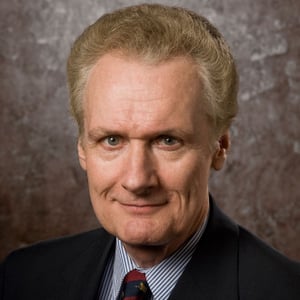
Vice President for Legal Affairs, Cato Institute
Roger Pilon is the Cato’s Institute’s vice president for legal affairs, the founding director of Cato’s Robert A. Levy Center for Constitutional Studies, the inaugural holder of Cato’s B. Kenneth Simon Chair in Constitutional Studies, and the founding publisher of the Cato Supreme Court Review.
Prior to joining Cato, Pilon held five senior posts in the Reagan administration, including at State and Justice, and was a national fellow at Stanford’s Hoover Institution. In 1989 the Bicentennial Commission presented him with its Benjamin Franklin Award for excellence in writing on the U.S. Constitution. In 2001 Columbia University’s School of General Studies awarded him its Alumni Medal of Distinction. Pilon lectures and debates at universities and law schools across the country and testifies often before Congress.
His writing has appeared in the Wall Street Journal, the Washington Post, the New York Times, the Los Angeles Times, Legal Times, National Law Journal, Harvard Journal of Law and Public Policy, Stanford Law and Policy Review, and elsewhere. He has appeared on ABC’s Nightline, CBS’s 60 Minutes II, Fox News Channel, NPR, CNN, MSNBC, CNBC, C-SPAN, and other media.
Pilon holds a BA from Columbia University, an MA and a PhD from the University of Chicago, and a JD from the George Washington University School of Law.
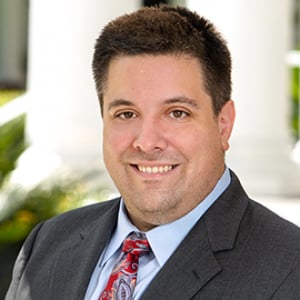
Sheila M. McDevitt Professor of Law and Faculty Director of the Election Law Center, Florida State University College of Law
Professor Morley joined FSU Law in 2018, and teaches and writes in the areas of election law, constitutional law, remedies, and the federal courts. He is best known for his work on election emergencies and post-election litigation, nationwide and other defendant-oriented injunctions, the jurisdiction of the federal courts and their equitable powers more generally. He has testified before congressional committees, made presentations to election officials for the U.S. Election Assistance Commission and participated in bipartisan blue-ribbon groups to develop election reforms. The governor of Florida also appointed Professor Morley to the Criminal Punishment Code Task Force, to propose potential revisions to the legislature.
The U.S. Supreme Court has cited several of his articles, and he was counsel of record for the successful Petitioner in a landmark campaign finance case. Professor Morley has appeared on C-SPAN, Court TV, Fox News and numerous local news programs, and has been quoted in the Washington Post, Los Angeles Times, Roll Call, Politico, U.S. News and World Report, and a wide range of other national publications. His work has been published in many of the nation’s top law reviews, including the Georgetown Law Journal, Northwestern University Law Review, Boston University Law Review and Emory Law Journal.
Before joining FSU Law, Professor Morley was a Climenko Fellow and Lecturer in Law at Harvard Law School. Prior to his experience in academia, he served in government as special assistant to the General Counsel of the Army at the Pentagon, as well as a law clerk for Judge Gerald B. Tjoflat of the U.S. Court of Appeals for the Eleventh Circuit. During his tenure with the Army General Counsel’s office, he was awarded the Meritorious Civilian Service Award and the Army Staff Lapel Pin. He also worked as an associate at Williams & Connolly LLP and the Supreme Court & Appellate group of Winston & Strawn, LLP, both in Washington, D.C.
Professor Morley earned his J.D. from Yale Law School in 2003, where he was a senior editor on the Yale Law Journal; served on the moot court board; and received the Thurman Arnold Prize for Best Oralist in the Morris Tyler Moot Court of Appeals.
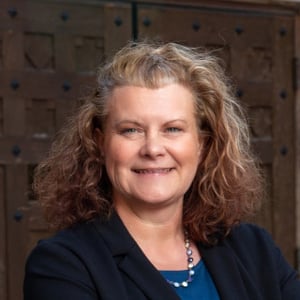
Associate Dean for Academic Affairs, Austin E. Owen Research Scholar & Professor of Law, The University of Richmond School of Law
Dean Kristen Jakobsen Osenga teaches and writes in the areas of patent law, antitrust, and legislation and regulation. Some of her recent scholarship focuses on standard development organizations, patent eligible subject matter, patent licensing firms, litigation and remedies for patent infringement, and patent law reform. She has written numerous law review articles on these and other topics, as well as book chapters and op eds on various aspects of patent law. Additionally, she has spoken on these issues at many academic conferences and bar events. Dean Osenga is Chief Policy Counselor for the Inventors Defense Alliance, as well as an active member of the Federal Circuit Bar Association and the American Intellectual Property Law Association.
Dean Osenga received a B.S. degree in Biomedical Engineering from the University of Iowa, an M.S. degree in Electrical Engineering from Southern Illinois University – Carbondale, and a J.D. from the University of Illinois College of Law, where she graduated magna cum laude. After law school, she practiced at the law firm of Finnegan, Henderson, Farabow, Garrett, & Dunner LLP, (now Finnegan) where she did patent prosecution and litigation. She then clerked for the Judge Richard Linn of the U.S. Court of Appeals for the Federal Circuit. After clerking, she entered academia, teaching first at Chicago-Kent College of Law and then at the University of Richmond, where she has been since 2006. She has also been a Visiting Professor at Emory University School of Law and at William & Mary School of Law.
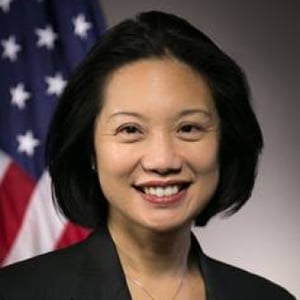
U.S. Attorney for the District of Columbia, U.S. Department of Justice
Jessie K. Liu was confirmed by the U.S. Senate on September 14, 2017, as the United States Attorney for the District of Columbia, and took office on September 24, 2017.
Ms. Liu was an Assistant United States Attorney in the District of Columbia from 2002 to 2006, prosecuting violent crime, drug trafficking, firearms, and fraud offenses in both the Superior Court and Criminal Divisions, and briefing and arguing appeals in the D.C. Court of Appeals and the U.S. District Court for the D.C. Circuit. She subsequently served in several senior positions in the U.S. Department of Justice, including as Deputy Assistant Attorney General in the Civil Rights Division, Counsel to the Deputy Attorney General for national security matters, and Deputy Chief of Staff for the National Security Division. Most recently, she was Deputy General Counsel at the U.S. Department of the Treasury, advising the Secretary of the Treasury and other senior Treasury officials on national security, law enforcement, and intelligence issues.
In addition, Ms. Liu has been a partner at the law firms of Morrison & Foerster LLP and Jenner & Block LLP, where her practice focused on litigation, investigations, and compliance.
Ms. Liu clerked for then-Chief Judge Carolyn Dineen King of the U.S. Court of Appeals for the Fifth Circuit in Houston, Texas. She received her A.B., summa cum laude, from Harvard University in 1995 and her J.D. from Yale Law School in 1998.
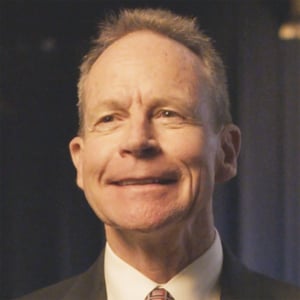
Associate Deputy Attorney General, United States Department of Justice
Steve Cook currently serves as Associate Deputy Attorney General in the United States Department of Justice. In March of 2017, he was appointed to serve as the Deputy Attorney General’s point person on the Task Force for Crime Reduction and Public Safety—a task force created at the direction of the President to develop a nationwide strategy to reduce crime. He now serves as the Director of Law Enforcement Affairs for the U.S. Department of Justice. Prior to his current appointment, he served as the chief of the Criminal Division in the United States Attorney’s Office for the Eastern District of Tennessee where he had been an Assistant United States Attorney for 30 years. During those 30 years, he worked in the Organized Crime Drug Enforcement Task Force; the General Crimes Section handling white-collar crime, fraud, and public corruption; and was the deputy criminal chief in the Narcotics and Violent Crime Section. In those positions, he received dozens of awards and letters of commendation including the Directors Award for Superior Performance in connection with his work prosecuting violent gang members. He is also the immediate past president of the National Association of Assistant U.S. Attorneys.
Prior to coming to the United States Attorney’s Office, Mr. Cook clerked for a judge of the United States Court of Appeals for the Sixth Circuit and before that worked as a deputy sheriff and then as a police officer for seven years in Knoxville, Tennessee. Mr. Cook earned his Doctor of Jurisprudence from the University of Tennessee in 1984, with high honors, and was a member of the Tennessee Law Review.
Mr. Cook was chosen as one of The Politico’s 50 in 2017 for his work on national criminal justice issues. He has testified multiple times before Congress in connection with proposed criminal justice legislation including bills involving the Electronic Communications Privacy Act and sentencing reform. He has appeared as a guest on numerous radio and television programs with regional and national audiences (including the O’Reilly Factor and Sean Hannity Show) and has appeared as a frequent panelist on forums and discussion panels (including programs hosted by the Washington Post, Atlantic Magazine, and Hastings Law Journal).
Finally, Mr. Cook has served as a speaker or instructor at hundreds of events across the country ranging from events with international audiences to local police training.
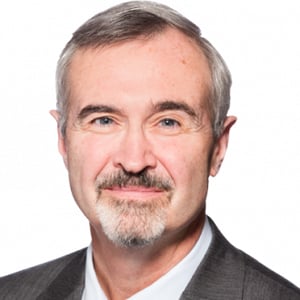
Vice President, Edwin Meese III Institute for the Rule of Law, Advancing American Freedom
John G. Malcolm oversees Advancing American Freedom’s work to increase understanding of the Constitution and the rule of law as Vice President of the organization’s Edwin Meese III Institute for the Rule of Law. Malcolm brings to the challenge a wealth of legal expertise and experience in both the public and private sectors.
Prior to joining Advancing American Freedom in 2025, Malcolm was the Vice President of the Institute for Constitutional Government and the Director of the Meese Center for Legal and Judicial Studies at the Heritage Foundation. Prior to joining Heritage in 2012, Malcolm was general counsel at the U.S. Commission on International Religious Freedom, as well as a distinguished practitioner in residence at Pepperdine Law School. From 2004 to 2009, Malcolm was executive vice president and director of worldwide anti-piracy operations for the Motion Picture Association.
Malcolm served as a deputy assistant attorney general in the Department of Justice’s Criminal Division from 2001 to 2004, where he oversaw sections on computer crime and intellectual property, domestic security, child exploitation and obscenity, and special investigations. Immediately prior to that, he was a founding partner in the Atlanta law firm of Malcolm & Schroeder, LLP.
From 1990 to 1997, Malcolm was an assistant U.S. attorney in Atlanta, assigned to the fraud and public corruption section, and also an associate independent counsel, investigating fraud and abuse in the Department of Housing and Urban Development. He was honored with the Director’s Award for Superior Performance for his work in connection with the successful prosecution of Walter Leroy Moody Jr., who assassinated an 11th Circuit judge and the head of the Savannah chapter of the NAACP.
A graduate of Harvard Law School and Columbia College, Malcolm began his career as a law clerk to a federal district court judge and a federal appellate court judge, and as an associate at the Atlanta-based law firm of Sutherland, Asbill & Brennan (new Eversheds Sutherland).
Malcolm, who resides in Washington, D.C., serves on the Board of Trustees of the Washington National Opera and is a Senate-confirmed member of the Board of Directors of the Legal Services Corporation, the largest funder of civil legal aid in the United States.
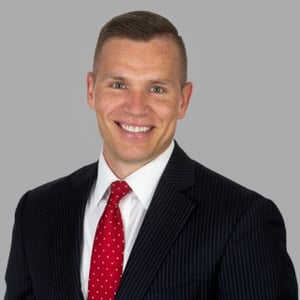
Assistant Professor of Law, Campbell University School of Law
Zachary C. Bolitho joined the Campbell Law School faculty after developing a reputation as a skilled trial and appellate lawyer. He teaches courses in Criminal Procedure, Criminal Law, Evidence, Federal Courts, and Trial Advocacy. Bolitho is an accomplished teacher, having been named “Professor of the Year” in both 2014-15 and 2015-16 following a vote of the third-year class.
He took a leave of absence during the 2017-18 academic year to work on the staff of Deputy Attorney General Rod Rosenstein at the U.S. Department of Justice in Washington, D.C. Bolitho was ultimately promoted to Chief of Staff and Associate Deputy Attorney General, serving as one of the Deputy Attorney General’s principal legal and policy advisors. Additionally, the Attorney General appointed Bolitho to serve as the Department of Justice’s ex officio member of the U.S. Sentencing Commission.
Prior to Campbell Law, Bolitho served as a federal prosecutor with the U.S. Attorney’s Office for the Eastern District of Tennessee. During his time as a federal prosecutor, Bolitho handled a wide variety of cases including several high profile matters. In addition to prosecuting cases in U.S. District Court, he briefed and argued cases before the U.S. Court of Appeals for the Sixth Circuit.
Before becoming a federal prosecutor, Bolitho was a litigation associate with the law firm Jones Day. He also completed a judicial clerkship with Judge David W. McKeague of the U.S. Court of Appeals for the Sixth Circuit.
Bolitho received his J.D. from The Ohio State University, Moritz College of Law. He graduated summa cum laude, was elected to the Order of the Coif, served as a law review editor, and won a national moot court championship. Before attending law school, Bolitho graduated from Mount Union College where he was the top student in his graduating class.
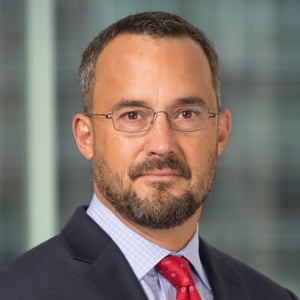
Senior Vice President for Legal Studies, Cato Institute
Clark Neily is senior vice president for legal studies at the Cato Institute. His areas of interest include constitutional law, overcriminalization, civil forfeiture, police accountability, and gun rights. Neily is the author of Terms of Engagement: How Our Courts Should Enforce the Constitution’s Promise of Limited Government. His writing has appeared in the Wall Street Journal, Forbes, and National Review Online, as well as various law reviews, including the Harvard Journal of Law and Public Policy, George Mason Law Review, Georgetown Journal of Law and Public Policy, NYU Journal of Law and Liberty, and Texas Review of Law and Politics. Neily is a frequent guest speaker and lecturer for the Federalist Society, Institute for Humane Studies, and American Constitution Society.
Before joining Cato in 2017, Neily was a senior attorney and constitutional litigator at the Institute for Justice and director of the Institute’s Center for Judicial Engagement. He is also an adjunct professor at the University of Texas School of Law, where he teaches constitutional litigation and public-interest law.
Neily served as co-counsel in District of Columbia v. Heller, the historic case in which the Supreme Court held for the first time that the Second Amendment protects an individual right to own a gun for self-defense.
Neily began his legal career as a law clerk to Judge Royce Lamberth on the U.S. District Court for the District of Columbia. After that he spent four years in the trial department of the Dallas-based firm Thompson & Knight. Neily received his undergraduate and law degrees from the University of Texas, where he was Chief Articles Editor of the Texas Law Review.
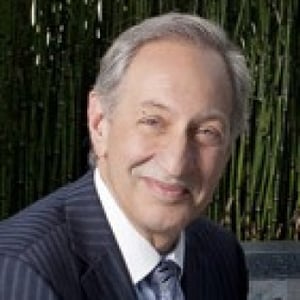
Attorney, Geragos & Geragos
As the Principal with the internationally known trial lawyer firm of Geragos & Geragos, Mark Geragos cemented his national reputation as a trial lawyer a dozen years ago with back-to-back State and Federal Court jury trial acquittals for renowned Whitewater figure Susan McDougal, later securing a presidential pardon for Ms. McDougal for a conviction sustained prior to his representation of her.
During the last decade, Geragos has won two consecutive dismissals of murder charges against clients by proving flawed eyewitness identification. One of those clients later won a $1.7 million settlement when the Geragos firm sued the City of Glendale for their false arrest of that client. In another twelve-week murder trial where the victim was the defendant's four-year-old daughter, Geragos was the lead lawyer where the jury did not convict his client. He was the attorney who successfully represented Chris Brown last year.
Geragos won dismissal of prostitution charges against James Bond movie director Lee Tamahori; dismissal of all felony charges - including kidnapping and torture - for Hung Bao Zhong, the recognized exiled leader of China's shadow government with an estimated 38 million followers worldwide; dismissal of murder charges for the third time for a USC co-ed charged with murder in the death of her fetus; and dismissal of a decades-old murder charge against Japanese national Kazuyoshi Miura, a case christened the "Japanese O.J. Case" by Japanese media.
Geragos was one of the lead lawyers in a pair of groundbreaking Federal Class Action Lawsuits against New York Life Insurance and AXA Corporation for insurance policies issued in the early 20th century during the genocide of over 1.5 million Armenians by the Ottoman Turk Regime, eventually settling these two cases for more than $37.5 million. He is currently suing the Government of Turkey for reparations arising out of the Armenian Genocide.
Geragos is the only lawyer besides Johnnie Cochran ever named "Lawyer of the Year" in both Criminal and Civil arenas. California Law Business Magazine named Geragos "One of the 100 Most Influential Attorneys in California" three years in a row, and Geragos has repeatedly been voted by his peers as one of Los Angeles' SuperLawyers. His $59 million jury verdict in a trade secrets case against pharmaceutical giant Pfizer Corporation was voted both "Top Ten Verdicts in 2008 in California" by the Daily Journal, as well as "Top Fifty Verdicts in the United States" by the National Law Journal.
Mark Geragos has represented some of the most prominent figures in the world. His client list has included former Congressman Gary Condit, former first brother Roger Clinton, Academy Award-nominated actress Winona Ryder, pop star Michael Jackson, Nicole Ritchie, singer Chris Brown, hip hop stars Nathaniel "Nate Dogg" Hale and Sean "Diddy" Combs (aka Puff Daddy), international arms dealer Sarkis Soghanalian, and the Sarkisyan family, whose seventeen-year-old daughter died when Cigna Corporation refused to authorize a liver transplant. For the last several years, Geragos has represented Barry Bonds' personal trainer, Greg Anderson, in his matter relating to the Federal Investigation into steroid use in Professional Sports.
Geragos has regularly appeared as both guest and legal commentator on the "Today Show," "Good Morning America," "Dateline NBC," "Larry King Live," "Greta Van Susteren's On the Record," "60 minutes," and "48 hours," and has lectured extensively and authored numerous articles and Law Review publications on the subject of Media and the Law.
Mark Geragos attended Haverford College in Pennsylvania as an undergraduate, and later earned his Juris Doctorate from Loyola Law School. He was born in Los Angeles.
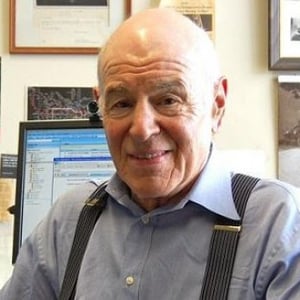
Professor of Law, Elisabeth Haub School of Law at Pace University
Professor Ben Gershman is one of the original faculty members at Pace Law and has taught as a visiting professor at Cornell Law School and Syracuse Law School. While in private practice he specialized in criminal defense litigation. A former prosecutor with the Manhattan District Attorney’s office for six years, he is the author of numerous articles as well as two books on prosecutorial and judicial ethics. He served for four years with the Special State Prosecutor investigating corruption in the judicial system. He is one of the nation’s leading experts on prosecutorial misconduct. He is active on several Bar Association committees, and is a frequent pro bono litigator. Professor Gershman has taught in the London Law Program, and was named James D. Hopkins Professor for the 2007–2009 academic years.
Professor of Law and Co-Director, Ordered Liberty Program, University of Louisville
Luke Milligan is a Professor of Law and criminal defense lawyer who works from the U.S. and Hungary.
He was previously with Williams & Connolly in Washington, D.C., where he practiced white-collar criminal defense. Published widely on the law of criminal procedure, his scholarship on the Fourth Amendment inspired the establishment of a litigation and public relations center at one of the world’s top public interest firms, the Institute for Justice, in Arlington, Virginia. He is a co-founder of the Ordered Liberty Program (with Prof. Justin Walker, now Judge of the U.S. Court of Appeals for the D.C. Circuit). He sits on the Board of Advisors of the Cato Supreme Court Review in Washington, D.C.
He’s been a visiting professor at Emory University School of Law, as well as on the law faculties of the University of Lisbon and the University of Milan. In Hungary, he is the founder and co-director of the Ordered Liberty School in Central Europe, based at Ludovika University in Budapest.
Of Counsel to a U.S.-based law firm, he’s represented individuals in a wide array of state and federal prosecutions. In 2020 and 2021, he fought the COVID-19 mandates in the U.S. He was lead counsel to U.S. Senator Rand Paul in landmark separation-of-powers litigation, stripping the Governor of Kentucky of “inherent authority” under the constitution, and, in turn, bringing an end to all statewide COVID-19 orders (notably, curfews, capacity limits, and masking requirements). He holds a tenured faculty position at the University of Louisville, where he teaches Criminal Law, Criminal Procedure, Jurisprudence, and Natural Law & Natural Rights. He’s been named Professor of the Year by alumni and hooding professor by five graduating classes.
He began his career as law clerk to the Hon. Edith Brown Clement of the U.S. Court of Appeals for the Fifth Circuit and the Hon. Martin L.C. Feldman of the U.S. District Court for the Eastern District of Louisiana. He received a J.D., with honors, from Emory University, where he was Articles Editor of the Emory Law Journal.
He and his wife, Sarah Peterson, have three sons, John, Mark, and Luke, Jr.
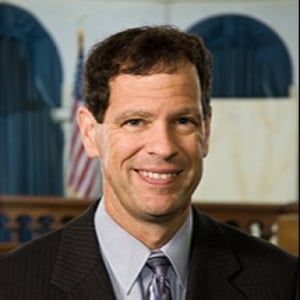
Warren Distinguished Professor of Law, University of San Diego School of Law
Michael D. Ramsey is Warren Distinguished Professor of Law at the University of San Diego School of Law, where he teaches and writes in the areas of Constitutional Law, Foreign Relations Law and International Law. He is the author of The Constitution’s Text in Foreign Affairs (Harvard University Press), co-editor of International Law in the U.S. Supreme Court: Continuity and Change (Cambridge University Press), and co-author of two casebooks, Transnational Law and Practice (2d ed., Aspen) and International Business Transactions: A Problem-Oriented Coursebook (14th ed., West). His scholarly articles have appeared in publications such as the Yale Law Journal, the University of Chicago Law Review, the Georgetown Law Journal and the American Journal of International Law. He received his B.A. magna cum laude from Dartmouth College and his J.D. summa cum laude from Stanford Law School. Prior to teaching, he served as a judicial clerk for Judge J. Clifford Wallace of the United States Court of Appeals for the Ninth Circuit and for Justice Antonin Scalia of the United States Supreme Court, and practiced law with the law firm of Latham & Watkins, where he specialized in international finance and investment. He has taught as a visiting professor at the University of California, San Diego, in the Department of Political Science and at the University of Paris – Sorbonne, in the Department of Comparative Law.
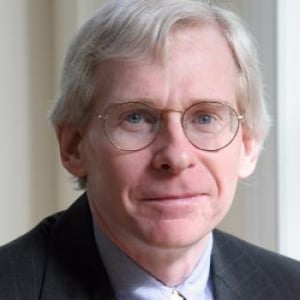
James Madison Distinguished Professor of Law and Class of 1941 Research Professor of Law, University of Virginia School of Law
Professor John C. Harrison is the James Madison Distinguished Professor of Law and Class of 1941 Research Professor of Law at the University of Virginia School of Law. He joined the faculty at University of Virginia in 1993 as an associate professor of law after a distinguished career with the U.S. Department of Justice. His teaching subjects include constitutional history, federal courts, remedies, corporations, civil procedure, legislation and property. In 2008 he was on leave from the Law School to serve as counselor on international law in the Office of the Legal Adviser at the U.S. Department of State.
A 1977 graduate of the University of Virginia, Harrison earned his law degree in 1980 at Yale, where he served as editor of the Yale Law Journal and editor and articles editor of the Yale Studies in World Public Order. He was an associate at Patton Boggs & Blow in Washington, D.C., and clerked for Judge Robert Bork on the U.S. Court of Appeals for the District of Columbia Circuit. He worked with the Department of Justice from 1983-93, serving in numerous capacities, including deputy assistant attorney general in the Office of Legal Counsel (1990-93).
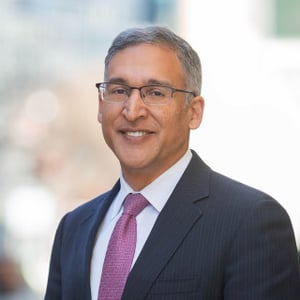
Partner, Millbank LLP
Mr. Katyal, the former Acting Solicitor General of the United States, focuses on appellate and complex litigation. He has argued 54 cases before the Supreme Court of the United States.
He has extensive experience in matters of antitrust, corporate, constitutional, securities, technology, criminal, patent, copyright, trademark, ERISA, products liability, labor, employment and tribal law. In the 2022-23 Supreme Court term, he argued five separate cases (nearly 10% of the docket), including winning the landmark voting case Moore v. Harper, which Judge Michael Luttig described as “the most important case for American democracy in the almost two and a half centuries since America’s founding.” Judge Luttig also said Mr. Katyal’s argument “was the single best oral argument I have ever heard made in the Supreme Court of the United States.” His cases include successfully striking down the Guantanamo military tribunals, successfully defending the constitutionality of the Voting Rights Act and successfully defending the Peace Cross in Maryland. His 2017 win in Bristol Myers Squibb v. Superior Court was a landmark victory for personal jurisdiction law and his 2006 win in Hamdan v. Rumsfeld was described by former Acting Solicitor General Walter Dellinger as “simply the most important decision on presidential power and the rule of law ever. Ever.”
From 2010 to 2011, Mr. Katyal served as Acting Solicitor General of the United States, where he argued several major Supreme Court cases involving a variety of issues, such as his successful defense of the constitutionality of the Voting Rights Act of 1965, his victorious defense of former Attorney General John Ashcroft for alleged abuses in the war on terror, his unanimous victory against eight states who sued the nation's leading power plants for contributing to global warming, and a variety of other matters. As Acting Solicitor General, he was responsible for representing the federal government of the United States in all appellate matters before the US Supreme Court and the Courts of Appeals throughout the nation. He served as Counsel of Record hundreds of times in the US Supreme Court. He was also the only head of the Solicitor General's office to argue a case in the US Court of Appeals for the Federal Circuit, on the important question of whether certain aspects of the human genome were patentable.
After graduating from Yale Law School, Mr. Katyal clerked for The Honorable Guido Calabresi of the US Court of Appeals for the Second Circuit as well as for The Honorable Justice Stephen G. Breyer of the US Supreme Court. He also served in the Deputy Attorney General's Office at the Justice Department as National Security Advisor and as Special Assistant to the Deputy Attorney General during 1998-1999.
Mr. Katyal is a best-selling New York Times author and has published dozens of scholarly articles in law journals (including several in the Harvard Law Review and Yale Law Journal), as well as many op-ed articles in publications such as the New York Times and the Washington Post. He has testified numerous times before various committees of both the US House of Representatives and the US Senate.
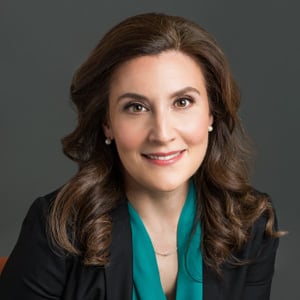
Board Member, U.S. Privacy and Civil Liberties Oversight Board
Beth A. Williams is a Board Member of the United States Privacy and Civil Liberties Oversight Board, an agency whose mission is to ensure that the federal government's efforts to prevent terrorism are balanced with the need to protect privacy and civil liberties.
Prior to her Board service, Ms. Williams was the Assistant Attorney General for the Office of Legal Policy at the United States Department of Justice from August 2017 to December 2020. In that role, she served as the primary policy advisor to the Attorney General and the Deputy Attorney General, and as the Chief Regulatory Officer for the Department. Ms. Williams also led the judicial nomination process for the Department, assisting in the selection and confirmation of more than 230 Article III judges to the bench.
Prior to becoming Assistant Attorney General, Ms. Williams was a litigation and appellate partner at a national law firm, where her practice focused on complex commercial, securities, appellate, and First Amendment litigation. From 2005-2006, Ms. Williams served as Special Counsel to the United States Senate Committee on the Judiciary, where she assisted with the confirmation of Chief Justice John G. Roberts, Jr. and Associate Justice Samuel A. Alito, Jr. to the United States Supreme Court.
Ms. Williams clerked for the Hon. Richard C. Wesley on the United State Court of Appeals for the Second Circuit. She graduated from Harvard College magna cum laude, with a degree in History and Literature, and she earned her law degree from Harvard Law School, where she served as Executive Editor of the Harvard Journal of Law and Public Policy.

Former President & CEO, The Federalist Society for Law and Public Policy Studies
Eugene B. Meyer, former President and CEO of the Federalist Society, has served as Executive Director, CEO, and/or President of the organization for more than 40 years. He is responsible for shepherding the organization from a small group of law students to a community of 90,000 lawyers, law students, academics, judges, and others interested in the rule of law. The Society now includes a Student Chapter at nearly every ABA-accredited law school in the country and Lawyers Chapters in 220 major cities across the nation. Gene earned his B.A. in history at Yale in 1975 and his M.A. in political science from the London School of Economics in 1976. Gene currently serves on the boards of the U.S. Chess Center, the Holman Foundation, the Sarah Scaife Foundation, and the advisory board of the Adam Smith Society. He holds the title of International Chess Master.
James Madison Distinguished Professor of Law and Class of 1941 Research Professor of Law, University of Virginia School of Law
Professor John C. Harrison is the James Madison Distinguished Professor of Law and Class of 1941 Research Professor of Law at the University of Virginia School of Law. He joined the faculty at University of Virginia in 1993 as an associate professor of law after a distinguished career with the U.S. Department of Justice. His teaching subjects include constitutional history, federal courts, remedies, corporations, civil procedure, legislation and property. In 2008 he was on leave from the Law School to serve as counselor on international law in the Office of the Legal Adviser at the U.S. Department of State.
A 1977 graduate of the University of Virginia, Harrison earned his law degree in 1980 at Yale, where he served as editor of the Yale Law Journal and editor and articles editor of the Yale Studies in World Public Order. He was an associate at Patton Boggs & Blow in Washington, D.C., and clerked for Judge Robert Bork on the U.S. Court of Appeals for the District of Columbia Circuit. He worked with the Department of Justice from 1983-93, serving in numerous capacities, including deputy assistant attorney general in the Office of Legal Counsel (1990-93).
Partner, Millbank LLP
Mr. Katyal, the former Acting Solicitor General of the United States, focuses on appellate and complex litigation. He has argued 54 cases before the Supreme Court of the United States.
He has extensive experience in matters of antitrust, corporate, constitutional, securities, technology, criminal, patent, copyright, trademark, ERISA, products liability, labor, employment and tribal law. In the 2022-23 Supreme Court term, he argued five separate cases (nearly 10% of the docket), including winning the landmark voting case Moore v. Harper, which Judge Michael Luttig described as “the most important case for American democracy in the almost two and a half centuries since America’s founding.” Judge Luttig also said Mr. Katyal’s argument “was the single best oral argument I have ever heard made in the Supreme Court of the United States.” His cases include successfully striking down the Guantanamo military tribunals, successfully defending the constitutionality of the Voting Rights Act and successfully defending the Peace Cross in Maryland. His 2017 win in Bristol Myers Squibb v. Superior Court was a landmark victory for personal jurisdiction law and his 2006 win in Hamdan v. Rumsfeld was described by former Acting Solicitor General Walter Dellinger as “simply the most important decision on presidential power and the rule of law ever. Ever.”
From 2010 to 2011, Mr. Katyal served as Acting Solicitor General of the United States, where he argued several major Supreme Court cases involving a variety of issues, such as his successful defense of the constitutionality of the Voting Rights Act of 1965, his victorious defense of former Attorney General John Ashcroft for alleged abuses in the war on terror, his unanimous victory against eight states who sued the nation's leading power plants for contributing to global warming, and a variety of other matters. As Acting Solicitor General, he was responsible for representing the federal government of the United States in all appellate matters before the US Supreme Court and the Courts of Appeals throughout the nation. He served as Counsel of Record hundreds of times in the US Supreme Court. He was also the only head of the Solicitor General's office to argue a case in the US Court of Appeals for the Federal Circuit, on the important question of whether certain aspects of the human genome were patentable.
After graduating from Yale Law School, Mr. Katyal clerked for The Honorable Guido Calabresi of the US Court of Appeals for the Second Circuit as well as for The Honorable Justice Stephen G. Breyer of the US Supreme Court. He also served in the Deputy Attorney General's Office at the Justice Department as National Security Advisor and as Special Assistant to the Deputy Attorney General during 1998-1999.
Mr. Katyal is a best-selling New York Times author and has published dozens of scholarly articles in law journals (including several in the Harvard Law Review and Yale Law Journal), as well as many op-ed articles in publications such as the New York Times and the Washington Post. He has testified numerous times before various committees of both the US House of Representatives and the US Senate.
Former President & CEO, The Federalist Society for Law and Public Policy Studies
Eugene B. Meyer, former President and CEO of the Federalist Society, has served as Executive Director, CEO, and/or President of the organization for more than 40 years. He is responsible for shepherding the organization from a small group of law students to a community of 90,000 lawyers, law students, academics, judges, and others interested in the rule of law. The Society now includes a Student Chapter at nearly every ABA-accredited law school in the country and Lawyers Chapters in 220 major cities across the nation. Gene earned his B.A. in history at Yale in 1975 and his M.A. in political science from the London School of Economics in 1976. Gene currently serves on the boards of the U.S. Chess Center, the Holman Foundation, the Sarah Scaife Foundation, and the advisory board of the Adam Smith Society. He holds the title of International Chess Master.
Board Member, U.S. Privacy and Civil Liberties Oversight Board
Beth A. Williams is a Board Member of the United States Privacy and Civil Liberties Oversight Board, an agency whose mission is to ensure that the federal government's efforts to prevent terrorism are balanced with the need to protect privacy and civil liberties.
Prior to her Board service, Ms. Williams was the Assistant Attorney General for the Office of Legal Policy at the United States Department of Justice from August 2017 to December 2020. In that role, she served as the primary policy advisor to the Attorney General and the Deputy Attorney General, and as the Chief Regulatory Officer for the Department. Ms. Williams also led the judicial nomination process for the Department, assisting in the selection and confirmation of more than 230 Article III judges to the bench.
Prior to becoming Assistant Attorney General, Ms. Williams was a litigation and appellate partner at a national law firm, where her practice focused on complex commercial, securities, appellate, and First Amendment litigation. From 2005-2006, Ms. Williams served as Special Counsel to the United States Senate Committee on the Judiciary, where she assisted with the confirmation of Chief Justice John G. Roberts, Jr. and Associate Justice Samuel A. Alito, Jr. to the United States Supreme Court.
Ms. Williams clerked for the Hon. Richard C. Wesley on the United State Court of Appeals for the Second Circuit. She graduated from Harvard College magna cum laude, with a degree in History and Literature, and she earned her law degree from Harvard Law School, where she served as Executive Editor of the Harvard Journal of Law and Public Policy.

Topics
Net Neutrality Back in Court: Will the Economics Hold Up?
Tomorrow, the sordid tale of net neutrality heads back to court at the D.C. Circuit...
Topics
New York State Rifle and Pistol Association v. City of New York
For the first time in a decade, the Supreme Court has decided to hear a...
Stare Decisis: What Is Stare Decisis? [No. 86]
Roger Pilon
Short video featuring Roger Pilon
The Latin term “stare decisis” may be translated literally as “to stand by decided matters.”...
Nutraceutical Corp. v. Lambert - Post-Argument SCOTUScast
Michael T. Morley
SCOTUScast featuring Michael Morley
On November 27, 2018, the Supreme Court heard argument in Nutraceutical Corp. v. Lambert, a...
Helsinn Healthcare S.A. v. Teva Pharmaceuticals USA Inc - Post-Argument SCOTUScast
Kristen Osenga
SCOTUScast featuring Kristen Osenga
On December 4, 2018, the Supreme Court heard argument in Helsinn Healthcare S.A. v. Teva...
To Seek Justice: Defining the Power of the Prosecutor
Jessie K. Liu, Steven H. Cook, John G. Malcolm, Zachary Bolitho, Clark Neily, Mark Geragos, Bennett L. Gershman
Documentary short by FedSoc Films
The job of a prosecutor is not just to seek convictions but to seek justice....
Stokeling v. United States, United States v. Stitt, and United States v. Sims - Post-Argument SCOTUScast
Luke Milligan
SCOTUScast featuring Luke Milligan
On October 9, 2018, the Supreme Court heard arguments in Stokeling v. United States and...
Jam v. International Finance Corporation
Michael D. Ramsey
SCOTUScast featuring Mike Ramsey
On October 31, 2018, the Supreme Court heard argument in Jam v. International Finance Corporation,...
Eleventh Annual Rosenkranz Debate & Luncheon
John C. Harrison, Neal K. Katyal, Beth A. Williams, Eugene B. Meyer
2018 National Lawyers Convention
RESOLVED: District courts do not have the authority to enter universal injunctions. Prof. John Harrison,...
Eleventh Annual Rosenkranz Debate & Luncheon
John C. Harrison, Neal K. Katyal, Eugene B. Meyer, Beth A. Williams
2018 National Lawyers Convention
RESOLVED: District courts do not have the authority to enter universal injunctions. Prof. John Harrison,...