
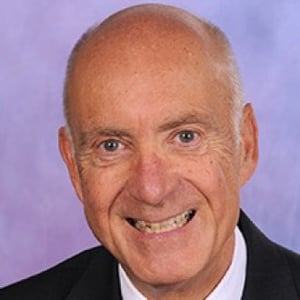
Distinguished Service Professor of Law; Chair, Levin Center at Wayne Law Faculty Committee, Wayne State University Law School
Following graduation with distinction from The University of Michigan Law School in 1964, where he served on the law review and was elected a member of the Order of the Coif, Professor Mogk practiced law with Shearman & Sterling in New York City. In addition to corporate law and litigation, his practice included providing legal counsel to the pioneering program revitalizing the Bedford-Stuyvesant neighborhood of Brooklyn, New York.
He joined the Wayne Law faculty in 1968, one year after Detroit's major civil disturbance, to focus upon critical issues facing America's distressed urban communities. His work has included research, teaching and engagement in the field of urban law and policy on such issues as economic development, neighborhood rehabilitation and intergovernmental cooperation. Professor Mogk frequently contributes editorial commentary on critical urban issues to the major media outlets.
Professor Mogk has assumed many public leadership positions, including his recent position as Chair of the Michigan Council on Labor and Economic Growth and as past Chair of Habitat for Humanity Detroit from 1999 to 2006. He has been an adviser to the state, Wayne County and the city of Detroit on a variety of urban development initiatives, including the Michigan State Housing Development Authority and the City of Detroit Planning and Development Department. He has also served on the Detroit Board of Education, Executive Committee of the Southeast Michigan Council of Governments and Michigan Construction Code Commission. From 1974-1994 he was executive director of the Michigan Energy and Resource Research Association, a nonprofit state, university and industry scientific partnership developing renewable energy policy and projects for Michigan.
He has received special commendations from the Michigan Legislature and Detroit Common Council and was selected Outstanding Professor by the law school student body in 1979, 1983 and 1994, 1997, 2003 and 2016 by the alumni in 1993. Professor Mogk was named one of the Ten Outstanding Young Men in the Unites States (U.S. Jaycees) in 1973.
He teaches courses in Property, State and Local Government Law, Land Use Planning, and Urban Development. Professor Mogk was a visiting fellow at the University of Warwick in England during 1985-86, and the University of Utrecht, the Netherlands, in 2001. He has served as editor of the Michigan International Lawyer, published by the State Bar of Michigan, and a member of the State Bar's Land Title Standards Committee.
Urban Agriculture Policy Paper
Professor Mogk led two former students, Sarah Kwiatkowski and Mary Jo Weindorf, on an urban agriculture policy paper for the city of Detroit. The paper, titled Promoting Urban Agriculture as an Alternative Land Use for Vacant Properties in the City of Detroit: Benefits, Problems and Proposals for a Regulatory Framework for Successful Land Use Integration, was submitted to Detroit Mayor Dave Bing and Detroit City Council President Charles Pugh in August 2010 .
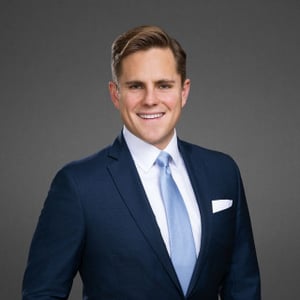
Environmental Law Attorney, DLA Piper
Garrett Kral is an attorney in DLA Piper’s Washington, DC, office, and a member of the Regulatory and Government Affairs Practice Group. His practice includes regulatory counseling, enforcement defense, and complex civil litigation on matters arising under major federal environmental statutes.
Garrett builds on a strong background in environmental science, a familiarity with technical processes involved in industrial operations, and valuable insights gained by serving in each branch of the federal government. With this experience, he advances the business objectives of Fortune 500 companies while limiting exposure and risk. Garrett is regarded as a strategic advisor to such clients on matters of environmental law and policy.
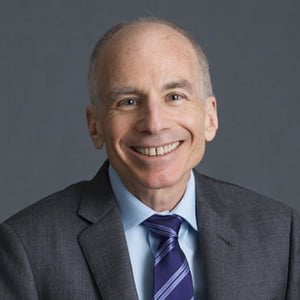
University Professor, Founding Linda D. & Timothy J. O’Neill Professor of Global Health Law, Faculty Director of O’Neill Institute for National & Global Health Law, Georgetown University, Director, World Health Organization Collaborating Center on Public Health Law & Human Rights
Lawrence O. Gostin is University Professor, Georgetown University’s highest academic rank conferred by the University President. Prof. Gostin directs the O’Neill Institute for National and Global Health Law and is the Founding O’Neill Chair in Global Health Law. He served as Associate Dean for Research at Georgetown Law from 2004 to 2008. He is Professor of Medicine at Georgetown University and Professor of Public Health at the Johns Hopkins University.
Prof. Gostin is the Director of the World Health Organization Collaborating Center on National and Global Health Law. The WHO Director-General has appointed Prof. Gostin to high-level positions, including the International Health Regulations (IHR) Roster of Experts and the Expert Advisory Panel on Mental Health. He served on the Director-General’s Advisory Committee on Reforming the World Health Organization, as well as numerous WHO expert advisory committees, including on the Pandemic Influenza Preparedness Framework, smallpox, genomic sequencing data, migrant health, and NCD prevention. He served on the WHO/Global Fund Blue Ribbon Expert Panel: The Equitable Access Initiative to develop a global health equity framework. He co-chairs the Lancet Commission on Global Health Law.
Professor Gostin served on two global commissions to report on the lessons learned from the 2015 West Africa Ebola epidemic. He was also senior advisor to the United Nations Secretary General’s post-Ebola Commission. He also served on the drafting team for the G-7 Summit in Tokyo 2016, focusing on global health security and Universal Health Coverage.
Prof. Gostin holds multiple international academic professorial appointments, including at Oxford University, the University of Witwatersrand (South Africa), and Melbourne University. Prof. Gostin served on the Governing Board of Directors of the Consortium of Universities for Global Health.
Prof. Gostin holds editorial appointments in leading academic journals throughout the world. He is the Legal and Global Health Correspondent for the Journal of the American Medical Association. He is also Founding Editor-in-Chief of Laws (an international open access law journal). He was formally the Editor-in-Chief of the Journal of Law, Medicine & Ethics.
Prof. Gostin holds four honorary degrees. In 1994, the Chancellor of the State University of New York conferred an Honorary Doctor of Laws Degree. In 2006, Her Majesty Queen Elizabeth II and the Vice Chancellor awarded Cardiff University’s (Wales) highest honor, an Honorary Fellow. In 2007, the Royal Institute of Public Health (United Kingdom) appointed Prof. Gostin as a Fellow of the Royal Society of Public Health (FRSPH). In 2012, the Chancellor of the University of Sydney – on the nomination of the Deans of the Law and Medical Schools – conferred a Doctor of Laws (honoris causa), presided by two Justices of Australia’s highest court—Justices Kirby and Haydon.
Prof. Gostin is an elected lifetime Member of the National Academy of Medicine/ National Academy of Sciences. He has served on the National Academy’s Board on Health Sciences Policy, the Board on Population Health, the Human Subjects Review Board, and the Committee on Science, Technology, and Law. He currently serves on the National Academies of Sciences Engineering, and Medicine, Board on Global Health. Gostin chaired the National Academy’s Committee on Global Solutions to Falsified, Substandard, and Counterfeit Medicines. He has chaired National Academy Committees on national preparedness for mass disasters, health informational privacy, public health genomics, and human subject research on prisoners.
Prof. Gostin is also a Member of the Council on Foreign Relations and Fellow of the Hastings Center. In 2016, President Obama appointed Prof. Gostin to a six-year term on the President’s National Cancer Advisory Board to advise the nation on cancer prevention, research, and policy. He also serves on the National Institutes of Health Director’s Advisory Committee on the ethics of public/private partnerships to end the opioid crisis.
Prof. Gostin has led major law reform initiatives in the U.S., including drafting the Model Emergency Health Powers Act (MEHPA) to combat bioterrorism (following the post-9/11 anthrax attacks) and the “Turning Point” Model State Public Health Act. He also spearheaded the World Health Organization and International Development Law Organization’s major report, Advancing the Right to Health: The Vital Role of Law.
Prof. Gostin’s proposal for a Framework Convention on Global Health – an international treaty ensuring the right to health – is now part of a global campaign, endorsed by the UN Secretary-General and Director of UNAIDS.
In the United Kingdom, Lawrence Gostin was the Legal Director of the National Association for Mental Health, Director of the National Council of Civil Liberties (the UK equivalent of the ACLU), and a Fellow at Oxford University. He helped draft the Mental Health Act (England and Wales) and brought landmark cases before the European Court of Human Rights.
Prof. Gostin’s books include: Public Health Law: Power, Duty, Restraint (University of California Press, 3rd ed., 2016); Public Health Law and Ethics: A Reader (University of California Press, 3rd ed., 2018); Human Rights in Global Health: Rights-Based Governance for a Globalizing World (Oxford University Press, 2018); Law and the Health System (Foundation Press, 2014); Principles of Mental Health Law & Practice (Oxford University Press, 2010).
Gostin’s classic text, Global Health Law (Harvard University Press, 2014) is read throughout the world—translated and published in both simplified and traditional Chinese, and in Spanish. Paul Farmer, Partners in Health, says of his book: Global Health Law is “more than the definitive book on a dynamic field. Gostin harnesses the power of international law and human rights as tools to close unconscionable health inequities — the injustices that burden marginalized populations throughout the world. Gostin presents a forceful vision, one that deserves a wide embrace.”
In a 2012 systematic empirical analysis of legal scholarship, independent researchers ranked Prof. Gostin 1st in the nation in productivity among all law professors, and 11th in in impact and influence. A 2017 and 2018 systematic empirical analysis ranked Prof. Gostin 1st in the nation for citations in health law.
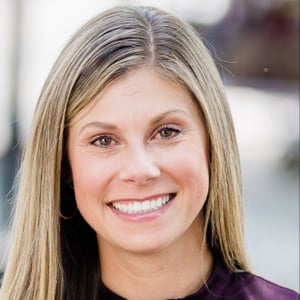
Executive Director, Southeastern Legal Foundation
Kimberly Hermann serves as Executive Director for Southeastern Legal Foundation.
Kim has worked with Southeastern Legal Foundation since 2009. Her belief in liberty and desire to serve started at a young age – instilled by her parents’ dedication to hard work, family values, and love for America.
After earning her undergraduate degree in Analytical Finance and graduate degree in Accounting from Wake Forest University, Kim worked as a licensed CPA with an international accounting firm. But her strong belief in individual liberty, the rule of law, and accountability in government led her to pursue a career in law. While in law school at Georgia State University College of Law, Kim served as a law clerk at SLF. After graduating, Kim worked at a private law firm in Atlanta where she specialized in financial and business litigation but continued to serve SLF in a pro bono capacity. In 2013, Kim returned to SLF full-time and is proud to dedicate her career to the freedom-based law movement.
Kim advances liberty through litigation in federal and state trial and appellate courts on issues ranging from government overreach, free speech, property rights, and economic liberty. In addition to representing clients, Kim testifies before state legislatures, drafts model legislation, and regularly publishes legal articles. Through SLF’s legal initiatives, she informs Americans about their constitutional rights, equipping them with the tools they need to stand up to government overreach. Her work and that of Southeastern Legal Foundation is regularly covered by national media and you will frequently hear or see her on radio, podcasts, and television.
Kim is an active member of the Federalist Society where she serves as an expert on the Federalist Society’s Civil Rights Executive Committee. She is also an active member of her community and when she isn’t fighting for liberty, you can find her at her children’s school or on the sports fields cheering them on. She lives in the Atlanta area with her husband and two children.
Attorney, Pacific Legal Foundation
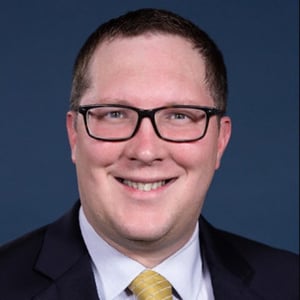
Luke A. Wake is an attorney at the Pacific Legal Foundation. Prior to joining PLF, he was a senior staff attorney at the NFIB Small Business Legal Center.
Wake has particular expertise on environmental and land use issues, and has worked on numerous other constitutional issues and matters of importance to small business owners. He is an ardent defender of private property rights, which he believes are essential to the free enterprise system and the foundation of American liberty. As a strong advocate of individual rights and economic liberties, he has built his career defending small business interests.
Wake has focused on a whole host of issues, from employment law matters to regulatory compliance. In addition to serving as a resource for small business owners, Wake is committed to ensuring that the voice of small business is heard in the nation’s courts. As an appellate practitioner, Wake has focused particularly on informing the courts on matters of administrative law and on issues under the Fifth Amendment’s Takings Clause. He is also working to advance small business interests in law review articles, and was recently published in the Berkeley Journal of Law & Ecology. See R.S. Radford & Luke A. Wake, Deciphering and Extrapolating: Searching for Sense in Penn Central, 38 Ecology L.Q. 731, 746-747 (2011).
Before joining the Legal Center’s team, Wake completed a prestigious two-year fellowship as an attorney in the Pacific Legal Foundation’s College of Public Interest Law. Wake is a graduate of Case Western Reserve University School of Law in Cleveland Ohio, and is a member of the California Bar. He completed his undergraduate studies at Elon University in North Carolina in 2006 where he focused on political theory and corporate communications.
Trial Attorney, Civil Rights Division, United States Department of Justice (incoming)
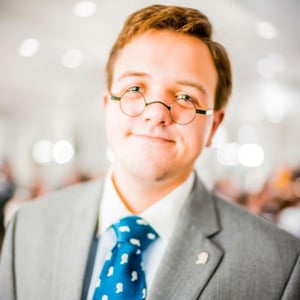
Adam Griffin is a graduate of the University of North Carolina School of Law. During law school, he served as a research assistant to Professor Stephen E. Sachs and UNC Law Dean Martin Brinkley. After law school, he spent two years litigating for liberty at the Institute for Justice as an inaugural Law and Liberty Fellow. He served as a law clerk to Chief Judge Richard E. Myers in the United States District Court for the Eastern District of North Carolina, and is now a separation-of-powers attorney at Pacific Legal Foundation.
Denver Managing Partner, Wilkinson Barker Knauer LLP
Raymond L. Gifford counsels communications, electric and gas utilities, and information technology companies on state and federal aspects of regulation, administrative law, and competition policy. He is an expert in public utilities law, and the law and economics of regulation of network industries. Mr. Gifford’s law and policy work focuses on the convergence of broadband communications and energy, as well as environmental policy as it applies to the electric industry. He represents clients in state and federal courts and agencies, and serves as an expert witness on utility regulation and its history. He is also a Senior Adjunct Fellow at the Silicon Flatirons Center for Law, Technology and Entrepreneurship, and Co-Directs the Institute for Regulatory Law & Economics at University of Colorado Law School.
Mr. Gifford served as Chairman of the Colorado Public Utilities Commission from 1999-2003. Following that, he served as President of The Progress & Freedom Foundation, a Washington DC-based think-tank that studied the digital revolution as it relates to regulation of network industries. He entered the regulatory law world as First Assistant Attorney General in the Colorado Attorney General’s Office. He clerked for the Honorable Richard P. Matsch of the United States District Court for the District of Colorado. Mr. Gifford has authored a number of articles on communications law, public utility regulation and competition policy in network industries. He is a graduate of University of Chicago Law School and St. John’s College in Annapolis, Maryland. He is an elected member of the American Law Institute
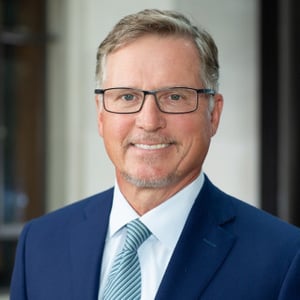
Barry Smitherman is principle of BARRY SMITHERMAN, P.C. and a former partner at Vinson & Elkins LLP. He served on the Texas Railroad Commission from 2011 through 2014, and was Chairman of the Commission from March 2012 through August 2014. Prior to joining the TX RRC, Barry was Chairman of the Public Utility Commission of Texas, a position he held from November 2007 through July 2011. His service as a PUCT Commissioner began in April 2004. Over this time period, Barry served two terms on the U.S. Department of Energy Electricity Advisory Committee, on the Board of Directors of the National Association of Regulatory Utility Commissioners (NARUC), Chairman of the NARUC Gas Committee, on the Electric Reliability Council of Texas (ERCOT) Board of Directors, and on the Regional State Committee of the Southwest Power Pool (SPP).
Barry presently serves on the Board of Directors of Centerpoint Energy, and of Centric Infrastructure Group. He previously served on the Board of NRG Energy, Inc. Barry is also the Chairman of BIG (Brookwood in Georgetown), a non profit which provides work, artistic, and housing opportunities for special needs adults.
Prior to beginning public service, Barry spent 16 years as a public finance investment banker with several prominent 'Wall Street' firms, including J.P. Morgan Securities, The First Boston Corporation (now part of Credit Suisse), Lazard, and Banc One Capital Markets (now part of JP MorganChase). At Banc One, he was a Managing Director and National Head of the Tax-Exempt Origination Group.
Barry received his J.D. from The University of Texas School of Law, his M.P.A. from Harvard University, and his B.B.A. summa cum laude from Texas A&M University.
Denver Managing Partner, Wilkinson Barker Knauer LLP
Raymond L. Gifford counsels communications, electric and gas utilities, and information technology companies on state and federal aspects of regulation, administrative law, and competition policy. He is an expert in public utilities law, and the law and economics of regulation of network industries. Mr. Gifford’s law and policy work focuses on the convergence of broadband communications and energy, as well as environmental policy as it applies to the electric industry. He represents clients in state and federal courts and agencies, and serves as an expert witness on utility regulation and its history. He is also a Senior Adjunct Fellow at the Silicon Flatirons Center for Law, Technology and Entrepreneurship, and Co-Directs the Institute for Regulatory Law & Economics at University of Colorado Law School.
Mr. Gifford served as Chairman of the Colorado Public Utilities Commission from 1999-2003. Following that, he served as President of The Progress & Freedom Foundation, a Washington DC-based think-tank that studied the digital revolution as it relates to regulation of network industries. He entered the regulatory law world as First Assistant Attorney General in the Colorado Attorney General’s Office. He clerked for the Honorable Richard P. Matsch of the United States District Court for the District of Colorado. Mr. Gifford has authored a number of articles on communications law, public utility regulation and competition policy in network industries. He is a graduate of University of Chicago Law School and St. John’s College in Annapolis, Maryland. He is an elected member of the American Law Institute
Barry Smitherman is principle of BARRY SMITHERMAN, P.C. and a former partner at Vinson & Elkins LLP. He served on the Texas Railroad Commission from 2011 through 2014, and was Chairman of the Commission from March 2012 through August 2014. Prior to joining the TX RRC, Barry was Chairman of the Public Utility Commission of Texas, a position he held from November 2007 through July 2011. His service as a PUCT Commissioner began in April 2004. Over this time period, Barry served two terms on the U.S. Department of Energy Electricity Advisory Committee, on the Board of Directors of the National Association of Regulatory Utility Commissioners (NARUC), Chairman of the NARUC Gas Committee, on the Electric Reliability Council of Texas (ERCOT) Board of Directors, and on the Regional State Committee of the Southwest Power Pool (SPP).
Barry presently serves on the Board of Directors of Centerpoint Energy, and of Centric Infrastructure Group. He previously served on the Board of NRG Energy, Inc. Barry is also the Chairman of BIG (Brookwood in Georgetown), a non profit which provides work, artistic, and housing opportunities for special needs adults.
Prior to beginning public service, Barry spent 16 years as a public finance investment banker with several prominent 'Wall Street' firms, including J.P. Morgan Securities, The First Boston Corporation (now part of Credit Suisse), Lazard, and Banc One Capital Markets (now part of JP MorganChase). At Banc One, he was a Managing Director and National Head of the Tax-Exempt Origination Group.
Barry received his J.D. from The University of Texas School of Law, his M.P.A. from Harvard University, and his B.B.A. summa cum laude from Texas A&M University.

Eminent Domain and Public Use | Taking Poletown
John Mogk
In the early 1980s, General Motors found the perfect place to build a new factory...
Environmental Law in the Supreme Court: Highlights from the October 2020 Term
Garrett Kral
Federalist Society Review, Volume 22
The Supreme Court decided nine important environmental law cases during its October 2020 term. This...
Examining the CDC's Eviction Moratorium
Lawrence Gostin, Kimberly Hermann, Luke A. Wake
A Regulatory Transparency Project Webinar
In September 2020, the Centers for Disease Control and Prevention (CDC) issued its first nationwide...
Protecting Economic Liberty in the Federal Courts: Theory, Precedent, Practice
Adam F. Griffin
Federalist Society Review, Volume 22
The 14th Amendment meaningfully protects economic liberty. While this protection was originally housed in the...
Topics
A Takings Clause Lawsuit Against the CDC Eviction Moratorium
This post originally appeared at the Volokh Conspiracy. The Centers for Disease Control's enactment of...
Topics
The CDC's New Eviction Moratorium Has Virtually all the Same Flaws as the Old
This post originally appeared at the Volokh Conspiracy. The Centers for Disease Control's repeatedly...
What Happened with the Texas Energy Grid
Raymond L. Gifford, Barry T. Smitherman
Environmental Law & Property Rights Practice Group Teleforum
When the Texas electric grid failed over Valentine’s Day weekend in February 2021, the recriminations...
What Happened with the Texas Energy Grid
Raymond L. Gifford, Barry T. Smitherman
Environmental Law & Property Rights Practice Group Teleforum
When the Texas electric grid failed over Valentine’s Day weekend in February 2021, the recriminations...
Topics
California Regulation Ruled an Uncompensated Taking in Cedar Point Nursery v. Hassid
On June 23, 2021, the United States Supreme Court issued an important decision for property...
Courthouse Steps Decision Teleforum: Cedar Point Nursery v. Hassid
The Supreme Court issued its decision in Cedar Point Nursery v. Hassid today, June 23, 2021,...