
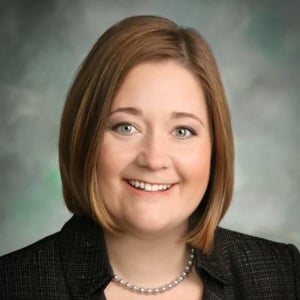
Attorney General, Office of the Iowa Attorney General
In November 2022, Brenna Bird was elected as Iowa Attorney General – the first Republican to hold the office since 1979.
Before taking office as Iowa Attorney General, Brenna served as a prosecutor for six years, first as the Fremont County Attorney and then since 2018 as the Guthrie County Attorney. She was elected by her fellow county attorneys to leadership roles with the Iowa County Attorney Association, and served as the Association's President.
Brenna has also engaged in the private practice of law, worked in the Iowa Governor’s Office and the U.S. House of Representatives, and taught as an adjunct professor at the University of Iowa College of Law.
Born and raised on an Iowa farm, where she was homeschooled. Brenna graduated from Drake University and went on to receive her J.D. from the University of Chicago Law School, where she served as symposium editor of the school’s law journal. In addition to her law studies, Brenna also helped entrepreneurs on Chicago’s South Side start their own businesses.
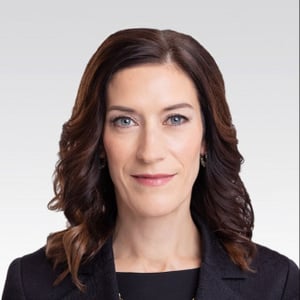
Executive Vice President of Global Governance, Chief Legal Officer and Corporate Secretary, Walmart Inc.
Rachel Brand is Walmart’s executive vice president of global governance, chief legal officer, and corporate secretary. She oversees the company’s global legal, compliance, ethics, corporate governance, digital citizenship, aviation, investigative, and corporate security functions, including Walmart’s Emergency Operations Center.
Immediately before joining Walmart, Rachel served as the United States Associate Attorney General and holds the distinction of being the first woman to serve in this role. She had previously served in the U.S. Department of Justice as the Assistant Attorney General for the Office of Legal Policy during President George W. Bush’s administration. Her other government service includes an appointment by President Obama to serve as a Member of the U.S. Privacy and Civil Liberties Oversight Board, service as an Associate Counsel to the President at the White House, and judicial clerkships with Justice Charles Fried of the Supreme Judicial Court of Massachusetts and Justice Anthony Kennedy at the Supreme Court of the United States. In the private sector, Rachel was a lawyer in private practice at two law firms in Washington, D.C. and served as the Vice President and Chief Counsel for Regulatory Litigation at the U.S. Chamber of Commerce Litigation Center.
Rachel serves on the board of directors for the Walmart Foundation and is the executive sponsor for Walmart’s Tribal Voices Associate Resource Group. Outside of Walmart, she serves on the board of directors for the International Justice Mission and is a member of The American Law Institute.
Rachel earned her Bachelor of Arts degree from the University of Minnesota-Morris and her J.D. from Harvard Law School.

Partner, Akin Gump Strauss Hauer & Feld LLP
Martine focuses her practice on high-profile litigation and government investigations matters, particularly those brought by state attorneys general. With experience in both the public and private sectors, she provides clients with comprehensive, strategic advice to guide them through state attorney general investigations and enforcement actions.
Martine is ranked by Chambers USA, where clients describe her as “a very talented lawyer” who is “extremely smart with impressive depth of experience,” who provides “excellent client service” and who has “an incredible body of substantive knowledge and commercial awareness.” As noted by Chambers, she is “an intelligent and complex thinker, able to take thorny legal issues and see a path through. She is extraordinarily analytical and works through complex legal problems.”
Martine served as a Special Assistant to the President and Senior Counsel in the Office of the White House Counsel. In this role, she provided legal advice on sensitive, complex matters to senior Executive Branch officials, led the White House response on matters of congressional oversight and investigations by inspectors general, and advised on litigation implicating executive privilege and related issues. Martine also served as Associate Counsel in the same office during the Obama administration.
Prior to joining the Biden White House, Martine served as Deputy Solicitor General in the Office of the Virginia Attorney General, where she was an appellate and trial litigator. She argued major cases in federal and state courts, including the U.S. Court of Appeals for the 4th Circuit and the Virginia Supreme Court, and was the lead drafter for numerous multistate amicus briefs in the U.S. Supreme Court. Martine also served in the Department of Justice’s Office of Legal Counsel as an Attorney Advisor, where she provided advice to Executive Branch agencies on constitutional and statutory issues, specializing in matters related to congressional oversight and executive privilege.
Martine spent several years as a counsel in Akin’s Supreme Court and Appellate and congressional investigations practices. She briefed and argued cases in the federal courts of appeal and U.S. Supreme Court and advised clients on matters related to congressional and other high-visibility investigations.
Martine served as a law clerk for Justice Ruth Bader Ginsburg on the U.S. Supreme Court and Chief Judge Merrick B. Garland on the U.S. Court of Appeals for the D.C. Circuit.
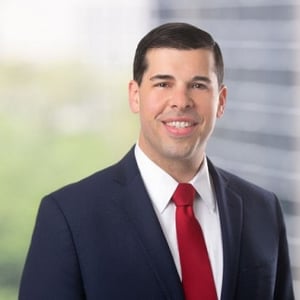
Partner, Boies Schiller Flexner LLP
Jesse, the former third-ranking official at the U.S. Department of Justice, helps clients with their most difficult litigation and regulatory issues─whether that means defending against an enforcement action, pursuing high-stakes litigation and appeals, navigating regulatory thickets at federal and state agencies, or crafting a comprehensive strategy to manage a crisis. He approaches these problems with the knowledge gained both from his broad private-practice experience and from having served at the highest levels of federal and state government.
Jesse has experience across a range of substantive and regulatory areas. He has sued the federal government and has also been one of its top law-enforcement officials; he has represented states and has also navigated their regulatory agencies on behalf of clients; and he has represented companies in business disputes, both as defendants and plaintiffs.
Before joining the firm, Jesse was the Acting Associate Attorney General at the United States Department of Justice. In that role, he oversaw the civil and criminal work of the Antitrust, Civil, Civil Rights, Environment and Natural Resources, and Tax Divisions. During Jesse’s tenure, the Associate’s office closely managed the Department’s most significant litigation, including matters involving large financial institutions, healthcare companies, automakers, energy companies, and state and local governments. In addition, Jesse served as Chair of DOJ’s Regulatory Reform Task Force and Vice Chair of DOJ’s Task Force on Market Integrity and Consumer Fraud. Jesse regularly provided legal and strategic advice to the highest-level decision makers in the federal government, including the Attorney General and Deputy Attorney General, general counsels across the spectrum of federal agencies, and White House officials.
Jesse served for three years as the secretary of Florida’s labor, economic-development, and land-use agency, the Florida Department of Economic Opportunity. Before that, he served as Governor (now Senator) Rick Scott’s general counsel.
Jesse maintains offices in both Washington D.C. and Florida. From Washington, he focuses on federal litigation and crisis management. In Florida, in addition to federal litigation, Jesse employs his knowledge of state government and regulation to help clients in courts across the state, from trial through the Florida Supreme Court.
Jesse currently serves on the Florida Supreme Court Judicial Nominating Commission, the body that provides the governor with nominees for appointment to the Florida Supreme Court. Jesse is also a fellow at the Center for the Study of the Administrative State at the Scalia Law School at George Mason University, where he writes and speaks about administrative law.
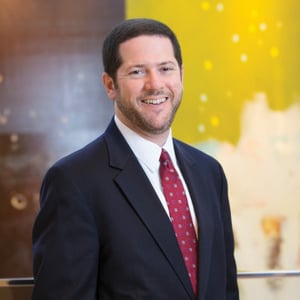
Partner, Co-chair of the Litigation & Trial Practice Group, Alston & Bird LLP
Adam Biegel is co-chair of Alston & Bird’s Litigation & Trial Practice Group and former co-chair of its Antitrust Team. He has substantial experience representing clients on antitrust counseling and litigation matters, including those involving government and internal investigations, mergers and joint ventures, pricing and distribution, compliance counseling and training, pre-merger reviews under the Hart-Scott-Rodino (HSR) Act, and multidistrict litigation. He regularly represents clients before the U.S. Department of Justice (DOJ) Antitrust Division, Federal Trade Commission (FTC) and state attorneys general, and in federal courts.
Adam is recognized for his antitrust experience by Chambers USA and selected to The Best Lawyers in America®, including his recognition as “Lawyer of the Year” for Antitrust Litigation in Washington, D.C., in 2022. He is a longtime member of the American Bar Association Antitrust Law Section’s leadership, currently serving as co-chair of its In-House Counsel Task Force and previously having served on its board, and chaired its Corporate Counseling Committee, Long Range Planning Committee, and Spring Meeting conference. He also serves on the board of the Federalist Society’s antitrust practice group.
Adam served as a law clerk to the Hon. Frank M. Hull, U.S. Court of Appeals for the Eleventh Circuit. Before attending law school, he worked as a newspaper reporter in Arkansas and on the legislative staff of U.S. Senator Orrin Hatch.
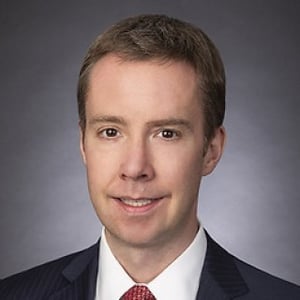
Partner in the Antitrust & Competition Practice Group, Sheppard Mullin
John’s practice focuses on civil and criminal antitrust matters, including mergers & acquisitions, strategic counseling and compliance, and global cartel investigations, where he represents clients before the Department of Justice Antitrust Division, Federal Trade Commission, and international and state antitrust enforcement authorities.
Prior to private practice, John was in the Mergers I Division of the Federal Trade Commission’s Bureau of Competition for several years. While with the FTC, he investigated, challenged, and negotiated settlements in a number of potentially anti-competitive business combinations in the aerospace, technology, consumer products, defense, healthcare, and pharmaceutical industries and received an Award for Meritorious Service for work on merger litigation.
John frequently speaks and writes on antitrust issues. He was the lead editor on the American Bar Association, Section of Antitrust Law’s Energy Antitrust Handbook, and has held leadership positions in that organization.
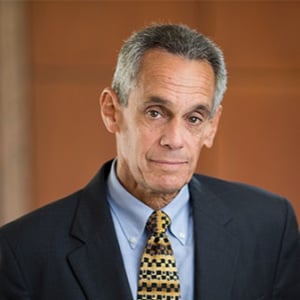
Partner, Boies Schiller Flexner LLP
Rich’s primary practice area is complex litigation, with a particular emphasis on antitrust matters. He frequently represents plaintiffs and defendants in private litigation, in addition to representing parties and third parties in the context of DOJ, FTC, and State Attorney General investigations and litigation. He also advises clients regarding transactions—both their own and those of others—including mergers or acquisitions that may be subject to review by federal, state, or international antitrust authorities. His experience includes both criminal and civil antitrust jury trials, and he is relied upon by clients for clear and practical guidance shaped by years of experience in antitrust enforcement and private practice.
Rich rejoined the firm in December 2013 after serving for four years as the Director of the Bureau of Competition at the Federal Trade Commission. He directed the FTC’s antitrust enforcement activity during a period when approximately 80 enforcement actions were initiated in a wide variety of industries. Major matters included, among others, two victories in the Supreme Court (involving pay-for-delay and state action), successful challenges to hospital mergers, and Intel and Google consent orders. He also participated directly in drafting and implementing the 2010 Horizontal Merger Guidelines.
Prior to serving as Bureau Director, Rich was a partner in the firm’s Washington D.C. office from 2001 to 2009. From October 1998 to June 2001, he served as an Assistant Director of the Bureau of Competition, in charge of the Health Care Services and Products Division. The work of that Division focused on antitrust enforcement in the health care industry, including anticompetitive practices and mergers involving health care providers, and anticompetitive conduct in the pharmaceutical industry.
Before initially entering private practice in 1985, Rich worked as a trial attorney in the Antitrust Division of the U.S. Department of Justice, and also served as Acting Deputy Director of the Division’s Office of Policy Planning and as Acting Assistant Chief of the Division’s Energy Section.
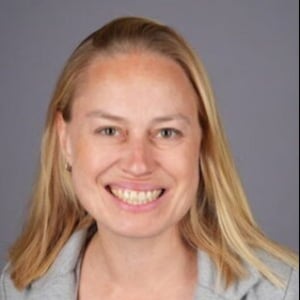
Research Manager, American Economic Liberties Project
Laurel manages AELP’s team of policy analysts and coordinates with expert advisors and fellows to develop original research and policy briefs. An experienced attorney, she also frequently writes and speaks about high profile court cases that impact the economic liberties of the American people.
In private practice, Laurel represented firms of all sizes– from startups to Fortune 500 companies– spanning a wide variety of industries, from software to generic pharmaceuticals to semiconductors. At Comar Mollé LLP, a boutique firm that specializes in serving startups and investors, she provided strategic counseling on employment, privacy, and transactional matters. At Goodwin Procter LLP, a global biglaw firm, she litigated high stakes patent and complex commercial disputes and counseled clients on technology transactions.
Before joining AELP, Laurel researched competition policy issues for the Balanced Economy Project in Europe. Earlier in her career, she analyzed legislation promoting access to essential medicines at the World Health Organization, coordinated patent law training workshops for Vietnamese research institutions through the Public Intellectual Property Resource for Agriculture, and developed public outreach materials for the American Association for the Advancement of Science. She has also developed and taught courses on topics ranging from legal practice skills to emerging policy issues.

Partner, Global Chair, Antitrust and Competition, Fried Frank
Bernard A. Nigro Jr. (“Barry”) is Global Chair of Fried Frank's Antitrust and Competition Department. Barry previously served as the Department of Justice’s Principal Deputy Assistant Attorney General for Antitrust and the Federal Trade Commission’s Deputy Director for the Bureau of Competition.
During his almost 40 years of practice and government service, Barry has handled hundreds of civil and criminal matters in dozens of industries ranging from concrete to high tech and everything in between. For example, Barry has been involved in some of the largest M&A transactions during the past decade, served as the antitrust compliance monitor in United States v. Apple Inc. (S.D.N.Y. 2013), worked on a variety of cartel matters, and counseled on complex compliance and litigation matters. While in government, Barry supported the rollout of the Procurement Collusion Strike Force, an initiative to modernize the merger review process, and revisions to the merger guidelines and remedies policies.
Barry is recognized as a leader by Chambers USA: America’s Leading Lawyers for Business, a “Leading Lawyer” by Legal 500 in Antitrust: Merger Control, and a “Global Leader” by Who’s Who Legal: Competition. Clients say "Barry is very adept at getting deals across the finish lines. He knows the inside game very well," “he is a skilled and knowledgeable antitrust lawyer with a very practical approach,” and “knows how to marry business and antitrust.” Other clients describe him as “the rare combination of DOJ and FTC expertise that is invaluable to clients who need to understand the agencies’ latest thinking” and note that “his decades of experience generally, and recent experience as the number-two lawyer in the Antitrust Division, make him a knowledgeable and skilled counselor on a broad array of government enforcement matters.” Clients say he is “fabulous” and “figures out quickly what’s important and focuses energies there.” Clients also report that “[n]o one compares to Barry Nigro in terms of goodwill” and note his “years of experience make his counsel and perspective, particularly seeing what is coming down the road, exceptional.”
Barry’s commitment to public service includes having served as Vice Chair of the American Bar Association’s Section of Antitrust Law (numbering over 10,000 members from across the globe), President of the George Washington University Law Alumni Association, a member of the Executive Committee of Higher Achievement’s DC President’s Council, a member of St. Albans School’s Development Committee, a member of Bishop Ireton High School’s Campaign Leadership Committee, and a member of Georgetown University’s Class of 1982 Executive Committee, among many other roles.
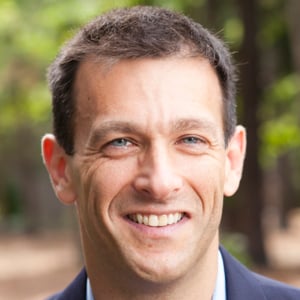
Alexander Hamilton Professor of Business Law, George Washington University Law School
Barak Richman’s primary research interests include the economics of contracting, new institutional economics, antitrust, and healthcare policy. His work has been published in the Columbia Law Review, the University of Pennsylvania Law Review, Law and Social Inquiry, the New England Journal of Medicine, the Journal of the American Medical Association, and Health Affairs. In 2006, he co-edited with Clark Havighurst a symposium volume of Law and Contemporary Problems entitled "Who Pays? Who Benefits? Distributional Issues in Health Care,” and his book Stateless Commerce was published by Harvard University Press in 2017.
Professor Richman represented the NFL Coaches Association in an amicus curiae brief in American Needle v. The Nat’l Football League, which was argued before the U.S. Supreme Court in January 2010 and again in Brady v. The Nat’l Football League in 2011. His recent work challenging illegal practices by Rabbinical Associations was featured in the New York Times. And in 2020, he was a member of the Working Group on Platform Scale at Stanford University’s Program on Democracy and the Internet that proposed middleware as a solution to stem the economic and political power of dominant internet platforms.
Professor Richman is also a Senior Scholar at the Clinical Excellence Research Center at the Stanford University School of Medicine and is currently a special counsel for competition policy at the Department of Health and Human Services. He won Duke Law School's Blueprint Award in 2005 and was named Teacher of the Year in 2010. He has had visiting appointments at Columbia, Harvard, and Stanford.
Professor Richman has an AB, magna cum laude, from Brown University, a JD, magna cum laude, from Harvard Law School, and a PhD from the University of California, Berkeley, where he studied under Nobel Laureate in Economics Oliver Williamson. He served as a law clerk to Judge Bruce M. Selya of the United States Court of Appeals for the First Circuit, and from 1994-1996 he handled international trade legislation as a staff member of the United States Senate Committee on Finance, then chaired by Senator Daniel Patrick Moynihan
Partner, Co-chair of the Litigation & Trial Practice Group, Alston & Bird LLP
Adam Biegel is co-chair of Alston & Bird’s Litigation & Trial Practice Group and former co-chair of its Antitrust Team. He has substantial experience representing clients on antitrust counseling and litigation matters, including those involving government and internal investigations, mergers and joint ventures, pricing and distribution, compliance counseling and training, pre-merger reviews under the Hart-Scott-Rodino (HSR) Act, and multidistrict litigation. He regularly represents clients before the U.S. Department of Justice (DOJ) Antitrust Division, Federal Trade Commission (FTC) and state attorneys general, and in federal courts.
Adam is recognized for his antitrust experience by Chambers USA and selected to The Best Lawyers in America®, including his recognition as “Lawyer of the Year” for Antitrust Litigation in Washington, D.C., in 2022. He is a longtime member of the American Bar Association Antitrust Law Section’s leadership, currently serving as co-chair of its In-House Counsel Task Force and previously having served on its board, and chaired its Corporate Counseling Committee, Long Range Planning Committee, and Spring Meeting conference. He also serves on the board of the Federalist Society’s antitrust practice group.
Adam served as a law clerk to the Hon. Frank M. Hull, U.S. Court of Appeals for the Eleventh Circuit. Before attending law school, he worked as a newspaper reporter in Arkansas and on the legislative staff of U.S. Senator Orrin Hatch.
Partner in the Antitrust & Competition Practice Group, Sheppard Mullin
John’s practice focuses on civil and criminal antitrust matters, including mergers & acquisitions, strategic counseling and compliance, and global cartel investigations, where he represents clients before the Department of Justice Antitrust Division, Federal Trade Commission, and international and state antitrust enforcement authorities.
Prior to private practice, John was in the Mergers I Division of the Federal Trade Commission’s Bureau of Competition for several years. While with the FTC, he investigated, challenged, and negotiated settlements in a number of potentially anti-competitive business combinations in the aerospace, technology, consumer products, defense, healthcare, and pharmaceutical industries and received an Award for Meritorious Service for work on merger litigation.
John frequently speaks and writes on antitrust issues. He was the lead editor on the American Bar Association, Section of Antitrust Law’s Energy Antitrust Handbook, and has held leadership positions in that organization.
Partner, Boies Schiller Flexner LLP
Rich’s primary practice area is complex litigation, with a particular emphasis on antitrust matters. He frequently represents plaintiffs and defendants in private litigation, in addition to representing parties and third parties in the context of DOJ, FTC, and State Attorney General investigations and litigation. He also advises clients regarding transactions—both their own and those of others—including mergers or acquisitions that may be subject to review by federal, state, or international antitrust authorities. His experience includes both criminal and civil antitrust jury trials, and he is relied upon by clients for clear and practical guidance shaped by years of experience in antitrust enforcement and private practice.
Rich rejoined the firm in December 2013 after serving for four years as the Director of the Bureau of Competition at the Federal Trade Commission. He directed the FTC’s antitrust enforcement activity during a period when approximately 80 enforcement actions were initiated in a wide variety of industries. Major matters included, among others, two victories in the Supreme Court (involving pay-for-delay and state action), successful challenges to hospital mergers, and Intel and Google consent orders. He also participated directly in drafting and implementing the 2010 Horizontal Merger Guidelines.
Prior to serving as Bureau Director, Rich was a partner in the firm’s Washington D.C. office from 2001 to 2009. From October 1998 to June 2001, he served as an Assistant Director of the Bureau of Competition, in charge of the Health Care Services and Products Division. The work of that Division focused on antitrust enforcement in the health care industry, including anticompetitive practices and mergers involving health care providers, and anticompetitive conduct in the pharmaceutical industry.
Before initially entering private practice in 1985, Rich worked as a trial attorney in the Antitrust Division of the U.S. Department of Justice, and also served as Acting Deputy Director of the Division’s Office of Policy Planning and as Acting Assistant Chief of the Division’s Energy Section.
Research Manager, American Economic Liberties Project
Laurel manages AELP’s team of policy analysts and coordinates with expert advisors and fellows to develop original research and policy briefs. An experienced attorney, she also frequently writes and speaks about high profile court cases that impact the economic liberties of the American people.
In private practice, Laurel represented firms of all sizes– from startups to Fortune 500 companies– spanning a wide variety of industries, from software to generic pharmaceuticals to semiconductors. At Comar Mollé LLP, a boutique firm that specializes in serving startups and investors, she provided strategic counseling on employment, privacy, and transactional matters. At Goodwin Procter LLP, a global biglaw firm, she litigated high stakes patent and complex commercial disputes and counseled clients on technology transactions.
Before joining AELP, Laurel researched competition policy issues for the Balanced Economy Project in Europe. Earlier in her career, she analyzed legislation promoting access to essential medicines at the World Health Organization, coordinated patent law training workshops for Vietnamese research institutions through the Public Intellectual Property Resource for Agriculture, and developed public outreach materials for the American Association for the Advancement of Science. She has also developed and taught courses on topics ranging from legal practice skills to emerging policy issues.
Partner, Global Chair, Antitrust and Competition, Fried Frank
Bernard A. Nigro Jr. (“Barry”) is Global Chair of Fried Frank's Antitrust and Competition Department. Barry previously served as the Department of Justice’s Principal Deputy Assistant Attorney General for Antitrust and the Federal Trade Commission’s Deputy Director for the Bureau of Competition.
During his almost 40 years of practice and government service, Barry has handled hundreds of civil and criminal matters in dozens of industries ranging from concrete to high tech and everything in between. For example, Barry has been involved in some of the largest M&A transactions during the past decade, served as the antitrust compliance monitor in United States v. Apple Inc. (S.D.N.Y. 2013), worked on a variety of cartel matters, and counseled on complex compliance and litigation matters. While in government, Barry supported the rollout of the Procurement Collusion Strike Force, an initiative to modernize the merger review process, and revisions to the merger guidelines and remedies policies.
Barry is recognized as a leader by Chambers USA: America’s Leading Lawyers for Business, a “Leading Lawyer” by Legal 500 in Antitrust: Merger Control, and a “Global Leader” by Who’s Who Legal: Competition. Clients say "Barry is very adept at getting deals across the finish lines. He knows the inside game very well," “he is a skilled and knowledgeable antitrust lawyer with a very practical approach,” and “knows how to marry business and antitrust.” Other clients describe him as “the rare combination of DOJ and FTC expertise that is invaluable to clients who need to understand the agencies’ latest thinking” and note that “his decades of experience generally, and recent experience as the number-two lawyer in the Antitrust Division, make him a knowledgeable and skilled counselor on a broad array of government enforcement matters.” Clients say he is “fabulous” and “figures out quickly what’s important and focuses energies there.” Clients also report that “[n]o one compares to Barry Nigro in terms of goodwill” and note his “years of experience make his counsel and perspective, particularly seeing what is coming down the road, exceptional.”
Barry’s commitment to public service includes having served as Vice Chair of the American Bar Association’s Section of Antitrust Law (numbering over 10,000 members from across the globe), President of the George Washington University Law Alumni Association, a member of the Executive Committee of Higher Achievement’s DC President’s Council, a member of St. Albans School’s Development Committee, a member of Bishop Ireton High School’s Campaign Leadership Committee, and a member of Georgetown University’s Class of 1982 Executive Committee, among many other roles.
Alexander Hamilton Professor of Business Law, George Washington University Law School
Barak Richman’s primary research interests include the economics of contracting, new institutional economics, antitrust, and healthcare policy. His work has been published in the Columbia Law Review, the University of Pennsylvania Law Review, Law and Social Inquiry, the New England Journal of Medicine, the Journal of the American Medical Association, and Health Affairs. In 2006, he co-edited with Clark Havighurst a symposium volume of Law and Contemporary Problems entitled "Who Pays? Who Benefits? Distributional Issues in Health Care,” and his book Stateless Commerce was published by Harvard University Press in 2017.
Professor Richman represented the NFL Coaches Association in an amicus curiae brief in American Needle v. The Nat’l Football League, which was argued before the U.S. Supreme Court in January 2010 and again in Brady v. The Nat’l Football League in 2011. His recent work challenging illegal practices by Rabbinical Associations was featured in the New York Times. And in 2020, he was a member of the Working Group on Platform Scale at Stanford University’s Program on Democracy and the Internet that proposed middleware as a solution to stem the economic and political power of dominant internet platforms.
Professor Richman is also a Senior Scholar at the Clinical Excellence Research Center at the Stanford University School of Medicine and is currently a special counsel for competition policy at the Department of Health and Human Services. He won Duke Law School's Blueprint Award in 2005 and was named Teacher of the Year in 2010. He has had visiting appointments at Columbia, Harvard, and Stanford.
Professor Richman has an AB, magna cum laude, from Brown University, a JD, magna cum laude, from Harvard Law School, and a PhD from the University of California, Berkeley, where he studied under Nobel Laureate in Economics Oliver Williamson. He served as a law clerk to Judge Bruce M. Selya of the United States Court of Appeals for the First Circuit, and from 1994-1996 he handled international trade legislation as a staff member of the United States Senate Committee on Finance, then chaired by Senator Daniel Patrick Moynihan
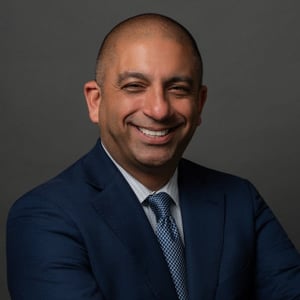
Founder and Executive Director, National Security Institute; Assistant Professor of Law, Antonin Scalia Law School, George Mason University
Jamil N. Jaffer is the Founder and Executive Director of the National Security Institute at the Antonin Scalia Law School at George Mason University where he also serves as an Assistant Professor of Law, Director of the National Security Law and Policy Program, and Director of the Cyber, Intelligence, and National Security LLM Program. Jamil also teaches classes on counterterrorism, intelligence, surveillance, cybersecurity, and other national security matters, as well as a summer course held abroad with U.S. Supreme Court Justice Neil M. Gorsuch. Jamil is also affiliated with Stanford University’s Center for International Security and Cooperation and previously served as a Visiting Fellow at the Hoover Institution from 2016 to 2019.
Jamil is also a Venture Partner with Paladin Capital Group, where he assists the firm with investments across the full range of its themes and theses, including a focus on dual-use national security technologies. Jamil also serves on the board of directors of RangeForce, a cybersecurity training and readiness platform startup and Tozny, a digital identity startup, and on the advisory boards of U.S. Strategic Metals, North America’s largest primary producer of cobalt, a critical mineral used in EV batteries, aerospace, and other national security applications; and Constella Intelligence, a deep and dark web intelligence startup. Jamil also serves as an advisor to Beacon Global Strategies, a strategic advisory firm and Duco, a technology platform startup that connects corporations with geopolitical and international business experts. Jamil is also the managing director of Trigraph Caveat Capital, a private investment vehicle.
Among other things, Jamil currently serves on the Board of Directors for the Greater Washington Board of Trade, the Board of Advisors for the Global Cyber Alliance, and the Advisory Board of the Foundation for the Defense of Democracies’ Center on Cyber and Tech Innovation, the Executive Committee of the Reagan Institute Strategy Group. Jamil is also a Fellow at the Academy for Judaic, Christian, and Islamic Studies, an advisor to the Concordia Summit, and is a member of the Board of Directors for the Center for Intelligence Policy, the Board of Directors of Speech First, and the Executive Committee of the International Law and National Security Practice Group of the Federalist Society.
Immediately prior to his current positions, from 2015-2021, Jamil served as a senior business leader at IronNet Cybersecurity, helping take the company from a bootstrapped first-year technology products startup through two rounds of venture capital fundraising, growing from 40 employees to over 300, and through its listing on New York Stock Exchange. In his role as IronNet's Senior Vice President for Strategy, Partnerships & Corporate Development, Jamil worked directly for the co-CEOs of the company, Gen (ret.) Keith B. Alexander, the former Director of the National Security Agency and Founding Commander of U.S. Cyber Command, and Bill Welch, the former COO of Zscaler and Duo; in that role, Jamil led all of the company’s strategic and technology partnership efforts, including developing go-to-market and technology integration plans with some of the largest cloud platforms and cybersecurity companies in the market, evaluating potential acquisition targets, and developing overall corporate strategy and thought leadership around collective security and collaborative defense in the cyber arena.
Prior to his time at IronNet, Jamil served on the leadership team of the Senate Foreign Relations Committee as Chief Counsel and Senior Advisor under Chairman Bob Corker (R-TN), where he worked on key national security and foreign policy issues, including leading the drafting of the proposed Authorization for the Use of Military Force against ISIS in 2014 and 2015, the AUMF against Syria in 2013, and revisions to the 9/11 AUMF against al Qaeda. Jamil was also the lead architect of the Iran Nuclear Agreement Review Act and two sanctions laws against Russia for its first intervention in Ukraine.
Prior to joining SFRC, Jamil served as Senior Counsel to the House Permanent Select Committee on Intelligence under Chairman Mike Rogers (R-MI) where he led the committee’s oversight of NSA surveillance, NRO intelligence issues, and NGA analytic and collection matters, as well as intelligence community-wide counterterrorism issues. Jamil was also the lead architect of the Cyber Intelligence Sharing and Protection Act, the nation’s first cyber threat intelligence sharing legislation that was signed into law in 2015.
In the Bush Administration, Jamil served in the White House as an Associate Counsel to the President, handling Defense Department, State Department, and intelligence community matters, and serving as one of the White House Counsel’s primary representatives to the National Security Council Deputies Committee.
Prior to the White House, Jamil served on the leadership team of the Justice Department’s National Security Division as Counsel to the Assistant Attorney General for National Security, where he focused on counterterrorism and intelligence matters. At NSD, Jamil helped lead the division’s work on In re: Directives, the first ever two-party litigated matter in the FISA Court and the second case before the FISA Court of Review in its 30-year history. Jamil also led NSD’s efforts on the President’s Comprehensive National Cybersecurity Initiative (CNCI), including the drafting of NSPD-54/HSPD-23, and related classified matters, and advised the National Security Agency (NSA) and U.S. Cyber Command’s predecessor organization, the Joint Function Component Command for Network Warfare (JFCC-NW), on matters related to cyber intelligence collection and offensive cyber activities. For his work on these matters, Jamil was awarded the Assistant Attorney General’s Award for Special Initiative and was among the group of lawyers awarded the Director of National Intelligence’s 2008 Legal Award (Team of the Year – Cyber Legal).
Jamil also served in other positions in the Justice Department, including in the Office of Legal Policy, where he worked on the confirmations of Chief Justice John G. Roberts, Jr. and Justice Samuel A. Alito, Jr. to the United States Supreme Court.
Jamil also served as a lawyer in private practice at Kellogg Huber, a Washington, DC-based litigation boutique, as a policy advisor to Congressman Bob Goodlatte (R-VA), and as a staff member or senior advisor on a number of political campaigns, including two presidential campaigns and a presidential transition team. While in law school, Jamil was a member of the University of Chicago Law Review, managing editor of the Chicago Journal of International Law, and National Symposium Editor of the Harvard Journal of Law & Public Policy. Following law school, Jamil served as a law clerk to Judge Edith H. Jones of the United States Court of Appeals for the Fifth Circuit and, later in his career, as a law clerk to then-Judge Neil M. Gorsuch when he first joined the United States Court of Appeals for the Tenth Circuit as well as a law clerk to Justice Neil Gorsuch when he joined the U.S. Supreme Court.
Jamil has published multiple op-eds and academic articles on national security, foreign policy, cybersecurity, counterterrorism, encryption, and intelligence matters, and is the co-author of a book chapter with former NSA Director Gen. (Ret.) Keith B. Alexander on national security and the press in National Security, Leaks, and the Freedom of the Press: The Pentagon Papers Fifty Years On (2021) and a book chapter with former CIA Director Gen. (ret.) Mike Hayden on ISIS, al Qaeda, and other international terrorist groups in Choosing to Lead: American Foreign Policy for a Disordered World (2015). Jamil has also written book chapters on cybersecurity and surveillance, as well as op-eds and policy papers with former Attorney General Michael B. Mukasey, former National Counterterrorism Center Director Matt Olsen, and Congressman Mike Waltz (R-FL), among others.
Jamil has previously taught graduate-level courses in intelligence law and policy at George Washington University’s Elliott School of International Affairs and the National Intelligence University, served an outside advisor to the Cyberspace Solarium Commission, and has recently testified before committees of the U.S. Senate and House of Representatives on China, cybersecurity, counterterrorism, and other national security matters. Jamil has also recently appeared on a range of national television and radio outlets including CNN, Fox News, Fox Business, MSNBC, Bloomberg, PBS, Voice of America, and National Public Radio, and in various print and online publications, including the Wall Street Journal, New York Times, and the Washington Post on a range of national security matters including cybersecurity, counterterrorism, surveillance, encryption, privacy, and foreign policy issues.
Jamil holds degrees from UCLA (BA, cum laude), the University of Chicago Law School (JD, with honors), and the United States Naval War College (MA, with distinction).
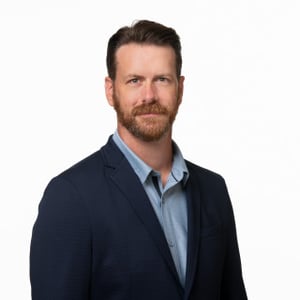
Managing Director, Beacon Global Strategies
Klon Kitchen, Managing Director at Beacon Global Strategies, leads the firm’s Global Technology Policy Practice. With over two decades of hands-on experience, Klon is adept at helping technology leaders anticipate and manage geopolitical risks, ensuring they stay ahead in an ever-evolving landscape.
Klon is a distinguished national security expert, bringing unparalleled insights and strategic foresight to the table. As a non-resident senior fellow at the American Enterprise Institute, he regularly shapes policy discussions through his congressional testimonies, high-impact publications in the The Wall Street Journal and other top-tier outlets, and features on CBS News’ “60 Minutes.”
Before joining Beacon, Klon was national security advisor to former Senator Ben Sasse and played a pivotal role in the U.S. Cyberspace Solarium Commission, crafting the strategic blueprint for America’s cyber defense. His leadership extended to directing the National Security and International Trade and Finance Subcommittee for the Committee on Banking, Housing, and Urban Affairs, where he navigated complex security and trade issues.
Klon’s foundational experience includes over 15 years as an intelligence officer, focusing on counterterrorism, cyber operations, and covert actions. His distinguished service, which includes deployments to multiple combat zones, earned him several prestigious honors, such as the civilian combat support medal and a commendation from the Commander of Joint Special Operations Command.
Holding an MA in strategy and security studies from the College of International Security Affairs and a War College Diploma from the National War College at National Defense University, Klon combines academic excellence with practical expertise. His unique perspective and proven track record make him an invaluable ally for technology executives facing the intricate challenges of geopolitical risk.
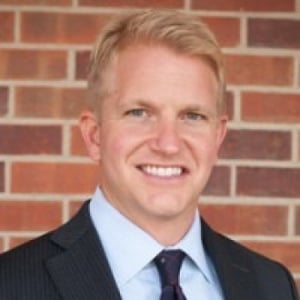
Wall Chair in Corporate Law and Governance and Professor of Law, University of Missouri School of Law
Thom Lambert holds the Wall Family Chair in Corporate Law and Governance at the University of Missouri Law School. He is co-author of a leading antitrust casebook and has published more than two dozen law review articles on antitrust, corporate, and regulatory matters. His most recent book, How to Regulate: A Guide for Policymakers was published by Cambridge University Press in 2017. He is a regular contributor to the law and economics blog, Truth on the Market (www.truthonthemarket.com) and is currently a visiting professor at Washington University Law School.
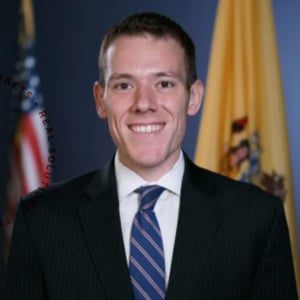
Brandon Pugh is the director and a resident senior fellow for the R Street Institute’s Cybersecurity and Emerging Threats team.
Outside of R Street, he serves in the U.S. Army Reserve as a national security law professor at The Judge Advocate General’s Legal Center and School, having previously served as a paratrooper and international law officer. Brandon is also a nonresident fellow with the Army Cyber Institute at the United States Military Academy at West Point, a member of the International Association of Privacy Professional’s Research Advisory Board, and a board member for both the Ithaca College Cybersecurity Program and a governor’s advisory council.
Prior to joining R Street, Brandon was legislative counsel for the New Jersey General Assembly Minority Office, where he handled nearly all policy and legislation on cybersecurity, emerging technology, and privacy. He also provided legal and policy advice to the 28-member caucus on almost every committee area from judiciary to commerce.
Brandon has served as a fellow with the Federal Bureau of Investigation; managing editor of the Journal of Law and Cyber Warfare; president and CEO of a homeland security advisory company; member of the Rutgers University Cybersecurity Program Board; and an elected and appointed official at the local, county, and state levels. This includes service as vice president for legislation of the New Jersey School Boards Association, a quasi-governmental entity representing the state’s nearly 600 school boards. His early work was in emergency management and chemical, biological, radiological, and nuclear incidents.
Brandon has presented and been published dozens of times; delivered congressional testimony; appeared on C-SPAN and other networks; trained congressional staff on cybersecurity; contributed to the U.S. Army’s critical infrastructure resiliency project; prepared cybersecurity guidance sent to thousands of public schools; and led events with senior military and intelligence community officials. He has received awards for his work from members of Congress and a governor of New Jersey, among others.
He holds a JD from Rutgers Law School and a bachelor’s degree from The College of New Jersey. Brandon is a master continuity practitioner through the U.S. Department of Homeland Security, a certified information privacy professional, a certified information privacy manager, and a fellow of information privacy. He is licensed to practice law in New Jersey and the District of Columbia, along with being admitted to the Supreme Court of the United States.
Brandon lives in New Jersey with his wife, who serves as an Air Force pilot.
Founder and Executive Director, National Security Institute; Assistant Professor of Law, Antonin Scalia Law School, George Mason University
Jamil N. Jaffer is the Founder and Executive Director of the National Security Institute at the Antonin Scalia Law School at George Mason University where he also serves as an Assistant Professor of Law, Director of the National Security Law and Policy Program, and Director of the Cyber, Intelligence, and National Security LLM Program. Jamil also teaches classes on counterterrorism, intelligence, surveillance, cybersecurity, and other national security matters, as well as a summer course held abroad with U.S. Supreme Court Justice Neil M. Gorsuch. Jamil is also affiliated with Stanford University’s Center for International Security and Cooperation and previously served as a Visiting Fellow at the Hoover Institution from 2016 to 2019.
Jamil is also a Venture Partner with Paladin Capital Group, where he assists the firm with investments across the full range of its themes and theses, including a focus on dual-use national security technologies. Jamil also serves on the board of directors of RangeForce, a cybersecurity training and readiness platform startup and Tozny, a digital identity startup, and on the advisory boards of U.S. Strategic Metals, North America’s largest primary producer of cobalt, a critical mineral used in EV batteries, aerospace, and other national security applications; and Constella Intelligence, a deep and dark web intelligence startup. Jamil also serves as an advisor to Beacon Global Strategies, a strategic advisory firm and Duco, a technology platform startup that connects corporations with geopolitical and international business experts. Jamil is also the managing director of Trigraph Caveat Capital, a private investment vehicle.
Among other things, Jamil currently serves on the Board of Directors for the Greater Washington Board of Trade, the Board of Advisors for the Global Cyber Alliance, and the Advisory Board of the Foundation for the Defense of Democracies’ Center on Cyber and Tech Innovation, the Executive Committee of the Reagan Institute Strategy Group. Jamil is also a Fellow at the Academy for Judaic, Christian, and Islamic Studies, an advisor to the Concordia Summit, and is a member of the Board of Directors for the Center for Intelligence Policy, the Board of Directors of Speech First, and the Executive Committee of the International Law and National Security Practice Group of the Federalist Society.
Immediately prior to his current positions, from 2015-2021, Jamil served as a senior business leader at IronNet Cybersecurity, helping take the company from a bootstrapped first-year technology products startup through two rounds of venture capital fundraising, growing from 40 employees to over 300, and through its listing on New York Stock Exchange. In his role as IronNet's Senior Vice President for Strategy, Partnerships & Corporate Development, Jamil worked directly for the co-CEOs of the company, Gen (ret.) Keith B. Alexander, the former Director of the National Security Agency and Founding Commander of U.S. Cyber Command, and Bill Welch, the former COO of Zscaler and Duo; in that role, Jamil led all of the company’s strategic and technology partnership efforts, including developing go-to-market and technology integration plans with some of the largest cloud platforms and cybersecurity companies in the market, evaluating potential acquisition targets, and developing overall corporate strategy and thought leadership around collective security and collaborative defense in the cyber arena.
Prior to his time at IronNet, Jamil served on the leadership team of the Senate Foreign Relations Committee as Chief Counsel and Senior Advisor under Chairman Bob Corker (R-TN), where he worked on key national security and foreign policy issues, including leading the drafting of the proposed Authorization for the Use of Military Force against ISIS in 2014 and 2015, the AUMF against Syria in 2013, and revisions to the 9/11 AUMF against al Qaeda. Jamil was also the lead architect of the Iran Nuclear Agreement Review Act and two sanctions laws against Russia for its first intervention in Ukraine.
Prior to joining SFRC, Jamil served as Senior Counsel to the House Permanent Select Committee on Intelligence under Chairman Mike Rogers (R-MI) where he led the committee’s oversight of NSA surveillance, NRO intelligence issues, and NGA analytic and collection matters, as well as intelligence community-wide counterterrorism issues. Jamil was also the lead architect of the Cyber Intelligence Sharing and Protection Act, the nation’s first cyber threat intelligence sharing legislation that was signed into law in 2015.
In the Bush Administration, Jamil served in the White House as an Associate Counsel to the President, handling Defense Department, State Department, and intelligence community matters, and serving as one of the White House Counsel’s primary representatives to the National Security Council Deputies Committee.
Prior to the White House, Jamil served on the leadership team of the Justice Department’s National Security Division as Counsel to the Assistant Attorney General for National Security, where he focused on counterterrorism and intelligence matters. At NSD, Jamil helped lead the division’s work on In re: Directives, the first ever two-party litigated matter in the FISA Court and the second case before the FISA Court of Review in its 30-year history. Jamil also led NSD’s efforts on the President’s Comprehensive National Cybersecurity Initiative (CNCI), including the drafting of NSPD-54/HSPD-23, and related classified matters, and advised the National Security Agency (NSA) and U.S. Cyber Command’s predecessor organization, the Joint Function Component Command for Network Warfare (JFCC-NW), on matters related to cyber intelligence collection and offensive cyber activities. For his work on these matters, Jamil was awarded the Assistant Attorney General’s Award for Special Initiative and was among the group of lawyers awarded the Director of National Intelligence’s 2008 Legal Award (Team of the Year – Cyber Legal).
Jamil also served in other positions in the Justice Department, including in the Office of Legal Policy, where he worked on the confirmations of Chief Justice John G. Roberts, Jr. and Justice Samuel A. Alito, Jr. to the United States Supreme Court.
Jamil also served as a lawyer in private practice at Kellogg Huber, a Washington, DC-based litigation boutique, as a policy advisor to Congressman Bob Goodlatte (R-VA), and as a staff member or senior advisor on a number of political campaigns, including two presidential campaigns and a presidential transition team. While in law school, Jamil was a member of the University of Chicago Law Review, managing editor of the Chicago Journal of International Law, and National Symposium Editor of the Harvard Journal of Law & Public Policy. Following law school, Jamil served as a law clerk to Judge Edith H. Jones of the United States Court of Appeals for the Fifth Circuit and, later in his career, as a law clerk to then-Judge Neil M. Gorsuch when he first joined the United States Court of Appeals for the Tenth Circuit as well as a law clerk to Justice Neil Gorsuch when he joined the U.S. Supreme Court.
Jamil has published multiple op-eds and academic articles on national security, foreign policy, cybersecurity, counterterrorism, encryption, and intelligence matters, and is the co-author of a book chapter with former NSA Director Gen. (Ret.) Keith B. Alexander on national security and the press in National Security, Leaks, and the Freedom of the Press: The Pentagon Papers Fifty Years On (2021) and a book chapter with former CIA Director Gen. (ret.) Mike Hayden on ISIS, al Qaeda, and other international terrorist groups in Choosing to Lead: American Foreign Policy for a Disordered World (2015). Jamil has also written book chapters on cybersecurity and surveillance, as well as op-eds and policy papers with former Attorney General Michael B. Mukasey, former National Counterterrorism Center Director Matt Olsen, and Congressman Mike Waltz (R-FL), among others.
Jamil has previously taught graduate-level courses in intelligence law and policy at George Washington University’s Elliott School of International Affairs and the National Intelligence University, served an outside advisor to the Cyberspace Solarium Commission, and has recently testified before committees of the U.S. Senate and House of Representatives on China, cybersecurity, counterterrorism, and other national security matters. Jamil has also recently appeared on a range of national television and radio outlets including CNN, Fox News, Fox Business, MSNBC, Bloomberg, PBS, Voice of America, and National Public Radio, and in various print and online publications, including the Wall Street Journal, New York Times, and the Washington Post on a range of national security matters including cybersecurity, counterterrorism, surveillance, encryption, privacy, and foreign policy issues.
Jamil holds degrees from UCLA (BA, cum laude), the University of Chicago Law School (JD, with honors), and the United States Naval War College (MA, with distinction).
Managing Director, Beacon Global Strategies
Klon Kitchen, Managing Director at Beacon Global Strategies, leads the firm’s Global Technology Policy Practice. With over two decades of hands-on experience, Klon is adept at helping technology leaders anticipate and manage geopolitical risks, ensuring they stay ahead in an ever-evolving landscape.
Klon is a distinguished national security expert, bringing unparalleled insights and strategic foresight to the table. As a non-resident senior fellow at the American Enterprise Institute, he regularly shapes policy discussions through his congressional testimonies, high-impact publications in the The Wall Street Journal and other top-tier outlets, and features on CBS News’ “60 Minutes.”
Before joining Beacon, Klon was national security advisor to former Senator Ben Sasse and played a pivotal role in the U.S. Cyberspace Solarium Commission, crafting the strategic blueprint for America’s cyber defense. His leadership extended to directing the National Security and International Trade and Finance Subcommittee for the Committee on Banking, Housing, and Urban Affairs, where he navigated complex security and trade issues.
Klon’s foundational experience includes over 15 years as an intelligence officer, focusing on counterterrorism, cyber operations, and covert actions. His distinguished service, which includes deployments to multiple combat zones, earned him several prestigious honors, such as the civilian combat support medal and a commendation from the Commander of Joint Special Operations Command.
Holding an MA in strategy and security studies from the College of International Security Affairs and a War College Diploma from the National War College at National Defense University, Klon combines academic excellence with practical expertise. His unique perspective and proven track record make him an invaluable ally for technology executives facing the intricate challenges of geopolitical risk.
Wall Chair in Corporate Law and Governance and Professor of Law, University of Missouri School of Law
Thom Lambert holds the Wall Family Chair in Corporate Law and Governance at the University of Missouri Law School. He is co-author of a leading antitrust casebook and has published more than two dozen law review articles on antitrust, corporate, and regulatory matters. His most recent book, How to Regulate: A Guide for Policymakers was published by Cambridge University Press in 2017. He is a regular contributor to the law and economics blog, Truth on the Market (www.truthonthemarket.com) and is currently a visiting professor at Washington University Law School.
Brandon Pugh is the director and a resident senior fellow for the R Street Institute’s Cybersecurity and Emerging Threats team.
Outside of R Street, he serves in the U.S. Army Reserve as a national security law professor at The Judge Advocate General’s Legal Center and School, having previously served as a paratrooper and international law officer. Brandon is also a nonresident fellow with the Army Cyber Institute at the United States Military Academy at West Point, a member of the International Association of Privacy Professional’s Research Advisory Board, and a board member for both the Ithaca College Cybersecurity Program and a governor’s advisory council.
Prior to joining R Street, Brandon was legislative counsel for the New Jersey General Assembly Minority Office, where he handled nearly all policy and legislation on cybersecurity, emerging technology, and privacy. He also provided legal and policy advice to the 28-member caucus on almost every committee area from judiciary to commerce.
Brandon has served as a fellow with the Federal Bureau of Investigation; managing editor of the Journal of Law and Cyber Warfare; president and CEO of a homeland security advisory company; member of the Rutgers University Cybersecurity Program Board; and an elected and appointed official at the local, county, and state levels. This includes service as vice president for legislation of the New Jersey School Boards Association, a quasi-governmental entity representing the state’s nearly 600 school boards. His early work was in emergency management and chemical, biological, radiological, and nuclear incidents.
Brandon has presented and been published dozens of times; delivered congressional testimony; appeared on C-SPAN and other networks; trained congressional staff on cybersecurity; contributed to the U.S. Army’s critical infrastructure resiliency project; prepared cybersecurity guidance sent to thousands of public schools; and led events with senior military and intelligence community officials. He has received awards for his work from members of Congress and a governor of New Jersey, among others.
He holds a JD from Rutgers Law School and a bachelor’s degree from The College of New Jersey. Brandon is a master continuity practitioner through the U.S. Department of Homeland Security, a certified information privacy professional, a certified information privacy manager, and a fellow of information privacy. He is licensed to practice law in New Jersey and the District of Columbia, along with being admitted to the Supreme Court of the United States.
Brandon lives in New Jersey with his wife, who serves as an Air Force pilot.

Vice President and Director of Competition Policy, Progressive Policy Institute
Diana Moss joined the Progressive Policy Institute in 2023. She was previously President of the American Antitrust Institute from 2015-2023. An economist, Dr. Moss has developed and expanded competition enforcement and policy advocacy channels and strategies, and strengthened communications with enforcers, Congress, other advocacy groups, and the media. Her work spans both antitrust and regulation, with industry expertise in digital technology, electricity, petroleum, food and agriculture, airlines, telecommunications, and healthcare. Dr. Moss was previously at the Federal Energy Regulatory Commission, where she coordinated the agency’s competition analysis for electricity mergers. In the early 1990s, she consulted in private practice in the areas of regulation and antitrust. Dr. Moss has spoken widely on various topics involving competition policy and enforcement, testified before Congress, appeared before state and federal regulatory commissions, and made numerous radio and television appearances. She has published articles in a number of economic and legal academic journals, including: American Economic Review, Journal of Industrial Organization, the Energy Law Journal, and the Antitrust Bulletin. She is editor of Network Access, Regulation and Antitrust (2005). Dr. Moss is Adjunct Faculty in the Department of Economics at the University of Colorado at Boulder. She holds a M.A. degree from the University of Denver and a Ph.D. from the Colorado School of Mines.
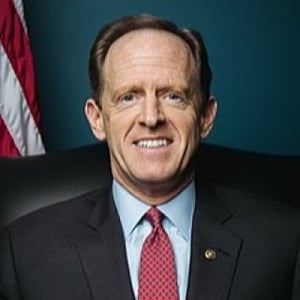
Former Senator, Pennsylvania
Pat Toomey (born November 17, 1961, Providence, Rhode Island, U.S.) is an American politician who was elected as a Republican to the U.S. Senate in 2010 and represented Pennsylvania from 2011 to 2023. He previously served in the U.S. House of Representatives (1999–2005).
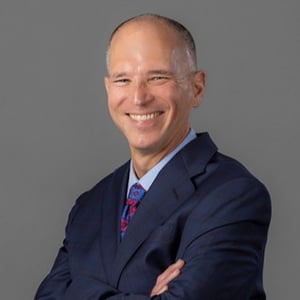
George Mason University Foundation Professor of Law, Antonin Scalia Law School, George Mason University
TODD J. ZYWICKI is George Mason University Foundation Professor of Law at Antonin Scalia Law School at George Mason University and Research Fellow of the George Mason Law and Economics Center. During the Fall 2023 semester he served as the Visiting Scholar in Conservative Thought and Policy for the Bruce Benson Center for the Study of Western Civilization at the University of Colorado-Boulder. From 2020-2021 he was Chair of the Consumer Financial Protection Bureau Taskforce on Federal Consumer Financial Law. In 2021 he was inducted to the American College of Consumer Financial Services Lawyers. He is also a Senior Fellow of the F.A. Hayek Program for the Advanced Study of Politics, Philosophy, and Economics at George Mason University and a former Senior Fellow of the Cato Institute. From 2015-2017 he was Executive Director of the George Mason Law and Economics Center. He served as Co-Editor of the Supreme Court Economic Review from 2006-2017. From 2003-2004, Professor Zywicki served as the Director of the Office of Policy Planning at the Federal Trade Commission. He has also taught at Vanderbilt University Law School, Georgetown University Law Center, Boston College Law School, Mississippi College School of Law, and China University of Political Science and Law.
Professor Zywicki clerked for Judge Jerry E. Smith of the U.S. Court of Appeals for the Fifth Circuit and worked as an associate at Alston & Bird in Atlanta, Georgia, where he practiced bankruptcy and commercial law. He received his J.D. from the University of Virginia, where he was executive editor of the Virginia Tax Review and John M. Olin Scholar in Law and Economics. Professor Zywicki also received an M.A. in Economics from Clemson University and an A.B. cum Laude with high honors in his major from Dartmouth College.
Professor Zywicki is also a Lone Mountain Fellow of the Property and Environment Research Center, a Fellow of the International Centre for Economic Research in Turin, Italy, and a former Senior Fellow of the Goldwater Institute. During the Fall 2008 Semester Professor Zywicki was the Searle Fellow of the George Mason University School of Law and was a 2008-09 W. Glenn Campbell and Rita Ricardo-Campbell National Fellow and the Arch W. Shaw National Fellow at the Hoover Institution on War, Revolution and Peace. He has lectured and consulted with government officials around the world, including Iceland, Italy, Japan, and Guatemala. In 2006 Professor Zywicki served as a Member of the United States Department of Justice Study Group on “Identifying Fraud, Abuse and Errors in the United States Bankruptcy System.”
Professor Zywicki is the author of more than 130 articles in leading law reviews and peer-reviewed economics journals. He is one of the Top 10 most-cited law professors in the field of Commercial Law and one of the Top 25 law professors on Twitter as measured by engagement levels. He is one of the Top 50 Most Downloaded Law Authors at the Social Science Research Network. He has testified multiple times before Congress on issues of consumer bankruptcy law and consumer credit and is a frequent commentator on legal issues in the print and broadcast media, including the Wall Street Journal, New York Times, The Washington Post, The Washington Times, Nightline, The Newshour with Jim Lehrer, Neil Cavuto Show, Fox & Friends, Smerconish, Fox News @ Night with Shannon Bream, Fox Business, CNN, CNBC, Bloomberg News, BBC, The Diane Rehm Show, Lou Dobbs Show, Jerry Doyle Show, and The Laura Ingraham Show.
Professor Zywicki is former Chairman and a current member of the Board of Directors of the Competitive Enterprise Institute, and is a member of the Board of Directors of the Institute for Humane Studies, Bill of Rights Institute, the Executive Committee for the Federalist Society's Financial Institutions and E-Commerce Practice Group, the Board of Trustees of the Foundation for Research on Economics and the Environment. He formerly served on the Governing Board and the Advisory Council for the Financial Services Research Program at George Washington University School of Business. He is currently the Chair of the Academic Advisory Council for the following organizations: The Bill of Rights Institute, the film “We the People in IMAX,” and the McCormick-Tribune Foundation “Freedom Museum” in Chicago, Illinois. He is a member of the Board of Visitors of Ralston College and was a member of the Board of Trustees of Yorktown University. From 2005-2009 he served as an elected Alumni Trustee of the Dartmouth College Board of Trustees.
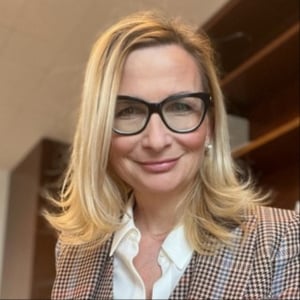
President, Corporate and External Affairs, Plaid
Jelena McWilliams is the former Managing Partner of the Washington, D.C. office of Cravath, Swaine, & Moore LLP and former Head of the Financial Institutions Group (FIG) Practice. She is a former Chairman of the Federal Deposit Insurance Corporation (FDIC). Ms. McWilliams focuses her practice on advising public and private companies, financial institutions, fintechs, and early-stage and venture companies on regulatory and corporate matters, as well as on mergers and acquisitions, IPO and other capital markets transactions.
While at the FDIC, Ms. McWilliams managed over 6,000 employees supervising approximately 5,000 banks, including through the COVID-19 pandemic. She participated in interagency negotiations, policy developments and joint agency rulemakings both as agency principal and as a voting member of the Financial Stability Oversight Council (FSOC). Ms. McWilliams chaired the Resolution Group at the Financial Stability Board (FSB); chaired and served on the Federal Financial Institutions Examination Council (FFIEC); and served on the Financial and Banking Information Infrastructure Committee (FBIIC). She testified before U.S. Congress on numerous occasions and engaged extensively with U.S. and international regulators, including the Basel Committee on Banking Supervision and the International Association of Deposit Insurers. She established the agency’s first office of innovation to implement technological advancements through supervisory channels and collaborative partnerships between banks and fintechs. Ms. McWilliams also spearheaded the agency’s effort to develop prudential banking policy on digital assets, including through a “crypto sprint” with the Office of the Currency Comptroller (OCC) and the Federal Reserve Board (FRB), and in collaboration with the President’s Working Group multiagency effort on stablecoins. She envisioned and created Mission Driven Bank Fund, a novel private/public partnership investment fund to support investments in low- and moderate-income communities served by the Minority Depository Institutions and Community Development Financial Institutions.
Ms. McWilliams is a frequent speaker on trends and topics in the financial services sector, including bank regulatory policy, governance trends, digital assets, fintechs and early-stage company regulatory policy. She is a member of the Economic Council of Washington, D.C., and serves on the Board of Trustees of the Southwestern Graduate School of Banking Foundation at Southern Methodist University.
Ms. McWilliams was born in Belgrade, Serbia. She received her B.A. with highest honors from the University of California, Berkeley in 1999 and her J.D. from the University of California, Berkeley, School of Law in 2002.
Vice President and Director of Competition Policy, Progressive Policy Institute
Diana Moss joined the Progressive Policy Institute in 2023. She was previously President of the American Antitrust Institute from 2015-2023. An economist, Dr. Moss has developed and expanded competition enforcement and policy advocacy channels and strategies, and strengthened communications with enforcers, Congress, other advocacy groups, and the media. Her work spans both antitrust and regulation, with industry expertise in digital technology, electricity, petroleum, food and agriculture, airlines, telecommunications, and healthcare. Dr. Moss was previously at the Federal Energy Regulatory Commission, where she coordinated the agency’s competition analysis for electricity mergers. In the early 1990s, she consulted in private practice in the areas of regulation and antitrust. Dr. Moss has spoken widely on various topics involving competition policy and enforcement, testified before Congress, appeared before state and federal regulatory commissions, and made numerous radio and television appearances. She has published articles in a number of economic and legal academic journals, including: American Economic Review, Journal of Industrial Organization, the Energy Law Journal, and the Antitrust Bulletin. She is editor of Network Access, Regulation and Antitrust (2005). Dr. Moss is Adjunct Faculty in the Department of Economics at the University of Colorado at Boulder. She holds a M.A. degree from the University of Denver and a Ph.D. from the Colorado School of Mines.
Former Senator, Pennsylvania
Pat Toomey (born November 17, 1961, Providence, Rhode Island, U.S.) is an American politician who was elected as a Republican to the U.S. Senate in 2010 and represented Pennsylvania from 2011 to 2023. He previously served in the U.S. House of Representatives (1999–2005).
George Mason University Foundation Professor of Law, Antonin Scalia Law School, George Mason University
TODD J. ZYWICKI is George Mason University Foundation Professor of Law at Antonin Scalia Law School at George Mason University and Research Fellow of the George Mason Law and Economics Center. During the Fall 2023 semester he served as the Visiting Scholar in Conservative Thought and Policy for the Bruce Benson Center for the Study of Western Civilization at the University of Colorado-Boulder. From 2020-2021 he was Chair of the Consumer Financial Protection Bureau Taskforce on Federal Consumer Financial Law. In 2021 he was inducted to the American College of Consumer Financial Services Lawyers. He is also a Senior Fellow of the F.A. Hayek Program for the Advanced Study of Politics, Philosophy, and Economics at George Mason University and a former Senior Fellow of the Cato Institute. From 2015-2017 he was Executive Director of the George Mason Law and Economics Center. He served as Co-Editor of the Supreme Court Economic Review from 2006-2017. From 2003-2004, Professor Zywicki served as the Director of the Office of Policy Planning at the Federal Trade Commission. He has also taught at Vanderbilt University Law School, Georgetown University Law Center, Boston College Law School, Mississippi College School of Law, and China University of Political Science and Law.
Professor Zywicki clerked for Judge Jerry E. Smith of the U.S. Court of Appeals for the Fifth Circuit and worked as an associate at Alston & Bird in Atlanta, Georgia, where he practiced bankruptcy and commercial law. He received his J.D. from the University of Virginia, where he was executive editor of the Virginia Tax Review and John M. Olin Scholar in Law and Economics. Professor Zywicki also received an M.A. in Economics from Clemson University and an A.B. cum Laude with high honors in his major from Dartmouth College.
Professor Zywicki is also a Lone Mountain Fellow of the Property and Environment Research Center, a Fellow of the International Centre for Economic Research in Turin, Italy, and a former Senior Fellow of the Goldwater Institute. During the Fall 2008 Semester Professor Zywicki was the Searle Fellow of the George Mason University School of Law and was a 2008-09 W. Glenn Campbell and Rita Ricardo-Campbell National Fellow and the Arch W. Shaw National Fellow at the Hoover Institution on War, Revolution and Peace. He has lectured and consulted with government officials around the world, including Iceland, Italy, Japan, and Guatemala. In 2006 Professor Zywicki served as a Member of the United States Department of Justice Study Group on “Identifying Fraud, Abuse and Errors in the United States Bankruptcy System.”
Professor Zywicki is the author of more than 130 articles in leading law reviews and peer-reviewed economics journals. He is one of the Top 10 most-cited law professors in the field of Commercial Law and one of the Top 25 law professors on Twitter as measured by engagement levels. He is one of the Top 50 Most Downloaded Law Authors at the Social Science Research Network. He has testified multiple times before Congress on issues of consumer bankruptcy law and consumer credit and is a frequent commentator on legal issues in the print and broadcast media, including the Wall Street Journal, New York Times, The Washington Post, The Washington Times, Nightline, The Newshour with Jim Lehrer, Neil Cavuto Show, Fox & Friends, Smerconish, Fox News @ Night with Shannon Bream, Fox Business, CNN, CNBC, Bloomberg News, BBC, The Diane Rehm Show, Lou Dobbs Show, Jerry Doyle Show, and The Laura Ingraham Show.
Professor Zywicki is former Chairman and a current member of the Board of Directors of the Competitive Enterprise Institute, and is a member of the Board of Directors of the Institute for Humane Studies, Bill of Rights Institute, the Executive Committee for the Federalist Society's Financial Institutions and E-Commerce Practice Group, the Board of Trustees of the Foundation for Research on Economics and the Environment. He formerly served on the Governing Board and the Advisory Council for the Financial Services Research Program at George Washington University School of Business. He is currently the Chair of the Academic Advisory Council for the following organizations: The Bill of Rights Institute, the film “We the People in IMAX,” and the McCormick-Tribune Foundation “Freedom Museum” in Chicago, Illinois. He is a member of the Board of Visitors of Ralston College and was a member of the Board of Trustees of Yorktown University. From 2005-2009 he served as an elected Alumni Trustee of the Dartmouth College Board of Trustees.
President, Corporate and External Affairs, Plaid
Jelena McWilliams is the former Managing Partner of the Washington, D.C. office of Cravath, Swaine, & Moore LLP and former Head of the Financial Institutions Group (FIG) Practice. She is a former Chairman of the Federal Deposit Insurance Corporation (FDIC). Ms. McWilliams focuses her practice on advising public and private companies, financial institutions, fintechs, and early-stage and venture companies on regulatory and corporate matters, as well as on mergers and acquisitions, IPO and other capital markets transactions.
While at the FDIC, Ms. McWilliams managed over 6,000 employees supervising approximately 5,000 banks, including through the COVID-19 pandemic. She participated in interagency negotiations, policy developments and joint agency rulemakings both as agency principal and as a voting member of the Financial Stability Oversight Council (FSOC). Ms. McWilliams chaired the Resolution Group at the Financial Stability Board (FSB); chaired and served on the Federal Financial Institutions Examination Council (FFIEC); and served on the Financial and Banking Information Infrastructure Committee (FBIIC). She testified before U.S. Congress on numerous occasions and engaged extensively with U.S. and international regulators, including the Basel Committee on Banking Supervision and the International Association of Deposit Insurers. She established the agency’s first office of innovation to implement technological advancements through supervisory channels and collaborative partnerships between banks and fintechs. Ms. McWilliams also spearheaded the agency’s effort to develop prudential banking policy on digital assets, including through a “crypto sprint” with the Office of the Currency Comptroller (OCC) and the Federal Reserve Board (FRB), and in collaboration with the President’s Working Group multiagency effort on stablecoins. She envisioned and created Mission Driven Bank Fund, a novel private/public partnership investment fund to support investments in low- and moderate-income communities served by the Minority Depository Institutions and Community Development Financial Institutions.
Ms. McWilliams is a frequent speaker on trends and topics in the financial services sector, including bank regulatory policy, governance trends, digital assets, fintechs and early-stage company regulatory policy. She is a member of the Economic Council of Washington, D.C., and serves on the Board of Trustees of the Southwestern Graduate School of Banking Foundation at Southern Methodist University.
Ms. McWilliams was born in Belgrade, Serbia. She received her B.A. with highest honors from the University of California, Berkeley in 1999 and her J.D. from the University of California, Berkeley, School of Law in 2002.
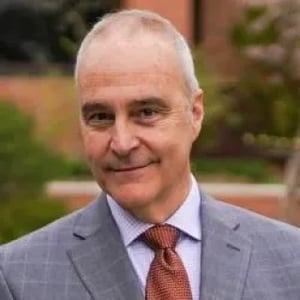
Coleman P. Burke Chair in Environmental Law, School of Law, Case Western Reserve University
Victor B. Flatt is the Coleman P. Burke Chair in Environmental Law and the Associate Director of the Burke Center for Environmental Law at Case Western University School of Law. He also holds an appointment as an Energy Fellow UH Energy at the University of Houston.
Professor Flatt is a recognized expert on environmental law, climate law and energy law, and the intersection of these areas. Since 2019, he has created and taught the first law school courses in the country concerning how law relates to sustainability planning and ESG policies in corporations, offering the courses at UHLC, Vermont Law School and Case Western University School of Law.
His research focuses on environmental legislation and enforcement, with particular expertise in the Clean Air Act, NEPA and Climate. He is co-author of a popular environmental law casebook, and has authored more than 50 law review articles, which have appeared in journals such as the Notre Dame Law Review, Ecology Law Quarterly, The Ohio State Law Journal, Washington Law Review, Houston Law Review and the Carolina Law Review. Seven of his articles have been recognized as finalists or winner of the best environmental law review article of the year, and one was recognized by Vanderbilt University Law School and the Environmental Law Institute as one of the three best environmental articles of 2010, leading to a seminar and panel on the article in a congressional staff briefing.
He has been a Visiting Law Professor at the University of Georgia Law School, the University of Washington Law School and Seattle University School of Law. He has been honored as a Distinguished Environmental Scholar in Residence at Vermont Law School, Pace Law School (Elisabeth Haub Distinguished Scholar) and Widener University Delaware Law School. He was previously the inaugural O’Quinn Chair in Environmental Law at UHLC from 2002-2009, and the Dwight Olds Chair in Law at UHLC from 2017-2023. Professor Flatt was also the inaugural Taft Distinguished Professor in Environmental Law and the Director of the Center for Climate, Energy, Environment, and Economics (CE3) at UNC Chapel Hill School of Law.
Professor Flatt has served on the AALS committees on Natural Resources and Environmental Law and was chair of the AALS Teaching Methods Section. He has served on many other board and committees in his career, including the national board of Lambda Legal and the Law School Admission Council’s Gay and Lesbian Interests section.
Professor Flatt received his B.A. in Chemistry and Math from Vanderbilt University where he was a Harold Stirling Vanderbilt Scholar, and his J.D. from Northwestern University, where he was a John Henry Wigmore Scholar. After graduating from Northwestern, Professor Flatt clerked for the Honorable Danny J. Boggs of the United States Sixth Circuit Court of Appeals.
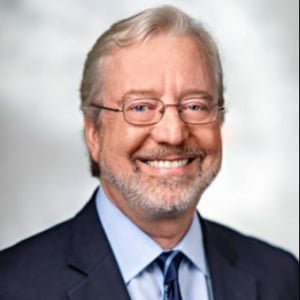
Legal Director and Securities Specialist, Better Markets
Mr. Hall has been with Better Markets since its founding more than 10 years ago, and he serves as its Legal Director and Securities Specialist. His background includes extensive experience in securities and commodities regulation acquired through positions in the Federal government, private practice, and the nonprofit sector.
Mr. Hall oversees a highly accomplished legal team that files amicus briefs in important cases involving financial regulation; initiates litigation or intervenes in cases when necessary to advance the public interest; issues special reports on specific topics surrounding the law and financial regulation; and provides regulatory analysis in the areas of banking, securities, and consumer protection. And his team supports the work of other staff members at Better Markets as they fight for the public interest before the regulatory agencies.
Mr. Hall is one of Better Markets’ most prolific authors, having written or co-written more than 100 comment letters, reports and legal briefs in his nearly decade-long fight for the public interest at the organization.
A sought-after expert for his legal and regulatory expertise, Mr. Hall has testified before Congress and currently serves on the Commission on Sanctions and Fitness of the Certified Financial Planner Board of Standards.
Prior to joining Better Markets in early 2011, Mr. Hall served as Senior Counsel to the Committee on Financial Services of the U.S. House of Representatives. During the Conference leading to passage of the Dodd-Frank Wall Street Reform and Consumer Protection Act, Mr. Hall worked on the titles dealing with securities and derivatives. He also handled other legislative initiatives relating to securities, including corporate governance, limited offering exemptions, the Freedom of Information Act, and the Securities Investor Protection Act.
From 2001 through 2009, Mr. Hall served as counsel to the North American Securities Administrators Association Inc. (NASAA), the association of state securities regulators. He supported all aspects of NASAA’s mission, including regulatory analysis, appellate advocacy, and enforcement. His written work included over 15 amicus briefs addressing a wide range of investor protection issues arising under State and Federal securities law, including four briefs filed in the U.S. Supreme Court. He also advised NASAA on corporate governance and transactional matters.
Mr. Hall began his legal career at the Commodity Futures Trading Commission, where he became Senior Trial Attorney and Associate Director of Enforcement. At the CFTC, he specialized in bringing injunctive actions in federal court against fraudulent commodity sales operations. And for almost a decade in private practice, he handled a wide range of civil litigation matters as well as transactional work in commercial real estate.
Mr. Hall is a graduate of the University of Michigan, and he received his law degree from Georgetown University.
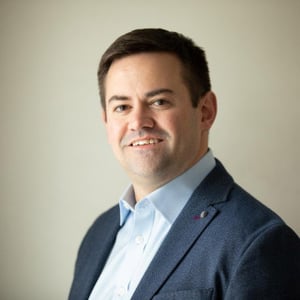
Policy Fellow, Regulatory Policy, Americans for Prosperity Foundation
Marc Marie is a fellow for regulatory policy at Americans for Prosperity, where he focuses on energy, land use, and the administrative state. Before joining Americans for Prosperity, Marc advised early-stage energy companies on regulatory strategy. His government service includes senior counsel at the Department of Justice, Environment and Natural Resources Division; acting deputy solicitor at the Department of the Interior; and counsel to Sen. Mike Lee on the Senate Judiciary Committee, Antitrust Subcommittee.
He holds a Juris Doctor from the University of Maryland and a bachelor's degree from Kenyon College.
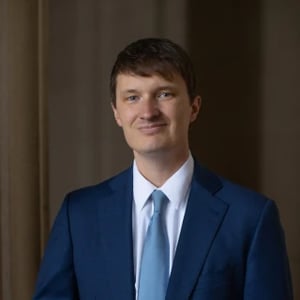
Partner, Boyden Gray PLLC
Trent McCotter is a partner with Boyden Gray PLLC. He previously served as Deputy Associate Attorney General of the United States and as an Assistant U.S. Attorney.
Mr. McCotter maintains an extensive appellate practice. He has considerable experience identifying and briefing cases that draw the Supreme Court’s attention, having persuaded the Court to grant certiorari in numerous cases raising issues of sovereignty, constitutional rights, due process, and criminal law. He has authored and submitted over 60 briefs at the Court.
He has also personally argued more than fifteen federal appeals across the Second, Fourth, Fifth, Sixth, Ninth, Eleventh, Federal, and D.C. Circuits—including once arguing three separate appeals in just four days. He has also twice argued before the 17-judge en banc Fifth Circuit. He has been counsel in over 50 other appeals raising matters from FOIA and the APA to constitutional rights and statutory construction.
As Deputy Associate Attorney General, Mr. McCotter oversaw DOJ’s Civil Appellate and Federal Programs branches, which are responsible for defending nearly all major litigation against the federal government. During his three years as a federal trial attorney in the Eastern District of Virginia’s “Rocket Docket,” Mr. McCotter won the Attorney General’s Award for Distinguished Service.
During his DOJ tenures, Mr. McCotter also assisted with the confirmations of two Supreme Court justices and over a dozen lower-court judges.
Mr. McCotter served as an inaugural clerk to the Hon. Steven J. Menashi on the U.S. Court of Appeals for the Second Circuit and also clerked for the Hon. R. Lanier Anderson III on the U.S. Court of Appeals for the Eleventh Circuit.

In-House Counsel Network: What Does the Next Administration Mean For Business?
Brenna Bird, Rachel L. Brand, Martine Cicconi, Jesse Panuccio
2024 National Lawyers Convention
By the time of the National Lawyers Convention, the American electorate will have decided on...
Topics
Big Week for the FTC
This post was originally published at American Action Forum on November 18. Despite being only...
Time for a Checkup: Evaluating the Withdrawal of the Health Care Antitrust Guidelines
Adam Biegel, John D. Carroll, Richard A. Feinstein, Laurel Kilgour, Bernard A. Nigro, Barak D. Richman
In 1996, the FTC and DOJ issued Statements of Antitrust Enforcement Policy in Health Care. ...
Time for a Checkup: Evaluating the Withdrawal of the Health Care Antitrust Guidelines
Adam Biegel, John D. Carroll, Richard A. Feinstein, Laurel Kilgour, Bernard A. Nigro, Barak D. Richman
In 1996, the FTC and DOJ issued Statements of Antitrust Enforcement Policy in Health Care. ...
Exploring Tradeoffs: The Nexus Between Antitrust and Security
Jamil N. Jaffer, Klon Kitchen, Thom Lambert, Brandon Pugh
Antitrust efforts have become prevalent in the courts and legislative bodies, both in the United...
Exploring Tradeoffs: The Nexus Between Antitrust and Security
Jamil N. Jaffer, Klon Kitchen, Thom Lambert, Brandon Pugh
Antitrust efforts have become prevalent in the courts and legislative bodies, both in the United...
Competition and Consumer Banking: Bank Mergers, Credit Cards, and the Capital One-Discover Deal
Diana L. Moss, Patrick J. Toomey, Todd J. Zywicki, Jelena McWilliams
In September, the Department of Justice announced that it would withdraw its 1995 bank merger...
Competition and Consumer Banking: Bank Mergers, Credit Cards, and the Capital One-Discover Deal
Diana L. Moss, Patrick J. Toomey, Todd J. Zywicki, Jelena McWilliams
In September, the Department of Justice announced that it would withdraw its 1995 bank merger...
Topics
United States v. Apple: A Triumph of Politics Over Economic Analysis
The Department of Justice’s recent antitrust suit against Apple has garnered significant attention, but a...
Climate Disclosure Litigation: Examining Legal Battles Against California and the SEC
Victor Flatt, Stephen Hall, Marc Marie, Trent McCotter
A Regulatory Transparency Project Webinar
A panel of distinguished legal scholars and practitioners will provide an overview of the current...