
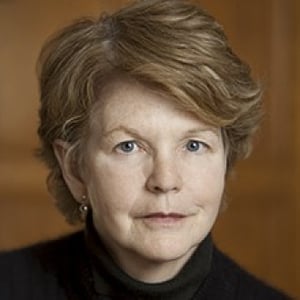
Howard M. Holtzmann Professor of International Law, Yale Law School
Lea Brilmayer is the Howard M. Holtzmann Professor of International Law at Yale Law School. In addition to teaching Contracts to first-year students, she also teaches Conflict of Laws and International Courts and Tribunals, as well as seminars on the laws of war and on African current affairs. Her degrees include a B.A. in mathematics and a J.D. from the University of California at Berkeley, as well as an LL.M. from Columbia Law School. Brilmayer has taught at a number of different law schools as either a professor or visiting professor, including the University of Texas, the University of Chicago, the University of Michigan, Columbia Law School, Harvard Law School, and the New York University School of Law (where she led a weekly seminar on International Jurisprudence.) She is a member of the Texas and Supreme Court bars. She has given numerous endowed lectures at other American law schools and has also taught twice at the summer session of the Hague Academy of International Law.
During her first decade of teaching, her writing interests mainly concerned conflict of laws (in particular, personal jurisdiction and choice of law); federal jurisdiction; and jurisprudence. Her conflict of laws writings have included one theoretical book on the subject and a leading casebook (in the more recent editions, co-authored with Jack Goldsmith). Together with a group of Yale student contributors, she published An Introduction to Jurisdiction in the American Federal System. Her writings on the conflict of laws have resulted in her being asked on a number of occasions to testify before Congressional committees, most recently on the Full Faith and Credit implications of same sex marriage. More recently, her interests have gradually turned to international law and international relations, and she is frequently cited for her academic writings about nationalism and the international legal status of secessionist movements. Her research in international jurisprudence has also led to two books, Justifying International Acts and American Hegemony: Political Morality in a One-Superpower World.
In addition to her academic interests, Brilmayer carries on an active life in interstate and international adjudication. In addition to contributing to amicus briefs, she has served as counsel of record before the United States Supreme Court and has been an expert consultant on many lower and intermediate appellate court cases. For the last decade she has served as lead counsel in several international public (state-to-state) arbitrations dealing with island sovereignty, maritime delimitation, land boundaries, and mass claims for violations of the laws of war.
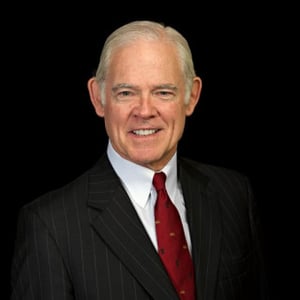
Founding Partner, Cooper & Kirk PLLC
Charles J. Cooper is a founding member and the chairman of Cooper & Kirk, PLLC, “one of the Nation’s leading litigation boutiques” (Above The Law 2017). The National Law Journal recently wrote that Mr. Cooper’s “brilliant legal career has so far spanned five decades and thrust Cooper into the spotlight in some of the most historic moments of the country’s modern history.” He has argued nine cases before the United States Supreme Court and scores of appeals before each of the 13 federal courts of appeals and several state supreme courts. He has been lead trial counsel in numerous complex, weeks-long trials in federal courts throughout the country. Named by the National Law Journal as one of the 10 best litigators in Washington D.C., Mr. Cooper’s work has been reported in numerous press accounts, and he has been called a “powerhouse attorney” (Fortune 2015), “a hard-nosed litigator” (Washington Post 2017), and “one of the country’s most in-demand civil litigators and a Washington legal institution unto himself” (The American Spectator 2014).
After graduating from the University of Alabama School of Law in 1977, where he ranked first in his class and served as Editor-in-Chief of the Alabama Law Review, Mr. Cooper began his career as a law clerk to Judge Paul Roney on the Fifth Circuit Court of Appeals and to Justice William H. Rehnquist in 1978–79. He then practiced law in Atlanta for two years before joining the Civil Rights Division of the U.S. Department of Justice, where he served as the Deputy Assistant Attorney General in charge of, among other things, appellate matters. In 1985 President Reagan appointed him to the position of Assistant Attorney General for the Office of Legal Counsel, which is the office responsible for providing legal opinions and advice to the White House, the Attorney General, and Executive Branch departments and agencies on issues covering the full spectrum of federal constitutional, statutory, and regulatory law.
In 1988 he returned to private practice as a litigation partner in the Washington, D.C. office of McGuireWoods. From 1990 until the founding of Cooper & Kirk in 1996, he was a partner at Shaw Pittman (now Pillsbury Winthrop Shaw Pittman), where he headed the firm’s Constitutional and Government Litigation Group.
Mr. Cooper has represented a wide range of public and private clients in highly complex constitutional, civil rights, antitrust, healthcare, banking, intellectual property, elections, campaign finance, administrative, commercial, and government contract cases. He has led trial teams in cases that have won judgments and settlements valued in the billions of dollars and that have established ground-breaking constitutional precedents.
Much of Mr. Cooper’s practice has involved representing high-profile clients in nationally prominent matters, including: the State of Florida in a First Amendment suit brought by the Disney Company concerning its autonomous regulatory authority over its Disney World property; the Commonwealth of Virginia in a suit seeking to enjoin the removal of noncitizens from its voter rolls; 38 members of the Duke Lacrosse team falsely accused of rape by officials of Duke University and the City of Durham; Harper Lee in a copyright dispute with the heirs of Gregory Peck; high-ranking former government officials such as former Attorneys General John Ashcroft, Jeff Sessions, and William Barr, and Ambassador John Bolton; several Governors and United States Senators; over 100 Members of Congress; and many state, territorial, and local government bodies and officials. He has also represented and advised government officials and public figures in connection with sensitive private issues that needed to be, and were, resolved discreetly without becoming matters of public record.
In 1998 Chief Justice Rehnquist appointed Mr. Cooper to the Standing Committee on Rules of Practice and Procedure of the Judicial Conference of the United States, where he served for three terms. He also served as a Public Member, appointed by President George H.W. Bush, of the National Commission on Judicial Discipline and Removal. He is a member of numerous professional associations, including the American Law Institute (since 1993) and the American Academy of Appellate Lawyers (since 1996). He is also an active member of the Federalist Society and the Republican National Lawyers Association, which in 2010 named him Republican Lawyer of the Year and in 2016 honored him with its Edwin Meese III Award.
Mr. Cooper has published scores of articles and spoken extensively on constitutional and legal policy topics. He has appeared before congressional committees on 26 occasions, testifying as an expert on a wide variety of legal issues, including the Chevron doctrine of judicial deference to administrative agencies, the diversity of citizenship jurisdiction of federal courts, statehood bills for Puerto Rico and the District of Columbia, and the impeachment of President Clinton.
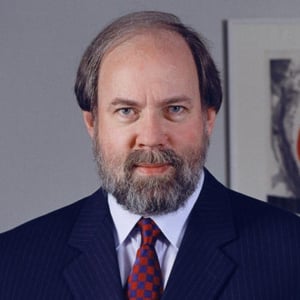
U.S. Court of Appeals, Seventh Circuit
Frank H. Easterbrook is a judge of the United States Court of Appeals for the Seventh Circuit and a Senior Lecturer at the Law School of the University of Chicago. He was Chief Judge from 2006–2013. Before joining the court in 1985, he was the Lee andBrena Freeman Professor of Law at the University of Chicago, where he taught and wrote in antitrust, securities, corporate law, jurisprudence, and criminal procedure. He has published The Economic Structure of Corporate Law (with Daniel R. Fischel) and about 100 scholarly articles. He served as Co-Editor of the Journal of Law and Economics from 1982 to 1991 and as a member of the Judicial Conference’s Standing Committee on Rules of Practice and Procedure from 1991 to 1997. Before joining the faculty of the Law School in 1979, Judge Easterbrook was Deputy Solicitor General of the United States. He holds degrees from Swarthmore College (B.A. with high honors, 1970) and the University of Chicago (J.D. cum laude, 1973), and is a member of the American Academy of Arts and Sciences, the American Law Institute, the Mont Pelerin Society, Phi Beta Kappa, and the Order of the Coif.
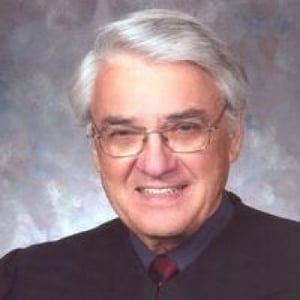
Senior Judge, United States Court of Appeals, Fifth Circuit
Patrick Errol Higginbotham is a federal judge on senior status with the United States Court of Appeals for the 5th Circuit. He joined the court in 1982 after being nominated by President Ronald Reagan.
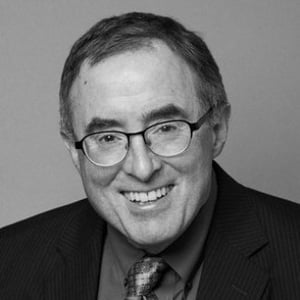
Contributing Writer, Vanity Fair
Michael Kinsley is a Contributing Writer for Vanity Fair, where his column appears monthly. Over a long career in the media, he has been Managing Editor of the Washington Monthly, Editor of the New Republic, and Editorial and Opinion Editor of the Los Angeles Times. He was the Founding Editor of Slate, one of the first on-line magazines. For over six years Kinsley was the liberal host of Crossfire, a CNN show where he sparred with Pat Buchanan five days a week. He played a similar role for many years with William F. Buckley on PBS’s Firing Line. He has written for The New Yorker, Conde Nast Traveler, and other publications.
U.S. Court of Appeals, Ninth Circuit
Stephen Roy Reinhardt is a federal appeals judge with the United States Court of Appeals for the Ninth Circuit in San Francisco. He joined the Court in 1980 after being nominated by President Jimmy Carter.
Born in New York City, New York, Reinhardt graduated from Pomona College with his Bachelor's degree in 1951 and later received a Bachelors of Laws degree, LL.B, from Yale Law School in 1954. Reinhardt served in the U.S. Air Force from 1954 to 1956 before becoming a law clerk for the Honorable Luther Youngdahl in the United States District Court for the District of Columbia until 1957. Reinhardt was a private practice attorney in the State of California from 1957 to 1980. Reinhardt was nominated to the United States Court of Appeals for the Ninth Circuit by President Jimmy Carter on November 30, 1979, to a new seat created by 92 Stat. 1629, which was approved by Congress. Reinhardt was confirmed by the U.S. Senate on September 11, 1980 and received commission on September 11, 1980.
Howard M. Holtzmann Professor of International Law, Yale Law School
Lea Brilmayer is the Howard M. Holtzmann Professor of International Law at Yale Law School. In addition to teaching Contracts to first-year students, she also teaches Conflict of Laws and International Courts and Tribunals, as well as seminars on the laws of war and on African current affairs. Her degrees include a B.A. in mathematics and a J.D. from the University of California at Berkeley, as well as an LL.M. from Columbia Law School. Brilmayer has taught at a number of different law schools as either a professor or visiting professor, including the University of Texas, the University of Chicago, the University of Michigan, Columbia Law School, Harvard Law School, and the New York University School of Law (where she led a weekly seminar on International Jurisprudence.) She is a member of the Texas and Supreme Court bars. She has given numerous endowed lectures at other American law schools and has also taught twice at the summer session of the Hague Academy of International Law.
During her first decade of teaching, her writing interests mainly concerned conflict of laws (in particular, personal jurisdiction and choice of law); federal jurisdiction; and jurisprudence. Her conflict of laws writings have included one theoretical book on the subject and a leading casebook (in the more recent editions, co-authored with Jack Goldsmith). Together with a group of Yale student contributors, she published An Introduction to Jurisdiction in the American Federal System. Her writings on the conflict of laws have resulted in her being asked on a number of occasions to testify before Congressional committees, most recently on the Full Faith and Credit implications of same sex marriage. More recently, her interests have gradually turned to international law and international relations, and she is frequently cited for her academic writings about nationalism and the international legal status of secessionist movements. Her research in international jurisprudence has also led to two books, Justifying International Acts and American Hegemony: Political Morality in a One-Superpower World.
In addition to her academic interests, Brilmayer carries on an active life in interstate and international adjudication. In addition to contributing to amicus briefs, she has served as counsel of record before the United States Supreme Court and has been an expert consultant on many lower and intermediate appellate court cases. For the last decade she has served as lead counsel in several international public (state-to-state) arbitrations dealing with island sovereignty, maritime delimitation, land boundaries, and mass claims for violations of the laws of war.
Founding Partner, Cooper & Kirk PLLC
Charles J. Cooper is a founding member and the chairman of Cooper & Kirk, PLLC, “one of the Nation’s leading litigation boutiques” (Above The Law 2017). The National Law Journal recently wrote that Mr. Cooper’s “brilliant legal career has so far spanned five decades and thrust Cooper into the spotlight in some of the most historic moments of the country’s modern history.” He has argued nine cases before the United States Supreme Court and scores of appeals before each of the 13 federal courts of appeals and several state supreme courts. He has been lead trial counsel in numerous complex, weeks-long trials in federal courts throughout the country. Named by the National Law Journal as one of the 10 best litigators in Washington D.C., Mr. Cooper’s work has been reported in numerous press accounts, and he has been called a “powerhouse attorney” (Fortune 2015), “a hard-nosed litigator” (Washington Post 2017), and “one of the country’s most in-demand civil litigators and a Washington legal institution unto himself” (The American Spectator 2014).
After graduating from the University of Alabama School of Law in 1977, where he ranked first in his class and served as Editor-in-Chief of the Alabama Law Review, Mr. Cooper began his career as a law clerk to Judge Paul Roney on the Fifth Circuit Court of Appeals and to Justice William H. Rehnquist in 1978–79. He then practiced law in Atlanta for two years before joining the Civil Rights Division of the U.S. Department of Justice, where he served as the Deputy Assistant Attorney General in charge of, among other things, appellate matters. In 1985 President Reagan appointed him to the position of Assistant Attorney General for the Office of Legal Counsel, which is the office responsible for providing legal opinions and advice to the White House, the Attorney General, and Executive Branch departments and agencies on issues covering the full spectrum of federal constitutional, statutory, and regulatory law.
In 1988 he returned to private practice as a litigation partner in the Washington, D.C. office of McGuireWoods. From 1990 until the founding of Cooper & Kirk in 1996, he was a partner at Shaw Pittman (now Pillsbury Winthrop Shaw Pittman), where he headed the firm’s Constitutional and Government Litigation Group.
Mr. Cooper has represented a wide range of public and private clients in highly complex constitutional, civil rights, antitrust, healthcare, banking, intellectual property, elections, campaign finance, administrative, commercial, and government contract cases. He has led trial teams in cases that have won judgments and settlements valued in the billions of dollars and that have established ground-breaking constitutional precedents.
Much of Mr. Cooper’s practice has involved representing high-profile clients in nationally prominent matters, including: the State of Florida in a First Amendment suit brought by the Disney Company concerning its autonomous regulatory authority over its Disney World property; the Commonwealth of Virginia in a suit seeking to enjoin the removal of noncitizens from its voter rolls; 38 members of the Duke Lacrosse team falsely accused of rape by officials of Duke University and the City of Durham; Harper Lee in a copyright dispute with the heirs of Gregory Peck; high-ranking former government officials such as former Attorneys General John Ashcroft, Jeff Sessions, and William Barr, and Ambassador John Bolton; several Governors and United States Senators; over 100 Members of Congress; and many state, territorial, and local government bodies and officials. He has also represented and advised government officials and public figures in connection with sensitive private issues that needed to be, and were, resolved discreetly without becoming matters of public record.
In 1998 Chief Justice Rehnquist appointed Mr. Cooper to the Standing Committee on Rules of Practice and Procedure of the Judicial Conference of the United States, where he served for three terms. He also served as a Public Member, appointed by President George H.W. Bush, of the National Commission on Judicial Discipline and Removal. He is a member of numerous professional associations, including the American Law Institute (since 1993) and the American Academy of Appellate Lawyers (since 1996). He is also an active member of the Federalist Society and the Republican National Lawyers Association, which in 2010 named him Republican Lawyer of the Year and in 2016 honored him with its Edwin Meese III Award.
Mr. Cooper has published scores of articles and spoken extensively on constitutional and legal policy topics. He has appeared before congressional committees on 26 occasions, testifying as an expert on a wide variety of legal issues, including the Chevron doctrine of judicial deference to administrative agencies, the diversity of citizenship jurisdiction of federal courts, statehood bills for Puerto Rico and the District of Columbia, and the impeachment of President Clinton.
U.S. Court of Appeals, Seventh Circuit
Frank H. Easterbrook is a judge of the United States Court of Appeals for the Seventh Circuit and a Senior Lecturer at the Law School of the University of Chicago. He was Chief Judge from 2006–2013. Before joining the court in 1985, he was the Lee andBrena Freeman Professor of Law at the University of Chicago, where he taught and wrote in antitrust, securities, corporate law, jurisprudence, and criminal procedure. He has published The Economic Structure of Corporate Law (with Daniel R. Fischel) and about 100 scholarly articles. He served as Co-Editor of the Journal of Law and Economics from 1982 to 1991 and as a member of the Judicial Conference’s Standing Committee on Rules of Practice and Procedure from 1991 to 1997. Before joining the faculty of the Law School in 1979, Judge Easterbrook was Deputy Solicitor General of the United States. He holds degrees from Swarthmore College (B.A. with high honors, 1970) and the University of Chicago (J.D. cum laude, 1973), and is a member of the American Academy of Arts and Sciences, the American Law Institute, the Mont Pelerin Society, Phi Beta Kappa, and the Order of the Coif.
Senior Judge, United States Court of Appeals, Fifth Circuit
Patrick Errol Higginbotham is a federal judge on senior status with the United States Court of Appeals for the 5th Circuit. He joined the court in 1982 after being nominated by President Ronald Reagan.
Contributing Writer, Vanity Fair
Michael Kinsley is a Contributing Writer for Vanity Fair, where his column appears monthly. Over a long career in the media, he has been Managing Editor of the Washington Monthly, Editor of the New Republic, and Editorial and Opinion Editor of the Los Angeles Times. He was the Founding Editor of Slate, one of the first on-line magazines. For over six years Kinsley was the liberal host of Crossfire, a CNN show where he sparred with Pat Buchanan five days a week. He played a similar role for many years with William F. Buckley on PBS’s Firing Line. He has written for The New Yorker, Conde Nast Traveler, and other publications.
U.S. Court of Appeals, Ninth Circuit
Stephen Roy Reinhardt is a federal appeals judge with the United States Court of Appeals for the Ninth Circuit in San Francisco. He joined the Court in 1980 after being nominated by President Jimmy Carter.
Born in New York City, New York, Reinhardt graduated from Pomona College with his Bachelor's degree in 1951 and later received a Bachelors of Laws degree, LL.B, from Yale Law School in 1954. Reinhardt served in the U.S. Air Force from 1954 to 1956 before becoming a law clerk for the Honorable Luther Youngdahl in the United States District Court for the District of Columbia until 1957. Reinhardt was a private practice attorney in the State of California from 1957 to 1980. Reinhardt was nominated to the United States Court of Appeals for the Ninth Circuit by President Jimmy Carter on November 30, 1979, to a new seat created by 92 Stat. 1629, which was approved by Congress. Reinhardt was confirmed by the U.S. Senate on September 11, 1980 and received commission on September 11, 1980.
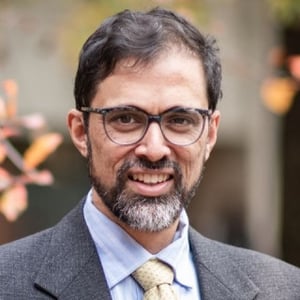
James Monroe Distinguished Professor of Law and Albert Clark Tate, Jr., Professor of Law, University of Virginia School of Law
Professor Saikrishna Prakash’s scholarship focuses on separation of powers, particularly executive powers. He teaches Constitutional Law, Foreign Relations Law and Presidential Powers at the Law School.
Prakash’s most recent book, “The Living Presidency: An Originalist Argument Against Its Ever-Expanding Powers,” was published by Harvard Belknap Press in 2020. He also authored “Imperial from the Beginning: The Constitution of the Original Executive” (Yale University Press, 2015). The former book focuses on the modern presidency while the latter considers the presidency of the Founders.
Prakash has authored over 75 law review articles. Among them are “Of Synchronicity and Supreme Law” in the Harvard Law Review, “The Indefensible Duty to Defend” in the Columbia Law Review, and “50 States, 50 Attorneys General and 50 Approaches to the Duty to Defend” and “The Executive Power Over Foreign Affairs” in the Yale Law Journal.
Prakash has published op-eds in The New York Times, The Wall Street Journal and the Los Angeles Times. At the request of Democrats and Republicans, he has testified before Congress on matters of presidential removal, the Mueller Report and how Congress might better check the presidency. He is currently a Miller Center Senior Fellow. In 2015, he received the Roger Traynor award for faculty scholarship. In the same year, he received an honorable mention from the American Society of Legal Writers for his book “Imperial from the Beginning.” He has given named lectures at William & Mary Law School, Princeton University and Toledo Law School, and keynote addresses at several conferences.
Prakash majored in economics and political science at Stanford University. At Yale Law School, he served as senior editor of the Yale Law Journal and received the John M. Olin Fellowship in Law, Economics and Public Policy. He subsequently clerked for Judge Laurence H. Silberman of the U.S. Court of Appeals for the District of Columbia Circuit and for Justice Clarence Thomas of the U.S. Supreme Court. After practicing in New York for two years, he served as a visiting professor at the University of Illinois College of Law and as an associate professor at Boston University School of Law. He then spent several years at the University of San Diego School of Law as the Herzog Research Professor of Law. Prakash has been a visiting professor at Northwestern University and the University of Chicago. He also has served as a James Madison Fellow at Princeton University and Visiting Research Fellow at the Hoover Institution of War & Peace at Stanford University.
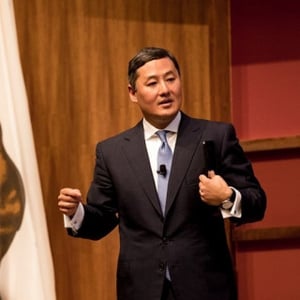
Emanuel S. Heller Professor of Law, University of California at Berkeley; Thomas Smith Senior Research Fellow, Civitas Institute, University of Texas at Austin
John Yoo is the Emanuel Heller Professor of Law at the University of California at Berkeley. He is also the Thomas Smith Senior Research Fellow, Civitas Institute, at the University of Texas at Austin. He is also a Nonresident Senior Fellow at the American Enterprise Institute.
His most recent book, The Politically Incorrect Guide to the Supreme Court, co-authored with Robert Delahunty, was published in 2023. Professor Yoo’s other books include Defender-in-Chief: Trump’s Fight for Presidential Power; Striking Power: How Cyber, Robots, and Space Weapons Change the Rules for War; Point of Attack: Preventive War, International Law, and Global Welfare; and Crisis and Command: A History of Executive Power from George Washington to George Bush.
He is a co-author of volumes 1 and 2 of R. Rossum, G. Tarr, V. Munoz & J. Yoo American Constitution Law (Routledge, 2026), and a co-editor of the eight-volume series on the 250th anniversary of the American Revolution, We Hold These Truths, with Yuval Levin and Adam White of the American Enterprise Institute.
Professor Yoo has published more than 100 articles in academic journals on subjects including national security, constitutional law, international law, and the Supreme Court. He also regularly contributes to the editorial pages of the Wall Street Journal, New York Times, Washington Post, Los Angeles Times, and National Review, among others.
Professor Yoo has served in all three branches of government. He was an official in the U.S. Department of Justice, where he worked on national security and terrorism issues after the 9/11 attacks. He served as general counsel of the U.S. Senate Judiciary Committee. He has been a law clerk for Supreme Court Justice Clarence Thomas and federal appeals Judge Laurence Silberman. He has been a visiting professor at the University of Texas at Austin’s School of Civic Leadership, Seoul National University, the Interdisciplinary Center Herzliya, Keio University, Trento University, the University of Chicago, and the Free University of Amsterdam.
Professor Yoo supervises the Public Law and Policy Program and the California Constitution Center. He also serves on the boards of Founding Forward, the Washington Legal Foundation, the Pacific Legal Foundation, the Ulysses Grant Institute, the Federalist Society’s Separation of Powers and Federalism Division, the Universidad Cientifica del Sur Law School, and the Asia-Pacific Law Institute at Seoul National University. He is a winner of the Federalist Society’s Paul Bator award and the Heritage Foundation’s Edwin Meese III Originalism Lectureship.
Professor Yoo graduated from Yale Law School and summa cum laude from Harvard College.
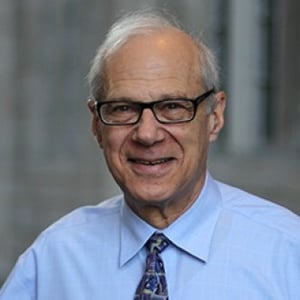
Nathaniel L. Nathanson Professor of Law Emeritus, Northwestern University Pritzker School of Law
A scholar in the field of constitutional law, Robert Bennett has been a member of the faculty of the Northwestern University School of Law since 1969, serving as the school’s dean from 1985 to 1995. Since 2002 he has been the Nathaniel L. Nathanson Professor of Law at Northwestern. With some regularity Professor Bennett teaches a seminar in the Law of American Democracy and courses in contracts, legislation, constitutional law, and constitutional theory. Professor Bennett has also taught as a visiting professor at the University of Illinois College of Law, the University of Virginia School of Law, the University of Southern California Law Center, Brooklyn Law School, and the Benjamin N. Cardozo School of Law of Yeshiva University.
Professor Bennett is a fellow of the American Bar Foundation, and served as the Foundation’s president from 1992 to 1994. He has been a member of the American Law Institute since 1979. He was also a co-founder of the Chicago Council of Lawyers and served as its president. Professor Bennett is the author of numerous books and articles. His two most recent books are Talking It Through: Puzzles of American Democracy, published by Cornell University Press in 2002 and Taming The Electoral College, published by Stanford University Press in 2006. At the present time he is at work on a (co-authored) book about constitutional interpretation for Cornell University Press, tentatively titled Originalism and Living Constitutionalism. Professor Bennett received his BA, summa cum laude, in 1962 from Harvard University and his LLB, cum laude, from Harvard Law School in 1965. At Harvard College he was elected to phi beta kappa and at Harvard Law School he was a member of the editorial board of the Harvard Law Review. Professor Bennett received a Knox Memorial Fellowship from Harvard University for study at the London School of Economics in 1965-66, and the following year he served as legal assistant to Commissioner Nicholas Johnson of the Federal Communications Commission. He was Reginald Heber Smith Fellow at the Office of Economic Opportunity, assigned to the Chicago Legal Aid Bureau in 1967-68, and he practiced law as an associate at the Chicago law firm of Mayer, Brown & Platt in 1968-69. Professor Bennett and his wife, Harriet Trop, live in Chicago and they have one daughter, Ariana Trop Bennett, who does as well.
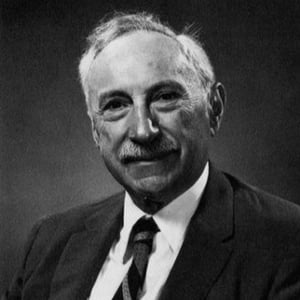
Charles Warren Senior Fellow in American Legal History, Harvard Law School
Raoul Berger (January 4, 1901 – September 23, 2000) was an American attorney and professor at The University of California at Berkeley and Harvard University School of Law. While at Harvard, he was the Charles Warren Senior Fellow in American Legal History.
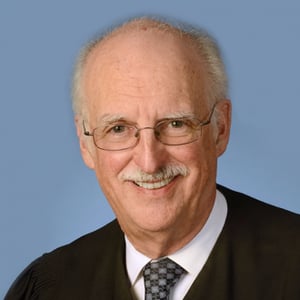
Senior Judge, United States Court of Appeals, District of Columbia Circuit
Circuit Judge Douglas H. Ginsburg was appointed to the United States Court of Appeals for the District of Columbia in 1986. After receiving his B.S. from Cornell University in 1970, and his J.D. from the University of Chicago Law School in 1973, he clerked on the D.C. Circuit and for Justice Thurgood Marshall on the United States Supreme Court. Thereafter, Judge Ginsburg was a professor at the Harvard Law School, the Deputy Assistant and then Assistant Attorney General for the Antitrust Division of the Department of Justice, as well as the Administrator of the Office of Information and Regulatory Affairs in the Office of Management and Budget. Concurrent with his service as a federal judge, Judge Ginsburg has taught at the University of Chicago Law School and the New York University School of Law. Judge Ginsburg is currently a Professor of Law at the George Mason University and a visiting professor at University College London, Faculty of Laws.
Judge Ginsburg is the Chairman of the International Advisory Board of the Global Antitrust Institute at the Law and Economics Center of the George Mason University School of Law. He also serves on the Advisory Boards of: Competition Policy International; the Harvard Journal of Law and Public Policy; the Journal of Competition Law and Economics; the Journal of Law, Economics & Policy; the Supreme Court Economic Review; the University of Chicago Law Review; the New York University Journal of Law and Liberty; and, at University College London, both the Centre for Law, Economics and Society and the Jevons Institute for Competition Law and Economics.
In 2020, Judge Ginsburg was the 11th recipient of the John Sherman Award, presented by the Antitrust Division of the Department of Justice in recognition of the awardee’s Lifetime Contributions to Antitrust Law and Policy.
In 2014, Judge Ginsburg received the Lifetime Achievement Award given annually by the Global Competition Review.
He is the author or co-author of several books and more than 100 articles on competition and regulation, including, most recently, Growing Convergence: The Limited Role of Antitrust in Standard Essential Patent Disputes, in CPI Antitrust Chronicle, Summer 2021, Vol. 1, No. 2.

Richard and Frances Mallery Professor of Law and Faculty Director, Constitutional Law Center, Stanford Law School
Michael W. McConnell is the Richard and Frances Mallery Professor and Faculty Director of the Constitutional Law Center at Stanford Law School, and a Senior Fellow at the Hoover Institution. From 2002 to 2009, he served as a Circuit Judge on the United States Court of Appeals for the Tenth Circuit. He was nominated by President George W. Bush, a Republican, and confirmed by a Democratic Senate by unanimous consent. McConnell has previously held chaired professorships at the University of Chicago and the University of Utah, and visiting professorships at Harvard and NYU. He teaches courses on constitutional law, constitutional history, First Amendment, and interpretive theory. He has published widely in the fields of constitutional law and theory, especially church and state, equal protection, and separation of powers. His book, “The President Who Would Not Be King: Executive Power Under the Constitution,” was published by Princeton University Press in 2020, based on the Tanner Lectures in Human Values, which he delivered at Princeton in 2019. His latest book, co-authored with Nathan Chapman, “Agreeing to Disagree: How the Establishment Clause Protects Religious Diversity and Freedom of Conscience,” was published by Oxford University Press in mid-2023. McConnell has argued sixteen cases in the United States Supreme Court, most recently Carney v. Adams (2020). defending a provision of the Delaware Constitution requiring political balance on that state’s courts. More recently, he was co-counsel in Gonzalez v. Google. He earned his B.A. from Michigan State University and his J.D. from the University of Chicago, and has received honorary degrees from Notre Dame University and Michigan State. He served as law clerk to Supreme Court Justice William J. Brennan, Jr. and D.C. Circuit Chief Judge J. Skelly Wright. He has been Assistant General Counsel of the Office of Management & Budget, Assistant to the Solicitor General of the Department of Justice, and a member of the President’s Intelligence Oversight Board. He is Senior of Counsel to the law firm Wilson, Sonsini, Goodrich & Rosati, and is co-chair of Meta’s Oversight Review Board.
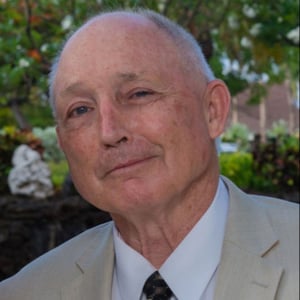
Charles R. Walgreen, Jr. Chair in Law and Co-Director, Program in Law and Philosophy, University of Illinois College of Law
One of the country’s most prominent authorities on the intersection of law and philosophy, and widely regarded as the country’s leading theoretician of the criminal law, Professor Moore joined the faculty in 2002 as the Charles R. Walgreen, Jr. Chair, the first and only university-wide chair for the University of Illinois’ three campuses. He is jointly appointed as professor of law in the College of Law and as a professor with the Center for Advanced Studies, an honor bestowed on faculty on the basis of their outstanding scholarship and among the highest forms of campus recognition. Professor Moore was just the second UI College of Law faculty member to have held such an appointment.
Before coming to Illinois, Professor Moore served as the Warren Distinguished Professor of Law and as co-founder and co-director of the Institute for Law and Philosophy at the University of San Diego. From 1989-2000, he was the Leon Meltzer Professor of Law and Professor of Philosophy at the University of Pennsylvania, where he co-founded and directed the University of Pennsylvania Institute for Law and Philosophy.
Over the course of his career, he also has been a professor of law at the University of California at Berkeley, the University of Southern California (where he held the Robert Kingsley Chair), and the University of Kansas. In addition, he has been the William Minor Lile Distinguished Visiting Professor of Law at the University of Virginia, the Florence Rogatz Visiting Professor at the Yale Law School, The Mason Ladd Distinguished Visiting Professor at the University of Iowa Schools of Law and of Medicine, as well as a visiting professor at Stanford University, Northwestern University, Tel Aviv University in Israel, di Tella University in Buenos Aires, and the Universität Erlangen in Germany.
He has held a number of fellowships and visiting scholar positions, including two in the Law and Humanities Program of Harvard University, five at the Australian National University’s Research School of Social Sciences in Canberra, Australia, and one each at the Humanities Research Institute of the University of California at Irvine, the Rockefeller Center in Bellagio, Italy, the Georgetown University Law Center, the University of Pennsylvania’s Center for Neuroscience and Society, and the Yale Law School.
Over an academic career spanning more than 50 years Moore has published more than 140 books, articles, editorials, and other pieces of scholarship, documented recently in a festschrift published in his honor, K. Ferzan and S. Morse, eds., Legal, Moral, and Metaphysical Truth: The Philosophy of Michael S. Moore (Oxford University Press, 2016). He is the author of Placing Blame: A General Theory of the Criminal Law (Oxford University Press, 1997), widely regarded as the leading modern statement of the retributivist theory of the criminal law. In an earlier book, Act and Crime: The Philosophy of Action and its Implications for Criminal Law (Oxford University Press, 1993), Moore provided a unified theory of action that underlies English and American criminal jurisprudence. In a later book, Causation and Responsibility: An Essay in Law, Morals, and Metaphysics (Oxford University Press, 2009), Moore explored the nature of causation and its relation to both moral and legal responsibility. Earlier in his career, he authored Law and Psychiatry: Rethinking the Relationship (Cambridge University Press, 1984), which explored the tension that often exists between legal and psychiatric theories. His latest book, Mechanical Brains and Responsible Choices, still forthcoming, will return to these same issues, this time as they are raised by contemporary neuroscience rather than by dynamic psychiatry.
Professor Moore has presented hundreds of lectures and papers around the world in law, jurisprudence, political theory, legal philosophy, political science, economics, philosophy, psychology, psychiatry, and neuroscience, including most recently endowed, named lectures at Duke, Dartmouth, Columbia, Tel Aviv, Pennsylvania universities, as well as the annual Public Philosophy Lecture and the annual Center for Advanced Studies Lecture at the University of Illinois. He is on the board of editors of numerous journals in law and in philosophy and for a decade served as editor-in-chief of the journal, Law and Philosophy.
He regularly rotates his law teaching between first-year courses of criminal law, torts, contracts, property, and constitutional law, and upper-year courses in jurisprudence and legal philosophy. During his 13 years on the Philosophy Department faculty at Illinois he taught undergraduate courses in the philosophy of law and political philosophy and graduate seminars in neuroscience, ethics, the theory of action, and the metaphysics of causation.
Nathaniel L. Nathanson Professor of Law Emeritus, Northwestern University Pritzker School of Law
A scholar in the field of constitutional law, Robert Bennett has been a member of the faculty of the Northwestern University School of Law since 1969, serving as the school’s dean from 1985 to 1995. Since 2002 he has been the Nathaniel L. Nathanson Professor of Law at Northwestern. With some regularity Professor Bennett teaches a seminar in the Law of American Democracy and courses in contracts, legislation, constitutional law, and constitutional theory. Professor Bennett has also taught as a visiting professor at the University of Illinois College of Law, the University of Virginia School of Law, the University of Southern California Law Center, Brooklyn Law School, and the Benjamin N. Cardozo School of Law of Yeshiva University.
Professor Bennett is a fellow of the American Bar Foundation, and served as the Foundation’s president from 1992 to 1994. He has been a member of the American Law Institute since 1979. He was also a co-founder of the Chicago Council of Lawyers and served as its president. Professor Bennett is the author of numerous books and articles. His two most recent books are Talking It Through: Puzzles of American Democracy, published by Cornell University Press in 2002 and Taming The Electoral College, published by Stanford University Press in 2006. At the present time he is at work on a (co-authored) book about constitutional interpretation for Cornell University Press, tentatively titled Originalism and Living Constitutionalism. Professor Bennett received his BA, summa cum laude, in 1962 from Harvard University and his LLB, cum laude, from Harvard Law School in 1965. At Harvard College he was elected to phi beta kappa and at Harvard Law School he was a member of the editorial board of the Harvard Law Review. Professor Bennett received a Knox Memorial Fellowship from Harvard University for study at the London School of Economics in 1965-66, and the following year he served as legal assistant to Commissioner Nicholas Johnson of the Federal Communications Commission. He was Reginald Heber Smith Fellow at the Office of Economic Opportunity, assigned to the Chicago Legal Aid Bureau in 1967-68, and he practiced law as an associate at the Chicago law firm of Mayer, Brown & Platt in 1968-69. Professor Bennett and his wife, Harriet Trop, live in Chicago and they have one daughter, Ariana Trop Bennett, who does as well.
Charles Warren Senior Fellow in American Legal History, Harvard Law School
Raoul Berger (January 4, 1901 – September 23, 2000) was an American attorney and professor at The University of California at Berkeley and Harvard University School of Law. While at Harvard, he was the Charles Warren Senior Fellow in American Legal History.
Senior Judge, United States Court of Appeals, District of Columbia Circuit
Circuit Judge Douglas H. Ginsburg was appointed to the United States Court of Appeals for the District of Columbia in 1986. After receiving his B.S. from Cornell University in 1970, and his J.D. from the University of Chicago Law School in 1973, he clerked on the D.C. Circuit and for Justice Thurgood Marshall on the United States Supreme Court. Thereafter, Judge Ginsburg was a professor at the Harvard Law School, the Deputy Assistant and then Assistant Attorney General for the Antitrust Division of the Department of Justice, as well as the Administrator of the Office of Information and Regulatory Affairs in the Office of Management and Budget. Concurrent with his service as a federal judge, Judge Ginsburg has taught at the University of Chicago Law School and the New York University School of Law. Judge Ginsburg is currently a Professor of Law at the George Mason University and a visiting professor at University College London, Faculty of Laws.
Judge Ginsburg is the Chairman of the International Advisory Board of the Global Antitrust Institute at the Law and Economics Center of the George Mason University School of Law. He also serves on the Advisory Boards of: Competition Policy International; the Harvard Journal of Law and Public Policy; the Journal of Competition Law and Economics; the Journal of Law, Economics & Policy; the Supreme Court Economic Review; the University of Chicago Law Review; the New York University Journal of Law and Liberty; and, at University College London, both the Centre for Law, Economics and Society and the Jevons Institute for Competition Law and Economics.
In 2020, Judge Ginsburg was the 11th recipient of the John Sherman Award, presented by the Antitrust Division of the Department of Justice in recognition of the awardee’s Lifetime Contributions to Antitrust Law and Policy.
In 2014, Judge Ginsburg received the Lifetime Achievement Award given annually by the Global Competition Review.
He is the author or co-author of several books and more than 100 articles on competition and regulation, including, most recently, Growing Convergence: The Limited Role of Antitrust in Standard Essential Patent Disputes, in CPI Antitrust Chronicle, Summer 2021, Vol. 1, No. 2.
Richard and Frances Mallery Professor of Law and Faculty Director, Constitutional Law Center, Stanford Law School
Michael W. McConnell is the Richard and Frances Mallery Professor and Faculty Director of the Constitutional Law Center at Stanford Law School, and a Senior Fellow at the Hoover Institution. From 2002 to 2009, he served as a Circuit Judge on the United States Court of Appeals for the Tenth Circuit. He was nominated by President George W. Bush, a Republican, and confirmed by a Democratic Senate by unanimous consent. McConnell has previously held chaired professorships at the University of Chicago and the University of Utah, and visiting professorships at Harvard and NYU. He teaches courses on constitutional law, constitutional history, First Amendment, and interpretive theory. He has published widely in the fields of constitutional law and theory, especially church and state, equal protection, and separation of powers. His book, “The President Who Would Not Be King: Executive Power Under the Constitution,” was published by Princeton University Press in 2020, based on the Tanner Lectures in Human Values, which he delivered at Princeton in 2019. His latest book, co-authored with Nathan Chapman, “Agreeing to Disagree: How the Establishment Clause Protects Religious Diversity and Freedom of Conscience,” was published by Oxford University Press in mid-2023. McConnell has argued sixteen cases in the United States Supreme Court, most recently Carney v. Adams (2020). defending a provision of the Delaware Constitution requiring political balance on that state’s courts. More recently, he was co-counsel in Gonzalez v. Google. He earned his B.A. from Michigan State University and his J.D. from the University of Chicago, and has received honorary degrees from Notre Dame University and Michigan State. He served as law clerk to Supreme Court Justice William J. Brennan, Jr. and D.C. Circuit Chief Judge J. Skelly Wright. He has been Assistant General Counsel of the Office of Management & Budget, Assistant to the Solicitor General of the Department of Justice, and a member of the President’s Intelligence Oversight Board. He is Senior of Counsel to the law firm Wilson, Sonsini, Goodrich & Rosati, and is co-chair of Meta’s Oversight Review Board.
Charles R. Walgreen, Jr. Chair in Law and Co-Director, Program in Law and Philosophy, University of Illinois College of Law
One of the country’s most prominent authorities on the intersection of law and philosophy, and widely regarded as the country’s leading theoretician of the criminal law, Professor Moore joined the faculty in 2002 as the Charles R. Walgreen, Jr. Chair, the first and only university-wide chair for the University of Illinois’ three campuses. He is jointly appointed as professor of law in the College of Law and as a professor with the Center for Advanced Studies, an honor bestowed on faculty on the basis of their outstanding scholarship and among the highest forms of campus recognition. Professor Moore was just the second UI College of Law faculty member to have held such an appointment.
Before coming to Illinois, Professor Moore served as the Warren Distinguished Professor of Law and as co-founder and co-director of the Institute for Law and Philosophy at the University of San Diego. From 1989-2000, he was the Leon Meltzer Professor of Law and Professor of Philosophy at the University of Pennsylvania, where he co-founded and directed the University of Pennsylvania Institute for Law and Philosophy.
Over the course of his career, he also has been a professor of law at the University of California at Berkeley, the University of Southern California (where he held the Robert Kingsley Chair), and the University of Kansas. In addition, he has been the William Minor Lile Distinguished Visiting Professor of Law at the University of Virginia, the Florence Rogatz Visiting Professor at the Yale Law School, The Mason Ladd Distinguished Visiting Professor at the University of Iowa Schools of Law and of Medicine, as well as a visiting professor at Stanford University, Northwestern University, Tel Aviv University in Israel, di Tella University in Buenos Aires, and the Universität Erlangen in Germany.
He has held a number of fellowships and visiting scholar positions, including two in the Law and Humanities Program of Harvard University, five at the Australian National University’s Research School of Social Sciences in Canberra, Australia, and one each at the Humanities Research Institute of the University of California at Irvine, the Rockefeller Center in Bellagio, Italy, the Georgetown University Law Center, the University of Pennsylvania’s Center for Neuroscience and Society, and the Yale Law School.
Over an academic career spanning more than 50 years Moore has published more than 140 books, articles, editorials, and other pieces of scholarship, documented recently in a festschrift published in his honor, K. Ferzan and S. Morse, eds., Legal, Moral, and Metaphysical Truth: The Philosophy of Michael S. Moore (Oxford University Press, 2016). He is the author of Placing Blame: A General Theory of the Criminal Law (Oxford University Press, 1997), widely regarded as the leading modern statement of the retributivist theory of the criminal law. In an earlier book, Act and Crime: The Philosophy of Action and its Implications for Criminal Law (Oxford University Press, 1993), Moore provided a unified theory of action that underlies English and American criminal jurisprudence. In a later book, Causation and Responsibility: An Essay in Law, Morals, and Metaphysics (Oxford University Press, 2009), Moore explored the nature of causation and its relation to both moral and legal responsibility. Earlier in his career, he authored Law and Psychiatry: Rethinking the Relationship (Cambridge University Press, 1984), which explored the tension that often exists between legal and psychiatric theories. His latest book, Mechanical Brains and Responsible Choices, still forthcoming, will return to these same issues, this time as they are raised by contemporary neuroscience rather than by dynamic psychiatry.
Professor Moore has presented hundreds of lectures and papers around the world in law, jurisprudence, political theory, legal philosophy, political science, economics, philosophy, psychology, psychiatry, and neuroscience, including most recently endowed, named lectures at Duke, Dartmouth, Columbia, Tel Aviv, Pennsylvania universities, as well as the annual Public Philosophy Lecture and the annual Center for Advanced Studies Lecture at the University of Illinois. He is on the board of editors of numerous journals in law and in philosophy and for a decade served as editor-in-chief of the journal, Law and Philosophy.
He regularly rotates his law teaching between first-year courses of criminal law, torts, contracts, property, and constitutional law, and upper-year courses in jurisprudence and legal philosophy. During his 13 years on the Philosophy Department faculty at Illinois he taught undergraduate courses in the philosophy of law and political philosophy and graduate seminars in neuroscience, ethics, the theory of action, and the metaphysics of causation.
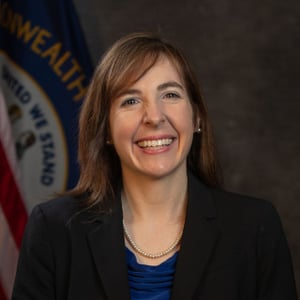
Auditor of Public Accounts, Commonwealth of Kentucky
Allison Ball is the 48th Auditor of Public Accounts for the Commonwealth of Kentucky. Prior to being elected Auditor, Ball served two terms as Kentucky State Treasurer. Before that, she spent four years as Assistant Floyd County Attorney, prosecuting child abuse and juvenile delinquency cases. When first appointed to office, Ball was the youngest statewide elected official in the country.
Ball has a rich Kentucky history; her family has been in Eastern Kentucky since the 1790s, and she holds a degree from the University of Kentucky College of Law.
She is a fierce watchdog for Kentucky taxpayer dollars. As Auditor, Ball protects against waste, fraud, and abuse.
As Treasurer, she returned more unclaimed property than any Treasurer in state history and established a savings and investment program for people with disabilities. She has been a national leader for improved financial literacy; Ball established the Kentucky Financial Empowerment Commission, and she successfully advocated for a financial literacy high school graduation requirement.
A Floyd County native, Ball and her husband, Dr. Asa James Swan, have two children, Levi and Marigold. Upon birth of her son, she was the first Kentucky Constitutional Officer to give birth while in office.
Chief of Staff, Office of the Kentucky State Treasurer
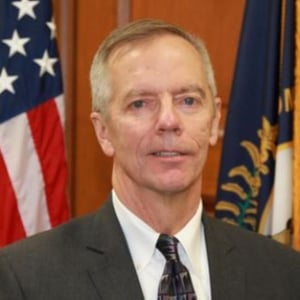
Assistant Deputy Attorney General, Commonwealth of Kentucky
Victor "Vic" Maddox heads the Civil Branch in the Office of the Attorney General. Maddox co-founded the Louisville firm known today as Fultz Maddox Dickens, PLC, where he represented clients in constitutional, administrative, business, and personal injury matters. Maddox is an expert in litigation matters and has represented elected officials and Kentucky citizens in his nearly four decades of legal experience, including vast experience at both the trial and appellate level. He was previously a partner with the predecessor firm to Frost Brown Todd, LLC, where he served in the firm's litigation practice and was involved in cases regarding securities fraud, product liability, trade secrets, and engineering liability. During his early career, Maddox worked in Washington, D.C., as a trial attorney with the Civil Division of the United States Department of Justice. He later served as Counsel on the Senate Judiciary Committee for Senator Mitch McConnell, where he oversaw judicial and Justice Department nominations. Maddox was also appointed to the board of the Legal Services Corporation, a federally-chartered non-profit that provides funding for legal aid in civil cases to low-income Americans by President Obama on the recommendation of Senator McConnell. In that capacity, Maddox served as chairman of the Audit Committee and co-chaired the organization's Opioid Task Force. Maddox is a graduate of Ohio University and the Indiana University Maurer School of Law.
Partner, Wyant, Tarrant & Combs LLP
Douglas McSwain is a member of the Litigation & Dispute Resolution Service Team at Wyant, Tarrant & Combs LLP. He has been a litigator, legal advisor, speaker, and writer for more than 30 years. He concentrates his practice in constitutional law, business, professional, employment, civil rights, data privacy & security, and trade law. Mr. McSwain also has experience in health care, administrative and equine law.
Mr. McSwain has handled numerous multi-party wage and hour cases both administratively and in litigation. He has conducted auditing and investigative cases involving the U.S. Department of Labor and the Kentucky Labor Cabinet, as well as multi-Plaintiff cases individually suing or class and collective actions.
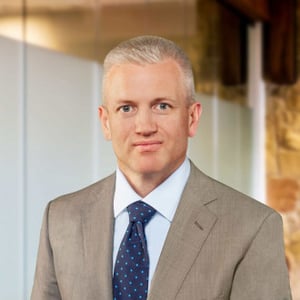
Executive General Counsel, First Liberty Institute
Hiram Sasser is Executive General Counsel for First Liberty Institute, where he oversees First Liberty’s litigation and media efforts. Sasser’s practice focuses on First Amendment and other constitutional and civil rights issues relating to religious liberty. Sasser served as co-counsel in seven victories before the United States Supreme Court, including Groff v. DeJoy (landmark case overturning the “de minimis cost” test for Title VII in place almost 50 years), Kennedy v. Bremerton (landmark case overturning 50 years of Establishment Clause precedent), Carson v. Makin (overturning 40 years of Maine’s discrimination against parents choosing faith-based schools), American Legion v. American Humanist Association (landmark case ending Establishment Clause attacks on veterans’ memorials with religious imagery), Klein v. Oregon Bureau of Labor and Industries (granted, vacated, and remanded (twice) in religious wedding service case), and Sause v. Bauer (summary reversal revoking qualified immunity for police who ordered a citizen not to pray in her own home).
In addition to his legal duties, Sasser develops, coordinates, and implements successful media strategies on behalf of his clients. This includes numerous appearances on ABC, NBC, CBS, Fox News, CNN, and the BBC as well as being heard on various radio stations throughout the United States, Asia, Africa, and Europe.
In 2016, Sasser took a leave of absence to serve a temporary assignment as the Chief of Staff for the Attorney General of Texas. He currently serves as an Adjunct Professor of Law at both The University of Texas at Austin School of Law (teaching Religious Liberty) and Oklahoma City University School of Law (teaching Civil Rights Procedure).
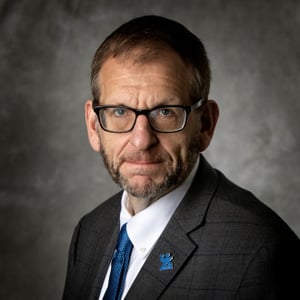
General Counsel, University of Kentucky & Former Solicitor General of Virginia, University of Kentucky
William E. Thro, the General Counsel of the University of Kentucky, is an accomplished university attorney, appellate advocate, and legal scholar.
As the Chief Legal Officer for the University of Kentucky, he provides proactive strategic advice on critical legal and policy issues confronting a public flagship land grant research university with an integrated academic medical center and a high profile athletics program. Before assuming his present position in 2012, he spent more than twenty years representing public universities including eight years as the first in-house counsel at Christopher Newport University.
As Solicitor General of Virginia for four years, he was responsible for the Virginia State Government’s U.S. Supreme Court litigation (except capital cases) as well as lower court appeals involving the constitutionality of statutes or politically sensitive issues. He argued two cases in the U.S. Supreme Court and numerous cases in the lower appellate courts. He co-authored seven U.S. Court merits briefs, eleven U.S. Supreme Court amicus briefs, and more than fifty briefs at the petition stage. He received two Best Brief Awards from the National Association of Attorneys General.
As a legal scholar, he focuses on constitutional law in educational contexts. He has more than sixty publications in law reviews or peer reviewed journals as well as numerous monographs, book chapters, and encyclopedia entries. In recognition of his scholarly work, he received Stetson University’s Kaplin Award for Excellence in Higher Education Law & Policy Scholarship (2014) and became a Fellow of both the National Education Finance Conference (2012) and the National Association of College and University Attorneys (2007).
He has served as President of the Education Law Association, Chair of the Virginia Bar Association’s Appellate Practice Section, Board Chair for a local Red Cross Chapter, on the Boards of both the National Association of College & University Attorneys and the National Education Finance Academy, and an Elder in the Presbyterian Church (U.S.A.).
A native of Kentucky, he received his undergraduate degree summa cum laude from Hanover College. In addition to receiving the Crowe Citation as the outstanding male in his class, he was the first Hanover student to become a Harry S. Truman Scholar. He earned a graduate degree with honours from the University of Melbourne while attending as a Rotary Foundation International Ambassadorial Scholar. His law degree is from the University of Virginia where he was a published member of the VIRGINIA LAW REVIEW and research assistant to constitutional law professor A.E. Dick Howard. He began his legal career as a judicial clerk to the late Judge Ronald E. Meredith of the U.S. District Court for the Western District of Kentucky in Louisville.
He is married to the Rev. Dr. Julie Urback Thro and has two children in college (Sandra, Will) and one in high school (Noah).
Auditor of Public Accounts, Commonwealth of Kentucky
Allison Ball is the 48th Auditor of Public Accounts for the Commonwealth of Kentucky. Prior to being elected Auditor, Ball served two terms as Kentucky State Treasurer. Before that, she spent four years as Assistant Floyd County Attorney, prosecuting child abuse and juvenile delinquency cases. When first appointed to office, Ball was the youngest statewide elected official in the country.
Ball has a rich Kentucky history; her family has been in Eastern Kentucky since the 1790s, and she holds a degree from the University of Kentucky College of Law.
She is a fierce watchdog for Kentucky taxpayer dollars. As Auditor, Ball protects against waste, fraud, and abuse.
As Treasurer, she returned more unclaimed property than any Treasurer in state history and established a savings and investment program for people with disabilities. She has been a national leader for improved financial literacy; Ball established the Kentucky Financial Empowerment Commission, and she successfully advocated for a financial literacy high school graduation requirement.
A Floyd County native, Ball and her husband, Dr. Asa James Swan, have two children, Levi and Marigold. Upon birth of her son, she was the first Kentucky Constitutional Officer to give birth while in office.
Chief of Staff, Office of the Kentucky State Treasurer
Assistant Deputy Attorney General, Commonwealth of Kentucky
Victor "Vic" Maddox heads the Civil Branch in the Office of the Attorney General. Maddox co-founded the Louisville firm known today as Fultz Maddox Dickens, PLC, where he represented clients in constitutional, administrative, business, and personal injury matters. Maddox is an expert in litigation matters and has represented elected officials and Kentucky citizens in his nearly four decades of legal experience, including vast experience at both the trial and appellate level. He was previously a partner with the predecessor firm to Frost Brown Todd, LLC, where he served in the firm's litigation practice and was involved in cases regarding securities fraud, product liability, trade secrets, and engineering liability. During his early career, Maddox worked in Washington, D.C., as a trial attorney with the Civil Division of the United States Department of Justice. He later served as Counsel on the Senate Judiciary Committee for Senator Mitch McConnell, where he oversaw judicial and Justice Department nominations. Maddox was also appointed to the board of the Legal Services Corporation, a federally-chartered non-profit that provides funding for legal aid in civil cases to low-income Americans by President Obama on the recommendation of Senator McConnell. In that capacity, Maddox served as chairman of the Audit Committee and co-chaired the organization's Opioid Task Force. Maddox is a graduate of Ohio University and the Indiana University Maurer School of Law.
Partner, Wyant, Tarrant & Combs LLP
Douglas McSwain is a member of the Litigation & Dispute Resolution Service Team at Wyant, Tarrant & Combs LLP. He has been a litigator, legal advisor, speaker, and writer for more than 30 years. He concentrates his practice in constitutional law, business, professional, employment, civil rights, data privacy & security, and trade law. Mr. McSwain also has experience in health care, administrative and equine law.
Mr. McSwain has handled numerous multi-party wage and hour cases both administratively and in litigation. He has conducted auditing and investigative cases involving the U.S. Department of Labor and the Kentucky Labor Cabinet, as well as multi-Plaintiff cases individually suing or class and collective actions.
Executive General Counsel, First Liberty Institute
Hiram Sasser is Executive General Counsel for First Liberty Institute, where he oversees First Liberty’s litigation and media efforts. Sasser’s practice focuses on First Amendment and other constitutional and civil rights issues relating to religious liberty. Sasser served as co-counsel in seven victories before the United States Supreme Court, including Groff v. DeJoy (landmark case overturning the “de minimis cost” test for Title VII in place almost 50 years), Kennedy v. Bremerton (landmark case overturning 50 years of Establishment Clause precedent), Carson v. Makin (overturning 40 years of Maine’s discrimination against parents choosing faith-based schools), American Legion v. American Humanist Association (landmark case ending Establishment Clause attacks on veterans’ memorials with religious imagery), Klein v. Oregon Bureau of Labor and Industries (granted, vacated, and remanded (twice) in religious wedding service case), and Sause v. Bauer (summary reversal revoking qualified immunity for police who ordered a citizen not to pray in her own home).
In addition to his legal duties, Sasser develops, coordinates, and implements successful media strategies on behalf of his clients. This includes numerous appearances on ABC, NBC, CBS, Fox News, CNN, and the BBC as well as being heard on various radio stations throughout the United States, Asia, Africa, and Europe.
In 2016, Sasser took a leave of absence to serve a temporary assignment as the Chief of Staff for the Attorney General of Texas. He currently serves as an Adjunct Professor of Law at both The University of Texas at Austin School of Law (teaching Religious Liberty) and Oklahoma City University School of Law (teaching Civil Rights Procedure).
General Counsel, University of Kentucky & Former Solicitor General of Virginia, University of Kentucky
William E. Thro, the General Counsel of the University of Kentucky, is an accomplished university attorney, appellate advocate, and legal scholar.
As the Chief Legal Officer for the University of Kentucky, he provides proactive strategic advice on critical legal and policy issues confronting a public flagship land grant research university with an integrated academic medical center and a high profile athletics program. Before assuming his present position in 2012, he spent more than twenty years representing public universities including eight years as the first in-house counsel at Christopher Newport University.
As Solicitor General of Virginia for four years, he was responsible for the Virginia State Government’s U.S. Supreme Court litigation (except capital cases) as well as lower court appeals involving the constitutionality of statutes or politically sensitive issues. He argued two cases in the U.S. Supreme Court and numerous cases in the lower appellate courts. He co-authored seven U.S. Court merits briefs, eleven U.S. Supreme Court amicus briefs, and more than fifty briefs at the petition stage. He received two Best Brief Awards from the National Association of Attorneys General.
As a legal scholar, he focuses on constitutional law in educational contexts. He has more than sixty publications in law reviews or peer reviewed journals as well as numerous monographs, book chapters, and encyclopedia entries. In recognition of his scholarly work, he received Stetson University’s Kaplin Award for Excellence in Higher Education Law & Policy Scholarship (2014) and became a Fellow of both the National Education Finance Conference (2012) and the National Association of College and University Attorneys (2007).
He has served as President of the Education Law Association, Chair of the Virginia Bar Association’s Appellate Practice Section, Board Chair for a local Red Cross Chapter, on the Boards of both the National Association of College & University Attorneys and the National Education Finance Academy, and an Elder in the Presbyterian Church (U.S.A.).
A native of Kentucky, he received his undergraduate degree summa cum laude from Hanover College. In addition to receiving the Crowe Citation as the outstanding male in his class, he was the first Hanover student to become a Harry S. Truman Scholar. He earned a graduate degree with honours from the University of Melbourne while attending as a Rotary Foundation International Ambassadorial Scholar. His law degree is from the University of Virginia where he was a published member of the VIRGINIA LAW REVIEW and research assistant to constitutional law professor A.E. Dick Howard. He began his legal career as a judicial clerk to the late Judge Ronald E. Meredith of the U.S. District Court for the Western District of Kentucky in Louisville.
He is married to the Rev. Dr. Julie Urback Thro and has two children in college (Sandra, Will) and one in high school (Noah).

Attorney General, Commonwealth of Kentucky
Daniel Cameron is the CEO of the 1792 Exchange, working to protect free exercise, free speech, and free enterprise and help American corporations return to the winning formula of producing great products and services, not pushing agendas.
Daniel previously served as the 51st Attorney General of Kentucky from 2019 to 2023. He was the first black American elected to a standalone statewide office in Kentucky’s history. Daniel then went on to win the Republican nomination for governor of Kentucky.
He grew up in Elizabethtown, Kentucky and attended the University of Louisville, where he played football for the Cardinals. After graduating from Brandeis School of Law, he clerked for a federal judge. Daniel later served as legal counsel to United States Senator Mitch McConnell.
Daniel and his wife are blessed with two sons: Theodore and Bennett. They reside in Louisville, Kentucky, a place they proudly call home.
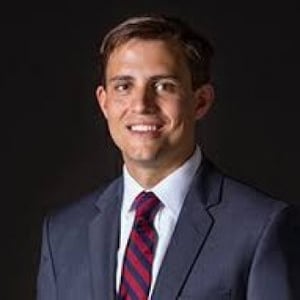
Partner, Wyatt Tarrant & Combs LLP
Thomas Travis is a member of Wyatt Tarrant & Combs' Litigation & Dispute Resolution Service Team. He assists with the representation of a broad range of clients in a variety of cases, including appellate practice, constitutional law, commercial litigation and transactional matters.
He was a clerk for Chief Justice John D. Minton, Jr., Supreme Court of Kentucky, and a legal fellow for United States Senator Rand Paul.
Attorney General, Commonwealth of Kentucky
Daniel Cameron is the CEO of the 1792 Exchange, working to protect free exercise, free speech, and free enterprise and help American corporations return to the winning formula of producing great products and services, not pushing agendas.
Daniel previously served as the 51st Attorney General of Kentucky from 2019 to 2023. He was the first black American elected to a standalone statewide office in Kentucky’s history. Daniel then went on to win the Republican nomination for governor of Kentucky.
He grew up in Elizabethtown, Kentucky and attended the University of Louisville, where he played football for the Cardinals. After graduating from Brandeis School of Law, he clerked for a federal judge. Daniel later served as legal counsel to United States Senator Mitch McConnell.
Daniel and his wife are blessed with two sons: Theodore and Bennett. They reside in Louisville, Kentucky, a place they proudly call home.
Partner, Wyatt Tarrant & Combs LLP
Thomas Travis is a member of Wyatt Tarrant & Combs' Litigation & Dispute Resolution Service Team. He assists with the representation of a broad range of clients in a variety of cases, including appellate practice, constitutional law, commercial litigation and transactional matters.
He was a clerk for Chief Justice John D. Minton, Jr., Supreme Court of Kentucky, and a legal fellow for United States Senator Rand Paul.

Panel V: The Conflict Between Text and Precedent in Constitutional Adjudication [Archive Collection]
Lea Brilmayer, Charles J. Cooper, Frank H. Easterbrook, Patrick E. Higginbotham, Michael Kinsley, Stephen Reinhardt
1987 National Student Symposium
On April 3-5, 1987, the Federalist Society's Chicago Student Chapter hosted the sixth annual National...
Panel V: The Conflict Between Text and Precedent in Constitutional Adjudication [Archive Collection]
Lea Brilmayer, Charles J. Cooper, Frank H. Easterbrook, Patrick E. Higginbotham, Michael Kinsley, Stephen Reinhardt
1987 National Student Symposium
On April 3-5, 1987, the Federalist Society's Chicago Student Chapter hosted the sixth annual National...
Deep Dive Episode 145 – The True Extent of Executive Power
Saikrishna Prakash, John C. Yoo
Regulatory Transparency Project's Fourth Branch Podcast
On October 20, 2020, the Federalist Society’s Georgetown Law Student Chapter and the Regulatory Transparency...
Necessary & Proper Episode 59: Presidential Power: A Historical Perspective on Today
On November 2, 2020, the Federalist Society's Illinois Student Chapter hosted Logan Beirne for a...
Panel III: Originalist Theories of Constitutional Interpretation [Archive Collection]
Robert William Bennett, Raoul Berger, Douglas H. Ginsburg, Michael W. McConnell, Michael S. Moore
1987 National Student Symposium
On April 3-5, 1987, the Federalist Society's Chicago Student Chapter hosted the sixth annual National...
Panel III: Originalist Theories of Constitutional Interpretation [Archive Collection]
Robert William Bennett, Raoul Berger, Douglas H. Ginsburg, Michael W. McConnell, Michael S. Moore
1987 National Student Symposium
On April 3-5, 1987, the Federalist Society's Chicago Student Chapter hosted the sixth annual National...
Covid-19 & Constitutional Law
Allison Joy Ball, Lesley Bilby, Victor B. Maddox, Douglas McSwain, Hiram Sasser, William Thro
2020 Kentucky Chapters Conference
On October 14-15, the Federalist Society's Kentucky lawyers chapters hosted their annual conference via online...
Covid-19 & Constitutional Law
Allison Joy Ball, Lesley Bilby, Victor B. Maddox, Douglas McSwain, Hiram Sasser, William Thro
2020 Kentucky Chapters Conference
On October 14-15, the Federalist Society's Kentucky lawyers chapters hosted their annual conference via online...
Opening Remarks by Attorney General Daniel Cameron
Daniel Cameron, Thomas E. Travis
2020 Kentucky Chapters Conference
On October 14-15, the Federalist Society's Kentucky lawyers chapters hosted their annual conference via online...
Opening Remarks by Attorney General Daniel Cameron
Daniel Cameron, Thomas E. Travis
2020 Kentucky Chapters Conference
On October 14-15, the Federalist Society's Kentucky lawyers chapters hosted their annual conference via online...