

Laurence A. Tisch Professor of Law and Director, Classical Liberal Institute, New York University School of Law; Director, Classical Liberal Institute, Civitas Institute University of Texas at Austin
Richard A. Epstein is the inaugural Laurence A. Tisch Professor of Law at NYU School of Law. Prior to his joining the faculty, he was a visiting law professor at NYU from 2007 through 2009. He served as the Peter and Kirstin Bedford Senior Fellow at the Hoover Institution from 2000 to 2024. Since 2024 to the present he is a senior lecturer at the Civitas Institute at the University of Texas—Austin. Epstein is also the James Parker Hall Distinguished Service Professor of Law Emeritus and a senior lecturer at the University of Chicago. His initial law school appointment was at the University of Southern California from 1968 to 1972. Epstein received an LL.D., h.c. from the University of Ghent, 2003. He has been a member of the American Academy of Arts and Sciences since 1985 and was a Senior Fellow of the Center for Clinical Medical Ethics at the University of Chicago Division of Biological Sciences, also from 1983. to 2022 He served as editor of the Journal of Legal Studies from 1981 to 1991, and of the Journal of Law and Economics from 1991-2001. From 2001 to 2010 he was a director of the John M. Olin Program in Law and Economics at the University of Chicago.
His newest book, The Myth of Birthright Citizenship: What the Fourteenth Amendment Really Says was published in 2026 (Encounter Books). Prior to that he has published many books including, The Dubious Morality of the Modern Administrative State (Roman & Littlefield 2020).Earlier he published th Classical Liberal Constitution: The Uncertain Quest for Limited Government (Harvard 2014) iHis previous books include Design for Liberty: Private Property, Public Administration and the Rule of Law (Harvard 2011); The Case Against the Employee Free Choice Act (Hoover 2009); Supreme Neglect: How to Revive the Constitutional Protection of Property Rights (Oxford 2008); Antitrust Decrees in Theory and Practice: Why Less is More (AEI 2007); Overdose: How Excessive Government Regulation Stifles Pharmaceutical Innovation (Yale University Press. 2006); How Progressives Rewrote the Constitution (Cato 2006); Cases and Materials on Torts (Aspen Law & Business; 8th ed. 2004); Skepticism and Freedom: A Modern Case for Classical Liberalism (University of Chicago, 2003); Torts (Aspen Law & Business 1999); Principles for a Free Society: Reconciling Individual Liberty with the Common Good (Perseus Books, 1998): Mortal Peril: Our Inalienable Rights to Health Care (Addison-Wesley, 1997); Simple Rules for a Complex World (Harvard, 1995); Bargaining With the State (Princeton, 1993); Forbidden Grounds: The Case Against Employment Discrimination Laws (Harvard , 1992); Takings: Private Property and the Power of Eminent Domain (Harvard, 1985); and Modern Products Liability Law (Greenwood Press, 1980). He has also edited(with Catherine M. Sharkey) Cases and Materials on the Law of Torts (10th edition 2012).
Professor Epstein has written numerous articles on a wide range of legal and interdisciplinary subjects. He has taught courses in administrative law, antitrust law, civil procedure, communications, constitutional law, contracts, corporations, criminal law, employment discrimination law, environmental law, food and drug law health law and policy, legal history, labor law, property, real estate development and finance, jurisprudence, labor law; land use planning, patents, individual, estate and corporate taxation, Roman Law; torts, and workers' compensation.
Professor Epstein also writes a regular column for Civitas Institute, which also sponsors his podcast, The Libertarian with Charles C.W. Cooke, and Law Talk, with Cooke and John Yoo. He also does a podcast with John Batchelor. And appears regularly on the Freedom File with Judge Andrew Napolitano.
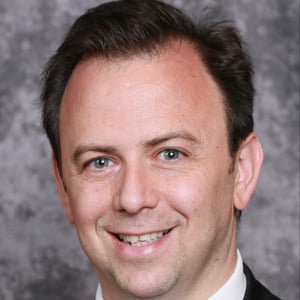
Stevenson Bernard Professor, George Washington University Law School
The Honorable F. Scott Kieff is the Stevenson Bernard Professor at George Washington University Law School and a Visiting Fellow at Stanford University’s Hoover Institution.
He served as Commissioner of the U.S. International Trade Commission from 2013-2017. He also served during the Bush, Obama, and Trump Administrations in the part-time leadership of the national security defense-intelligence community.
He was previously a professor of law and medicine at Washington University in Saint Louis and a Senior Fellow at Hoover. A former law clerk to U.S. Circuit Judge Giles S. Rich, he is a graduate of Penn Law School and MIT, where he studied molecular biology and microeconomics. He was elected to the European Academy of Sciences and Arts in 2012 and the Academia Europaea in 2024.
His private sector work through Kieff Strategies LLC (www.kieffstrategies.com) provides neutral services including mediation and compliance, and expert services including crisis management, advising, and testimony.

Executive Vice President, The Federalist Society
Dean Reuter is Executive Vice President at the Federalist Society for Law and Public Policy Studies. He has served in two federal government agency Offices of the Inspector General, as Counsel to the Inspector General and Deputy Inspector General, responsible for policing the use of federal funds granted and contracted through those agencies. As such, he helped conduct and oversee criminal investigations across the country. He is the principal author of the non-fiction book, The Hidden Nazi: The Untold Story of America's Deal with the Devil, and editor of Liberty’s Nemesis: The Unchecked Expansion of the State and Confronting Terror: 9/11 and the Future of American National Security. He was appointed by the President and served as Vice-Chairman of the Board of Directors of the Corporation for National and Community Service, and recently served as an appointee on the U.S. Commission on Presidential Scholars. He is a graduate of Hood College (BA with Honors) and the University of Maryland School of Law.
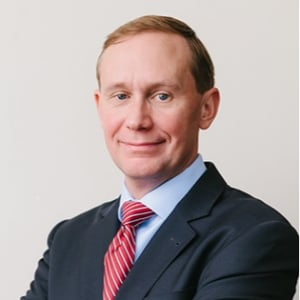
Associate Professor, Boston College Law School
David Olson is an associate professor and the Faculty Director of the Program on Innovation and Entrepreneurship. He teaches patent law, intellectual property law, antitrust law, and various seminars. His research and writing primarily focus on patents, copyrights, antitrust, and incentives for innovation and competition. Since joining BC Law in 2007, he has been recognized for his teaching excellence and contributions. In 2011, he received the Business & Law Society Faculty Award for Achievement in Business & Law. In 2012, he received the Professor Emil Slizewski Award for Faculty Excellence. For one semester in 2015, Olson served as a visiting professor at Pontifical Catholic University, Rio de Janeiro, Brazil, where he conducted research and taught a course on intellectual property.
Olson has published scholarly articles on patent law, copyright law, antitrust, music licensing, and first amendment copyright issues. His writing has been cited in Supreme Court and other legal opinions. He has testified before the U.S. Congress on matters of drug patents, FDA regulation, and antitrust.
The media frequently seeks Olson’s insights and opinions. He has been quoted in the Wall Street Journal, Associated Press, and Reuters, among others. He has appeared as a guest panelist on WBUR’s Radio Boston, WAMU's Kojo Namdi Show, and Public Radio Canada. His op-eds have appeared in the Chicago Tribune, Washington Times, and The Hill.
Olson came to Boston College from Stanford Law School's Center for Internet and Society, where he conducted research on patent law and litigated copyright fair use impact cases. Before entering academia, Olson practiced law as a patent litigator. He clerked for Judge Jerry Smith of the U.S. Court of Appeals for the Fifth Circuit.
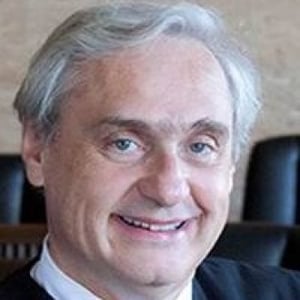
Former Judge, United States Court of Appeals, Ninth Circuit
Judge Kozinski served as a United States Circuit Judge for the Ninth Circuit from November 1985 until December 2017. He served as Chief Judge from 2007 to 2014. He graduated from UCLA, receiving an A.B. degree in 1972, and from UCLA Law School, receiving a J.D. degree in 1975.
Prior to his appointment to the appellate bench, Judge Kozinski served as Chief Judge of the United States Claims Court, 1982-85; Special Counsel, Merit Systems Protection Board, 1981-82; Assistant Counsel, Office of Counsel to the President, 1981; Deputy Legal Counsel, Office of President-Elect Reagan, 1980-81; Attorney, Covington & Burling, 1979-81; Attorney, Forry Golbert Singer & Gelles, 1977-79; Law Clerk to Chief Justice Warren E. Burger, 1976-77; and Law Clerk to Circuit Judge Anthony M. Kennedy, 1975-76.
Judge Kozinski is married to Marcy Jane Tiffany and has three children: Yale, Wyatt and Clayton, and three grandchildren: Quinn, Owen and Anna.

Former President & CEO, The Federalist Society for Law and Public Policy Studies
Eugene B. Meyer, former President and CEO of the Federalist Society, has served as Executive Director, CEO, and/or President of the organization for more than 40 years. He is responsible for shepherding the organization from a small group of law students to a community of 90,000 lawyers, law students, academics, judges, and others interested in the rule of law. The Society now includes a Student Chapter at nearly every ABA-accredited law school in the country and Lawyers Chapters in 220 major cities across the nation. Gene earned his B.A. in history at Yale in 1975 and his M.A. in political science from the London School of Economics in 1976. Gene currently serves on the boards of the U.S. Chess Center, the Holman Foundation, the Sarah Scaife Foundation, and the advisory board of the Adam Smith Society. He holds the title of International Chess Master.
U.S. Court of Appeals, Ninth Circuit
Stephen Roy Reinhardt is a federal appeals judge with the United States Court of Appeals for the Ninth Circuit in San Francisco. He joined the Court in 1980 after being nominated by President Jimmy Carter.
Born in New York City, New York, Reinhardt graduated from Pomona College with his Bachelor's degree in 1951 and later received a Bachelors of Laws degree, LL.B, from Yale Law School in 1954. Reinhardt served in the U.S. Air Force from 1954 to 1956 before becoming a law clerk for the Honorable Luther Youngdahl in the United States District Court for the District of Columbia until 1957. Reinhardt was a private practice attorney in the State of California from 1957 to 1980. Reinhardt was nominated to the United States Court of Appeals for the Ninth Circuit by President Jimmy Carter on November 30, 1979, to a new seat created by 92 Stat. 1629, which was approved by Congress. Reinhardt was confirmed by the U.S. Senate on September 11, 1980 and received commission on September 11, 1980.
Senior Vice President for Legal Studies, Cato Institute
Clark Neily is senior vice president for legal studies at the Cato Institute. His areas of interest include constitutional law, overcriminalization, civil forfeiture, police accountability, and gun rights. Neily is the author of Terms of Engagement: How Our Courts Should Enforce the Constitution’s Promise of Limited Government. His writing has appeared in the Wall Street Journal, Forbes, and National Review Online, as well as various law reviews, including the Harvard Journal of Law and Public Policy, George Mason Law Review, Georgetown Journal of Law and Public Policy, NYU Journal of Law and Liberty, and Texas Review of Law and Politics. Neily is a frequent guest speaker and lecturer for the Federalist Society, Institute for Humane Studies, and American Constitution Society.
Before joining Cato in 2017, Neily was a senior attorney and constitutional litigator at the Institute for Justice and director of the Institute’s Center for Judicial Engagement. He is also an adjunct professor at the University of Texas School of Law, where he teaches constitutional litigation and public-interest law.
Neily served as co-counsel in District of Columbia v. Heller, the historic case in which the Supreme Court held for the first time that the Second Amendment protects an individual right to own a gun for self-defense.
Neily began his legal career as a law clerk to Judge Royce Lamberth on the U.S. District Court for the District of Columbia. After that he spent four years in the trial department of the Dallas-based firm Thompson & Knight. Neily received his undergraduate and law degrees from the University of Texas, where he was Chief Articles Editor of the Texas Law Review.
Executive Vice President, The Federalist Society
Dean Reuter is Executive Vice President at the Federalist Society for Law and Public Policy Studies. He has served in two federal government agency Offices of the Inspector General, as Counsel to the Inspector General and Deputy Inspector General, responsible for policing the use of federal funds granted and contracted through those agencies. As such, he helped conduct and oversee criminal investigations across the country. He is the principal author of the non-fiction book, The Hidden Nazi: The Untold Story of America's Deal with the Devil, and editor of Liberty’s Nemesis: The Unchecked Expansion of the State and Confronting Terror: 9/11 and the Future of American National Security. He was appointed by the President and served as Vice-Chairman of the Board of Directors of the Corporation for National and Community Service, and recently served as an appointee on the U.S. Commission on Presidential Scholars. He is a graduate of Hood College (BA with Honors) and the University of Maryland School of Law.
Senior Editor, National Review
Historian Richard Brookhiser is a senior editor of National Review, a senior fellow at the National Review Institute, and the author of several books, including Founders’ Son, Right Time, Right Place, George Washington on Leadership, What Would the Founders Do?, Gentleman Revolutionary, Rules of Civility, America’s First Dynasty, Alexander Hamilton, American, Founding Father: Rediscovering George Washington, Way of the WASP, and The Outside Story.
Executive Director and Executive Vice President, American Society of International Law
Elizabeth (Betsy) Andersen is Executive Director and Executive Vice President of the American Society of International Law (ASIL), a position she has held since 2006. Previously she served as the Executive Director of the American Bar Association's Central European and Eurasian Law Initiative (ABA CEELI), and as Executive Director of Human Rights Watch's Europe and Central Asia Division. Earlier in her career, she served as Legal Assistant to Judge Georges Abi-Saab of the International Criminal Tribunal for the former Yugoslavia and as a law clerk to Judge Kimba M. Wood of the U.S. District Court of the Southern District of New York.
Ms. Andersen is a graduate of Yale Law School, the Woodrow Wilson School of Public and International Affairs at Princeton University, and Williams College, from which she received the College’s Bicentennial Medal in 2006. Her area of expertise is international humanitarian, human rights, and refugee law. She serves as co-editor of the ASIL Studies in Transnational Legal Theory Series; as a member of the governing boards of the Washington Foreign Law Society and Friends of the Law Library of Congress; and as a member of the advisory committees of the American University Academy on Human Rights and Humanitarian Law, the International Senior Lawyers Project, and the Journal of International Humanitarian Legal Studies.
Professor of Law and Director, Center for the Middle East and International Law, George Mason University Antonin Scalia Law School
Professor of Law Eugene Kontorovich is one of the world’s preeminent experts on universal jurisdiction and maritime piracy, as well as international law and the Israel-Arab conflict. He is also the Director of Scalia Law School's Center for the Middle East and International Law. Professor Kontorovich joined the Scalia Law School from Northwestern University Pritzker School of Law where he was a Professor of Law from 2011 to 2018 and an Associate Professor from 2007 to 2011. Previously, he was a Visiting Professor at the University of Chicago from 2005 to 2007 and an Assistant Professor at George Mason School of Law from 2003 to 2007.
Professor Kontorovich has published over thirty major scholarly articles and book chapters in leading law reviews and peer-reviewed journals in the United States and Europe, including the American Journal of International Law, International Review of Law & Economics, Stanford Law Review, California Law Review, University of Pennsylvania Law Review, and Virginia Law Review. His scholarship has been cited in leading foreign relations and international law
His expertise is often sought out and quoted by major news organizations such the New York Times, Wall Street Journal, NPR News, The New Yorker, Los Angeles Times, and numerous television and radio programs. Prof. Kontorovich’s popular writings have appeared in the New York Times, Wall Street Journal, Los Angeles Times, POLITICO, Commentary, Haaretz, and numerous other leading publications. He is also a regular contributor to the Washington Post’s Volokh Conspiracy legal blog.
He attended the University of Chicago for college and law school. After law school, he clerked for Judge Richard Posner on the United States Court of Appeals for the Seventh Circuit. He has been honored with a fellowship at the Institute for Advanced Study in Princeton, in 2011-12, and with the Federalist Society’s prestigious Bator Award, given annually to a young scholar (under 40), for outstanding scholarship and teaching.
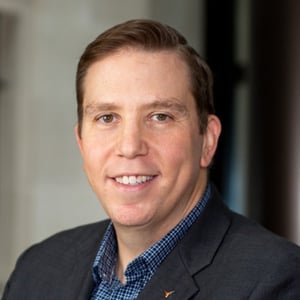
Agnes Williams Sesquicentennial Professor of Federal Courts, Georgetown Law
Stephen I. Vladeck is a professor of law at the Georgetown University Law Center, and is a nationally recognized expert on the federal courts; the Supreme Court; national security law; and military justice.
Vladeck is author of the New York Times bestselling book, “The Shadow Docket: How the Supreme Court Uses Stealth Rulings to Amass Power and Undermine the Republic,” which won the 2023 Writers’ League of Texas Book Award for Non-Fiction and was a finalist for the 2024 ABA Silver Gavel Award for Media and the Arts. Vladeck is also a highly regarded appellate advocate, having argued three cases before the U.S. Supreme Court and over a dozen before various lower federal civilian and military courts. He has received numerous awards for his influential and widely cited legal scholarship, his prolific popular writing, his teaching, and his service to the legal profession—including the 2024 University of Texas President’s Research Impact Award and his selection by the Order of the Coif to serve as its Distinguished Visiting Professor for 2025.
Vladeck is CNN’s Supreme Court analyst and editor and author of “One First,” a popular weekly newsletter about the Supreme Court. Together with Bobby Chesney, Vladeck co-hosts the popular and award-winning “National Security Law Podcast.” He is also a co-author of Aspen Publishers’ leading national security law and counterterrorism law casebooks. And he is a member of the Board of Trustees of EarthJustice—the nation’s premier nonprofit public interest environmental law organization.
Vladeck graduated from Yale Law School in 2004—where he was executive editor of the Yale Law Journal and won the Harlan Fiske Stone Prize for outstanding moot court oralist and shared the Potter Stewart Prize for best moot court team performance. After law school, he clerked for the Honorable Marsha S. Berzon on the U.S. Court of Appeals for the Ninth Circuit and the Honorable Rosemary Barkett on the U.S. Court of Appeals for the Eleventh Circuit. He earned a B.A. summa cum laude with Highest Distinction in History and Mathematics from Amherst College in 2001—where he wrote his senior thesis on “Leipzig’s Shadow: The War Crimes Trials of the First World War and Their Implications from Nuremberg to the Present.” A native New Yorker and hopeless Mets fan, Vladeck lives in the District with his wife, Karen (Founder and Managing Partner of Risepoint Search Partners); their daughters, Madeleine and Sydney; and their eleven-year-old pug, Roxanna.
Executive Director and Executive Vice President, American Society of International Law
Elizabeth (Betsy) Andersen is Executive Director and Executive Vice President of the American Society of International Law (ASIL), a position she has held since 2006. Previously she served as the Executive Director of the American Bar Association's Central European and Eurasian Law Initiative (ABA CEELI), and as Executive Director of Human Rights Watch's Europe and Central Asia Division. Earlier in her career, she served as Legal Assistant to Judge Georges Abi-Saab of the International Criminal Tribunal for the former Yugoslavia and as a law clerk to Judge Kimba M. Wood of the U.S. District Court of the Southern District of New York.
Ms. Andersen is a graduate of Yale Law School, the Woodrow Wilson School of Public and International Affairs at Princeton University, and Williams College, from which she received the College’s Bicentennial Medal in 2006. Her area of expertise is international humanitarian, human rights, and refugee law. She serves as co-editor of the ASIL Studies in Transnational Legal Theory Series; as a member of the governing boards of the Washington Foreign Law Society and Friends of the Law Library of Congress; and as a member of the advisory committees of the American University Academy on Human Rights and Humanitarian Law, the International Senior Lawyers Project, and the Journal of International Humanitarian Legal Studies.
Professor of Law and Director, Center for the Middle East and International Law, George Mason University Antonin Scalia Law School
Professor of Law Eugene Kontorovich is one of the world’s preeminent experts on universal jurisdiction and maritime piracy, as well as international law and the Israel-Arab conflict. He is also the Director of Scalia Law School's Center for the Middle East and International Law. Professor Kontorovich joined the Scalia Law School from Northwestern University Pritzker School of Law where he was a Professor of Law from 2011 to 2018 and an Associate Professor from 2007 to 2011. Previously, he was a Visiting Professor at the University of Chicago from 2005 to 2007 and an Assistant Professor at George Mason School of Law from 2003 to 2007.
Professor Kontorovich has published over thirty major scholarly articles and book chapters in leading law reviews and peer-reviewed journals in the United States and Europe, including the American Journal of International Law, International Review of Law & Economics, Stanford Law Review, California Law Review, University of Pennsylvania Law Review, and Virginia Law Review. His scholarship has been cited in leading foreign relations and international law
His expertise is often sought out and quoted by major news organizations such the New York Times, Wall Street Journal, NPR News, The New Yorker, Los Angeles Times, and numerous television and radio programs. Prof. Kontorovich’s popular writings have appeared in the New York Times, Wall Street Journal, Los Angeles Times, POLITICO, Commentary, Haaretz, and numerous other leading publications. He is also a regular contributor to the Washington Post’s Volokh Conspiracy legal blog.
He attended the University of Chicago for college and law school. After law school, he clerked for Judge Richard Posner on the United States Court of Appeals for the Seventh Circuit. He has been honored with a fellowship at the Institute for Advanced Study in Princeton, in 2011-12, and with the Federalist Society’s prestigious Bator Award, given annually to a young scholar (under 40), for outstanding scholarship and teaching.
Agnes Williams Sesquicentennial Professor of Federal Courts, Georgetown Law
Stephen I. Vladeck is a professor of law at the Georgetown University Law Center, and is a nationally recognized expert on the federal courts; the Supreme Court; national security law; and military justice.
Vladeck is author of the New York Times bestselling book, “The Shadow Docket: How the Supreme Court Uses Stealth Rulings to Amass Power and Undermine the Republic,” which won the 2023 Writers’ League of Texas Book Award for Non-Fiction and was a finalist for the 2024 ABA Silver Gavel Award for Media and the Arts. Vladeck is also a highly regarded appellate advocate, having argued three cases before the U.S. Supreme Court and over a dozen before various lower federal civilian and military courts. He has received numerous awards for his influential and widely cited legal scholarship, his prolific popular writing, his teaching, and his service to the legal profession—including the 2024 University of Texas President’s Research Impact Award and his selection by the Order of the Coif to serve as its Distinguished Visiting Professor for 2025.
Vladeck is CNN’s Supreme Court analyst and editor and author of “One First,” a popular weekly newsletter about the Supreme Court. Together with Bobby Chesney, Vladeck co-hosts the popular and award-winning “National Security Law Podcast.” He is also a co-author of Aspen Publishers’ leading national security law and counterterrorism law casebooks. And he is a member of the Board of Trustees of EarthJustice—the nation’s premier nonprofit public interest environmental law organization.
Vladeck graduated from Yale Law School in 2004—where he was executive editor of the Yale Law Journal and won the Harlan Fiske Stone Prize for outstanding moot court oralist and shared the Potter Stewart Prize for best moot court team performance. After law school, he clerked for the Honorable Marsha S. Berzon on the U.S. Court of Appeals for the Ninth Circuit and the Honorable Rosemary Barkett on the U.S. Court of Appeals for the Eleventh Circuit. He earned a B.A. summa cum laude with Highest Distinction in History and Mathematics from Amherst College in 2001—where he wrote his senior thesis on “Leipzig’s Shadow: The War Crimes Trials of the First World War and Their Implications from Nuremberg to the Present.” A native New Yorker and hopeless Mets fan, Vladeck lives in the District with his wife, Karen (Founder and Managing Partner of Risepoint Search Partners); their daughters, Madeleine and Sydney; and their eleven-year-old pug, Roxanna.
Senior Editor, National Review
Historian Richard Brookhiser is a senior editor of National Review, a senior fellow at the National Review Institute, and the author of several books, including Founders’ Son, Right Time, Right Place, George Washington on Leadership, What Would the Founders Do?, Gentleman Revolutionary, Rules of Civility, America’s First Dynasty, Alexander Hamilton, American, Founding Father: Rediscovering George Washington, Way of the WASP, and The Outside Story.
Former President & CEO, The Federalist Society for Law and Public Policy Studies
Eugene B. Meyer, former President and CEO of the Federalist Society, has served as Executive Director, CEO, and/or President of the organization for more than 40 years. He is responsible for shepherding the organization from a small group of law students to a community of 90,000 lawyers, law students, academics, judges, and others interested in the rule of law. The Society now includes a Student Chapter at nearly every ABA-accredited law school in the country and Lawyers Chapters in 220 major cities across the nation. Gene earned his B.A. in history at Yale in 1975 and his M.A. in political science from the London School of Economics in 1976. Gene currently serves on the boards of the U.S. Chess Center, the Holman Foundation, the Sarah Scaife Foundation, and the advisory board of the Adam Smith Society. He holds the title of International Chess Master.
Senior Editor, National Review
Historian Richard Brookhiser is a senior editor of National Review, a senior fellow at the National Review Institute, and the author of several books, including Founders’ Son, Right Time, Right Place, George Washington on Leadership, What Would the Founders Do?, Gentleman Revolutionary, Rules of Civility, America’s First Dynasty, Alexander Hamilton, American, Founding Father: Rediscovering George Washington, Way of the WASP, and The Outside Story.
Former President & CEO, The Federalist Society for Law and Public Policy Studies
Eugene B. Meyer, former President and CEO of the Federalist Society, has served as Executive Director, CEO, and/or President of the organization for more than 40 years. He is responsible for shepherding the organization from a small group of law students to a community of 90,000 lawyers, law students, academics, judges, and others interested in the rule of law. The Society now includes a Student Chapter at nearly every ABA-accredited law school in the country and Lawyers Chapters in 220 major cities across the nation. Gene earned his B.A. in history at Yale in 1975 and his M.A. in political science from the London School of Economics in 1976. Gene currently serves on the boards of the U.S. Chess Center, the Holman Foundation, the Sarah Scaife Foundation, and the advisory board of the Adam Smith Society. He holds the title of International Chess Master.

U.S. Court of Appeals, Seventh Circuit
Frank H. Easterbrook is a judge of the United States Court of Appeals for the Seventh Circuit and a Senior Lecturer at the Law School of the University of Chicago. He was Chief Judge from 2006–2013. Before joining the court in 1985, he was the Lee andBrena Freeman Professor of Law at the University of Chicago, where he taught and wrote in antitrust, securities, corporate law, jurisprudence, and criminal procedure. He has published The Economic Structure of Corporate Law (with Daniel R. Fischel) and about 100 scholarly articles. He served as Co-Editor of the Journal of Law and Economics from 1982 to 1991 and as a member of the Judicial Conference’s Standing Committee on Rules of Practice and Procedure from 1991 to 1997. Before joining the faculty of the Law School in 1979, Judge Easterbrook was Deputy Solicitor General of the United States. He holds degrees from Swarthmore College (B.A. with high honors, 1970) and the University of Chicago (J.D. cum laude, 1973), and is a member of the American Academy of Arts and Sciences, the American Law Institute, the Mont Pelerin Society, Phi Beta Kappa, and the Order of the Coif.
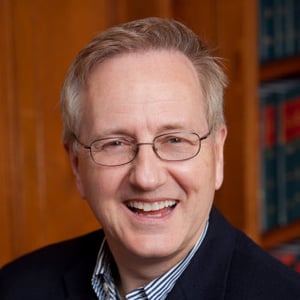
Alexander M. Bickel Professor of Public Law, Yale Law School
Degrees from Davidson College, B.A. summa cum laude, 1973; Harvard University, M.A., 1974; Yale Law School, J.D, 1978. Clerked for Edward Weinfeld, 1978-79; Attorney at Shea & Gardner, 1979-82; Law Professor since 1982, tenured at Georgetown and Yale, visiting professor at Stanford, NYU, Toronto, Harvard, Columbia, Penn, Fordham, Vanderbilt. Author of casebooks on legislation and sexuality, gender and law, as well as monographs on statutory interpretation and the rights of sexual and gender minorities. Author of dozens of articles, by one empirical count a top ten most cited law professors.
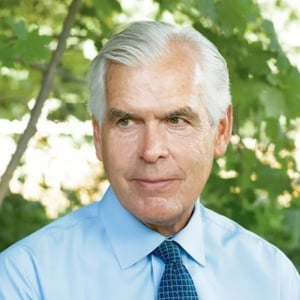
Senior Counsel, Covington & Burling LLP and Founder & Chair, Common Good
Philip K. Howard is a well-known leader of government and legal reform in America. He is Chair of Common Good and a bestselling author, and has advised both parties on needed reforms. In his new book, Not Accountable (Rodin Books, 2023), he argues that public employee unions undermine democratic governance and should be unconstitutional.
Philip is the author of the bestseller The Death of Common Sense (Random House, 1995), The Collapse of the Common Good (Ballantine Books, 2002), Life Without Lawyers (W.W. Norton, 2009), The Rule of Nobody (W.W. Norton, 2014), and Try Common Sense (W.W. Norton, 2019). His commentaries are published frequently in major media outlets.
In 2002, Philip formed Common Good, a nonpartisan coalition dedicated to simplifying laws so that Americans can use common sense in daily choices. His 2010 TED Talk has been viewed by more than 750,000 people. His 2015 report, “Two Years, Not Ten Years,” exposed the economic and environmental costs of delayed infrastructure approvals, and its proposals have since been incorporated into federal law. Philip has appeared often on television and radio, including several times on Jon Stewart’s “The Daily Show.”
The son of a minister, Philip got his start working summers at the Oak Ridge National Laboratory for Nobel laureate Eugene Wigner. He has been active in public affairs his entire adult life. He is Senior Counsel at the law firm Covington & Burling, LLP. A graduate of Yale College and the University of Virginia Law School, Philip lives in Manhattan with his wife Alexandra. They have four children.
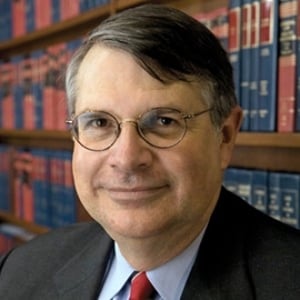
Charles Evans Hughes Professor of Law, Columbia Law School
THOMAS W. MERRILL is the Charles Evans Hughes Professor of Law at Columbia Law School. He previously taught at Northwestern University School of Law and Yale Law School. He has undergraduate degrees from Grinnell College and Oxford University, where he studied as a Rhodes Scholar, and a law degree from the University of Chicago. He clerked on the D.C. Circuit (for Chief Judge David Bazelon) and the U.S. Supreme Court (for Justice Harry Blackmun). From 1987-1990 he served as Deputy Solicitor General, U.S. Department of Justice. Professor Merrill’s writings related to property include Property: Principles and Policies (Foundation Press Second Edition, 2012) (with Henry E. Smith); Property: The Oxford Introductions to U.S. Law (Oxford U. Press, 2010); Property: Takings (Foundation Press, 2002)(with David Dana); and numerous articles, including “The Economics of Public Use” (Cornell Law Review 1986); “The Landscape of Constitutional Property” (Virginia Law Review 2000); and “The Character of the Governmental Action” (Vermont Law Review 2012). He is a member of the American Academy of Arts and Sciences.

Chief Judge, United States Court of Appeals, Sixth Circuit
JEFFREY S. SUTTON is the Chief Judge of the United States Court of Appeals for the Sixth Circuit. He has served as Chair of the Federal Judicial Conference Committee on Rules of Practice and Procedure, Chair of the Advisory Committee on Appellate Rules, and Chair of the Supreme Court Fellows Commission. He currently serves as Chair of the Executive Committee of the Judicial Conference of the United States. Since 1993, Chief Judge Sutton has been an adjunct professor at The Ohio State University College of Law, where he teaches seminars on State Constitutional Law, the United States Supreme Court, and Appellate Advocacy. He also teaches a class on State Constitutional Law at Harvard Law School. Among other publications, he is the author of Who Decides? States as Laboratories of Constitutional Experimentation and 51 Imperfect Solutions: States and the Making of American Constitutional Law. He is the co-author of a casebook, State Constitutional Law: The Modern Experience, as well as The Law of Judicial Precedent. He is also the co-editor of The Essential Scalia: On the Constitution, the Courts, and the Rule of Law. In 2006, Chief Judge Sutton was elected to the American Law Institute, and in 2017 he was elected to its Council.
U.S. Court of Appeals, Seventh Circuit
Frank H. Easterbrook is a judge of the United States Court of Appeals for the Seventh Circuit and a Senior Lecturer at the Law School of the University of Chicago. He was Chief Judge from 2006–2013. Before joining the court in 1985, he was the Lee andBrena Freeman Professor of Law at the University of Chicago, where he taught and wrote in antitrust, securities, corporate law, jurisprudence, and criminal procedure. He has published The Economic Structure of Corporate Law (with Daniel R. Fischel) and about 100 scholarly articles. He served as Co-Editor of the Journal of Law and Economics from 1982 to 1991 and as a member of the Judicial Conference’s Standing Committee on Rules of Practice and Procedure from 1991 to 1997. Before joining the faculty of the Law School in 1979, Judge Easterbrook was Deputy Solicitor General of the United States. He holds degrees from Swarthmore College (B.A. with high honors, 1970) and the University of Chicago (J.D. cum laude, 1973), and is a member of the American Academy of Arts and Sciences, the American Law Institute, the Mont Pelerin Society, Phi Beta Kappa, and the Order of the Coif.
Alexander M. Bickel Professor of Public Law, Yale Law School
Degrees from Davidson College, B.A. summa cum laude, 1973; Harvard University, M.A., 1974; Yale Law School, J.D, 1978. Clerked for Edward Weinfeld, 1978-79; Attorney at Shea & Gardner, 1979-82; Law Professor since 1982, tenured at Georgetown and Yale, visiting professor at Stanford, NYU, Toronto, Harvard, Columbia, Penn, Fordham, Vanderbilt. Author of casebooks on legislation and sexuality, gender and law, as well as monographs on statutory interpretation and the rights of sexual and gender minorities. Author of dozens of articles, by one empirical count a top ten most cited law professors.
Senior Counsel, Covington & Burling LLP and Founder & Chair, Common Good
Philip K. Howard is a well-known leader of government and legal reform in America. He is Chair of Common Good and a bestselling author, and has advised both parties on needed reforms. In his new book, Not Accountable (Rodin Books, 2023), he argues that public employee unions undermine democratic governance and should be unconstitutional.
Philip is the author of the bestseller The Death of Common Sense (Random House, 1995), The Collapse of the Common Good (Ballantine Books, 2002), Life Without Lawyers (W.W. Norton, 2009), The Rule of Nobody (W.W. Norton, 2014), and Try Common Sense (W.W. Norton, 2019). His commentaries are published frequently in major media outlets.
In 2002, Philip formed Common Good, a nonpartisan coalition dedicated to simplifying laws so that Americans can use common sense in daily choices. His 2010 TED Talk has been viewed by more than 750,000 people. His 2015 report, “Two Years, Not Ten Years,” exposed the economic and environmental costs of delayed infrastructure approvals, and its proposals have since been incorporated into federal law. Philip has appeared often on television and radio, including several times on Jon Stewart’s “The Daily Show.”
The son of a minister, Philip got his start working summers at the Oak Ridge National Laboratory for Nobel laureate Eugene Wigner. He has been active in public affairs his entire adult life. He is Senior Counsel at the law firm Covington & Burling, LLP. A graduate of Yale College and the University of Virginia Law School, Philip lives in Manhattan with his wife Alexandra. They have four children.
Charles Evans Hughes Professor of Law, Columbia Law School
THOMAS W. MERRILL is the Charles Evans Hughes Professor of Law at Columbia Law School. He previously taught at Northwestern University School of Law and Yale Law School. He has undergraduate degrees from Grinnell College and Oxford University, where he studied as a Rhodes Scholar, and a law degree from the University of Chicago. He clerked on the D.C. Circuit (for Chief Judge David Bazelon) and the U.S. Supreme Court (for Justice Harry Blackmun). From 1987-1990 he served as Deputy Solicitor General, U.S. Department of Justice. Professor Merrill’s writings related to property include Property: Principles and Policies (Foundation Press Second Edition, 2012) (with Henry E. Smith); Property: The Oxford Introductions to U.S. Law (Oxford U. Press, 2010); Property: Takings (Foundation Press, 2002)(with David Dana); and numerous articles, including “The Economics of Public Use” (Cornell Law Review 1986); “The Landscape of Constitutional Property” (Virginia Law Review 2000); and “The Character of the Governmental Action” (Vermont Law Review 2012). He is a member of the American Academy of Arts and Sciences.
Chief Judge, United States Court of Appeals, Sixth Circuit
JEFFREY S. SUTTON is the Chief Judge of the United States Court of Appeals for the Sixth Circuit. He has served as Chair of the Federal Judicial Conference Committee on Rules of Practice and Procedure, Chair of the Advisory Committee on Appellate Rules, and Chair of the Supreme Court Fellows Commission. He currently serves as Chair of the Executive Committee of the Judicial Conference of the United States. Since 1993, Chief Judge Sutton has been an adjunct professor at The Ohio State University College of Law, where he teaches seminars on State Constitutional Law, the United States Supreme Court, and Appellate Advocacy. He also teaches a class on State Constitutional Law at Harvard Law School. Among other publications, he is the author of Who Decides? States as Laboratories of Constitutional Experimentation and 51 Imperfect Solutions: States and the Making of American Constitutional Law. He is the co-author of a casebook, State Constitutional Law: The Modern Experience, as well as The Law of Judicial Precedent. He is also the co-editor of The Essential Scalia: On the Constitution, the Courts, and the Rule of Law. In 2006, Chief Judge Sutton was elected to the American Law Institute, and in 2017 he was elected to its Council.

Will Americans Continue to Invent?
Richard A. Epstein, F. Scott Kieff, Dean Reuter, David S. Olson
Intellectual Property Practice Group Podcast
United States patent law has traditionally authorized the grant of patent rights to the first...
A Conversation Between Judge Kozinski and Judge Reinhardt
Alex Kozinski, Eugene B. Meyer, Stephen Reinhardt
Sixth Annual Western Conference
This discussion between Judge Alex Kozinski and Judge Stephen Reinhardt was featured at the Sixth...
Speaking Freely in Business
Clark Neily, Dean Reuter
Free Speech & Election Law Practice Group Podcast
The United States Supreme Court is about to make a decision whether to grant cert...
James Madison: Father of the Constitution, Father of Politics
Richard Brookhiser
Long Island Lawyers Chapter
Featuring: Mr. Richard Brookhiser, Author of James Madison and Columnist for American History and...
Luncheon Debate: The Alien Tort Statute, International Law, and the Judiciary
Elizabeth Andersen, Eugene Kontorovich, Stephen I. Vladeck
14th Annual Faculty Conference
The Federalist Society's Facutly Division hosted this panel on "The Alien Tort Statute, International Law,...
Luncheon Debate: The Alien Tort Statute, International Law, and the Judiciary
Elizabeth Andersen, Eugene Kontorovich, Stephen I. Vladeck
14th Annual Faculty Conference
The Federalist Society's Facutly Division hosted this panel on "The Alien Tort Statute, International Law,...
Address by Richard Brookhiser on James Madison
Richard Brookhiser, Eugene B. Meyer
2011 National Lawyers Convention
On November 12, 2011, Mr. Richard Brookhiser, Senior Editor of National Review, delivered an address...
Address by Richard Brookhiser on James Madison
Richard Brookhiser, Eugene B. Meyer
2011 National Lawyers Convention
On November 12, 2011, Mr. Richard Brookhiser, Senior Editor of National Review, delivered an address...
Showcase Panel IV: A Federal Sunset Law
Frank H. Easterbrook, William N. Eskridge, Philip K. Howard, Thomas W. Merrill, Jeffrey S. Sutton
2011 National Lawyers Convention
In the years since the New Deal and the Great Society, a huge number of...
Showcase Panel IV: A Federal Sunset Law
Frank H. Easterbrook, William N. Eskridge, Philip K. Howard, Thomas W. Merrill, Jeffrey S. Sutton
2011 National Lawyers Convention
In the years since the New Deal and the Great Society, a huge number of...