
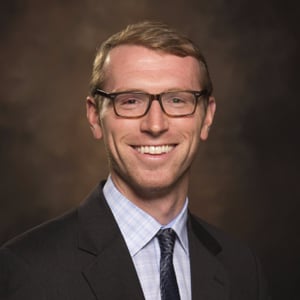
Attorney, Institute for Justice
Greg Reed is an attorney with the Institute for Justice. He joined IJ in 2013 and litigates cases promoting economic liberty and educational choice.
Greg is representing two St. Louis-based African-style hair braiders before the Eighth Circuit Court of Appeals in a challenge to an onerous licensing regime. Greg is also representing the Archdiocese of Newark in a challenge to a blatantly protectionist law that prevents religious cemeteries from providing headstones to its parishioners. Greg is currently the lead attorney in a case challenging Baltimore’s arbitrary, anticompetitive prohibition on mobile vendors operating within 300 feet of brick-and-mortar business establishments.
Prior to joining IJ, Greg was the research assistant to nationally syndicated columnist George F. Will. Greg received his law degree from American University Washington College of Law in 2013. Greg graduated from Haverford College in 2006 with a Bachelor of Arts degree in Political Science.
Greg is a member of the Maryland bar.
Founder, Bunch O Balloons
Josh Malone quit his corporate job in 2006 to take his shot at the American (Inventor’s) Dream. Eight years later, savings depleted and orthodontics and college unfunded, he took one last swing before trudging back to the corporate world. And hit the homerun with Bunch O Balloons. His solution to the 63 year old problem of filling and tying water balloons instantly became the number one selling spring/summer toy. It was just as quickly knocked off resulting in a patent litigation now totaling 6 patents, 5 patent suits, 5 PTAB petitions/trials, 4 preliminary injunctions, and 8 appeals at the Federal Circuit. He is currently a Fellow with US Inventor working to restore the patent system.

Associate Dean for Academic Affairs, Austin E. Owen Research Scholar & Professor of Law, The University of Richmond School of Law
Dean Kristen Jakobsen Osenga teaches and writes in the areas of patent law, antitrust, and legislation and regulation. Some of her recent scholarship focuses on standard development organizations, patent eligible subject matter, patent licensing firms, litigation and remedies for patent infringement, and patent law reform. She has written numerous law review articles on these and other topics, as well as book chapters and op eds on various aspects of patent law. Additionally, she has spoken on these issues at many academic conferences and bar events. Dean Osenga is Chief Policy Counselor for the Inventors Defense Alliance, as well as an active member of the Federal Circuit Bar Association and the American Intellectual Property Law Association.
Dean Osenga received a B.S. degree in Biomedical Engineering from the University of Iowa, an M.S. degree in Electrical Engineering from Southern Illinois University – Carbondale, and a J.D. from the University of Illinois College of Law, where she graduated magna cum laude. After law school, she practiced at the law firm of Finnegan, Henderson, Farabow, Garrett, & Dunner LLP, (now Finnegan) where she did patent prosecution and litigation. She then clerked for the Judge Richard Linn of the U.S. Court of Appeals for the Federal Circuit. After clerking, she entered academia, teaching first at Chicago-Kent College of Law and then at the University of Richmond, where she has been since 2006. She has also been a Visiting Professor at Emory University School of Law and at William & Mary School of Law.

Partner, Antitrust and Competition, Wilson Sonsini Goodrich & Rosati
Maureen Ohlhausen is a partner in the Washington, D.C., office of Wilson Sonsini Goodrich & Rosati, where she advises industry-leading clients on complex antitrust and litigation matters, with a focus on high-profile cases. Sought after for her depth of experience on antitrust and Federal Trade Commission (FTC)-related issues, Maureen is known for her relationships with officials in the U.S. and abroad.
After finishing law school and clerking at the U.S. Court of Appeals for the D.C. Circuit, Maureen joined the FTC in 1997. She held a series of roles at the agency over the next 12 years, rising to the position of Director of the FTC Office of Policy Planning, where she led the agency’s work on e-commerce and headed the FTC’s Internet Access Task Force, which produced an influential report analyzing competition and consumer protection legal issues in the broadband and internet sectors. She then went into private practice at a leading telecommunications law firm, where she headed the FTC practice group.
In 2012, Maureen was confirmed by the Senate as a Commissioner of the FTC and was appointed Acting Chairman in January 2017, a role she held until May 2018. As Acting Chairman, Maureen directed all aspects of the agency’s antitrust work, including merger review, conduct enforcement, and all consumer protection enforcement, with an emphasis on privacy and technology issues. Under her leadership, the FTC won several influential merger challenges in court and reached a number of key digital privacy settlements.
To date, Maureen is the only FTC Commissioner to have received the Robert Pitofsky Lifetime Achievement Award in recognition of her contributions to the FTC.
Following the end of her term at the FTC, and immediately prior to joining Wilson Sonsini, Maureen was chair of the global antitrust and competition practice at Baker Botts, based in that firm’s Washington, D.C., office.
A recognized thought leader, Maureen is a frequent author and speaker, and is often quoted by leading print and broadcast media on antitrust, FTC, and privacy and data security matters. She has published dozens of articles on antitrust, privacy, intellectual property, regulation, FTC litigation, telecommunications, and international law issues in prestigious publications. During her tenure at the FTC and in private practice, she testified more than two dozen times before Congress, including before the Senate Commerce Committee and the House Energy and Commerce Antitrust Sub-Committee. She also testified before the Antitrust Modernization Commission.
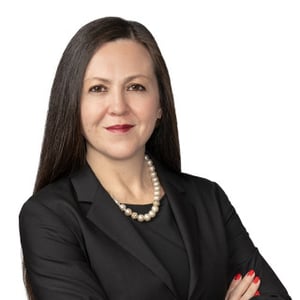
Partner, Axinn, Veltrop & Harkrider LLP
Koren Wong-Ervin is a recognized thought leader on competition issues who has testified before Congress on domestic and international issues in antitrust policy. She has more than eighteen years of experience in government, private practice, and as in-house counsel, including representing defendants and plaintiffs in high-stakes litigations and representing companies in domestic and foreign investigations. While at the Federal Trade Commission (FTC), Koren served as an Attorney Advisor to Commissioner Joshua Wright and Counsel for Intellectual Property & International Antitrust.
The combination of Koren's experience representing defendants—along with her experience at the FTC and as a former plaintiffs class action attorney—gives her insights into the thinking on both sides of cases, including complex multi-district litigations, allowing her to develop both effective offensive and defensive strategies. On top of this, her in-house experience as the Director of Antitrust Litigation & Policy at a major technology company gives her a first-hand understanding of how companies work and unique insight into the needs of clients. Koren also has a deep understanding of economics, as evidenced by the fact that she has trained over 500 foreign judges and enforcers on a variety of economic topics.
Koren’s scholarship has been cited by courts and the Department of Justice. She has authored over sixty articles, including on vertical mergers and restraints, acquisitions of potential competitors, consummated mergers, multisided platforms, the intersection of antitrust and intellectual property, incremental innovations or “product hopping,” optimal penalties, extraterritoriality, methodologies for calculating patent infringement damages, and international due process and convergence. She has spoken at over 200 domestic and international events.
Senior Counsel, Crowell & Moring LLP
Lisa Kimmel is a senior counsel in Crowell & Moring's Antitrust Group. She resides in the firm's Washington, D.C. office. Lisa's practice covers merger and civil nonmerger antitrust investigations and antitrust counseling. Lisa also advocates for clients on competition policy matters before federal and state antitrust agencies, focusing in particular on the technology and digital commerce sectors.
Lisa joined Crowell & Moring in 2015 from the Federal Trade Commission (FTC), where she worked for nearly five years as an attorney advisor on antitrust and competition policy matters for Commissioner and later, Chairwoman, Edith Ramirez. During her time at the FTC, Lisa advised the chairwoman on antitrust enforcement and policy matters across a broad range of sectors, and was her lead advisor on antitrust enforcement and competition policy matters in the technology sector, including matters related to industry standards and the acquisition or assertion of intellectual property rights. Before joining the FTC, Lisa practiced with the antitrust group at an AmLaw 100 firm, where she worked in the firm's San Francisco and Washington, D.C. offices.
Lisa’s recent private practice experience includes:
Lisa earned her J.D. and a Ph.D. in economics from the University of California, Berkeley. She is an active member of the ABA Antitrust Section, where she is vice-chair of the Media & Technology Committee, past editor of the Unilateral Conduct Committee newsletter, and co-editor of a forthcoming revision to the Handbook on Antitrust Aspects of Standard Setting. Lisa is a member of the MLex Antitrust Advisory Board and speaks and writes regularly on antitrust issues involving the technology sector and intellectual property rights.
Admitted to practice: California, District of Columbia
Senior Assistant Attorney General, Office of the Attorney General of the Commonwealth of Virginia
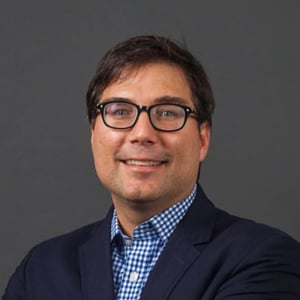
Associate Professor of Law and Director, Program on Economics & Privacy, Antonin Scalia Law School, George Mason University
Associate Professor of Law James C. Cooper brings over a decade of public and private sector experience to his research and teaching. He served as Deputy and Acting Director of the Federal Trade Commission’s Office of Policy Planning, Advisor to Federal Trade Commissioner William Kovacic, and an associate in the antitrust group of Crowell and Moring, LLP. His research on vertical restraints, price discrimination, behavioral economics and antitrust, and privacy policy have appeared in top journals and are widely cited.
Professor Cooper has a BA from the University of South Carolina, received his PhD in economics from Emory University, and his law degree (magna cum laude) from Antonin Scalia Law School, George Mason University, where he was a Levy Fellow and a member of the George Mason Law Review.
He teaches Economics for Lawyers, Advanced Seminar on Law & Economics, and Digital Information Policy Seminar.
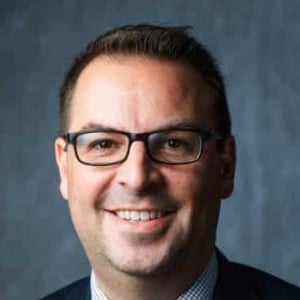
Associate Professor of Politics, Hillsdale College
Higher education is one of the few remaining environments where human beings can be at leisure to read, think, and study. Hillsdale College is one of the few remaining places in higher education where students are actively encouraged and required to engage in those activities. This opportunity to be at leisure to think about the most fundamental and pressing questions of modern life is precious and transformative.
As a first-year undergraduate at a liberal arts college, my own life was changed over several evenings of reading in the library about the history of the French Revolution. It was in that moment that I realized the importance of the perennial and perplexing questions in which we engage in the liberal arts setting. I switched my major to political science, history, and philosophy, and have never looked back.
In my graduate studies, I focused extensively on political theory, but my current thinking and research are directed to understanding the political institutions that determine how politics works in America. I am especially interested in understanding the modern administrative state, Congress, and political parties. We must grapple with the interaction of these institutions, and how they relate to the basic principles of American constitutionalism, if we want to preserve and restore constitutional government in the United States.
In my teaching, I aim to engage students in a common enterprise, where we think together and discuss fundamental questions. My goal is not to instruct, but to educate students. That requires active and thoughtful engagement rather than passively receiving information. I am blessed to be at a place like Hillsdale where the students are drawn to this model of education and thrive in such an environment.
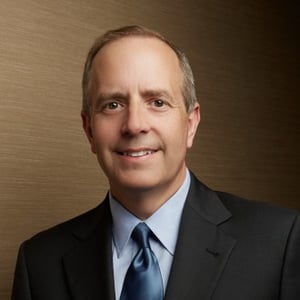
Former CEO, Vascular Solutions
Howard Root is the recently-retired Chief Executive Officer of Vascular Solutions, Inc., a company he founded in 1997, took public in 2000, and grew into a worldwide medical device company that he sold to Teleflex for $1 billion in February 2017. Over the company’s 20 years, Howard led Vascular Solutions in inventing, developing and launching over 100 new medical devices that are used daily to improve the lives of patients suffering from cardiovascular disease. In 2014, Vascular Solutions and Howard were indicted on felony charges alleging the company’s salespeople had promoted off-label an FDA-cleared medical device that made up only 0.1% of the company’s sales and never harmed a single patient. After surviving an arduous legal process, with 121 attorneys charging $25 million in legal fees, in February 2016 the jury returned a verdict of not guilty on all charges, even though the defense didn’t call a single witness to testify in the four-week trial.
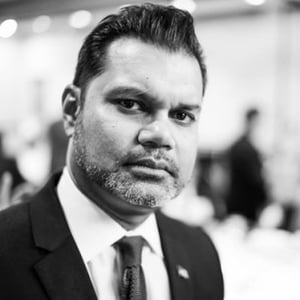
Director of External Affairs, Microsoft
Suhail A. Khan serves as Director of External Affairs at Microsoft Corporation and a Senior Fellow at the Institute for Global Engagement, a Christian religious freedom think tank. Suhail served on Capitol Hill, in the Bush Administration in the White House and at the U.S. Department of Transportation where he was awarded the Secretary's Team Award in 2005 and the Secretary's Gold Medal for Outstanding Achievement in 2007. He was elected to the Board of Directors of the American Conservative Union in 2006 and was awarded the Young Conservative Coalition's Buckley Award in 2010. In combating Holocaust-denial and anti-Semitism, Suhail led delegations of major American and global faith leaders to Europe’s death camps in 2010 and 2013. And in 2014, Suhail was appointed by RNC Chairman Reince Prebus to serve on the Asian Pacific American Advisory Council of the RNC. He was appointed to the Board of Directors of the American Studies Center, the parent foundation for Radio America and the American Veterans Center in 2014, the Board of Advisers for the Children's National Medical Center and the American Jewish Committee's Muslim Jewish Advisory Committee in 2016. Suhail earned a B.A. in political science from the University of California at Berkeley and his J.D. from the University of Iowa.

Professorial Lecturer in Law, The George Washington University
Paul Rosenzweig is an accomplished writer and speaker with a national reputation in cyber security and homeland security. He is the founder of Red Branch Consulting PLLC, a homeland security consulting company. He is also a Senior Advisor to The Chertoff Group. Mr. Rosenzweig formerly served as Deputy Assistant Secretary for Policy in the Department of Homeland Security.
He is a Professorial Lecturer in Law at George Washington University, and a Senior Fellow in the Tech, Law & Security Program at the American University, Washington College of Law. He serves as an advisor to and former member of the American Bar Association Standing Committee on Law and National Security, and a Contributing Editor of the Lawfare blog. He is a member of the ABA Cybersecurity Legal Task Force and of the United States Court of Appeals for the District of Columbia Circuit Advisory Committee on Admissions and Grievances. He serves, as well, as a Hearing Committee Member of the District of Columbia Board of Professional Responsibility. In 2011 he was a Carnegie Fellow in National Security Journalism at the Medill School of Journalism, Northwestern University.
Mr. Rosenzweig is a cum laude graduate of the University of Chicago Law School. He has an M.S. in Chemical Oceanography from the Scripps Institution of Oceanography, University of California at San Diego and a B.A from Haverford College. Following graduation from law school he served as a law clerk to the Honorable R. Lanier Anderson, III of the United States Court of Appeals for the Eleventh Circuit.
He is the author of Cyber Warfare: How Conflicts in Cyberspace are Challenging America and Changing the World and of three video lecture series from The Great Courses, Thinking About Cybersecurity: From Cyber Crime to Cyber Warfare; The Surveillance State: Big Data, Freedom, and You; and Investigating American Presidents.
He is the co-author (with James Jay Carafano) of Winning the Long War: Lessons from the Cold War for Defeating Terrorism and Preserving Freedom and co-editor (with Jill D. Rhodes and Robert S. Litt) of the Cybersecurity Handbook (3rd ed.). He is also co-editor (with Timothy McNulty and Ellen Shearer) of two books, Whistleblowers, Leaks and the Media: The First Amendment and National Security, and National Security Law in the News: A Guide for Journalists, Scholars, and Policymakers. Mr. Rosenzweig is a member of the Literary Society of Washington.
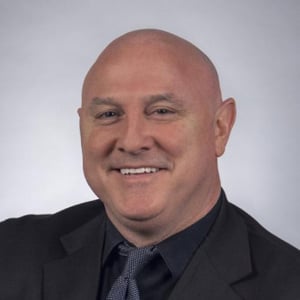
VP for Policy & Director of Technology Studies, Competitive Enterprise Institute
Wayne Crews is VP for Policy & Director of Technology Studies at the Competitive Enterprise Institute and a Cato Institute alum. A one-time Libertarian candidate for South Carolina state senate, he is widely published, contributes to Forbes.com, and authors the annual Ten Thousand Commandments, which the Wall Street Journal called "the best measure of the overall regulatory burden." Wayne also compiles the Tip of the Costberg report on gov't regulatory costs, and catalogs "regulatory dark matter."
A frequent speaker, Wayne has appeared at venues including the DVD Awards Showcase in Hollywood, the National Academies, the Future of Music Policy Summit, the Consumer Electronics Show, European Commission-sponsored conferences and the Spanish Ministry of Justice. He has testified before Congress numerous times.
While not a lawyer, Wayne's work is cited in hundreds of law reviews, journals, and books. A dad of five, he can still do a handstand on a skateboard and enjoys custom motorcycles, the beach, and the family farm. He is a member of Omicron Delta Epsilon economics honor society.
Wayne is co-editor of the books Who Rules the Net?: Internet Governance and Jurisdiction, and Copy Fights: The Future of Intellectual Property In the Information Age. He is co-author of What’s Yours Is Mine: Open Access and the Rise of Infrastructure Socialism, and a contributing author to others.
TV appearances include Fox, CNN, ABC, CNBC and NewsHour, and radio such as NPR; Wayne's reform ideas have been profiled in the Washington Post, Forbes and Investor’s Business Daily.
Wayne created CEI's c:\spin tech newsletter series, and co-created CEI's OnPoint policy series and Cato's TechKnowledge newsletter (which introduced "The Libertarian Vision for Telecom and High-Technology" with Adam Thierer, which helped inspire the 2012 Declaration of Internet Freedom). He coined the term "Splinternet" in Forbes in 2001 to underscore alternatives to government regulation of the Internet.
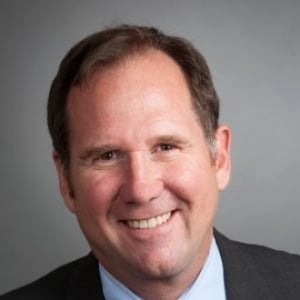
Founder, President and CEO, LabMD
Mike Daugherty is the CEO of LabMD, a cancer testing laboratory. He has spent most of the last decade defending his company against charges that it had deficient cybersecurity practices. The early years of his entering and fighting Washington, DC, are recorded in his book, “The Devil Inside the Beltway”. In so doing, he has become the only litigant to challenge the basic authority that underlies more than 200 enforcement actions relating to cybersecurity and online privacy that the FTC has brought over the past 15 years. Every one of the 200+ litigants before him – including some of the largest companies in the world – have settled with the FTC, creating an unquestioned and untested belief that the FTC has broad authority to regulate in these areas. Following oral arguments in June, 2017, before a panel of the 11th Circuit Court of Appeals, it seems entirely possible that he will prevail. In so doing, he may well topple key pillars of the FTC’s cybersecurity and online privacy edifice, successfully exposing and challenging The Administrative State.

Senior Fellow and Academic Director, Penn Carey Law School
Gus Hurwitz is a Senior Fellow and the Academic Director of the Center for Technology, Innovation & Competition and the University of Pennsylvania Carey Law School where he is working to develop academic and scholarly programs at the intersecution of law, technology, and policy.
He is also Director of Law & Economics Programs at the International Center for Law & Economics (ICLE), a think tank based in Portland, Oregon, where he directs its law and economics-focused research program and helps to translate academic research into applied policy issues.
Hurwitz's research focuses on the regulation of technology, including administrative and regulatory law, antitrust law, torts and products liability, and media law - alongside cognate fields. Inrecent years he has worked on an AI standardization initiative with Seoul National University, a UNICEF-organized study of broadband deployment to public schools in Rwanda, and a book on conglomerate and ecosystems theories of antitrust.
He has published over 30 articles and book chapters, two books (one on cybersecurity law & policy, one on media regulation in the digital era) and have two more in process, over 100 shorter writings (op-eds, shorter analyses, blog posts, &c), hosted over 100 podcast episodes, and regularly appear or am quoted in popular media (including the NY Times, Wall Street Journal, Washington Post, and Associated Press). His work has been cited by legislators, federal courts of appeals, and federal regulatory agencies.
He was previously a full professor and founding director of the Governance & Technology Center at the University of Nebraska, prior to which he was the inaugural research fellow at the Center for Technology, Innovation & Competition (CTIC). From 2007 to 2010, he was a trial attorney with the U.S. Department of Justice Antitrust Division in the Telecommunications and Media Enforcement Section.
He also is, or has been, affiliated with the Classical Liberal Institute at New York University School of Law, the National Security Institute at George Mason University, and the American Enterprise Institute (AEI).
Before attending law school, Hurwitz worked at Los Alamos National Lab and interned at the Naval Research Lab. During this time his work was recognized by the Federal Laboratory Consortium, Los Alamos National Lab, IEEE & ACM, Corporation for Education Network Initiatives in California, R&D Magazine, and even the Guinness Book of World Records.
A current list of Hurwitz’s publications is available on his website: GusHurwitz.net.

Capitalism v. Cronyism: Why Can't You Buy a Tesla in Utah?
Gregory Regan Reed
Short video featuring Greg Reed
The Utah Supreme Court recently ruled 5-0 against Tesla being able to sell directly to...
Topics
Overturning Auer Deference
In conjunction with the Supreme Court Clinic at Antonin Scalia Law School, Garco Construction, Inc....
Is There a "Death Squad" at the U.S. Patent Office?: Examining the PTAB
Josh Malone, Kristen Osenga, Brian OShaughnessy
Regulatory Transparency Project Teleforum
In 2011, Congress created a new administrative tribunal in the U.S. Patent Office with the...
Occupational Licensing, Antitrust, and Innovation
Maureen K. Ohlhausen, Koren Wong-Ervin, Lisa Kimmel, Sarah Oxenham Allen, James C. Cooper
Regulatory Transparency Project Event Video/Audio Recording
Every state has laws or regulations that require individuals seeking to offer a certain service...
Bureaucracy in America
Joseph Postell
Regulatory Transparency Project Teleforum
Administrative agencies, and extensive regulation of the economy, have always existed in America. But from...
Topics
Occupational Licensing, Antitrust, and Innovation Panel
While professional licensing can have an important role to play in protecting consumers, the proliferation...
Cardiac Arrest: A Cautionary Tale
Howard Root
Regulatory Transparency Project Teleforum
Howard Root started Vascular Solutions, a medical device company, from scratch. Fifteen years later, his...
IoT: Rise of the Machines?
Suhail A. Khan, Paul Rosenzweig
Regulatory Transparency Project Teleforum
The Internet of Things (IoT) refers to the connection of various devices to the Internet. ...
Laws, Regulations, and "Regulatory Dark Matter"
Wayne Crews
Regulatory Transparency Project Teleforum
Congress passes and the President signs several dozen laws every year. Meanwhile, federal departments and...
LabMD v. FTC: A David Against Goliath Story
Michael J. Daugherty, Justin (Gus) Hurwitz
Regulatory Transparency Project Teleforum
Mike Daugherty is the CEO of LabMD, a medical testing lab. He has spent most...