

Associate, Wiley Rein LLP
Joel S. Nolette is an associate at Wiley Rein LLP, where he advocates on behalf of corporate and individual clients in a broad spectrum of complex litigation matters. In 2017, Joel graduated cum laude from the Georgetown University Law Center, where he served as the Editor in Chief of Volume 15 of the Georgetown Journal of Law and Public Policy. From 2019 to 2021, Joel clerked for the Honorable Raymond W. Gruender of the U.S. Court of Appeals for the Eighth Circuit; and from 2021 to 2022, he clerked for the Honorable Timothy J. Kelly of the U.S. District Court for the District of Columbia. Before attending law school, Joel graduated summa cum laude from Gordon College in Wenham, MA, with his Bachelor of Arts in Biblical Studies and worked as a letter carrier with the U.S. Postal Service.
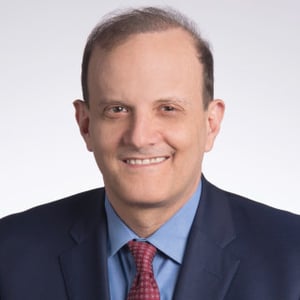
Partner, Duane Morris LLP; Managing Principal, Duane Morris Institute
Jonathan A. Segal is a partner at Duane Morris LLP in the Employment, Labor, Benefits and Immigration Practice Group. He is also the managing principal of the Duane Morris Institute. The Duane Morris Institute provides training for human resource professionals, in-house counsel, benefits administrators and managers at Duane Morris, at client sites and by way of webinar on myriad employment, labor, benefits and immigration matters.
Previously a litigator, Jonathan’s practice now focuses almost entirely on helping employers meet their business objectives or missions by minimizing legal risk, maximizing compliance and focusing on relationship with business objectives or mission and legal requirements or restrictions.
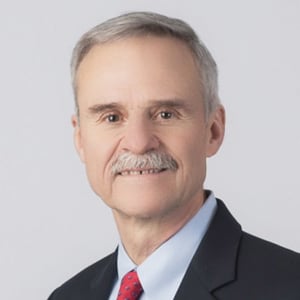
Partner & Deputy General Counsel, Wiley Rein LLP
Rick is a trial lawyer and appellate advocate. As an Assistant U.S. Attorney for the Southern District of New York, Rick learned to love nothing so much as going to trial, unless it is crafting briefs and presenting oral argument in an important appeal. Assistants in that office were fortunate to be able to do both.
Rick represents lawyers and other professionals in malpractice claims, defends insurers in coverage and “bad faith” litigation, and represents clients in commercial litigation. He also represents lawyers in disciplinary proceedings, provides legal ethics advice to law firms, has served as an expert witness on legal ethics and insurance coverage, and is Deputy General Counsel at Wiley.
Rick recently completed a three-year term as Chair of the American Bar Association Standing Committee on Lawyers Professional Liability and now serves as a Special Advisor to the Committee. During his tenure as Chair of the Standing Committee, Rick also served as a member of the Coordinating Council of the ABA Center for Professional Responsibility. Previously, Rick served a three-year term as a member of the Standing Committee. He speaks regularly on professional liability and insurance coverage topics.
Rick has acted as lead counsel for trials in the District of Columbia, Florida, Maryland, New York, Texas, and Virginia, as well as for arbitration hearings. On the appellate side, Rick has presented oral argument in the Supreme Court of the United States; 10 of the federal courts of appeals; the Supreme Courts of Connecticut, Delaware, Maryland, North Carolina, and Ohio; and state intermediate appellate courts in California, Florida, Maryland, New York, and Texas. His strong record of success includes winning his case in the United States Supreme Court and all five state Supreme Court cases.
Beginning with the Marc Rich cases while he was an AUSA (for those who can remember that far back), Rick has handled many high-profile representations, including dealing with the press as appropriate. Those matters include conducting an internal investigation for a U.S. Senator and representing the Senator in connection with a grand jury investigation, representing high-level White House officials in connection with criminal and congressional investigations arising from the Whitewater and Monica Lewinsky investigations, and representing Prof. Alan Dershowitz in connection with a defamation case in Florida.
Rick is an Adjunct Professor at the University of North Carolina School of Law, where he is the co-director of the Supreme Court Program, which operates as a clinic in which students assist in preparing submissions to the United States Supreme Court. From 2003 to 2017, Rick was an Adjunct Instructor in Trial Advocacy at the University of Virginia School of Law.
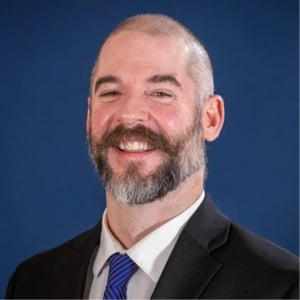
Deputy Director, Regulatory Studies Center, George Washington University
Will Yeatman is deputy director of the GW Regulatory Studies Center. A lawyer, he has spent almost two decades working on federal regulatory policy, with an emphasis on administrative law.
Yeatman has testified many times before Congress and state legislatures, and his scholarly work has appeared in such academic journals as Georgetown Law Journal, Administrative Law Review, and the (forthcoming) Catholic University Law Review. His popular writing has appeared in The Wall Street Journal, Foreign Policy, and Bloomberg.
Yeatman came to the RSC from the Pacific Legal Foundation. Previously, he had been at the Cato Institute’s Center for Constitutional Studies and the Competitive Enterprise Institute. From 2004 to 2006, he served as a Peace Corps volunteer in the Kyrgyz Republic.
Yeatman holds a BA in environmental sciences from the University of Virginia, an MA in international studies from the Denver University Graduate School of International Studies, and a JD from the Georgetown University Law Center. He is a member of the Washington, DC Bar.
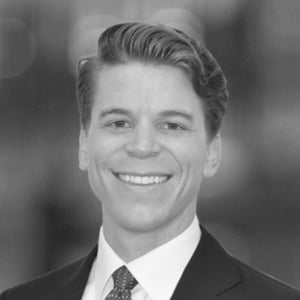
Chief Civil Counsel, Senate Judiciary Committee
Austin Rogers serves as Chief Counsel for the Senate Judiciary Committee, covering the civil portfolio for the Chairman. He obtained dual graduate degrees in Law and Theology from Duke University (summa cum laude), where he served on the Duke Law Journal and Harvard Journal of Law & Public Policy. After law school, he clerked for Chief Judge Steven D. Merryday in the Middle District of Florida. Following his clerkship, he practiced law at White & Case, specializing in commercial and appellate litigation. Prior to serving as Chief Civil Counsel for the Senate Judiciary Committee, he served as Senior Counsel of Oversight and Investigations for the Senate Judiciary Committee.
Austin obtained undergraduate degrees (summa cum laude) in International Business and Theology from Southeastern University and Wheaton College, respectively, and played college soccer at both schools.
He has published First Amendment scholarship in the Duke Law Journal and the Marquette Law Review, and he has a forthcoming article that will be published in the Florida Law Review. He is a member of the District of Columbia Bar, the Republican National Lawyers Association, and the Federalist Society, where he serves in a volunteer capacity. Austin is actively involved in his church and serves on its worship team.
Associate, Wiley Rein LLP
Joel S. Nolette is an associate at Wiley Rein LLP, where he advocates on behalf of corporate and individual clients in a broad spectrum of complex litigation matters. In 2017, Joel graduated cum laude from the Georgetown University Law Center, where he served as the Editor in Chief of Volume 15 of the Georgetown Journal of Law and Public Policy. From 2019 to 2021, Joel clerked for the Honorable Raymond W. Gruender of the U.S. Court of Appeals for the Eighth Circuit; and from 2021 to 2022, he clerked for the Honorable Timothy J. Kelly of the U.S. District Court for the District of Columbia. Before attending law school, Joel graduated summa cum laude from Gordon College in Wenham, MA, with his Bachelor of Arts in Biblical Studies and worked as a letter carrier with the U.S. Postal Service.
Partner, Duane Morris LLP; Managing Principal, Duane Morris Institute
Jonathan A. Segal is a partner at Duane Morris LLP in the Employment, Labor, Benefits and Immigration Practice Group. He is also the managing principal of the Duane Morris Institute. The Duane Morris Institute provides training for human resource professionals, in-house counsel, benefits administrators and managers at Duane Morris, at client sites and by way of webinar on myriad employment, labor, benefits and immigration matters.
Previously a litigator, Jonathan’s practice now focuses almost entirely on helping employers meet their business objectives or missions by minimizing legal risk, maximizing compliance and focusing on relationship with business objectives or mission and legal requirements or restrictions.
Partner & Deputy General Counsel, Wiley Rein LLP
Rick is a trial lawyer and appellate advocate. As an Assistant U.S. Attorney for the Southern District of New York, Rick learned to love nothing so much as going to trial, unless it is crafting briefs and presenting oral argument in an important appeal. Assistants in that office were fortunate to be able to do both.
Rick represents lawyers and other professionals in malpractice claims, defends insurers in coverage and “bad faith” litigation, and represents clients in commercial litigation. He also represents lawyers in disciplinary proceedings, provides legal ethics advice to law firms, has served as an expert witness on legal ethics and insurance coverage, and is Deputy General Counsel at Wiley.
Rick recently completed a three-year term as Chair of the American Bar Association Standing Committee on Lawyers Professional Liability and now serves as a Special Advisor to the Committee. During his tenure as Chair of the Standing Committee, Rick also served as a member of the Coordinating Council of the ABA Center for Professional Responsibility. Previously, Rick served a three-year term as a member of the Standing Committee. He speaks regularly on professional liability and insurance coverage topics.
Rick has acted as lead counsel for trials in the District of Columbia, Florida, Maryland, New York, Texas, and Virginia, as well as for arbitration hearings. On the appellate side, Rick has presented oral argument in the Supreme Court of the United States; 10 of the federal courts of appeals; the Supreme Courts of Connecticut, Delaware, Maryland, North Carolina, and Ohio; and state intermediate appellate courts in California, Florida, Maryland, New York, and Texas. His strong record of success includes winning his case in the United States Supreme Court and all five state Supreme Court cases.
Beginning with the Marc Rich cases while he was an AUSA (for those who can remember that far back), Rick has handled many high-profile representations, including dealing with the press as appropriate. Those matters include conducting an internal investigation for a U.S. Senator and representing the Senator in connection with a grand jury investigation, representing high-level White House officials in connection with criminal and congressional investigations arising from the Whitewater and Monica Lewinsky investigations, and representing Prof. Alan Dershowitz in connection with a defamation case in Florida.
Rick is an Adjunct Professor at the University of North Carolina School of Law, where he is the co-director of the Supreme Court Program, which operates as a clinic in which students assist in preparing submissions to the United States Supreme Court. From 2003 to 2017, Rick was an Adjunct Instructor in Trial Advocacy at the University of Virginia School of Law.
Deputy Director, Regulatory Studies Center, George Washington University
Will Yeatman is deputy director of the GW Regulatory Studies Center. A lawyer, he has spent almost two decades working on federal regulatory policy, with an emphasis on administrative law.
Yeatman has testified many times before Congress and state legislatures, and his scholarly work has appeared in such academic journals as Georgetown Law Journal, Administrative Law Review, and the (forthcoming) Catholic University Law Review. His popular writing has appeared in The Wall Street Journal, Foreign Policy, and Bloomberg.
Yeatman came to the RSC from the Pacific Legal Foundation. Previously, he had been at the Cato Institute’s Center for Constitutional Studies and the Competitive Enterprise Institute. From 2004 to 2006, he served as a Peace Corps volunteer in the Kyrgyz Republic.
Yeatman holds a BA in environmental sciences from the University of Virginia, an MA in international studies from the Denver University Graduate School of International Studies, and a JD from the Georgetown University Law Center. He is a member of the Washington, DC Bar.
Chief Civil Counsel, Senate Judiciary Committee
Austin Rogers serves as Chief Counsel for the Senate Judiciary Committee, covering the civil portfolio for the Chairman. He obtained dual graduate degrees in Law and Theology from Duke University (summa cum laude), where he served on the Duke Law Journal and Harvard Journal of Law & Public Policy. After law school, he clerked for Chief Judge Steven D. Merryday in the Middle District of Florida. Following his clerkship, he practiced law at White & Case, specializing in commercial and appellate litigation. Prior to serving as Chief Civil Counsel for the Senate Judiciary Committee, he served as Senior Counsel of Oversight and Investigations for the Senate Judiciary Committee.
Austin obtained undergraduate degrees (summa cum laude) in International Business and Theology from Southeastern University and Wheaton College, respectively, and played college soccer at both schools.
He has published First Amendment scholarship in the Duke Law Journal and the Marquette Law Review, and he has a forthcoming article that will be published in the Florida Law Review. He is a member of the District of Columbia Bar, the Republican National Lawyers Association, and the Federalist Society, where he serves in a volunteer capacity. Austin is actively involved in his church and serves on its worship team.
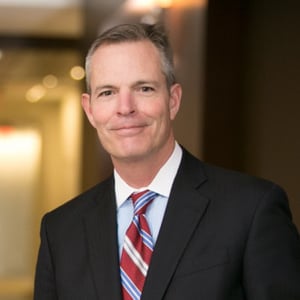
Partner, Balch & Bingham LLP
General Counsel to the Mississippi Manufacturers Association, Pepper Crutcher advises and advocates for a wide range of Southeast U.S., private sector employers. Pepper regularly defends employment litigation, including class and collective actions, and both defends and prosecutes unfair competition claims. Pepper’s labor law practice involves all types of NLRB proceedings, labor contract negotiation and arbitration. Pepper also helps employers, insurers, brokers, administrators and providers achieve Affordable Care Act compliance and appeal ACA tax assessments.
Mr. Crutcher has been rated "AV" by Martindale Hubbell and since 2004 has been selected to be included in Chambers USA America's Leading Lawyers for Business: The Client's Guide (Employment, Mississippi). He is also listed in The Best Lawyers in America for Intellectual Property Law and Labor & Employment Law.
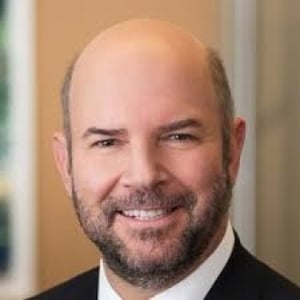
Partner, Morgan, Lewis & Bockius LLP
Philip A. Miscimarra is the former Chairman of the National Labor Relations Board (NLRB). Phil leads the firm’s NLRB special appeals practice and is co-leader of Morgan Lewis Workforce Change, which manages all employment, labor, benefits, and related issues arising from mergers, acquisitions, startups, workforce reductions, and other types of business restructuring. He represents clients on a wide range of labor and employment issues, with a focus on labor-management relations, business acquisitions and restructuring, and employment litigation. Phil is also a Senior Fellow at the University of Pennsylvania's Wharton School and the Wharton Center for Human Resources. He is admitted in Illinois only, and his practice is supervised by DC Bar members.
Phil was named Chairman of the NLRB by President Donald J. Trump on April 24, 2017, after previously serving as Acting Chairman and a Board Member. He was appointed to the NLRB by President Barack Obama on April 9, 2013, and was approved unanimously by the Senate Committee on Health, Education, Labor, and Pensions on May 22, 2013. He was confirmed by voice vote in the US Senate on July 30, 2013, and served from August 7, 2013, to December 16, 2017. Upon the completion of his term, Phil served on the NLRB longer than 26 other board members over the past 30 years.
Phil is the author or co-author of several books involving labor law issues, including The NLRB and Managerial Discretion: Subcontracting, Relocations, Closings, Sales, Layoffs, and Technological Change (2d ed. 2010) (by Miscimarra, Turner, Friedman, Callahan, Conrad, Lignowski and Scroggins); The NLRB and Secondary Boycotts (3d ed. 2002) (by Miscimarra, Berkowitz, Wiener and Ditelberg); and Government Protection of Employees Involved in Mergers and Acquisitions (1989 and 1997 supp.) (by Northrup and Miscimarra); and other publications. He has also testified on labor and employment law issues in the United States Congress.
Chambers USA named Phil one of the leading lawyers for employment law in the United States from 2004 to 2012, based on the views of clients, peers, and other industry professionals. He has been described as a "fantastic lawyer" and "prolific writer," with clients admiring his "multilayered abilities and business savvy" and his "high level of integrity."
Partner, Balch & Bingham LLP
General Counsel to the Mississippi Manufacturers Association, Pepper Crutcher advises and advocates for a wide range of Southeast U.S., private sector employers. Pepper regularly defends employment litigation, including class and collective actions, and both defends and prosecutes unfair competition claims. Pepper’s labor law practice involves all types of NLRB proceedings, labor contract negotiation and arbitration. Pepper also helps employers, insurers, brokers, administrators and providers achieve Affordable Care Act compliance and appeal ACA tax assessments.
Mr. Crutcher has been rated "AV" by Martindale Hubbell and since 2004 has been selected to be included in Chambers USA America's Leading Lawyers for Business: The Client's Guide (Employment, Mississippi). He is also listed in The Best Lawyers in America for Intellectual Property Law and Labor & Employment Law.
Partner, Morgan, Lewis & Bockius LLP
Philip A. Miscimarra is the former Chairman of the National Labor Relations Board (NLRB). Phil leads the firm’s NLRB special appeals practice and is co-leader of Morgan Lewis Workforce Change, which manages all employment, labor, benefits, and related issues arising from mergers, acquisitions, startups, workforce reductions, and other types of business restructuring. He represents clients on a wide range of labor and employment issues, with a focus on labor-management relations, business acquisitions and restructuring, and employment litigation. Phil is also a Senior Fellow at the University of Pennsylvania's Wharton School and the Wharton Center for Human Resources. He is admitted in Illinois only, and his practice is supervised by DC Bar members.
Phil was named Chairman of the NLRB by President Donald J. Trump on April 24, 2017, after previously serving as Acting Chairman and a Board Member. He was appointed to the NLRB by President Barack Obama on April 9, 2013, and was approved unanimously by the Senate Committee on Health, Education, Labor, and Pensions on May 22, 2013. He was confirmed by voice vote in the US Senate on July 30, 2013, and served from August 7, 2013, to December 16, 2017. Upon the completion of his term, Phil served on the NLRB longer than 26 other board members over the past 30 years.
Phil is the author or co-author of several books involving labor law issues, including The NLRB and Managerial Discretion: Subcontracting, Relocations, Closings, Sales, Layoffs, and Technological Change (2d ed. 2010) (by Miscimarra, Turner, Friedman, Callahan, Conrad, Lignowski and Scroggins); The NLRB and Secondary Boycotts (3d ed. 2002) (by Miscimarra, Berkowitz, Wiener and Ditelberg); and Government Protection of Employees Involved in Mergers and Acquisitions (1989 and 1997 supp.) (by Northrup and Miscimarra); and other publications. He has also testified on labor and employment law issues in the United States Congress.
Chambers USA named Phil one of the leading lawyers for employment law in the United States from 2004 to 2012, based on the views of clients, peers, and other industry professionals. He has been described as a "fantastic lawyer" and "prolific writer," with clients admiring his "multilayered abilities and business savvy" and his "high level of integrity."
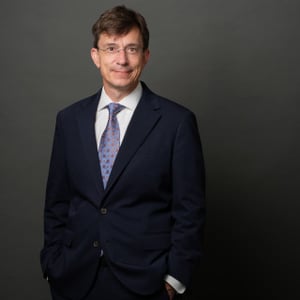
Professor of Law and Executive Director, Law and Economics Center, Antonin Scalia Law School, George Mason University
Donald Kochan is Professor of Law and Executive Director of the Law & Economics Center (LEC). Professor Kochan is an elected member of the American Law Institute (ALI) and serves as an Adviser to ALI's Restatement of the Law Fourth, Property project. Professor Kochan is a Nonresident Scholar at the Center for the Constitution at Georgetown University Law Center, where he was a Visiting Scholar in residence during Fall 2018. Before joining the Antonin Scalia Law School faculty, he was the Parker S. Kennedy Professor in Law at Chapman University’s Dale E. Fowler School of Law from 2004 to 2020. From 2003 to 2004, Professor Kochan was an Olin Fellow at the University of Virginia School of Law. During 2002-2003, he was a Visiting Assistant Professor of Law at George Mason’s Scalia Law School.
Professor Kochan’s scholarship focuses on areas of property law, constitutional law, administrative law, local government law, natural resources and environmental law, and law & economics. He has published several books and more than 50 scholarly articles and essays in well-regarded law journals. His work has been cited in more than a dozen state and federal court opinions, in more than 75 briefs filed in state and federal courts including more than 25 filed in the U.S. Supreme Court, in dozens of books and treatises, and in more than 800 scholarly articles.
Professor Kochan received his JD from Cornell Law School, where he was a John M. Olin Scholar in Law and Economics and managing editor of the Cornell International Law Journal. During law school, he also served as editor and executive editor of the Harvard Journal of Law & Public Policy symposium issues in 1997 and 1998. He received his BA from Western Michigan University, magna cum laude, with majors in both political science and philosophy, where he studied as the John W. Gill Medallion Scholar and was honored as the Presidential Scholar (awarded to the top graduate in the political science department).
After graduating from law school, Professor Kochan was a law clerk to The Honorable Richard F. Suhrheinrich of the United States Court of Appeals for the Sixth Circuit. Following his clerkship, Professor Kochan was an associate with the firm of Crowell & Moring LLP in Washington, D.C., where he specialized in natural resources & environmental law as well as tort, products, and consumer civil litigation & legislative affairs.
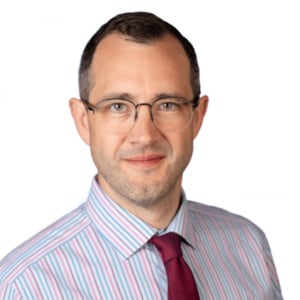
Attorney, Pacific Legal Foundation
Jeremy is an attorney in Pacific Legal Foundation’s Property Rights practice. He focuses on the fundamental rights of landowners to use and develop their property. He also leads PLF’s Coastal Land Rights Project, which puts him routinely at odds with the California Coastal Commission—but he wouldn’t mind being contacted about any government abuses in Hawaii or the U.S. Virgin Islands.
Some of his career highlights at PLF include forcing the mayor of Mount Dora, Florida, to publicly apologize for the city’s vendetta against the owners of a home painted like Van Gogh’s “Starry Night,” and obtaining an opinion ordering just compensation for the owners of a small offshore island in Florida (that just happened to be named after their war hero father), after government regulations stripped all economic uses of the property.
Jeremy obtained his undergraduate degree in communications from the University of Central Florida, but for every minute he spent in classes, he spent five more playing guitar or bass in several noteworthy-for-their-obscurity rock bands. A few tours across the country later, Jeremy realized he was spending all of his free time reading about the principles of liberty and decided to make a career out of it.
He graduated cum laude from Chapman University, Fowler School of Law in Orange, California, where he was president of the Federalist Society, senior articles editor of the Chapman Law Review, and “that guy who keeps trying to talk about the Constitution” on the Chapman moot court team. His two favorite parts of law school were externing for Judge Andrew J. Guilford in the Central District of California and getting the top grade in administrative law from his favorite professor.
Jeremy’s free time is almost never actually free, because he has 11-year-old twin boys and a golden retriever named Ripley (yes, as in Ellen Ripley, warrant officer of the Nostromo). But he will always find time to talk your ear off about freedom, guitars, or Nebraska football.

Topics
President Trump Issues An Executive Order Recognizing Only Two Sexes
On his first day in office, President Trump issued an executive order titled “Defending Women...
A Seat at the Sitting - February 2025
Joel S. Nolette, Jonathan A. Segal, Richard A. Simpson, Will Yeatman, Austin Rogers
The February Docket in 90 Minutes or Less
Each month, a panel of constitutional experts convenes to discuss the Court’s upcoming docket sitting...
A Seat at the Sitting - February 2025
Joel S. Nolette, Jonathan A. Segal, Richard A. Simpson, Will Yeatman, Austin Rogers
The February Docket in 90 Minutes or Less
Each month, a panel of constitutional experts convenes to discuss the Court’s upcoming docket sitting...
Litigation Update: United Natural Foods v. NLRB
R. Pepper Crutcher, Philip A. Miscimarra
NLRB Deference, Do Federal Rules Apply to the NLRB, and More
This litigation update will discuss the United Natural Foods case, where a new National Labor...
Litigation Update: United Natural Foods v. NLRB
R. Pepper Crutcher, Philip A. Miscimarra
NLRB Deference, Do Federal Rules Apply to the NLRB, and More
This litigation update will discuss the United Natural Foods case, where a new National Labor...
Explainer Episode 85 - Rebuilding California: Lessons from the Pacific Palisades Fire
Donald J. Kochan, Jeremy Talcott
RTP's Fourth Branch Podcast
The 2025 Pacific Palisades Fire has underscored the challenges of building in California’s complex regulatory...
Topics
President Trump Formally Prohibits Government Jawboning, But Will the Administrative State Comply?
The right to free speech guaranteed by the First Amendment is a fundamental tenet of...
Topics
Tax Deductibility of Business Interest Expense
As it considers revising the tax code, Congress should examine the distortions and inefficiencies created...
Topics
Asking the Right Questions About AI
Many lawmakers are asking the wrong questions about AI. Their first question is, “What harm...
Topics
Title IX Dear Colleague Letter from Education Department Puts Controversial Issue to Rest, For Now
American educational institutions finally have clarity on whether they are required to open sex-segregated facilities,...