
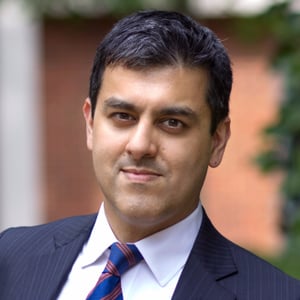
Professor of Law, University of Virginia School of Law
Aditya Bamzai is a professor of law at the University of Virginia. He teaches administrative law, civil procedure, computer crime and conflicts of law, and he has written about these and related subjects. He has argued cases relating to the separation of powers and national security in the U.S. Supreme Court, Foreign Intelligence Surveillance Court of Review, D.C. Circuit and other federal courts of appeals. From 2019 to 2021, he served as a Member of the Privacy and Civil Liberties Oversight Board, a federal agency charged with ensuring that the government’s national security efforts are balanced with the need to protect privacy and civil liberties. Before entering the academy, Bamzai was an attorney-adviser in the Office of Legal Counsel of the U.S. Department of Justice, and an appellate attorney in both private practice and for the National Security Division of the Department of Justice. Earlier in his career, he was a law clerk to Justice Antonin Scalia of the Supreme Court of the United States and to Judge Jeffrey Sutton of the Sixth Circuit Court of Appeals.

U.S. Court of Appeals, First Circuit
David Barron was appointed to the United States Court of Appeals for the First Circuit in May 2014. He graduated from Harvard College in 1989 and Harvard Law School in 1994. From 1989 to 1991, he worked as a newspaper reporter. After graduating from law school, he clerked for Judge Stephen R. Reinhardt of the United States Court of Appeals for the Ninth Circuit, from 1994 to 1995, and for Justice John Paul Stevens of the United States Supreme Court, from 1995 to 1996. He then worked as an attorney advisor for the Office of Legal Counsel of the United States Department of Justice, from 1996 to 1999. In 1999, Barron became an Assistant Professor at Harvard Law School. He became a full Professor at Harvard Law School in 2004, where he worked until he rejoined the Justice Department as Acting Assistant Attorney General for the Office of Legal Counsel, from 2009 to 2010. He then returned to the Harvard Law School faculty in 2010, where he was named the S. William Green Professor of Public Law in 2011, and worked until his appointment to the federal bench in 2014. Currently, Barron is the Honorable S. William Green Visiting Professor of Public Law at Harvard Law School. Barron has published articles in the Harvard Law Review, the Stanford Law Review, and the Yale Law Journal. His book, Waging War, won the 2017 William E. Colby Award.
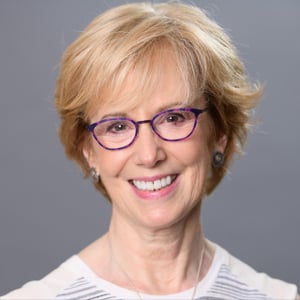
Director, GW Regulatory Studies Center & Distinguished Professor of Practice, Trachtenberg School of Public Policy & Public Administration, The George Washington University
Susan Dudley is the Founder and Director of the George Washington University Regulatory Studies Center, established in 2009 to raise awareness of regulations’ effects and improve regulatory policy through research, education, and outreach. She is also a distinguished professor of practice in the Trachtenberg School of Public Policy and Public Administration. She is past-president of the Society for Benefit Cost Analysis, a senior fellow of the Administrative Conference of the United States, and on the Regulatory Transparency Project Regulatory Practice Working Group. Her book, Regulation: A Primer, with Jerry Brito, is available on Amazon.com.
From April 2007 through January 2009, Professor Dudley served as the Presidentially-appointed Administrator of the Office of Information and Regulatory Affairs in the U.S. Office of Management and Budget and was responsible for the review of draft executive branch regulations under Executive Order 12866, the collection of federal-government-wide information under the Paperwork Reduction Act, the development and implementation of government-wide policies in the areas of information policy, privacy, and statistical policy, and international regulatory cooperation efforts.
Prior to OIRA, she directed the Regulatory Studies Program at the Mercatus Center at George Mason University, and taught courses on regulation at the George Mason University School of Law. Earlier in her career, Professor Dudley served as an economist at OIRA, as well as the Environmental Protection Agency and the Commodity Futures Trading Commission. She was also a consultant to government and private clients at Economists Incorporated. She holds a Master of Science degree from the Sloan School of Management at MIT and a Bachelor of Science degree (summa cum laude) in Resource Economics from the University of Massachusetts, Amherst.
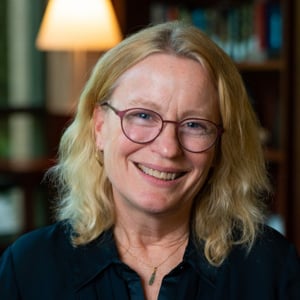
Justice William J. Brennan, Jr., Professor of Law, Georgetown University Law Center
Lisa Heinzerling is the Justice William J. Brennan, Jr. Professor of Law at Georgetown University. Her primary specialties are administrative law and environmental law. She is the author of several books, including Priceless: On Knowing the Price of Everything and the Value of Nothing, a critique of the use of cost-benefit analysis in environmental policy. Professor Heinzerling has received the Georgetown University President's Award for Distinguished Scholar-Teachers, the faculty teaching award at Georgetown Law, and several awards related to her scholarship and advocacy in environmental law. She was the lead author of the winning briefs in Massachusetts v. EPA, in which the Supreme Court held that the Clean Air Act gives EPA the authority to regulate greenhouse gases. From January 2009 to July 2009, Heinzerling served as Senior Climate Policy Counsel to the Administrator of the Environmental Protection Agency and then, from July 2009 to December 2010, she served as Associate Administrator of EPA’s Office of Policy. She was a law clerk to Judge Richard A. Posner of the U.S. Court of Appeals for the Seventh Circuit and Justice William J. Brennan, Jr. of the U.S. Supreme Court.
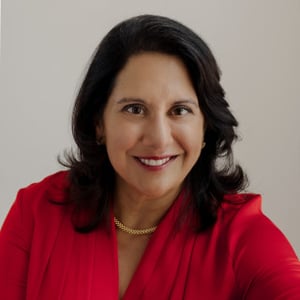
Judge, United States Court of Appeals, District of Columbia Circuit
Judge Rao was appointed to the United States Court of Appeals for the District of Columbia Circuit in March 2019. She graduated from Yale College in 1995 and the University of Chicago Law School in 1999. Following graduation, she served as a law clerk to Judge J. Harvie Wilkinson III of the U.S. Court of Appeals for the Fourth Circuit and, in the 2001 October Term, as law clerk to Justice Clarence Thomas of the U.S. Supreme Court. Between her clerkships, Judge Rao served as counsel for nominations and constitutional law to the U.S. Senate Committee on the Judiciary. In 2002, she joined the international arbitration group of Clifford Chance LLP in London, England. From 2005-2006, she served as Special Assistant and Associate White House Counsel to President George W. Bush. From 2006 to 2017, Judge Rao was a professor at the Antonin Scalia Law School at George Mason University, where she taught constitutional law, legislation and statutory interpretation, and the history and foundations of the administrative state. In 2014, she founded the Center for the Study of the Administrative State, a non-profit Center that promotes academic scholarship and public policy debates about administrative law. In July 2017, she was appointed to serve as the Administrator of the Office of Information and Regulatory Affairs in the Office of Management Budget. She served in this position until her appointment to the D.C. Circuit.

Executive Vice President, The Federalist Society
Dean Reuter is Executive Vice President at the Federalist Society for Law and Public Policy Studies. He has served in two federal government agency Offices of the Inspector General, as Counsel to the Inspector General and Deputy Inspector General, responsible for policing the use of federal funds granted and contracted through those agencies. As such, he helped conduct and oversee criminal investigations across the country. He is the principal author of the non-fiction book, The Hidden Nazi: The Untold Story of America's Deal with the Devil, and editor of Liberty’s Nemesis: The Unchecked Expansion of the State and Confronting Terror: 9/11 and the Future of American National Security. He was appointed by the President and served as Vice-Chairman of the Board of Directors of the Corporation for National and Community Service, and recently served as an appointee on the U.S. Commission on Presidential Scholars. He is a graduate of Hood College (BA with Honors) and the University of Maryland School of Law.
Professor of Law, University of Virginia School of Law
Aditya Bamzai is a professor of law at the University of Virginia. He teaches administrative law, civil procedure, computer crime and conflicts of law, and he has written about these and related subjects. He has argued cases relating to the separation of powers and national security in the U.S. Supreme Court, Foreign Intelligence Surveillance Court of Review, D.C. Circuit and other federal courts of appeals. From 2019 to 2021, he served as a Member of the Privacy and Civil Liberties Oversight Board, a federal agency charged with ensuring that the government’s national security efforts are balanced with the need to protect privacy and civil liberties. Before entering the academy, Bamzai was an attorney-adviser in the Office of Legal Counsel of the U.S. Department of Justice, and an appellate attorney in both private practice and for the National Security Division of the Department of Justice. Earlier in his career, he was a law clerk to Justice Antonin Scalia of the Supreme Court of the United States and to Judge Jeffrey Sutton of the Sixth Circuit Court of Appeals.
U.S. Court of Appeals, First Circuit
David Barron was appointed to the United States Court of Appeals for the First Circuit in May 2014. He graduated from Harvard College in 1989 and Harvard Law School in 1994. From 1989 to 1991, he worked as a newspaper reporter. After graduating from law school, he clerked for Judge Stephen R. Reinhardt of the United States Court of Appeals for the Ninth Circuit, from 1994 to 1995, and for Justice John Paul Stevens of the United States Supreme Court, from 1995 to 1996. He then worked as an attorney advisor for the Office of Legal Counsel of the United States Department of Justice, from 1996 to 1999. In 1999, Barron became an Assistant Professor at Harvard Law School. He became a full Professor at Harvard Law School in 2004, where he worked until he rejoined the Justice Department as Acting Assistant Attorney General for the Office of Legal Counsel, from 2009 to 2010. He then returned to the Harvard Law School faculty in 2010, where he was named the S. William Green Professor of Public Law in 2011, and worked until his appointment to the federal bench in 2014. Currently, Barron is the Honorable S. William Green Visiting Professor of Public Law at Harvard Law School. Barron has published articles in the Harvard Law Review, the Stanford Law Review, and the Yale Law Journal. His book, Waging War, won the 2017 William E. Colby Award.
Director, GW Regulatory Studies Center & Distinguished Professor of Practice, Trachtenberg School of Public Policy & Public Administration, The George Washington University
Susan Dudley is the Founder and Director of the George Washington University Regulatory Studies Center, established in 2009 to raise awareness of regulations’ effects and improve regulatory policy through research, education, and outreach. She is also a distinguished professor of practice in the Trachtenberg School of Public Policy and Public Administration. She is past-president of the Society for Benefit Cost Analysis, a senior fellow of the Administrative Conference of the United States, and on the Regulatory Transparency Project Regulatory Practice Working Group. Her book, Regulation: A Primer, with Jerry Brito, is available on Amazon.com.
From April 2007 through January 2009, Professor Dudley served as the Presidentially-appointed Administrator of the Office of Information and Regulatory Affairs in the U.S. Office of Management and Budget and was responsible for the review of draft executive branch regulations under Executive Order 12866, the collection of federal-government-wide information under the Paperwork Reduction Act, the development and implementation of government-wide policies in the areas of information policy, privacy, and statistical policy, and international regulatory cooperation efforts.
Prior to OIRA, she directed the Regulatory Studies Program at the Mercatus Center at George Mason University, and taught courses on regulation at the George Mason University School of Law. Earlier in her career, Professor Dudley served as an economist at OIRA, as well as the Environmental Protection Agency and the Commodity Futures Trading Commission. She was also a consultant to government and private clients at Economists Incorporated. She holds a Master of Science degree from the Sloan School of Management at MIT and a Bachelor of Science degree (summa cum laude) in Resource Economics from the University of Massachusetts, Amherst.
Justice William J. Brennan, Jr., Professor of Law, Georgetown University Law Center
Lisa Heinzerling is the Justice William J. Brennan, Jr. Professor of Law at Georgetown University. Her primary specialties are administrative law and environmental law. She is the author of several books, including Priceless: On Knowing the Price of Everything and the Value of Nothing, a critique of the use of cost-benefit analysis in environmental policy. Professor Heinzerling has received the Georgetown University President's Award for Distinguished Scholar-Teachers, the faculty teaching award at Georgetown Law, and several awards related to her scholarship and advocacy in environmental law. She was the lead author of the winning briefs in Massachusetts v. EPA, in which the Supreme Court held that the Clean Air Act gives EPA the authority to regulate greenhouse gases. From January 2009 to July 2009, Heinzerling served as Senior Climate Policy Counsel to the Administrator of the Environmental Protection Agency and then, from July 2009 to December 2010, she served as Associate Administrator of EPA’s Office of Policy. She was a law clerk to Judge Richard A. Posner of the U.S. Court of Appeals for the Seventh Circuit and Justice William J. Brennan, Jr. of the U.S. Supreme Court.
Judge, United States Court of Appeals, District of Columbia Circuit
Judge Rao was appointed to the United States Court of Appeals for the District of Columbia Circuit in March 2019. She graduated from Yale College in 1995 and the University of Chicago Law School in 1999. Following graduation, she served as a law clerk to Judge J. Harvie Wilkinson III of the U.S. Court of Appeals for the Fourth Circuit and, in the 2001 October Term, as law clerk to Justice Clarence Thomas of the U.S. Supreme Court. Between her clerkships, Judge Rao served as counsel for nominations and constitutional law to the U.S. Senate Committee on the Judiciary. In 2002, she joined the international arbitration group of Clifford Chance LLP in London, England. From 2005-2006, she served as Special Assistant and Associate White House Counsel to President George W. Bush. From 2006 to 2017, Judge Rao was a professor at the Antonin Scalia Law School at George Mason University, where she taught constitutional law, legislation and statutory interpretation, and the history and foundations of the administrative state. In 2014, she founded the Center for the Study of the Administrative State, a non-profit Center that promotes academic scholarship and public policy debates about administrative law. In July 2017, she was appointed to serve as the Administrator of the Office of Information and Regulatory Affairs in the Office of Management Budget. She served in this position until her appointment to the D.C. Circuit.
Executive Vice President, The Federalist Society
Dean Reuter is Executive Vice President at the Federalist Society for Law and Public Policy Studies. He has served in two federal government agency Offices of the Inspector General, as Counsel to the Inspector General and Deputy Inspector General, responsible for policing the use of federal funds granted and contracted through those agencies. As such, he helped conduct and oversee criminal investigations across the country. He is the principal author of the non-fiction book, The Hidden Nazi: The Untold Story of America's Deal with the Devil, and editor of Liberty’s Nemesis: The Unchecked Expansion of the State and Confronting Terror: 9/11 and the Future of American National Security. He was appointed by the President and served as Vice-Chairman of the Board of Directors of the Corporation for National and Community Service, and recently served as an appointee on the U.S. Commission on Presidential Scholars. He is a graduate of Hood College (BA with Honors) and the University of Maryland School of Law.

Judge, United States Court of Appeals, Ninth Circuit
Judge Carlos Bea serves as a judge on the United States Court of Appeals for the Ninth Circuit. He received his Bachelor's Degree from Stanford University in 1956 and his J.D. from Stanford Law School in 1958. Judge Bea was born in San Sebastian, Spain, and immigrated with his family to Cuba in 1939. In 1952, he represented Cuba on the Cuban National basketball team in the Helsinki Olympics. Judge Bea became a naturalized citizen of the United States in 1958. He engaged in private practice in San Francisco, principally in the area of civil trials (jury and non-jury), from 1959-75 at Dunne, Phelps & Mills and from 1975-90 at Carlos Bea, A Law Corporation. He taught courses in civil litigation advocacy at Hastings College of Law and Stanford Law School. From 1990 to 2003, Judge Bea served as a judge of the San Francisco Superior Court. He was nominated by President George W. Bush to the United States Court of Appeals for the Ninth Circuit and was confirmed in 2003.
Judge Bea and his wife Louise reside in San Francisco, where they raised their four sons, Sebastian, Alexander, Nicholas, and Dominic.

Laurence A. Tisch Professor of Law and Director, Classical Liberal Institute, New York University School of Law; Director, Classical Liberal Institute, Civitas Institute University of Texas at Austin
Richard A. Epstein is the inaugural Laurence A. Tisch Professor of Law at NYU School of Law. Prior to his joining the faculty, he was a visiting law professor at NYU from 2007 through 2009. He served as the Peter and Kirstin Bedford Senior Fellow at the Hoover Institution from 2000 to 2024. Since 2024 to the present he is a senior lecturer at the Civitas Institute at the University of Texas—Austin. Epstein is also the James Parker Hall Distinguished Service Professor of Law Emeritus and a senior lecturer at the University of Chicago. His initial law school appointment was at the University of Southern California from 1968 to 1972. Epstein received an LL.D., h.c. from the University of Ghent, 2003. He has been a member of the American Academy of Arts and Sciences since 1985 and was a Senior Fellow of the Center for Clinical Medical Ethics at the University of Chicago Division of Biological Sciences, also from 1983. to 2022 He served as editor of the Journal of Legal Studies from 1981 to 1991, and of the Journal of Law and Economics from 1991-2001. From 2001 to 2010 he was a director of the John M. Olin Program in Law and Economics at the University of Chicago.
His newest book, The Myth of Birthright Citizenship: What the Fourteenth Amendment Really Says was published in 2026 (Encounter Books). Prior to that he has published many books including, The Dubious Morality of the Modern Administrative State (Roman & Littlefield 2020).Earlier he published th Classical Liberal Constitution: The Uncertain Quest for Limited Government (Harvard 2014) iHis previous books include Design for Liberty: Private Property, Public Administration and the Rule of Law (Harvard 2011); The Case Against the Employee Free Choice Act (Hoover 2009); Supreme Neglect: How to Revive the Constitutional Protection of Property Rights (Oxford 2008); Antitrust Decrees in Theory and Practice: Why Less is More (AEI 2007); Overdose: How Excessive Government Regulation Stifles Pharmaceutical Innovation (Yale University Press. 2006); How Progressives Rewrote the Constitution (Cato 2006); Cases and Materials on Torts (Aspen Law & Business; 8th ed. 2004); Skepticism and Freedom: A Modern Case for Classical Liberalism (University of Chicago, 2003); Torts (Aspen Law & Business 1999); Principles for a Free Society: Reconciling Individual Liberty with the Common Good (Perseus Books, 1998): Mortal Peril: Our Inalienable Rights to Health Care (Addison-Wesley, 1997); Simple Rules for a Complex World (Harvard, 1995); Bargaining With the State (Princeton, 1993); Forbidden Grounds: The Case Against Employment Discrimination Laws (Harvard , 1992); Takings: Private Property and the Power of Eminent Domain (Harvard, 1985); and Modern Products Liability Law (Greenwood Press, 1980). He has also edited(with Catherine M. Sharkey) Cases and Materials on the Law of Torts (10th edition 2012).
Professor Epstein has written numerous articles on a wide range of legal and interdisciplinary subjects. He has taught courses in administrative law, antitrust law, civil procedure, communications, constitutional law, contracts, corporations, criminal law, employment discrimination law, environmental law, food and drug law health law and policy, legal history, labor law, property, real estate development and finance, jurisprudence, labor law; land use planning, patents, individual, estate and corporate taxation, Roman Law; torts, and workers' compensation.
Professor Epstein also writes a regular column for Civitas Institute, which also sponsors his podcast, The Libertarian with Charles C.W. Cooke, and Law Talk, with Cooke and John Yoo. He also does a podcast with John Batchelor. And appears regularly on the Freedom File with Judge Andrew Napolitano.
Nomura Professor of International Financial Systems and Director, Harvard Law School
Hal S. Scott is the Nomura Professor and Director of the Program on International Financial Systems (PIFS) at Harvard Law School, where he has taught since 1975.
He teaches courses on Capital Markets Regulation, International Finance, and Securities Regulation. He has a B.A. from Princeton University (Woodrow Wilson School, 1965), an M.A. from Stanford University in Political Science (1967), and a J.D. from the University of Chicago Law School (1972). In 1974-1975, before joining Harvard, he clerked for Justice Byron White.
The Program on International Financial Systems, founded in 1986, engages in a variety of research projects. Its book, Capital Adequacy Beyond Basel (Oxford University Press 2004), examines capital adequacy rules for banks, insurance companies and securities firms. The Program also organizes the annual invitation-only U.S.-China, U.S.-Europe, U.S.-Japan, and U.S.-Latin America Symposia on Building the Financial System of the 21st Century, attended by financial system leaders in the concerned countries.
Professor Scott's books include the law school textbook International Finance: Transactions, Policy and Regulation (21st ed. Foundation Press 2016); Connectedness and Contagion (M.I.T. Press 2016) and The Global Financial Crisis (Foundation Press 2009).
Professor Scott is the Director of the Committee on Capital Markets Regulation, a bi-partisan non-profit organization dedicated to enhancing the competitiveness of U.S. capital markets and ensuring the stability of the U.S. financial system via research and advocacy. He is also a member of the Bretton Woods Committee, a member of the Market Monitoring Group of the Institute of International Finance, a past independent director of Lazard, Ltd. (2006-2016), a past President of the International Academy of Consumer and Commercial Law and a past Governor of the American Stock Exchange (2002-2005).
Senior Fellow, Arthur F. Burns Fellow in Financial Policy Studies, American Enterprise Institute
Peter J. Wallison holds the Arthur F. Burns Chair in Financial Policy Studies and is co-director of AEI’s program on Financial Policy Studies. Prior to joining AEI, he practiced banking, corporate and financial law at Gibson, Dunn & Crutcher in Washington, D.C., and New York. Mr. Wallison has held a number of government positions. From June 1981 to January 1985, he was General Counsel of the United States Treasury Department, where he had a significant role in the development of the Reagan Administration's proposals for deregulation in the financial services industry. During 1986 and 1987, Mr. Wallison was White House counsel to President Ronald Reagan, and between 1972 and 1976, he served first as Special Assistant to New York's Gov. Nelson A. Rockefeller and, subsequently, as counsel to Mr. Rockefeller as vice president of the United States.
Mr. Wallison was admitted to practice before the courts of New York and the District of Columbia, and is retired from practice in New York. He continues to be a member of the District of Columbia Bar Association. He received his undergraduate degree from Harvard College in 1963 and law degree from Harvard Law School in 1966.
Mr. Wallison is the author of Ronald Reagan: The Power of Conviction and the Success of His Presidency, published in December 2002 by Westview Press. On campaign finance, he is the author (with Joel Gora) of Better Parties, Better Government, (AEI Press 2009). On financial or regulatory matters, he is the author of Back From the Brink, a proposal for a private deposit insurance system, and co-author of Nationalizing Mortgage Risk: The Growth of Fannie Mae and Freddie Mac; The GAAP Gap: Corporate Disclosure in the Internet Age; Competitive Equity: A Better Way to Organize Mutual Funds; Bad History, Worse Policy: How a False Narrative about the Financial Crisis Led to the Dodd-Frank Act (AEI Press 2013); and Hidden In Plain Sight: What Caused the World’s Worst Financial Crisis and Why it Could Happen Again (Encounter Books 2015). His most recent book is Judicial Fortitude: The Last Chance to Rein in the Administrative State, published by Encounter Books in October 2018.
He testifies frequently before committees of Congress, and is a frequent contributor to the op-ed pages of the Wall Street Journal and other print and online journals. He has also been a speaker at many conferences on financial services, housing, the causes of the financial crisis, the Dodd-Frank Act, accounting, and corporate governance, and was a member of the Shadow Financial Regulatory Committee between 1995 and 2015. He was a member of the SEC Advisory Committee on Improvements to Financial Reporting (2008), co-Chair of the Pew Financial Reform Task Force (2009), and a member of the congressionally- appointed Financial Crisis Inquiry Commission (2009-2011). In May 2011, for his work in financial policy, Mr. Wallison received an honorary doctorate in Humane Letters from the University of Colorado.
Professor Emeritus, The George Washington University Law School
Art Wilmarth is a Professor Emeritus of Law at George Washington University Law School (GW Law). He was a member of GW Law’s full-time faculty from 1986 to 2020. Prior to joining the faculty, he was a partner in Jones Day’s Washington, DC office. He served as Executive Director of GW Law’s Center for Law, Economics & Finance from 2011 to 2014.
Professor Wilmarth is the author of Taming the Megabanks: Why We Need a New Glass-Steagall Act (Oxford University Press, 2020), and co-editor of The Panic of 2008: Causes, Consequences, and Implications for Reform (Edward Elgar, 2010). He has published more than 50 law review articles and book chapters in the fields of financial regulation and American constitutional history.
In 2005, the American College of Consumer Financial Services Lawyers (ACCFSL) awarded Professor Wilmarth its annual prize for the best law review article published in the field of consumer financial services law. He has testified before committees of the U.S. Congress, the California legislature, and the U.K. House of Lords on financial regulatory issues. In 2010, he served as a consultant to the Financial Crisis Inquiry Commission, the body established by Congress to investigate the causes of the global financial crisis of 2007-09. He is a Fellow of ACCFSL and a member of the international advisory board of the Journal of Banking Regulation (Springer). He received his B.A. degree from Yale University and his J.D. degree from Harvard University.
Judge, United States Court of Appeals, Ninth Circuit
Judge Carlos Bea serves as a judge on the United States Court of Appeals for the Ninth Circuit. He received his Bachelor's Degree from Stanford University in 1956 and his J.D. from Stanford Law School in 1958. Judge Bea was born in San Sebastian, Spain, and immigrated with his family to Cuba in 1939. In 1952, he represented Cuba on the Cuban National basketball team in the Helsinki Olympics. Judge Bea became a naturalized citizen of the United States in 1958. He engaged in private practice in San Francisco, principally in the area of civil trials (jury and non-jury), from 1959-75 at Dunne, Phelps & Mills and from 1975-90 at Carlos Bea, A Law Corporation. He taught courses in civil litigation advocacy at Hastings College of Law and Stanford Law School. From 1990 to 2003, Judge Bea served as a judge of the San Francisco Superior Court. He was nominated by President George W. Bush to the United States Court of Appeals for the Ninth Circuit and was confirmed in 2003.
Judge Bea and his wife Louise reside in San Francisco, where they raised their four sons, Sebastian, Alexander, Nicholas, and Dominic.
Laurence A. Tisch Professor of Law and Director, Classical Liberal Institute, New York University School of Law; Director, Classical Liberal Institute, Civitas Institute University of Texas at Austin
Richard A. Epstein is the inaugural Laurence A. Tisch Professor of Law at NYU School of Law. Prior to his joining the faculty, he was a visiting law professor at NYU from 2007 through 2009. He served as the Peter and Kirstin Bedford Senior Fellow at the Hoover Institution from 2000 to 2024. Since 2024 to the present he is a senior lecturer at the Civitas Institute at the University of Texas—Austin. Epstein is also the James Parker Hall Distinguished Service Professor of Law Emeritus and a senior lecturer at the University of Chicago. His initial law school appointment was at the University of Southern California from 1968 to 1972. Epstein received an LL.D., h.c. from the University of Ghent, 2003. He has been a member of the American Academy of Arts and Sciences since 1985 and was a Senior Fellow of the Center for Clinical Medical Ethics at the University of Chicago Division of Biological Sciences, also from 1983. to 2022 He served as editor of the Journal of Legal Studies from 1981 to 1991, and of the Journal of Law and Economics from 1991-2001. From 2001 to 2010 he was a director of the John M. Olin Program in Law and Economics at the University of Chicago.
His newest book, The Myth of Birthright Citizenship: What the Fourteenth Amendment Really Says was published in 2026 (Encounter Books). Prior to that he has published many books including, The Dubious Morality of the Modern Administrative State (Roman & Littlefield 2020).Earlier he published th Classical Liberal Constitution: The Uncertain Quest for Limited Government (Harvard 2014) iHis previous books include Design for Liberty: Private Property, Public Administration and the Rule of Law (Harvard 2011); The Case Against the Employee Free Choice Act (Hoover 2009); Supreme Neglect: How to Revive the Constitutional Protection of Property Rights (Oxford 2008); Antitrust Decrees in Theory and Practice: Why Less is More (AEI 2007); Overdose: How Excessive Government Regulation Stifles Pharmaceutical Innovation (Yale University Press. 2006); How Progressives Rewrote the Constitution (Cato 2006); Cases and Materials on Torts (Aspen Law & Business; 8th ed. 2004); Skepticism and Freedom: A Modern Case for Classical Liberalism (University of Chicago, 2003); Torts (Aspen Law & Business 1999); Principles for a Free Society: Reconciling Individual Liberty with the Common Good (Perseus Books, 1998): Mortal Peril: Our Inalienable Rights to Health Care (Addison-Wesley, 1997); Simple Rules for a Complex World (Harvard, 1995); Bargaining With the State (Princeton, 1993); Forbidden Grounds: The Case Against Employment Discrimination Laws (Harvard , 1992); Takings: Private Property and the Power of Eminent Domain (Harvard, 1985); and Modern Products Liability Law (Greenwood Press, 1980). He has also edited(with Catherine M. Sharkey) Cases and Materials on the Law of Torts (10th edition 2012).
Professor Epstein has written numerous articles on a wide range of legal and interdisciplinary subjects. He has taught courses in administrative law, antitrust law, civil procedure, communications, constitutional law, contracts, corporations, criminal law, employment discrimination law, environmental law, food and drug law health law and policy, legal history, labor law, property, real estate development and finance, jurisprudence, labor law; land use planning, patents, individual, estate and corporate taxation, Roman Law; torts, and workers' compensation.
Professor Epstein also writes a regular column for Civitas Institute, which also sponsors his podcast, The Libertarian with Charles C.W. Cooke, and Law Talk, with Cooke and John Yoo. He also does a podcast with John Batchelor. And appears regularly on the Freedom File with Judge Andrew Napolitano.
Nomura Professor of International Financial Systems and Director, Harvard Law School
Hal S. Scott is the Nomura Professor and Director of the Program on International Financial Systems (PIFS) at Harvard Law School, where he has taught since 1975.
He teaches courses on Capital Markets Regulation, International Finance, and Securities Regulation. He has a B.A. from Princeton University (Woodrow Wilson School, 1965), an M.A. from Stanford University in Political Science (1967), and a J.D. from the University of Chicago Law School (1972). In 1974-1975, before joining Harvard, he clerked for Justice Byron White.
The Program on International Financial Systems, founded in 1986, engages in a variety of research projects. Its book, Capital Adequacy Beyond Basel (Oxford University Press 2004), examines capital adequacy rules for banks, insurance companies and securities firms. The Program also organizes the annual invitation-only U.S.-China, U.S.-Europe, U.S.-Japan, and U.S.-Latin America Symposia on Building the Financial System of the 21st Century, attended by financial system leaders in the concerned countries.
Professor Scott's books include the law school textbook International Finance: Transactions, Policy and Regulation (21st ed. Foundation Press 2016); Connectedness and Contagion (M.I.T. Press 2016) and The Global Financial Crisis (Foundation Press 2009).
Professor Scott is the Director of the Committee on Capital Markets Regulation, a bi-partisan non-profit organization dedicated to enhancing the competitiveness of U.S. capital markets and ensuring the stability of the U.S. financial system via research and advocacy. He is also a member of the Bretton Woods Committee, a member of the Market Monitoring Group of the Institute of International Finance, a past independent director of Lazard, Ltd. (2006-2016), a past President of the International Academy of Consumer and Commercial Law and a past Governor of the American Stock Exchange (2002-2005).
Senior Fellow, Arthur F. Burns Fellow in Financial Policy Studies, American Enterprise Institute
Peter J. Wallison holds the Arthur F. Burns Chair in Financial Policy Studies and is co-director of AEI’s program on Financial Policy Studies. Prior to joining AEI, he practiced banking, corporate and financial law at Gibson, Dunn & Crutcher in Washington, D.C., and New York. Mr. Wallison has held a number of government positions. From June 1981 to January 1985, he was General Counsel of the United States Treasury Department, where he had a significant role in the development of the Reagan Administration's proposals for deregulation in the financial services industry. During 1986 and 1987, Mr. Wallison was White House counsel to President Ronald Reagan, and between 1972 and 1976, he served first as Special Assistant to New York's Gov. Nelson A. Rockefeller and, subsequently, as counsel to Mr. Rockefeller as vice president of the United States.
Mr. Wallison was admitted to practice before the courts of New York and the District of Columbia, and is retired from practice in New York. He continues to be a member of the District of Columbia Bar Association. He received his undergraduate degree from Harvard College in 1963 and law degree from Harvard Law School in 1966.
Mr. Wallison is the author of Ronald Reagan: The Power of Conviction and the Success of His Presidency, published in December 2002 by Westview Press. On campaign finance, he is the author (with Joel Gora) of Better Parties, Better Government, (AEI Press 2009). On financial or regulatory matters, he is the author of Back From the Brink, a proposal for a private deposit insurance system, and co-author of Nationalizing Mortgage Risk: The Growth of Fannie Mae and Freddie Mac; The GAAP Gap: Corporate Disclosure in the Internet Age; Competitive Equity: A Better Way to Organize Mutual Funds; Bad History, Worse Policy: How a False Narrative about the Financial Crisis Led to the Dodd-Frank Act (AEI Press 2013); and Hidden In Plain Sight: What Caused the World’s Worst Financial Crisis and Why it Could Happen Again (Encounter Books 2015). His most recent book is Judicial Fortitude: The Last Chance to Rein in the Administrative State, published by Encounter Books in October 2018.
He testifies frequently before committees of Congress, and is a frequent contributor to the op-ed pages of the Wall Street Journal and other print and online journals. He has also been a speaker at many conferences on financial services, housing, the causes of the financial crisis, the Dodd-Frank Act, accounting, and corporate governance, and was a member of the Shadow Financial Regulatory Committee between 1995 and 2015. He was a member of the SEC Advisory Committee on Improvements to Financial Reporting (2008), co-Chair of the Pew Financial Reform Task Force (2009), and a member of the congressionally- appointed Financial Crisis Inquiry Commission (2009-2011). In May 2011, for his work in financial policy, Mr. Wallison received an honorary doctorate in Humane Letters from the University of Colorado.
Professor Emeritus, The George Washington University Law School
Art Wilmarth is a Professor Emeritus of Law at George Washington University Law School (GW Law). He was a member of GW Law’s full-time faculty from 1986 to 2020. Prior to joining the faculty, he was a partner in Jones Day’s Washington, DC office. He served as Executive Director of GW Law’s Center for Law, Economics & Finance from 2011 to 2014.
Professor Wilmarth is the author of Taming the Megabanks: Why We Need a New Glass-Steagall Act (Oxford University Press, 2020), and co-editor of The Panic of 2008: Causes, Consequences, and Implications for Reform (Edward Elgar, 2010). He has published more than 50 law review articles and book chapters in the fields of financial regulation and American constitutional history.
In 2005, the American College of Consumer Financial Services Lawyers (ACCFSL) awarded Professor Wilmarth its annual prize for the best law review article published in the field of consumer financial services law. He has testified before committees of the U.S. Congress, the California legislature, and the U.K. House of Lords on financial regulatory issues. In 2010, he served as a consultant to the Financial Crisis Inquiry Commission, the body established by Congress to investigate the causes of the global financial crisis of 2007-09. He is a Fellow of ACCFSL and a member of the international advisory board of the Journal of Banking Regulation (Springer). He received his B.A. degree from Yale University and his J.D. degree from Harvard University.

Founding Partner, Boyden Gray & Associates
Ambassador C. Boyden Gray is the founding partner of Boyden Gray & Associates, a law and strategy firm in Washington, D.C., focused on constitutional and regulatory issues.
Mr. Gray worked in the White House for twelve years, first as counsel to the Vice President during the Reagan administration and then as White House Counsel to President George H.W. Bush. In the Reagan administration, he was Counsel to the Presidential Task Force on Regulatory Relief, for which he wrote the original Executive Order 12291 requiring cost-benefit analysis and White House review of regulations (later renumbered as current EO 12866). In the George H.W. Bush Administration, Mr. Gray was in charge of judicial selection and was also instrumental in the enactment of the Clean Air Act Amendments of 1990, the Energy Policy Act of 1992, and a cap-and-trade system for acid rain emissions. In 1993, he received the Presidential Citizens Medal. Under President George W. Bush, Mr. Gray was U.S. Ambassador to the European Union and U.S. Special Envoy to Europe for Eurasian Energy.
Mr. Gray practiced law for 25 years at the law firm of Wilmer, Cutler & Pickering and was chairman of the Administrative Law and Regulatory Practice Section of the American Bar Association from 2000 to 2002. Early in his career, Mr. Gray helped to develop the Business Roundtable and served as its first counsel. He is an adjunct professor at Antonin Scalia Law School and a former adjunct professor at NYU Law School (teaching energy and environmental law). Mr. Gray is on the Board of Directors of the Atlantic Council, the Federalist Society, Reason Foundation, and the Trust for the National Mall.
Mr. Gray earned his A.B. magna cum laude from Harvard, where he was an editor of the Crimson, and his J.D. with high honors from the University of North Carolina at Chapel Hill, where he was editor-in-chief of the Law Review. Mr. Gray served in the United States Marine Corps, and after law school, he clerked for Earl Warren, Chief Justice of the United States Supreme Court.
Betts Professor Emeritus of Law, Columbia Law School
Peter L. Strauss is the Betts Professor of Law at Columbia Law School. He teaches courses in administrative law, legal methods, and legislation. He joined the faculty in 1971, and has twice served as vice dean.
He received his LL.B. from Yale Law School in 1964 and his A.B. from Harvard College in 1961. Before joining the Law School, he clerked for David L. Bazelon and William J. Brennan in Washington, D.C.; spent two years lecturing on criminal law in the national university of Ethiopia; and three years as an attorney in the Office of the Solicitor General, briefing and arguing cases before the U.S. Supreme Court. During 1975 to 1977, Strauss was on leave from Columbia as the first general counsel of the United States Nuclear Regulatory Commission.
In 1987, the American Bar Association's section of administrative law and regulatory practice presented Strauss with its third annual award for distinguished scholarship in administrative law. From 1992 to 1993, he served as chair of the section. He has been a reporter for rulemaking on its APA and European Union administrative law projects, and was a member of its E-Rulemaking task force. In 2008, the American Constitution Society awarded him the first Richard Cudahy prize for his essay “Overseer or 'The Decider'? The President in Administrative Law.”
Strauss has been a visitor at the European University Institute, Harvard University, the Max Planck Institute for Comparative Public and International Law, and New York University, and has lectured widely on American administrative law abroad, including programs in Argentina, Australia, Belarus, Brazil, China, Colombia, England, France, Germany, Hong Kong, India, Italy, Japan, the Netherlands, New Zealand, Turkey, and Venezuela. During 2008 to 2009, he was Fernand Braudel Senior Fellow at the European Law Institute and Parsons Fellow at the University of Sydney Law School.
A life member of the American Law Institute, Strauss was elected in 2010 to the American Academy of Arts & Sciences. He has also long been a faculty member on the board of the Law School's Public Interest Law Foundation.
Judge, United States Court of Appeals, Seventh Circuit
Judge Sykes was nominated to the Seventh Circuit by President George W. Bush and confirmed by the Senate in 2004. Prior to her appointment to the federal bench, Judge Sykes served as a justice on the Wisconsin Supreme Court. Governor Tommy G. Thompson appointed her in September 1999 to fill a mid-term vacancy on the state supreme court, and she was elected to a full ten-year term in April 2000. From 1992-1999, Judge Sykes served on the state trial bench in Milwaukee County (elected in 1992 and re-elected in 1998). From 1985-1992, Judge Sykes practiced law with the Milwaukee firm of Whyte & Hirschboeck, S.C., and from 1984-1985, was a law clerk to Federal Judge Terence T. Evans.
Born and raised in the Milwaukee area, Judge Sykes earned a bachelor’s degree in journalism from Northwestern University in 1980 and a law degree from Marquette University Law School in 1984. Between college and law school, Judge Sykes worked as a reporter for The Milwaukee Journal.
Judge Sykes has two sons.
Professor of Law, University of Michigan Law School
Christopher J. Walker is a Professor of Law at the University of Michigan. Prior to joining Michigan law faculty in 2022, he spent a decade teaching at The Ohio State University Moritz College of Law. He previously clerked for Justice Anthony Kennedy of the U.S. Supreme Court, worked on the Civil Appellate Staff at the U.S. Department of Justice, and served on the Senate Judiciary Committee staff for the Gorsuch Supreme Court confirmation. Professor Walker’s research focuses on administrative law, regulation, and law and policy at the agency level. Outside the law school, he chaired the American Bar Association’s Section of Administrative Law and Regulatory Practice in 2020-21 and served as one of forty Public Members of the Administrative Conference of the United States from 2016-2022, and he continues to serve in both organizations in various capacities. He also works of counsel at the U.S. Chamber Litigation Center. In 2022, he received the Federalist Society’s Joseph Story Award.
David Boies Professor of Law, Yale Law School
Founding Partner, Boyden Gray & Associates
Ambassador C. Boyden Gray is the founding partner of Boyden Gray & Associates, a law and strategy firm in Washington, D.C., focused on constitutional and regulatory issues.
Mr. Gray worked in the White House for twelve years, first as counsel to the Vice President during the Reagan administration and then as White House Counsel to President George H.W. Bush. In the Reagan administration, he was Counsel to the Presidential Task Force on Regulatory Relief, for which he wrote the original Executive Order 12291 requiring cost-benefit analysis and White House review of regulations (later renumbered as current EO 12866). In the George H.W. Bush Administration, Mr. Gray was in charge of judicial selection and was also instrumental in the enactment of the Clean Air Act Amendments of 1990, the Energy Policy Act of 1992, and a cap-and-trade system for acid rain emissions. In 1993, he received the Presidential Citizens Medal. Under President George W. Bush, Mr. Gray was U.S. Ambassador to the European Union and U.S. Special Envoy to Europe for Eurasian Energy.
Mr. Gray practiced law for 25 years at the law firm of Wilmer, Cutler & Pickering and was chairman of the Administrative Law and Regulatory Practice Section of the American Bar Association from 2000 to 2002. Early in his career, Mr. Gray helped to develop the Business Roundtable and served as its first counsel. He is an adjunct professor at Antonin Scalia Law School and a former adjunct professor at NYU Law School (teaching energy and environmental law). Mr. Gray is on the Board of Directors of the Atlantic Council, the Federalist Society, Reason Foundation, and the Trust for the National Mall.
Mr. Gray earned his A.B. magna cum laude from Harvard, where he was an editor of the Crimson, and his J.D. with high honors from the University of North Carolina at Chapel Hill, where he was editor-in-chief of the Law Review. Mr. Gray served in the United States Marine Corps, and after law school, he clerked for Earl Warren, Chief Justice of the United States Supreme Court.
Betts Professor Emeritus of Law, Columbia Law School
Peter L. Strauss is the Betts Professor of Law at Columbia Law School. He teaches courses in administrative law, legal methods, and legislation. He joined the faculty in 1971, and has twice served as vice dean.
He received his LL.B. from Yale Law School in 1964 and his A.B. from Harvard College in 1961. Before joining the Law School, he clerked for David L. Bazelon and William J. Brennan in Washington, D.C.; spent two years lecturing on criminal law in the national university of Ethiopia; and three years as an attorney in the Office of the Solicitor General, briefing and arguing cases before the U.S. Supreme Court. During 1975 to 1977, Strauss was on leave from Columbia as the first general counsel of the United States Nuclear Regulatory Commission.
In 1987, the American Bar Association's section of administrative law and regulatory practice presented Strauss with its third annual award for distinguished scholarship in administrative law. From 1992 to 1993, he served as chair of the section. He has been a reporter for rulemaking on its APA and European Union administrative law projects, and was a member of its E-Rulemaking task force. In 2008, the American Constitution Society awarded him the first Richard Cudahy prize for his essay “Overseer or 'The Decider'? The President in Administrative Law.”
Strauss has been a visitor at the European University Institute, Harvard University, the Max Planck Institute for Comparative Public and International Law, and New York University, and has lectured widely on American administrative law abroad, including programs in Argentina, Australia, Belarus, Brazil, China, Colombia, England, France, Germany, Hong Kong, India, Italy, Japan, the Netherlands, New Zealand, Turkey, and Venezuela. During 2008 to 2009, he was Fernand Braudel Senior Fellow at the European Law Institute and Parsons Fellow at the University of Sydney Law School.
A life member of the American Law Institute, Strauss was elected in 2010 to the American Academy of Arts & Sciences. He has also long been a faculty member on the board of the Law School's Public Interest Law Foundation.
Judge, United States Court of Appeals, Seventh Circuit
Judge Sykes was nominated to the Seventh Circuit by President George W. Bush and confirmed by the Senate in 2004. Prior to her appointment to the federal bench, Judge Sykes served as a justice on the Wisconsin Supreme Court. Governor Tommy G. Thompson appointed her in September 1999 to fill a mid-term vacancy on the state supreme court, and she was elected to a full ten-year term in April 2000. From 1992-1999, Judge Sykes served on the state trial bench in Milwaukee County (elected in 1992 and re-elected in 1998). From 1985-1992, Judge Sykes practiced law with the Milwaukee firm of Whyte & Hirschboeck, S.C., and from 1984-1985, was a law clerk to Federal Judge Terence T. Evans.
Born and raised in the Milwaukee area, Judge Sykes earned a bachelor’s degree in journalism from Northwestern University in 1980 and a law degree from Marquette University Law School in 1984. Between college and law school, Judge Sykes worked as a reporter for The Milwaukee Journal.
Judge Sykes has two sons.
Professor of Law, University of Michigan Law School
Christopher J. Walker is a Professor of Law at the University of Michigan. Prior to joining Michigan law faculty in 2022, he spent a decade teaching at The Ohio State University Moritz College of Law. He previously clerked for Justice Anthony Kennedy of the U.S. Supreme Court, worked on the Civil Appellate Staff at the U.S. Department of Justice, and served on the Senate Judiciary Committee staff for the Gorsuch Supreme Court confirmation. Professor Walker’s research focuses on administrative law, regulation, and law and policy at the agency level. Outside the law school, he chaired the American Bar Association’s Section of Administrative Law and Regulatory Practice in 2020-21 and served as one of forty Public Members of the Administrative Conference of the United States from 2016-2022, and he continues to serve in both organizations in various capacities. He also works of counsel at the U.S. Chamber Litigation Center. In 2022, he received the Federalist Society’s Joseph Story Award.
David Boies Professor of Law, Yale Law School

Clayton J. and Henry R. Barber Professor of Law, Northwestern University Pritzker School of Law and Co-Chairman, Board of Directors, The Federalist Society
STEVEN GOW CALABRESI is the Clayton J. & Henry R. Barber Professor at Northwestern Pritzker School of Law. He has also co-taught in the Fall semester at Yale Law School from 2013 to the present. Calabresi clerked for Justice Antonin Scalia and Judges Robert H. Bork and Ralph K. Winter. He was a Special Assistant to Attorney General Meese from 1985 to 1987 and worked with Ken Cribb as his deputy in 1987 on the second floor of the West Wing of the Reagan White House. Calabresi has written books on presidential power and comparative constitutional law and the origins of judicial review. He and Gary Lawson are the co-editors of a casebook on U.S. Constitutional Law, and Calabresi is also the co-editor of a casebook on comparative constitutional law. He has written over seventy law review articles since 1990.
Ellison C. Palmer Professor of Tax Law, Mercer University School of Law
Linda Jellum is the Ellison C. Palmer Sr. Professor of Law at Mercer University School of Law and a visiting professor at Tulane University School of law. She teaches Tax Courses, Administrative Law, and Statutory Interpretation. In addition to teaching, Professor Jellum is a prolific scholar and has written extensively in the areas of Tax Law, Administrative Law, and Statutory Interpretation. Her numerous articles have appeared in top law journals, such as the Southern Methodist Law Review, the Miami Law Review, the UCLA Law Review, and the Ohio State Law Journal. She has also authored multiple books and book chapters on statutory interpretation.
Professor Jellum has been a leader in legal education. She is currently the Treasurer for the Southeastern Association of Law Schools; Chair of the Association of American Law School’s Section on Administrative Law; and Vice-chair for American Bar Association Section’s on Administrative Law and Regulatory Practice. Formerly, she served as the Deputy Director for the Association of American Law Schools.
Before joining the faculty, Professor Jellum worked for the Washington State Attorney General’s office. While there, she served as lead attorney for the Department of Social and Health Services. Prior to working as an assistant attorney general, she served as a law clerk for the Honorable Paul Yesawich.
Professor Jellum received her J.D. from Cornell Law School and her undergraduate degree from Cornell University. She has the unique honor of having sat for and passed five states’ bar exams.
SSRN: http://papers.ssrn.com/sol3/cf_dev/AbsByAuth.cfm?per_id=624243
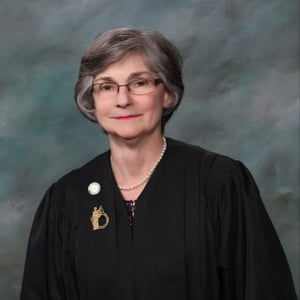
Judge, United States Court of Appeals, Fifth Circuit
Edith Jones graduated from Alamo Heights High School, where she was a National Merit Scholar. In 1971, she received her B.A. in Economics from Cornell University, graduating with honors. In 1974, she was awarded her J.D. at the University of Texas Law School, where she was a law review editor and received the Order of the Coif.
Judge Jones was the first female partner at Andrews, Kurth, Campbell & Jones (now Hunton Andrews Kurth) where she practiced various types of litigation and bankruptcy cases. Judge Jones went on the federal bench on June 1, 1985.
Judge Jones served as a former member of the National Bankruptcy Review Commission, and as a member of the Judicial Conference Commission on Bankruptcy Rules. Judge Jones served on the White House Fellows Commission. Judge Jones served on the board of the Sam Houston Area Council of the Boy Scouts of America. She has been a member of the Garland Walker Inn of Court in Houston for more than 20 years and its President for at least ten years. Judge Jones is also on the Board of the Calvin Coolidge Presidential Foundation.
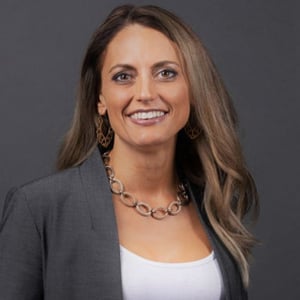
Judge, U.S. Court of Appeals for the Third Circuit
Hon. Jennifer Mascott served as Associate Professor of Law and Director of the Separation of Powers Institute at The Catholic University of America’s Columbus School of Law before her appointment to the federal bench. On July 16, 2025, President Donald J. Trump nominated her to the U.S. Court of Appeals for the Third Circuit (Delaware), and she was confirmed on October 9, 2025.
Prior to her confirmation, Judge Mascott wrote extensively in administrative and constitutional law, statutory interpretation, and the separation of powers. Her scholarship—published in leading journals including the Stanford Law Review, Notre Dame Law Review, and Supreme Court Review—was cited by the U.S. Supreme Court and multiple federal courts. She also contributed Supreme Court commentary for NBC Universal.
Before joining Catholic Law, she was an Assistant Professor and Co-Director of The C. Boyden Gray Center at George Mason University’s Antonin Scalia Law School. In 2022 she became co-author of Beermann, Cass & Diver’s Administrative Law: Cases and Materials (9th ed.). In 2023 she received the Justice Joseph Story Award for excellence in scholarship, teaching, and advancing the rule of law.
Judge Mascott also served as a Council Member of the ABA’s Administrative Law Section and as a Public Member of the Administrative Conference of the United States. She frequently testified before Congress on executive power, regulatory reform, and judicial jurisdiction, and participated in multiple Supreme Court confirmation hearings.
From 2019 to 2021, she took leave from academia to serve as Deputy Assistant Attorney General in the Department of Justice’s Office of Legal Counsel and later as Associate Deputy Attorney General, where she argued federal cases and assisted with Justice Amy Coney Barrett’s confirmation. Earlier in her career, she clerked for Justice Clarence Thomas and for then-Judge Brett M. Kavanaugh on the D.C. Circuit.
Judge Mascott earned her J.D. summa cum laude from the George Washington University Law School and her B.A. from the same institution.
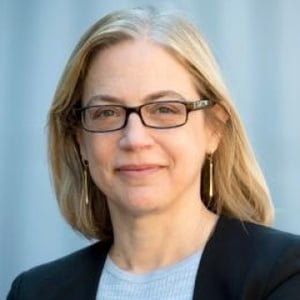
Harlan Fiske Stone Professor of Constitutional Law, Columbia Law School
A leading administrative and constitutional law scholar, Gillian Metzger ’96 writes and teaches in the areas of administrative law, constitutional law, and federal courts, with an emphasis on federalism and privatization. In 2023-2024, she served as Acting Assistant Attorney General and Deputy Assistant Attorney General in the Office of Legal Counsel in the Department of Justice.
Metzger's recent work covers topics ranging from constitutional attacks on the administrative state to appropriations, administrative law under the Roberts Court, and the role of administrative agencies in a polarized world. In 2015, Metzger won the American Bar Association Administrative Law Section Annual Scholarship Award for “The Constitutional Duty to Supervise,” which examined presidential control and oversight of the modern administrative state. She is a co-editor of Gellhorn & Byse’s Administrative Law: Cases and Comments, 13th ed. (Foundation Press, 2023), a seminal administrative law casebook.
Professor Metzger was recently elected to the American Academy of Arts & Sciences and is a Senior Fellow of the Administrative Conference of the United States. In 2020, she was awarded Columbia University's Faculty Mentorship Award and in 2014, the Law School’s graduating class awarded Metzger the Willis L.M. Reese Prize for Excellence in Teaching, recognizing, among many other accomplishments, her commitment to mentoring new generations of law students.
In 2012, Metzger helped launch Columbia Law School’s Center for Constitutional Governance (CCG)—where she now serves as faculty director—a nonpartisan legal and policy organization devoted to the study of constitutional structure and authority. CCG brings together a diverse group of constitutional scholars to explore policy areas such as health care, civil rights, immigration, financial regulation, and national security.
Metzger also has co-authored and filed numerous amicus briefs in major constitutional and administrative law challenges before the Supreme Court and other courts. Most recently, Metzger filed a brief in Seila Law Center v. CFPB, a separation of powers challenge, and in Kisor v. Wilkie, a case involving judicial deference to agencies. She has also filed briefs in cases involving reproductive rights and the Affordable Care Act, among others.
Previously, Metzger served as vice dean of intellectual life at Columbia Law School. Before joining the Law School, she worked as an attorney with the Brennan Center for Justice. Metzger also clerked for U.S. Supreme Court Justice Ruth Bader Ginsburg ’59 and Judge Patricia M. Wald of the U.S. Circuit Court of Appeals for the District of Columbia. In 2018, Metzger moderated a panel discussion with Justice Ginsburg on impact litigation at Columbia Law School.
Clayton J. and Henry R. Barber Professor of Law, Northwestern University Pritzker School of Law and Co-Chairman, Board of Directors, The Federalist Society
STEVEN GOW CALABRESI is the Clayton J. & Henry R. Barber Professor at Northwestern Pritzker School of Law. He has also co-taught in the Fall semester at Yale Law School from 2013 to the present. Calabresi clerked for Justice Antonin Scalia and Judges Robert H. Bork and Ralph K. Winter. He was a Special Assistant to Attorney General Meese from 1985 to 1987 and worked with Ken Cribb as his deputy in 1987 on the second floor of the West Wing of the Reagan White House. Calabresi has written books on presidential power and comparative constitutional law and the origins of judicial review. He and Gary Lawson are the co-editors of a casebook on U.S. Constitutional Law, and Calabresi is also the co-editor of a casebook on comparative constitutional law. He has written over seventy law review articles since 1990.
Ellison C. Palmer Professor of Tax Law, Mercer University School of Law
Linda Jellum is the Ellison C. Palmer Sr. Professor of Law at Mercer University School of Law and a visiting professor at Tulane University School of law. She teaches Tax Courses, Administrative Law, and Statutory Interpretation. In addition to teaching, Professor Jellum is a prolific scholar and has written extensively in the areas of Tax Law, Administrative Law, and Statutory Interpretation. Her numerous articles have appeared in top law journals, such as the Southern Methodist Law Review, the Miami Law Review, the UCLA Law Review, and the Ohio State Law Journal. She has also authored multiple books and book chapters on statutory interpretation.
Professor Jellum has been a leader in legal education. She is currently the Treasurer for the Southeastern Association of Law Schools; Chair of the Association of American Law School’s Section on Administrative Law; and Vice-chair for American Bar Association Section’s on Administrative Law and Regulatory Practice. Formerly, she served as the Deputy Director for the Association of American Law Schools.
Before joining the faculty, Professor Jellum worked for the Washington State Attorney General’s office. While there, she served as lead attorney for the Department of Social and Health Services. Prior to working as an assistant attorney general, she served as a law clerk for the Honorable Paul Yesawich.
Professor Jellum received her J.D. from Cornell Law School and her undergraduate degree from Cornell University. She has the unique honor of having sat for and passed five states’ bar exams.
SSRN: http://papers.ssrn.com/sol3/cf_dev/AbsByAuth.cfm?per_id=624243
Judge, United States Court of Appeals, Fifth Circuit
Edith Jones graduated from Alamo Heights High School, where she was a National Merit Scholar. In 1971, she received her B.A. in Economics from Cornell University, graduating with honors. In 1974, she was awarded her J.D. at the University of Texas Law School, where she was a law review editor and received the Order of the Coif.
Judge Jones was the first female partner at Andrews, Kurth, Campbell & Jones (now Hunton Andrews Kurth) where she practiced various types of litigation and bankruptcy cases. Judge Jones went on the federal bench on June 1, 1985.
Judge Jones served as a former member of the National Bankruptcy Review Commission, and as a member of the Judicial Conference Commission on Bankruptcy Rules. Judge Jones served on the White House Fellows Commission. Judge Jones served on the board of the Sam Houston Area Council of the Boy Scouts of America. She has been a member of the Garland Walker Inn of Court in Houston for more than 20 years and its President for at least ten years. Judge Jones is also on the Board of the Calvin Coolidge Presidential Foundation.
Judge, U.S. Court of Appeals for the Third Circuit
Hon. Jennifer Mascott served as Associate Professor of Law and Director of the Separation of Powers Institute at The Catholic University of America’s Columbus School of Law before her appointment to the federal bench. On July 16, 2025, President Donald J. Trump nominated her to the U.S. Court of Appeals for the Third Circuit (Delaware), and she was confirmed on October 9, 2025.
Prior to her confirmation, Judge Mascott wrote extensively in administrative and constitutional law, statutory interpretation, and the separation of powers. Her scholarship—published in leading journals including the Stanford Law Review, Notre Dame Law Review, and Supreme Court Review—was cited by the U.S. Supreme Court and multiple federal courts. She also contributed Supreme Court commentary for NBC Universal.
Before joining Catholic Law, she was an Assistant Professor and Co-Director of The C. Boyden Gray Center at George Mason University’s Antonin Scalia Law School. In 2022 she became co-author of Beermann, Cass & Diver’s Administrative Law: Cases and Materials (9th ed.). In 2023 she received the Justice Joseph Story Award for excellence in scholarship, teaching, and advancing the rule of law.
Judge Mascott also served as a Council Member of the ABA’s Administrative Law Section and as a Public Member of the Administrative Conference of the United States. She frequently testified before Congress on executive power, regulatory reform, and judicial jurisdiction, and participated in multiple Supreme Court confirmation hearings.
From 2019 to 2021, she took leave from academia to serve as Deputy Assistant Attorney General in the Department of Justice’s Office of Legal Counsel and later as Associate Deputy Attorney General, where she argued federal cases and assisted with Justice Amy Coney Barrett’s confirmation. Earlier in her career, she clerked for Justice Clarence Thomas and for then-Judge Brett M. Kavanaugh on the D.C. Circuit.
Judge Mascott earned her J.D. summa cum laude from the George Washington University Law School and her B.A. from the same institution.
Harlan Fiske Stone Professor of Constitutional Law, Columbia Law School
A leading administrative and constitutional law scholar, Gillian Metzger ’96 writes and teaches in the areas of administrative law, constitutional law, and federal courts, with an emphasis on federalism and privatization. In 2023-2024, she served as Acting Assistant Attorney General and Deputy Assistant Attorney General in the Office of Legal Counsel in the Department of Justice.
Metzger's recent work covers topics ranging from constitutional attacks on the administrative state to appropriations, administrative law under the Roberts Court, and the role of administrative agencies in a polarized world. In 2015, Metzger won the American Bar Association Administrative Law Section Annual Scholarship Award for “The Constitutional Duty to Supervise,” which examined presidential control and oversight of the modern administrative state. She is a co-editor of Gellhorn & Byse’s Administrative Law: Cases and Comments, 13th ed. (Foundation Press, 2023), a seminal administrative law casebook.
Professor Metzger was recently elected to the American Academy of Arts & Sciences and is a Senior Fellow of the Administrative Conference of the United States. In 2020, she was awarded Columbia University's Faculty Mentorship Award and in 2014, the Law School’s graduating class awarded Metzger the Willis L.M. Reese Prize for Excellence in Teaching, recognizing, among many other accomplishments, her commitment to mentoring new generations of law students.
In 2012, Metzger helped launch Columbia Law School’s Center for Constitutional Governance (CCG)—where she now serves as faculty director—a nonpartisan legal and policy organization devoted to the study of constitutional structure and authority. CCG brings together a diverse group of constitutional scholars to explore policy areas such as health care, civil rights, immigration, financial regulation, and national security.
Metzger also has co-authored and filed numerous amicus briefs in major constitutional and administrative law challenges before the Supreme Court and other courts. Most recently, Metzger filed a brief in Seila Law Center v. CFPB, a separation of powers challenge, and in Kisor v. Wilkie, a case involving judicial deference to agencies. She has also filed briefs in cases involving reproductive rights and the Affordable Care Act, among others.
Previously, Metzger served as vice dean of intellectual life at Columbia Law School. Before joining the Law School, she worked as an attorney with the Brennan Center for Justice. Metzger also clerked for U.S. Supreme Court Justice Ruth Bader Ginsburg ’59 and Judge Patricia M. Wald of the U.S. Circuit Court of Appeals for the District of Columbia. In 2018, Metzger moderated a panel discussion with Justice Ginsburg on impact litigation at Columbia Law School.
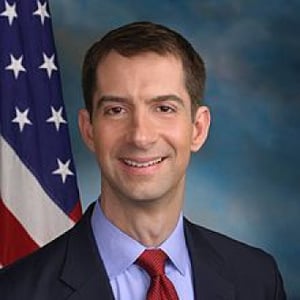
United States Senator, Arkansas
Tom Cotton is a United States Senator from Arkansas. Tom’s committees include the Banking Committee, where he chairs the Economic Policy Subcommittee, the Intelligence Committee, and the Armed Services Committee, where he chairs the Air Land Power Subcommittee.
Tom grew up on his family’s cattle farm in Yell County. He graduated from Dardanelle High School, Harvard, and Harvard Law School. After a clerkship with the U.S. Court of Appeals and private law practice, Tom left the law because of the September 11th attacks. Tom served nearly five years on active duty in the United States Army as an Infantry Officer.
Tom served in Iraq with the 101st Airborne and in Afghanistan with a Provincial Reconstruction Team. Between his two combat tours, Tom served with The Old Guard at Arlington National Cemetery. Tom’s military decorations include the Bronze Star Medal, Combat Infantry Badge, and Ranger Tab.
Between the Army and the Senate, Tom worked for McKinsey & Co. and served one term in the House of Representatives.
Tom and his wife Anna have two sons, Gabriel and Daniel.
Executive Vice President, The Federalist Society
Dean Reuter is Executive Vice President at the Federalist Society for Law and Public Policy Studies. He has served in two federal government agency Offices of the Inspector General, as Counsel to the Inspector General and Deputy Inspector General, responsible for policing the use of federal funds granted and contracted through those agencies. As such, he helped conduct and oversee criminal investigations across the country. He is the principal author of the non-fiction book, The Hidden Nazi: The Untold Story of America's Deal with the Devil, and editor of Liberty’s Nemesis: The Unchecked Expansion of the State and Confronting Terror: 9/11 and the Future of American National Security. He was appointed by the President and served as Vice-Chairman of the Board of Directors of the Corporation for National and Community Service, and recently served as an appointee on the U.S. Commission on Presidential Scholars. He is a graduate of Hood College (BA with Honors) and the University of Maryland School of Law.
United States Senator, Arkansas
Tom Cotton is a United States Senator from Arkansas. Tom’s committees include the Banking Committee, where he chairs the Economic Policy Subcommittee, the Intelligence Committee, and the Armed Services Committee, where he chairs the Air Land Power Subcommittee.
Tom grew up on his family’s cattle farm in Yell County. He graduated from Dardanelle High School, Harvard, and Harvard Law School. After a clerkship with the U.S. Court of Appeals and private law practice, Tom left the law because of the September 11th attacks. Tom served nearly five years on active duty in the United States Army as an Infantry Officer.
Tom served in Iraq with the 101st Airborne and in Afghanistan with a Provincial Reconstruction Team. Between his two combat tours, Tom served with The Old Guard at Arlington National Cemetery. Tom’s military decorations include the Bronze Star Medal, Combat Infantry Badge, and Ranger Tab.
Between the Army and the Senate, Tom worked for McKinsey & Co. and served one term in the House of Representatives.
Tom and his wife Anna have two sons, Gabriel and Daniel.
Executive Vice President, The Federalist Society
Dean Reuter is Executive Vice President at the Federalist Society for Law and Public Policy Studies. He has served in two federal government agency Offices of the Inspector General, as Counsel to the Inspector General and Deputy Inspector General, responsible for policing the use of federal funds granted and contracted through those agencies. As such, he helped conduct and oversee criminal investigations across the country. He is the principal author of the non-fiction book, The Hidden Nazi: The Untold Story of America's Deal with the Devil, and editor of Liberty’s Nemesis: The Unchecked Expansion of the State and Confronting Terror: 9/11 and the Future of American National Security. He was appointed by the President and served as Vice-Chairman of the Board of Directors of the Corporation for National and Community Service, and recently served as an appointee on the U.S. Commission on Presidential Scholars. He is a graduate of Hood College (BA with Honors) and the University of Maryland School of Law.

Showcase Panel III: The Executive Branch and the Regulatory State
Aditya Bamzai, David Barron, Susan E. Dudley, Lisa Heinzerling, Neomi Rao, Dean Reuter
2017 National Lawyers Convention
In recent decades, the President has sought to control the regulatory state through the Office...
Showcase Panel III: The Executive Branch and the Regulatory State
Aditya Bamzai, David Barron, Susan E. Dudley, Lisa Heinzerling, Neomi Rao, Dean Reuter
2017 National Lawyers Convention
In recent decades, the President has sought to control the regulatory state through the Office...
Financial Regulation: The Apotheosis of the Administrative State?
Carlos T. Bea, Richard A. Epstein, Hal S. Scott, Peter J. Wallison, Arthur E. Wilmarth
2017 National Lawyers Convention
Concern with “the regulatory state" often focuses on reforms to formal institutional structures and legal...
Financial Regulation: The Apotheosis of the Administrative State?
Carlos T. Bea, Richard A. Epstein, Hal S. Scott, Peter J. Wallison, Arthur E. Wilmarth
2017 National Lawyers Convention
Concern with “the regulatory state" often focuses on reforms to formal institutional structures and legal...
Showcase Panel II: Congress and the Administrative State
C. Boyden Gray, Peter L. Strauss, Diane S. Sykes, Christopher J. Walker, Keith E. Whittington
2017 National Lawyers Convention
Despite the Constitution vesting “[a]ll legislative Powers herein granted" in Congress, today lawmaking by administrative...
Showcase Panel II: Congress and the Administrative State
C. Boyden Gray, Peter L. Strauss, Diane S. Sykes, Christopher J. Walker, Keith E. Whittington
2017 National Lawyers Convention
Despite the Constitution vesting “[a]ll legislative Powers herein granted" in Congress, today lawmaking by administrative...
Showcase Panel I: Administrative Agencies and the Federal Judiciary
Steven G. Calabresi, Linda Jellum, Edith H. Jones, Jenn L. Mascott, Gillian E. Metzger
2017 National Lawyers Convention
Statutory administrative law judges (ALJ) located within each agency adjudicate administrative law cases brought by...
Showcase Panel I: Administrative Agencies and the Federal Judiciary
Steven G. Calabresi, Linda Jellum, Edith H. Jones, Jenn L. Mascott, Gillian E. Metzger
2017 National Lawyers Convention
Statutory administrative law judges (ALJ) located within each agency adjudicate administrative law cases brought by...
Opening Remarks by Senator Tom Cotton
Tom Cotton, Dean Reuter
2017 National Lawyers Convention
Senator Tom Cotton opened the 2017 National Lawyers Convention on November 16 at the Mayflower...
Opening Remarks by Senator Tom Cotton
Tom Cotton, Dean Reuter
2017 National Lawyers Convention
Senator Tom Cotton opened the 2017 National Lawyers Convention on November 16 at the Mayflower...