2008
Washington Supreme Court Round-Up: 2007 Highlights
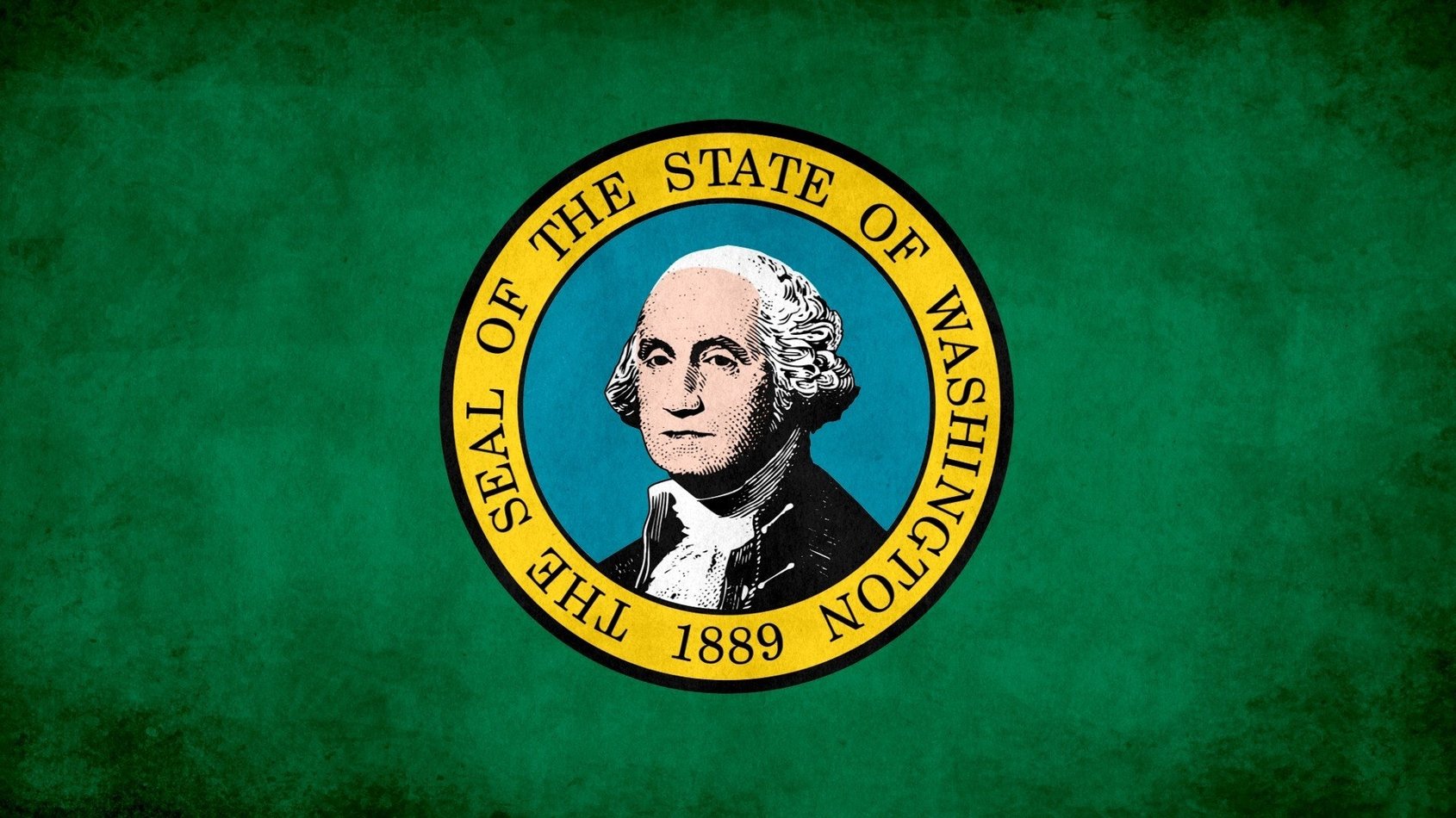
The Washington Supreme Court recently issued another much publicized opinion, ruling 5-4 that the voters of the state misunderstood what they were voting for when they decided to limit property tax increases to 1% a year.
Background
In Washington Citizens Action of Washington v. State,1 a deeply divided Washington Supreme Court struck down Initiative 747 (I-747). The initiative amended existing law by limiting property tax increases to 1% per year.2 I-747 would have kept in place the ability of local governments to increase property tax collections above 1% if approved by the voters.3
Prior to I-747’s passage, Washington voters passed a similar initiative (I-722) in 2000 which set the property tax limit from 6% to 2%. After I-722’s passage, a number of local jurisdictions challenged the measure as unconstitutional. On November 20, 2001, the trial court entered a preliminary injunction against implementation or enforcement of I-722.4 As a result of the trial court’s decision, supporters of I-722 filed I-747 with the Secretary of State’s Office. Seven months later in July 2001, I-747 supporters turned in the requisite number of signatures, placing the initiative on the 2001 November general election ballot. I-747’s official ballot title stated:
Initiative Measure No. 747 concerns limiting property tax increases. This measure would require state and local governments to limit property tax levy increases to 1% per year, unless an increase greater than this limit is approved by the voters at an election. Should this measure be enacted into law?5
On September 20, 2001 the Washington Supreme Court ruled6 I-722 violated the single-subject rule of the Washington Constitution.7 Because I-722 was struck down by the Washington Supreme Court, the previous 6% property tax limit was reinstated. On November 6, 2001, Washington voters overwhelmingly passed I-747 (59% to 41%) which set the property tax increase limit at 1%.
Washington Supreme Court’s Decision
Writing for the majority, Justice Bobbe Bridge8 upheld the trial court’s ruling that I-747 violated Article II, Section 37 of the Washington Constitution. Concurring in the decision were Justices Susan Owens, Barbara Madsen, Stephen Brown (Pro Tem), and Teresa Kulik (Pro Tem).9
The court ruled that I-747 violated the Washington Constitution because the “text of the initiative claimed to reduce the general property tax limit from two percent to one percent, but in reality it reduced the limit from six percent to one percent.”10
Article II, Section 37 provides that “[n]o act shall ever be revised or amended by mere reference to its title, but the act revised or the section amended shall be set forth at full length.” According to the court, when I-747 was enacted, the text of the initiative “did not accurately set forth the law that the initiative sought to amend.”11 The court ruled that I-747’s text led voters to believe the initiative would generally reduce the property tax increase limit from 2% to 1% when in reality—because I-722 was recently declared unconstitutional—I-747 was actually reducing the property tax increase limit from 6% to 1%.12
The court dismissed the State’s argument that Section 37’s purpose was, in fact, satisfied because the official Voters’ Pamphlet made it clear that there was an ongoing challenge to I-722, and if that law was struck down, I-747 would reduce the property tax increase limit from 6% to 1%.13 In addition, the court disagreed that the “Argument For” section and Washington Attorney General’s explanatory statement set forth in the Voters’ Pamphlet cured any defect:
While complete review of the attorney general’s explanatory statement in the Voters’ Pamphlet might have explained the relationship between pre-I-722 law and the changes proposed by I-747, article II, section 37 does not simply require that notice of an amendatory initiative’s impact on existing law be somehow available to voters. ‘[T]he act revised or the section amended’ must be ‘set forth at full length.’ Nothing in the plain language of article II, section 37 or in the case law interpreting it suggests that information in the Voters’ Pamphlet can cure the type of textual violation of article II, section 37 that occurred here, where the initiative’s inaccuracy strikes at the substance of the amendment’s impact.14
The majority further noted that the court “previously acknowledged that many voters do not read the Voters’ Pamphlet when evaluating an initiative or referendum.” Thus, according to the court’s reasoning, a voter would have thought the initiative was reducing the property tax limit from 2% to 1%, if he or she had simply read the text of I-747.15 In sum, the court ruled that at the time of the popular vote, the text of I-747 misled the voters because the initiative did not accurately set forth the act being revised or the section being amended.
The Dissent
Justice Charles Johnson—joined by Chief Justice Gerry Alexander and Justices Tom Chambers and Richard Sanders—chided the majority for suggesting that “the voters are unable to think or read for themselves[.]”16 According to the dissent, Article II, Section 37 of the Washington Constitution has two primary purposes: (1) “to avoid confusion, ambiguity, and uncertainty in statutory law, essentially to disclose the effect of the new legislation”; and (2) “to ensure that legislators and voters are aware of the impact that an amendatory law will have on existing law.”17
The dissent argued that there was no confusion, ambiguity, or uncertainty to I-747’s text. The dissent noted that the “ballot title and the text clearly disclose[d] the effect of the new legislation to reduce taxes.”18 Moreover, the dissent opined that the voters were informed there was a previous higher property tax limit of 6% and that I-747 reduced the maximum tax to 1%.19 According to the dissent, “[w]hether the former tax cap was six percent or two percent, the voters understood the effect of this law was to reduce the tax, and this is what they voted to approve.”20
The dissent further explained that the former 6% property tax limit was specifically referenced in the Voters’ Pamphlet’s “Policies and Purposes” section, the “Argument For” section, and the Washington Attorney General’s explanation section.21 Thus, the voters who wished to read only the official ballot title were apprised of the initiative’s effect, to reduce taxes to a maximum of 1% increase per year.22 Voters who further decided to read the Voters’ Pamphlet were fully apprised of both the status of I-722 and the former 6% property tax cap.23
The dissent concluded that the voters “were aware the existing law was higher taxes and the impact of [I-747] was to reduce taxes.”24
Washington Legislature’s Response to Court’s Decision
As a result of the public outcry sparked by the Washington Supreme Court’s decision, Governor Christine Gregoire (D) convened the state legislature for a rare one-day special session to reinstate the 1% property tax limit.25 Both houses overwhelmingly voted to overturn the Washington Supreme Court’s decision and to reinstate the 1% property tax cap; the bill was signed into law the same day by Governor Gregoire.26
* Andrew Cook is the President of the Puget Sound Federalist Society Lawyers Chapter in Seattle and is Legal Counsel for the Building Industry Association of Washington.
Endnotes
1 171 P.3d 486 (Wash. 2007).
2 In some taxing districts, I-747 would have limited property tax collections at the lesser of 1% or the rate of inflation.
3 State of Washington Voters Pamphlet, General Election 15 (Nov. 6, 2001) (Voters’ Pamphlet).
4 171 P.3d at 490.
5 Voters’ Pamphlet, supra note 3, at 4.
6 City of Burien v. Kiga, 144 Wn.2d 819, 31 P.3d 659 (Wash. 2001).
7 Wash. Const. art. II, section 19 (“No bill shall embrace more than one subject, and that shall be expressed in the title”).
8 Justice Bridge retired in December, one year before her six-year term ended. Bridge was replaced by Debra Stephens, who was appointed by Governor Christine Gregoire.
9 Justices Mary Fairhurst and Jim Johnson recused themselves. Justice Jim Johnson, prior to being elected to the court, represented the proponents of I-747 and drafted the initiative’s text.
10 171 P.3d at 488.
11 Id. at 492.
12 Id.
13 Id.
14 Id. at 492-93 (citations omitted).
15 Id. at 493.
16 Id. at 496.
17 Id. (citing Amalgamated Transit Union Local 587 v. State, 142 Wn.2d 183, 245, 11 P.3d 762 (Wash. 2000) and Citizens for Responsible Wildlife Mgmt. v. State, 149 Wn.2d 622, 642, 71 P.3d 644 (Wash. 2003)).
18 Washington Citizens Action of Washington v. State, 171 P.3d at 496-97.
19 Id. at 497.
20 Id.
21 Id.
22 Id.
23 Id.
24 Id.
25 Ralph Thomas & Andrew Garber, Shouting, Name-Calling as Lawmakers Cap Property Taxes, The Seattle Times, Nov. 30, 2007, available at http://archives.seattletimes.nwsource.com/cgi-bin/texis. cgi/web/vortex/display?slug=session30m&date=20071130&query= Initiative+747.
26 Id. (The House of Representatives voted 86-8 voted in favor of reinstating the 1% property tax limit; the Senate voted 39-9.)
Note from the Editor: The Federalist Society takes no positions on particular legal and public policy matters. Any expressions of opinion are those of the author. We welcome responses to the views presented here. To join the debate, please email us at info@fedsoc.org.