
America’s AI Action Plan: Green Lights or Guardrails?
America’s new AI Action Plan — announced by the White House in July and framed...

The Regulatory Transparency Project is a nonprofit, nonpartisan effort dedicated to fostering discussion and a better understanding of regulatory policies.




Neil Chilson, Kevin Frazier, Mario Loyola, Asad Ramzanali
America’s new AI Action Plan — announced by the White House in July and framed...
Neil Chilson, Kevin Frazier, Mario Loyola, Asad Ramzanali
America’s new AI Action Plan — announced by the White House in July and framed...

Jennifer Huddleston, Clare Morell, Bailey Sanchez, Ashkhen Kazaryan
On June 27th, the Supreme Court ruled in Free Speech Coalition v. Paxton that Texas’s age-verification law...

Lisa Larrimore Ouellette, Adam Mossoff, Dan Troy, Brad Watts
A Regulatory Transparency Project Webinar
On January 17, the Biden-Harris Administration added 15 new drugs, including Ozempic, to the list of...
Lisa Larrimore Ouellette, Adam Mossoff, Dan Troy, Brad Watts
A Regulatory Transparency Project Webinar
On January 17, the Biden-Harris Administration added 15 new drugs, including Ozempic, to the list of...

Professor of Law, South Texas College of Law Houston
Josh Blackman is a national thought leader on constitutional law and the United States Supreme Court. Josh’s work was quoted during two presidential impeachment trials. He has testified before Congress and advises federal and state lawmakers. Josh regularly appears on TV, including NBC, CBS, ABC, Fox, and the BBC. Josh is also a frequent guest on NPR and other syndicated radio programs. He has published commentaries in the New York Times, Wall Street Journal, Washington Post, and leading national publications.
Since 2012, Josh has served as a professor at the South Texas College of Law Houston. He holds the Centennial Chair of Constitutional Law. Josh is an Adjunct Fellow at the Manhattan Institute. Josh has written more than seven dozen law review articles that have been cited more than a thousand times. Josh was selected as the Jurist of the Year by the Texas Journal of Law & Public Policy, received the inaugural Meese III Originalism Award, and was awarded the Inaugural Joseph Story Award. Josh was selected by Forbes Magazine for the “30 Under 30” in Law and Policy. Josh is the President of the Harlan Institute, and founded FantasySCOTUS, the Internet’s Premier Supreme Court Fantasy League. He blogs at the Volokh Conspiracyand posts@JoshMBlackman.
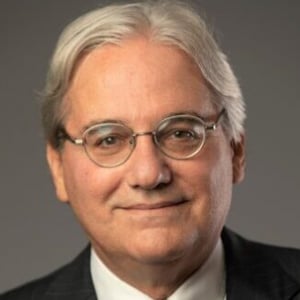
Clinical Professor of Law, Cornell Law School
William A. Jacobson is a Clinical Professor of Law and Director of the Securities Law Clinic.
He is a 1981 graduate of Hamilton College and a 1984 graduate of Harvard Law School. At Harvard he was Senior Editor of the Harvard International Law Journal and Director of Litigation for the Harvard Prison Legal Assistance Project.
Prior to joining the Cornell law faculty in 2007, Professor Jacobson had a highly successful civil litigation and arbitration practice in Providence, Rhode Island, concentrating in investment, employment, and business disputes in the securities industry, including many high profile cases reported in leading newspapers and magazines.
Professor Jacobson has argued cases in numerous federal and state courts, including the Courts of Appeal for the First, Fifth and Sixth Circuits, and the Rhode Island Supreme Court.
Professor Jacobson has a national reputation as a leading practitioner in securities arbitration. He was Treasurer, and is a former member of the Executive Committee and Board of Directors of the Public Investors Arbitration Bar Association, a professional organization of attorneys dedicated to protecting public investors. He frequently is quoted in national media on issues related to investment fraud and investor protection, and in the past has served as one of a small number of private practice attorneys who trained new arbitrators for the Financial Industry Regulatory Authority.
Professor Jacobson is co-author of the Securities Arbitration Desk Reference (Thomson-Reuters), updated annually.
Professor Jacobson also is the founder and publisher of Legal Insurrection, a popular politics and law website. He is frequently quoted in the media on political and legal topics, has authored many Op-Eds in major publications, and appears on television and radio to discuss politics and the law.
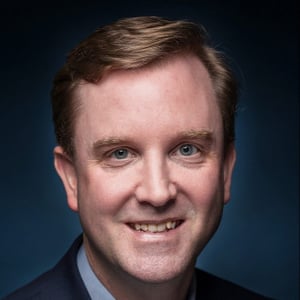
Vice President and Deputy Counsel, Wisconsin Institute for Law and Liberty
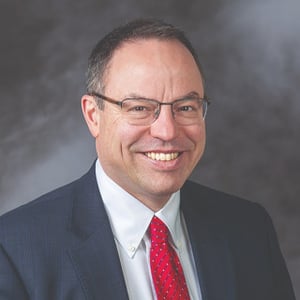
Professor of Law and J. Philip Johnson Faculty Fellow, University of North Dakota School of Law
Michael S. McGinniss is Professor of Law and J. Philip Johnson Faculty Fellow at the University of North Dakota School of Law, where he joined the faculty in 2010 and served as the Dean from 2019 to 2022. He chairs the executive committee for the Federalist Society's Practice Group on Professional Responsibility and Legal Education.
Before entering the legal academy, Professor McGinniss served for twelve years as a Disciplinary Counsel for the Supreme Court of Delaware. He currently teaches courses on Professional Responsibility, Advanced Legal Ethics, Civil Procedure, and Federal Courts. He also serves as Faculty Advisor for the North Dakota Law Review and the UND Law Federalist Society student chapter.
Professor McGinniss’ research and scholarship interests are wide-ranging and include lawyer and judicial ethics, lawyer discipline and regulation of the profession, constitutional law (especially First Amendment, separation of powers, and federalism), and cultural challenges faced by conservatives in the law schools and the legal profession. His most recent law review article, Declaring Independence to Secure Integrity: The Supreme Court Justices' Code of Conduct, was published in the Federalist Society Review. His article Expressing Conscience with Candor: Saint Thomas More and First Freedoms in the Legal Profession, was published in the Harvard Journal of Law & Public Policy.
Professor McGinniss has spoken to Federalist Society lawyer and student chapters across the country about judicial independence and ethics, especially relating to the federal courts and the United States Supreme Court Justices. In addition, he has spoken to several chapters about rising challenges to ideological diversity and targeting of conservative viewpoints in law schools and the legal profession. Although he is very pleased to speak on these and many other topics that may be of interest to lawyer and student chapters, in 2026-2027, he has particular interest in speaking on the topic “Lawyer Discipline as Political ‘Resistance’: Separation of Powers, Federalism, and the Rule of Law,” concerning his work-in-progress on the weaponization of professional disciplinary processes against conservative lawyers for political and ideological purposes.

Commissioner, U.S. Equal Employment Opportunity Commission
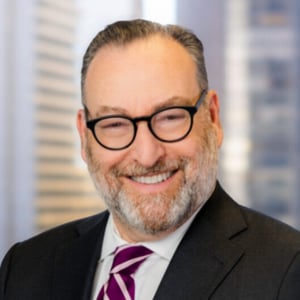
Founder, Chairman, and CEO, Louis D. Brandeis Center for Human Rights Under Law
Hon. Kenneth L. Marcus is an internationally recognized expert in civil and human rights, as well as a leader in the fight against anti-Semitism on and off university campuses. He is the Founder, Chairman, and CEO of The Louis D. Brandeis Center for Human Rights Under Law, the leading civil rights legal organization fighting against anti-Semitism. The New York Times has called him “The Man Who Helped Redefine Campus Anti-Semitism.” He been described, in that paper, as “the single most effective and respected force” to combat anti-Semitism.
During his public service career, Marcus served as Assistant U.S. Secretary of Education for Civil Rights; Staff Director at the U.S. Commission on Civil Rights; and General Deputy Assistant U.S. Secretary of Housing and Urban Development for Fair Housing and Equal Opportunity.
In academia, he serves as Professorial Lecturer in Law at George Washington University. He formerly held the Lillie and Nathan Ackerman Chair in Equality and Justice in America at the City University of New York’s Bernard M. Baruch College, served as Visiting Research Professor of Political Science at Yeshiva University, and was a Board of Visitors member George Mason University and Distinguished Senior Fellow at that university’s law school. He is a member of the editorial board of the Journal of Contemporary Antisemitism and previously served as Associate Editor of the Journal for the Study of Anti-Semitism.
Marcus is also author of The Definition of Anti-Semitism (Oxford University Press) and Jewish Identity and Civil Rights in America (Cambridge University Press). He has published widely in academic journals as well as in more popular venues such as The Wall Street Journal, Washington Post, Newsweek, USA Today, and Politico. He is a graduate of Williams College and the University of California at Berkeley School of Law.
Earlier in his career, he was a litigation partner in two major law firms, where he conducted complex commercial and constitutional litigation. He also serves as Chairman emeritus of the Executive Committee of the Federalist Society for Law & Public Policy Civil Rights Practice Group.
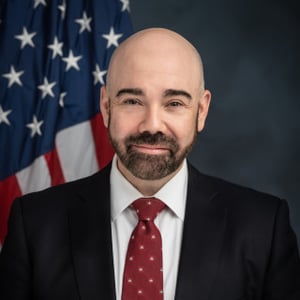
Assistant Secretary for Fair Housing and Equal Opportunity, United States Department of Housing and Urban Development
Craig Trainor is Assistant Secretary for Fair Housing and Equal Opportunity at the United States Department of Housing and Urban Development. President Trump nominated Mr. Trainor for this position on February 11, 2025, and the United States Senate confirmed him on October 7, 2025.
A “Day One” Trump-Vance Administration official, he previously served as Acting Assistant Secretary for Civil Rights and Principal Deputy Assistant Secretary for Civil Rights at the United States Department of Education, where he spearheaded the Department’s efforts to reorient America’s civil rights regime from an unjust spoils system to one that protects the rights of all Americans. Mr. Trainor’s February 14, 2025, “Dear Colleague” letter is widely considered the Trump Administration’s blueprint for enforcing civil rights laws and restoring the Constitution’s promise of equal protection.
Prior to serving in the Trump-Vance Administration, he was Senior Special Counsel with the United States House of Representatives Committee on the Judiciary under Chairman Jim Jordan (R-OH), and Senior Litigation Counsel with the America First Policy Institute under the Honorable Pam Bondi.
For over ten years, Mr. Trainor was a criminal defense and civil rights lawyer in New York City, litigating cases in New York state court and the United States District Court for the Southern and Eastern Districts of New York.
Prior to founding his law practice, he served as a New York City prosecutor, an associate attorney at a white collar criminal defense firm, and a law clerk to Chief Judge Frederick J. Scullin, Jr., United States District Court for the Northern District of New York.
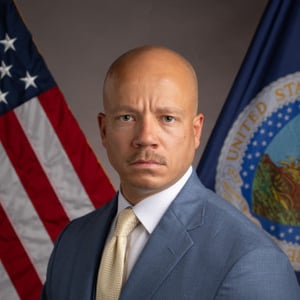
Assistant Secretary for Civil Rights, U.S. Department of Agriculture
Devon Westhill is the Assistant Secretary for Civil Rights at the U.S. Department of Agriculture. The U.S. Senate confirmed President Donald Trump’s nomination of Westhill on October 7, 2025.
Westhill returns to the USDA where he previously headed the civil rights office as Deputy Assistant Secretary in President Trump’s first term. His previous government appointments also include service at the U.S. Department of Labor, liaison to the Administrative Conference of the U.S., and liaison to the White House Initiative on Historically Black Colleges and Universities. Prior to returning to government service, Westhill was President and General Counsel of a nonprofit civil rights organization.
Westhill has testified on civil rights matters before Congress, federal agencies, and as an expert witness in federal court. He has spoken hundreds of times at college campuses, conferences, and on radio and TV programs, and he is frequently quoted in print publications, and his writing has appeared in numerous national outlets. A U.S. Navy veteran, Westhill earned his BA from the University of North Carolina at Chapel Hill and his JD from the University of Florida.
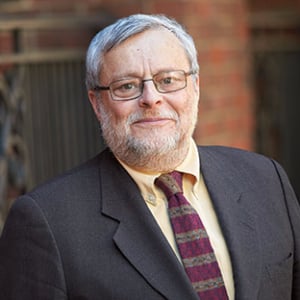
Dwight D. Opperman Professor of Law; Director, Center for Labor, New York University School of Law
Samuel Estreicher is a nationally preeminent scholar in US and international-comparative labor and employment law and arbitration law. He has authored more than a dozen books, including Beyond Elite Law: Access to Civil Justice in America (with Joy Radice, Cambridge Univ. 2016); leading casebooks on legislation and regulatory state, labor law and employment discrimination and employment law; and published more than 200 articles in professional and academic journals. He served as Chief Reporter for the American Law Institute’s Restatement of Employment Law (2015). After clerking for Judge Harold Leventhal of the US Court of Appeals for the DC Circuit, practicing in a labor law firm, and clerking for Justice Lewis F. Powell Jr. of the US Supreme Court, Prof. Estreicher joined the NYU School of Law faculty in 1978. In addition to serving as counsel to major law firms, he is the former secretary of the Labor and Employment Law Section of the American Bar Association, a former chair of the Committee on Labor and Employment Law of the Association of the Bar of the City of New York.15). He maintains an active appellate and ADR practice. The Labor and Employment Research Association awarded him its 2010 Susan C. Eaton Award for Outstanding Scholar-Practitioner. In recent years, Estreicher also has published work in public international law and authored several briefs in the Supreme Court and US courts of appeals on employment and US foreign relations law issues. Prof. Estreicher received his BA from Columbia College, his MS in industrial relations from Cornell University, and his JD from Columbia Law School, where he was editor-in-chief of the Columbia Law Review. He is a member of the College of Labor and Employment Lawyers and was appointed in 2016 by the UN Secretary General as a member of the UN’s Internal Justice Commission.
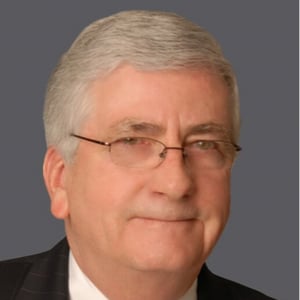
Shareholder, Ogletree Deakins
Brian Hayes is a Shareholder in the Washington, DC office of Ogletree Deakins and serves as Co-Chair of the law firm’s Traditional Labor Practice Group. Immediately prior to his joining the firm he was a Member of the National Labor Relations Board. He was confirmed to that post by the United States Senate in 2010 and his term ended in December of 2012. He is currently a Member of the U.S. Chamber of Commerce Litigation Advisory Committee and was recently named Chairman of the U.S. Chamber’s Subcommittee on the National Labor Relations Act. He also serves as editor in chief for The Practical NLRB Advisor.
Prior to his nomination and confirmation to the NLRB, Brian Hayes served as the Republican Labor Policy Director for the United States Senate Committee on Health, Education, Labor and Pensions. He came to Capitol Hill in 2005 after nearly thirty years in private legal practice devoted exclusively to representing management clients in labor and employment matters. While in private practice he represented clients in scores of cases before NLRB, state and federal courts, and a host of other federal agencies such as the EEOC, OFCCP, OSHA, the Department of Labor and their state counterparts. He also has had extensive private practice experience representing employers in collective-bargaining negotiations, arbitrations and other forms of dispute resolution. In addition to his private practice, he served as Counsel to the Employers’ Association of the Northeast, editor-in-chief and contributor to The Health Care Labor Manual, and also served on the adjunct faculty of Western New England Law School teaching courses in labor law, and collective-bargaining, arbitration and employment litigation. Before entering private practice he began his legal career at the NLRB working as a law clerk to the Chief Administrative Law Judge while in law school and subsequently as counsel to the then-Board Chairman. He is a graduate of Boston College and of Georgetown University Law School.
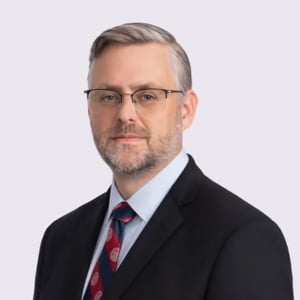
Principal, JacksonLewis
Marvin Kaplan is a principal in the New York City, New York, office of Jackson Lewis P.C.
Marvin, a former Chairman of the National Labor Relations Board (NLRB), advises clients on labor and employment issues, focusing on union organizing and labor-management relations. Over his eight years on the NLRB, Marvin participated in over 900 decisions, including decisions addressing the lawfulness of captive audience speeches and work rules, and the standards for determining the composition of a bargaining unit and whether an individual is an independent contractor, and several rulemakings, defining a joint-employer and laying out procedures governing representation elections.
Prior to his time on the NLRB, he served as Chief Counsel at the Occupational Safety and Health Review Commission and a Special Assistant at U.S. Department of Labor. His cross-disciplinary experience makes Marvin particularly well-suited to advise clients on strategic business planning.
His experience at all levels of government in different agencies and branches, including the U.S. House of Representatives, provides a unique perspective on Congressional oversight, legislation, regulations and federal investigations—enabling him to help clients navigate complex compliance challenges and anticipate regulatory developments that could impact their organizations.
He is a graduate of Cornell University and Washington University in St. Louis Law School.
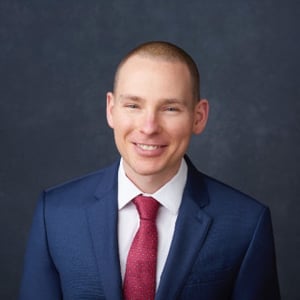
Shareholder & Co-Chair of the Workplace Policy Institute, Littler Mendelson P.C.
Alexander T. MacDonald advises employers on all aspects of the employment and labor landscape, focusing on emerging legislation and regulation. He has extensive experience advising businesses on worker classification, arbitration, the administrative and regulatory process, and the future of work. He frequently writes, publishes, and speaks on these subjects. His work has been cited by scholars and appellate courts. He is a recognized voice for the management perspective.
Alexander is a co-chair of the Workplace Policy Institute (WPI) team. With WPI, he advises employers on legislative, administrative, and regulatory developments at the state and federal level. He advocates for employers in the regulatory and administrative process. He also helps employers protect their businesses by understanding and anticipating cutting-edge legal developments.
Alexander also has extensive experience in traditional labor law. He represents management in all aspects of labor-management relations, including unfair labor practice charges, grievance arbitrations, representation elections, contract negotiations, and related litigation, including litigation in the U.S. courts of appeals.
Before joining Littler, Alexander served as the director, future of work, for a major technology company. He also worked in a national labor and employment law firm and a major public-sector general counsel’s office. He was a law clerk to the senior judges in the District of Columbia Court of Appeals.
He is also a veteran of the U.S. Air Force. He served in Operations Enduring Freedom and Iraqi Freedom. In law school, he graduated first in his class
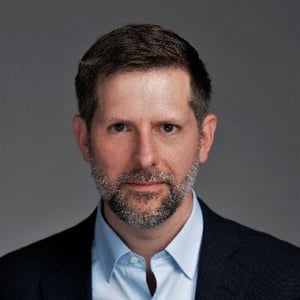
Head of AI Policy, Abundance Institute
Neil Chilson is the Head of AI Policy at the Abundance Institute. Prior to this position, he served as a Senior Research Fellow at the Center for Growth and Opportunity. Chilson is a lawyer, computer scientist, and author of the book “Getting Out of Control: Emergent Leadership in a Complex World.”
Chilson was previously the senior research fellow for Technology and Innovation at Stand Together, where he guided efforts to understand and promote the legal and cultural paradigms that best enable people to discover, innovate, and improve all our lives.
Before Stand Together, Chilson was the Chief Technologist at the Federal Trade Commission, where he focused on the economics of privacy and blockchain-related issues. Previously, he was an attorney advisor to Acting FTC Chairman Maureen K. Ohlhausen. In both roles he advised Chairman Ohlhausen and worked with staff on nearly every major technology-related case, report, workshop, or other FTC proceeding since January 2014. Neil joined the FTC from telecom firm Wilkinson Barker Knauer. Neil is frequently quoted by the press and his work has appeared in numerous news outlets, including The Wall Street Journal, The Washington Post, USAToday, and Newsweek. Neil has a J.D. from The George Washington Law School, a M.S. in computer science from University of Illinois, Urbana-Champaign, and a B.S. in computer science from Harding University.
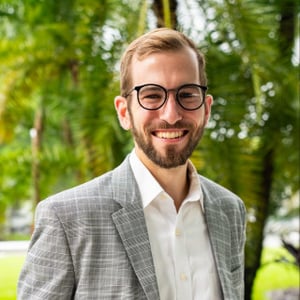
AI Innovation and Law Fellow, University of Texas School of Law
Kevin Frazier is an AI Innovation and Law Fellow with University of Texas School of Law.
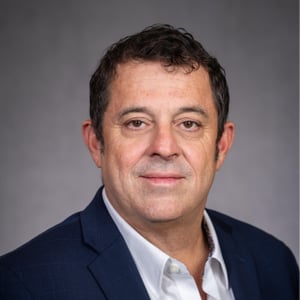
Senior Fellow for Law, Economics, and Technology, The Heritage Foundation; Professor, Florida International University
Mario Loyola is a Senior Fellow for Law, Economics, and Technology at The Heritage Foundation.
Loyola served in the Trump Administration as Associate Director for Regulatory Reform at the White House Council on Environmental Quality. In that role, he was one of the principal drafters of the One Federal Decision policy, which helped to streamline the permitting and environmental review of large infrastructure projects. While at CEQ, he was a member of the U.S. delegation to the USMCA free trade negotiations with Mexico and Canada, as well as the United Nations conference on biodiversity on the high seas. Loyola initially joined the White House in February 2017 as a Presidential Speechwriter, employing his expertise in many areas of foreign and domestic policy.
After beginning his career in M&A and corporate finance law, Loyola served in the Bush 43 Administration as a special assistant to the Undersecretary of Defense for Policy. He left that position to start writing on national defense issues in magazines such as National Review and The Weekly Standard, reporting from the front lines of the war on terrorism in Lebanon, Israel, and Iraq. He finished the Bush Administration as Foreign and Defense Counsel to the U.S. Senate Republican Policy Committee, then under the chairmanship of Senator Kay Bailey Hutchison of Texas. He subsequently moved to Texas and joined the Texas Public Policy Foundation, where he specialized in energy, environment, and federalism.
Loyola is a frequent contributor to The Wall Street Journal, National Review, and The Atlantic, among others. He teaches environmental and administrative law at Florida International University, where he is Founding Director of the Environmental Finance and Risk Management program in FIU’s prestigious Institute of Environment. He received a bachelor’s degree in European history from the University of Wisconsin–Madison and a J.D. from Washington University School of Law.
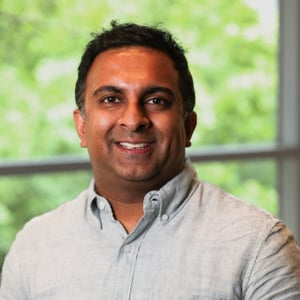
Director of Artificial Intelligence & Technology Policy, Vanderbilt Policy Accelerator, Vanderbilt University
Asad Ramzanali is the Director of Artificial Intelligence & Technology Policy at the Vanderbilt Policy Accelerator.
Asad has technology and technology policy experience across government, nonprofit, and industry. Most recently, he served as the Chief of Staff and Deputy Director for Strategy at the Biden-Harris White House Office of Science and Technology Policy (OSTP), with the designation of Special Assistant to the President. He joined OSTP after four years on Capitol Hill. He was Legislative Director for U.S. Representative Anna Eshoo, whose district included much of Silicon Valley, after a short stint as a legislative fellow for U.S. Senator Brian Schatz. Before entering public service, Asad worked on the corporate strategy team at Intuit and managed an impact investing program backed by JPMorgan Chase, funding early-stage financial technology startups serving low-income Americans.
Asad earned a Bachelor of Arts in economics from the University of California, Los Angeles (UCLA) and a Master of Public Policy from Harvard University’s Kennedy School of Government. He is based in Washington, D.C.
Head of AI Policy, Abundance Institute
Neil Chilson is the Head of AI Policy at the Abundance Institute. Prior to this position, he served as a Senior Research Fellow at the Center for Growth and Opportunity. Chilson is a lawyer, computer scientist, and author of the book “Getting Out of Control: Emergent Leadership in a Complex World.”
Chilson was previously the senior research fellow for Technology and Innovation at Stand Together, where he guided efforts to understand and promote the legal and cultural paradigms that best enable people to discover, innovate, and improve all our lives.
Before Stand Together, Chilson was the Chief Technologist at the Federal Trade Commission, where he focused on the economics of privacy and blockchain-related issues. Previously, he was an attorney advisor to Acting FTC Chairman Maureen K. Ohlhausen. In both roles he advised Chairman Ohlhausen and worked with staff on nearly every major technology-related case, report, workshop, or other FTC proceeding since January 2014. Neil joined the FTC from telecom firm Wilkinson Barker Knauer. Neil is frequently quoted by the press and his work has appeared in numerous news outlets, including The Wall Street Journal, The Washington Post, USAToday, and Newsweek. Neil has a J.D. from The George Washington Law School, a M.S. in computer science from University of Illinois, Urbana-Champaign, and a B.S. in computer science from Harding University.
AI Innovation and Law Fellow, University of Texas School of Law
Kevin Frazier is an AI Innovation and Law Fellow with University of Texas School of Law.
Senior Fellow for Law, Economics, and Technology, The Heritage Foundation; Professor, Florida International University
Mario Loyola is a Senior Fellow for Law, Economics, and Technology at The Heritage Foundation.
Loyola served in the Trump Administration as Associate Director for Regulatory Reform at the White House Council on Environmental Quality. In that role, he was one of the principal drafters of the One Federal Decision policy, which helped to streamline the permitting and environmental review of large infrastructure projects. While at CEQ, he was a member of the U.S. delegation to the USMCA free trade negotiations with Mexico and Canada, as well as the United Nations conference on biodiversity on the high seas. Loyola initially joined the White House in February 2017 as a Presidential Speechwriter, employing his expertise in many areas of foreign and domestic policy.
After beginning his career in M&A and corporate finance law, Loyola served in the Bush 43 Administration as a special assistant to the Undersecretary of Defense for Policy. He left that position to start writing on national defense issues in magazines such as National Review and The Weekly Standard, reporting from the front lines of the war on terrorism in Lebanon, Israel, and Iraq. He finished the Bush Administration as Foreign and Defense Counsel to the U.S. Senate Republican Policy Committee, then under the chairmanship of Senator Kay Bailey Hutchison of Texas. He subsequently moved to Texas and joined the Texas Public Policy Foundation, where he specialized in energy, environment, and federalism.
Loyola is a frequent contributor to The Wall Street Journal, National Review, and The Atlantic, among others. He teaches environmental and administrative law at Florida International University, where he is Founding Director of the Environmental Finance and Risk Management program in FIU’s prestigious Institute of Environment. He received a bachelor’s degree in European history from the University of Wisconsin–Madison and a J.D. from Washington University School of Law.
Director of Artificial Intelligence & Technology Policy, Vanderbilt Policy Accelerator, Vanderbilt University
Asad Ramzanali is the Director of Artificial Intelligence & Technology Policy at the Vanderbilt Policy Accelerator.
Asad has technology and technology policy experience across government, nonprofit, and industry. Most recently, he served as the Chief of Staff and Deputy Director for Strategy at the Biden-Harris White House Office of Science and Technology Policy (OSTP), with the designation of Special Assistant to the President. He joined OSTP after four years on Capitol Hill. He was Legislative Director for U.S. Representative Anna Eshoo, whose district included much of Silicon Valley, after a short stint as a legislative fellow for U.S. Senator Brian Schatz. Before entering public service, Asad worked on the corporate strategy team at Intuit and managed an impact investing program backed by JPMorgan Chase, funding early-stage financial technology startups serving low-income Americans.
Asad earned a Bachelor of Arts in economics from the University of California, Los Angeles (UCLA) and a Master of Public Policy from Harvard University’s Kennedy School of Government. He is based in Washington, D.C.

Senior Fellow, Technology Policy, Cato Institute
Jennifer’s research focuses on the intersection of emerging technology and law with a particular interest in the interactions between technology and the administrative state. Her work covers topics including judicial deference, liability protection for Internet platforms, autonomous vehicles and other disruptive transportation technologies, the regulation of data privacy, and the benefits of technology and innovation. Her work has appeared in USA Today, the Chicago Tribune, the New York Daily News, the Sacramento Bee, the Washington Times, Real Clear Policy, and U.S. News and World Report. Jennifer has a JD from the University of Alabama School of Law and a BA in political science at Wellesley College.

Fellow, Ethics and Public Policy Center
Clare Morell is a fellow at the Ethics and Public Policy Center, where she directs EPPC’s Technology and Human Flourishing Project. Prior to joining EPPC, Ms. Morell worked in both the White House Counsel’s Office and the Department of Justice, as well as in the private and non-profit sectors. She is also the author of the forthcoming book, The Tech Exit: A Practical Guide to Freeing Kids and Teens from Smartphones, which will be published by Penguin Random House.
At the Department of Justice, Ms. Morell worked as an Advisor to Attorney General Bill Barr. As part of her work for the Attorney General, she helped oversee the President’s Commission on Law Enforcement and the Administration of Justice and served as Editor of the Commission’s final report. A major focus of the Commission’s report was the challenges that Big Tech’s end-to-end encryption presents to law enforcement for gaining lawful access to crucial intelligence in criminal investigations, like domestic terrorism, as well as human and drug trafficking crimes. Ms. Morell also supported the Attorney General’s work on Section 230 reform as one of his main priorities.
Prior to her role with the Office of the Attorney General, Ms. Morell worked on judicial nominations for the White House Counsel’s office and monitored all nominations data to create high-level presentations for briefing White House leadership. From her experience, Ms. Morell brings an intimate knowledge and understanding of how policy is advanced within the Executive Branch of the federal government, particularly in the Department of Justice and the White House.
Ms. Morell has had opinion pieces published in the Wall Street Journal, Fox News, Newsweek, the Washington Examiner, National Review, American Affairs Journal, Deseret News, The Federalist, Public Discourse, WORLD Magazine, the Washington Times, and the Daily Signal.
Ms. Morell received a B.S.F.S. from Georgetown University’s Walsh School of Foreign Service, where she majored in Science, Technology, and International Affairs. She graduated summa cum laude and received the Edmund A. Walsh Award for academic achievement in international law. She also is proficient in Spanish.
Ms. Morell lives with her husband and three children in Washington, D.C.
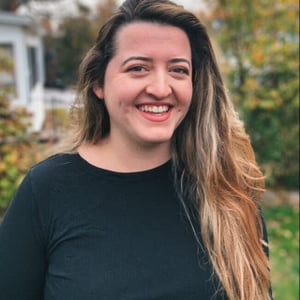
Deputy Director of U.S. Legislation, Future of Privacy Forum
Bailey Sanchez is Deputy Director with the Future of Privacy Forum’s U.S. Legislation Team. Bailey leads the team’s work analyzing legislative proposals that impact children and teens’ online privacy and safety. Bailey seeks to understand legislative and regulatory trends at the intersection of youth and technology and provide resources and expertise to stakeholders navigating the youth privacy landscape. Prior to joining FPF, Bailey was a legal extern at the International Association of Privacy Professionals.
Bailey holds a J.D. from the University of New Hampshire School of Law and a B.A. in Political Science from the University of Central Florida. While at UNH Law, she served as a research assistant to Professor Alexandra Roberts, a legal writing teaching assistant to Professors Jennifer Davis and Rachel Goldwasser, president of the Civic Engagement Society, and a student attorney in UNH Law’s Intellectual Property & Transaction Clinic.

Senior Legal Fellow, The Future of Free Speech, Vanderbilt University
Ashkhen Kazaryan is a renowned expert in First Amendment law and technology policy, specializing in digital free speech, artificial intelligence, and the intersection of constitutional rights with emerging technologies. As a Senior Legal Fellow at the Future of Free Speech at Vanderbilt University, she leads initiatives to protect free expression and shape policies that uphold the First Amendment in the digital age.
Previously, Ashkhen was the lead for North and Latin America on the content regulation team at Meta, where she also served as the company’s policy lead on Section 230. She has also been a Senior Fellow at Stand Together and the Director of Civil Liberties at TechFreedom, where she worked extensively on platform liability, free speech, and internet governance. She is currently Fellow for the First Amendment at the Freedom Forum.
Ashkhen earned her specialist in law degree summa cum laude from Lomonosov Moscow State University in 2012 and later received a master of law degree from Yale Law School in 2016. During her time at Yale, she contributed as an articles editor for the Yale Journal of Law and Feminism, a senior editor for the Yale Law and Policy Review, and an editor for the Yale Journal of Law and Technology, while also serving as co-chair of the Public Interest Fellowship.
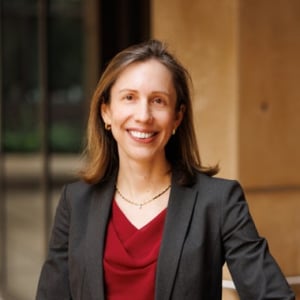
Deane F. Johnson Professor of Law, Stanford Law School
Lisa Larrimore Ouellette is the Deane F. Johnson Professor of Law at Stanford Law School, as well as a Senior Fellow at the Stanford Institute for Economic Policy Research. Her scholarship addresses empirical and theoretical problems in intellectual property and innovation law. She takes advantage of her training in physics to explore policy issues such as how scientists use the technical information in patents, how scientific expertise might improve patent examination, the patenting of publicly funded research under the Bayh–Dole Act, and the integration of IP with other levers of innovation policy. She has applied these ideas to biomedical innovation challenges including the opioid epidemic, the COVID-19 pandemic, and pharmaceutical prices. She has also written about multiple legal issues in trademark law, about the evidentiary value of online surveys, and about the potential for different standards of review to create what she terms “deference mistakes” in numerous areas of law.
Professor Ouellette is also an acclaimed teacher and nationally recognized intellectual property law expert. She has coauthored a free patent law casebook, Patent Law: Cases, Problems, and Materials. She has written over 350 posts for her blog, Written Description, and her commentary has appeared in publications including the New York Times, Wall Street Journal, TIME Magazine, and Slate. She has been selected to design and lead pedagogy training for other Stanford Law faculty. In 2018, she received the law school’s John Bingham Hurlbut Award for Excellence in Teaching.
Prior to her appointment at Stanford Law School in 2014, Professor Ouellette was a Postdoctoral Fellow at the Information Society Project at Yale Law School. She also clerked for Judge Timothy B. Dyk of the U.S. Court of Appeals for the Federal Circuit and Judge John M. Walker, Jr. of the U.S. Court of Appeals for the Second Circuit. She holds a J.D. from Yale Law School, where she was an Articles Editor of the Yale Law Journal and a Coker Fellow in Contract Law. She earned a Ph.D. in physics from Cornell University as well as a B.A. in physics from Swarthmore College, and she has conducted scientific research at the Max Planck Institute, CERN, and NIST.
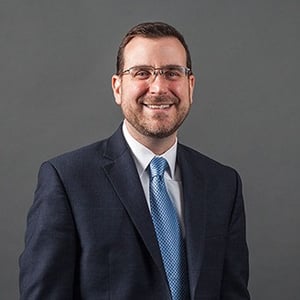
Professor of Law, Antonin Scalia Law School, George Mason University
Adam Mossoff is Professor of Law at Antonin Scalia Law School, George Mason University. He has published extensively on why patents, copyrights, and other intellectual property rights have been—and should be—legally secured to innovators and creators as property rights. His scholarship has been relied on by the United States Supreme Court, by lower federal courts, and by U.S. federal agencies. He has been invited to testify numerous times before the U.S. Senate and the House of Representatives on intellectual property legislation. His writings on intellectual property policy have also appeared in the Wall Street Journal, New York Times, Forbes, Investors Business Daily, and in other media outlets. His journal articles can be downloaded here.
Professor Mossoff is a longstanding member of the Executive Committee of the Intellectual Property Practice Group of the Federalist Society, on which he served as Chairperson from 2016-2018, and he is Chair of the Intellectual Property Working Group of the Regulatory Transparency Project of the Federalist Society. He is a Senior Fellow and Chair of the Forum for Intellectual Property at the Hudson Institute, a Visiting Intellectual Property Fellow at the Heritage Foundation, and a member of the Board of Directors of the Center for Intellectual Property Understanding. He is a member of the Intellectual Property Rights Policy Committee of ANSI and he has served as Chair and Vice-Chair of the Intellectual Property Committee of the IEEE-USA, on which he remains a member in good standing.
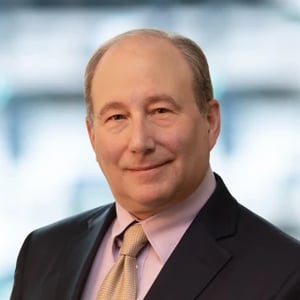
Managing Director, Berkeley Research Group
Dan Troy is the Managing Director at Berkeley Research Group.
Prior to that, he was the Chief Business Officer, Chief Administrative Officer, and General Counsel of Valo in Boston, Massachusetts.
Prior to joining Valo, he served as the Senior Vice President & General Counsel of GlaxoSmithKline and was a member of its Corporate Executive Team. Dan joined GSK in September 2008 and was responsible for leading the company’s legal department in protecting GSK’s intellectual property; managing litigation; supporting business development transactions; and business compliance and risk management. In 2012, Dan led the integration team following the acquisition of Human Genome Sciences, which later resulted in the launch of Benlysta, the first lupus treatment in 50 years. Dan led GSK’s Contributions Committee in the US and also led the Government Affairs, Public Policy and Patient Advocacy team from 2012 until 2014.
Prior to joining GSK, he was a Partner at the Washington law firm Sidley Austin LLP, where he principally represented pharmaceutical companies and trade associations on matters related to the US Food and Drug Administration (FDA) and government regulations. Dan was formerly Chief Counsel for the FDA, where he served as a primary liaison to the White House and the US Department of Health and Human Services.
Dan has chaired the American Bar Association's Section of Administrative Law and is a member of the American Law Institute. He currently chairs the US Chamber of Commerce Litigation Center. He has also chaired the Civil Justice Reform Group, as well as the PhRMA Law Section Executive Committee. He was the 2012 CPR Corporate Leadership Award recipient and, in 2013, was named a 'Legend in the Law' at the Burton Awards.
Dan holds a B.S. in Industrial and Labor Relations from Cornell University and a J.D. from Columbia University School of Law, where he was a member of the Law Review and a Kent Scholar. After graduation from law school, he was a law clerk for the US Circuit Court of Appeals for the District of Columbia Circuit.
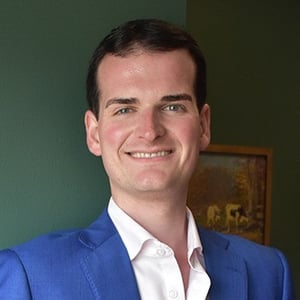
Senior Vice President, Global Innovation Policy Center, U.S. Chamber of Commerce
Brad Watts, senior vice president at the U.S. Chamber of Commerce’s Global Innovation Policy Center (GIPC), oversees the center’s day-to-day operations. He also leads the development and implementation of the Chamber’s U.S. and global intellectual property (IP) agenda to foster a political, legal, and economic environment where innovators and creators can invest in the next big thing for the benefit of Americans and the world.
Watts previously served as the Republican chief counsel on the Senate Judiciary Committee Subcommittee on Intellectual Property. There he was responsible for planning and implementing Senator Thom Tillis’ (R-NC) and the Republican party’s legislative portfolio on all aspects of IP law.
In the 116th Congress, when Senator Tillis was chairman of the subcommittee, Watts served as majority chief counsel and staff director for the Senate Judiciary Committee Subcommittee on Intellectual Property. He was responsible for implementing the senator’s legislative and oversight agenda on all aspects of America’s innovation economy.
During Watts’ tenure as majority chief counsel, the subcommittee held 17 legislative and oversight hearings and multiple staff briefings on IP issues, ranging from the state of patent eligibility law in America to reforming the Digital Millennium Copyright Act of 1998. Under his leadership, the subcommittee passed the CASE Act, the Trademark Modernization Act, and the Protecting Lawful Streaming Act, three landmark bills that collectively represent the largest changes to IP law since the Leahy-Smith America Invents Act.
Earlier, Watts was chief immigration counsel to then-Senate Judiciary Committee Chairman Chuck Grassley (R-IA). He began his career with former Senator Jeff Sessions (R-AL) as a legislative counsel on the Subcommittee on Immigration and the National Interest, handling civil rights and civil liberties law, general tort law, bankruptcy, telecommunications, and IP issues for the senator.
Deane F. Johnson Professor of Law, Stanford Law School
Lisa Larrimore Ouellette is the Deane F. Johnson Professor of Law at Stanford Law School, as well as a Senior Fellow at the Stanford Institute for Economic Policy Research. Her scholarship addresses empirical and theoretical problems in intellectual property and innovation law. She takes advantage of her training in physics to explore policy issues such as how scientists use the technical information in patents, how scientific expertise might improve patent examination, the patenting of publicly funded research under the Bayh–Dole Act, and the integration of IP with other levers of innovation policy. She has applied these ideas to biomedical innovation challenges including the opioid epidemic, the COVID-19 pandemic, and pharmaceutical prices. She has also written about multiple legal issues in trademark law, about the evidentiary value of online surveys, and about the potential for different standards of review to create what she terms “deference mistakes” in numerous areas of law.
Professor Ouellette is also an acclaimed teacher and nationally recognized intellectual property law expert. She has coauthored a free patent law casebook, Patent Law: Cases, Problems, and Materials. She has written over 350 posts for her blog, Written Description, and her commentary has appeared in publications including the New York Times, Wall Street Journal, TIME Magazine, and Slate. She has been selected to design and lead pedagogy training for other Stanford Law faculty. In 2018, she received the law school’s John Bingham Hurlbut Award for Excellence in Teaching.
Prior to her appointment at Stanford Law School in 2014, Professor Ouellette was a Postdoctoral Fellow at the Information Society Project at Yale Law School. She also clerked for Judge Timothy B. Dyk of the U.S. Court of Appeals for the Federal Circuit and Judge John M. Walker, Jr. of the U.S. Court of Appeals for the Second Circuit. She holds a J.D. from Yale Law School, where she was an Articles Editor of the Yale Law Journal and a Coker Fellow in Contract Law. She earned a Ph.D. in physics from Cornell University as well as a B.A. in physics from Swarthmore College, and she has conducted scientific research at the Max Planck Institute, CERN, and NIST.
Professor of Law, Antonin Scalia Law School, George Mason University
Adam Mossoff is Professor of Law at Antonin Scalia Law School, George Mason University. He has published extensively on why patents, copyrights, and other intellectual property rights have been—and should be—legally secured to innovators and creators as property rights. His scholarship has been relied on by the United States Supreme Court, by lower federal courts, and by U.S. federal agencies. He has been invited to testify numerous times before the U.S. Senate and the House of Representatives on intellectual property legislation. His writings on intellectual property policy have also appeared in the Wall Street Journal, New York Times, Forbes, Investors Business Daily, and in other media outlets. His journal articles can be downloaded here.
Professor Mossoff is a longstanding member of the Executive Committee of the Intellectual Property Practice Group of the Federalist Society, on which he served as Chairperson from 2016-2018, and he is Chair of the Intellectual Property Working Group of the Regulatory Transparency Project of the Federalist Society. He is a Senior Fellow and Chair of the Forum for Intellectual Property at the Hudson Institute, a Visiting Intellectual Property Fellow at the Heritage Foundation, and a member of the Board of Directors of the Center for Intellectual Property Understanding. He is a member of the Intellectual Property Rights Policy Committee of ANSI and he has served as Chair and Vice-Chair of the Intellectual Property Committee of the IEEE-USA, on which he remains a member in good standing.
Managing Director, Berkeley Research Group
Dan Troy is the Managing Director at Berkeley Research Group.
Prior to that, he was the Chief Business Officer, Chief Administrative Officer, and General Counsel of Valo in Boston, Massachusetts.
Prior to joining Valo, he served as the Senior Vice President & General Counsel of GlaxoSmithKline and was a member of its Corporate Executive Team. Dan joined GSK in September 2008 and was responsible for leading the company’s legal department in protecting GSK’s intellectual property; managing litigation; supporting business development transactions; and business compliance and risk management. In 2012, Dan led the integration team following the acquisition of Human Genome Sciences, which later resulted in the launch of Benlysta, the first lupus treatment in 50 years. Dan led GSK’s Contributions Committee in the US and also led the Government Affairs, Public Policy and Patient Advocacy team from 2012 until 2014.
Prior to joining GSK, he was a Partner at the Washington law firm Sidley Austin LLP, where he principally represented pharmaceutical companies and trade associations on matters related to the US Food and Drug Administration (FDA) and government regulations. Dan was formerly Chief Counsel for the FDA, where he served as a primary liaison to the White House and the US Department of Health and Human Services.
Dan has chaired the American Bar Association's Section of Administrative Law and is a member of the American Law Institute. He currently chairs the US Chamber of Commerce Litigation Center. He has also chaired the Civil Justice Reform Group, as well as the PhRMA Law Section Executive Committee. He was the 2012 CPR Corporate Leadership Award recipient and, in 2013, was named a 'Legend in the Law' at the Burton Awards.
Dan holds a B.S. in Industrial and Labor Relations from Cornell University and a J.D. from Columbia University School of Law, where he was a member of the Law Review and a Kent Scholar. After graduation from law school, he was a law clerk for the US Circuit Court of Appeals for the District of Columbia Circuit.
Senior Vice President, Global Innovation Policy Center, U.S. Chamber of Commerce
Brad Watts, senior vice president at the U.S. Chamber of Commerce’s Global Innovation Policy Center (GIPC), oversees the center’s day-to-day operations. He also leads the development and implementation of the Chamber’s U.S. and global intellectual property (IP) agenda to foster a political, legal, and economic environment where innovators and creators can invest in the next big thing for the benefit of Americans and the world.
Watts previously served as the Republican chief counsel on the Senate Judiciary Committee Subcommittee on Intellectual Property. There he was responsible for planning and implementing Senator Thom Tillis’ (R-NC) and the Republican party’s legislative portfolio on all aspects of IP law.
In the 116th Congress, when Senator Tillis was chairman of the subcommittee, Watts served as majority chief counsel and staff director for the Senate Judiciary Committee Subcommittee on Intellectual Property. He was responsible for implementing the senator’s legislative and oversight agenda on all aspects of America’s innovation economy.
During Watts’ tenure as majority chief counsel, the subcommittee held 17 legislative and oversight hearings and multiple staff briefings on IP issues, ranging from the state of patent eligibility law in America to reforming the Digital Millennium Copyright Act of 1998. Under his leadership, the subcommittee passed the CASE Act, the Trademark Modernization Act, and the Protecting Lawful Streaming Act, three landmark bills that collectively represent the largest changes to IP law since the Leahy-Smith America Invents Act.
Earlier, Watts was chief immigration counsel to then-Senate Judiciary Committee Chairman Chuck Grassley (R-IA). He began his career with former Senator Jeff Sessions (R-AL) as a legislative counsel on the Subcommittee on Immigration and the National Interest, handling civil rights and civil liberties law, general tort law, bankruptcy, telecommunications, and IP issues for the senator.