Bounty Hunters and the Public Interest - A Study of California Proposition 65
Engage Volume 13, Issue 1, March 2012
INTRODUCTION Adopted by California voters in 1986, Proposition 65 was a revolutionary measure in a...

Federalism & Separation of Powers Practice Group


Engage Volume 13, Issue 1, March 2012
INTRODUCTION Adopted by California voters in 1986, Proposition 65 was a revolutionary measure in a...

Charles J. Cooper, Michael B. Rappaport, Peter M. Shane, William R. Yeomans, Dean Reuter
Federalism & Separation of Powers Practice Group Podcast
To listen, please right click on the audio file you wish to hear and then...
Lisa L. Dixon, Robert T. Numbers
Engage Volume 12, Issue 3, November 2011
I. Introduction On November 1, 2011, the Supreme Court heard oral arguments in Minneci v....
The Journal of the Federalist Society Practice Groups
*Online-Only Issue* Special Edition: Templeton Debates The Constitutionality of the Patient Protection and Affordable Care Act...
Richard A. Epstein, Jesse H. Choper
Engage Volume 12, Issue 2, September 2011
The topic of the discussion between Professor Jesse Choper and myself is the Commerce Clause...
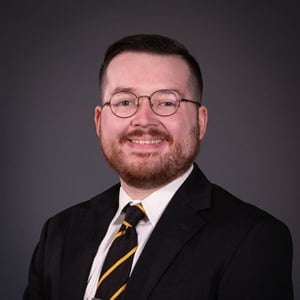
Solicitor General of Nebraska
Cody Barnett previously served as legal counsel on Alliance Defending Freedom’s Appellate Advocacy Team, where he represented various ADF clients before appellate courts across the country.
Before joining ADF, Barnett served as the William H. Rehnquist Fellow at Cooper & Kirk PLLC. He then went on to clerk for the Honorable Amul R. Thapar and the Honorable Raymond M. Kethledge, both of the U.S. Court of Appeals for the 6th Circuit, and for the Honorable Justin R. Walker of the U.S. Court of Appeals for the District of Columbia.
Barnett earned his J.D. from the University of Kentucky College of Law in 2017, where he graduated first in his class. He also served as president of the Christian Legal Society and as an articles editor for the Kentucky Law Journal. He completed ADF’s Blackstone Legal Fellowship in 2017. Prior to law school, Barnett earned a Bachelor of Arts in both history and political science from Transylvania University.
Barnett is admitted to practice law in Kentucky, the District of Columbia, and before several U.S. Courts of Appeal.

Director, Robert A. Levy Center for Constitutional Studies, Cato Institute
Thomas Berry is the director in the Cato Institute’s Robert A. Levy Center for Constitutional Studies and editor in chief of the Cato Supreme Court Review. Before joining Cato, he was an attorney at Pacific Legal Foundation and clerked for Judge E. Grady Jolly of the U.S. Court of Appeals for the Fifth Circuit. His academic work has appeared in NYU Journal of Law and Liberty, Washington and Lee Law Review Online, and Federalist Society Review. His popular writing has appeared in The Wall Street Journal, National Law Journal, Investor’s Business Daily, National Review Online, and The Hill Online. He has testified before the U.S. Senate, and his work has been cited by the U.S. District Court for the District of Columbia.
Berry holds a J.D. from Stanford Law School, where he was a senior editor on the Stanford Law and Policy Review and a Bradley Student Fellow in the Stanford Constitutional Law Center. He graduated with a B.A. in Liberal Arts from St. John’s College, Santa Fe.

Vice President for Legal Strategy, Stand Together
Casey Mattox is Vice President for Legal Strategy at Stand Together and Senior Advisor at
Americans for Prosperity. In these roles he advocates for and creates strategies and
partnerships to ensure a constitutionally limited government that protects the civil liberties of all
Americans. Prior to joining Stand Together and AFP Casey’s legal career focused on defending
the First Amendment rights of students, faculty, healthcare workers and religious organizations.
Casey has a J.D. from Boston College School of Law and an undergraduate degree from the
University of Virginia. You can find him on Twitter at @CaseyMattox_ and on LinkedIn at
@Casey-Mattox-ST.

Charles Evans Hughes Professor of Law, Columbia Law School
THOMAS W. MERRILL is the Charles Evans Hughes Professor of Law at Columbia Law School. He previously taught at Northwestern University School of Law and Yale Law School. He has undergraduate degrees from Grinnell College and Oxford University, where he studied as a Rhodes Scholar, and a law degree from the University of Chicago. He clerked on the D.C. Circuit (for Chief Judge David Bazelon) and the U.S. Supreme Court (for Justice Harry Blackmun). From 1987-1990 he served as Deputy Solicitor General, U.S. Department of Justice. Professor Merrill’s writings related to property include Property: Principles and Policies (Foundation Press Second Edition, 2012) (with Henry E. Smith); Property: The Oxford Introductions to U.S. Law (Oxford U. Press, 2010); Property: Takings (Foundation Press, 2002)(with David Dana); and numerous articles, including “The Economics of Public Use” (Cornell Law Review 1986); “The Landscape of Constitutional Property” (Virginia Law Review 2000); and “The Character of the Governmental Action” (Vermont Law Review 2012). He is a member of the American Academy of Arts and Sciences.
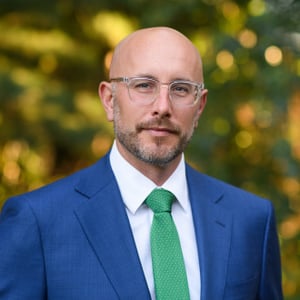
Professor; Associate Dean of Faculty Development and Curriculum, School of Civic Life and Leadership, The University of North Carolina at Chapel Hill
DiSalvo’s research focuses on American political parties, elections, labor unions, state government, and public policy. He is the author of Engines of Change: Party Factions in American Politics, 1868–2010 (Oxford) and Government Against Itself: Public Union Power and Its Consequences (Oxford). His scholarly work has appeared in Political Science Quarterly, Policy Studies Journal, Political Research Quarterly, and American Political Thought.
DiSalvo also writes for popular outlets including The New York Times, The Wall Street Journal, The Atlantic Monthly, National Affairs, City Journal, The Los Angeles Times, and The New York Daily News. He previously co-edited The Forum: A Journal of Applied Research in Contemporary Politics and serves on the editorial board of the Journal of Policy History. He has held visiting appointments at Princeton University’s James Madison Program, the CUNY Graduate Center, and Universidad de Los Andes.
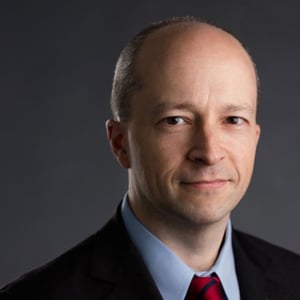
Senior Fellow; Beth and Ravenel Curry Chair in Public Policy; Director, Social, Cultural, and Constitutional Studies, American Enterprise Institute
Yuval Levin is the director of Social, Cultural, and Constitutional Studies at the American Enterprise Institute (AEI), where he also holds the Beth and Ravenel Curry Chair in Public Policy. The founder and editor of National Affairs, he is also a senior editor at The New Atlantis, a contributing editor at National Review, and a contributing opinion writer at New York Times.
Dr. Levin served as a member of the White House domestic policy staff under President George W. Bush. He was also executive director of the President’s Council on Bioethics and a congressional staffer at the member, committee, and leadership levels.
In addition to being interviewed frequently on radio and television, Dr. Levin has published essays and articles in numerous publications, including Wall Street Journal, Washington Post, The Atlantic, and Commentary. He is the author of several books on political theory and public policy, most recently American Covenant: How the Constitution Unified Our Nation – and Could Again (Basic Books, 2024).
He holds an MA and PhD from the Committee on Social Thought at the University of Chicago.

Tazewell Taylor Professor of Law and William H. Cabell Research Professor, William & Mary Law School
Jonathan H. Adler joined the William & Mary law faculty as the Tazwell Taylor Professor of Law and William H. Cabell Research Professor in 2025. Prior to joining the faculty, he was the inaugural Johan Verheij Memorial Professor of Law and the founding Director of the Coleman P. Burke Center for Environmental Law at the Case Western Reserve University School of Law.
Professor Adler is the author or editor of seven books, including Climate Liberalism: Perspectives on Liberty, Property and Pollution (Palgrave, 2023), Marijuana Federalism: Uncle Sam and Mary Jane (Brookings Institution Press, 2020), Business and the Roberts Court (Oxford University Press, 2016) and Rebuilding the Ark: New Perspectives on Endangered Species Act Reform (AEI Press, 2011).
His articles have appeared in publications ranging from the Harvard Environmental Law Review and Yale Journal on Regulation to the Wall Street Journal, New York Times, and Washington Post. He has testified before Congress a dozen times, and his work has been cited in the U.S. Supreme Court. A 2024 study identified Professor Adler as the seventh most cited legal academic in administrative and environmental law from 2019 to 2023.
Professor Adler is a contributing editor to Civitas Outlook and a regular contributor to the popular legal blog, The Volokh Conspiracy. A regular commentator on constitutional and regulatory issues, he has appeared on numerous radio and television programs, ranging from the PBS Newshour and National Public Radio to the Fox News Channel and Entertainment Tonight.
Professor Adler is a senior fellow at the Property & Environment Research Center in Bozeman, Montana. In 2018, Professor Adler was elected to membership in the American Law Institute and helped co-found the organization Checks and Balances. In 2024, Professor Adler was appointed a public member of the Administrative Conference of the United States.
Professor Adler clerked for the Honorable David B. Sentelle on the U.S. Court of Appeals for the District of Columbia Circuit.
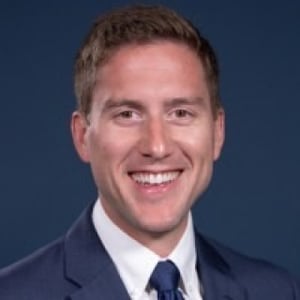
Chief Deputy Solicitor General, Director of the Tenth Amendment Center, Ohio Attorney General's Office
John serves in the Office of the Solicitor General as a Deputy Solicitor General and as the Director of the Tenth Amendment Center. In his role, John monitors federal actions, orders, statutes, and regulations for potential overreach and advises the Solicitor General about potential actions to protect the interests of the State of Ohio. John works in both state and federal courts, including the U.S. Supreme Court, the U.S. Courts of Appeals, and the Ohio Supreme Court.
John previously practiced as a litigator at two large law firms in Columbus. He clerked for Judge Joseph Hood on the U.S. District Court for the Eastern District of Kentucky and Judge Eugene Siler for the U.S. Court of Appeals for the Sixth Circuit.
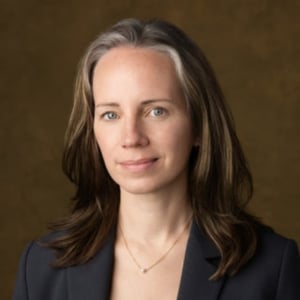
Senior Fellow in Executive Power, Cato Institute
Molly Nixon is a senior fellow at the Cato Institute, where she focuses on the scope, use, and history of executive power as well as its limits under the Constitution. Molly was previously an attorney with Pacific Legal Foundation’s separation of powers practice, where she litigated cases challenging congressional delegations of legislative power and executive branch overreach. Before that, she served as an Attorney-Advisor at the Department of the Interior and as Legislative Counsel for Congressman Justin Amash.
Molly holds a J.D. from New York University School of Law and a B.A. in History and International Relations from Boston University. She clerked for the U.S. District Court for the District of Alaska and practiced law at a firm in New York City for several years before moving to Washington, D.C.
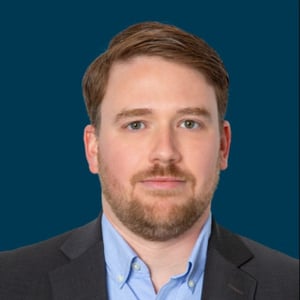
Attorney, Separation of Powers, Pacific Legal Foundation
Josh Robbins is an attorney in Pacific Legal Foundation’s separation of powers group. He litigates cases to defend the structural protections of the U.S. and state constitutions that guarantee liberty for all Americans. He wants to help ensure Americans receive due process from the government when their lives and property are at stake and that the laws are made by our democratically elected representatives and not by unaccountable bureaucrats.
As an attorney in private practice, Josh saw firsthand how the government can embroil people (and even large corporations) in years-long legal battles. At PLF, he works to provide those without great resources an opportunity to vindicate their right to a properly ordered government, which is the right of all Americans.
Prior to joining PLF, Josh was an associate at a large law firm where he litigated cases in federal and state courts. He clerked for the Honorable Jerry E. Smith of the United States Court of Appeals for the Fifth Circuit in Houston.
Josh earned a B.A. in economics and international studies from Yale University and a J.D. from the University of Virginia School of Law. While at UVA, he served as an articles editor for the Virginia Law Review. He lives in Alexandria, Virginia, and enjoys hiking, swimming, and attending Washington Nationals games.
Josh is a member of the bar only in the states of Virginia and D.C.

Executive Director, Alliance For Consumers; President & CEO, American Juris Link
O.H. Skinner is the President & CEO of American Juris Link, a nonprofit dedicated to accelerating nonprofit litigation to advance freedom, liberty, and the rule of law. O.H. has a long track record in facilitating strategic nonprofit litigation in his role as the Executive Director at Alliance For Consumers as well as from his time serving Arizona Attorney General Mark Brnovich in senior positions, including as Arizona Solicitor General. O.H. is a graduate of the University of Pennsylvania and Harvard Law School. Prior to joining the Arizona Attorney General's Office, O.H. practiced at WilmerHale and Ropes & Gray in Boston, and clerked for the Hon. J.L. Edmondson of the United States Court of Appeals for the Eleventh Circuit. In 2023, O.H. was a Wasserstein Public Interest Fellow at Harvard Law School, where he counseled students as a Harvard-identified “outstanding public interest attorney.”

Partner, Morgan, Lewis & Bockius LLP
Michael Edney defends executives and corporations in criminal prosecutions and agency enforcement actions, successfully challenging numerous regulatory agencies—from the Justice Department to the US Securities and Exchange Commission and the US Commodity Futures Trading Commission, among others—against federal government overreach. Many of the regulations Mike has convinced the courts to reverse would have arbitrarily ended hundreds of businesses absent the courts’ intervention. He has also successfully challenged government decisions to break contracts and end projects in cooperation with private industry.
In addition to his criminal defense practice, Mike regularly brings actions challenging government agency regulations as illegal and unconstitutional before they are enforced. He has sued government agencies and reversed their attempted regulations seeking to upend the energy, financial, and tobacco industries.
His civil litigation practice spans beyond anti-regulatory suits. He has brought some of the leading First Amendment cases in the country. On behalf of The Washington Free Beacon, he vindicated the publication’s First Amendment right to access sealed court records before the Arizona Supreme Court. He has defended corporations in bet-the-company litigation concerning securities, environmental, employment, and fair housing. He has represented states at the request of their governors. He has repeatedly served as counsel for former Attorneys General of the United States when they appear as amici curiae before the Supreme Court.
Mike also represents clients on numerous national security matters, including the Classified Information Procedures Act, the Foreign Agent Registration Act, matters before the Committee on Foreign Investment in the United States, government cybersecurity investigations into companies regarded as critical national infrastructure, the handling of classified information by government contractors, and prepublication review of books authored by former government officials for sensitive and classified information.
His private practice draws from a half decade of prior government service. During the administration of former President George W. Bush, he served as deputy legal advisor to the National Security Council at the White House and in the Office of Legal Counsel at the United States Department of Justice, where he helped the administration address many legal issues pertaining to the United States' post-9/11 campaign against terrorism.
Before joining Morgan Lewis, Mike was a litigation partner at another global law firm.
Non-Resident Senior Fellow, Reiss Center on Law and Security at NYU School of Law
Christopher Fonzone is a Non-Resident Senior Fellow at the Reiss Center on Law and Security at NYU School of Law. Fonzone served as the Assistant Attorney General for the Office of Legal Counsel (OLC) at the Department of Justice from 2023 to 2025. OLC, by delegation from the Attorney General, provides written opinions and other legal advice to the President and all executive branch agencies on a wide range of issues, with a focus on matters of particular complexity or importance, including sensitive national security matters.
Fonzone previously held a number of other government roles. From 2021 to 2023, he was the General Counsel of the Office of the Director of National Intelligence. During the Obama Administration, Fonzone was Deputy Assistant and Deputy Counsel to President Obama and the Legal Adviser to the National Security Council (NSC). And earlier in his career, Fonzone was Special Counsel to General Counsel of the Department of Defense and served in career roles at the Department of Justice, both at OLC and on the Civil Division’s Appellate Staff. Fonzone also served as a Member on the J. William Fulbright Foreign Scholarship Board from 2017 to 2019.
Outside of government, Fonzone is currently a Member of Anthropic’s National Security and Public Sector Advisory Council, where he supports the identification and development of AI applications that strengthen U.S. capabilities in key areas and assists in the development of industry-leading standards to promote a “race to the top” for responsible national security AI solutions. He was also the lead national security counsel to the Biden-Harris Transition, and a partner in Sidley Austin’s Privacy and Cybersecurity group, with a practice that focused on a wide range of issues related to information technology and cybersecurity.
Fonzone has lectured and taught classes on national security law at a variety of law schools, and his writing on national security and other legal topics has been published in a variety of forums, including the Washington Post, Newsweek, Lawfare, and Just Security.
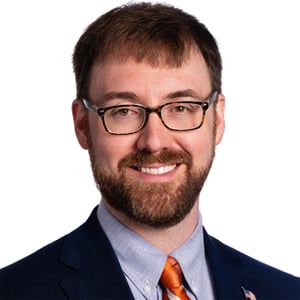
Senior Legal Fellow, Courts and the Constitution, Legal Policy Center, The Heritage Foundation
Zack is a Senior Legal Fellow of Courts and the Constitution at The Heritage Foundation.
He previously served for several years as an Assistant United States Attorney in the Northern District of Florida. Prior to that, he spent two years as an associate in the Washington, D.C. office of Cleary Gottlieb Steen & Hamilton, which he joined after clerking for the Hon. Emmett R. Cox on the United States Court of Appeals for the Eleventh Circuit.
Smith received his undergraduate, master’s, and law degrees from the University of Florida. During law school, Smith served as the Editor in Chief of the Florida Law Review and served on the executive boards of several student organizations, including the UF Chapter of the Federalist Society.
Clinical Professor of Law, Dale E. Fowler School of Law, Chapman University

Founding Partner, Cooper & Kirk PLLC
Charles J. Cooper is a founding member and the chairman of Cooper & Kirk, PLLC, “one of the Nation’s leading litigation boutiques” (Above The Law 2017). The National Law Journal recently wrote that Mr. Cooper’s “brilliant legal career has so far spanned five decades and thrust Cooper into the spotlight in some of the most historic moments of the country’s modern history.” He has argued nine cases before the United States Supreme Court and scores of appeals before each of the 13 federal courts of appeals and several state supreme courts. He has been lead trial counsel in numerous complex, weeks-long trials in federal courts throughout the country. Named by the National Law Journal as one of the 10 best litigators in Washington D.C., Mr. Cooper’s work has been reported in numerous press accounts, and he has been called a “powerhouse attorney” (Fortune 2015), “a hard-nosed litigator” (Washington Post 2017), and “one of the country’s most in-demand civil litigators and a Washington legal institution unto himself” (The American Spectator 2014).
After graduating from the University of Alabama School of Law in 1977, where he ranked first in his class and served as Editor-in-Chief of the Alabama Law Review, Mr. Cooper began his career as a law clerk to Judge Paul Roney on the Fifth Circuit Court of Appeals and to Justice William H. Rehnquist in 1978–79. He then practiced law in Atlanta for two years before joining the Civil Rights Division of the U.S. Department of Justice, where he served as the Deputy Assistant Attorney General in charge of, among other things, appellate matters. In 1985 President Reagan appointed him to the position of Assistant Attorney General for the Office of Legal Counsel, which is the office responsible for providing legal opinions and advice to the White House, the Attorney General, and Executive Branch departments and agencies on issues covering the full spectrum of federal constitutional, statutory, and regulatory law.
In 1988 he returned to private practice as a litigation partner in the Washington, D.C. office of McGuireWoods. From 1990 until the founding of Cooper & Kirk in 1996, he was a partner at Shaw Pittman (now Pillsbury Winthrop Shaw Pittman), where he headed the firm’s Constitutional and Government Litigation Group.
Mr. Cooper has represented a wide range of public and private clients in highly complex constitutional, civil rights, antitrust, healthcare, banking, intellectual property, elections, campaign finance, administrative, commercial, and government contract cases. He has led trial teams in cases that have won judgments and settlements valued in the billions of dollars and that have established ground-breaking constitutional precedents.
Much of Mr. Cooper’s practice has involved representing high-profile clients in nationally prominent matters, including: the State of Florida in a First Amendment suit brought by the Disney Company concerning its autonomous regulatory authority over its Disney World property; the Commonwealth of Virginia in a suit seeking to enjoin the removal of noncitizens from its voter rolls; 38 members of the Duke Lacrosse team falsely accused of rape by officials of Duke University and the City of Durham; Harper Lee in a copyright dispute with the heirs of Gregory Peck; high-ranking former government officials such as former Attorneys General John Ashcroft, Jeff Sessions, and William Barr, and Ambassador John Bolton; several Governors and United States Senators; over 100 Members of Congress; and many state, territorial, and local government bodies and officials. He has also represented and advised government officials and public figures in connection with sensitive private issues that needed to be, and were, resolved discreetly without becoming matters of public record.
In 1998 Chief Justice Rehnquist appointed Mr. Cooper to the Standing Committee on Rules of Practice and Procedure of the Judicial Conference of the United States, where he served for three terms. He also served as a Public Member, appointed by President George H.W. Bush, of the National Commission on Judicial Discipline and Removal. He is a member of numerous professional associations, including the American Law Institute (since 1993) and the American Academy of Appellate Lawyers (since 1996). He is also an active member of the Federalist Society and the Republican National Lawyers Association, which in 2010 named him Republican Lawyer of the Year and in 2016 honored him with its Edwin Meese III Award.
Mr. Cooper has published scores of articles and spoken extensively on constitutional and legal policy topics. He has appeared before congressional committees on 26 occasions, testifying as an expert on a wide variety of legal issues, including the Chevron doctrine of judicial deference to administrative agencies, the diversity of citizenship jurisdiction of federal courts, statehood bills for Puerto Rico and the District of Columbia, and the impeachment of President Clinton.
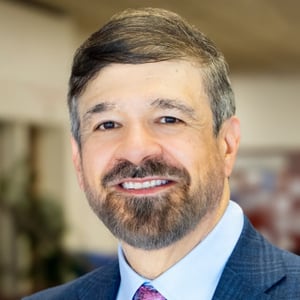
Hugh and Hazel Darling Foundation Professor of Law; Director, Center for the Study of Constitutional Originalism, University of San Diego School of Law
Jacob E. Davis and Jacob E. Davis II Chair in Law, Moritz Colleg, The Ohio State University
Professor Shane came to Ohio State in 2003 from Carnegie Mellon University's H. John Heinz III School of Public Policy and Management. He is an internationally recognized scholar in administrative law, with a specialty in separation of powers law, and has co-authored leading casebooks on each subject. He has served on the faculty at the University of Iowa College of Law and was dean at the University of Pittsburgh School of Law.
In addition to his outstanding law teaching and scholarship, Professor Shane has received a National Science Foundation grant for interdisciplinary study related to cyberspace and democracy. At Ohio State, he provides strong leadership in interdisciplinary scholarship and teaching.
Fellow in Law and Government, American University Washington College of Law
William Yeomans joined the faculty of law of the American University Washington College of law in 2009 where he teaches courses on civil rights, legislation and the legislative process. From 2006 until 2009, he served as Sen. Edward M. Kennedy’s Chief Counsel on the Senate Judiciary Committee. Prior to that, he spent 26 years at the Department of Justice where he litigated and supervised civil rights cases in the federal courts at all levels involving voting rights, school desegregation, employment discrimination, housing discrimination, hate crimes, police misconduct, abortion clinic violence, and human trafficking. He served as Deputy Assistant Attorney General, Chief of Staff, and acting Assistant Attorney General for Civil Rights. He has also been Legal Director of the Alliance for Justice and the first Director of Programs for the American Constitution Society, where he spearheaded the launch of two publications: the Harvard Law and Policy Review and Advance.

Executive Vice President, The Federalist Society
Dean Reuter is Executive Vice President at the Federalist Society for Law and Public Policy Studies. He has served in two federal government agency Offices of the Inspector General, as Counsel to the Inspector General and Deputy Inspector General, responsible for policing the use of federal funds granted and contracted through those agencies. As such, he helped conduct and oversee criminal investigations across the country. He is the principal author of the non-fiction book, The Hidden Nazi: The Untold Story of America's Deal with the Devil, and editor of Liberty’s Nemesis: The Unchecked Expansion of the State and Confronting Terror: 9/11 and the Future of American National Security. He was appointed by the President and served as Vice-Chairman of the Board of Directors of the Corporation for National and Community Service, and recently served as an appointee on the U.S. Commission on Presidential Scholars. He is a graduate of Hood College (BA with Honors) and the University of Maryland School of Law.
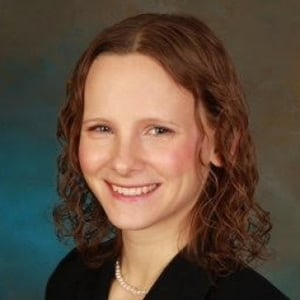
Executive Director, Center for Election Confidence
Lisa L. Dixon serves as the Executive Director of the Center for Election Confidence (formerly known as Lawyers Democracy Fund). Lisa is also a consultant for the Republican National Lawyers Association, serving as their Legal Counsel. Previously, Lisa practiced at Holtzman Vogel, where she specialized in tax-exempt organizations, campaign finance and election law, and lobbying compliance.
During law school, she interned for the Office of Chief Counsel, Procedure and Administration, at the Internal Revenue Service and at the Center for Law and Religious Freedom. Before law school, she served as the Assistant Student Division Director at The Federalist Society for Law and Public Policy Studies and interned at The Heritage Foundation’s Center for Legal and Judicial Studies.
Lisa earned a J.D. from the University of Virginia School of Law, an M.A. in History from the University of Virginia, and a B.A. in History from Hillsdale College. After 18 years on the East Coast, mostly in northern Virginia, she recently returned to her native Michigan, where she lives with her husband and three sons.
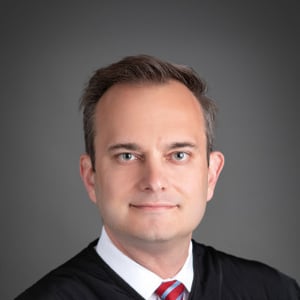
United States Magistrate Judge, Eastern District of North Carolina
Robert T. Numbers, II serves as a United States Magistrate Judge in the United States District Court for the Eastern District of North Carolina.
Judge Numbers received degrees in Political Science and Economics, with honors, from Wake Forest University. After completing his undergraduate work, Judge Numbers obtained his law degree from the University of Notre Dame where he served on the Notre Dame Law Review.
Upon his graduation from law school, Judge Numbers joined the Winston-Salem office of a large, regional law firm. From 2005 until 2010, Judge Numbers’ practice focused on civil rights claims against local municipalities and government contractors. In 2010, Judge Numbers joined the firm’s Raleigh office and concentrated his practice on complex business litigation in state and federal courts.

Laurence A. Tisch Professor of Law and Director, Classical Liberal Institute, New York University School of Law; Senior Fellow, The Civitas Institute, University of Texas at Austin
Richard A. Epstein is the inaugural Laurence A. Tisch Professor of Law at NYU School of Law. Prior to his joining the faculty, he was a visiting law professor at NYU from 2007 through 2009. He served as the Peter and Kirstin Bedford Senior Fellow at the Hoover Institution from 2000 to 2024. Since 2024 to the present he is a senior lecturer at the Civitas Institute at the University of Texas—Austin. Epstein is also the James Parker Hall Distinguished Service Professor of Law Emeritus and a senior lecturer at the University of Chicago. His initial law school appointment was at the University of Southern California from 1968 to 1972. Epstein received an LL.D., h.c. from the University of Ghent, 2003. He has been a member of the American Academy of Arts and Sciences since 1985 and was a Senior Fellow of the Center for Clinical Medical Ethics at the University of Chicago Division of Biological Sciences, also from 1983. to 2022 He served as editor of the Journal of Legal Studies from 1981 to 1991, and of the Journal of Law and Economics from 1991-2001. From 2001 to 2010 he was a director of the John M. Olin Program in Law and Economics at the University of Chicago.
His newest book, The Myth of Birthright Citizenship: What the Fourteenth Amendment Really Says was published in 2026 (Encounter Books). Prior to that he has published many books including, The Dubious Morality of the Modern Administrative State (Roman & Littlefield 2020).Earlier he published th Classical Liberal Constitution: The Uncertain Quest for Limited Government (Harvard 2014) iHis previous books include Design for Liberty: Private Property, Public Administration and the Rule of Law (Harvard 2011); The Case Against the Employee Free Choice Act (Hoover 2009); Supreme Neglect: How to Revive the Constitutional Protection of Property Rights (Oxford 2008); Antitrust Decrees in Theory and Practice: Why Less is More (AEI 2007); Overdose: How Excessive Government Regulation Stifles Pharmaceutical Innovation (Yale University Press. 2006); How Progressives Rewrote the Constitution (Cato 2006); Cases and Materials on Torts (Aspen Law & Business; 8th ed. 2004); Skepticism and Freedom: A Modern Case for Classical Liberalism (University of Chicago, 2003); Torts (Aspen Law & Business 1999); Principles for a Free Society: Reconciling Individual Liberty with the Common Good (Perseus Books, 1998): Mortal Peril: Our Inalienable Rights to Health Care (Addison-Wesley, 1997); Simple Rules for a Complex World (Harvard, 1995); Bargaining With the State (Princeton, 1993); Forbidden Grounds: The Case Against Employment Discrimination Laws (Harvard , 1992); Takings: Private Property and the Power of Eminent Domain (Harvard, 1985); and Modern Products Liability Law (Greenwood Press, 1980). He has also edited(with Catherine M. Sharkey) Cases and Materials on the Law of Torts (10th edition 2012).
Professor Epstein has written numerous articles on a wide range of legal and interdisciplinary subjects. He has taught courses in administrative law, antitrust law, civil procedure, communications, constitutional law, contracts, corporations, criminal law, employment discrimination law, environmental law, food and drug law health law and policy, legal history, labor law, property, real estate development and finance, jurisprudence, labor law; land use planning, patents, individual, estate and corporate taxation, Roman Law; torts, and workers' compensation.
Professor Epstein also writes a regular column for Civitas Institute, which also sponsors his podcast, The Libertarian with Charles C.W. Cooke, and Law Talk, with Cooke and John Yoo. He also does a podcast with John Batchelor. And appears regularly on the Freedom File with Judge Andrew Napolitano.
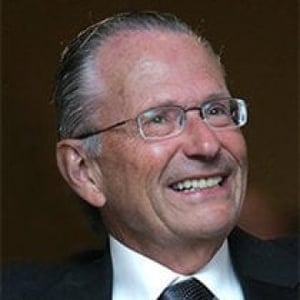
Earl Warren Professor of Public Law (Emeritus), UC Berkeley School of Law
Jesse Choper served as law clerk to Chief Justice Earl Warren of the U.S. Supreme Court following graduation from law school. He taught at the Wharton School of the University of Pennsylvania from 1957 to 1960, and at the University of Minnesota Law School from 1961 to 1965. He joined the Berkeley Law faculty in 1965. Choper has been a visiting professor at Harvard Law School, Fordham Law School, University of Milan, Free University in Amsterdam, Autonoma University in Barcelona, University of New South Wales in Sydney, University of Lucerne in Switzerland, and Catholic University of Portugal in Lisbon and Porto. He served as Berkeley Law’s dean from 1982 to 1992.
From 1979 to 1998, Choper was one of the three major lecturers at U.S. Law Week’s Annual Constitutional Law Conference in Washington, D.C. He has delivered 20 titled lectures at major universities throughout the country, including the Cooley Lectures at Michigan, the Stevens Lecture at Cornell, the Baum Lecture at Illinois, and the Lockhart Lecture at Minnesota. He has served on the executive committee of the Association of American Law Schools, and on the executive council of the American Academy of Arts and Sciences (of which he was vice president for more than ten years). He was national president of the Order of the Coif and is a member of the American Law Institute. In 1998 he received the UC Berkeley Distinguished Teaching Award and the Rutter Award for Teaching Distinction at Berkeley Law in 2006. In 2005 the Berkeley Law Alumni Association presented Choper with the Faculty Lifetime Achievement Award and the University of Pennsylvania Law School gave him the James Wilson Award, its highest award for alumni.
Choper’s major publications include the books, Judicial Review and the National Political Process: A Functional Reconsideration of the Role of the Supreme Court, which received the Order of the Coif Triennial Book Award in 1982, and Securing Religious Liberty: Principles for Judicial Interpretation of the Religion Clauses. His recent publications include the thirteenth edition of his Constitutional Law casebooks; the eighth edition of his Corporations casebook; the second edition of The Supreme Court and Its Justices; “The Political Question Doctrine: Suggested Criteria,” in Duke Law Journal (2005); “Wartime Process: A Dialogue on Congressional Power to Remove Issues From the Federal Courts,” in California Law Review (2007) (co-author); and “Who’s Afraid of the Eleventh Amendment? The Limited Impact of the Court’s Sovereign Immunity Rulings,” in Columbia Law Review (2006) (co-author).