Engage Volume 8, Issue 3, June 2007
ADMINISTRATIVE LAW & REGULATION Gasoline, Markets, and Regulators by Andrew Morriss CIVIL RIGHTS The Legal...

Criminal Law & Procedure Practice Group

ADMINISTRATIVE LAW & REGULATION Gasoline, Markets, and Regulators by Andrew Morriss CIVIL RIGHTS The Legal...
On April 27, 2007, the German Federal Prosecutor General announced that she would not commence...
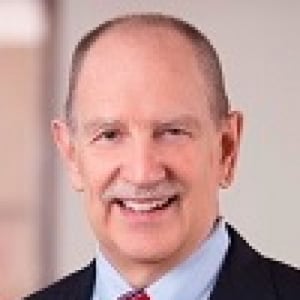
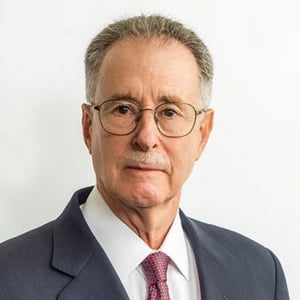
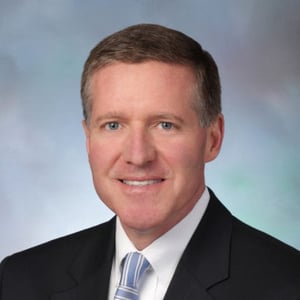
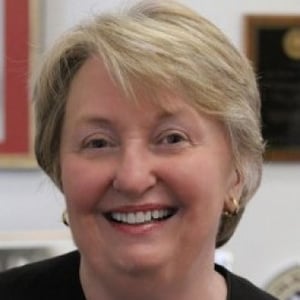
Stephen A. Saltzburg, Kenneth M. Karas, Kenneth L. Wainstein, Jennifer Daskal, Lois Haight Herrington
Introduction: I’m Judge Lois Haight. I’ll be the moderator of the panel today. Bringing terrorists...
This online issue features transcripts from many of the panels and speeches at our November...
ADMINISTRATIVE LAW & REGULATION State-Level Protection for Good-Faith Pharmaceutical Manufacturers by Daniel Troy Federalist Society...
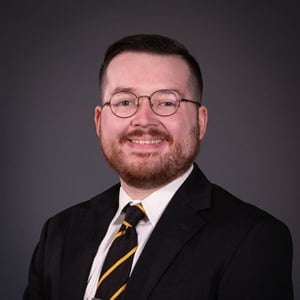
Solicitor General of Nebraska
Cody Barnett previously served as legal counsel on Alliance Defending Freedom’s Appellate Advocacy Team, where he represented various ADF clients before appellate courts across the country.
Before joining ADF, Barnett served as the William H. Rehnquist Fellow at Cooper & Kirk PLLC. He then went on to clerk for the Honorable Amul R. Thapar and the Honorable Raymond M. Kethledge, both of the U.S. Court of Appeals for the 6th Circuit, and for the Honorable Justin R. Walker of the U.S. Court of Appeals for the District of Columbia.
Barnett earned his J.D. from the University of Kentucky College of Law in 2017, where he graduated first in his class. He also served as president of the Christian Legal Society and as an articles editor for the Kentucky Law Journal. He completed ADF’s Blackstone Legal Fellowship in 2017. Prior to law school, Barnett earned a Bachelor of Arts in both history and political science from Transylvania University.
Barnett is admitted to practice law in Kentucky, the District of Columbia, and before several U.S. Courts of Appeal.
Director, Robert A. Levy Center for Constitutional Studies, Cato Institute
Thomas Berry is the director in the Cato Institute’s Robert A. Levy Center for Constitutional Studies and editor in chief of the Cato Supreme Court Review. Before joining Cato, he was an attorney at Pacific Legal Foundation and clerked for Judge E. Grady Jolly of the U.S. Court of Appeals for the Fifth Circuit. His academic work has appeared in NYU Journal of Law and Liberty, Washington and Lee Law Review Online, and Federalist Society Review. His popular writing has appeared in The Wall Street Journal, National Law Journal, Investor’s Business Daily, National Review Online, and The Hill Online. He has testified before the U.S. Senate, and his work has been cited by the U.S. District Court for the District of Columbia.
Berry holds a J.D. from Stanford Law School, where he was a senior editor on the Stanford Law and Policy Review and a Bradley Student Fellow in the Stanford Constitutional Law Center. He graduated with a B.A. in Liberal Arts from St. John’s College, Santa Fe.
Vice President for Legal Strategy, Stand Together
Casey Mattox is Vice President for Legal Strategy at Stand Together and Senior Advisor at
Americans for Prosperity. In these roles he advocates for and creates strategies and
partnerships to ensure a constitutionally limited government that protects the civil liberties of all
Americans. Prior to joining Stand Together and AFP Casey’s legal career focused on defending
the First Amendment rights of students, faculty, healthcare workers and religious organizations.
Casey has a J.D. from Boston College School of Law and an undergraduate degree from the
University of Virginia. You can find him on Twitter at @CaseyMattox_ and on LinkedIn at
@Casey-Mattox-ST.
Charles Evans Hughes Professor of Law, Columbia Law School
THOMAS W. MERRILL is the Charles Evans Hughes Professor of Law at Columbia Law School. He previously taught at Northwestern University School of Law and Yale Law School. He has undergraduate degrees from Grinnell College and Oxford University, where he studied as a Rhodes Scholar, and a law degree from the University of Chicago. He clerked on the D.C. Circuit (for Chief Judge David Bazelon) and the U.S. Supreme Court (for Justice Harry Blackmun). From 1987-1990 he served as Deputy Solicitor General, U.S. Department of Justice. Professor Merrill’s writings related to property include Property: Principles and Policies (Foundation Press Second Edition, 2012) (with Henry E. Smith); Property: The Oxford Introductions to U.S. Law (Oxford U. Press, 2010); Property: Takings (Foundation Press, 2002)(with David Dana); and numerous articles, including “The Economics of Public Use” (Cornell Law Review 1986); “The Landscape of Constitutional Property” (Virginia Law Review 2000); and “The Character of the Governmental Action” (Vermont Law Review 2012). He is a member of the American Academy of Arts and Sciences.
Chief Counsel, Legal Policy, Koch Capabilities, LLC
Sarah Field is Chief Counsel, Legal Policy at Koch Capabilities, LLC, where she develops and scales Koch-wide strategic policy initiatives on a variety of legal, judicial, and regulatory topics.
Sarah specializes in leading initiatives that require rapid vision development, start-up, and scaling expertise. This has included leading criminal justice reform and constitutionally limited government initiatives for the Stand Together community, overseeing the comprehensive portfolio of the Stand Together community’s issue areas, driving Americans for Prosperity’s long-term vision and strategy for addressing the country’s political environment, and leading judicial engagement strategy at Americans for Prosperity.
Before that, Sarah served as Executive Director of the Center for Shared Services, which provided compliance, talent development, and operational support for the Stand Together community. Previously, Sarah held roles at the Charles Koch Foundation, the Federalist Society, and a variety of other nonprofit organizations.
Sarah serves on the board of Americans for Public Safety, an organization dedicated to public safety, justice, and the rule of law.
Sarah received her B.A. from Grove City College, her law degree from Case Western Reserve University School of Law, and is an alumna of the Koch Associate Program.
Legal Fellow, Cato Institute
Mike Fox is a legal fellow in the Cato Institute’s Project on Criminal Justice. His areas of interest include overcriminalization, police accountability, and coercive plea bargaining. Before joining Cato, Fox served as a Colorado public defender and worked for the Senate Committee on Homeland Security and the Governmental Affairs Subcommittee on Government Operations and Border Management. He received his BS in political science from Northeastern University and his JD from Suffolk University Law School.
Donald Phillip Rothschild Research Professor, George Washington University Law School
Renée Lettow Lerner is Donald Phillip Rothschild Research Professor of Law at George Washington University Law School.
Professor Lerner works in the fields of U.S. and English legal history, civil and criminal procedure, and comparative law. She advises judges, lawyers, and government officials from the United States and countries in Europe, Latin America, and Asia about the differences between adversarial and nonadversarial legal systems.
She writes extensively about the history of American juries. Her work includes not only scholarly articles, but also online publications intended for a broader audience of legal professionals and the public. In many different settings, she has debated the role of juries with other academics and with lawyers. She has a book forthcoming with Oxford University Press in the Very Short Introduction Series entitled “The Jury.” She is also working on a book about the American civil jury, from the colonial period to the present.
She is the author, with John Langbein and Bruce Smith, of the book History of the Common Law: The Development of Anglo-American Legal Institutions (2009).
Her recent writings include a book review of Amalia D. Kessler’s Inventing American Exceptionalism: The Origins of American Adversarial Legal Culture, 1800-1877, 67 J. Legal Ed. 888 (2018); “How the Creation of Appellate Courts in England and the United States Limited Judicial Comment on Evidence to the Jury,” 40 Journal of the Legal Profession 215 (2016); “The Troublesome Inheritance of Americans in Magna Carta and Trial by Jury,” in Magna Carta and its Modern Legacy 77-98 (Robert Hazell and James Melton eds., Cambridge University Press 2015); and “The Failure of Originalism in Preserving Constitutional Rights to Civil Jury Trial,” 22 William & Mary Bill of Rights Journal 811 (2014).
Professor Lerner received an A.B. summa cum laude in history from Princeton University. She was a Rhodes Scholar at Oxford University, where she studied English legal history. At Yale Law School, she was Articles Editor of the Yale Law Journal. She served as a law clerk to Justice Anthony M. Kennedy of the U.S. Supreme Court and to Judge Stephen F. Williams of the U.S. Court of Appeals for the District of Columbia Circuit. From 2003 to 2005, she served as Deputy Assistant Attorney General in the Office of Legal Counsel at the U.S. Department of Justice.
Edward Rood Eminent Scholar Chair, Professor of Law, and Senior Fellow, Hamilton Center for Classical and Civic Education, University of Florida Levin College of Law
Professor Stinneford researches, teaches, and consults about legal ethics, criminal law, criminal procedure, and constitutional law. His work has been cited by the United States Supreme Court, several state supreme courts and federal courts of appeal, and numerous scholars. It has been published in numerous scholarly journals including the Georgetown Law Journal, the Northwestern University Law Review, the Virginia Law Review, the Notre Dame Law Review, and the William & Mary Law Review. The Stanford-Yale Junior faculty forum selected one of his articles as the best paper in the category of Constitutional History, and the AALS Criminal Justice Section named another article as the best paper in its Junior Scholars Paper Competition. In the fall of 2015, he was a Visiting Scholar at the Georgetown Law Center, Center for the Constitution.
John Stinneford was the inaugural Director and serves as a Senior Fellow of the Hamilton Center for Classical and Civic Education at the University of Florida. The Hamilton Center is a new academic unit whose mission is to promote civic education and civic discourse and to foster intellectual diversity. Its core purpose is to help students develop the knowledge, habits of thought, analytical skills, and character to be citizens and leaders in a free society. It will do so through curriculum, public programming, and (in conjunction with the Florida Department of Education) teacher training. Its curriculum will focus primarily on the Western intellectual tradition and the American founding.
Before joining the Florida faculty in 2009, Stinneford clerked for the Hon. James Moran of the United States District Court for the Northern District of Illinois, served as an Assistant United States Attorney, and practiced law with Winston & Strawn in Chicago. Stinneford teaches first-year courses in Criminal Law and Constitutional Law, and upper-level courses in Professional Responsibility, Criminal Procedure, Federal Criminal Law, Law & Literature, and White Collar Crime.
Tazewell Taylor Professor of Law and William H. Cabell Research Professor, William & Mary Law School
Jonathan H. Adler joined the William & Mary law faculty as the Tazwell Taylor Professor of Law and William H. Cabell Research Professor in 2025. Prior to joining the faculty, he was the inaugural Johan Verheij Memorial Professor of Law and the founding Director of the Coleman P. Burke Center for Environmental Law at the Case Western Reserve University School of Law.
Professor Adler is the author or editor of seven books, including Climate Liberalism: Perspectives on Liberty, Property and Pollution (Palgrave, 2023), Marijuana Federalism: Uncle Sam and Mary Jane (Brookings Institution Press, 2020), Business and the Roberts Court (Oxford University Press, 2016) and Rebuilding the Ark: New Perspectives on Endangered Species Act Reform (AEI Press, 2011).
His articles have appeared in publications ranging from the Harvard Environmental Law Review and Yale Journal on Regulation to the Wall Street Journal, New York Times, and Washington Post. He has testified before Congress a dozen times, and his work has been cited in the U.S. Supreme Court. A 2024 study identified Professor Adler as the seventh most cited legal academic in administrative and environmental law from 2019 to 2023.
Professor Adler is a contributing editor to Civitas Outlook and a regular contributor to the popular legal blog, The Volokh Conspiracy. A regular commentator on constitutional and regulatory issues, he has appeared on numerous radio and television programs, ranging from the PBS Newshour and National Public Radio to the Fox News Channel and Entertainment Tonight.
Professor Adler is a senior fellow at the Property & Environment Research Center in Bozeman, Montana. In 2018, Professor Adler was elected to membership in the American Law Institute and helped co-found the organization Checks and Balances. In 2024, Professor Adler was appointed a public member of the Administrative Conference of the United States.
Professor Adler clerked for the Honorable David B. Sentelle on the U.S. Court of Appeals for the District of Columbia Circuit.
Chief Deputy Solicitor General, Director of the Tenth Amendment Center, Ohio Attorney General's Office
John serves in the Office of the Solicitor General as a Deputy Solicitor General and as the Director of the Tenth Amendment Center. In his role, John monitors federal actions, orders, statutes, and regulations for potential overreach and advises the Solicitor General about potential actions to protect the interests of the State of Ohio. John works in both state and federal courts, including the U.S. Supreme Court, the U.S. Courts of Appeals, and the Ohio Supreme Court.
John previously practiced as a litigator at two large law firms in Columbus. He clerked for Judge Joseph Hood on the U.S. District Court for the Eastern District of Kentucky and Judge Eugene Siler for the U.S. Court of Appeals for the Sixth Circuit.
Senior Fellow in Executive Power, Cato Institute
Molly Nixon is a senior fellow at the Cato Institute, where she focuses on the scope, use, and history of executive power as well as its limits under the Constitution. Molly was previously an attorney with Pacific Legal Foundation’s separation of powers practice, where she litigated cases challenging congressional delegations of legislative power and executive branch overreach. Before that, she served as an Attorney-Advisor at the Department of the Interior and as Legislative Counsel for Congressman Justin Amash.
Molly holds a J.D. from New York University School of Law and a B.A. in History and International Relations from Boston University. She clerked for the U.S. District Court for the District of Alaska and practiced law at a firm in New York City for several years before moving to Washington, D.C.
Attorney, Separation of Powers, Pacific Legal Foundation
Josh Robbins is an attorney in Pacific Legal Foundation’s separation of powers group. He litigates cases to defend the structural protections of the U.S. and state constitutions that guarantee liberty for all Americans. He wants to help ensure Americans receive due process from the government when their lives and property are at stake and that the laws are made by our democratically elected representatives and not by unaccountable bureaucrats.
As an attorney in private practice, Josh saw firsthand how the government can embroil people (and even large corporations) in years-long legal battles. At PLF, he works to provide those without great resources an opportunity to vindicate their right to a properly ordered government, which is the right of all Americans.
Prior to joining PLF, Josh was an associate at a large law firm where he litigated cases in federal and state courts. He clerked for the Honorable Jerry E. Smith of the United States Court of Appeals for the Fifth Circuit in Houston.
Josh earned a B.A. in economics and international studies from Yale University and a J.D. from the University of Virginia School of Law. While at UVA, he served as an articles editor for the Virginia Law Review. He lives in Alexandria, Virginia, and enjoys hiking, swimming, and attending Washington Nationals games.
Josh is a member of the bar only in the states of Virginia and D.C.
Executive Director, Alliance For Consumers; President & CEO, American Juris Link
O.H. Skinner is the President & CEO of American Juris Link, a nonprofit dedicated to accelerating nonprofit litigation to advance freedom, liberty, and the rule of law. O.H. has a long track record in facilitating strategic nonprofit litigation in his role as the Executive Director at Alliance For Consumers as well as from his time serving Arizona Attorney General Mark Brnovich in senior positions, including as Arizona Solicitor General. O.H. is a graduate of the University of Pennsylvania and Harvard Law School. Prior to joining the Arizona Attorney General's Office, O.H. practiced at WilmerHale and Ropes & Gray in Boston, and clerked for the Hon. J.L. Edmondson of the United States Court of Appeals for the Eleventh Circuit. In 2023, O.H. was a Wasserstein Public Interest Fellow at Harvard Law School, where he counseled students as a Harvard-identified “outstanding public interest attorney.”
Vice President, Edwin Meese III Institute for the Rule of Law, Advancing American Freedom
John G. Malcolm oversees Advancing American Freedom’s work to increase understanding of the Constitution and the rule of law as Vice President of the organization’s Edwin Meese III Institute for the Rule of Law. Malcolm brings to the challenge a wealth of legal expertise and experience in both the public and private sectors.
Prior to joining Advancing American Freedom in 2025, Malcolm was the Vice President of the Institute for Constitutional Government and the Director of the Meese Center for Legal and Judicial Studies at the Heritage Foundation. Prior to joining Heritage in 2012, Malcolm was general counsel at the U.S. Commission on International Religious Freedom, as well as a distinguished practitioner in residence at Pepperdine Law School. From 2004 to 2009, Malcolm was executive vice president and director of worldwide anti-piracy operations for the Motion Picture Association.
Malcolm served as a deputy assistant attorney general in the Department of Justice’s Criminal Division from 2001 to 2004, where he oversaw sections on computer crime and intellectual property, domestic security, child exploitation and obscenity, and special investigations. Immediately prior to that, he was a founding partner in the Atlanta law firm of Malcolm & Schroeder, LLP.
From 1990 to 1997, Malcolm was an assistant U.S. attorney in Atlanta, assigned to the fraud and public corruption section, and also an associate independent counsel, investigating fraud and abuse in the Department of Housing and Urban Development. He was honored with the Director’s Award for Superior Performance for his work in connection with the successful prosecution of Walter Leroy Moody Jr., who assassinated an 11th Circuit judge and the head of the Savannah chapter of the NAACP.
A graduate of Harvard Law School and Columbia College, Malcolm began his career as a law clerk to a federal district court judge and a federal appellate court judge, and as an associate at the Atlanta-based law firm of Sutherland, Asbill & Brennan (new Eversheds Sutherland).
Malcolm, who resides in Washington, D.C., serves on the Board of Trustees of the Washington National Opera and is a Senate-confirmed member of the Board of Directors of the Legal Services Corporation, the largest funder of civil legal aid in the United States.
Senior Vice President for Legal Studies, Cato Institute
Clark Neily is senior vice president for legal studies at the Cato Institute. His areas of interest include constitutional law, overcriminalization, civil forfeiture, police accountability, and gun rights. Neily is the author of Terms of Engagement: How Our Courts Should Enforce the Constitution’s Promise of Limited Government. His writing has appeared in the Wall Street Journal, Forbes, and National Review Online, as well as various law reviews, including the Harvard Journal of Law and Public Policy, George Mason Law Review, Georgetown Journal of Law and Public Policy, NYU Journal of Law and Liberty, and Texas Review of Law and Politics. Neily is a frequent guest speaker and lecturer for the Federalist Society, Institute for Humane Studies, and American Constitution Society.
Before joining Cato in 2017, Neily was a senior attorney and constitutional litigator at the Institute for Justice and director of the Institute’s Center for Judicial Engagement. He is also an adjunct professor at the University of Texas School of Law, where he teaches constitutional litigation and public-interest law.
Neily served as co-counsel in District of Columbia v. Heller, the historic case in which the Supreme Court held for the first time that the Second Amendment protects an individual right to own a gun for self-defense.
Neily began his legal career as a law clerk to Judge Royce Lamberth on the U.S. District Court for the District of Columbia. After that he spent four years in the trial department of the Dallas-based firm Thompson & Knight. Neily received his undergraduate and law degrees from the University of Texas, where he was Chief Articles Editor of the Texas Law Review.
Partner, Vinson & Elkins, and former U.S. Attorney for the Eastern District of Virginia
Zachary (“Zach”) Terwilliger, the former Senate confirmed United States Attorney for the Eastern District of Virginia, has extensive experience in all manner of federal investigations and trials. Those frontline skills combine with his mastery of involved management roles overseeing operational programs, setting policy parameters, and managing teams to accomplish strategic objectives. He gained this experience over a decades-long career in public service where he advanced from an office intern to serve as the presidentially appointed and Senate confirmed United States Attorney. He rounds out his Washington experience by having served as Associate Deputy Attorney General and Chief of staff to the Deputy Attorney General, whose office manages the entire Department of Justice and its various agencies, and as counsel to the Chair of the Senate Judiciary Committee.
In a testament to his professionalism, he was the sole and unanimous recommendation of Virginia’s two Democratic Senators to serve as U.S. Attorney. Following this recommendation, the President’s nomination, and confirmation by the entire U.S. Senate, Zach was sworn in as the then youngest U.S. Attorney in the country.
Zach’s knowledge of how the Justice Department and federal enforcement agencies function in both civil and criminal matters, particularly in regards to discretionary decision making, provides him with unique insights necessary to effectively assist companies and individuals facing federal enforcement matters, including allegations of domestic and international criminal and civil violations. Zach is skilled in navigating internal and government investigations, allegations of bribery under the Foreign Corrupt Practices Act, complex criminal grand jury investigations, criminal antitrust matters, and Congressional inquiries and select committee investigations, among other complex white collar issues.
As U.S. Attorney for the Eastern District of Virginia, Zach supervised a team of over 300 lawyers and support staff. He also managed multiple key corporate resolutions, and significantly enhanced the District’s white-collar footprint through collaboration with DOJ’s Fraud Section, as well as with other enforcement entities like the newly created Special Inspector General for Pandemic Recovery and the Procurement Collusion Strike Force. He is also a veteran litigator with years of investigative and in-court experience in trials, pre-trial proceedings, and appeals.
Retired
Tom Gede retired in 2023 as a principal in Morgan Lewis Consulting LLC and of counsel to the firm. He currently consults on a variety of legal and policy matters for both public and private clients. Tom has a national reputation and distinguished background in federal Indian law. Prior to retirement, he represented clients in complex governmental matters in litigation, administrative and regulatory proceedings, including high-profile matters involving state governments. A former senior deputy in the California Attorney General’s office, Tom was amicus coordinator and Supreme Court counsel, and argued cases in the US Supreme Court, the California Supreme Court, and numerous state and federal appellate courts.
Tom also served as executive director of the Conference of Western Attorneys General (CWAG), coordinating activities on key legal and policy issues, such as federal Indian law, energy, environmental, public lands, financial services, and telecommunications, for the attorneys general of 18 western states and territories. In 2016, Tom was elected as a Member of the American Law Institute (ALI), and served as an Adviser on the Restatement of the Law Third - The Law of American Indians. Tom also taught federal Indian law as an adjunct law professor at the University of the Pacific - McGeorge School of Law. He served as an assistant editor for and the author of the Indian gaming chapter in CWAG’s American Indian Law Deskbook (2d & 3d eds.). He has been engaged in Indian gaming and Indian law matters for more than three decades, having focused on the gaming compacts with Indian tribes, as well as complex civil and criminal jurisdiction, land, natural resources, water and law enforcement issues in Indian country. He has testified before Congress on American Indian and Native Alaskan issues. In 2012 he was appointed by Speaker John Boehner to serve on the United States Indian Law and Order Commission, where he examined criminal justice issues in Indian country and Alaska, resulting in the issuance of an important report to the President and Congress.
Wallace and Beverley Woodbury University Professor of Law; Co-director of the Litigation and Dispute Resolution Program, The George Washington University Law School
Stephen A. Saltzburg joined GW Law in 1990. Before that, he taught at the University of Virginia School of Law, and was named the first incumbent of the Class of 1962 Endowed Chair. In 1996, he founded and directed the master’s program in Litigation and Dispute Resolution at GW. He was named University Professor, the highest title a University can confer upon a faculty member, in 2004. The Chief Justice of the United States appointed him as reporter for, and then as a member of, the Advisory Committee on the Federal Rules of Criminal Procedure and as a member of the Advisory Committee on the Federal Rules of Evidence. He was the reporter for the Civil Justice Reform Act Committee for the D.C. District Court before he became chair. He has served as a special master in two class action cases in the D.C. District Court, and continues to serve as a mediator for the U.S. Court of Appeals for D.C. He has mediated a variety of disputes involving public agencies and private litigants; served as a sole arbitrator, panel chair, and panel member in domestic arbitrations; and served as an arbitrator for the International Chamber of Commerce.
Professor Saltzburg held the following governmental positions: associate independent counsel in the Iran-Contra investigation; deputy assistant attorney general in the Criminal Division of the U.S. Department of Justice, the Attorney General’s ex-officio representative on the U.S. Sentencing Commission; and director of the U.S. Treasury Department Tax Refund Fraud Task Force. He was chair of the ABA Criminal Justice Section from 2007 to 2008, and represents the section in the ABA House of Delegates. He was appointed to the ABA Task Force on Terrorism and the Law and to the ABA Task Force on Gatekeeper Regulation and the Profession in 2001, and to the ABA President’s Advisory Group on Citizen Detention and Enemy Combatant Issues in 2002. In 2001 he was appointed by Chief Judge Edward R. Becker of the U.S. Court of Appeals for the Third Circuit as co-chair of the Task Force on the Selection of Lead Counsel in Class Actions, which published its final report in 2002. Professor Saltzburg is the author of numerous books and articles on evidence, procedure, and litigation.
Partner, Davis Polk & Wardwell LLP
Kenneth Wainstein is a partner at Davis Polk & Wardwell, where he focuses his practice on corporate internal investigations and civil and criminal enforcement proceedings. Ken spent over 20 years in a variety of law enforcement and national security positions in the government. Between 1989 and 2001, Ken served as an Assistant U.S. Attorney in both the Southern District of New York and the District of Columbia, where he handled criminal prosecutions ranging from public corruption to gang prosecution cases and held a variety of supervisory positions, including Acting United States Attorney. In 2001, he was appointed Director of the Executive Office for U.S. Attorneys, where he provided oversight and support to the 94 U.S. Attorneys’ Offices. Between 2002 and 2004, Ken served as General Counsel of the Federal Bureau of Investigation and then as Chief of Staff to Director Robert S. Mueller III. In 2004, Ken was appointed and then confirmed as United States Attorney for the District of Columbia, where he had the privilege to lead the largest United States Attorney’s Office in the country. In 2006, the U.S. Senate confirmed Ken as the first Assistant Attorney General for National Security. In that position, Ken established and led the new National Security Division, which consolidated DOJ’s law enforcement and intelligence activities on counterterrorism and counterintelligence matters. In 2008, after 19 years at the Justice Department, Ken was named Homeland Security Advisor by President George W. Bush. In this capacity, he coordinated the nation’s counterterrorism, homeland security, infrastructure protection, and disaster response and recovery efforts. He advised the President, convened and chaired meetings of the Cabinet Officers on the Homeland Security Council, and oversaw the inter-agency coordination process for homeland security and counterterrorism programs.
Assistant Professor of Law, American University Washington College of Law
Jennifer Daskal joined American University Washington College of Law (WCL) in 2013 as an Assistant Professor of Law. She teaches and writes in the fields of criminal law, national security law, and constitutional law. From 2009-2011, Prof. Daskal was counsel to the Assistant Attorney General for National Security at the Department of Justice and, among other things, served on the Secretary of Defense and Attorney General-led Detention Policy Task Force. Prior to joining DOJ, she was the senior counterterrorism counsel at Human Rights Watch, worked as a staff attorney for the Public Defender Service for the District of Columbia, and clerked for the Honorable Jed S. Rakoff. She spent two years before joining WCL’s faculty as a national security law fellow and adjunct professor at Georgetown Law Center.
Prof. Daskal is a graduate of Brown University, Harvard Law School, and Cambridge University, where she was a Marshall Scholar. Recent publications include The Un-Territoriality of Data, 326 Yale L.J. 326 (2015); Pre-Crime Restraints: The Explosion of Targeted, Non-Custodial Prevention, 99 Cornell L. Rev. 327 (2014); After the AUMF, 5 Harvard Nat'l Sec. L. J. 115 (2014) (co-authored with Steve Vladeck); and The Geography of the Battlefield: A Framework for Detention and Targeting Outside the ‘Hot’ Conflict Zone, 171 Penn. L. Rev. 1165 (2013). Prof. Daskal has published op-eds in the New York Times, Washington Post, International Herald Tribune, L.A. Times, and Salon.com, and she has appeared on BBC, C-Span, CNN, MSNBC, and NPR, among other media outlets. She is an Executive Editor of and regular contributor to the Just Security blog.
Judge, Contra Costa County Superior Court in California
Judge Haight was appointed to Contra Costa County Superior Court by Governor Pete Wilson in 1993.