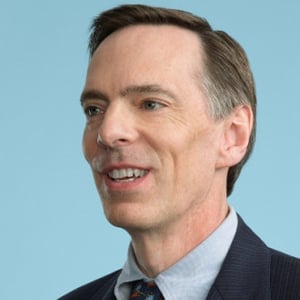
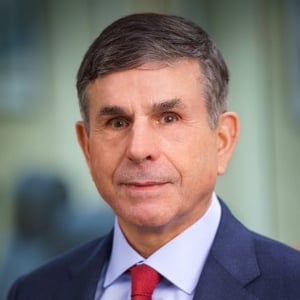
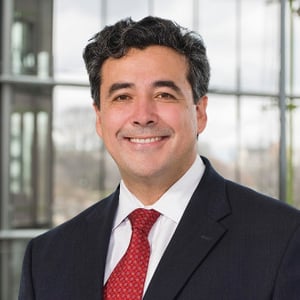
Leo Spitz Professor of International Law, Ludwig and Hilde Wolf Research Scholar, Professor of Political Science, The University of Chicago Law School
Biography
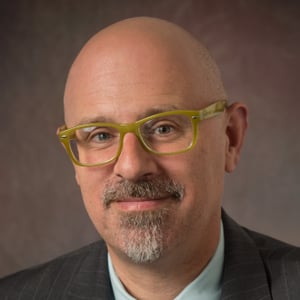
Prof. Tom Ginsburg is the Leo Spitz Professor of Law and Ludwig and Hilde Wolf Research Scholar at the University of Chicago Law School. His research focuses on comparative and international law from an interdisciplinary perspective. Currently he is the Co-Director of the Comparative Constitutions Project. His scholarship includes Judicial Review in New Democracies (2003); The Endurance of National Constitutions (2009); Constitutions in Authoritarian Regimes (2014); and Judicial Reputation (2015).
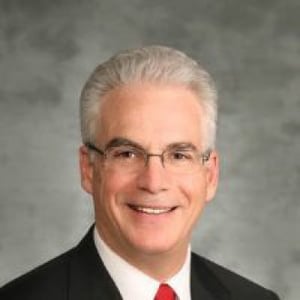
Professor of Law, Northwestern University Pritzker School of Law
Biography
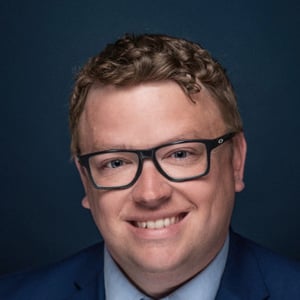
Joshua Kleinfeld teaches and writes about political, legal, and moral philosophy, criminal law, and criminal procedure. He also practices law in Northwestern's Juvenile Criminal Defense Clinic. He is a full professor with tenure at the Northwestern Pritzker School of the Law and (by courtesy) in Northwestern’s philosophy department. In 2017-18, he was a visiting professor at Harvard and Stanford Law Schools. He is the recipient of the Bator Award, given annually to one American law professor under the age of 40 who has demonstrated "excellence in legal scholarship, a commitment to teaching, a concern for students, and who has made a significant public impact."
In philosophy, Kleinfeld's research focuses on the idea of "embodied ethical life," as developed in the socio-theoretic tradition of Hegel, Weber, and Durkheim. This tradition aims to understand and critique social life by bringing to light the normative ideas implicit in social practices and institutions. In law, this means that the most interesting philosophical concepts are often those reflected or actualized in legal practice – in the law as judges and lawyers think of it and wield it.
In criminal law and procedure, Kleinfeld has developed a theory known as "reconstructivism," which holds that the chief office of criminal law is not to dole out retributive justice, nor to optimize crime and cost control, but to reconstruct a violated normative order in the wake of a crime. This work, which draws on the thought of Hegel, Durkheim, Jean Hampton, and Antony Duff, develops an alternative to retributive and utilitarian theories of criminal law by focusing on the distinctive social function and sense of justice at work in the criminal system.
Kleinfeld is also involved in practical criminal justice reform. In this vein, he defends children accused of homicide in the Northwestern Juvenile Criminal Defense clinic and assists in litigation efforts meant to reform American criminal law through the courts. He has also developed a view of criminal justice reform known as "democratization," which holds that the root of the American criminal justice crisis is a set of bureaucratic attitudes, structures, and incentives divorced from the American public’s concerns and sense of justice, and that the primary solution is to make criminal justice more community-focused and responsive to lay influences. Working with others, he has developed a number of policy proposals meant to reform American criminal justice in a democratic direction.
Kleinfeld holds a JD from Yale Law School, a PhD in philosophy from the Goethe University of Frankfurt (supervised by Axel Honneth, Klaus Günther, and Rainer Forst), and a BA in philosophy from Yale College. He clerked for Judge J. Harvie Wilkinson on the United States Court of Appeals for the Fourth Circuit; Judge Janice Rogers Brown on the United States Court of Appeals for the D.C. Circuit; and President (chief justice) Aharon Barak of the Supreme Court of Israel. He worked as an Associate at Debevoise & Plimpton LLP in Frankfurt, Germany, in the area of corporate criminal law. Before law school, he worked as a Senior Research Analyst at the White House’s Council on Bioethics.
Deputy Counsel, Wisconsin Institute for Law & Liberty
Biography
Lucas Vebber is deputy counsel at the Wisconsin Institute for Law & Liberty ("WILL") in Milwaukee, Wisconsin. At WILL he litigates cases in state and federal courts where he focuses on separation of powers and regulatory issues. His litigation efforts have won several national awards, and he has been named a Legal All Star by the Wisconsin Law Journal.
Before joining WILL Lucas worked in a variety of roles in Madison, most recently serving as General Counsel and Director of the Litigation Center at Wisconsin Manufacturers & Commerce, the state’s chamber of commerce and manufacturers’ association. Prior to that Lucas worked for the state in both the legislature and executive branch.
Lucas has a bachelor’s degree from Marquette University in Milwaukee and a law degree from the University of Saint Thomas in Minneapolis.
Richard Blaylock’s practice covers financing, M&A, licensing, collaboration and partnering arrangements, and intellectual property counseling for start-up and established companies whose value derives from innovative technology.
Richard is well-versed in a wide array of technologies, including those germane to both life sciences (pharmaceuticals, biologics, and diagnostics) as well as high technology (software, robotics, wireless, novel materials, and pollution control). He has counseled companies across a wide range of technologies with respect to company formation, licensing, partnering and collaborations, financing and intellectual property strategy, as well as patent, license, trademark, trade secrets and unfair competition disputes.
Former Chief Judge, United States Court of Appeals for the Federal Circuit
Biography
Judge Michel served for more than 22 years on the Federal Circuit, retiring on May 31, 2010. From December 25, 2004 until his retirement, he also discharged the duties of Chief Judge of this national court, serving simultaneously on the U.S. Judicial Conference -- the Judiciary's governing body -- and by appointment of the Chief Justice on its seven-judge Executive Committee.
He judged several thousand appeals and authored more than 800 opinions, one third concerning intellectual property law. Intellectual Asset Management magazine inducted him into its Hall of Fame and he was designated one of the 50 most influential leaders in intellectual property law in the world. His contributions were also recognized by lifetime achievement and similar awards by the American Intellectual Property Law Association (AIPLA); Intellectual Property Owners Education Foundation (IPO); the American Bar Association's Intellectual Property Section; Managing Intellectual Property magazine; the Sedona Conference; the Patent and Trademark Office Society (PTOS); the New York, Chicago, Philadelphia, and Los Angeles Intellectual Property Law Associations; and the William C. Connor, the Giles S. Rich, and the Richard Linn Intellectual Property American Inns of Court. In 2010 the Los Angeles IP Inn was renamed in his honor as the Paul R. Michel IP Inn.
Judge Michel received the Jefferson Medal, the Eli Whitney Award, and the Katz-Kiley Prize as well as Honorary Doctor of Law degrees from the Catholic University of America and the John Marshall Law School. He is a lifetime Member of Honore of FICPI, the international association of private practitioners of intellectual property law. Williams College granted him the Kellogg Award for "outstanding leadership in law and public service."
Judge Michel has written numerous articles on patent law and advocacy, taught related courses and master classes at George Washington University, the University of Akron, and John Marshall law schools, serving as well on their IP advisory boards and on counterpart boards at the universities of California (Berkley), Washington, and Maryland. He co-authored a casebook, Patent Litigation and Strategy (West, 1999) and an August 2010 editorial in the New York Times on strengthening the patent system to promote prosperity and create new jobs.
A frequent speaker at conferences and law schools during his judicial tenure and since, he retired from a lifetime appointment to be free to speak out on the national need for better patent policy and protection of intellectual property and the vital, unmet resource needs of the courts, the PTO, the International Trade Commission, and other IP-related agencies. He was appointed Distinguished Scholar in Residence by IPO, following his retirement. Judge Michel also consults for law firms and their clients in intellectual property litigations, conducting moot courts, mock trials, case evaluations, editing briefs, advising on strategy and providing mediation and arbitration services.
Brian is chair of Dinsmore’s IP Transactions and Licensing Group. He is a past president of the Licensing Executives Society (USA and Canada), Inc. (LES), the leading professional society devoted to commercial transactions and licensing of intangible property. He continues to serve LES as senior vice president for public policy. He has extensive experience in a wide variety of commercial transactions involving intangible property, and is known for creative licensing strategies to promote collaboration and resolve IP-related disputes.
He is a registered patent attorney with more than 30 years of experience before the U.S. Patent and Trademark Office and in structuring global IP portfolios and strategies. He has extensive experience in contested proceedings before the USPTO Patent Trial and Appeal Board (interferences, Inter Partes Reviews and Post Grant Reviews), as well as contested matters in federal courts and the International Trade Commission. His wide-ranging experience affords a broad, informed perspective and facilitates creative approaches to intellectual property management, licensing, and enforcement.
In addition to his leadership of LES, Brian served on the LES Board of Directors 2007 – 2018. In his ongoing role as senior vice president for public policy he is responsible for coordinating the society’s public policy positions, amicus briefs, and congressional outreach. He works with legislators, the executive branch, and the courts toward consistent, reliable, and prudent IP laws and policies that advance innovation and economic development. He has also served LES as trustee for education, and has long served as an author, editor, and faculty member of LES educational programs focusing on best practices in IP licensing.
He is also active in the global society, LES International (LESI). Among his various roles in LESI, he has served as co-chair of the External Relations Committee, coordinating public policy and advocacy for effective IP laws and policies among the 33 regional LES societies, and with various non-governmental organizations such as WIPO and EPO. In 2019, he received the LES International President’s Service Recognition Award.
Brian also serves as Chair of the Board of Directors of the Bayh Dole Coalition, a 501(c)(4) corporation dedicated to promoting and preserving the Bayh Dole Act. He is a member of the Founding Board of Directors of the United States Intellectual Property Alliance (USIPA), an organization dedicated to raising public awareness of, and appreciation for, the role of IP in fostering innovation for the public good; and he has served on the DC Bar Intellectual Property Section Steering Committee (2013 – 2016).
In 2016, Brian testified before the U.S. Senate Committee on Small Business and Entrepreneurship on the effects of the America Invents Act on small business and entrepreneurs in a hearing entitled “An Examination of Changes to the U.S. Patent System & Impacts on America's Small Businesses.”
With his longstanding and diverse patent practice, in both private practice and in-house, Brian advises corporate leaders and entrepreneurs in effective IP procurement practices, and in maximizing value from IP assets. He has been retained as a testifying witness in IP and licensing disputes by the U.S. Department of Justice, the U.S. Department of the Treasury, and by various private enterprises.
Brian has been acknowledged by IAM magazine as among its “IAM Strategy 300”, the world’s leading IP strategists, and among “The World's Leading Patent and Technology Licensing Lawyers.”
He earned B.S. and M.S. degrees from the Department of Chemistry, Rochester Institute of Technology, Rochester, NY; and Juris Doctor from Syracuse University, College of Law, Syracuse, NY (1986).
Brian has served his alma mater as president of the RIT Alumni Association 2005 – 2009; and now serves on the RIT Board of Trustees as a member of its Executive Committee, chair of its Student Life Committee, and vice-chair of its Committee on Trustees. In 2013, Brian was awarded RIT’s Outstanding Alumnus Award, and in 2005 he was awarded the Distinguished Alumnus Award by RIT’s College of Science.
Deputy General Counsel and Vice President for Intellectual Property, Biotechnology Industry Organization
Biography
Hans Sauer is Deputy General Counsel for Intellectual Property for the Biotechnology Industry Organization, a major trade association representing over 1,100 biotechnology companies from the medical, agricultural, environmental and industrial sectors in the United States and 31 other countries. At BIO, Dr. Sauer advises the organization’s board of directors, amicus committee, and various staff committees on patent and other intellectual property-related matters. Prior to taking his current position at BIO in 2006, he was Chief Patent Counsel for MGI Pharma, Inc. in Bloomington MN, and Senior Patent Counsel for Guilford Pharmaceuticals Inc. in Baltimore, MD. Hans has 18 years of in-house experience in the biotechnology industry, first as a research scientist and later as a lawyer. His scientific work was in the area of age-related neurological disorders; after becoming a lawyer he worked on several drug development programs, being responsible for patent prosecution and portfolio oversight, clinical trial health information privacy, and sales and marketing legal compliance. He did his postdoc at Genentech in South San Francisco, and holds a M.S. degree from the University of Ulm in his native Germany; a Ph.D. in Neuroscience from the University of Lund, Sweden; and a J.D. degree from Georgetown University, where he serves as adjunct professor.
Distinguished Senior Fellow and Antonin Scalia Chair in Constitutional Studies, Ethics and Public Policy Center
Biography
Edward Whelan is a Distinguished Senior Fellow of the Ethics and Public Policy Center and holds EPPC’s Antonin Scalia Chair in Constitutional Studies. He is the longest-serving President in EPPC’s history, having held that position from March 2004 through January 2021.
Mr. Whelan directs EPPC’s program on The Constitution, the Courts, and the Culture. His areas of expertise include constitutional law and the judicial confirmation process. As a contributor to National Review Online’s Bench Memos blog, he has been a leading commentator on nominations to the Supreme Court and the lower courts and on issues of constitutional law. He has written essays and op-eds for leading newspapers—including the Wall Street Journal, the New York Times, and the Washington Post—opinion journals, and academic symposia and law reviews. The National Law Journal has named Mr. Whelan among its “Champions and Visionaries” in the practice of law in D.C.
Mr. Whelan is co-editor of three volumes of Supreme Court Justice Antonin Scalia’s work: Scalia Speaks: Reflections on Law, Faith, and Life Well Lived (Crown Forum, 2017), a New York Times bestselling collection of speeches by Justice Scalia; On Faith: Lessons from an American Believer (Crown Forum, 2019), a collection of Justice Scalia’s writings on faith and religion; and The Essential Scalia: On the Constitution, the Courts, and the Rule of Law (Crown Forum, 2020), a collection of Justice Scalia’s views on legal issues.
Mr. Whelan, a lawyer and a former law clerk to Justice Scalia, has served in positions of responsibility in all three branches of the federal government. From just before the terrorist attacks of September 11, 2001, until joining EPPC in 2004, Mr. Whelan was the Principal Deputy Assistant Attorney General for the Office of Legal Counsel in the U.S. Department of Justice. In that capacity, he advised the White House Counsel’s Office, the Attorney General and other senior DOJ officials, and departments and agencies throughout the executive branch on difficult and sensitive legal questions. Mr. Whelan previously served on Capitol Hill as General Counsel to the U.S. Senate Committee on the Judiciary. In addition to clerking for Justice Scalia, he was a law clerk to Judge J. Clifford Wallace of the U.S. Court of Appeals for the Ninth Circuit.
In 1981 Mr. Whelan graduated with honors from Harvard College and was inducted into Phi Beta Kappa. He received his J.D. magna cum laude in 1985 from Harvard Law School, where he was a member of the Board of Editors of the Harvard Law Review.
For more on Mr. Whelan’s background, see this interview.
Erin Wilcox joined PLF in 2018 and works primarily from Austin, Texas. She litigates cases around the country to secure the inalienable rights of all Americans to live responsibly and productively in their pursuit of happiness.
After graduating from law school, Erin defended the individual rights of employees as a litigator for the National Right to Work Legal Defense Foundation, was an attorney-advisor for the D.C. Public Employee Relations Board, and most recently fought for liberty in the Lone Star State as an attorney with the Texas Public Policy Foundation. During law school, Erin clerked at the Institute for Justice and was a Charles Koch Summer Fellow.
A native Texan, Erin ventured east after high school to earn a B.A. in history and political science from Wake Forest University and a J.D. from the Wake Forest University School of Law. In addition to liberty, Erin’s loves include college football, Texas barbecue, and a well-made Old Fashioned.
Paul served as the 43rd Solicitor General of the United States from June 2005 until June 2008. Before his confirmation as Solicitor General, he served as Acting Solicitor General for nearly a year and as Principal Deputy Solicitor General for over three years.
Paul has argued over 100 cases before the United States Supreme Court, including McConnell v. FEC, Tennessee v. Lane, United States v. Booker, MGM v. Grokster, Hobby Lobby v. Burwell, Epic Systems Corp. v. Lewis, Rucho v. Common Cause, Facebook v. Duguid, and TransUnion v. Ramirez. Paul has argued more Supreme Court cases since 2000 than any lawyer in or out of government. He has also argued many important cases in the lower courts, including Walker v. Cheney, United States v. Moussaoui and NFL v. Brady.
Paul’s practice focuses on appellate matters, constitutional litigation and strategic counseling. He represents a broad array of clients in the Supreme Court and in federal and state appellate courts. Last year, for example, he successfully argued Supreme Court cases involving significant issues of energy regulation, statutory interpretation, state sovereign immunity and Article III standing, and successfully argued a trademark appeal in the Fourth Circuit, and a constitutional appeal before the en banc Eleventh Circuit.
Paul focuses on high-stakes appeals. In recent years, he successfully defended a $1.2 billion jury verdict for clients in a Tenth Circuit case, while securing the reversal of an over $2 billion jury verdict for another client in the Seventh Circuit and the approval of a nearly $1 billion dollar class action settlement in the Third Circuit. He has initiated major administrative law challenges and constitutional litigation against the federal government, such as the successful challenge to the HHS drug-pricing rule and threatened challenges that led to the withdrawal of the Treasury Department’s proposed cryptocurrency regulations. He also counsels clients on a variety of strategic legal questions, whether arising from pending legislation, government inquiries or ongoing litigation.
Paul has undertaken substantial pro bono engagements in the Supreme Court, such as twice successfully representing the defendant in Bond v. United States and successfully representing the Omaha Tribe in Nebraska v. Parker, the guardian ad litem in Adoptive Couple v. Baby Girl, the defendant in Sekhar v. United States, a high school football coach in Kennedy v. Bremerton, and the Little Sisters of the Poor. Paul’s pro bono representation also precipitated the federal government’s confession of error in United States v. Rojas.
Following law school, Paul clerked for Judge Laurence H. Silberman of the U.S. Court of Appeals for the D.C. Circuit and for Associate Justice Antonin Scalia of the U.S. Supreme Court. After his clerkships, he went on to serve as Chief Counsel of the U.S. Senate Subcommittee on the Constitution, Federalism and Property Rights.
Paul is a Distinguished Lecturer in Law at the Georgetown University Law Center, where he has taught in various capacities since 1998. He also serves as a Senior Fellow of the Law Center’s Supreme Court Institute. He is the Justice Joseph Story Distinguished Practitioner in Residence at the Gray Center at Scalia Law School.
Roger J. Marzulla is one of the nation’s leading environmental, water, and property lawyers. As Assistant Attorney General in charge of the U.S. Justice Department’s Environment and Natural Resources Division, Roger learned first hand the operations and litigation styles of his client agencies: EPA, Interior Department, Bureau of Reclamation, Fish and Wildlife Service, National Marine Fisheries Service, Department of Transportation, Department of Commerce. In 1997, he co-founded Marzulla Law, where he brings to bear more than 35 years of expertise representing companies and individuals in industries as diverse as land and project development, aerospace, chemicals, oil and gas, mining, timber, manufacturing, computers, agriculture and water service.
Roger began his legal career as a trial lawyer in San Jose, California, after graduating magna cum laude from the University of Santa Clara School of Law. As a partner in Matthews & Marzulla he represented developers, title and construction companies, shopping centers, apartment owners and lenders in litigation throughout California. In 1981 he moved to Denver to become President of Mountain States Legal Foundation, litigating environmental and natural resource cases across the West.
In 1983 Roger joined the Justice Department as Special Litigation Counsel. He was subsequently promoted to Deputy Assistant Attorney General and, in 1987, was confirmed by the Senate as Assistant Attorney General in charge of the Environment and Natural Resources Division. At the Justice Department, Roger helped create litigation strategies for government programs as diverse as Superfund, the Clean Air Act, off-shore oil leasing, environmental crimes, federal facility clean-up, wetlands, endangered species and hazardous waste enforcement, as well as Presidential Order EO 12,630 (Government Interference with Private Property Rights).
In 1989 Roger returned to private law practice, successively heading the environmental law practices of the Powell, Goldstein and Akin, Gump law firms.
Since 1997, as a partner in Marzulla Law, Roger has continued to represent corporate and business clients in a wide array of environmental and property issues in courts across the country, frequently in litigation against the United States. He also assists clients in attaining compliance with environmental, health and safety regulation, and in avoiding risks in transactions.
J.D., Santa Clara University School of Law Santa Clara, California, 1971
Noel Francisco served as the 47th Solicitor General of the United States in the Trump Administration, from 2017 to 2020. He has argued some of the most important cases the Supreme Court has heard in recent years on a wide array of issues.
For example, as Solicitor General, he argued Trump v. Hawaii, where he successfully defended the president's orders restricting travel from countries deemed to present security risks; Janus v. AFSCME, which upheld the First Amendment rights of public employees who decline to join labor unions; Kisor v. Wilkie, which adopted his argument that the "Auer deference doctrine" should be significantly curtailed but retained in its core applications; Apple Inc. v. Pepper, which addressed whether Apple's App Store customers had standing to sue the company for antitrust violations; Knick v. Township of Scott, which held that property owners could sue state and local governments in federal court to vindicate Fifth Amendment takings claims; and Seila Law LLC v. CFPB, which invalidated restrictions on the president's authority to remove the director of the Consumer Financial Protection Bureau.
He also spearheaded the government's general strategy to seek emergency relief in the appellate courts and the Supreme Court when lower courts issued nationwide injunctions against important government programs.
Noel's service as Solicitor General built on his previous tenure at Jones Day, during which he argued McDonnell v. United States, which reversed the federal bribery conviction of the governor of Virginia; NLRB v. Noel Canning, which limited the president's constitutional recess appointments power; and Zubik v. Burwell, which challenged federal insurance coverage regulations that violated Catholic organizations' religious beliefs.
Director, Robert A. Levy Center for Constitutional Studies, Cato Institute
Biography
Thomas Berry is the director in the Cato Institute’s Robert A. Levy Center for Constitutional Studies and editor in chief of the Cato Supreme Court Review. Before joining Cato, he was an attorney at Pacific Legal Foundation and clerked for Judge E. Grady Jolly of the U.S. Court of Appeals for the Fifth Circuit. His academic work has appeared in NYU Journal of Law and Liberty, Washington and Lee Law Review Online, and Federalist Society Review. His popular writing has appeared in The Wall Street Journal, National Law Journal, Investor’s Business Daily, National Review Online, and The Hill Online. He has testified before the U.S. Senate, and his work has been cited by the U.S. District Court for the District of Columbia.
Berry holds a J.D. from Stanford Law School, where he was a senior editor on the Stanford Law and Policy Review and a Bradley Student Fellow in the Stanford Constitutional Law Center. He graduated with a B.A. in Liberal Arts from St. John’s College, Santa Fe.