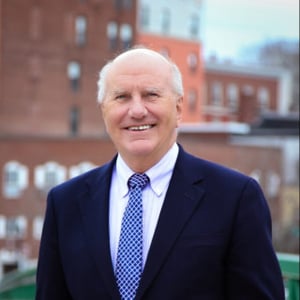
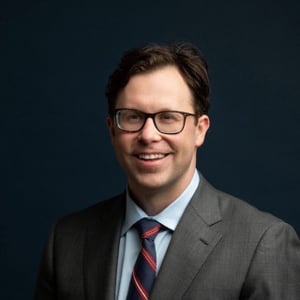
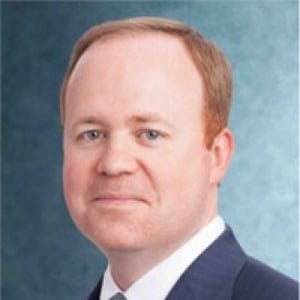
Jeff Wall is Co-Chair of the Appellate and Constitutional Law Practice Group at Gibson Dunn and a former Acting Solicitor General of the United States. He has argued more than 30 cases before the U.S. Supreme Court and is widely regarded as one of the nation’s leading appellate advocates. Last year, he was named Appellate Attorney of the Year by The National Law Journal. He has been honored as The American Lawyer’s “Litigator of the Week” three times since 2024, for securing the elimination of a $650 million award against several national pharmacy chains; persuading the Delaware Supreme Court to reinstate Tesla CEO Elon Musk’s $60 billion incentive-compensation plan; and delivering what was described as a “knockout blow” to the Federal Communications Commission’s net neutrality rules in the Sixth Circuit after more than a decade of regulatory uncertainty.
A Fellow of the American Academy of Appellate Lawyers, Jeff is widely regarded for his ability to distill complex legal issues into clear, persuasive arguments. He is ranked Band 1 by Chambers USA, which has praised his “formidable reputation,” describing him as a “sophisticated” and “brilliant advocate” with an “impressive track record before the Supreme Court.” He is also a three-time Law360 Appellate MVP, most recently earning back-to-back honors in 2024 and 2025.
Jeff is a member of the American Law Institute, President of the Edward Coke Appellate Inn of Court, trustee of the Supreme Court Historical Society, and former member of the Advisory Committee on Procedures for the U.S. Court of Appeals for the D.C. Circuit. Before his service in the Solicitor General’s Office and time in private practice, Jeff clerked for Justice Clarence Thomas of the U.S. Supreme Court and Judge J. Harvie Wilkinson III of the U.S. Court of Appeals for the Fourth Circuit. Jeff has a robust pro bono practice and role in his community, serving on the board of the St. Albans School and its School of Public Service.
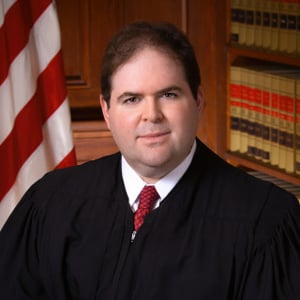
Judge, United States Court of Appeals, Eleventh Circuit
Biography
On November 19, 2019, Judge Robert J. Luck was appointed to the United States Court of Appeals for the Eleventh Circuit by President Donald Trump. Prior to serving on the federal bench, he was appointed to the Florida Supreme Court by Governor Ron DeSantis on January 14, 2019. He previously served on the Third District Court of Appeal in Miami after his appointment there by Governor Rick Scott in March 2017.
Earlier, Judge Luck served on the Eleventh Judicial Circuit Court of Florida from September 2013 to March 2017. He presided in the Criminal, Civil, and Appellate Divisions. Judge Luck, in his years as a trial court judge, tried seventy jury trials, and heard dozens of appeals from the county court and municipal agencies. Judge Luck was appointed to the circuit court in 2013 and was elected by the voters of Miami-Dade County to retain his seat in 2016.
Prior to his service on the bench, Judge Luck was an Assistant United States Attorney for the Southern District of Florida. In his years as a federal prosecutor, he was assigned to the Appeals, Major Crimes, and Economic Crimes Sections of the U.S. Attorney’s Office. Judge Luck tried nineteen jury trials before the federal district court and argued three appeals to the United States Court of Appeals for the Eleventh Circuit. In his final year in the Office, he was a Deputy Chief in the Major Crimes Section.
Earlier in his career, Judge Luck was a legislative correspondent for two United States Senators, a law clerk and staff attorney to Circuit Judge Edward E. Carnes on the United States Court of Appeals for the Eleventh Circuit, and a part of the Greenberg Traurig firm’s appellate section. Judge Luck received his Juris Doctor from the University of Florida Levin College of Law magna cum laude and was asked to join the Order of the Coif. Judge Luck also served as Editor-in-Chief of the Florida Law Review. Judge Luck received his Bachelor of Arts in Economics from the University of Florida with highest honors.
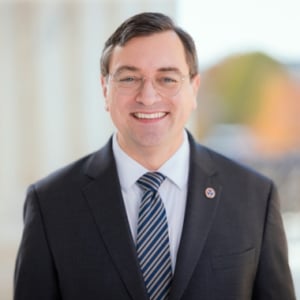
Jonathan Skrmetti was sworn in to an eight-year term as Tennessee’s Attorney General and Reporter on September 1, 2022.
Prior to his current role, General Skrmetti served as Chief Counsel to Governor Bill Lee and as Chief Deputy Attorney General to his predecessor, Tennessee Attorney General Herbert Slatery.
Before working for the State of Tennessee, General Skrmetti was a partner at Butler Snow LLP in Memphis. His legal career began with nearly a decade as a federal prosecutor. He worked at the Civil Rights Division at Main Justice and then at the Memphis U.S. Attorney’s Office and prosecuted sex traffickers, corrupt government officials, and violent white supremacists. In addition, General Skrmetti taught cyberlaw as an adjunct professor at the University of Memphis.
General Skrmetti earned honors degrees from George Washington University, the University of Oxford, and Harvard Law School, where he was editor-in-chief of the Harvard Journal of Law & Public Policy. Following law school, Jonathan clerked for Judge Steven Colloton on the U.S. Court of Appeals for the Eighth Circuit. He lives in Franklin, Tennessee, with his wife and four children.
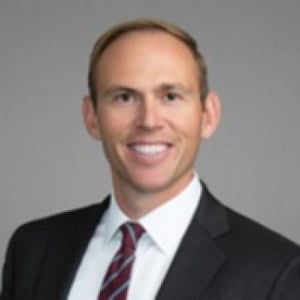
Stephen Hammer is a litigation associate in the Dallas office of Gibson, Dunn & Crutcher.
Before joining the firm, Mr. Hammer served as a law clerk to Chief Justice John G. Roberts, Jr. of the Supreme Court of the United States, Judge Gregory G. Katsas of the United States Court of Appeals for the District of Columbia Circuit, and Judge Jeffrey S. Sutton of the United States Court of Appeals for the Sixth Circuit.
Mr. Hammer graduated magna cum laude from Harvard Law School, where he served as managing editor of the Harvard Journal of Law and Public Policy. Before law school, Mr. Hammer served as an infantry officer in the 82nd Airborne Division of the United States Army. His military decorations include the Bronze Star. Mr. Hammer received an M.Phil. in theology from the University of Oxford, where he studied on a Rhodes scholarship. He received an A.B. summa cum laude in classics from Princeton University and graduated as Latin salutatorian.
Mr. Hammer is a member of the Texas and District of Columbia bars.
Professor of Law, Hofstra University School of Law
Biography
Professor Colombo joined the Hofstra University School of Law faculty in the Fall of 2006. He teaches courses in corporate, securities, and contract law. His research and scholarship focuses primarily on corporate and securities law and, more specifically, the application of non-economic principles and norms to these fields.
Before coming to Hofstra, Professor Colombo served in the Complex Global Litigation Group of Morgan Stanley & Co., Inc., as vice president and counsel. In this position, Professor Colombo supervised investigations, litigations, and regulatory inquiries affecting Morgan Stanley's investment banking franchise. Prior to that, Professor Colombo practiced as a litigation associate at the New York office of Sullivan & Cromwell, where, among other things, he represented corporate and banking clients in civil and criminal investigations conducted by the S.E.C., the U.S. Attorney's Office, and the Federal Reserve Bank; in matters before state courts, federal courts, and arbitration panels; and in appeals before the Third Circuit, the D.C. Circuit, and the U.S. Supreme Court. From 2000-2003, Professor Colombo also served on the Committee on Professional and Judicial Ethics of the Association of the Bar of the City of New York.
Brett Dwight Baber, a 1985 graduate of the University of Maine School of Law, has been practicing law in Maine for 39 years. Currently, Mr. Baber serves in an “of counsel” capacity in the litigation section of Russell Johnson Beaupain. Previously, Mr. Baber was a partner at Rudman Winchell, the Law Office of Brett Baber, and most recently at Lanham Blackwell & Baber, where he served as its managing partner. The focus of Mr. Baber’s practice has been in civil trial practice, including personal injury, wrongful death, product liability, commercial litigation, and real estate disputes. He is admitted to practice in all courts in the State of Maine, the United States Supreme Court, the United States Court of Appeals for the First Circuit, and the United States District Court for the District of Maine.
Having served on the Board of Governors of the Maine State Bar Association for over a decade, Mr. Baber was selected to serve as the organization’s President in 2008. Mr. Baber has served on the Board of Directors of the Penobscot County Bar Association and as its treasurer from 2022-23. Mr. Baber has also been a member of the American Bar Association and the American Association for Justice, and he is currently a member of the Maine Trial Lawyers. Mr. Baber has written numerous articles on litigation topics that have appeared in the Maine Bar Journal and in the March 2021 edition of Trial magazine, a publication of the American Association of Justice. For over the past decade, Mr. Baber has been a regular legal commentator on WVOM radio, a station heard over much of Maine.
Mr. Baber is married to Gayle E. Baber, his wife of 44 years, and they live in Dedham, Maine. The Babers have four children and one grandson. Outside the practice of law, Brett’s interests include travel with his wife and family (having visited all 50 states), downhill and Nordic skiing, golf, and reading non-fiction and novels. In the last few years, Brett has taken up the guitar and enjoys playing blues, soft rock, and country rock. Mr. Baber is a member of St. Paul the Apostle, where he sings in the choir and, as a cantor, serves as a reader. Mr. Baber is a current member of the Pine Cone Council of the Knights of Columbus, having served in various offices.
Professor of Law, University of Cincinnatti College of Law
Biography
Anne Marie Lofaso is a Professor of Law at the University of Cincinnati College of Law, where she teaches labor law, employment law, employment discrimination law, and constitutional law. Before arriving at U.C., she was the Arthur B. Hodges Professor of Law at the West Virginia University College of Law, where she taught for over 18 years. Professor Lofaso is a labor law expert. She has authored over seventy law review articles, primarily on labor and employment law, as well as over a dozen scholarly blogs, primarily in the area of human rights, with a focus on socio-economic rights. She has co-authored two casebooks, Modern Labor Law in the Public and Private Sectors and Public Sector Employment, in addition to one textbook, Mastering Labor Law (2d ed. Forthcoming 2025).
She is the author and editor of two labor law treaties, NLRA: Law and Practice and Drafting the Union Contract, and the editor of several other books, including Title VII of the Civil Rights Act After 50 Years: Proceedings of the New York University 67th Annual Conference on Labor.
Professor Lofaso is an active public intellectual who has presented nearly two hundred lectures throughout the world and the United States, has testified before Congress on labor law issues, and has appeared in numerous news outlets such as the New York Times, Washington Times, Wall Street Journal, NPR, PBS, Bloomberg Radio, the Daily Labor Report, and Law360 to discuss labor law and constitutional law topics. She has also lectured throughout West Virginia on issues related to professionalism and ethics in the practice of law. Professor Lofaso is a former Special Government Employee who served as Vice President of the U.S. Commission on Civil Rights and as a Commissioner of the Human Rights Commission for the City of Morgantown.
She is a member of the College of Labor and Employment Lawyers and affiliated with the Oxford Human Rights Hub Blog. Professor Lofaso earned her A.B. from Harvard University, magna cum laude, J.D. from the University of Pennsylvania Carey Law School, and D.Phil. from Oxford University, where she wrote her doctoral dissertation comparing the law and underlying jurisprudence of mass economic dismissals in the U.S., Great Britain, and the European Union.
Former Deputy Secretary of Labor; Mayor, Pinehurst, NC
Biography
Patrick Pizzella’s professional career includes 28 years in the Federal government and 13 years in the non-profit and private sector. In 2021 he was appointed to the Board of Directors of the Leadership Institute.
In November 2021 Pizzella was elected to the Pinehurst Village Council in North Carolina. In November 2023 Pizzella was elected to a four-year term as Mayor of Pinehurst.
Pizzella recently served as Deputy Secretary of the U.S. Department of Labor (DOL) in Washington, DC from 2018—2021. President Donald J. Trump nominated him to serve as Deputy Secretary and the U.S. Senate confirmed Pizzella on April 12, 2018. Pizzella served as Acting U.S. Secretary of Labor from July 20, 2019, until September 27, 2019. DOL's mission is to foster, promote, and develop the welfare of the wage earners, job seekers, and retirees of the United States; improve working conditions; advance opportunities for profitable employment; and assure work-related benefits and rights. DOL administers and enforces more than 180 federal laws and thousands of federal regulations. These mandates and the regulations that implement them cover many workplace activities for over 10 million employers and over 150 million workers. DOL has almost 14,000 employees and a budget of about $12 billion.
Pizzella previously served as a Member of the Federal Labor Relations Authority (FLRA) after being nominated by the President and confirmed by the Senate in 2013. On January 23, 2017, President Trump designated Pizzella as Acting FLRA Chairman, a position he held until December 8, 2017.
Prior to joining the FLRA, Pizzella was Principal at Patrick Pizzella LLC. He was confirmed by the Senate and served as Assistant Secretary of Labor for Administration and Management DOL from 2001 to 2009. Pizzella was designated by President George W. Bush to serve as a member of the Board of Directors of the Overseas Private Investment Corporation from January 2004 to April 2005.
Previously, he worked at Preston Gates Ellis & Rouvelas Meeds LLP as a Government Affairs Counselor from 1998 to 2001 and Director of Coalitions from 1996 to 1997. From 1990 to 1995, Pizzella was Director of the Office of Administration at the Federal Housing Finance Board, and from 1988 to 1989, Deputy Under Secretary for Management at the U.S. Department of Education.
He has previously held positions at the U.S. Office of Personnel Management, the U.S. Small Business Administration, and the U.S. General Services Administration.
Pizzella received a Bachelor of Science in business administration from the University of South Carolina and he is a graduate of Iona Preparatory School. He is a native of New Rochelle, New York.
Aaron Solem is a staff attorney at the National Right to Work Legal Defense Foundation, where he represents both private and public sector employees in state and federal courts, as well as before administrative agencies.
Aaron was co-counsel in Janus v. AFSCME, Council 31, 138 S. Ct. 2448 (2018), a major Supreme Court case establishing that it violates the First Amendment to force public sector employees to pay compulsory fees. Additionally, Aaron’s track record in federal court includes being co-counsel in Stewart v. NLRB, 851 F.3d 21 (D.C. Cir. 2017); Tamosiunas v. NLRB, 892 F.3d 422 (D.C. Cir. 2018); and UNAP v. NLRB, 975 F.3d 34 (1st Cir. 2020). He was also lead counsel in Sands v. NLRB, 825 F.3d 778 (D.C. Cir. 2016), where he successfully vacated an unfavorable NLRB decision.
Aaron is also experienced in representing employees before the National Labor Relations Board. Aaron won a major victory in NABET, Local 51, 371 NLRB No. 15 (2021), establishing the unlawfulness of threatening evidence preservation letters under the National Labor Relations Act. He also frequently represents and advises decertification petitioners, including the decertification petitioners in Americold Logistics, 362 NLRB 493 (2015); Pinnacle Foods Grp., 368 NLRB No. 97 (2019); and Geodis Logistics, 371 NLRB No. 102 (2022).
Aaron earned his law degree with honors from the University of Notre Dame Law School and currently resides in Bethesda, Maryland.









 Professor Colombo joined the Hofstra University School of Law faculty in the Fall of 2006. He teaches courses in corporate, securities, and contract law. His research and scholarship focuses primarily on corporate and securities law and, more specifically, the application of non-economic principles and norms to these fields.