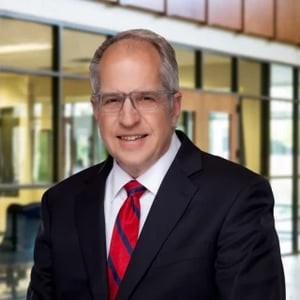
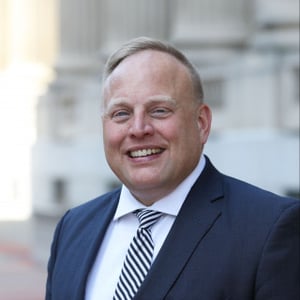
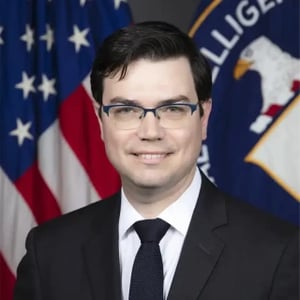
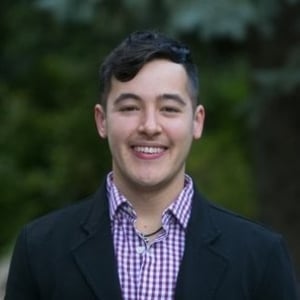
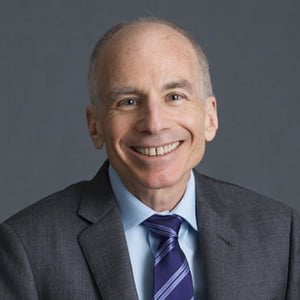
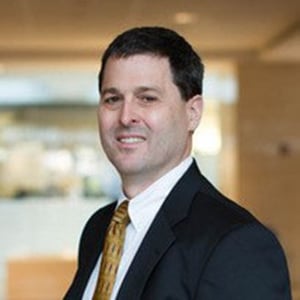
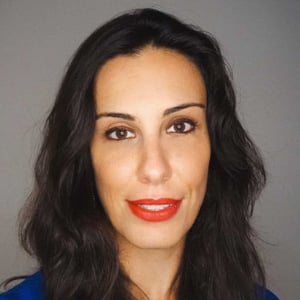
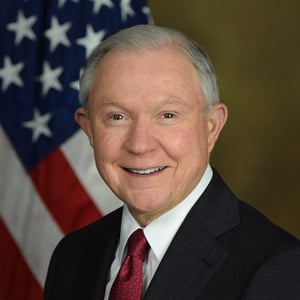
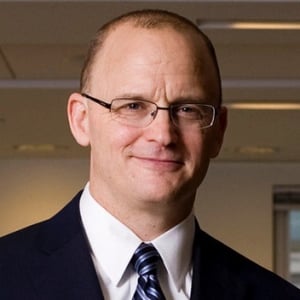
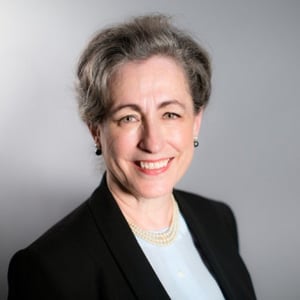
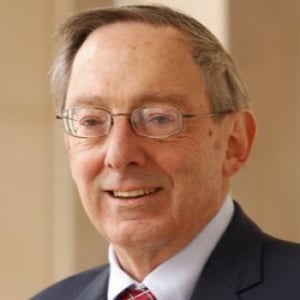
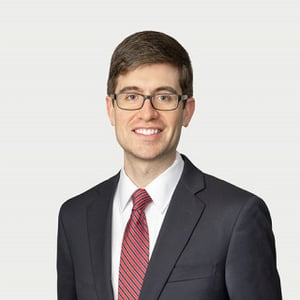
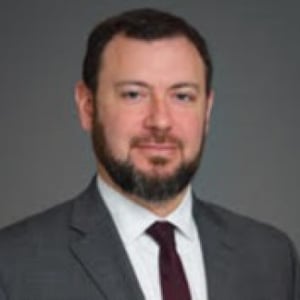
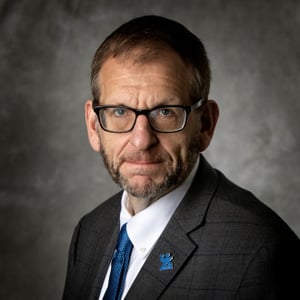
Jordan Lorence is Senior Counsel in FLI’s Washington, D.C. office, where he represents First Liberty in strategic efforts promoting religious liberty, and works on important First Amendment projects and litigation, including those at the U.S. Supreme Court.
Lorence has a long career of litigating religious liberty cases since 1984. He has worked for many public interest law firms, including Alliance Defending Freedom, Home School Legal Defense Association, the North Star Legal Center and Concerned Women for America.
He has worked on important religious liberty cases. Lorence worked on school choice cases at the Supreme Court, such as Witters v. Washington Department of Services for the Blind (1986), and Trinity Lutheran (2016), which laid the foundation for First Liberty’s crucial win in Carson v. Makin (2022), requiring Maine to include religious schools in its school choice program.
Lorence argued before the U.S. Supreme Court in Regents of the University of Wisconsin v. Southworth (2000). He represented prolife Christian law students from the University of Wisconsin Law School who objected to the University’s requirement that they pay a mandatory student fee that funded the advocacy of student pro-abortion groups. Other Supreme Court cases Lorence has worked on include NIFLA v. Becerra (2018), protecting prolife pregnancy centers from a California statute requiring them to post signs explaining how pregnant women could obtain state-funded abortions; Masterpiece Cakeshop (2017), involving a Christian cake artist sued by the State of Colorado for declining to design a case celebrating the wedding of a same-sex couple and other cases such as Christian Legal Society v. Martinez (2012), Rosenberger v. University of Virginia (1995), Hurley v. GLIB (1995) and Lamb’s Chapel v. Center Moriches Center Moriches School District (1993).
Churches and other religious groups in New York City obtained the right to rent vacant public schools on weekends to conduct worship services after Lorence’s tenacious 20 years of litigation in Bronx Household of Faith. Lorence won protection for churches facing eviction from discriminatory zoning ordinances in Minnesota in Cornerstone Bible Church v. City of Hastings, Minnesota (1991). He also argued at the New Mexico Supreme Court one of the first cases in the nation defending a Christian wedding photographer charged by the State of New Mexico with discrimination for declining to create photos celebrating the commitment ceremony of a lesbian couple in Elane Photography v. Willock (2013).
Lorence defended home schooling families from intrusive school officials during his time working at Home School Legal Defense Association (HSLDA) in the 1980s and 1990s. HSLDA also tasked Lorence with establishing a sister organization in Canada to protect home schooling families there. He traveled extensively in Canada from British Columbia to Prince Edward Island speaking to families how they could protect their right to home school under relevant Canadian law.
Lorence earned his undergraduate degree in journalism from Stanford University and his law degree from the University of Minnesota, his home state. Lorence was born and raised in Minnesota, where he worked one summer building Mighty Dump trucks at Tonka Toys in Mound, Minnesota. For two years immediately after he graduated from law school, Lorence served as the head administrator for a Minnesota Senate committee.
He speaks extensively on First Amendment and other legal issues. Lorence has spoken at least 75 law schools and many legal conferences. Prominent publications such as the Wall Street Journal, the Washington Post and others have printed his opinion pieces on key legal issues involving religious liberty and freedom of speech. He has appeared on such media outlets as Fox News, CNN, National Public Radio, NBC’s Today Show, BBC radio and many others.
Lorence and his wife Marilyn have been married 40 years. They live in the Washington, D.C. area where they raised their seven children.
Vice President and Director of Litigation, EdChoice
Biography
Thomas M. Fisher served as a Deputy Attorney General for 22 years and as Indiana’s first Solicitor General from 2005-2023. In that role he handled high profile litigation for the State, defended state statutes against constitutional attack, advised the Attorney General on a range of legal policy issues, and managed the State’s U.S. Supreme Court docket. A two-time recipient of the National Association of Attorneys General Best Brief Award, Fisher has argued five times before the High Court.
His U.S. Supreme Court experience also includes authorship of dozens of cert-stage and merits-stage amicus curiae briefs on a wide range of issues. In addition, Fisher has argued dozens of important and high-profile cases before both the Indiana Supreme Court and the Seventh Circuit U.S. Court of Appeals. Fisher is a Fellow of the American Academy of Appellate Lawyers and was recently named a Sagamore of the Wabash by Governor Eric Holcomb.
A native Hoosier, Fisher is a graduate of Wabash College and Indiana University Maurer School of Law, where he serves as an Adjunct Professor of Law.
Chief Judge, United States Court of Appeals, Sixth Circuit
Biography
JEFFREY S. SUTTON is the Chief Judge of the United States Court of Appeals for the Sixth Circuit. He has served as Chair of the Federal Judicial Conference Committee on Rules of Practice and Procedure, Chair of the Advisory Committee on Appellate Rules, and Chair of the Supreme Court Fellows Commission. He currently serves as Chair of the Executive Committee of the Judicial Conference of the United States. Since 1993, Chief Judge Sutton has been an adjunct professor at The Ohio State University College of Law, where he teaches seminars on State Constitutional Law, the United States Supreme Court, and Appellate Advocacy. He also teaches a class on State Constitutional Law at Harvard Law School. Among other publications, he is the author of Who Decides? States as Laboratories of Constitutional Experimentation and 51 Imperfect Solutions: States and the Making of American Constitutional Law. He is the co-author of a casebook, State Constitutional Law: The Modern Experience, as well as The Law of Judicial Precedent. He is also the co-editor of The Essential Scalia: On the Constitution, the Courts, and the Rule of Law. In 2006, Chief Judge Sutton was elected to the American Law Institute, and in 2017 he was elected to its Council.
Chief Judge, United States Court of Appeals, Eleventh Circuit
Biography
William H. Pryor Jr. serves as Chief Circuit Judge on the United States Court of Appeals for the Eleventh Circuit.
In 2013–18, he served on the United States Sentencing Commission and, in 2017–18, served as Acting Chair.
He has taught as a visiting professor at the University of Alabama School of Law and previously taught as an adjunct professor at the Cumberland School of Law of Samford University.
He served as the 45th Attorney General of Alabama from 1997 to 2004. When he took office, he was the youngest attorney general in the nation. In his reelection, he received the highest percentage of votes of any statewide candidate.
He graduated magna cum laude from Tulane Law School where he finished first in the common-law curriculum and was editor in chief of the Tulane Law Review. He then served as a law clerk for Judge John Minor Wisdom of the U.S. Court of Appeals for the Fifth Circuit.
He is a member of The American Law Institute and an Adviser for the RESTATEMENT OF THE LAW THIRD, CONFLICT OF LAWS. He is a coauthor with Bryan Garner, Justices Gorsuch and Kavanaugh, and several other judges of a treatise, THE LAW OF JUDICIAL PRECEDENT. He has published in the Yale Law Journal, Columbia Law Review, Virginia Law Review, Notre Dame Law Review, Harvard Journal of Law & Public Policy, Yale Law & Policy Review, George Mason Law Review, Florida Law Review, Alabama Law Review, Case Western Reserve Law Review, and Tulane Law Review. He has published op-eds in The Wall Street Journal, The New York Times, National Review, and USA Today. He has debated at National Lawyers’ Conventions of the Federalist Society (including on National Public Radio) and at the Oxford Union in the United Kingdom. And he is listed among several “widely admired judicial writers” in Bryan Garner’s The Redbook: A Manual on Legal Style.
He is a member of the Tulane Law School Hall of Fame and has received the Defender of the Constitution Award from the Heritage Foundation, the Jurist of the Year Award from the Texas Review of Law & Politics, and the St. Thomas More Award from the St. Thomas More Society of Atlanta. Judge Pryor is also a proud member of the National Society of the Sons of the American Revolution.
Chief Judge, United States Court of Appeals, Eleventh Circuit
Biography
William H. Pryor Jr. serves as Chief Circuit Judge on the United States Court of Appeals for the Eleventh Circuit.
In 2013–18, he served on the United States Sentencing Commission and, in 2017–18, served as Acting Chair.
He has taught as a visiting professor at the University of Alabama School of Law and previously taught as an adjunct professor at the Cumberland School of Law of Samford University.
He served as the 45th Attorney General of Alabama from 1997 to 2004. When he took office, he was the youngest attorney general in the nation. In his reelection, he received the highest percentage of votes of any statewide candidate.
He graduated magna cum laude from Tulane Law School where he finished first in the common-law curriculum and was editor in chief of the Tulane Law Review. He then served as a law clerk for Judge John Minor Wisdom of the U.S. Court of Appeals for the Fifth Circuit.
He is a member of The American Law Institute and an Adviser for the RESTATEMENT OF THE LAW THIRD, CONFLICT OF LAWS. He is a coauthor with Bryan Garner, Justices Gorsuch and Kavanaugh, and several other judges of a treatise, THE LAW OF JUDICIAL PRECEDENT. He has published in the Yale Law Journal, Columbia Law Review, Virginia Law Review, Notre Dame Law Review, Harvard Journal of Law & Public Policy, Yale Law & Policy Review, George Mason Law Review, Florida Law Review, Alabama Law Review, Case Western Reserve Law Review, and Tulane Law Review. He has published op-eds in The Wall Street Journal, The New York Times, National Review, and USA Today. He has debated at National Lawyers’ Conventions of the Federalist Society (including on National Public Radio) and at the Oxford Union in the United Kingdom. And he is listed among several “widely admired judicial writers” in Bryan Garner’s The Redbook: A Manual on Legal Style.
He is a member of the Tulane Law School Hall of Fame and has received the Defender of the Constitution Award from the Heritage Foundation, the Jurist of the Year Award from the Texas Review of Law & Politics, and the St. Thomas More Award from the St. Thomas More Society of Atlanta. Judge Pryor is also a proud member of the National Society of the Sons of the American Revolution.
Michael Ellis was sworn in as Deputy Director of the Central Intelligence Agency on February 10, 2025. Deputy Director Ellis has held a variety of senior national security positions, including General Counsel of the National Security Agency and Senior Director for Intelligence Programs at the National Security Council.
Deputy Director Ellis previously served in the White House Counsel's Office, providing legal advice on national security and foreign relations. Prior to the White House, he was General Counsel of the U.S. House of Representatives Permanent Select Committee on Intelligence and served as an intelligence officer in the U.S. Navy Reserve.
Before returning to government, Deputy Director Ellis was the General Counsel of Rumble, a publicly traded video sharing platform and cloud services provider.
Deputy Director Ellis is a graduate of Yale Law School and Dartmouth College. Following law school, he served as a clerk to two federal judges. He is a "Jeopardy!" champion.
Aaron Ginn is the co-founder and CEO of Hydra Host, a decentralized hosting environment providing 100% availability and eliminating cloud infrastructure lock-in. He is also the co-founder of Lincoln Network, one of the largest think tanks devoted to technology policy and cybersecurity issues in Washington DC, and the growth hacking movement.
Speaker Information
Lawrence Gostin
University Professor, Founding Linda D. & Timothy J. O’Neill Professor of Global Health Law, Faculty Director of O’Neill Institute for National & Global Health Law, Georgetown University, Director, World Health Organization Collaborating Center on Public Health Law & Human Rights
Biography
Lawrence O. Gostin is University Professor, Georgetown University’s highest academic rank conferred by the University President. Prof. Gostin directs the O’Neill Institute for National and Global Health Law and is the Founding O’Neill Chair in Global Health Law. He served as Associate Dean for Research at Georgetown Law from 2004 to 2008. He is Professor of Medicine at Georgetown University and Professor of Public Health at the Johns Hopkins University.
Prof. Gostin is the Director of the World Health Organization Collaborating Center on National and Global Health Law. The WHO Director-General has appointed Prof. Gostin to high-level positions, including the International Health Regulations (IHR) Roster of Experts and the Expert Advisory Panel on Mental Health. He served on the Director-General’s Advisory Committee on Reforming the World Health Organization, as well as numerous WHO expert advisory committees, including on the Pandemic Influenza Preparedness Framework, smallpox, genomic sequencing data, migrant health, and NCD prevention. He served on the WHO/Global Fund Blue Ribbon Expert Panel: The Equitable Access Initiative to develop a global health equity framework. He co-chairs the Lancet Commission on Global Health Law.
Professor Gostin served on two global commissions to report on the lessons learned from the 2015 West Africa Ebola epidemic. He was also senior advisor to the United Nations Secretary General’s post-Ebola Commission. He also served on the drafting team for the G-7 Summit in Tokyo 2016, focusing on global health security and Universal Health Coverage.
Prof. Gostin holds multiple international academic professorial appointments, including at Oxford University, the University of Witwatersrand (South Africa), and Melbourne University. Prof. Gostin served on the Governing Board of Directors of the Consortium of Universities for Global Health.
Prof. Gostin holds editorial appointments in leading academic journals throughout the world. He is the Legal and Global Health Correspondent for the Journal of the American Medical Association. He is also Founding Editor-in-Chief of Laws (an international open access law journal). He was formally the Editor-in-Chief of the Journal of Law, Medicine & Ethics.
Prof. Gostin holds four honorary degrees. In 1994, the Chancellor of the State University of New York conferred an Honorary Doctor of Laws Degree. In 2006, Her Majesty Queen Elizabeth II and the Vice Chancellor awarded Cardiff University’s (Wales) highest honor, an Honorary Fellow. In 2007, the Royal Institute of Public Health (United Kingdom) appointed Prof. Gostin as a Fellow of the Royal Society of Public Health (FRSPH). In 2012, the Chancellor of the University of Sydney – on the nomination of the Deans of the Law and Medical Schools – conferred a Doctor of Laws (honoris causa), presided by two Justices of Australia’s highest court—Justices Kirby and Haydon.
Prof. Gostin is an elected lifetime Member of the National Academy of Medicine/ National Academy of Sciences. He has served on the National Academy’s Board on Health Sciences Policy, the Board on Population Health, the Human Subjects Review Board, and the Committee on Science, Technology, and Law. He currently serves on the National Academies of Sciences Engineering, and Medicine, Board on Global Health. Gostin chaired the National Academy’s Committee on Global Solutions to Falsified, Substandard, and Counterfeit Medicines. He has chaired National Academy Committees on national preparedness for mass disasters, health informational privacy, public health genomics, and human subject research on prisoners.
Prof. Gostin is also a Member of the Council on Foreign Relations and Fellow of the Hastings Center. In 2016, President Obama appointed Prof. Gostin to a six-year term on the President’s National Cancer Advisory Board to advise the nation on cancer prevention, research, and policy. He also serves on the National Institutes of Health Director’s Advisory Committee on the ethics of public/private partnerships to end the opioid crisis.
Prof. Gostin has led major law reform initiatives in the U.S., including drafting the Model Emergency Health Powers Act (MEHPA) to combat bioterrorism (following the post-9/11 anthrax attacks) and the “Turning Point” Model State Public Health Act. He also spearheaded the World Health Organization and International Development Law Organization’s major report, Advancing the Right to Health: The Vital Role of Law.
Prof. Gostin’s proposal for a Framework Convention on Global Health – an international treaty ensuring the right to health – is now part of a global campaign, endorsed by the UN Secretary-General and Director of UNAIDS.
In the United Kingdom, Lawrence Gostin was the Legal Director of the National Association for Mental Health, Director of the National Council of Civil Liberties (the UK equivalent of the ACLU), and a Fellow at Oxford University. He helped draft the Mental Health Act (England and Wales) and brought landmark cases before the European Court of Human Rights.
Prof. Gostin’s books include: Public Health Law: Power, Duty, Restraint (University of California Press, 3rd ed., 2016); Public Health Law and Ethics: A Reader (University of California Press, 3rd ed., 2018); Human Rights in Global Health: Rights-Based Governance for a Globalizing World (Oxford University Press, 2018); Law and the Health System (Foundation Press, 2014); Principles of Mental Health Law & Practice (Oxford University Press, 2010).
Gostin’s classic text, Global Health Law (Harvard University Press, 2014) is read throughout the world—translated and published in both simplified and traditional Chinese, and in Spanish. Paul Farmer, Partners in Health, says of his book: Global Health Law is “more than the definitive book on a dynamic field. Gostin harnesses the power of international law and human rights as tools to close unconscionable health inequities — the injustices that burden marginalized populations throughout the world. Gostin presents a forceful vision, one that deserves a wide embrace.”
In a 2012 systematic empirical analysis of legal scholarship, independent researchers ranked Prof. Gostin 1st in the nation in productivity among all law professors, and 11th in in impact and influence. A 2017 and 2018 systematic empirical analysis ranked Prof. Gostin 1st in the nation for citations in health law.
Scott K. Ginsburg Professor of Health Law & Policy, Georgetown University
Biography
David A. Hyman, M.D., J.D., is the Scott K. Ginsburg Professor of Health Law & Policy at Georgetown University. Professor Hyman focuses his research and writing on the regulation and financing of health care. He teaches or has taught health care regulation, civil procedure, insurance, medical malpractice, law & economics, professional responsibility, and tax policy.
While serving as Special Counsel to the Federal Trade Commission, Professor Hyman was principal author and project leader for the first joint report ever issued by the Federal Trade Commission and Department of Justice, “Improving Health Care: A Dose of Competition” (2004). He is also the author of Medicare Meets Mephistopheles, which was selected by the U.S. Chamber of Commerce/National Chamber Foundation as one of the top ten books of 2007, and the co-author (with Charles Silver) of Overcharged: Why Americans Pay Too Much for Health Care (2018). He has published widely in student-edited law reviews and peer-reviewed medical, health policy, law, and economics journals.
Jenin Younes is Litigation Counsel for the New Civil Liberties Alliance. Having always been a passionate advocate for individual liberties, Jenin spent the first part of her career as an appellate public defender, providing representation to indigent clients convicted of criminal offenses in New York City. In this capacity, she briefed and argued countless appeals in New York’s Appellate Division, Second Department, and several cases in the New York State Court of Appeals. She also represented individuals at civil hearings in trial court.
Jenin holds a B.A. from Cornell University and a J.D. from New York University School of Law.
Jeff Sessions served as the 84th Attorney General of the United States from February 9, 2017 until November 7, 2018.
Prior to becoming Attorney General, Mr. Sessions served as a United States Senator for Alabama since 1996. As a United States Senator, he focused his energies on maintaining a strong military, upholding the rule of law, limiting the role of government, and providing tax relief to stimulate economic growth and to empower Americans to keep more of their hard-earned money.
Mr. Sessions was born in Selma, Alabama on December 24, 1946, and grew up in Hybart, the son of a country store owner. Growing up in the country, Sessions was instilled with certain core values – honesty, hard work, belief in God and parental respect – that define him today. In 1964, he became an Eagle Scout and thereafter received the Distinguished Eagle Scout Award. After attending school in nearby Camden, Sessions attended Huntingdon College in Montgomery, graduating with a Bachelor of Arts degree in 1969. He received a Juris Doctorate degree from the University of Alabama in 1973. Sessions served in the United States Army Reserve from 1973 to 1986, ultimately attaining the rank of Captain. He still considers that period to be one of the most rewarding chapters of his life.
Sessions’ interest in the law led to a distinguished legal career, first as a practicing attorney in Russellville, Alabama, and then in Mobile. Following a two-year stint as Assistant United States Attorney for the Southern District of Alabama (1975-1977), Sessions was nominated by President Reagan in 1981 and confirmed by the Senate to serve as the United States Attorney for the Southern District of Alabama, a position he held for 12 years. Sessions was elected Alabama Attorney General in 1995, serving as the State’s chief legal officer until 1996, when he entered the United States Senate.
Sessions and his wife, Mary Blackshear Sessions, originally of Gadsden, Alabama, have three children, Mary Abigail Reinhardt, Ruth Sessions Walk, and Sam. They have seven granddaughters, Jane Ritchie, Alexa, Gracie, Sophia, Hannah, Joanna, and Phoebe, and three grandsons, Jim Beau, Lewis, and Nicholas.
Gregory Garre is a partner in the Washington, D.C. office of Latham & Watkins and Global Chair of the firm's Supreme Court and Appellate Practice Group. He recently served as the 44th Solicitor General of the United States. As Solicitor General, he was the federal government's top lawyer before the Supreme Court and was responsible for overseeing the government's litigation in the federal appellate courts. Prior to his nomination by the President and unanimous confirmation as Solicitor General by the Senate, he served as Principal Deputy Solicitor General from 2005 to 2008, and then as Acting Solicitor General. In addition, he served as an Assistant to the Solicitor General from 2000 to 2004. He is the only person to have held all of those positions within the Office of the Solicitor General.
Mr. Garre has argued 29 cases before the Supreme Court, including two cases during the current term, and has served as counsel of record in hundreds of cases before the Court. During the past term, he won each of the cases he argued as Solicitor General, including the landmark case of Ashcroft v. Iqbal, which clarified the gateway requirements for civil litigation in the federal courts, as well as FCC v. Fox Television Stations, and Winter v. NRDC. He has also argued and briefed cases involving a wide array of other nationally important matters, including in the areas of administrative law, alien tort statute, antitrust, business and employment law, education, environmental law, First Amendment, intellectual property, international law, media and telecommunications, separation of powers and voting rights.
Mr. Garre has also successfully argued numerous cases before the federal courts of appeals, including some of the most significant cases heard by the appellate courts in recent years. And, as Acting Solicitor General, he successfully argued on behalf of the government in the first adversarial appeal heard by the Foreign Intelligence Surveillance Court of Review in its 30-year history.
Mr. Garre has received numerous awards for his public service, including the Attorney General's Medallion for his service as Solicitor General and the Navy's Distinguished Public Service Award-the Navy's highest civilian honor-for his successful argument in Winter v. NRDC, which secured a path-marking Supreme Court ruling overturning an order that restrained critically important naval exercises. He has also received the Attorney General's Distinguished Service Award, the Attorney General's Award for Excellence in Furthering Interests of US National Security, and additional honors from the Department of Justice for his work on nationally important litigation matters.
In November 2009, Mr. Garre was named to Washingtonian Magazine's list of top Supreme Court lawyers. In 2006, he was named to The American Lawyer's "Fab 50" list of top litigators under the age of 45 expected to be "leading the field for years to come." And in 2005, he was named to Chambers USA's list of leading appellate litigators in Washington, D.C.
Mr. Garre received his JD degree with high honors from the George Washington University Law School, where he served as editor-in-chief of the law review and was selected to Order of the Coif, and his BA degree cum laude from Dartmouth College, where he was a Rufus Choate Scholar. Following his graduation from law school, he served as a law clerk to Chief Justice William H. Rehnquist, and to Judge Anthony J. Scirica of the United States Court of Appeals for the Third Circuit.
Mr. Garre is a member of the advisory board of the Georgetown University Law School Supreme Court Institute and of the Edward Coke Appellate Inn of Court. He has taught constitutional law and Supreme Court practice for many years at the George Washington University Law School. He has testified before Congress and speaks frequently on issues related to the Supreme Court and appellate practice.
JD, George Washington University Law School, 1991 Highest Honors; Order of the Coif; Editor-in-Chief, Law Review
BA, Dartmouth College, 1987 cum laude; Rufus Choate Schola
Senior Litigation Counsel, New Civil Liberties Alliance
Biography
Peggy Little, Senior Counsel at New Civil Liberties Alliance, a new public interest law firm challenging the administrative state founded in 2017 by Professor Philip Hamburger, has over three decades of experience as a trial and appellate litigator in complex, high-stakes regulatory, mass-tort, class-action, products liability, securities, commercial and civil rights litigation representing individuals and high-profile litigants including Fortune 50 companies, financial institutions, public companies, and universities in state and federal courts, including the United States Supreme Court.
Peggy is a graduate of Yale College and Yale Law School, where she was awarded the Potter Stewart Prize. She was a law clerk to the Hon. Ralph K. Winter on the U.S. Court of Appeals for the Second Circuit. Prior to starting her own trial and appellate law firm in 1997, where she was appellate consulting counsel to the New Haven firefighters in Ricci v.DeStefano, a landmark 2009 United States Supreme Court decision, Peggy was a partner at Tyler, Cooper & Alcorn in New Haven, Connecticut. From 2004 to early 2018, Peggy directed, part-time, the Federalist Society Pro Bono Center.
Peggy has participated in many national conferences and symposia addressing issues of current importance in constitutional law – specifically state and federal constitutional questions regarding the separation of powers and the first amendment – and regularly speaks, blogs and publishes on the topic of the unconstitutional exercise of governmental power. In May of 2017, she presented her paper, Pirates at the Parchment Gates, to a conference of state and federal judges at the Law and Economics Center at the Antonin Scalia Law School. Her work has been published by law reviews, legal publications, the Federalist Society, the Wall Street Journal, Law and Liberty and the Manhattan Institute.
Recent publications include: How the SEC silences its critics, The SEC should listen to Sen. Cotton, Lucia v. SEC, Opening Salvos in the Opioid Litigation Wars, Straight Dope on the Opioid Crisis
Robert E. Scott Distinguished Professor of Law Emeritus, University of Virginia School of Law; Alice McKean Young Regents Chair in Law Emeritus, University of Texas
Biography
Douglas Laycock is perhaps the nation’s leading authority on the law of religious liberty and also on the law of remedies. He has taught and written about these topics for more than four decades at the University of Chicago, the University of Texas, the University of Michigan and the University of Virginia. He retired from teaching at UVA Law School in May 2023.
Laycock has testified frequently before Congress and has argued many cases in the courts, including the U.S. Supreme Court, where he has served as lead counsel in six cases and has also filed influential amicus briefs. He is the author (co-author in the most recent edition) of the leading casebook Modern American Remedies, the award-winning monograph The Death of the Irreparable Injury Rule and many articles in leading law reviews. He co-edited a collection of essays, Same-Sex Marriage and Religious Liberty.
His many writings on religious liberty have been republished in a five-volume collection:
Religious Liberty Volume One: Overviews and History
Religious Liberty Volume Two: The Free Exercise Clause
Religious Liberty Volume Three: Religious Freedom Restoration Acts, Same-Sex Marriage Legislation, and the Culture Wars
Religious Liberty Volume Four: Federal Legislation After the Religious Freedom Restoration Act, with More on the Culture Wars
Religious Liberty Volume Five: The Free Speech and Establishment Clauses
Laycock resigned from the council and as first vice president of the American Law Institute to become co-reporter for the Restatement (Third) of Torts: Remedies. He is a fellow of the American Academy of Arts and Sciences. He earned his B.A. from Michigan State University and his J.D. from the University of Chicago.
General Counsel, University of Kentucky & Former Solicitor General of Virginia, University of Kentucky
Biography
William E. Thro, the General Counsel of the University of Kentucky, is an accomplished university attorney, appellate advocate, and legal scholar.
As the Chief Legal Officer for the University of Kentucky, he provides proactive strategic advice on critical legal and policy issues confronting a public flagship land grant research university with an integrated academic medical center and a high profile athletics program. Before assuming his present position in 2012, he spent more than twenty years representing public universities including eight years as the first in-house counsel at Christopher Newport University.
As Solicitor General of Virginia for four years, he was responsible for the Virginia State Government’s U.S. Supreme Court litigation (except capital cases) as well as lower court appeals involving the constitutionality of statutes or politically sensitive issues. He argued two cases in the U.S. Supreme Court and numerous cases in the lower appellate courts. He co-authored seven U.S. Court merits briefs, eleven U.S. Supreme Court amicus briefs, and more than fifty briefs at the petition stage. He received two Best Brief Awards from the National Association of Attorneys General.
As a legal scholar, he focuses on constitutional law in educational contexts. He has more than sixty publications in law reviews or peer reviewed journals as well as numerous monographs, book chapters, and encyclopedia entries. In recognition of his scholarly work, he received Stetson University’s Kaplin Award for Excellence in Higher Education Law & Policy Scholarship (2014) and became a Fellow of both the National Education Finance Conference (2012) and the National Association of College and University Attorneys (2007).
He has served as President of the Education Law Association, Chair of the Virginia Bar Association’s Appellate Practice Section, Board Chair for a local Red Cross Chapter, on the Boards of both the National Association of College & University Attorneys and the National Education Finance Academy, and an Elder in the Presbyterian Church (U.S.A.).
A native of Kentucky, he received his undergraduate degree summa cum laude from Hanover College. In addition to receiving the Crowe Citation as the outstanding male in his class, he was the first Hanover student to become a Harry S. Truman Scholar. He earned a graduate degree with honours from the University of Melbourne while attending as a Rotary Foundation International Ambassadorial Scholar. His law degree is from the University of Virginia where he was a published member of the VIRGINIA LAW REVIEW and research assistant to constitutional law professor A.E. Dick Howard. He began his legal career as a judicial clerk to the late Judge Ronald E. Meredith of the U.S. District Court for the Western District of Kentucky in Louisville.
He is married to the Rev. Dr. Julie Urback Thro and has two children in college (Sandra, Will) and one in high school (Noah).