

This event has concluded.

Here are the latest events.






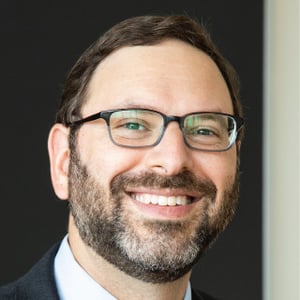
Antonin Scalia Professor of Law, Harvard Law School
Stephen E. Sachs is the Antonin Scalia Professor of Law at Harvard Law School, where he teaches civil procedure, conflict of laws, and seminars on constitutional law. His research focuses on the law and theory of constitutional interpretation, the jurisdiction of state and federal courts, the history of procedure and private law, and the role of the general common law in the U.S. legal system.
Sachs has authored numerous articles, essays, and book chapters. He is an elected member of the American Law Institute, an adviser to the ALI’s project on the Restatement of the Law (Third), Conflict of Laws, a former member of the Judicial Conference’s Advisory Committee on Appellate Rules, and a founding member of the Academic Freedom Alliance.
In 2020, Sachs received the Federalist Society’s Joseph Story Award, which recognizes a young academic who has demonstrated excellence in legal scholarship, a commitment to teaching, a concern for students, and who has made a significant public impact in a manner that advances the rule of law in a free society.
Sachs previously taught at Duke University School of Law and as a visiting professor at the University of Chicago Law School. Before entering academia, he practiced in the Washington, D.C., litigation group of Mayer Brown LLP, and he clerked for Chief Justice John G. Roberts Jr. as well as for Judge Stephen F. Williams of the U.S. Court of Appeals for the D.C. Circuit.
Sachs received his J.D. from Yale Law School, where he was executive editor of the Yale Law Journal and served both as executive editor and articles editor of the Yale Law & Policy Review. A Rhodes Scholar, he graduated from Oxford University with a first-class BA (Hons) degree in philosophy, politics, and economics. He received his A.B. degree summa cum laude in history from Harvard University, earning the Sophia Freund Prize.
Sachs is a licensed attorney in Massachusetts and the District of Columbia, and he is authorized to practice before the D.C. Circuit, the Second Circuit, the Seventh Circuit, and the Supreme Court of the United States.
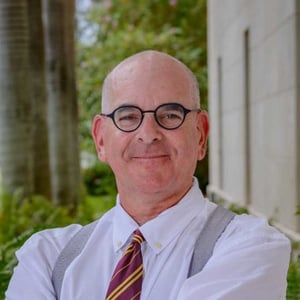
Professor of Law, Florida International University College of Law
Howard M. Wasserman joined the College of Law in 2003. He graduated magna cum laude from the Northwestern University School of Law, where he was an associate articles editor of the Law Review and was named to the Order of the Coif. Following law school, he clerked for Chief Judge James T. Giles of the United States District Court for the Eastern District of Pennsylvania and Judge Jane R. Roth of the United States Court of Appeals for the Third Circuit. He also has been a visiting professor at Saint Louis University School of Law and Florida State University College of Law. Professor Wasserman teaches civil procedure, evidence, federal courts, civil rights, and First Amendment; his scholarship focuses on the freedom of speech and on the role of procedure and jurisdiction in public-law and civil-rights litigation. He blogs at PrawfsBlawg and at Sports-Law Blog and is the Section Editor for the Courts Law Section of JOTWELL. Professor Wasserman is a loyal Chicago Cubs fan.
Professor of Law, Ohio Northern University Pettit College of Law
Scott Gerber clerked for U.S. District Judge Ernest C. Torres of the District of Rhode Island and practiced with the Boston-based law firm Bingham, Dana & Gould. He is a member of the Massachusetts, Colorado and Virginia bars as well as the U.S. Supreme Court bar. He is the 2002, 2009, 2011 and 2012 winner of the Fowler V. Harper Award for excellence in legal scholarship and the 2004, 2013 and 2016 recipient of the Daniel S. Guy Award for excellence in legal journalism. He held the Ella & Ernest Fisher chair in law at Ohio Northern University from 2008-10. He has served on the Ohio Advisory Committee of the U.S. Commission on Civil Rights since 2008 and was appointed to the Association of American Law Schools Committee to Review Scholarly Papers for the 2018 Annual Meeting. He is an associated scholar at Brown University's Political Theory Project. StateStats.org named him one of the top law professors in Ohio. He was on sabbatical as a visiting professor at Brown University's Political Theory Project during the 2018-19 academic year.
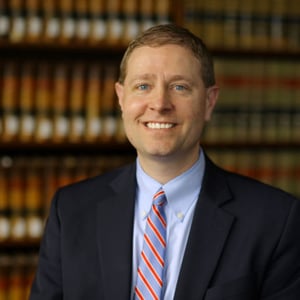
Executive Director, Salmon P. Chase Center for Civics, Culture, and Society, The Ohio State University
Professor Lee J. Strang serves as the inaugural executive director of the Salmon P. Chase Center for Civics, Culture, and Society at The Ohio State University.
Initiated in 2023 by the state of Ohio, the Chase Center will be an academic home at Ohio State for teaching, research, and programing on the foundations of the American constitutional order and its impact on society. As executive director, Professor Strang is responsible for organizing the center, overseeing the hiring and appointment of the center’s faculty, developing curriculum, and delivering student and academic programming. He also holds a faculty appointment in the Moritz College of Law at Ohio State.
Professor Strang is a nationally recognized legal scholar who has published dozens of articles in leading journals in the fields of constitutional law and interpretation, property law, and religion and the First Amendment. He co-edits the textbook Federal Constitutional Law, and his most recent book, Originalism’s Promise: A Natural Law Account of the American Constitution is the first book-length, natural law justification for originalism. He currently is writing on civic thought and leadership, and he is finalizing a book on the history of American Catholic legal education (with John M. Breen).
Before joining Ohio State, Professor Strang served as the inaugural director of the University of Toledo’s Institute of American Constitutional Thought & Leadership. He joined the Toledo College of Law faculty in 2008, was granted tenure in 2010, and was named John W. Stoepler Professor of Law & Values in 2015. The University of Toledo awarded Professor Strang its Outstanding Faculty Research and Scholarship Award in 2017. Before that, he was a visiting professor at Michigan State University College of Law. A graduate of the University of Iowa, where he was articles editor of the Iowa Law Review and Order of the Coif, Professor Strang holds an LL.M. degree from Harvard Law School.
Professor Strang has been a visiting scholar at the Georgetown Center for the Constitution and a visiting fellow at the James Madison Program at Princeton University. In 2016, he was appointed to the Ohio Advisory Committee of the U.S. Commission on Civil Rights and reappointed as chair in 2023.
Prior to teaching, Professor Strang served as a judicial clerk for Judge Alice M. Batchelder of the U.S. Court of Appeals for the Sixth Circuit. He was also an associate for Jenner & Block LLP in Chicago, where he practiced in general and appellate litigation.
Professor Strang is a frequent presenter at scholarly conferences. He is the president of the Board of Trustees of Northwest Ohio Classical Academy, Ohio’s first classical charter school. He is also a regular participant in debates at law schools across the country, a contributor to the media, and a speaker to political, civic, and religious groups.
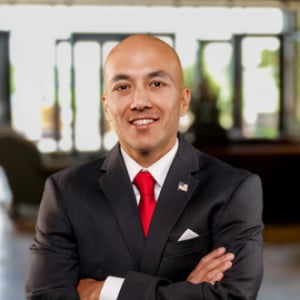
Chief Counsel, Senator Ted Cruz
Mike Berry serves as Chief Counsel for United States Senator Ted Cruz. As Chief Counsel for Senator Cruz, Mike provides advice and counsel to the Senator with special emphasis on the Senate’s advice and consent role pertaining to judicial nominations.
Prior to working on the Hill, Mike spent many years in public interest litigation with various non-profits. Mike served for seven years as an attorney with the U.S. Marine Corps, leaving active duty in 2013. Among his numerous positions within the Marine Corps, Mike deployed to Afghanistan in 2008 and he served as an Adjunct Professor of Law at the United States Naval Academy. Mr. Berry continues to proudly serve our nation as a member of the Marine Corps Reserve.
Mr. Berry earned his bachelor’s degree from Texas A&M University, and he earned his law degree from The Ohio State University.
U.S. District Court for the Middle District of Florida
Prior to joining the federal bench, Judge Barber served as a Circuit Judge in the criminal division of the Thirteenth Judicial Circuit, where he has served since his appointment by the Governor in 2008. As a Circuit Judge he has handled the full range of civil and criminal cases. He previously served for four years as a Hillsborough County Court Judge. Upon graduation from law school, Judge Barber practiced for five years in the trial and business litigation department of Carlton Fields, P.A. He then served as an Assistant Statewide Prosecutor in the Office of Statewide Prosecution and as an Assistant State Attorney for the Thirteenth Judicial Circuit. Upon completion of his service as a prosecutor he returned to Carlton Fields, P.A., where his practice focused on business litigation until his appointment to the bench.
Judge Barber earned his B.A. from the University of Florida, where he was inducted into Phi Beta Kappa, and his J.D. from the University of Pennsylvania Law School.
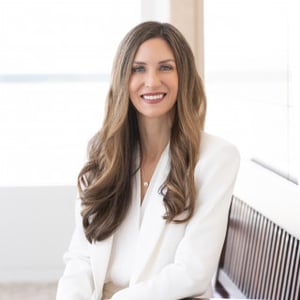
United States District Judge, United States District Court for the Middle District of Florida
In November 2020, the Senate confirmed Kathryn Kimball Mizelle as a United States District Judge for the Middle District of Florida. At age 33, she became the youngest Article III judge in the country. Prior to her confirmation, Judge Mizelle was in private practice at Jones Day, where she focused on complex civil and criminal litigation and appeals. Judge Mizelle previously served at the United States Department of Justice in the Office of the Associate Attorney General, in the Southern Criminal Enforcement Section of the Tax Division, and in the United States Attorney’s Office for the Eastern District of Virginia. Judge Mizelle has also taught as an adjunct professor of law at the University of Florida Levin College of Law and at George Mason University’s Antonin Scalia Law School.
Judge Mizelle earned her B.A., summa cum laude, from Covenant College, and her J.D., summa cum laude, from the University of Florida Levin College of Law. After graduation, Judge Mizelle served as a law clerk at every level of the federal judiciary: at the Supreme Court for Justice Clarence Thomas, at the D.C. Circuit for Judge Gregory G. Katsas, at the Eleventh Circuit for Chief Judge William H. Pryor Jr., and at the Middle District of Florida for Judge James S. Moody Jr.

Senior Fellow and Director of Constitutional Studies, Manhattan Institute
Ilya Shapiro is a senior fellow and director of constitutional studies at the Manhattan Institute and a contributing editor of City Journal. Previously he was executive director and senior lecturer at the Georgetown Center for the Constitution, and before that a vice president of the Cato Institute.
Shapiro is the author of Lawless: The Miseducation of America’s Elites (2025) and Supreme Disorder: Judicial Nominations and the Politics of America’s Highest Court (2020), coauthor of Religious Liberties for Corporations? (2014), and editor of 11 volumes of the Cato Supreme Court Review (2008-18). He has contributed to a variety of academic, popular, and professional publications, including the Wall Street Journal, Harvard Journal of Law & Public Policy, Washington Post, Los Angeles Times, USA Today, National Review, and Newsweek. He also regularly provides commentary for various media outlets, writes the Shapiro’s Gavel newsletter on Substack, and once appeared on the Colbert Report.
Shapiro has testified many times before Congress and state legislatures and has filed more than 500 amicus curiae “friend of the court” briefs in the Supreme Court. He lectures regularly on behalf of the Federalist Society, is a member of the board of fellows of the Jewish Policy Center, was an inaugural Washington Fellow at the National Review Institute, and has been an adjunct law professor at the George Washington University and University of Mississippi. He is also the chairman of the board of advisers of the Mississippi Justice Institute, a barrister in the Edward Coke Appellate Inn of Court, and a former member of the Virginia Advisory Committee to the U.S. Commission on Civil Rights.
Earlier in his career, Shapiro was a special assistant/adviser to the Multi-National Force in Iraq on rule-of-law issues and practiced at Patton Boggs and Cleary Gottlieb. Before entering private practice, he clerked for Judge E. Grady Jolly of the U.S. Court of Appeals for the Fifth Circuit. He holds an AB from Princeton University, an MSc from the London School of Economics, and a JD from the University of Chicago Law School.
Associate Dean & Principle Lecturer, Regent University School of Law
Professor Jacob has been a law professor at Regent University since January 2001. Prior to coming to Regent, his career began in a big-firm law practice and included years as a religious liberty lawyer, in Christian ministry leadership, and in Christian higher education.
Most of his teaching and scholarship is in the area of constitutional law. His published articles include"Griswold and the Defense of Traditional Marriage” in the North Dakota Law Review; “Will the Real Constitutional Originalist Please Stand Up?” in the Creighton Law Review; “Back to Basics: Constitutional Meaning and ‘Tradition,’” in the Texas Tech Law Review; and “Free Exercise in the ‘Lobbying Nineties,’” in the Nebraska Law Review.
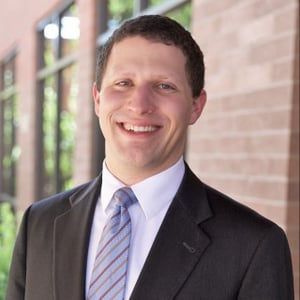
President & General Counsel, Reason for Life
Samuel D. Green serves as President & General Counsel at Reason for Life, a nonprofit ministry working to end abortion in America. In this role, Samuel focuses on educating, but he has also served as counsel of record on amicus briefs in multiple cases, including Dobbs v. Jackson Women’s Health Organization (abortion) and 303 Creative LLC v. Elenis (freedom of speech).
Before founding Reason for Life, Samuel spent five years at Alliance Defending Freedom (ADF), where he engaged in litigation to defend the sanctity of life, freedom of speech, and religious liberty. Samuel has also worked as a litigation associate at a large law firm (Jenner & Block), as a member of a presidential campaign’s legal team, and as a law clerk to the Honorable Raymond W. Gruender of the U.S. Court of Appeals for the Eighth Circuit.
Samuel finished first in his class at Pepperdine University School of Law, where he earned a Juris Doctor degree in 2011. He also studied political science at the University of California, Los Angeles (UCLA), where he graduated, summa cum laude, with a Bachelor of Arts degree in 2008.
Samuel has provided legislative testimony, preached sermons about the sanctity of life, and given presentations across the country to various groups or their chapters (including the Federalist Society, the Christian Legal Society, the St. Thomas More Society, Turning Point USA, Students for Life of America, Live Action, 40 Days for Life, Summit Ministries, and Teen Pact Leadership Schools). Samuel has also participated in media interviews and published articles with various outlets, including Newsweek, The Hill, The Seattle Times, WORLD, Washington Examiner, Arizona Capitol Times, The Federalist, and The Daily Signal.
Samuel is admitted to practice law in California, Arizona, Missouri, Montana, the U.S. Supreme Court, and multiple federal district and appellate courts.
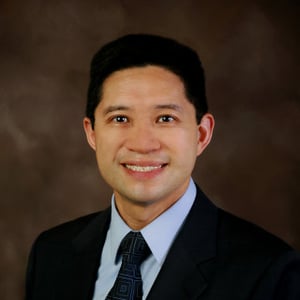
Founder, Original Jurisdiction
David Lat is a lawyer turned writer. He publishes Original Jurisdiction, a newsletter on Substack about law and legal affairs, and he writes for newspapers and magazines, including the New York Times, Washington Post, and Wall Street Journal. Prior to launching Original Jurisdiction, David founded Above the Law, one of the nation's most widely read legal news websites, and Underneath Their Robes, a popular blog about federal judges that he wrote under a pseudonym. He is also the author of a novel set in the world of the federal courts, Supreme Ambitions. Before entering the media world, David worked as a federal prosecutor in Newark, New Jersey; a litigation associate at Wachtell, Lipton, Rosen & Katz, in New York; and a law clerk to Judge Diarmuid F. O’Scannlain of the U.S. Court of Appeals for the Ninth Circuit. David graduated from Harvard College and Yale Law School, where he served as an editor of the Yale Law Journal.
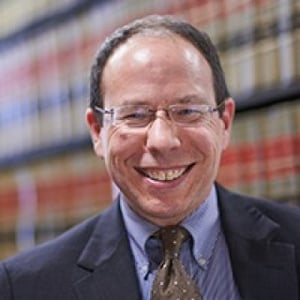
Professor of Law, Michigan State University (currently serving as FCC General Counsel)
Professor Candeub joined the MSU Law faculty in fall 2004. He is also a Fellow with MSU's Institute of Public Utilities. Prior to joining MSU, he served as an advisor at the Federal Communications Commission (FCC). From 1998 to 2000, Professor Candeub was a litigation associate for the Washington D.C. firm of Jones, Day, Reavis & Pogue and also has served as a corporate associate with Cleary, Gottlieb, Steen & Hamilton, also in Washington, D.C. Immediately following law school, he clerked for Chief Judge J. Clifford Wallace, U.S. Court of Appeals for the Ninth Circuit. While in law school, Professor Candeub was an articles editor for the University of Pennsylvania Law Review.
Professor Candeub's scholarly interests focus on the law and regulation of communications, internet, technology. His numerous law review articles and scholarly papers have placed him at the center of legal and policy controversies, and he often writes for popular outlets such as the Wall Street Journal and US News. Federal courts, including the U.S. Supreme Court, have cited and relied upon his work.
He joined the Trump administration in 2019 as Deputy Assistant Secretary of Commerce for Telecommunications and Information and assumed the role of Acting Assistant Secretary. He later joined the Department of Justice as Deputy Associate Attorney General.
Professor Candeub is a senior fellow at the D.C.-based Center of Renewing America.
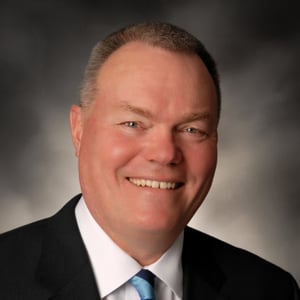
Chief Operating Officer and General Counsel, North American Meat Institute
Mark Dopp is the chief operating officer and general counsel for the North American Meat Institute (NAMI), previously serving as its senior vice president of regulatory affairs and general counsel. In his role, Dopp oversees policy development and represents industry views on significant regulatory, scientific, legislative, and communications matters. He also provides legal counsel to NAMI and oversees its administration and financial matters.
Dopp became the Meat Institute’s outside general counsel in May 1995 and in 1999 he formally joined the Institute and assumed responsibility for its legal and regulatory affairs. Before joining NAMI, Dopp worked at Hogan and Hartson (now Hogan Lovells), where he was active in areas of food and agricultural law on behalf of many clients, including domestic and foreign corporations. He joined Hogan and Hartson in 1989 as an associate and in January 1993 became a partner. Dopp began his career in USDA's Office of the General Counsel in 1984 and entered private practice in 1985.
Dopp received his Bachelor of Science-Agriculture degree in agricultural economics from the University of Wisconsin and his Master of Science from Michigan State University in 1981, also in agricultural economics. He received his law degree in 1984 from the University of Missouri.
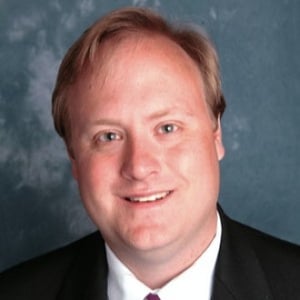
Sean Heather is senior vice president for International Regulatory Affairs and Antitrust at the U.S. Chamber of Commerce. He leads the Chamber’s Center for Global Regulatory Cooperation (GRC), which seeks to align trade, regulatory, and competition policy in support of open and competitive markets, and oversees the organization’s antitrust policy on behalf of its members.
On the international level, Heather directs policy related to data governance, cross-border data flows, artificial intelligence, cybersecurity, and other emerging regulatory frameworks related to the digital transformation of the economy. His efforts focus on advancing sound regulatory practices as the foundation of better regulation and cooperation across jurisdictions. In addition, he is responsible for policy related to foreign direct investment and investment screening.
Heather has made significant contributions to update trade disciplines that address issues ranging from digital trade and regulatory cooperation to competition policy and state-owned enterprises.
Heather has held a variety of positions during his long career at the Chamber. He served in the Congressional and Public Affairs Division and was head of the Chamber’s regional office in Chicago.
Before joining the Chamber, Heather worked for the Illinois comptroller and with several political campaigns across the state. He holds an undergraduate degree and an M.B.A. from the University of Illinois.
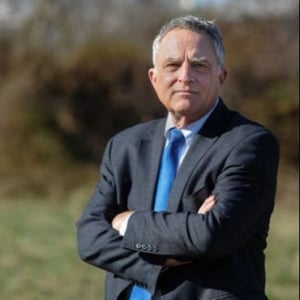
President, Board of Directors, Farm Action
Joe Maxwell is a co-founder of Farm Action. He focuses his work on a vision of an inclusive U.S. economy that works for all people, providing them an equitable opportunity to share in the prosperity they help build, rather than an economy that works for just a handful of individuals and multi-national corporations.
Joe has held key positions in both political and initiative petition campaigns. During the last election cycle, he assisted Presidential, U.S. Senate and U.S. House of Representatives candidates in developing their antitrust, agriculture, and food policy positions.
Joe holds degrees in agriculture economics and law from the University of Missouri. He served as a Missouri state legislator, as Missouri’s Lieutenant Governor, and is retired from the Army National Guard, where he served as a First Sergeant in the Field Artillery. Joe and his brother, Steve, are Missouri family farmers. Joe’s work has been profiled by The Hill, Huffington Post, Mother Jones, Politico, and The Nation. He has been cited by CNN, The New York Times, NPR, USA Today, Washington Post, and more.
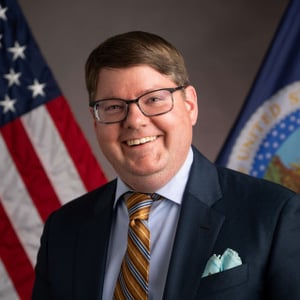
Deputy Secretary of Agriculture, U.S. Department of Agriculture
Judge Stephen Alexander Vaden was appointed as the Deputy Secretary of the U.S. Department of Agriculture on July 7, 2025. Alongside Secretary Brooke L. Rollins, Deputy Secretary Vaden leads the Department’s operations and implements policies that support America’s food and farm systems. A native of Union City, Tennessee, Deputy Secretary Vaden brings expertise in agricultural policy, law, and rural development. Previously, he served as a judge on the U.S. Court of International Trade and as General Counsel of USDA. Throughout Deputy Secretary Vaden’s time as General Counsel, he led successful Supreme Court litigation, advanced regulatory reform, and supported the implementation of the 2018 Farm Bill. He is a graduate of Yale Law School and Vanderbilt University. A public servant with strong agricultural roots, Deputy Secretary Vaden is committed to revitalizing rural America and ensuring an abundant, affordable, and safe U.S. food supply.