Senior Fellow, Claremont Institute and Adjunct Professor, John Hopkins University
Biography
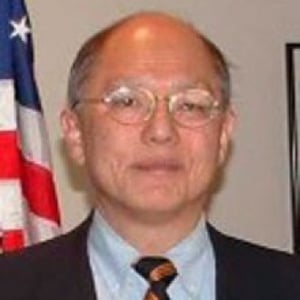
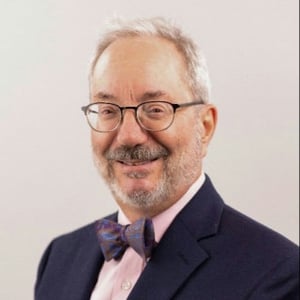
Ken Masugi, non-resident Senior Fellow at the Claremont Institute, has had diverse careers in academia, think-tanks, and government. He teaches graduate courses for Johns Hopkins University’s Center for Advanced Studies in American Government in Washington, DC. He has held positions at a variety of universities and college programs, including a federal prison and Princeton University. He taught for three years at the U.S. Air Force Academy, where he was John M. Olin Distinguished Visiting Professor.
Masugi has also served in the federal government for ten years, as a special assistant and speechwriter to the heads of the Departments of Labor and Justice and the U.S. Equal Employment Opportunity Commission. He is the co-author, co-editor, or editor of 10 books on American politics and author of over 100 articles and reviews on American politics, political philosophy, constitutional development, and films. He is a regular columnist for the web magazine American Greatness. He has recorded CDs of lectures on American presidential rhetoric and Tocqueville’s Democracy in America. He has helped develop the Claremont Institute as Director of the Bicentennial of the Constitution project, Editor of The Claremont Review of Books, and inaugural director of the Center for Local Government.
Masugi is currently preparing a monograph on Alexis de Tocqueville’s Democracy in America and a series of studies on Aristotle’s political philosophy. He is working on a book on the Declaration of Independence and changing American diversity. He is the recipient of several academic honors, including a Fulbright scholarship to the University of Cologne, Germany (1975-76), and has lectured at a variety of American and international institutions. He holds his B.A., with honors, from Claremont McKenna College and his Ph.D. from The New School for Social Research.
John R. Lott, Jr. is an economist who has held research and/or teaching positions at the University of Chicago, Yale University, Stanford, UCLA, Wharton, and Rice and was the chief economist at the United States Sentencing Commission during 1988 and 1989. He has published over 100 articles in academic journals. He also is the author of six books including More Guns, Less Crime, Freedomnomics, The Bias Against Guns, and Are Predatory Commitments Credible? He has just released another book entitled "Debacle: Obama's war on jobs and growth and what we can do now to regain our future." Lott is a FoxNews.com contributor and a weekly columnist for them. Opinion pieces by Prof. Lott have appeared in such places as The Wall Street Journal, The New York Times, The Los Angeles Times, the New York Post, USA Today, and The Chicago Tribune. He has appeared on such television programs as the ABC and NBC National Evening News broadcasts, Fox News, "The NewsHour with Jim Lehrer," and the "Today Show." He received his Ph.D. in economics from UCLA in 1984.
Judge, United States Court of Appeals, Seventh Circuit
Biography
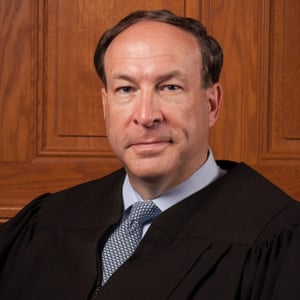
Michael B. Brennan was confirmed and sworn in as a Circuit Judge for the U.S. Court of Appeals for the Seventh Circuit in May 2018.
He previously worked as a partner in the Milwaukee law firm of Gass Weber Mullins LLC, where he tried cases and handled appeals in federal and state courts, as a judge on the Milwaukee County Circuit, where he presided over a variety of criminal and civil calendars, and as an assistant district attorney in the Milwaukee County District Attorney’s office.
Brennan’s undergraduate degree is from the University of Notre Dame, and his law degree from Northwestern University School of Law, where he was an editor on the law review and the moot court champion. He served as a law clerk on the U.S. District Court for the Eastern District of Wisconsin and the U.S. Court of Appeals for the Seventh Circuit.
Judge, United States Court of Appeals, Ninth Circuit
Biography
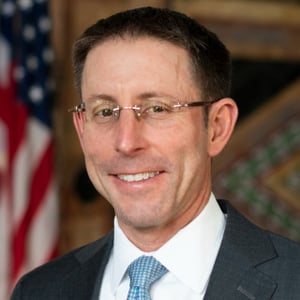
Judge Daniel A. Bress is a Circuit Judge on the United States Court of Appeals for the Ninth Circuit, with chambers in San Francisco. A native of Gilroy, California, Judge Bress graduated magna cum laude from Harvard College and received his J.D. degree from the University of Virginia School of Law, where he served as Editor-in-Chief of the Virginia Law Review. Following law school, Judge Bress clerked for the Honorable J. Harvie Wilkinson III of the United States Court of Appeals for the Fourth Circuit, and the Honorable Antonin Scalia of the Supreme Court of the United States. Judge Bress was then a lawyer private practice, first at Munger Tolles & Olson and later at Kirkland & Ellis LLP, where he was a litigation partner. Judge Bress has also taught law school courses at the University of Virginia School of Law and the Columbus School of Law at Catholic University. Judge Bress was nominated and confirmed to the Ninth Circuit in 2019.
Cory Liu is a state district judge in Austin, Texas. He previously served as assistant general counsel to Texas Governor Greg Abbott. Mr. Liu clerked for Judge Andrew Oldham on the U.S. Court of Appeals for the Fifth Circuit and Judge Danny Boggs on the U.S. Court of Appeals for the Sixth Circuit. He was Editor-in-Chief of the Harvard Journal of Law & Public Policy and is a graduate of Harvard Law School and the University of Chicago.
Professor of Law and Director of the Center for Global Law and P, Santa Clara Law
Biography
Professor Sloss is a prominent expert on the domestic application of international law in U.S. courts. He is the editor of a forthcoming book, to be published by Cambridge University Press, providing a comparative analysis of treaty enforcement in domestic courts. He has published articles in several leading law journals, including Stanford Law Review, Cornell Law Review, the American Journal of International Law, the Yale Journal of International Law, the Virginia Journal of International Law and the Columbia Journal of Transnational Law. Before embarking on an academic career, Professor Sloss spent nine years as a civil servant in the U.S. Government. During that time, he helped draft and negotiate several important arms control treaties and other international agreements. Professor, Saint Louis University School of Law (1999-2008); Associate, Wilson, Sonsini, Goodrich & Rosati (1997-1999); Law Clerk, Judge Joseph T. Sneed, U.S. Court of Appeals for the Ninth Circuit (1996-97); U.S. Arms Control and Disarmament Agency (1984-1993). Hampshire College, B.A. 1981 Harvard University Kennedy School of Government, M.P.P. 1983 Stanford Law School, J.D. 1996 with Distinction
Keith E. Whittington is the David Boies Professor of Law at Yale Law School. He is the faculty director of the Center for Academic Freedom and Free Speech at Yale. Prior to joining Yale, Professor Whittington was the William Nelson Cromwell Professor of Politics at Princeton University. He writes about American constitutional law, politics and history and American political thought. He has been a visiting professor at the University of Texas School of Law, is a member of the American Academy of the Arts and Sciences, and served on the Presidential Commission on the Supreme Court of the United States. He did his undergraduate work at the University of Texas at Austin and completed his Ph.D. in political science at Yale University. His books include Constitutional Interpretation: Textual Meaning, Original Intent, and Judicial Review. His most recent books include You Can't Teach That! The Battle over University Classrooms and Repugnant Laws: Judicial Review of Acts of Congress from the Founding to the Present.
E. Claiborne Robins Distinguished Chair in Law, University of Richmond School of Law
Biography
Professor Kurt Lash teaches and writes about constitutional law. Founder and director of the Richmond Program on the American Constitution, Professor Lash has published widely on the subjects of constitutional law and constitutional history, including The Fourteenth Amendment and the Privileges or Immunities of American Citizenship (Cambridge University Press, 2014), The Lost History of the Ninth Amendment (Oxford University Press, 2009), and The American First Amendment in the Twenty-first Century: Cases and Materials(with William W. Van Alstyne) (5th ed., Foundation Press, 2014). An elected member of the American Law Institute, Professor Lash’s work has appeared in numerous legal journals including the Stanford Law Journal, Georgetown Law Journal, Virginia Law Review, andNotre Dame Law Review. He has been a visiting professor at Northwestern University School of Law and is the former director of the University of Illinois College of Law Program in Constitutional Theory, History, and Law.
Professor of Law and Assistant Director, Criminal Justice Center, University of Florida Levin College of Law
Biography
Professor Stinneford teaches and writes about legal ethics, criminal law, criminal procedure, and constitutional law. His work has been cited by the United States Supreme Court, several state supreme courts and federal courts of appeal, and numerous scholars. It has published in numerous scholarly journals including the Georgetown Law Journal, the Northwestern University Law Review, the Virginia Law Review, the Notre Dame Law Review, and the William & Mary Law Review. The Stanford-Yale Junior faculty forum selected one of his articles as the best paper in the category of Constitutional History, and the AALS Criminal Justice Section named another article as the best paper in its Junior Scholars Paper Competition. In the fall of 2015, he was a Visiting Scholar at the Georgetown Law Center, Center for the Constitution.
Before joining the Florida faculty in 2009, Stinneford clerked for the Hon. James Moran of the United States District Court for the Northern District of Illinois, served as an Assistant United States Attorney, and practiced law with Winston & Strawn in Chicago. Stinneford teaches first-year courses in Criminal Law and Constitutional Law, and upper-level courses in Professional Responsibility, Criminal Procedure, Federal Criminal Law, Law & Literature, and White Collar Crime.
Jeffery J. Ventrella leads TruthxChange, a ministry engaging in cultural apologetics that informs the public, equips the church, and protects the future. He also serves as Professor of Law for Trinity Law School, teaching Constitutional Law and international human rights. He also serves as Senior Lecturer at Arizona Christian University, teaching Constitutional Law and a course he designed, Law & Politics. He previously served as associate attorney general for the State of Idaho as well as senior counsel and senior vice president of academic affairs and training at Alliance Defending Freedom (ADF). Upon joining ADF in 2000, he designed the curriculum for a number of ADF training programs, including the Blackstone Legal Fellowship (BLF), a unique training and professional development program for law students. He also helped design ADF International’s Areté Academy Europe, Areté Academy Asia, and Areté Latin America, which provide training for exceptional international advocates and cultural leaders who are on a path to future leadership in a variety of disciplines.
Dr. Ventrella has served as a research fellow and a member of an ad hoc graduate thesis committee for the department of philosophy and constitutional law at the University of the Free State, South Africa. He is also a distinguished fellow of law and culture for the Center for Cultural Leadership and a fellow with the Ezra Institute for Contemporary Christianity. In 2014, TruthXchange appointed him a senior fellow. As an approved speaker for the Federalist Society, Dr. Ventrella serves as an appointed member of the society’s executive committee – guiding its religious liberties practice group. His book, The Cathedral Builder: Pursuing Cultural Beauty (2007), is part of the BLF core curriculum project. In addition, he also edits the BLF’s curriculum. He is the author of numerous monographs and has contributed to and/or edited ten books. Dr. Ventrella received a bachelor’s degree in music education, magna cum laude, from the University of Northern Colorado, where he specialized in trumpet performance. He holds a doctorate in church and state studies from Whitefield Theological Seminary and earned his J.D. from the University of California Hastings College of the Law. He has practiced law since 1985 and is a member of the Idaho State Bar serving on its professionalism and ethics and diversity sections. He is also admitted to practice before the U.S. Court of Appeals for the Ninth Circuit, the U.S. District Court for the District of Idaho, and the U.S. Supreme Court.
Judge, United States District Court for the District of Arizona
Biography
United States District Judge Michael T. Liburdi began his legal career as a law clerk to the Honorable Ruth V. McGregor of the Arizona Supreme Court.
He entered private practice with the law firm of Brown & Bain P.A., which became the Phoenix office of Perkins Coie LLP. He later practiced at Snell & Wilmer L.L.P.
From 2015-2018, Judge Liburdi served as General Counsel to Arizona Governor Douglas A. Ducey. Judge Liburdi provided legal advice to the Governor, advised on appointments to the state judiciary, directed litigation involving the state agencies, and worked with Arizona’s Congressional delegation on legal policy issues.
Immediately prior to his judicial appointment, Judge Liburdi was a shareholder at the international law firm of Greenberg Traurig, LLP.
Judge Liburdi’s private sector practice included complex commercial litigation, antitrust, constitutional law, and political and election law.
Judge Liburdi has served as an adjunct professor of law at the Sandra Day O’Connor College of Law at Arizona State University.
Judge Liburdi earned his Juris Doctorate from the Sandra Day O’Connor College of Law and a Bachelor of Science degree from Arizona State University.