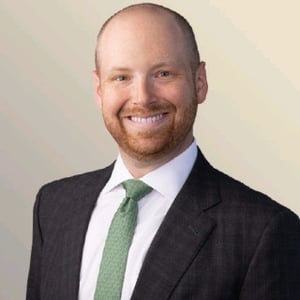
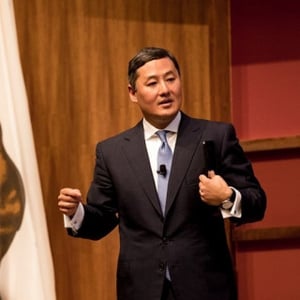
Distinguished Professor of Law, Jamie L. Whitten Chair of Law and Government, University of Mississippi School of Law
Biography
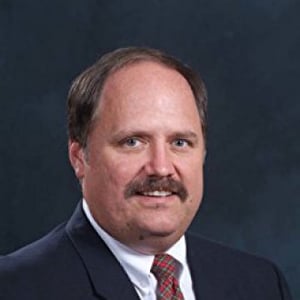
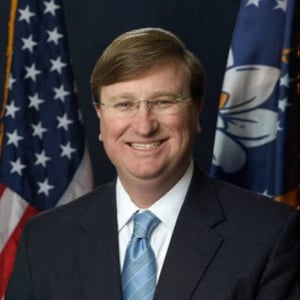
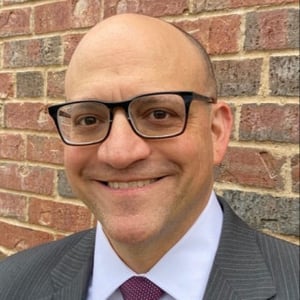
Professor Ronald J. Rychlak is the Jamie L. Whitten Chair of Law and Government and Distinguished Professor of Law at the University of Mississippi. He is a legal advisor to the Holy See’s delegation to the United Nations and chair of the Mississippi Advisory Committee to the U.S. Civil Rights Commission. He serves as the university’s Faculty Athletic Representative and is on the executive committee of the Southeastern Conference (SEC). In 2019 he received the university’s highest research and publication recognition, the “Distinguished Research and Creative Achievement Award” based upon his reputation for scholarly activity and leadership roles in professional societies. In 2023, he received the Algernon Sydney Sullivan Award, the University’s highest award in honor of service, for “placing service to others and the community before oneself, while embodying the qualities of honesty, morality, ethics, integrity, responsibility, determination, courage, and compassion.” In 2024, he was voted “Outstanding Law Professor” by the law school student body.
Ron is the author, co-author, or editor of twelve books and over 100 articles. The Congregation for the Causes of Saints at the Vatican called his book, Hitler, the War, and the Pope “definitive” in its response to charges made against the leader of the Catholic Church during World War II. He has been published in Notre Dame Law Review, UCLA Law Review, The Washington Post, The Wall Street Journal, and numerous other periodicals and journals. Media appearances include CNN, ABC, Fox News, The National Geographic TV Network, The Military Channel, C-SPAN, and more.
Ron and his wife Claire are proud of their six children, two sons-in-law, one daughter-in-law, and three granddaughters. They live in Oxford, Mississippi.
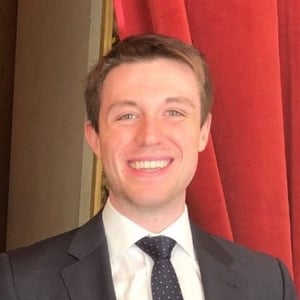
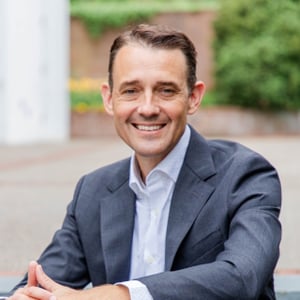
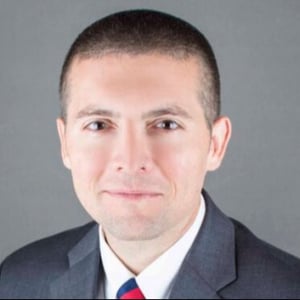
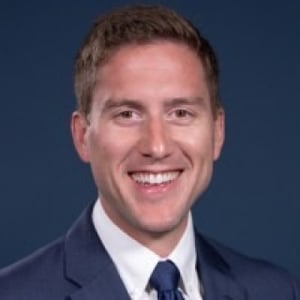
Zack Austin advises Dr. Alex Karp in the Office of the CEO at Palantir. Previously, he contributed to SCOTUS briefs at Jones Day; clerked for Judge Justin Walker on the D.C. Circuit and Judge Britt Grant on the 11th Circuit; co-founded a task force backed by federal legislation to honor WW1 veterans; and supported the 2018 National Defense Strategy Commission and the 2017 National Security Strategy at AEI. He graduated from Yale University and Yale Law School, where he led the Federalist Society when it was recognized as the national Chapter of the Year. His work on federal budgetary reform won FedSoc’s writing contest for authors under 40 when he was 26. Once he sailed as a deckhand on a three-masted ship for fun.
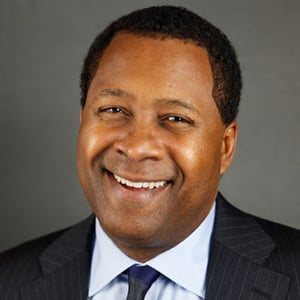
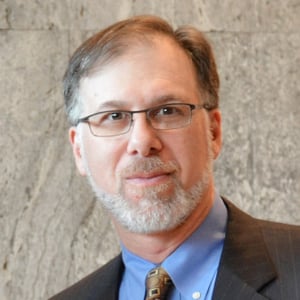
Reginald “Reg” Brown is a partner in the Washington, D.C., office of Kirkland & Ellis LLP. He has a vibrant and diverse crisis and governmental investigations practice, and regularly counsels financial institutions and other industry-leading clients facing complex and significant regulatory, enforcement and reputational matters.
Reg provides investigations-related guidance, strategic counsel and crisis management assistance to a broad range of companies and senior executives confronting challenges and opportunities at the intersection of government, law, media and public policy. He has assisted leading institutions and high-profile individual clients with more than a hundred congressional inquiries, as well as numerous federal, state and global government investigations and crisis avoidance and mitigation matters.
Reg leads teams of lawyers responding to some of the most challenging Department of Justice (DOJ), Consumer Financial Protection Bureau (CFPB), State Attorneys General and other regulatory or enforcement matters for financial institutions. Many of his clients are among the world's most prominent banks, hedge funds, private equity and venture firms, energy companies, government contractors, healthcare institutions and technology firms, as well as CEOs and high-ranking public officials. Reg has also assisted prospective and incumbent high-level public officials in connection with complex ethics agreements and governmental controversies.
Prior to joining Kirkland, Reg was a partner at WilmerHale, where he served as chairman of the firm's Financial Institutions Group and led the firm's congressional investigations practice as vice chair of the Crisis Management and Strategic Response Group. He previously served in the White House Counsel's office, where he was the White House's principal legal liaison to the Departments of Treasury and Housing and Urban Development, as well as many independent financial services agencies. In this role, he provided counsel on a wide variety of issues. Among other things, Reg served as a counselor for the White House Office of Political Affairs, Presidential Personnel Office and the National Economic Council.
Prior to his government service, Reg served as assistant to the CEO and vice president of corporate strategy at Nationwide Mutual Insurance Company, and as the deputy general counsel to former Florida Governor Jeb Bush. He served as a Peace Corps volunteer in the Federated States of Micronesia early in his professional career.
Senior Vice President, Strategic Initiatives & Special Counsel to the President, Alliance Defending Freedom
Biography
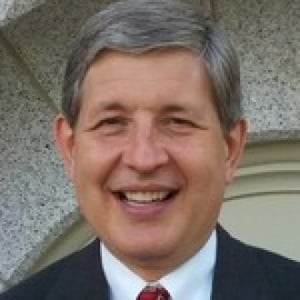
Ryan Bangert serves as senior vice president for strategic initiatives and special counsel to the president at Alliance Defending Freedom. He oversees ADF’s regulatory practice, government relations, and corporate engagement teams. He also advises executive leadership with strategic initiatives and appears as counsel for ADF clients.
Before joining ADF, Bangert served as deputy first assistant attorney general and deputy for legal counsel in the office of the Texas attorney general. In those roles, he oversaw the state’s Special Litigation Unit, which handled critical litigation against the federal government, and oversaw multiple divisions within the office. Prior to that, he served as deputy for civil litigation for Missouri Attorney General Josh Hawley, overseeing the state’s civil litigation divisions, including the consumer protection and antitrust divisions, with over 200 attorneys and staff. During his time in government service, Bangert handled a diverse array of matters involving Big Tech, election law, civil rights, multistate antitrust and consumer protection investigations, and many other issues.
Prior to his government service, Bangert was a litigation partner at Baker Botts L.L.P., where he was a member of the firm’s commercial litigation and appellate practice sections. A seasoned trial attorney, The Texas Lawyer ranked the verdict Bangert achieved in the Janvey v. Maldonado case as the #1 verdict in the securities category for 2015-2019, and The National Law Journal ranked it in its “Top 100 Verdicts of 2015.” He was named a “Texas Rising Star” for multiple years by Texas Lawyer and Law and Politics magazines. While at Baker Botts, he was a volunteer attorney for ADF and served as amicus counsel in numerous cases, including Trinity Lutheran v. Comer and Salazar v. Buono, receiving the firm’s Opus Justitae Award in recognition of his outstanding commitment to pro bono service.
Bangert earned his J.D. from Southern Methodist University, where he was a Hatton Sumner’s scholar and graduated first in his class. He also participated in ADF’s Blackstone program and is a Blackstone Fellow. Following law school, he clerked for the Honorable Patrick E. Higginbotham on the Fifth Circuit Court of Appeals.
Bangert is a member of the Philadelphia Society and Federalist Society. He is admitted to practice law in Texas, California (inactive), Missouri (inactive), the U.S. Supreme Court and numerous federal district and appellate courts. A frequent op-ed contributor, his work has appeared in National Review, Daily Wire, The Hill, Washington Examiner, The Federalist, Fox News, and RealClear Religion. He speaks nationally on constitutional, cultural, and religious liberty issues.
Erik Jaffe has been involved in appeals on a broad range of legal issues, including First Amendment challenges to campaign finance reform, Commerce Clause challenges to Health Care Reform and other federal legislation, Equal Protection Clause challenges to affirmative action in education, First Amendment challenges to school vouchers, Fifth Amendment challenges to takings of property, Second Amendment challenges to restrictions on gun ownership, and a wide variety of cases involving patents, copyrights, ERISA, securities fraud, federal preemption, environmental regulation, and other state and federal constitutional and statutory matters. He has represented businesses and non-profit groups, Judges, Senators, former government officials, Nobel Prize winners, and a broad cross-section of private individuals. Mr. Jaffe has been involved in over 120 Supreme Court matters, including filing over 30 cert. petitions, representing half-a-dozen parties on the merits, and filing over 70 amicus briefs at both the cert. and merits stages.
A 1990 graduate of the Columbia University School of Law, Mr. Jaffe was a law clerk to Judge Douglas H. Ginsburg of the United States Court of Appeals for the District of Columbia Circuit from 1990 to 1991. Following that clerkship he spent five years in litigation practice with the Washington, D.C. law firm of Williams & Connolly. In the summer of 1996 he left Williams & Connolly to clerk for Supreme Court Justice Clarence Thomas. At the end of that clerkship he started his own practice, and he was a sole practitioner from 1997 to 2018. He joined the firm of Schaerr | Jaffe LLP in 2018.
Gene Schaerr specializes in handling—and usually winning—civil appeals, writ proceedings and similar matters, both in appellate courts and in the law-focused proceedings at the trial-court or agency level that often determine success or failure on appeal. He has argued and won dozens of cases in a variety of forums—including the U.S. Supreme Court (where he has argued six cases), every federal circuit, and numerous federal district courts and state appellate courts. His win rate in the dozens of federal appeals he has argued in the past six years is over 75 percent.
He was a coordinator of Sidley Austin's appellate practice from 1993 until 2005, and from 2005 until 2014 was the chair of the nationwide appellate practice at Winston & Strawn—a practice he led to numerous recognitions in such publications as the Appellate Hot List. His personal practice successes have won him repeated recognition in such publications as Best Lawyers in Washington, D.C., Legal 500, D.C. Superlawyers, and Best Lawyers in America. In January 2014, Mr. Schaerr formed his own boutique litigation firm so that he could serve his clients without the conflicts and inefficiencies inherent in big-firm law practice.
Substantively, Mr. Schaerr's experience includes not only virtually every area of federal law, defamation, higher education law, immigration, insurance coverage, labor and employment, patent and trademark, privacy, product liability and warranty, statutory interpretation and tax.He has represented clients in virtually every sector, including automotive, communications, energy, financial services, health care, higher education, insurance, maritime, pharmaceuticals, technology and state and local government. He also teaches courses in Supreme Court litigation, religious freedom litigation and advanced litigation skills as an adjunct professor of law at the Brigham Young University law school.
Mr. Schaerr began law practice in 1987 following clerkships on the U.S. Supreme Court (for Chief Justice Warren Burger and Justice Antonin Scalia) and on the U.S. Court of Appeals for the D.C. Circuit (for then- Judge Kenneth Starr). He graduated in 1985 from the Yale Law School, where he was Editor-in-Chief of the Yale Journal on Regulation and Senior Editor of the Yale Law Journal. From 1991 to 1993, he served in the White House as Associate Counsel to the President, where he had responsibility for a wide range of constitutional and administrative-law issues, including those involving economic regulation, higher education, separation of powers, federalism and religious freedom. He serves as Chairman of the Constitutional Sources Project, a digital resource providing free public access to historical materials relevant to the U.S. Constitution.
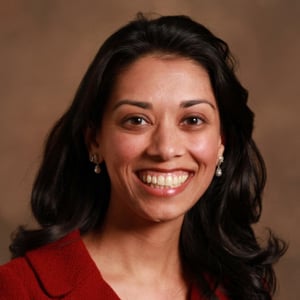
Darpana Sheth joined CIR as General Counsel in May 2025. She is a nationally recognized constitutional litigator with over two decades of experience serving in in leadership roles at other nonprofit organizations.
Before joining CIR, Darpana served for four years as Vice President of Litigation for the Foundation for Individual Rights and Expression. Prior to that, Darpana was a Senior Attorney with the Institute for Justice, where she also served as Director of the Institute’s National Initiative to End Forfeiture Abuse.
Before finding her calling as a public-interest attorney, Darpana served as an Assistant Attorney General for the State of New York and worked in private practice as a litigation associate at the Manhattan law firm of Chadbourne & Parke, LLP. She also served as law clerk to the Honorable Jerome A. Holmes of the U.S. Court of Appeals for the Tenth Circuit.
A native of Philadelphia, Darpana graduated from the University of Pennsylvania with a Bachelor of Arts in Political Science and History. She earned her law degree from Georgetown University Law Center.
Owen Yeates is a Senior Attorney on the litigation team and plays an important role in their regulatory, legislative, and policy work. Owen joined the Institute in 2015 as a Staff Attorney and was promoted in 2021 to Senior Attorney and Deputy Vice President for Litigation, after serving as Acting Legal Director following the departure of Allen Dickerson to the Federal Election Commission. From May 2022 to May 2025, Owen served as a Deputy District Attorney for Multnomah County, Oregon. He re-joined the Institute for Free Speech as a Senior Attorney in May 2025.
He received his J.D. from Stanford Law School after completing a Ph.D. in Political Science at Duke University and a B.S., summa cum laude, in Physics from Brigham Young University. Owen clerked for the Honorable Scott Matheson, Jr., of the United States Court of Appeals for the Tenth Circuit (2012-2013), the Honorable J. Jerome Farris of the United States Court of Appeals for the Ninth Circuit (2011-2012), and the Honorable James L. Robart of the United States District Court for the Western District of Washington (Summer 2012). After clerking, he was a litigation associate in intellectual property law at Klarquist Sparkman, LLP, in Portland, Oregon, where he was involved with the Legal Aid Society of Oregon’s domestic violence program. Before law school, he taught Ancient Political Theory, American Politics, Theories of Human Freedom, and Religion and American Politics at Brigham Young University and Wake Forest University. During law school, Owen interned with the U.S. Attorney’s Office and the U.S. Department of Defense, and he worked with the school’s Three Strikes Clinic and Domestic Violence pro bono program.
Owen is licensed to practice law in the District of Columbia, Oregon, Utah (inactive), and Washington state (inactive). He is admitted to practice before the United States Supreme Court; the United States Courts of Appeals for the Third, Sixth, Eighth, Ninth, Tenth, Eleventh, and D.C. Circuits; and the United States District Courts for the Districts of Colorado, Columbia, Oregon, and Utah, as well as the Eastern District of Texas and the Western District of Tennessee.
Vice President and Deputy Chief Counsel, U.S. Chamber Litigation Center, U.S. Chamber of Commerce
Biography
Jennifer B. Dickey is vice president and deputy chief counsel at the U.S. Chamber Litigation Center, the litigation arm of the U.S. Chamber of Commerce. Dickey handles a variety of litigation matters for the Chamber.
Dickey joined the Chamber following her service as Acting Assistant Attorney General and Principal Deputy Assistant Attorney General in the Civil Division at the U.S. Department of Justice. She also previously served as Deputy Associate Attorney General, providing strategic oversight of the Civil Division, Civil Rights Division, and Foreign Claims Settlement Commission, as well as Special Assistant to the President and Associate Counsel to the President. In the latter capacity, she provided legal advice on a wide array of executive actions and rulemakings, civil litigation, and judicial nominations.
Dickey also practiced law at Kirkland & Ellis LLP before her government service. She was a commercial and appellate litigator, representing businesses in federal and state courts.
Earlier in her career, Dickey served as a law clerk for the Honorable Clarence Thomas of the Supreme Court of the United States and the Honorable William H. Pryor Jr. of the United States Court of Appeals for the Eleventh Circuit.
Dickey earned her law degree magna cum laude from Duke University School of Law, where she was an Executive Editor of the Duke Law Journal, and her undergraduate degree magna cum laude from Dartmouth College.
Associate Counsel, The Wisconsin Institute for Law & Liberty (WILL)
Biography
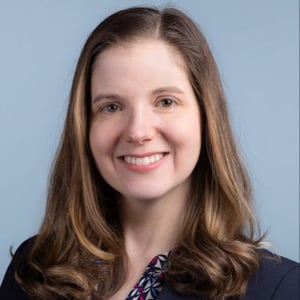
Lauren Greuel is Associate Counsel at WILL. She focuses on legal and policy issues related to K-12 education in Wisconsin.
Lauren returned to Wisconsin this year after receiving her law degree, from Regent University School of Law in Virginia Beach, VA. She also holds a Bachelor of Arts degree in Political Economy, from Hillsdale College in Hillsdale, MI.
Lauren worked for WILL from 2018-2020 as a policy intern and is happy to return as an attorney—to continue to fight for an education system that is student-centered and prioritizes the freedom of families to choose the best education for their children.
Executive Director & Secretary, American Civil Rights Project
Biography
Dan Morenoff is the executive director at the American Civil Rights Project and an adjunct fellow at the Manhattan Institute.
His work focuses on protecting and, where necessary, restoring the primacy of all Americans' shared civil rights against the identitarian alternative.
Before practicing law, Morenoff served on the legislative staff of Sen. Phil Gramm (R-TX). Morenoff holds a B.A. from Columbia College of Columbia University in the City of New York and a J.D. from the University of Chicago Law School. He has also served as an officer or director of several community organizations in Dallas, Texas.
Vice President and Counsel for Public Policy, D.R. Horton, Inc.
Biography
Charbel J Barakat is Vice President and Counsel for Public Policy, with D.R. Horton, Inc., the nation's largest homebuilder, where he coordinates the company’s interactions with federal and state governments.
Previously, for over 10 years, he served as Chief Counsel for the company’s Florida, Gulf Coast, and Mid-Atlantic Regions. During that time, he oversaw legal affairs for an area that included 9 states and 2,000+ employees.
He was formerly associated with Akerman LLP in Miami and Milbank LLP in New York City, where he specialized in complex corporate, real estate, and project finance transactions. Charbel currently serves as a member of the University of South Florida Board of Trustees and the Florida Supreme Court Judicial Nominating Commission, positions to which he was appointed by Governor Ron DeSantis in February 2025 and July 2023, respectively.
From July 2023 to February 2025, Charbel served as Vice Chair and acting Chair of the Board of Supervisors for the Central Florida Tourism Oversight District (the special district governing Walt Disney World Resort). As acting board chair, he presided over the successful settlement of litigation challenging the District’s governing structure and the subsequent negotiation of a 15-year, $17 billion theme park master development agreement.
He previously served on the board of directors of the Florida Development Finance Corporation, a state authorized issuer of industrial revenue bonds, and as Chair of the 2nd District Court of Appeal Judicial Nominating Commission.
Since 2022, he has served as an advisor to the Board of Directors of the Tampa Hispanic Bar Association.
In 2023, Florida Trend magazine recognized Charbel as one of 11 inaugural “Notable General Counsel” throughout the state. In 2018 and 2019, Charbel was recognized by the Tampa Bay Business Journal as one of the city’s Top Corporate Counsel.
Active in his church and community, Charbel is a member of the Knights of the Holy Sepulchre, a Catholic order of chivalry dedicated to charitable support of Christians in the Holy Land, and of the Krewe of the Knights of Sant’ Yago, dedicated to the preservation and enhancement of Tampa's rich Latin heritage and culture.
Charbel is a graduate of the New York University School of Law and The Johns Hopkins University. While in law school, he was a founding managing editor of the NYU Journal of Law and Liberty.
In 2018, Charbel became a Jeopardy! champion.
A native Floridian, Charbel lives in Tampa with his wife, Daira, and their three children.
Tazewell Taylor Professor of Law and William H. Cabell Research Professor, William & Mary Law School
Biography
Jonathan H. Adler joined the William & Mary law faculty as the Tazwell Taylor Professor of Law and William H. Cabell Research Professor in 2025. Prior to joining the faculty, he was the inaugural Johan Verheij Memorial Professor of Law and the founding Director of the Coleman P. Burke Center for Environmental Law at the Case Western Reserve University School of Law.
Professor Adler is the author or editor of seven books, including Climate Liberalism: Perspectives on Liberty, Property and Pollution (Palgrave, 2023), Marijuana Federalism: Uncle Sam and Mary Jane (Brookings Institution Press, 2020), Business and the Roberts Court (Oxford University Press, 2016) and Rebuilding the Ark: New Perspectives on Endangered Species Act Reform (AEI Press, 2011).
His articles have appeared in publications ranging from the Harvard Environmental Law Review and Yale Journal on Regulation to the Wall Street Journal, New York Times, and Washington Post. He has testified before Congress a dozen times, and his work has been cited in the U.S. Supreme Court. A 2024 study identified Professor Adler as the seventh most cited legal academic in administrative and environmental law from 2019 to 2023.
Professor Adler is a contributing editor to Civitas Outlook and a regular contributor to the popular legal blog, The Volokh Conspiracy. A regular commentator on constitutional and regulatory issues, he has appeared on numerous radio and television programs, ranging from the PBS Newshour and National Public Radio to the Fox News Channel and Entertainment Tonight.
Professor Adler is a senior fellow at the Property & Environment Research Center in Bozeman, Montana. In 2018, Professor Adler was elected to membership in the American Law Institute and helped co-found the organization Checks and Balances. In 2024, Professor Adler was appointed a public member of the Administrative Conference of the United States.
Professor Adler clerked for the Honorable David B. Sentelle on the U.S. Court of Appeals for the District of Columbia Circuit.
Chief Deputy Solicitor General, Director of the Tenth Amendment Center, Ohio Attorney General's Office
Biography
John serves in the Office of the Solicitor General as a Deputy Solicitor General and as the Director of the Tenth Amendment Center. In his role, John monitors federal actions, orders, statutes, and regulations for potential overreach and advises the Solicitor General about potential actions to protect the interests of the State of Ohio. John works in both state and federal courts, including the U.S. Supreme Court, the U.S. Courts of Appeals, and the Ohio Supreme Court.
John previously practiced as a litigator at two large law firms in Columbus. He clerked for Judge Joseph Hood on the U.S. District Court for the Eastern District of Kentucky and Judge Eugene Siler for the U.S. Court of Appeals for the Sixth Circuit.
Molly Nixon is a senior fellow at the Cato Institute, where she focuses on the scope, use, and history of executive power as well as its limits under the Constitution. Molly was previously an attorney with Pacific Legal Foundation’s separation of powers practice, where she litigated cases challenging congressional delegations of legislative power and executive branch overreach. Before that, she served as an Attorney-Advisor at the Department of the Interior and as Legislative Counsel for Congressman Justin Amash.
Molly holds a J.D. from New York University School of Law and a B.A. in History and International Relations from Boston University. She clerked for the U.S. District Court for the District of Alaska and practiced law at a firm in New York City for several years before moving to Washington, D.C.
Attorney, Separation of Powers, Pacific Legal Foundation
Biography
Josh Robbins is an attorney in Pacific Legal Foundation’s separation of powers group. He litigates cases to defend the structural protections of the U.S. and state constitutions that guarantee liberty for all Americans. He wants to help ensure Americans receive due process from the government when their lives and property are at stake and that the laws are made by our democratically elected representatives and not by unaccountable bureaucrats.
As an attorney in private practice, Josh saw firsthand how the government can embroil people (and even large corporations) in years-long legal battles. At PLF, he works to provide those without great resources an opportunity to vindicate their right to a properly ordered government, which is the right of all Americans.
Prior to joining PLF, Josh was an associate at a large law firm where he litigated cases in federal and state courts. He clerked for the Honorable Jerry E. Smith of the United States Court of Appeals for the Fifth Circuit in Houston.
Josh earned a B.A. in economics and international studies from Yale University and a J.D. from the University of Virginia School of Law. While at UVA, he served as an articles editor for the Virginia Law Review. He lives in Alexandria, Virginia, and enjoys hiking, swimming, and attending Washington Nationals games.
Josh is a member of the bar only in the states of Virginia and D.C.
Executive Director, Alliance For Consumers; President & CEO, American Juris Link
Biography
O.H. Skinner is the President & CEO of American Juris Link, a nonprofit dedicated to accelerating nonprofit litigation to advance freedom, liberty, and the rule of law. O.H. has a long track record in facilitating strategic nonprofit litigation in his role as the Executive Director at Alliance For Consumers as well as from his time serving Arizona Attorney General Mark Brnovich in senior positions, including as Arizona Solicitor General. O.H. is a graduate of the University of Pennsylvania and Harvard Law School. Prior to joining the Arizona Attorney General's Office, O.H. practiced at WilmerHale and Ropes & Gray in Boston, and clerked for the Hon. J.L. Edmondson of the United States Court of Appeals for the Eleventh Circuit. In 2023, O.H. was a Wasserstein Public Interest Fellow at Harvard Law School, where he counseled students as a Harvard-identified “outstanding public interest attorney.”
Shareholder at Kirton McConkie, Former Solicitor General of Idaho
Biography
Alan Hurst is the Solicitor General of Idaho, the state’s chief appellate advocate before the Idaho Supreme Court, the federal courts of appeals, and the United States Supreme Court. He supervises all civil appellate litigation for the state and all trial-court filings raising significant civil appellate issues. He also advises the Attorney General and other state officers on matters of constitutional and legal policy.
Alan is a graduate of Brigham Young University and Yale Law School and clerked for Justice Christine Durham of the Utah Supreme Court and Judge Monroe McKay on the Tenth Circuit. He has been a fellow at the Yale Center for Faith and Culture, the Becket Fund for Religious Liberty, and BYU’s J. Reuben Clark Law School, where he taught property law and related subjects before becoming a litigation partner at a national law firm and an occasional legal columnist for the Deseret News.
Partner, Holtzman Vogel Baran Torchinsky & Josefiak PLLC
Biography
Abhishek (Abhi) Kambli is a partner at Holtzman Vogel who represents clients in high-stakes appellate and complex litigation, constitutional challenges, and matters involving state attorneys general and federal agencies. He is one of a handful of lawyers nationally who has both led federal litigation from inside the Department of Justice and multi-state coalition work from a State Attorney General’s office—giving clients a 360-degree perspective on government enforcement, regulatory challenges, and constitutional advocacy.
Prior to joining Holtzman Vogel, Abhi served as Deputy Associate Attorney General at the United States Department of Justice, where he acted as lead counsel in high-priority matters for the Trump Administration, oversaw the Department’s civil components on behalf of the Associate Attorney General, advised the White House Counsel’s Office and federal agencies on litigation risk and strategy, and developed the Department’s national affirmative civil litigation strategy.
Earlier, he served as Deputy Attorney General and Division Chief of the Special Litigation and Constitutional Issues Division at the Kansas Attorney General’s Office, where he launched the division and led multi-state coalitions in trial and appellate courts nationwide, including the United States Supreme Court. He began his career as an Assistant United States Attorney in the Southern District of Indiana, prosecuting more than 100 federal cases from investigation through appeal.
Abhi is also a Lieutenant Colonel in the United States Air Force Judge Advocate General's Corps, having served on active duty and in the reserves since 2013. His military service includes criminal trials as both prosecutor and defense attorney, appellate representation before the Court of Appeals for the Armed Forces, and representation of a high-profile detainee before the Military Commissions at Guantánamo Bay.
Judge, United States Court of Appeals, Ninth Circuit
Biography
Judge Nelson was confirmed to the Ninth Circuit in October 2018,as the youngest Circuit Judge to serve from Idaho and he has chambers in his hometown of Idaho Falls.Prior to his confirmation, Judge Nelson served for nine years as General Counsel of Idaho Falls-based Melaleuca, Inc., a consumer goods company. He previously worked in Washington, DC, where he served in all three branches of the federal government, including as Special Counsel for Supreme Court nominations to the Ranking Member of the Senate Judiciary Committee; Deputy General Counsel to the White House Office of Management and Budget; Deputy Assistant Attorney General in the Environment and Natural Resources Division of the United States Department of Justice; and a law clerk to Judge Henderson of the United States Court of Appeals for the D.C. Circuit. He has argued in most of the federal courts of appeals and worked on dozens of Supreme Court briefs. He started in the Washington, DC office of Sidley Austin as an appellate lawyer, after clerking for Judges Mosk and Brower of the Iran-U.S. Claims Tribunal at The Hague, and fornow-Judge Tom Griffith, then-Senate Legal Counsel, during the impeachment trial of President Clinton. Judge Nelson earned his B.A. from Brigham Young University and his J.D., with honors, from BYU Law School. Judge Nelson has been a member of the Federalist Society since 1998.
Senior Fellow, Civitas Institute, University of Texas, Austin
Biography
Linda Denno is a senior fellow at the Civitas Institute. She is also Associate Dean of the University of Arizona, College of Applied Science and Technology headquartered at the branch campus in Sierra Vista, Arizona. Dr. Denno’s strategic vision and commitment to academic excellence is demonstrated by the fact that two of the College’s academic programs—Cyber Operations and Intelligence & Information Operations—have been designated as National Centers of Academic Excellence.
Dr. Denno has earned numerous awards for teaching and for university and community service in her more than 35 years in higher education, including multiple outstanding teaching awards. She was awarded the Silver Rose for Outstanding Contributions to the US Army Military Intelligence Corps; and the Meritorious Public Service Medal, the highest civilian award given by the US Army.
Deputy Editor-in-Chief, Harvard Journal of Law & Public Policy
Speaker Information
Eric Wessan
Solicitor General, Iowa Office of the Attorney General
Biography
Eric Wessan serves as Iowa’s Solicitor General in the Iowa Attorney General’s Office. In that role, Wessan leads Iowa’s litigation before State and federal appellate courts, including the Iowa and U.S. Supreme Courts. Before that role, Wessan worked on complex commercial litigation at two large law firms in Chicago. Wessan also served as a law clerk for the Honorable James C. Ho on the U.S. Court of Appeals for the Fifth Circuit and for the Honorable John F. Kness on the U.S. District Court for the Northern District of Illinois. Wessan is a graduate of the University of Chicago Law School, with honors, and of the University of Chicago.
Emanuel S. Heller Professor of Law, University of California at Berkeley; Thomas Smith Senior Research Fellow, Civitas Institute, University of Texas at Austin
Biography
John Yoo is the Emanuel Heller Professor of Law at the University of California at Berkeley. He is also the Thomas Smith Senior Research Fellow, Civitas Institute, at the University of Texas at Austin. He is also a Nonresident Senior Fellow at the American Enterprise Institute.
His most recent book, The Politically Incorrect Guide to the Supreme Court, co-authored with Robert Delahunty, was published in 2023. Professor Yoo’s other books include Defender-in-Chief: Trump’s Fight for Presidential Power; Striking Power: How Cyber, Robots, and Space Weapons Change the Rules for War; Point of Attack: Preventive War, International Law, and Global Welfare; and Crisis and Command: A History of Executive Power from George Washington to George Bush. He is a co-author of volumes 1 and 2 of R. Rossum, G. Tarr, V. Munoz & J. Yoo American Constitution Law (Routledge, 2026), and a co-editor of the eight-volume series on the 250th anniversary of the American Revolution, We Hold These Truths, with Yuval Levin and Adam White of the American Enterprise Institute.
Professor Yoo has published more than 100 articles in academic journals on subjects including national security, constitutional law, international law, and the Supreme Court. He also regularly contributes to the editorial pages of the Wall Street Journal, New York Times, Washington Post, Los Angeles Times, and National Review, among others.
Professor Yoo has served in all three branches of government. He was an official in the U.S. Department of Justice, where he worked on national security and terrorism issues after the 9/11 attacks. He served as general counsel of the U.S. Senate Judiciary Committee. He has been a law clerk for Supreme Court Justice Clarence Thomas and federal appeals Judge Laurence Silberman. He has been a visiting professor at the University of Texas at Austin’s School of Civic Leadership, Seoul National University, the Interdisciplinary Center Herzliya, Keio University, Trento University, the University of Chicago, and the Free University of Amsterdam.
Professor Yoo supervises the Public Law and Policy Program and the California Constitution Center. He also serves on the boards of Founding Forward, the Washington Legal Foundation, the Pacific Legal Foundation, the Ulysses Grant Institute, the Federalist Society’s Separation of Powers and Federalism Division, the Universidad Cientifica del Sur Law School, and the Asia-Pacific Law Institute at Seoul National University. He is a winner of the Federalist Society’s Paul Bator award and the Heritage Foundation’s Edwin Meese III Originalism Lectureship.
Professor Yoo graduated from Yale Law School and summa cum laude from Harvard College.