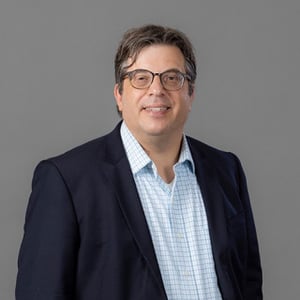
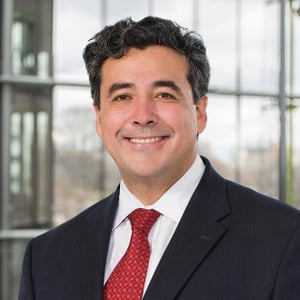
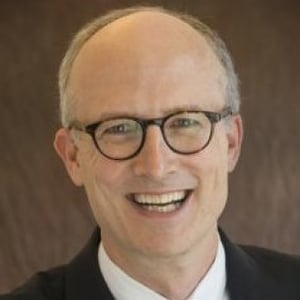
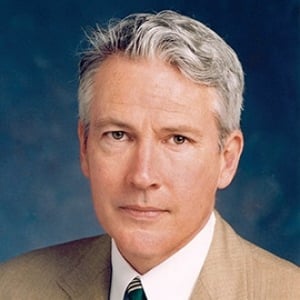
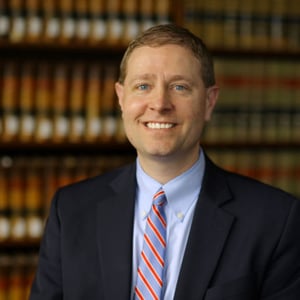
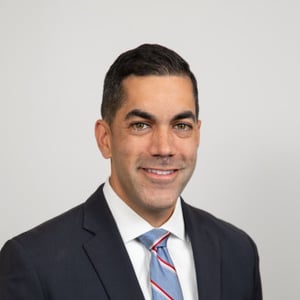
University Professor of Law and Executive Director, Liberty & Law Center, Antonin Scalia Law School, George Mason University
Biography
David Bernstein holds a University Professorship chair at the Antonin Scalia Law School, where he has been teaching since 1995. He has also been a visiting professor at the University of Michigan, Georgetown University, William & Mary, Brooklyn Law School, the University of Turin, and Hebrew University. Professor Bernstein teaches Constitutional Law, Evidence, and Products Liability.
A prolific author, Professor Bernstein often challenges the conventional wisdom with prodigious research and sharp, original analysis. He is the author of five books, and coauthor of two more. Professor Bernstein’s book Rehabilitating Lochner was praised across the political spectrum as “intellectual history in its highest form,” a “fresh perspective and a cogent analysis,” “delightful and informative,” “sharp and iconoclastic,” and “a terrific work of historical revisionism.” Columnist George Will praised Bernstein’s most recent book, Classified, The Untold Story of Racial Classification in America, as “perhaps the most consequential American book of 2022.”
Professor Bernstein has also written dozens of articles and essays published in major law reviews, including the California Law Review, Columbia Law Review, Michigan Law Review, and Yale Law Journal. An article he coauthored, Defending Daubert: It’s Time to Amend Federal Rule of Evidence 702, directly inspired a pending amendment to Rule 702.
Professor Bernstein blogs at the Instapundit.com, the Times of Israel, and the Volokh Conspiracy. He is a graduate of the Yale Law School, where he was senior editor of the Yale Law Journal and a John M. Olin Fellow in Law, Economics, and Public Policy.
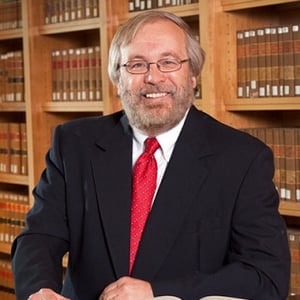
Welpton & Wise Professor of Law, University of Nebraska College of Law
Biography
Professor Rick Duncan is the Welpton & Wise Professor of Law at the University Of Nebraska College Of Law. He is a graduate of the Cornell Law School and served as an editor of the Cornell Law Review. He teaches Constitutional Law with a special emphasis on the law of religious freedom, free speech, and federalism. Duncan has written numerous books, articles, and commentaries on a wide variety of legal topics. His recent publications include an article on Justice Scalia’s legacy, another on Kermit Gosnell and Roe v. Wade, a piece on the Electoral College and Federalism, a 2019 piece on Masterpiece Cakeshop and the First Amendment, and three recent articles on the “no compelled speech” doctrine as a First Amendment defense against authoritarianism and tyranny. His most recent article, on School Choice and the First Amendment, will be published in 2023 in Case Western Law Review. He is also the co-author of a book on Secured Transactions under Article 9 of the UCC. He served as Chairman of the Nebraska Advisory Committee to the U.S. Commission on Civil Rights during the Reagan Administration. He also loves to speak at Federalist Society meetings around the country on life, liberty, and the pursuit of federalism.
Duncan has five children, five grandchildren, and a wonderful wife who help him pursue happiness. He loves lifting weights (particularly going heavy on the incline bench press), attending Broadway musicals and plays, including Hamilton: An American Musical which he has seen 12 times (possibly a Nebraska record). He regularly reads both the Bible and the New York Times because it is important to keep up with what both sides have to say. He loves following major league baseball, especially the San Diego Padres. And his favorite legal aphorism is “first come rights then comes government to secure those rights.”
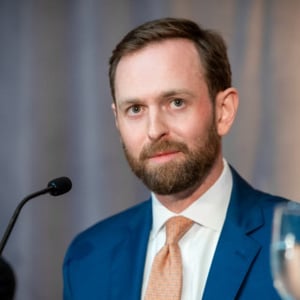
Andrew N. Ferguson was sworn in April 2, 2024 as a Commissioner of the Federal Trade Commission. President Joe Biden named Ferguson to a term that expires on September 25, 2030.
Ferguson most recently served as solicitor general of the Commonwealth of Virginia. Prior to that position, he served as chief counsel to U.S. Sen. Mitch McConnell of Kentucky, the Republican leader, and as a Republican counsel on the U.S. Senate Judiciary Committee. He also practiced law at several Washington, D.C. law firms. He earned his undergraduate degree and law degree from the University of Virginia. After law school, Ferguson clerked for Judge Karen L. Henderson on the U.S. Court of Appeals for the D.C. Circuit and U.S. Supreme Court Justice Clarence Thomas.
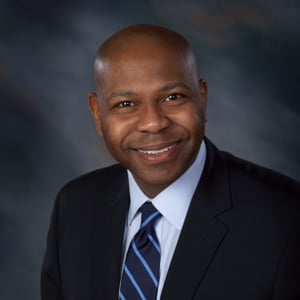
James Madison Distinguished Professor of Law and Class of 1941 Research Professor of Law, University of Virginia School of Law
Biography
Professor John C. Harrison is the James Madison Distinguished Professor of Law and Class of 1941 Research Professor of Law at the University of Virginia School of Law. He joined the faculty at University of Virginia in 1993 as an associate professor of law after a distinguished career with the U.S. Department of Justice. His teaching subjects include constitutional history, federal courts, remedies, corporations, civil procedure, legislation and property. In 2008 he was on leave from the Law School to serve as counselor on international law in the Office of the Legal Adviser at the U.S. Department of State.
A 1977 graduate of the University of Virginia, Harrison earned his law degree in 1980 at Yale, where he served as editor of the Yale Law Journal and editor and articles editor of the Yale Studies in World Public Order. He was an associate at Patton Boggs & Blow in Washington, D.C., and clerked for Judge Robert Bork on the U.S. Court of Appeals for the District of Columbia Circuit. He worked with the Department of Justice from 1983-93, serving in numerous capacities, including deputy assistant attorney general in the Office of Legal Counsel (1990-93).
Senior fellow, Manhattan Institute; Columnist, Wall Street Journal
Biography
Jason Riley is a senior fellow at the Manhattan Institute and a columnist for the Wall Street Journal, where he worked for more than 20 years writing opinion pieces on politics, economics, education, immigration and race, among other subjects. He’s also a commentator for Fox News, where he’s appeared for more than a decade.
After joining the Journal in 1994, he was named a senior editorial page writer in 2000 and a member of the Editorial Board in 2005. He joined the Manhattan Institute in 2015. In 2008 he published Let Them In, which argues for a more free-market oriented U.S. immigration policy. His second book, Please Stop Helping Us, which is about the track record of government efforts to help the black underclass, was published in 2014. His most recent book, False Black Power?, is an assessment of why black political success has not translated into more black economic success and was published in June.
Born in Buffalo, N.Y., Mr. Riley earned a bachelor's degree in English from the State University of New York at Buffalo. He has also worked for USA Today and the Buffalo News. He lives in suburban New York City.
Patrick Hotung Professor of Constitutional Law, Georgetown University Law Center
Biography
Randy Barnett is the Patrick Hotung Professor of Constitutional Law at Georgetown University Law Center. He has argued before the United States Supreme Court, tried murder cases to juries as a prosecutor in Chicago, and appeared as a prosecutor in the feature film Inalienable. He is the author of numerous books, including Restoring the Lost Constitution, The Structure of Liberty, Our Republican Constitution, and The Original Meaning of the Fourteenth Amendment. He has published two memoirs, A Life for Liberty: The Making of an American Originalist, and Felony Review: Tales of True Crime and Corruption in Chicago. He is currently working on a new book, Freedom and Flourishing: Libertarianism for the Real World.
Noel Francisco served as the 47th Solicitor General of the United States in the Trump Administration, from 2017 to 2020. He has argued some of the most important cases the Supreme Court has heard in recent years on a wide array of issues.
For example, as Solicitor General, he argued Trump v. Hawaii, where he successfully defended the president's orders restricting travel from countries deemed to present security risks; Janus v. AFSCME, which upheld the First Amendment rights of public employees who decline to join labor unions; Kisor v. Wilkie, which adopted his argument that the "Auer deference doctrine" should be significantly curtailed but retained in its core applications; Apple Inc. v. Pepper, which addressed whether Apple's App Store customers had standing to sue the company for antitrust violations; Knick v. Township of Scott, which held that property owners could sue state and local governments in federal court to vindicate Fifth Amendment takings claims; and Seila Law LLC v. CFPB, which invalidated restrictions on the president's authority to remove the director of the Consumer Financial Protection Bureau.
He also spearheaded the government's general strategy to seek emergency relief in the appellate courts and the Supreme Court when lower courts issued nationwide injunctions against important government programs.
Noel's service as Solicitor General built on his previous tenure at Jones Day, during which he argued McDonnell v. United States, which reversed the federal bribery conviction of the governor of Virginia; NLRB v. Noel Canning, which limited the president's constitutional recess appointments power; and Zubik v. Burwell, which challenged federal insurance coverage regulations that violated Catholic organizations' religious beliefs.
Professor of Law, South Texas College of Law Houston
Biography
Josh Blackman is a national thought leader on constitutional law and the United States Supreme Court. Josh’s work was quoted during two presidential impeachment trials. He has testified before Congress and advises federal and state lawmakers. Josh regularly appears on TV, including NBC, CBS, ABC, Fox, and the BBC. Josh is also a frequent guest on NPR and other syndicated radio programs. He has published commentaries in the New York Times, Wall Street Journal, Washington Post, and leading national publications.
Since 2012, Josh has served as a professor at the South Texas College of Law Houston. He holds the Centennial Chair of Constitutional Law. Josh is an Adjunct Fellow at the Manhattan Institute. Josh has written more than seven dozen law review articles that have been cited more than a thousand times. Josh was selected as the Jurist of the Year by the Texas Journal of Law & Public Policy, received the inaugural Meese III Originalism Award, and was awarded the Inaugural Joseph Story Award. Josh was selected by Forbes Magazine for the “30 Under 30” in Law and Policy. Josh is the President of the Harlan Institute, and founded FantasySCOTUS, the Internet’s Premier Supreme Court Fantasy League. He blogs at the Volokh Conspiracyand posts@JoshMBlackman.
Michael J. Marks Professor of Law, University of Chicago Law School
Biography
M. Todd Henderson is the Michael J. Marks Professor of Law at the University of Chicago Law School. Professor Henderson’s research interests include corporations, securities regulation, and law and economics. He has taught classes ranging from Banking Regulation to Torts to American Indian Law.
Professor Henderson received an engineering degree cum laude from Princeton University in 1993. He worked for several years designing and building dams in California before matriculating at the Law School. While at the Law School, Todd was an editor of the Law Review and captained the Law School's all-University champion intramural football team. He graduated magna cum laude in 1998 and was elected to the Order of the Coif. Following law school, Todd served as clerk to the Hon. Dennis Jacobs of the US Court of Appeals for the Second Circuit. He then practiced appellate litigation at Kirkland & Ellis in Washington, DC, and was an engagement manager at McKinsey & Company in Boston, where he specialized in counseling telecommunications and high-tech clients on business and regulatory strategy.
Patrick Hotung Professor of Constitutional Law, Georgetown University Law Center
Biography
Randy Barnett is the Patrick Hotung Professor of Constitutional Law at Georgetown University Law Center. He has argued before the United States Supreme Court, tried murder cases to juries as a prosecutor in Chicago, and appeared as a prosecutor in the feature film Inalienable. He is the author of numerous books, including Restoring the Lost Constitution, The Structure of Liberty, Our Republican Constitution, and The Original Meaning of the Fourteenth Amendment. He has published two memoirs, A Life for Liberty: The Making of an American Originalist, and Felony Review: Tales of True Crime and Corruption in Chicago. He is currently working on a new book, Freedom and Flourishing: Libertarianism for the Real World.
Herbert Wechsler Professor of Federal Jurisprudence, Columbia Law School
Biography
Philip C. Bobbitt is the Herbert Wechsler Professor of Federal Jurisprudence and director for the Center for National Security at Columbia Law School. He is one of the nation’s leading constitutional theorists. Bobbitt’s interests include not only constitutional law but also international security and the history of strategy.
The author of eight books, Bobbitt is a former trustee of Princeton University and a former member of the Oxford University Modern History Faculty and the War Studies Department of Kings College, London.
Bobbitt is a fellow of the American Academy of Arts & Sciences. He is a life member of the American Law Institute; a member of the Council on Foreign Relations; the Pacific Council on International Policy; and the International Institute for Strategic Studies (London). He is also a member of the Commission on the Continuity of Government.
He has served as law clerk to the Honorable Henry J. Friendly; associate counsel to the president; the counselor on international law at the State Department; legal counsel to the Senate Iran-Contra Committee; and senior director for Critical Infrastructure and senior director for strategic planning at the National Security Council.
Before joining the Law School’s faculty, Bobbitt was A.W. Walker Centennial Chair in Law at the University of Texas Law School.
He serves on the editorial board of Biosecurity and Bioterrorism. He was the Florence Rogatz Visiting Professor of Law at Yale Law School in 2014; the Samuel Rubin Visiting Professor of Law at Columbia Law School in 2007; and the James Barr Ames Visiting Professor of Law at Harvard Law School in 2005.
He serves as a distinguished senior lecturer at the University of Texas.
Executive Director, Salmon P. Chase Center for Civics, Culture, and Society, The Ohio State University
Biography
Professor Lee J. Strang serves as the inaugural executive director of the Salmon P. Chase Center for Civics, Culture, and Society at The Ohio State University.
Initiated in 2023 by the state of Ohio, the Chase Center will be an academic home at Ohio State for teaching, research, and programing on the foundations of the American constitutional order and its impact on society. As executive director, Professor Strang is responsible for organizing the center, overseeing the hiring and appointment of the center’s faculty, developing curriculum, and delivering student and academic programming. He also holds a faculty appointment in the Moritz College of Law at Ohio State.
Professor Strang is a nationally recognized legal scholar who has published dozens of articles in leading journals in the fields of constitutional law and interpretation, property law, and religion and the First Amendment. He co-edits the textbook Federal Constitutional Law, and his most recent book, Originalism’s Promise: A Natural Law Account of the American Constitution is the first book-length, natural law justification for originalism. He currently is writing on civic thought and leadership, and he is finalizing a book on the history of American Catholic legal education (with John M. Breen).
Before joining Ohio State, Professor Strang served as the inaugural director of the University of Toledo’s Institute of American Constitutional Thought & Leadership. He joined the Toledo College of Law faculty in 2008, was granted tenure in 2010, and was named John W. Stoepler Professor of Law & Values in 2015. The University of Toledo awarded Professor Strang its Outstanding Faculty Research and Scholarship Award in 2017. Before that, he was a visiting professor at Michigan State University College of Law. A graduate of the University of Iowa, where he was articles editor of the Iowa Law Review and Order of the Coif, Professor Strang holds an LL.M. degree from Harvard Law School.
Professor Strang has been a visiting scholar at the Georgetown Center for the Constitution and a visiting fellow at the James Madison Program at Princeton University. In 2016, he was appointed to the Ohio Advisory Committee of the U.S. Commission on Civil Rights and reappointed as chair in 2023.
Prior to teaching, Professor Strang served as a judicial clerk for Judge Alice M. Batchelder of the U.S. Court of Appeals for the Sixth Circuit. He was also an associate for Jenner & Block LLP in Chicago, where he practiced in general and appellate litigation.
Professor Strang is a frequent presenter at scholarly conferences. He is the president of the Board of Trustees of Northwest Ohio Classical Academy, Ohio’s first classical charter school. He is also a regular participant in debates at law schools across the country, a contributor to the media, and a speaker to political, civic, and religious groups.
Arif Panju serves as a managing attorney with the Institute for Justice. He leads IJ’s Texas office and litigates cases involving free speech, property rights, economic liberty, and educational choice.
Arif is co-counsel in the case of Carson v. Makin in the U.S. Supreme Court. Carson is a challenge to Maine’s exclusion of religious educational options from the state’s school choice program.
Arif’s work has resulted in court victories in both federal and state court. He vindicated the free speech rights of tour guides in Billups v. City of Charleston. He secured a victory for economic liberty in Brantley v. Kuntz, freeing hairbraiding schools in Texas from onerous restrictions and paving the way for the abolishment of the state’s braiding license at the Texas Legislature. In Patel v. Texas Department of Licensing and Regulation, Arif helped secure a landmark victory in the Texas Supreme Court, establishing a new test for reviewing the constitutionality of economic regulations.
Arif’s work at IJ has been featured by outlets including The Wall Street Journal, New York Times, Washington Post, The Atlantic, Texas Tribune, and dozens more nationwide. His opinions and views on legal issues have been published in several outlets, including the Dallas Morning News, Austin American-Statesman, and USA Today. Arif sits on the board for the Freedom of Information Foundation of Texas.
Arif graduated law school with honors from Southern Methodist University. During law school he clerked on the United States Senate Committee on the Judiciary. Arif lives in Austin, Texas.