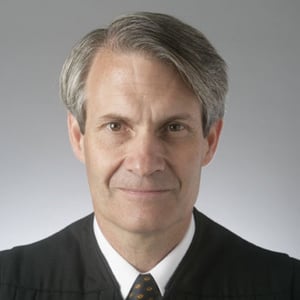
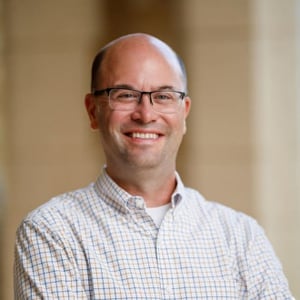
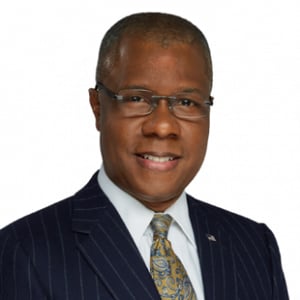
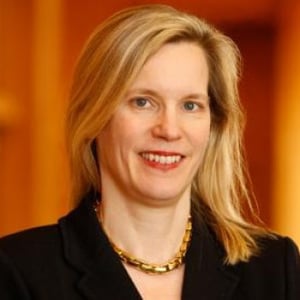
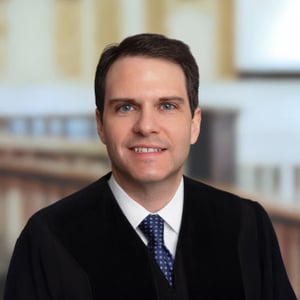
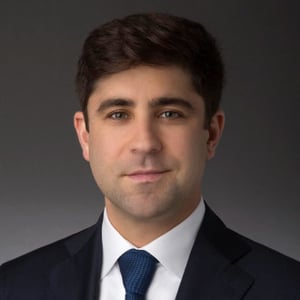
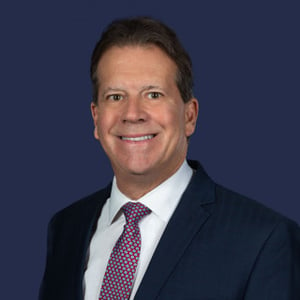
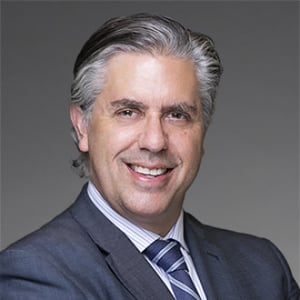
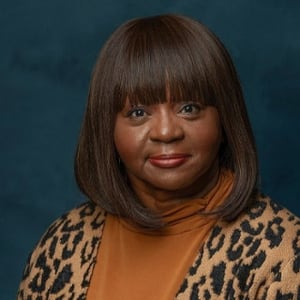
After serving on the United State Court of Appeals for the D. C. Circuit from 2005, Judge Griffith stepped down from the bench in 2020. Currently he is a Lecturer on Law at Harvard Law School, a Fellow at the Wheatley Institute at Brigham Young University, and Special Counsel in the Washington, DC office of the law firm of Hunton Andrews Kurth. Most recently, he was a member of President Biden's Commission on the Supreme Court. He is the author of Civic Charity and the Constitution , and the co-author, along with former judges Michael Luttig and Michael McConnell, of Lost, Not Stolen: The Conservative Case that Trump Lost and Biden Won the 2020 Presidential Election. https://lostnotstolen.org/ . Before being appointed to the D. C. Circuit, Judge Griffith was the General Counsel at BYU; Senate Legal Counsel, the non-partisan chief legal officer of the U. S. Senate; and a partner at Wiley, Rein & Fielding. Long active in rule-of-law programs in former communist nations, Judge Griffith is a member of the international advisory board of the CEELI Institute in Prague. He is a graduate of BYU and the University of Virginia School of Law and is a member of the American Law Institute.
Dean and Professor of Law, Widener University Delaware School of Law
Biography
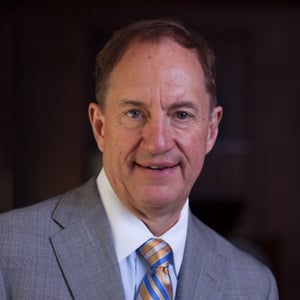
Rod Smolla is Dean and Professor of Law at the Delaware Law School of Widener University, in Wilmington, Delaware. He was previously the 11th President of Furman University, in Greenville, South Carolina, the Dean of the Law School at Washington and Lee University Law School, the Dean of the University of Richmond Law School, the Director of the Institute of Bill of Rights Law at the College of William and Mary, and Senior Fellow and Project Director of the Washington Annenberg Program of Northwestern University. He has also been a faculty member at the DePaul, University of Illinois, and University of Arkansas law schools, and a visiting professor at the Duke, University of Georgia, University of Indiana, Denver University, and University of Melbourne law schools. As an educator, he has been an advocate for experiential learning, including greater emphasis on helping law students develop skills relating to counseling, problem-solving, negotiation, drafting, advocacy, civic engagement, pro bono service, legal ethics, and professionalism. He has emphasized diversity and community outreach and important institutional missions in higher education and legal education.
Smolla is a nationally-known scholar on matters relating to constitutional law, civil rights, freedom of speech, and mass media, particularly matters relating to libel and privacy. He is the author of five multi-volume legal treatises, all published by Thomson Reuters, which are updated twice annually: Law of Defamation; Smolla and Nimmer on Freedom of Speech; Rights and Liabilities in Media Content, Internet, Broadcast, and Print; Federal Civil Rights Acts; and, Law of Lawyer Advertising. He is also author of The First Amendment: Freedom of Expression, Regulation of Mass Media, Freedom of Religion (Carolina Academic Press 1999) (a law school casebook); and co-author of Constitutional Law: Structure and Rights in Our Federal System (6th Edition, 2010, with Dean William Banks). He is the editor each year of the First Amendment Law Handbook, published annually by Thomson Reuters. He was also editor of The Copyright Law Anthology published by Thomson Reuters. He is also the author of may trade and university press books, including Suing the Press: Libel, the Media, and Power (Oxford University Press 1986) (won ABA Silver Gavel Award Certificate of Merit); Jerry Falwell v. Larry Flynt: The First Amendment on Trial (St. Martin's Press 1988); Free Speech in an Open Society (Alfred A. Knopf 1992) (winner of the William O. Douglas Award); Deliberate Intent: A Lawyer Tells the True Story of Murder by the Book (Crown Publishers 1999) (made into a television movie by FX, with Timothy Hutton playing the role of Rod Smolla); The Constitution Goes to College (New York University Press 2010). He was editor of A Year in the Life of the Supreme Court (Duke University Press 1995) (won ABA Civil Gavel Award). Smolla has published over 100 articles in law reviews and other publications.
Smolla has served as Chairman of the Association of American Law Schools Section on Defamation and Privacy Law, as Chairman of the Association of American Law Schools Section on Mass Communications Law, as a member of the American Bar Association Advisory Committee to the Forum on Mass Communications Law, and as a member of the First Amendment Advisory Board to the Media Institute, as the Director of the Annenberg Washington Program Libel Reform Project, and author of the Annenberg Libel Reform Report that emerged from the blue ribbon task force on that project. He served as a Director of the Media General Corporation, and as a Director of the American Arbitration Association. In 2011, he was appointed by Governor Nikki Haley to serve as a Commissioner on the South Carolina Commission of Higher Education, which included within its mission the oversight of all of South Carolina's public universities and colleges, and licensure and programmatic approval for all public and private educational programs within the state.
Smolla has been and remains an active litigator. He has participated as counsel or co-counsel in litigation matters in state and federal courts throughout the nation, and is a frequent advocate, having presented oral argument in numerous state and federal courts, including the Supreme Court of the United States.
Paul J. Schierl Professor of Law, University of Notre Dame Law School
Biography
Professor Richard W. Garnett teaches and writes in the areas of constitutional law, criminal law, the First Amendment, and law and religion. He is a leading authority on questions and debates regarding religious freedom and church-state relations, and is the founding director of Notre Dame Law School’s Program on Church, State, and Society.
Garnett clerked for the late Chief Justice of the United States, William H. Rehnquist, and also for the late Chief Judge of the United States Court of Appeals for the Eighth Circuit, Richard S. Arnold. He earned his J.D. from Yale Law School in 1995 and his B.A., summa cum laude, from Duke University in 1990. He joined the faculty in 1999 after practicing law in Washington, D.C. with Miller, Cassidy, Larroca & Lewin.
Amelia Lewis Professor of Constitutional Law, Sandra Day O'Conno, ASU
Biography
Speaker Information
Deroy Murdock
Syndicated Columnist
Biography
New York political commentor Deroy Murdock is a Fox News Contributor, a Contributing Editor with National Review Online, an emeritus Media Fellow with the Hoover Institution on War, Revolution and Peace at Stanford University; and a Senior Fellow with the Atlas Network, which supports and connects some 500 free-market think tanks in the USA and some 95 countries world-wide. Mr. Murdock’s weekly column — “This Opinion Just In…” — appears in the New York Post, the Washington Times, the New Hampshire Union-Leader, and other newspapers across America. He has appeared on radio shows across America and presents commentaries on Fox News Radio’s podcast, The Rundown. He is a veteran of the 1980 and 1984 Reagan for President campaigns and Steve Forbes’ 2000 White House bid.
As a popular public speaker, he has lectured or debated at the Cato Institute, the Council on Foreign Relations; Harvard Medical School, the Heritage Foundation; the National Academy of Sciences; Dartmouth, Stanford, and Tulane universities; and various fora, from Bogotá to Buenos Aires to Budapest. He is a native of Los Angeles, a graduate of Georgetown University, and a resident of Manhattan, where he earned an MBA from New York University. His program included a semester of study at the Chinese University of Hong Kong.
Deroy Murdock hopes that someday the free society will bring him — and every American — more leisure time to experience fine dining, motion pictures, skiing, live music, and the priceless joys of family, friends, and loved ones.
John S. Battle Professor of Law, University of Virginia School of Law
Biography
Julia D. Mahoney teaches courses in property, government finance, constitutional law and nonprofit organizations. A graduate of Yale Law School, she joined the University of Virginia faculty as an associate professor in 1999 and is now John S. Battle Professor of Law. She has also taught at the University of Southern California Law School and the University of Chicago Law School, and before entering the legal academy, practiced law at the New York firm Wachtell, Lipton, Rosen & Katz. Her scholarly articles include works on land preservation, eminent domain, health care reform and property rights in human biological materials.
Nicholas Bronni was appointed to the Arkansas Supreme Court by Governor Sarah Huckabee Sanders on December 20, 2024, and he began his service on January 1, 2025.
Before being appointed to the bench, Justice Bronni served as the Solicitor General of Arkansas. In that role, he successfully argued two cases in the United States Supreme Court: Delaware v. Pennsylvania, 598 U.S. 115 (2023), an original jurisdiction case concerning unclaimed property; and Rutledge v. PCMA, 592 U.S. 80 (2020), an ERISA preemption case. Justice Bronni also successfully argued numerous cases before federal and state appellate courts, including Arkansas Times v. Waldrip, 37 F.4th 1386 (8th Cir. 2022) (en banc), which upheld Arkansas's law barring state contractors from boycotting Israel; and Arkansas State Conf. NAACP v. Arkansas Bd. of Apportionment, 86 F.4th 1204 (8th Cir. 2023), a landmark case holding that Section 2 of the Voting Rights Act is not privately enforceable. As Solicitor General, Justice Bronni received the National Association of Attorneys General's 2024 Best Supreme Court Brief Award for his multistate amicus brief in Muldrow v. City of St. Louis, Missouri, 601 U.S. 346 (2024).
Justice Bronni received his law degree with magna cum laude honors from the University of Michigan Law School. At Michigan, he was an editor of the Michigan Law Review and was elected to the Order of the Coif. He received his undergraduate degree, summa cum laude, and with special departmental honors from the Elliott School of International Affairs at the George Washington University.
Prior to returning home to Arkansas, Justice Bronni was a Senior Litigation Counsel with the Appellate Litigation Group at the United States Securities and Exchange Commission. He was also an associate with Gibson Dunn and Crutcher LLP in Washington, DC. Justice Bronni clerked for the Honorable Jay S. Bybee of the United States Court of Appeals for the Ninth Circuit.
Will Levi is a partner at Sidley Austin. He draws on his experience serving in senior roles at the U.S. Department of Justice and U.S. Senate to represent clients in high-stakes government enforcement actions, congressional investigations, litigation, and crisis situations. He focuses his practice on commercial disputes and government-facing litigation, including in matters defending against government enforcement actions and challenging federal regulatory action, and he represents clients before federal administrative agencies as well as in federal and state courts.
Prior to joining Sidley, Will served in senior roles at the U.S. Department of Justice, including as Chief of Staff of the Department of Justice and Senior Counselor to the Attorney General. In those roles, Will had broad responsibilities, including supervision of a wide range of high-profile civil litigation, criminal investigations and prosecutions, and national security matters. In recognition of outstanding service to the Department of Justice, Will was awarded the Department’s highest honor, the Edmund J. Randolph Award.
He also served as Chief Counsel to U.S. Senator Mike Lee and Staff Director of the U.S. Senate Judiciary Committee’s Subcommittee on Antitrust, Competition Policy, and Consumer Rights, which oversees the federal antitrust enforcement agencies and reviews major proposed mergers affecting the national economy.
Will regularly advises leading company executives and boards of directors on strategic legal issues arising from high-stakes litigation, congressional investigations and hearings, and government investigations and regulation. In recognition of his success, Will has been named a “Future Star” in the District of Columbia by Benchmark Litigation (2025), and he was ranked among an elite group of lawyers as a 2023 “D.C. Rising Star” by The National Law Journal.
Will clerked for U.S. Supreme Court Justice Samuel A. Alito, Jr. and U.S. Court of Appeals for the Third Circuit Judge Anthony J. Scirica. By appointment of the U.S. Court of Appeals for the D.C. Circuit, Will serves as a member of the Court’s Advisory Committee on Procedures. He is also an elected member of the American Law Institute and a member of the nominating committee for the William H. Webster Profiles in Leadership Award for Prosecution.
Judge, United States Court of Appeals, Sixth Circuit
Biography
Judge Readler earned his undergraduate and law degrees from the University of Michigan. After graduating, he served as a law clerk to Judge Alan Norris of the United States Court of Appeals for the Sixth Circuit. Judge Readler then began practicing law in the Columbus office of the international law firm Jones Day, eventually spending ten years as a partner in the firm’s Issues and Appeals Practice Group. While at Jones Day, Judge Readler appeared in state and federal trial and appellate courts around the country, most frequently the Supreme Court of Ohio and the Sixth Circuit. Judge Readler also successfully argued before the United States Supreme Court in McQuiggin v. Perkins on behalf of an inmate claiming actual innocence. His other pro bono representations include representing capital defendants before the Tenth Circuit and the Supreme Court of Ohio, as well as representing defendants sentenced to life in prison before the Sixth Circuit. While at Jones Day, Judge Readler traveled to Nairobi with Lawyers Without Borders to train Kenyan lawyers in prosecuting domestic violence cases, and he was also a recipient of the American Marshall Memorial Fellowship awarded by the German Marshall Fund of the United States. Following his career in private practice, Judge Readler served as Acting Assistant Attorney General for the Civil Division of the United States Department of Justice from 2017 to 2019. In that role, Judge Readler led and supervised over 1,000 lawyers in the Department’s largest litigating division, briefing and arguing several cases on behalf of the United States in federal courts across the country, including high-profile cases significant to the Administration and the Department. In March 2019, Judge Readler was confirmed to serve as a Circuit Judge on the Sixth Circuit. He resides in Columbus.
Arbitrator, American Arbitration Association & Former Deputy Director, Office of Federal Contract Compliance Programs (OFCCP), U.S. Department of Labor
Biography
Bob Gaglione is an Arbitrator for the American Arbitration Association based in San Diego, California. He also teaches law and politics courses at several universities in Southern California.
From 2019-2021, Mr. Gaglione was a Presidential appointee serving as Deputy Director of the Office of Federal Contract Compliance Programs (OFCCP) at the U.S. Department of Labor.
Mr. Gaglione has over 30 years of legal experience, including most recently, serving as founder and principal of Gaglione Law Group in San Diego, CA, where he practiced civil litigation including business, employment, insurance, real estate, and tort litigation. He previously served as a partner at the law firm of McInnis, Fitzgerald, Rees & Sharkey – one of San Diego’s largest law firms at the time.
For more than a decade, Mr. Gaglione has been as a member of the American Arbitration Association National Roster of Neutrals and Panel of Arbitrators. He served as an Arbitrator or Mediator in close to 100 cases before he went to work for the Department of Labor. .
Mr. Gaglione was elected by his peers to a three-year term on the San Diego County Bar Association Board of Directors from 2011-2014. He is a founding Director of the San Diego Chapter of the Federalist Society and a Chair of the Board of Advisors of this chapter. Mr. Gaglione is a Past President of the Todd American Inn of Court and a past Chair of the Bar History Committee and Litigation Section of the San Diego County Bar Association. He has also served on the Board of Directors of the San Diego-Imperial Council of Boy Scouts of America.
Mr. Gaglione is AV-rated by Martindale Hubbell and has been featured in Best’s Directory of Recommended Insurance Attorneys, Law & Business Directory of Environmental Attorneys and Who’s Who in American Law. Mr. Gaglione has been included in the San Diego Daily Transcript Top Attorneys, was named a Super Lawyer numerous times, and has made the list of Top Lawyers in San Diego Magazine.
Mr. Gaglione has taught law and political science courses at DeVry University, Keller Graduate School of Management, and JP Catholic University. He is also a frequent lecturer at the University of San Diego School of Law, San Diego State University, and California Western School of Law.
Mr. Gaglione hosted a radio show known as Independent Counsel: the news from a legal perspective for over seven years. He is also a frequent legal commentator on radio and television news programs.
Mr. Gaglione received a Bachelor of Science degree in Business Administration from the University of Southern California and a Juris Doctor degree from the University of San Diego School of Law. He is a member of the California, District of Columbia, and New York Bars. He is also admitted to practice before the United States Supreme Court, the Ninth Circuit Court of Appeals, and all United States District Courts in California.
Partner at K&L Gates, Former OFCCP Director, and President-Elect of the Bar Association of the District of Columbia
Biography
Craig E. Leen is a partner in the Washington, DC office of K&L Gates, where he is a member of the Labor, Employment, and Workplace Safety practice group. Mr. Leen is also the President-Elect of the Bar Association of the District of Columbia.
Mr. Leen was formerly the Director of the Office of Federal Contract Compliance Programs (OFCCP) at the U.S. Department of Labor, where he reported directly to the Secretary and Deputy Secretary of Labor.
Mr. Leen serves as a Professorial Lecturer in Law and Professor of Government Lawyering at The George Washington University Law School, as Vice Chair of the District of Columbia Advisory Committee to the U.S. Commission on Civil Rights, as Co-Chair of the DC Family Support Council, and as Chair of the Civil and Human Rights Committee of the Bar Association of the District of Columbia.
Prior to his federal service at OFCCP, Mr. Leen was the City Attorney of the City of Coral Gables, and before that was Chief of the Appeals Section and then Chief of the Federal Litigation Section at the Miami-Dade County Attorney's Office. Earlier in his career, Mr. Leen served as a law clerk to the Honorable Robert E. Keeton, United States District Judge, District of Massachusetts.
In recognition of his public service, Mr. Leen received the Secretary's Exceptional Achievement Award - Professional while at the U.S. Department of Labor, and the Paul S. Buchman Award for Outstanding Contribution in the Area of Legal Public Service while in local government.
Mr. Leen is admitted to practice law in the District of Columbia, Florida, Massachusetts, and New York, and is also board certified by The Florida Bar in city, county, and local government law.
Mr. Leen received his Juris Doctorate from Columbia Law School, graduating as a Harlan Fiske Stone Scholar, and having served as a teaching fellow in both Contracts and Torts. Mr. Leen received his Bachelor of Arts, cum laude, from Georgetown University, where he majored in both Government and Economics.
Executive Director, American Association for Access Equity and Diversity (AAAED)
Biography
Shirley J. Wilcher, Mount Holyoke Class of 1973, is a leading authority on equal opportunity and diversity policy. After graduating from Mount Holyoke cum laude with a degree in Philosophy and French, she went on to receive her MA in Urban Affairs and Policy Analysis from the New School for Social Research and her Juris Doctor degree from Harvard Law School. While a student at Mount Holyoke she received a certificat pratique de langue Francaise from the Université de Paris. While a student at Harvard, Wilcher began a career in civil rights as clerk for the NAACP Legal Defense and Educational Fund, Inc.
After earning her law degree, she became staff attorney for the National Women’s Law Center in Washington, D.C. She later moved to Capitol Hill as Associate Counsel for Civil Rights for the House Committee on Education and Labor. There, she was responsible for legislation and oversight of the federal agencies charged with enforcement of Title IX of the Education Amendments of 1972, Titles VI and VII of the Civil Rights Act of 1964, the Age Discrimination in Employment Act and other laws relating to equal employment opportunity and labor standards. She served as principal staff person on major investigations of the civil rights enforcement activities of the Equal Employment Opportunity Commission, the Office of Federal Contract Compliance Programs, U.S. Department of Labor, and the Office for Civil Rights, U.S. Department of Education. Wilcher left Capitol Hill to serve as the Director for State Relations and General Counsel for the National Association of Independent Colleges and Universities.
During the Clinton Administration, Wilcher served a near seven-year term as Deputy Assistant Secretary for the Office of Federal Contract Compliance Programs in the Labor Department. There she directed a federal program that emphasized the elimination of systemic barriers to equal employment opportunity, the glass ceiling, and inequities in corporate compensation systems, testifying before both House and Senate Labor Committees. Following her service in the Clinton Administration, Wilcher established her consulting firm, Wilcher Global LLC, and served as Executive Director of Americans for a Fair Chance, a consortium of six civil rights legal organizations formed to serve as an educational resource on affirmative action. Wilcher also taught as adjunct Associate Professor of Law at Washington College of Law of American University and worked as Attorney Advisor for the Equal Employment Opportunity Commission.
Currently, Wilcher is the Executive Director of the American Association for Access Equity and Diversity (AAAED), formerly the American Association for Affirmative Action (AAAA), founded in 1974. AAAED is an organization of equal opportunity, diversity and affirmative action professionals working for academic institutions, the private sector and government. Wilcher is also President and CEO of the Fund for Leadership, Equity, Access and Diversity (LEAD Fund), the nonprofit affiliate of AAAED.
Shirley is the recipient of the NAACP’s Keeper of the Flame Award, AAAED’s Rosa Parks Award and the special Drum Major for Justice and President’s Awards for AAAA/AAAED. Wilcher also served as the first Recording Secretary of the National Political Congress of Black Women, founded in 1984 by former U.S. Representative Shirley Chisholm, and was on the board of Wider Opportunities for Women. Wilcher is an Advisory Board Member, Oxford Women’s Leadership Program, Oxford, UK. In 2018, Shirley Wilcher received an Honorary Doctor of Laws from her alma mater, Mount Holyoke College.