

This event has concluded.

Here are the latest events.




Partner, Gibson Dunn & Crutcher LLP
Daniel M. Kolkey is a partner in the San Francisco office of Gibson, Dunn & Crutcher. A member of the Litigation Department, he is co-chair of the Appellate and Constitutional Law Practice Group. Mr. Kolkey returned to the firm in November 2003 after five years as an Associate Justice on the California Court of Appeal, Third Appellate District, in Sacramento.
Recognized in 2005 and 2007 by California Lawyermagazine as an Attorney of the Year in the fields of Government/Public Policy and Appellate law, respectively, and ranked in the first tier for California Appellate Litigation by Chambers USA in 2010, 2011, 2012, and 2013, Mr. Kolkey's practice focuses on appellate litigation. He has also advised four different governors on legal issues, and served as Governor Pete Wilson’s and Governor Arnold Schwarzenegger's lead negotiator for tribal-state compacts under the Indian Gaming Regulatory Act. He was named in 2004, 2005, and 2006 by the Daily Journal as one of the top 100 attorneys in California. And in May 2010, he was appointed by the California Chief Justice to the California Judicial Council’s Appellate Advisory Committee for a three-year term.
Prior to being appointed as an Associate Justice on the California Court of Appeal, Mr. Kolkey served as Legal Affairs Secretary and counsel to Governor Pete Wilson for four years. As such, he was responsible for all of the legal advice within the Governor's Office; approving all state agency appeals; supervising and directing litigation strategy with respect to lawsuits brought against the Governor in his official capacity; drafting the Governor's civil justice reform legislation; and negotiating tribal-state compacts under the Indian Gaming Regulatory Act.
Before serving Governor Wilson, Mr. Kolkey was a partner at Gibson Dunn, where he handled litigation at both the trial and appellate levels, including commercial disputes, political law litigation, and international arbitration.
As a litigator (before and after his government service from 1995 to 2003), Mr. Kolkey has handled class and shareholder actions; construction, real estate, employment, and contract disputes; unfair competition litigation; and political law litigation, including ballot litigation, Voting Rights Act claims, and redistricting matters.
Partner, Horvitz & Levy LLP
Jeremy Rosen is nationally renowned for his proficiency in numerous issues arising under the First Amendment and California’s anti-SLAPP law. Using that knowledge, Jeremy has helped a wide variety of clients – including churches, private businesses, and individuals – defeat lawsuits that seek to impose liability on clients for exercising their rights of petition, free speech, and free exercise of religion. He has also handled hundreds of appeals in numerous appellate courts, including the Ninth Circuit Court of Appeals, the California Supreme Court, and California’s intermediate appellate courts. In addition to First Amendment and anti-SLAPP cases, his cases have involved numerous important issues regarding anti-trust, class actions, wage and hour law, employment law, breach of contract, California’s Unfair Competition Law, CEQA, the enforceability of arbitration clauses, hospital peer review, the scope of public employee whistleblower protection, and the application of the primary assumption of risk doctrine.
Jeremy is a partner at the firm, which he joined in 2001. He is a California State Bar Certified Appellate Specialist and a member of the California Academy of Appellate Lawyers.
Jeremy directed the Pepperdine University School of Law Ninth Circuit Appellate Advocacy Clinic for 6 years. The Clinic represents individuals in the Ninth Circuit who are identified by the court as needing pro bono counsel. Jeremy also previously served a three-year term where he was appointed by the Ninth Circuit to serve as one of 18 appellate lawyer representatives to the court.
Jeremy is a member of the National Chamber Litigation Center’s California Litigation Advisory Committee. Before joining the firm, Jeremy was a Litigation Associate with Munger, Tolles & Olson.
Vice Dean and Professor of Law, Villanova University School of Law
Professor Michael Risch joined the Villanova faculty in 2010 from the West Virginia University College of Law, where he directed the Entrepreneurship, Innovation and Law Program. Prior to joining the West Virginia faculty, he served as an Olin Fellow in Law at Stanford Law School. Professor Risch’s teaching and scholarship focus on intellectual property and internet law, with an emphasis on patents, trade secrets and information access. His articles have been published in the Stanford Law Review and Duke Law Journal, among others; online in the Yale Law Journal Online and PENNumbra; and less formally at the Madisonian, Prawfsblawg, and Patently-O blogs. Two of his articles have been cited by the United States Supreme Court. Professor Risch received his A.B. with honors and distinction in Public Policy and with distinction in Quantitative Economics from Stanford University, and his J.D. with high honors from the University of Chicago Law School. Prior to entering academia, he was a partner at intellectual property boutique Russo & Hale LLP in Palo Alto, California.
Professor, Gonzaga University School of Law
Law clerk for Justice Stephen Bistline, Idaho Supreme Court, 1979-80; in private practice with Lukins & Annis, P.S., Spokane, (1980-84); assistant professor, Oklahoma City University (1984-87); Senior Fellow, Discovery Institute, Seattle, Washington.
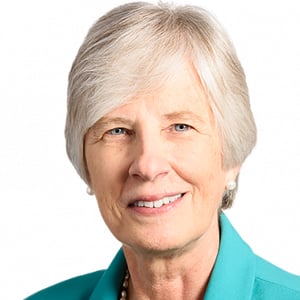
Ronald Reagan Distinguished Fellow, The Heritage Foundation
Becky Norton Dunlop, a prominent leader, strategist, and counselor in the conservative movement, is The Heritage Foundation’s Ronald Reagan Distinguished Fellow.
Dunlop, who joined the leading think tank in 1998, holds the only policy chair in the country to be officially named for the 40th president. She succeeds Ed Meese, the U.S. attorney general under Reagan, who assumed emeritus status.
Dunlop oversees special projects, travels as an ambassador for Heritage, and works tirelessly to assure that the legacy of principles, policies, and practices represented by the life and service of Ronald Reagan remain in the hearts and minds of Americans.
Previously, Dunlop was Heritage’s vice president for external relations from 1998 until May 2016. She served on the Trump Transition team.
Dunlop was a senior official in the Reagan administration from 1981-1989 inside the White House, at the Justice Department, and at the Interior Department.
She served from 1994-1998 as Secretary of Natural Resources for the Commonwealth of Virginia in the Cabinet of then-Virginia Gov. George Allen.
As political director for the American Conservative Union from 1973- 1977, she was instrumental in organizing grass-roots activists for Reagan’s unsuccessful 1976 race for the Republican nomination and advised his successful 1980 nomination and general election campaigns.
From Reagan’s first inauguration in 1981 to 1985, her White House posts included Deputy Assistant to the President for Presidential Personnel and Special Assistant to the President and Director of his Cabinet office. During Reagan’s second term, Dunlop served as senior special assistant to Meese, then attorney general, in charge of managing Cabinet-level domestic policy issues. She oversaw major policy reports on the environment, the family, federalism, tort reform, privatization, and welfare reform.
She completed her service in the Reagan administration as deputy undersecretary of the Interior Department and as assistant interior secretary for fish, wildlife, and parks.
Dunlop is one of the few of the insiders from the beginnings of the Reagan era who remain active in public policy leadership.
As Virginia’s natural resources chief, Dunlop worked to streamline, decentralize, and down-size agencies while protecting and improving the environment. She is one of the few “free-market environmentalists” to have headed a state agency and put ideas into action. Her book, “Clearing the Air” (Alexis de Tocqueville Institute, 2000), chronicles some of her experiences in advancing those principles.
In 2002, President George W. Bush appointed her to a part-time post as chairwoman of the Federal Service Impasses Panel. The seven-member panel resolves disputes between federal agencies management and labor unions. Under her leadership, it took on several hundred cases and eliminated backlogs.
Other current leadership roles include the boards of the Virginia Institute for Public Policy, the Reagan Ranch Board of Governors, the Reagan Alumni Association, the Association for American Educators and the AAE Foundation, the Council for National Policy and the American Conservative Union.
In addition to topics addressing conservative principles and their roots in the nation’s founding, Dunlop is a sought-after public speaker on the idea that personnel is policy; on energy, natural resources and the environment (including free market environmentalism); on federalism as a former member of a governor’s Cabinet; Capitalism and the Rule of Law, and on the Reagan administration (including the 40th president’s effective leadership style).
A graduate of Miami University in Ohio, she currently resides in Arlington, Virginia, with her husband, George S. Dunlop. The Dunlops are members of Oakland Baptist Church in Alexandria, Virginia.
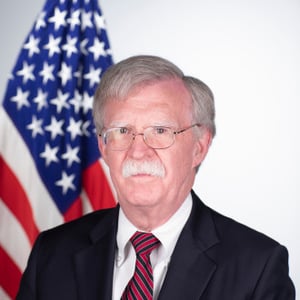
Former United States National Security Advisor
John R. Bolton served as Assistant to the President and National Security Advisor from April 2018 to September 2019.
Prior to his appointment, Ambassador Bolton served as a senior fellow at the American Enterprise Institute (AEI); of counsel at Kirkland & Ellis; a contributor to FOX News Channel and FOX Business Network; and his op-ed articles were regularly featured in major media publications.
Ambassador Bolton was appointed as United States Permanent Representative to the United Nations on August 1, 2005 and served until his resignation in December 2006. Prior to his appointment, Ambassador Bolton served as Under Secretary of State for Arms Control and International Security from May 2001 to May 2005.
Other positions he has previously held include Assistant Secretary for International Organization Affairs at the Department of State, 1989-1993; Assistant Attorney General, Department of Justice, 1985-1989; Assistant Administrator for Program and Policy Coordination, U.S. Agency for International Development, 1982-1983 and General Counsel, U.S. Agency for International Development, 1981-1982.
Ambassador Bolton is the author of Surrender is Not an Option: Defending America at the U.N. and Abroad, published by Simon and Shuster (November 2007) and How Barack Obama is Endangering our National Sovereignty, published by Encounter Books (April 2010).
Ambassador Bolton was born in Baltimore, Maryland. He graduated with a Bachelor of Arts degree, summa cum laude, Phi Beta Kappa, from Yale College in 1970, and received his Juris Doctor from Yale Law School in 1974. He currently resides in Maryland with his wife, Gretchen. They have one daughter, Jennifer Sarah, who also graduated from Yale College, and received her MBA and SM degrees from MIT in 2014 and is currently a senior manager at Nissan’s facility in Nashville.
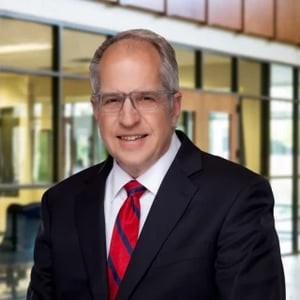
Senior Counsel, First Liberty Institute
Jordan Lorence is Senior Counsel in FLI’s Washington, D.C. office, where he represents First Liberty in strategic efforts promoting religious liberty, and works on important First Amendment projects and litigation, including those at the U.S. Supreme Court.
Lorence has a long career of litigating religious liberty cases since 1984. He has worked for many public interest law firms, including Alliance Defending Freedom, Home School Legal Defense Association, the North Star Legal Center and Concerned Women for America.
He has worked on important religious liberty cases. Lorence worked on school choice cases at the Supreme Court, such as Witters v. Washington Department of Services for the Blind (1986), and Trinity Lutheran (2016), which laid the foundation for First Liberty’s crucial win in Carson v. Makin (2022), requiring Maine to include religious schools in its school choice program.
Lorence argued before the U.S. Supreme Court in Regents of the University of Wisconsin v. Southworth (2000). He represented prolife Christian law students from the University of Wisconsin Law School who objected to the University’s requirement that they pay a mandatory student fee that funded the advocacy of student pro-abortion groups. Other Supreme Court cases Lorence has worked on include NIFLA v. Becerra (2018), protecting prolife pregnancy centers from a California statute requiring them to post signs explaining how pregnant women could obtain state-funded abortions; Masterpiece Cakeshop (2017), involving a Christian cake artist sued by the State of Colorado for declining to design a case celebrating the wedding of a same-sex couple and other cases such as Christian Legal Society v. Martinez (2012), Rosenberger v. University of Virginia (1995), Hurley v. GLIB (1995) and Lamb’s Chapel v. Center Moriches Center Moriches School District (1993).
Churches and other religious groups in New York City obtained the right to rent vacant public schools on weekends to conduct worship services after Lorence’s tenacious 20 years of litigation in Bronx Household of Faith. Lorence won protection for churches facing eviction from discriminatory zoning ordinances in Minnesota in Cornerstone Bible Church v. City of Hastings, Minnesota (1991). He also argued at the New Mexico Supreme Court one of the first cases in the nation defending a Christian wedding photographer charged by the State of New Mexico with discrimination for declining to create photos celebrating the commitment ceremony of a lesbian couple in Elane Photography v. Willock (2013).
Lorence defended home schooling families from intrusive school officials during his time working at Home School Legal Defense Association (HSLDA) in the 1980s and 1990s. HSLDA also tasked Lorence with establishing a sister organization in Canada to protect home schooling families there. He traveled extensively in Canada from British Columbia to Prince Edward Island speaking to families how they could protect their right to home school under relevant Canadian law.
Lorence earned his undergraduate degree in journalism from Stanford University and his law degree from the University of Minnesota, his home state. Lorence was born and raised in Minnesota, where he worked one summer building Mighty Dump trucks at Tonka Toys in Mound, Minnesota. For two years immediately after he graduated from law school, Lorence served as the head administrator for a Minnesota Senate committee.
He speaks extensively on First Amendment and other legal issues. Lorence has spoken at least 75 law schools and many legal conferences. Prominent publications such as the Wall Street Journal, the Washington Post and others have printed his opinion pieces on key legal issues involving religious liberty and freedom of speech. He has appeared on such media outlets as Fox News, CNN, National Public Radio, NBC’s Today Show, BBC radio and many others.
Lorence and his wife Marilyn have been married 40 years. They live in the Washington, D.C. area where they raised their seven children.
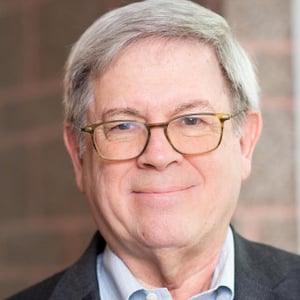
Senior Fellow, Cato Institute
Walter Olson is a senior fellow at the Cato Institute’s Robert A. Levy Center for Constitutional Studies and is known for his writing on the American legal system. His books include The Rule of Lawyers, on mass litigation, The Excuse Factory, on lawsuits in the workplace, and most recently Schools for Misrule, on the state of the law schools. His first book, The Litigation Explosion, was one of the most widely discussed general-audience books on law of its time. It led the Washington Post to dub him “intellectual guru of tort reform.” Active on social media, he is known as the founder and principal writer of what is generally considered the oldest blog on law as well as one of the most popular, Overlawyered.com. He has advised many public officials from the White House to town councils and in 2015 was named by Gov. Larry Hogan to be co-chair of the Maryland Redistricting Reform Commission, which issued its report recommendations later that year to acclaim across the state.
Before joining Cato, Olson was a senior fellow at the Manhattan Institute and an editor at the magazine Regulation, then edited by future Supreme Court Justice Antonin Scalia. Olson’s more than 400 broadcast appearances include all the major networks, NPR, the BBC, The Diane Rehm Show, and Oprah.
Senior Fellow, Cato Institute
Doug Bandow is a senior fellow at the Cato Institute, specializing in foreign policy and civil liberties. He worked as special assistant to President Reagan and editor of the political magazine Inquiry. He writes regularly for leading publications such as Fortune magazine, National Interest, Wall Street Journal, and Washington Times. Bandow speaks frequently at academic conferences, on college campuses, and to business groups. Bandow has been a regular commentator on ABC, CBS, NBC, CNN, Fox News Channel, and MSNBC. He holds a J.D. from Stanford University.