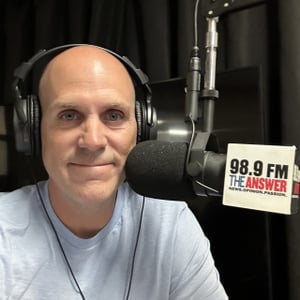
Vice President for Legal Affairs, Goldwater Institute
Biography
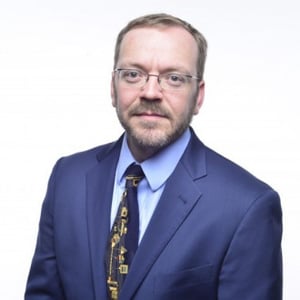
Timothy Sandefur is the Vice President for Legal Affairs at the Goldwater Institute’s Scharf-Norton Center for Constitutional Litigation and holds the Duncan Chair in Constitutional Government. He litigates to promote economic liberty, private property rights, free speech, and other crucial values in states across the country.
Timothy is the author of nine books, including most recently You Don’t Own Me: Individualism and the Culture of Liberty (2025), and Freedom’s Furies: How Isabel Paterson, Rose Wilder Lane, and Ayn Rand Found Liberty in an Age of Darkness (2022), as well as more than 50 scholarly articles on a wide variety of legal subjects. A frequent guest on radio and television, he is well known to radio audiences as “Tim the Lawyer” on The Armstrong & Getty Show, and his writings have appeared in Reason, National Review, The Weekly Standard, The Wall Street Journal, and The Objective Standard, where he is a contributing editor. He has taught classes at Pepperdine University, McGeorge School of Law, George Mason University’s Antonin Scalia Law School, and Arizona State University, where he held the 2023-24 Barry Goldwater Chair in American Institutions.
He is an Adjunct Scholar with the Cato Institute and is a graduate of Hillsdale College and Chapman University School of Law.
Senior Vice President for Legal Studies, Cato Institute
Biography
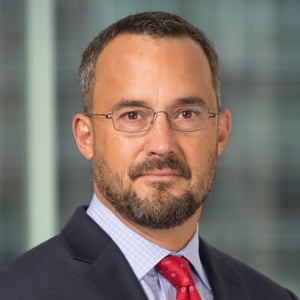
Clark Neily is senior vice president for legal studies at the Cato Institute. His areas of interest include constitutional law, overcriminalization, civil forfeiture, police accountability, and gun rights. Neily is the author of Terms of Engagement: How Our Courts Should Enforce the Constitution’s Promise of Limited Government. His writing has appeared in the Wall Street Journal, Forbes, and National Review Online, as well as various law reviews, including the Harvard Journal of Law and Public Policy, George Mason Law Review, Georgetown Journal of Law and Public Policy, NYU Journal of Law and Liberty, and Texas Review of Law and Politics. Neily is a frequent guest speaker and lecturer for the Federalist Society, Institute for Humane Studies, and American Constitution Society.
Before joining Cato in 2017, Neily was a senior attorney and constitutional litigator at the Institute for Justice and director of the Institute’s Center for Judicial Engagement. He is also an adjunct professor at the University of Texas School of Law, where he teaches constitutional litigation and public-interest law.
Neily served as co-counsel in District of Columbia v. Heller, the historic case in which the Supreme Court held for the first time that the Second Amendment protects an individual right to own a gun for self-defense.
Neily began his legal career as a law clerk to Judge Royce Lamberth on the U.S. District Court for the District of Columbia. After that he spent four years in the trial department of the Dallas-based firm Thompson & Knight. Neily received his undergraduate and law degrees from the University of Texas, where he was Chief Articles Editor of the Texas Law Review.
Vice President for Legal Affairs, Goldwater Institute
Biography
Timothy Sandefur is the Vice President for Legal Affairs at the Goldwater Institute’s Scharf-Norton Center for Constitutional Litigation and holds the Duncan Chair in Constitutional Government. He litigates to promote economic liberty, private property rights, free speech, and other crucial values in states across the country.
Timothy is the author of nine books, including most recently You Don’t Own Me: Individualism and the Culture of Liberty (2025), and Freedom’s Furies: How Isabel Paterson, Rose Wilder Lane, and Ayn Rand Found Liberty in an Age of Darkness (2022), as well as more than 50 scholarly articles on a wide variety of legal subjects. A frequent guest on radio and television, he is well known to radio audiences as “Tim the Lawyer” on The Armstrong & Getty Show, and his writings have appeared in Reason, National Review, The Weekly Standard, The Wall Street Journal, and The Objective Standard, where he is a contributing editor. He has taught classes at Pepperdine University, McGeorge School of Law, George Mason University’s Antonin Scalia Law School, and Arizona State University, where he held the 2023-24 Barry Goldwater Chair in American Institutions.
He is an Adjunct Scholar with the Cato Institute and is a graduate of Hillsdale College and Chapman University School of Law.
Professor of Law, Yeshiva University Benjamin N. Cardozo School of Law
Biography
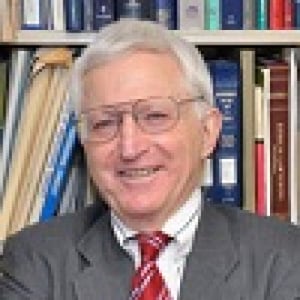
Professor Brickman teaches Contracts, Professional Responsibility, and Land Use, among other courses. His areas of expertise include legal ethics, contingency fees, mass torts, and asbestos litigation. His writings on these and other subjects are widely cited and he is frequently quoted in the press.
Sterling and Eleanor Colton Endowed Chair in Law; Associate Director, International Center for Law and Religion Studies, BYU Law
Biography
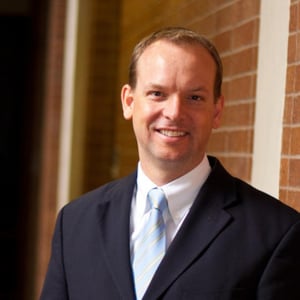
Professor Moore is a scholar of foreign relations law, international law, international human rights, and international development. His publications have appeared in the Harvard, Columbia, Virginia, and Northwestern Law Reviews, among others. Professor Moore has taught international law, international human rights, U.S. foreign relations law, civil procedure, legal scholarship, a plenary powers colloquium, and an international religious freedom clinic. As a teacher, he has been recognized with the University's R. Wayne Hansen Teaching and Learning Fellowship, the BYU Law Alumni Association Teacher of the Year Award, and the Student Bar Association First Year Professor of the Year Award. He is a member of the American Law Institute.
As a human rights expert, Professor Moore serves on the Organization for Security and Cooperation in Europe’s Moscow Mechanism. In 2020, he was elected to a brief term on the Human Rights Committee, a body of independent experts that oversees states’ compliance with the International Covenant on Civil and Political Rights. Professor Moore also serves as an Associate Director of the International Center for Law and Religion Studies, which seeks to secure the blessings of religious freedom and belief for everyone.
Between 2017 and 2019, Professor Moore served, variously, as the Acting Deputy Administrator and General Counsel of the U.S. Agency for International Development, the federal government’s lead agency for international development and humanitarian assistance. From 2016 to 2017, he was the Associate Dean for Research and Academic Affairs at Brigham Young University Law School. He was a Visiting Professor at the George Washington University Law School from 2008 to 2009.
Before joining BYU, Professor Moore clerked for Justice Samuel A. Alito, Jr. during the U.S. Supreme Court’s 2007 Term. From 2003 to 2007, Professor Moore was an assistant and then associate professor at the University of Kentucky College of Law. He arrived at the University of Kentucky after researching and teaching at the University of Chicago Law School as an Olin Fellow from 2001 to 2003. From 2000 to 2001, Professor Moore clerked for Judge Samuel A. Alito, Jr. on the U.S. Court of Appeals for the Third Circuit. From 1996 to 2000, he was an Honor Program trial attorney at the U.S. Department of Justice, Civil Division, Federal Programs Branch.
Professor Moore is a summa cum laude graduate of Brigham Young University Law School, where he served as Editor in Chief of the Law Review and graduated first in his class. He received his BA from Brigham Young University, where he was a Benson scholar and graduated summa cum laude, with University Honors, and as co-valedictorian of his college. He and his wife Natalie are the parents of seven wonderful children.
Matt A. Mayer is the President of Opportunity Ohio and weekly contributor on Columbus-Dayton-Cincinnati radio. In his role, he develops strategic policy positions, advises policymakers on a wide-range of issues, designs and evaluates public opinion surveys, creates educational videos and collateral material aimed at key constituencies, engages with all elements of the media, conducts fact-finding missions, and speaks to groups in America and Europe on a variety of topics. Mayer led a nine-state campaign to stop the expansion of Medicaid, and has conducted strategic policy summits for top state and national groups. Opportunity Ohio’s targeted educational videos have received more than 18.4 million views on social media in the last seven years. Mayer accurately predicted BREXIT, the election of Donald Trump, the budget deficit in Ohio in 2017-2018, the enormous enrollment in Medicaid that surpassed government estimates, Ohio’s continued mediocre private sector job market, and the Joe Biden-Kamala Harris 2020 Democratic ticket.
In 2023, Mayer spent nine months exploring an outsider run for Ohio Governor that involved speaking to thousands of Ohioans in fifty-six out of Ohio’s eighty-eight counties. Ultimately, Mayer ended the exploratory effort after not reaching internal non-financial benchmarks and determining that a major non-Establishment figure likely would run and overwhelm Mayer with his personal fortune and extensive media exposure.
Mayer has written and spoken extensively on the importance of competitive federalism in renewing the American promise. Previously, Mayer served as a monthly columnist for The Spectator USA and U.S. News & World Report, a Visiting Fellow for the American Enterprise Institute, and a Visiting Scholar for the Heritage Foundation in Washington, D.C. where he wrote extensively on national security issues. You can follow him on Twitter (@ohiomatt) and all of his op-eds can be found on his Substack page, The Patriot Mind.
Mayer has worked in public policy and politics at both the state and federal levels. He was a senior official at the U.S. Department of Homeland Security where he provided DHS leaders with policy and operational advice as the Counselor to the Deputy Secretary, including participating in crisis management activities following Hurricane Katrina. He also headed the $3.5 billion terrorism preparedness office charged with developing initiatives to transform America to meet the demands of a post-9/11 environment. Mayer engaged in bilateral counterterrorism exchanges with the United Kingdom and Israel, did briefings in The White House Situation Room and at NATO, and headed America’s largest full-scale national exercise focused on a pandemic virus attack (fifteen years before the COVID pandemic).
Mayer came to DHS from Colorado where he served as the Deputy Director for the Department of Regulatory Agencies under Colorado Governor Bill Owens. He co-developed Colorado’s Regulatory Notice system that utilizes electronic mail to notify stakeholders of all proposed regulations before those regulations become final. The Regulatory Notice system earned the Denver Business Journal’s 2003 “Innovative Product/Service Award” for making government more transparent and accountable. Mayer’s concept of restoring federalism received the runner-up prize in the 2012 Better Government Competition.
Mayer was a 2007 Lincoln Fellow with The Claremont Institute for the Study of Statesmanship and Political Philosophy and a 2006 American Marshall Memorial Fellow with the German Marshall Fund of the United States. In September 2005, The Ohio State University Alumni Association awarded Mayer the William Thompson Oxley Award for early career achievement. Mayer received the Colorado Statesman’s “Rising Star Award” for his management of a congressional campaign and as a deputy on a U.S. Senate campaign in Colorado. At the age of 29, the Denver Business Journal recognized Mayer as one of Colorado’s young leaders by naming him to its “Forty Under 40” list–one of only three recipients under the age of 30 (one of the other two was current Colorado Governor Jared Polis).
Mayer has written three books: The Founding Debate: Where Should the Power Over Our Lives Reside, Taxpayers Don’t Stand a Chance: How Battleground Ohio Loses No Matter Who Wins (and What to Do About It), and Homeland Security and Federalism: Protecting America from Outside the Beltway (with Foreword by the Honorable Edwin Meese III). He has written articles for law reviews, public policy journals, and newspapers, including the Wall Street Journal, CNN, Fox News, USA Today, and Politico; given testimony to the U.S. Congress, the Texas House and Senate, and the Ohio House and Senate; and appeared on Fox News, C-SPAN, ABC, NBC, and other major media outlets.
Mayer graduated from the University of Dayton and received his law degree from The Ohio State University College of Law.
Vice President for Legal Affairs, Goldwater Institute
Biography
Timothy Sandefur is the Vice President for Legal Affairs at the Goldwater Institute’s Scharf-Norton Center for Constitutional Litigation and holds the Duncan Chair in Constitutional Government. He litigates to promote economic liberty, private property rights, free speech, and other crucial values in states across the country.
Timothy is the author of nine books, including most recently You Don’t Own Me: Individualism and the Culture of Liberty (2025), and Freedom’s Furies: How Isabel Paterson, Rose Wilder Lane, and Ayn Rand Found Liberty in an Age of Darkness (2022), as well as more than 50 scholarly articles on a wide variety of legal subjects. A frequent guest on radio and television, he is well known to radio audiences as “Tim the Lawyer” on The Armstrong & Getty Show, and his writings have appeared in Reason, National Review, The Weekly Standard, The Wall Street Journal, and The Objective Standard, where he is a contributing editor. He has taught classes at Pepperdine University, McGeorge School of Law, George Mason University’s Antonin Scalia Law School, and Arizona State University, where he held the 2023-24 Barry Goldwater Chair in American Institutions.
He is an Adjunct Scholar with the Cato Institute and is a graduate of Hillsdale College and Chapman University School of Law.