

This event has concluded.

Here are the latest events.



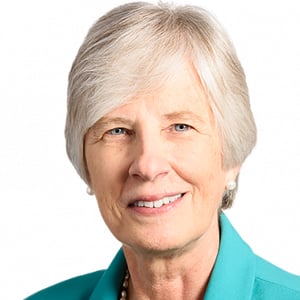
Ronald Reagan Distinguished Fellow, The Heritage Foundation
Becky Norton Dunlop, a prominent leader, strategist, and counselor in the conservative movement, is The Heritage Foundation’s Ronald Reagan Distinguished Fellow.
Dunlop, who joined the leading think tank in 1998, holds the only policy chair in the country to be officially named for the 40th president. She succeeds Ed Meese, the U.S. attorney general under Reagan, who assumed emeritus status.
Dunlop oversees special projects, travels as an ambassador for Heritage, and works tirelessly to assure that the legacy of principles, policies, and practices represented by the life and service of Ronald Reagan remain in the hearts and minds of Americans.
Previously, Dunlop was Heritage’s vice president for external relations from 1998 until May 2016. She served on the Trump Transition team.
Dunlop was a senior official in the Reagan administration from 1981-1989 inside the White House, at the Justice Department, and at the Interior Department.
She served from 1994-1998 as Secretary of Natural Resources for the Commonwealth of Virginia in the Cabinet of then-Virginia Gov. George Allen.
As political director for the American Conservative Union from 1973- 1977, she was instrumental in organizing grass-roots activists for Reagan’s unsuccessful 1976 race for the Republican nomination and advised his successful 1980 nomination and general election campaigns.
From Reagan’s first inauguration in 1981 to 1985, her White House posts included Deputy Assistant to the President for Presidential Personnel and Special Assistant to the President and Director of his Cabinet office. During Reagan’s second term, Dunlop served as senior special assistant to Meese, then attorney general, in charge of managing Cabinet-level domestic policy issues. She oversaw major policy reports on the environment, the family, federalism, tort reform, privatization, and welfare reform.
She completed her service in the Reagan administration as deputy undersecretary of the Interior Department and as assistant interior secretary for fish, wildlife, and parks.
Dunlop is one of the few of the insiders from the beginnings of the Reagan era who remain active in public policy leadership.
As Virginia’s natural resources chief, Dunlop worked to streamline, decentralize, and down-size agencies while protecting and improving the environment. She is one of the few “free-market environmentalists” to have headed a state agency and put ideas into action. Her book, “Clearing the Air” (Alexis de Tocqueville Institute, 2000), chronicles some of her experiences in advancing those principles.
In 2002, President George W. Bush appointed her to a part-time post as chairwoman of the Federal Service Impasses Panel. The seven-member panel resolves disputes between federal agencies management and labor unions. Under her leadership, it took on several hundred cases and eliminated backlogs.
Other current leadership roles include the boards of the Virginia Institute for Public Policy, the Reagan Ranch Board of Governors, the Reagan Alumni Association, the Association for American Educators and the AAE Foundation, the Council for National Policy and the American Conservative Union.
In addition to topics addressing conservative principles and their roots in the nation’s founding, Dunlop is a sought-after public speaker on the idea that personnel is policy; on energy, natural resources and the environment (including free market environmentalism); on federalism as a former member of a governor’s Cabinet; Capitalism and the Rule of Law, and on the Reagan administration (including the 40th president’s effective leadership style).
A graduate of Miami University in Ohio, she currently resides in Arlington, Virginia, with her husband, George S. Dunlop. The Dunlops are members of Oakland Baptist Church in Alexandria, Virginia.
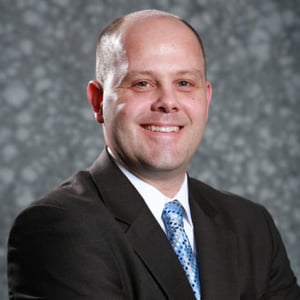
Partner, Ashcroft Law Firm
Austin R. Nimocks is a partner in The Ashcroft Law Firm's office in Austin, Texas. He focuses his practice on internal investigations, government relations, white-collar criminal defense, and helping companies comply with federal law. Litigating for over 20 years, including three as a public defender, Mr. Nimocks has practiced law within the private, government, and non-profit sectors, geographically spanning the United States and beyond.
Prior to joining The Ashcroft Law Firm, Mr. Nimocks served in the Executive Administration of Texas Attorney General Ken Paxton as both Special Counsel and the Associate Deputy Attorney General for Special Litigation. During his time with General Paxton, Mr. Nimocks coordinated and led myriad multi-state lawsuits and strategic litigation against the federal government, other states, and local government entities. On behalf of Texas (and other states), Mr. Nimocks' teams achieved many victories against the federal government, including the U.S. Department of Justice, U.S. Department of Labor, U.S. Department of Health and Human Services, and other federal agencies.
Before joining the Texas Attorney General's Office, Mr. Nimocks served as Senior Counsel for Alliance Defending Freedom ("ADF") in Washington, D.C. While at ADF, Mr. Nimocks handled appeals and litigated constitutional cases in state and federal courts across the country, including matters regarding marriage, parental rights, voters' rights, and religious freedom. Mr. Nimocks also authored several pieces of legislation and policy memoranda and testified before numerous state legislatures, as well as Congress. While with ADF, Mr. Nimocks made regular public appearances, speaking at numerous events and participating in hundreds of television, radio, and newspaper interviews with all major national media outlets.
Mr. Nimocks earned his undergraduate and law degrees from Baylor University in Waco, Texas. He passed the bar exams in Texas, Mississippi, Alabama, and Arizona and is also a member of the Bar for the District of Columbia. In addition to his state bar admissions, Mr. Nimocks is admitted to practice law before the U.S. Supreme Court, the U.S. Courts of Appeals for the D.C., First, Second, Third, Fourth, Fifth, Sixth, Seventh, Ninth, Tenth, and Eleventh Circuits, as well as numerous federal district courts.
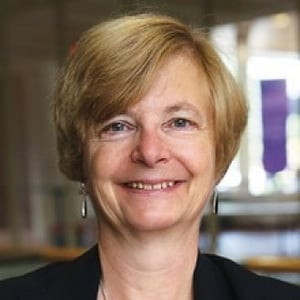
Robina Chair of Law, Science and Technology, University of Minnesota Law School
Professor June Carbone joined the University of Minnesota Law School faculty in June 2013 as the inaugural holder of the Robina Chair in Law, Science and Technology from her position as the Edward A. Smith/Missouri Chair of Law, the Constitution and Society at the University of Missouri at Kansas City (UMKC). She is an expert in family law, assisted reproduction, property, and law, medicine and bioethics, and also has taught contracts, remedies, financial institutions, civil procedure, and feminist jurisprudence.
Before joining UMKC in 2007, Professor Carbone was an associate professor and a professor at Santa Clara University (SCU) School of Law, beginning in 1987. From 2000-06 she served as associate dean for faculty development and from 2001-03 as the Presidential Professor of Ethics and the Common Good, an appointment that supports ethics research at the SCU’s Markkula Center for Applied Ethics. She was a visiting scholar at Stanford University’s Institute for Research on Women and Gender in 1995-96.
While at SCU, she also was co-director of the National University of Singapore summer program focused on intellectual property and international trade (2006), director of the Sydney summer study program focused on law and biotechnology (2004 and 2005), and director of the Hong Kong summer study program focused on comparative legal systems and international trade (1994).
Previously she was an assistant professor at George Mason University School of Law (1983-87) and a trial attorney in the Civil Division, Federal Programs Branch of the U.S. Department of Justice (1978-83).
Professor Carbone writes prolifically on law and the family, marriage, divorce, and domestic obligations, including changes brought about by the biotechnology revolution. Her most recent books are Red Families v. Blue Families: Legal Polarization and the Creation of Culture (Oxford U. Press, 2010), which explores the effects of diverging values and norms in America, and Marriage Markets: How Inequality is Remaking the American Family (Oxford U. Press, 2014), which examines the widening class divide in the American family. Both are co-authored with Naomi Cahn.
Among the honors Professor Carbone has received are the 2009-10 Daniel L. Brenner Faculty Publishing Award from UMKC School of Law, the 2002 SCU Award for Recent Achievement in Scholarship over the previous five years, and the 2002 SCU Law School Award for Distinguished Scholarship. At the Association of American Law Schools, she is a founding member of the Biolaw Section, a former chair of the Family and Juvenile Law Section, and a former Liaison to the Joint Editorial Board of the National Conference of Commissioners on Uniform State Laws. She also has been a member of the Yale Cultural Cognition Project since 2010.
Professor Carbone received her J.D. from the Yale Law School in 1978 and her A.B., magna cum laude, from the Woodrow Wilson School for Public and International Affairs at Princeton University in 1975.

Patrick Hotung Professor of Constitutional Law, Georgetown University Law Center
Randy Barnett is the Patrick Hotung Professor of Constitutional Law at Georgetown University Law Center. He has argued before the United States Supreme Court, tried murder cases to juries as a prosecutor in Chicago, and appeared as a prosecutor in the feature film Inalienable. He is the author of numerous books, including Restoring the Lost Constitution, The Structure of Liberty, Our Republican Constitution, and The Original Meaning of the Fourteenth Amendment. He has published two memoirs, A Life for Liberty: The Making of an American Originalist, and Felony Review: Tales of True Crime and Corruption in Chicago. He is currently working on a new book, Freedom and Flourishing: Libertarianism for the Real World.
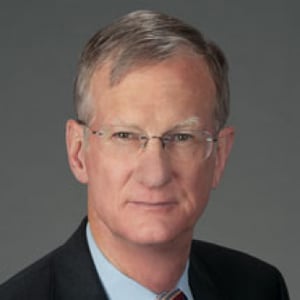
Legal Scholar and Solo Practitioner
Jack received his B.A. in History from the University of Virginia in 1977, graduating with Highest Distinction. After graduating Yale Law School in 1980, he served active duty in the U.S. Army's JAG Corps, rising to the rank of Major, where he represented the United States in more than 250 cases.
He practiced for a decade as an Associate for Bradley Arant in Birmingham, Alabama. He proudly served the State of Alabama in the Office of the Attorney General, both as Deputy and Assistant Attorney General, handling complex civil and criminal litigation cases for the people of Alabama. In 2000, he won the "Best Brief Award" from the National Association of Attorneys General for his brief in a case decided by the U.S. Supreme Court, James Alexander v. Martha Sandoval – a case he won. He was Special Assistant to the Inspector General for the Corporation for National and Community Service, Visiting Legal Fellow for the Center for Judicial and Legal Studies for the Heritage Foundation, Of Counsel at Strickland Brockington Lewis, a solo practitioner, and General Counsel for Indigo Energy.
Most recently, he "re-upped" for military service, volunteering his legal services to the Georgia State Defense Force where twice each month he provided legal services for National Guardsmen who were being deployed. He wore his military uniform for the last time in October 2024.
Jack Park passed away on March 16, 2026.
The Ethics and Justice Center
Prof. Jack Kress
Director, Ethics and Justice Center
Jack Kress has published more than 15 books and 70 articles on various issues of justice and ethics. He is perhaps best known for his early work co-originating the very concept of sentencing guidelines and directing the research projects that developed and implemented the first sentencing guidelines systems in America; he has been called the "father of sentencing guidelines" by ABC News. He helped establish the sentencing guidelines systems now in place in more than half the states, and also worked with Congress and the Department of Justice in first bringing the United States Sentencing Commission into existence. An elected life member of the American Law Institute, Professor Kress lectures broadly on criminal justice and sentencing reform; he is presently consulting with the ALI's Reporter in revising the Model Penal Code's sentencing provisions.
Professor Jack Kress holds degrees from Columbia University and Cambridge University; he has been tenured and taught at several law and other graduate schools. A former Manhattan Assistant District Attorney, his more recent work has been in ethics and bioethics.
In 1990, Professor Kress was named Special Counsel for Ethics and Designated Agency Ethics Official for the United States Department of Health and Human Services, where he worked with the Office of White House Counsel and the U. S. Office of Government Ethics in formulating the federal government's ethics policies; he concurrently directed the largest federal ethics and bioethics program, encompassing all components of HHS, including the National Institutes of Health, the Food and Drug Administration, and the Center for Medicare and Medicaid Services. In 2001, Jack Kress was selected as the first Executive Director of the HHS Advisory Committee on Organ Transplantation, and led that group in promulgating and implementing more than forty recommendations for reform in America’s donation and transplantation system, including the establishment of the national breakthrough collaborative. From 2004-2009, Professor Kress was a core faculty member of the Alden March Bioethics Institute at Albany Medical College. His most recent peer-reviewed article was published in the prestigious American Journal of Transplantation. He presently directs the Ethics and Justice Center in Saratoga Springs, New York. See www.ethicsandjustice.org
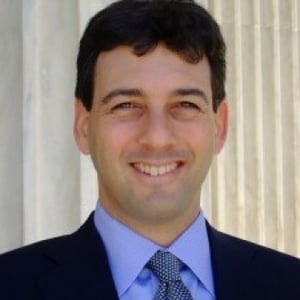
Vice President for Litigation, Institute for Free Speech
Alan joined the Institute for Free Speech as Vice President for Litigation in February 2021. In this role, Alan directs the Institute’s litigation and legal advocacy, leads our in-house legal team, and manages and works to expand our network of volunteer attorneys.
Prior to joining the Institute, Alan litigated complex federal matters for twenty years, in his own practice and as a partner in various Washington-area firms. He argued and won landmark constitutional cases in the United States Supreme Court and has appeared before numerous appellate and district courts throughout the country. Alan often speaks at law schools and continuing legal education seminars. He also teaches strategic/public interest litigation as an adjunct professor at the Georgetown University Law Center.
Alan began his career clerking for the Hon. Terrence W. Boyle, United States District Judge for the Eastern District of North Carolina. He has also served as a Deputy Attorney General for the State of California, a litigation associate at the Washington office of Sidley Austin, and as counsel to the United States Senate Judiciary Committee.
Alan earned his J.D. at Georgetown (1995) and his B.A. at Cornell University (1992). He is an active member in good standing of the Virginia, District of Columbia, and California bars, the Bar of the United States Supreme Court, and various federal appellate and district court bars.
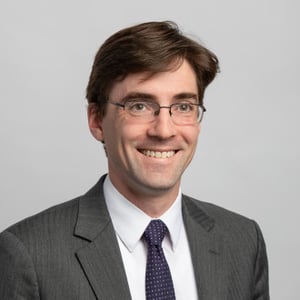
Deputy Litigation Director, Institute for Justice
Robert McNamara serves as Deputy Litigation Director with the Institute for Justice. He joined the Institute in August 2006 and litigates cutting-edge constitutional cases protecting free speech, property rights, economic liberty and other individual liberties in both federal and state courts.
Robert’s work has resulted in court victories for property owners fighting eminent domain abuse, tour guides fighting unconstitutional restrictions on their speech, taxi drivers seeking the right to own their own business, and many others. Robert also litigates in defense of innovation and entrepreneurship in medical care and was co-counsel in Flynn v. Holder, IJ’s landmark challenge to the federal prohibition on compensating bone marrow donors.
Robert’s writing has been published by outlets including The New York Times, The Wall Street Journal, The Washington Post and dozens more nationwide. His opinions and views on legal issues have been featured in radio and television programs ranging from National Public Radio’s All Things Considered to Fox News Channel’s Hannity & Colmes.
Robert is a graduate of Boston University and the New York University School of Law, where he was a founding member and eventual editor-in-chief of the NYU Journal of Law & Liberty. He currently lives in Virginia with his wife and children.
Robert McNamara is a member of the Virginia bar.
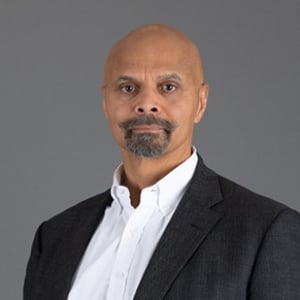
Partner, Benesch, Friedlander, Coplan & Aronoff LLP
Peter focuses his legal practice on representing management in employment-related litigation and in contract negotiations, NLRB proceedings, EEO matters and arbitration.
Peter Kirsanow is a partner with Benesch’s Labor & Employment Practice Group. He returned to Benesch in January 2008 after serving as a presidential appointee to the National Labor Relations Board (NLRB) in Washington D.C. for two years. While serving on the NLRB, he was involved with significant decisions including Oakwood Healthcare, Inc., Dana/Metaldyne and Oil Capital Sheet Metal, Inc. In addition, Peter testified before the Senate Judiciary Committee on the nominations of John Roberts, Samuel Alito, Sonia Sotomayor, Elena Kagan and Neil Gorsuch to the Supreme Court. He also continues to testify before and advise members of the U.S. Congress on employment law matters, most recently on November 18 before the House Subcommittee on Investigations and Oversight regarding disparate impact theory.
Peter was recently reappointed by the Majority Leader of the House of Representatives to his fourth consecutive six-year term on the U.S. Commission on Civil Rights. This is a part-time position which will expire in December 2025.
Recently, Peter and a team of Benesch attorneys served as lead counsel to the National Association of Manufacturers in litigation before the U.S. Circuit Court for the District of Columbia against the NLRB, challenging the Board’s Notice of Employer Rights Posting Rule. The court ruled in favor of Benesch’s client, striking down the NLRB’s Rule in its entirety. This ruling impacts over 6,000,000 employers nationwide which would have been subject to the posting requirement.
Additionally, Peter is past chair of the board of directors of the Center for New Black Leadership and is a member of Benesch’s Diversity & Inclusion Committee. This committee helps ensure that the firm promotes an environment in which differences are respected, employees are treated fairly, and individual skills and talents are valued.
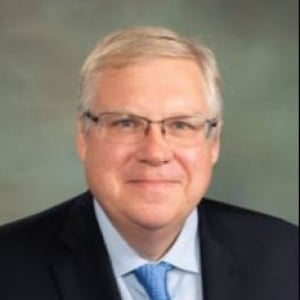
President and General Counsel, Public Interest Legal Foundation
J. Christian Adams is the President and General Counsel of the Public Interest Legal Foundation. He served from 2005 to 2010 in the Voting Section at the United States Department of Justice Voting Section. President Trump appointed Adams to the Presidential Advisory Commission on Election Integrity. President Trump also appointed Adams as a Commissioner to the United States Commission on Civil Rights where he also now serves with a term through 2025. He has been involved in election law lawsuits in 33 states and the territory of Guam. He has represented multiple presidential campaigns in election litigation. He has a law degree from the University of South Carolina School of Law. He is a member of the South Carolina and Virginia Bars.