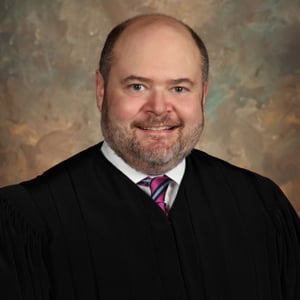
Garwood Visiting Professor and Visiting Fellow, James Madison Pr, Cleveland-Marshall College of Law
Biography
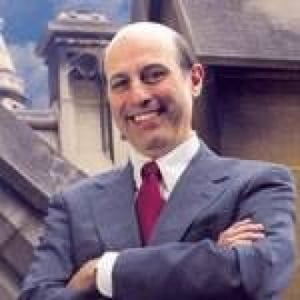
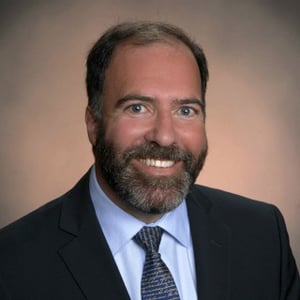
David F. Forte is Professor of Law at Cleveland State University, where he was the inaugural holder of the Charles R. Emrick, Jr.- Calfee Halter & Griswold Endowed Chair. This fall, Professor Forte will be the Garwood Visiting Professor at Princeton University in the Department of Politics, and Visiting Fellow at the James Madison Program in American Ideals and Institutions. He holds degrees from Harvard College, Manchester University, England, the University of Toronto and Columbia University.
During the Reagan administration, Professor Forte served as chief counsel to the United States delegation to the United Nations and alternate delegate to the Security Council. He has authored a number of briefs before the United States Supreme Court, and has frequently testified before the United States Congress and consulted with the Department of State on human rights and international affairs issues. His advice was specifically sought on the approval of the Genocide Convention, on world-wide religious persecution, and Islamic extremism. He has appeared and spoken frequently on radio and television, both nationally and internationally. In 2002, the Department of State sponsored a speaking tour for Professor Forte in Amman, Jordan, and he was also a featured speaker to the Meeting of Peoples in Rimini, Italy, a meeting which gathers over 500,000 people from all over Europe. He has also been called to testify before the state legislatures of Ohio, Kansas, and Idaho as well as the New York City Council. He has assisted in drafting a number of pieces of legislation for the Ohio General Assembly dealing with abortion, international trade, and federalism. He has sat as acting judge on the municipal court of Lakewood Ohio and was chairman of Professional Ethics Committee of the Cleveland Bar Association. He has received a number of awards for his public service, including the Cleveland Bar Association’s President’s Award, the Cleveland State University Award for Distinguished Service, the Cleveland State University Distinguished Teaching Award, and the Cleveland-Marshall College of Law Alumni Award for Faculty Excellence. He served as Consultor to the Pontifical Council for the Family under Pope St. John Paul II and Pope Benedict XVI. In 2003, Dr. Forte was a Distinguished Fulbright Chair at the University of Trento and returned there in 2004 as a Visiting Professor. For the academic year, 2008-2009, Professor Forte was Senior Visiting Scholar at the Center for the Study of Religion and the Constitution in at the Witherspoon Institute in Princeton, New Jersey. He was the Robert E. Henderson Constitution Day Lecturer at the Ashbrook Center at Ashland University, and he has given over 300 invited addresses and papers at more than 100 academic institutions. His work has been cited by the U.S. Supreme Court.
Professor Forte was a Bradley Scholar at the Heritage Foundation, and Visiting Scholar at the Liberty Fund. He has been President of the Ohio Association of Scholars, was on the Board of Directors of the Philadelphia Society, and is also adjunct Scholar at the Ashbrook Center. He has been appointed to the Ohio State Advisory Committee to the U.S. Commission on Civil Rights. He has also been a Civil War re-enactor and a Merit Badge Counselor for the Boy Scouts.
He writes and speaks nationally on topics such as constitutional law, religious liberty, Islamic law, the rights of families, and international affairs. He served as book review editor for the American Journal of Jurisprudence and has edited a volume entitled, Natural Law and Contemporary Public Policy, published by Georgetown University Press. His book, Islamic Law Studies: Classical and Contemporary Applications, has been published by Austin & Winfield. He is Senior Editor of The Heritage Guide to the Constitution (2006), 2d edition (2014), published by Regnery & Co, a clause by clause analysis of the Constitution of the United States.
His teaching competencies include Constitutional Law, the First Amendment, Islamic Law, Jurisprudence, Natural Law, International Law, International Human Rights, the Presidency, and Constitutional History.
SARAH ISGUR is the editor of SCOTUSblog, host of the legal podcast Advisory Opinions, and a legal analyst for ABC News. Isgur has previously worked on multiple presidential campaigns and in all three branches of the federal government. During the first Trump administration, she served in the Department of Justice as the director of the Office of Public Affairs and senior counsel to the deputy attorney general during the Russia investigation. She clerked for Judge Edith H. Jones of the U.S. Court of Appeals for the Fifth Circuit and is a graduate of Harvard Law School and Northwestern University. She is the author of the book, Last Branch Standing: A Potentially Surprising, Occasionally Witty Journey Inside Today's Supreme Court.
Professor of Law, Northwestern University Pritzker School of Law
Biography
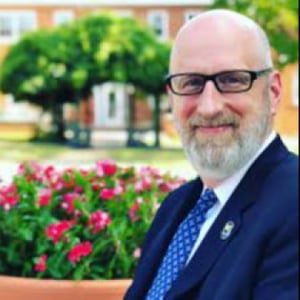
Joshua Kleinfeld teaches and writes about political, legal, and moral philosophy, criminal law, and criminal procedure. He also practices law in Northwestern's Juvenile Criminal Defense Clinic. He is a full professor with tenure at the Northwestern Pritzker School of the Law and (by courtesy) in Northwestern’s philosophy department. In 2017-18, he was a visiting professor at Harvard and Stanford Law Schools. He is the recipient of the Bator Award, given annually to one American law professor under the age of 40 who has demonstrated "excellence in legal scholarship, a commitment to teaching, a concern for students, and who has made a significant public impact."
In philosophy, Kleinfeld's research focuses on the idea of "embodied ethical life," as developed in the socio-theoretic tradition of Hegel, Weber, and Durkheim. This tradition aims to understand and critique social life by bringing to light the normative ideas implicit in social practices and institutions. In law, this means that the most interesting philosophical concepts are often those reflected or actualized in legal practice – in the law as judges and lawyers think of it and wield it.
In criminal law and procedure, Kleinfeld has developed a theory known as "reconstructivism," which holds that the chief office of criminal law is not to dole out retributive justice, nor to optimize crime and cost control, but to reconstruct a violated normative order in the wake of a crime. This work, which draws on the thought of Hegel, Durkheim, Jean Hampton, and Antony Duff, develops an alternative to retributive and utilitarian theories of criminal law by focusing on the distinctive social function and sense of justice at work in the criminal system.
Kleinfeld is also involved in practical criminal justice reform. In this vein, he defends children accused of homicide in the Northwestern Juvenile Criminal Defense clinic and assists in litigation efforts meant to reform American criminal law through the courts. He has also developed a view of criminal justice reform known as "democratization," which holds that the root of the American criminal justice crisis is a set of bureaucratic attitudes, structures, and incentives divorced from the American public’s concerns and sense of justice, and that the primary solution is to make criminal justice more community-focused and responsive to lay influences. Working with others, he has developed a number of policy proposals meant to reform American criminal justice in a democratic direction.
Kleinfeld holds a JD from Yale Law School, a PhD in philosophy from the Goethe University of Frankfurt (supervised by Axel Honneth, Klaus Günther, and Rainer Forst), and a BA in philosophy from Yale College. He clerked for Judge J. Harvie Wilkinson on the United States Court of Appeals for the Fourth Circuit; Judge Janice Rogers Brown on the United States Court of Appeals for the D.C. Circuit; and President (chief justice) Aharon Barak of the Supreme Court of Israel. He worked as an Associate at Debevoise & Plimpton LLP in Frankfurt, Germany, in the area of corporate criminal law. Before law school, he worked as a Senior Research Analyst at the White House’s Council on Bioethics.
Internet Policy Counsel and Director of Appellate Litigation, TechFreedom
Biography
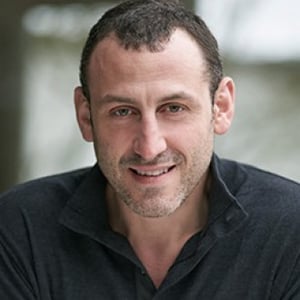
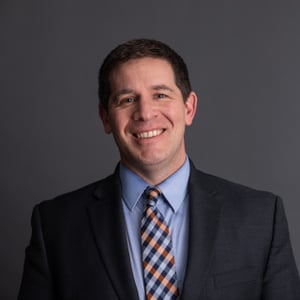
Corbin Barthold is TechFreedom's Internet Policy Counsel and Director of Appellate Litigation.
Corbin clerked for the Hon. Steven D. Merryday (M.D. Fla.) and the Hon. Robert H. Cleland (E.D. Mich.). After his clerkships, he became an associate, and later a partner, in the Los Angeles office of Browne George Ross LLP, where he engaged in high-stakes complex litigation. He then served as Senior Litigation Counsel at Washington Legal Foundation, a D.C. public-interest firm, where his practice focused on appeals involving administrative law, the separation of powers, antitrust, and tech policy.
Corbin received his J.D. from the University of California, Berkeley, School of Law. He also holds a B.A., magna cum laude and Phi Beta Kappa, from the University of California, San Diego, and an Msc., with distinction, from the London School of Economics.
Solicitor General, Montana Attorney General's Office
Biography
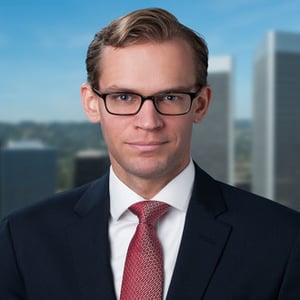
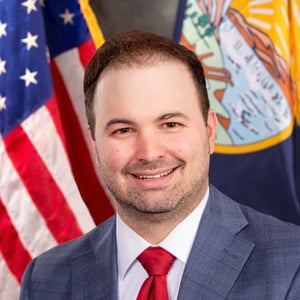
Christian is currently Solicitor General of Montana, where he serves as the chief litigator and principal legal advisor to Montana Attorney General Austin Knudsen. In that capacity, he manages litigation before the federal district courts, courts of appeal, and the United States Supreme Court, as well as the Montana Supreme Court. He previously served in the Trump Administration as Senior Counsel to the Assistant Secretary for Civil Rights at the U.S. Department of Education. Prior to government service, he was a public interest constitutional litigator at Mountain States Legal Foundation and a fellow at the Institute for Justice. He clerked for Justice Caleb Stegall on the Kansas Supreme Court. He also served as Director of Publications for the Federalist Society's national headquarters.
Christian earned his B.A. in Political Science in 2009 from the University of Pennsylvania before attending the University of Kansas School of Law. Christian is admitted to practice law in Kansas and Montana. A Kansas native, he is a die-hard fan of the Kansas Jayhawks, Kansas City Chiefs, and Kansas City Royals.
Christian is a member of the Federalism & Separation of Powers Practice Group's Executive Committee.
Casey Mattox is Vice President for Legal Strategy at Stand Together and Senior Advisor at Americans for Prosperity. In these roles he advocates for and creates strategies and partnerships to ensure a constitutionally limited government that protects the civil liberties of all Americans. Prior to joining Stand Together and AFP Casey’s legal career focused on defending the First Amendment rights of students, faculty, healthcare workers and religious organizations. Casey has a J.D. from Boston College School of Law and an undergraduate degree from the University of Virginia. You can find him on Twitter at @CaseyMattox_ and on LinkedIn at @Casey-Mattox-ST.
Clinical Professor of Law, University of Arizona, James E. Rogers College of Law
Biography
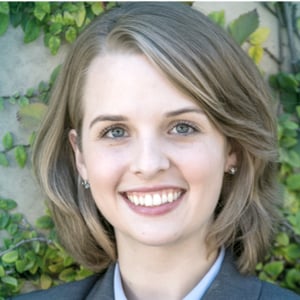
Tessa L. Dysart is the Assistant Director of Legal Writing and Associate Clinical Professor of Law at the University of Arizona, James E. Rogers College of Law. With the Hon. Leslie H. Southwick of the United States Court of Appeals for the Fifth Circuit, she co-authored the third edition of Winning on Appeal: Better Briefs and Oral Arguments. She manages the Appellate Advocacy Blog, writes on human trafficking and constitutional law, and lectures nationally on developing effective state anti-trafficking laws.
Professor Dysart is a graduate of Willamette University and Harvard Law School. She clerked for the Hon. Dennis W. Shedd of the United States Court of Appeals for the Fourth Circuit. Her practice experience includes working for the United States Department of Justice Office of Legal Policy and the Senate Judiciary Committee. Prior to joining the College of Law faculty she taught appellate advocacy and constitutional law courses at Regent University School of Law, where she coached award-winning moot court teams and advised the program to a national ranking.
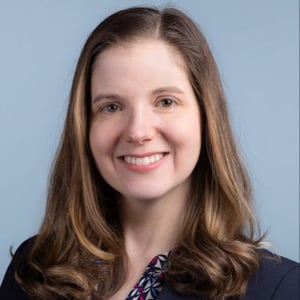
Shannon Grammel is a litigator with experience at all levels of federal and state courts.
Ms. Grammel has represented both private- and public-sector clients in a broad array of substantive legal areas, including constitutional law, administrative law, election law, and complex commercial litigation. Ms. Grammel has authored briefs before the Supreme Court of the United States, several federal courts of appeals, multiple state supreme courts, and federal and state trial courts. She has also argued in state appellate court and has participated in both federal- and state-court trials.
Before joining Lehotsky Keller Cohn LLP, Ms. Grammel served as Deputy Solicitor General of Kansas. Before that, she was a member of the Supreme Court & Appellate group in Latham & Watkins LLP’s Washington D.C. office.
Ms. Grammel served as a law clerk for Justice Brett M. Kavanaugh of the Supreme Court of the United States and Judge J. Harvie Wilkinson III of the U.S. Court of Appeals for the Fourth Circuit. Ms. Grammel earned her law degree from Stanford Law School, where she was President of the Stanford Law Review.
Vice President and Deputy Chief Counsel, U.S. Chamber Litigation Center, U.S. Chamber of Commerce
Biography
Jennifer B. Dickey is vice president and deputy chief counsel at the U.S. Chamber Litigation Center, the litigation arm of the U.S. Chamber of Commerce. Dickey handles a variety of litigation matters for the Chamber.
Dickey joined the Chamber following her service as Acting Assistant Attorney General and Principal Deputy Assistant Attorney General in the Civil Division at the U.S. Department of Justice. She also previously served as Deputy Associate Attorney General, providing strategic oversight of the Civil Division, Civil Rights Division, and Foreign Claims Settlement Commission, as well as Special Assistant to the President and Associate Counsel to the President. In the latter capacity, she provided legal advice on a wide array of executive actions and rulemakings, civil litigation, and judicial nominations.
Dickey also practiced law at Kirkland & Ellis LLP before her government service. She was a commercial and appellate litigator, representing businesses in federal and state courts.
Earlier in her career, Dickey served as a law clerk for the Honorable Clarence Thomas of the Supreme Court of the United States and the Honorable William H. Pryor Jr. of the United States Court of Appeals for the Eleventh Circuit.
Dickey earned her law degree magna cum laude from Duke University School of Law, where she was an Executive Editor of the Duke Law Journal, and her undergraduate degree magna cum laude from Dartmouth College.
Professor of Law, Widener University Commonwealth Law School
Biography
Michael R. Dimino is a Professor of Law at Widener University Commonwealth Law School, where he teaches and writes in a wide variety of subjects, including constitutional law and election law. Professor Dimino graduated from the State University of New York at Buffalo and Harvard Law School, and served as Articles Editor of the Harvard Journal of Law & Public Policy. Professor Dimino served as Chief Clerk to Associate Judge Albert Rosenblatt of the New York State Court of Appeals, and then clerked for Senior Circuit Judge Laurence Silberman of the United States Court of Appeals for the District of Columbia Circuit and Judge Paul Friedman of the United States District Court for the District of Columbia. Professor Dimino is a two-time recipient of Widener’s Faculty Scholarship Award, a three-time recipient of Widener’s Outstanding Professor Award, an elected member of the American Law Institute, and a Fulbright scholar. He has authored or co-authored several articles and six books, including Voting Rights and Election Law (4th ed. forthcoming); Understanding Election Law and Voting Rights (2d ed. 2026); and Congressional Investigations and Oversight (2d ed. 2023). In his spare time, Professor Dimino referees hockey.
Brett Nolan is a Senior Attorney at the Institute for Free Speech, a public interest law firm that defends the First Amendment rights of those engaged in political speech and advocacy around the country.
Before joining the Institute, Brett served as the Principal Deputy Solicitor General of Kentucky, where he represented the Commonwealth in a wide variety of high-stakes litigation at every level of state and federal court. In that role, Brett led a successful challenge against the Department of Treasury over the constitutionality of a federal law limiting the ability of states to modify their tax codes, and he helped secure a U.S. Supreme Court victory that upheld a state’s constitutional right to defend its interests in federal court.
Prior to that, Brett served as the Deputy General Counsel to the former Governor of Kentucky, where he advised the governor and other executive branch officials on legal and policy issues and represented them in litigation. Brett clerked for Judge John Nalbandian of the U.S. Court of Appeals for the Sixth Circuit and Judge Karen K. Caldwell of the U.S. District Court for the Eastern District of Kentucky. Between clerkships, he worked in private practice. Brett received his law degree from the University of Chicago Law School, where he graduated with High Honors and was an editor of The University of Chicago Law Review.
Greg Porter has extensive trial and class action experience in complex pension, 401(k) plan, and employee stock ownership plan (ESOPs) lawsuits in federal court. Greg has led Bailey Glasser’s ERISA and trust practice to major trial and appellate victories, including seminal decisions in the Seventh and Fourth Circuit Courts of Appeal and a $30 million trial judgment that broke new ground for ESOPs. With co-counsel, the firm’s ERISA practice won a 9-0 decision in the Supreme Court, Intel Corp v. Sulyma, that established key statute of limitations rights for employees in ERISA cases.
Greg has recovered hundreds of millions of dollars on behalf of employees who lost retirement savings in 401(k) plans and ESOPs. He understands complex financial transactions, investments, and instruments.
Greg has also developed techniques for successfully investigating and prosecuting complex lawsuits involving business valuation, securities lending, hedge funds, and private equity. He has argued appeals in the Second, Fourth, Sixth and Eighth U.S. Circuit Courts of Appeal.
Vikrant Reddy is a senior fellow at Stand Together Trust, specializing in the area of criminal justice reform. Reddy previously served as a senior policy analyst at the Texas Public Policy Foundation (TPPF), where he managed the launch of TPPF’s national Right on Crime initiative in 2010. He has worked as a research assistant at the Cato Institute, as a judicial clerk to the Hon. Gina M. Benavides in Texas, and as an attorney in private practice. He is a member of the State Bar of Texas, and he serves on the Executive Committee of the Criminal Law Practice Group of the Federalist Society. He is also an appointee to the U.S. Commission on Civil Rights Texas State Advisory Committee.
Reddy’s research and scholarly opinions have appeared in a range of national media outlets, including USA Today, National Review, The Federalist, and others.
Reddy earned his law degree from the Southern Methodist University School of Law. He received his undergraduate degree from the University of Texas at Austin.
Mr. Weir is an experienced litigator who focuses on constitutional and regulatory matters. He has particular expertise in cases involving the First and Fourteenth Amendments, civil rights statutes, and challenges to federal agency actions. He has briefed and presented oral argument in state and federal courts across the country, including in the Supreme Court of the United States. He was trial counsel and part of the team that prevailed before the Supreme Court in the landmark case Students for Fair Admissions, Inc. v. Harvard College and University of North Carolina.
Since 2015, Mr. Weir has been an adjunct professor for the Administrative Law and Supreme court clinics at the Antonin Scalia Law School at George Mason University. He is a former law clerk to Judge Carlos T. Bea of the United States Court of Appeals for the Ninth Circuit and Judge Anthony J. Trenga of the United States District Court for the Eastern District of Virginia. He earned his A.B. cum laude from Georgetown University and his J.D. summa cum laude from George Mason University School of Law.
Kennerly Davis has over forty years of experience in corporate management, public service, and the private practice of law. He has held senior executive positions in a Fortune 500 electric and gas company. He has served as Deputy Attorney General for the Commonwealth of Virginia, and as a legislative aide to a U.S. Senator and a U.S. Congressman. He practiced law for 25 years with Hunton Andrews Kurth LLP.
Davis is active in the Federalist Society as a member of the Regulatory Process Working Group of the Regulatory Transparency Project, and as a member of the Execuitve Committee of the Administrative Law and Regulation Practice Group. He is active in the national Alumni Free Speech Alliance, and involved in AFSA-chapter initiatives, including litigation, to publicize and correct the serious legal problems created by university Diversity, Equity, and Inclusion programs and the anonymous bias reporting systems used to enforce those DEI programs.
Davis writes and speaks on a wide variety of topics, including those related to the Founding of America, the natural rights foundation of our Republic, the constitutional rule of law, equal protection and free speech, DEI programs and bias reporting systems, capitalism, regulation and regulatory reform, and economic development. His articles have appeared in The Wall Street Journal, the Washington Examiner, the Richmond Times-Dispatch, The Federalist Society Review, the FedSoc Blog, Real Clear Energy, Townhall, the Daily Caller, reports of the Center for Strategic & International Studies, and other publications. He appears frequently on radio, podcasts, and television.
Davis graduated with honors from Cornell University with an A.B. degree in Government. He earned an M.A. degree from Pembroke College, Oxford, in Philosophy, Politics, and Economics. He was awarded a J.D. degree from Harvard Law School, and an M.B.A. degree from Virginia Commonwealth University.
Davis lives in Richmond, Virginia. He can be contacted by email: j.kendavis@verizon.net, and by phone: (804) 624-8525.
Partner, Holtzman Vogel Baran Torchinsky & Josefiak PLLC
Biography
Abhishek (Abhi) Kambli is a partner at Holtzman Vogel who represents clients in high-stakes appellate and complex litigation, constitutional challenges, and matters involving state attorneys general and federal agencies. He is one of a handful of lawyers nationally who has both led federal litigation from inside the Department of Justice and multi-state coalition work from a State Attorney General’s office—giving clients a 360-degree perspective on government enforcement, regulatory challenges, and constitutional advocacy.
Prior to joining Holtzman Vogel, Abhi served as Deputy Associate Attorney General at the United States Department of Justice, where he acted as lead counsel in high-priority matters for the Trump Administration, oversaw the Department’s civil components on behalf of the Associate Attorney General, advised the White House Counsel’s Office and federal agencies on litigation risk and strategy, and developed the Department’s national affirmative civil litigation strategy.
Earlier, he served as Deputy Attorney General and Division Chief of the Special Litigation and Constitutional Issues Division at the Kansas Attorney General’s Office, where he launched the division and led multi-state coalitions in trial and appellate courts nationwide, including the United States Supreme Court. He began his career as an Assistant United States Attorney in the Southern District of Indiana, prosecuting more than 100 federal cases from investigation through appeal.
Abhi is also a Lieutenant Colonel in the United States Air Force Judge Advocate General's Corps, having served on active duty and in the reserves since 2013. His military service includes criminal trials as both prosecutor and defense attorney, appellate representation before the Court of Appeals for the Armed Forces, and representation of a high-profile detainee before the Military Commissions at Guantánamo Bay.
Casey Mattox is Vice President for Legal Strategy at Stand Together and Senior Advisor at Americans for Prosperity. In these roles he advocates for and creates strategies and partnerships to ensure a constitutionally limited government that protects the civil liberties of all Americans. Prior to joining Stand Together and AFP Casey’s legal career focused on defending the First Amendment rights of students, faculty, healthcare workers and religious organizations. Casey has a J.D. from Boston College School of Law and an undergraduate degree from the University of Virginia. You can find him on Twitter at @CaseyMattox_ and on LinkedIn at @Casey-Mattox-ST.
United States District Judge, Northern District of Illinois
Biography
Prior to being appointed judge, Hon. Martha Pacold served as Deputy General Counsel of the U.S. Department of the Treasury. Before that, Ms. Pacold was an associate and then a partner in the Chicago office of Bartlit Beck Herman Palenchar & Scott, LLP. She also was a Lecturer in Law at the University of Chicago Law School. Earlier in her career, Judge Pacold served as a Special Assistant U.S. Attorney for the Eastern District of Virginia and as Counsel to the Attorney General at the U.S. Department of Justice. Judge Pacold served as a law clerk to Justice Clarence Thomas of the Supreme Court of the United States, to Judge Jay S. Bybee of the U.S. Court of Appeals for the Ninth Circuit, and to Judge A. Raymond Randolph of the U.S. Court of Appeals for the District of Columbia Circuit. Judge Pacold earned her B.A., with highest distinction, from Indiana University, where she was inducted into Phi Beta Kappa, and her J.D., with honors, from the University of Chicago Law School, where she was inducted into the Order of the Coif and served as Editor-in-Chief of the University of Chicago Law Review.
Judge, United States Court of Appeals, Eighth Circuit
Biography
David Stras became a judge on the United States Court of Appeals for the Eighth Circuit on January 31, 2018. Before serving on the Eighth Circuit, Judge Stras was an Associate Justice of the Minnesota Supreme Court, a position he occupied from July 1, 2010 until his appointment to the Eighth Circuit.
Prior to becoming a judge, Stras was a member of the faculty of the University of Minnesota Law School from 2004 through 2010. He taught and wrote in the areas of federal courts and jurisdiction, constitutional law, criminal law, and law and politics.
Judge Stras received his Bachelor of Arts degree, with highest distinction, in 1995 and his Master of Business Administration in 1999, both from the University of Kansas. He also received his law degree from the University of Kansas School of Law in 1999, where he served as Editor-in-Chief of the Criminal Procedure Edition of the Kansas Law Review.
Following law school, Stras clerked for The Honorable Melvin Brunetti of the United States Court of Appeals for the Ninth Circuit and then for The Honorable J. Michael Luttig of the United States Court of Appeals for the Fourth Circuit.
From 2001 to 2002, he practiced white-collar criminal and appellate litigation with the Washington, D.C., office of Sidley Austin Brown & Wood. Following his year in practice, he clerked for The Honorable Clarence Thomas of the Supreme Court of the United States.