Former Judge, United States Court of Appeals, Ninth Circuit
Biography
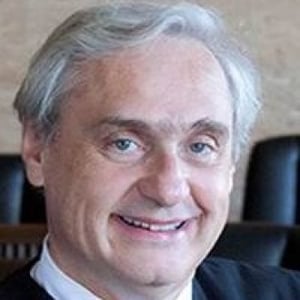
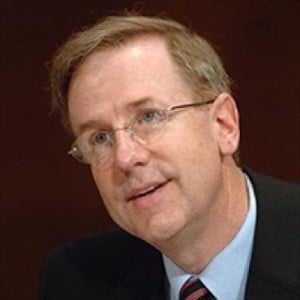
Judge Kozinski served as a United States Circuit Judge for the Ninth Circuit from November 1985 until December 2017. He served as Chief Judge from 2007 to 2014. He graduated from UCLA, receiving an A.B. degree in 1972, and from UCLA Law School, receiving a J.D. degree in 1975.
Prior to his appointment to the appellate bench, Judge Kozinski served as Chief Judge of the United States Claims Court, 1982-85; Special Counsel, Merit Systems Protection Board, 1981-82; Assistant Counsel, Office of Counsel to the President, 1981; Deputy Legal Counsel, Office of President-Elect Reagan, 1980-81; Attorney, Covington & Burling, 1979-81; Attorney, Forry Golbert Singer & Gelles, 1977-79; Law Clerk to Chief Justice Warren E. Burger, 1976-77; and Law Clerk to Circuit Judge Anthony M. Kennedy, 1975-76.
Judge Kozinski is married to Marcy Jane Tiffany and has three children: Yale, Wyatt and Clayton, and three grandchildren: Quinn, Owen and Anna.
Welpton & Wise Professor of Law, University of Nebraska College of Law
Biography
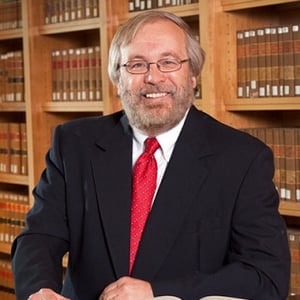
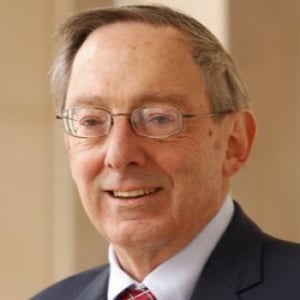
Professor Rick Duncan is the Welpton & Wise Professor of Law at the University Of Nebraska College Of Law. He is a graduate of the Cornell Law School and served as an editor of the Cornell Law Review. He teaches Constitutional Law with a special emphasis on the law of religious freedom, free speech, and federalism. Duncan has written numerous books, articles, and commentaries on a wide variety of legal topics. His recent publications include an article on Justice Scalia’s legacy, another on Kermit Gosnell and Roe v. Wade, a piece on the Electoral College and Federalism, a 2019 piece on Masterpiece Cakeshop and the First Amendment, and three recent articles on the “no compelled speech” doctrine as a First Amendment defense against authoritarianism and tyranny. His most recent article, on School Choice and the First Amendment, will be published in 2023 in Case Western Law Review. He is also the co-author of a book on Secured Transactions under Article 9 of the UCC. He served as Chairman of the Nebraska Advisory Committee to the U.S. Commission on Civil Rights during the Reagan Administration. He also loves to speak at Federalist Society meetings around the country on life, liberty, and the pursuit of federalism.
Duncan has five children, five grandchildren, and a wonderful wife who help him pursue happiness. He loves lifting weights (particularly going heavy on the incline bench press), attending Broadway musicals and plays, including Hamilton: An American Musical which he has seen 12 times (possibly a Nebraska record). He regularly reads both the Bible and the New York Times because it is important to keep up with what both sides have to say. He loves following major league baseball, especially the San Diego Padres. And his favorite legal aphorism is “first come rights then comes government to secure those rights.”
Milton R. Underwood Chair in Free Enterprise, Vanderbilt University Law School
Biography
Brian Fitzpatrick is the Milton R. Underwood Chair in Free Enterprise and Professor of Law at Vanderbilt Law School, where his research focuses on class action litigation, federal courts, judicial selection, and constitutional law. He is best known for his empirical studies of class action settlements as well as his book The Conservative Case for Class Actions (University of Chicago Press, 2019). Professor Fitzpatrick joined Vanderbilt's law faculty in 2007 after serving as the John M. Olin Fellow at New York University School of Law. He graduated first in his class from Harvard Law School and went on to clerk for Judge Diarmuid O'Scannlain on the U.S. Court of Appeals for the Ninth Circuit and Justice Antonin Scalia on the U.S. Supreme Court. After his clerkships, Professor Fitzpatrick practiced commercial and appellate litigation for several years at Sidley Austin in Washington, D.C., and served as Special Counsel for Supreme Court Nominations to U.S. Senator John Cornyn. Before earning his law degree, Fitzpatrick graduated summa cum laude with a bachelor's of science in chemical engineering from the University of Notre Dame. He has received the Hall-Hartman Outstanding Professor Award, which recognizes excellence in classroom teaching, for his Civil Procedure and Federal Courts courses.
Dr. John Baker is Professor Emeritus of Law, and previously the Dale E. Bennett Professor of Law, at Louisiana State University Law School. He is currently Visiting Professor at Peking University School of Transnational Law (via Zoom) and has been Visiting Professor at The Center for the Constitution, Georgetown Law School (2013-2020). He has also been a Visiting Fellow at Oriel College, the University of Oxford (2012-2014) and taught at Blackfriars Hall, Oxford in 2014. Dr. Baker has also been an adjunct Fellow at the Heritage Foundation (Spring, 2008) and a Distinguished Scholar at the Catholic University of America Law School (2011-12). He has taught at Tulane Law School, George Mason Law School, Pepperdine Law School, New York Law School, Hong Kong University, and the University of Dallas, School of Management and also taught and/or lectured in 17 foreign countries. Notable among his foreign visits are the
following: Visiting Professor at the University of Lyon III (France) (1999-2011); Visiting Professor at the Universidad de los Andes, Chile (2012), as a Fulbright Specialist (2006); and a Fulbright Scholar at various universities in the Philippines. Dr. Baker received his J.D., with honors, from the University of Michigan Law School and his B.A., magna cum laude, from the University of Dallas. He also earned a Ph.D. in Political Thought from the University of London. Baker has taught over a dozen different subjects, mostly courses in public law. His main areas of interest are Constitutional Law (particularly federalism and separation of powers), Criminal Law, Anti-Terrorism Law, International Law, Health Care Law, Mediation, and Comparative Law.
In addition to law review articles and book chapters, Dr. Baker’s academic publications include Hall's Criminal Law: Cases and Materials (with Benson, Force and George; 5th ed. Michie, 1993); An Introduction to the Law of the United States (ed. with Levasseur; University Press of America, 1992). He has also published on Forbes.com, FoxNews.com, in The Washington Times, and a number of times in The Wall Street Journal. He argues in federal court, including two oral arguments in the U.S. Supreme Court. For many years, he co-taught courses for the Federalist Society on separation of powers with the late Supreme Court Justice Antonin Scalia. In September 2016, he co-taught a Supreme Court seminar in China with Justice Samuel Alito. Following law school, he served as a law clerk in federal district court and as an assistant district attorney in New Orleans before joining LSU in 1975. While a professor, he has been as a consultant to USAID, USIA (since rolled into the State Department), the Justice Department, the U.S. Senate Judiciary Subcommittee on Separation of Powers, and the Office of Planning in the White House. He served on an ABA Task Force which issued the report, The Federalization of Crime (1998) and later as a consultant to the “Bi-Partisan Task Force on the Over- federalization of Crime” (2012-2014) created by the U.S. House Judiciary Subcommittee on Crime. Dr. Baker was a co-founder of the first iteration (1995) of Stratfor Inc., a global intelligence agency. He co-authored its first book: The Intelligence Edge (with Friedman, Friedman and Chapman; Crown Books/Random House 1997). In 2022, he began a short, weekly video podcast available on YouTube and Rumble, The Baker Brief.
John R. Lott, Jr. is an economist who has held research and/or teaching positions at the University of Chicago, Yale University, Stanford, UCLA, Wharton, and Rice and was the chief economist at the United States Sentencing Commission during 1988 and 1989. He has published over 100 articles in academic journals. He also is the author of six books including More Guns, Less Crime, Freedomnomics, The Bias Against Guns, and Are Predatory Commitments Credible? He has just released another book entitled "Debacle: Obama's war on jobs and growth and what we can do now to regain our future." Lott is a FoxNews.com contributor and a weekly columnist for them. Opinion pieces by Prof. Lott have appeared in such places as The Wall Street Journal, The New York Times, The Los Angeles Times, the New York Post, USA Today, and The Chicago Tribune. He has appeared on such television programs as the ABC and NBC National Evening News broadcasts, Fox News, "The NewsHour with Jim Lehrer," and the "Today Show." He received his Ph.D. in economics from UCLA in 1984.
Vice President for Legal Affairs, Goldwater Institute
Biography
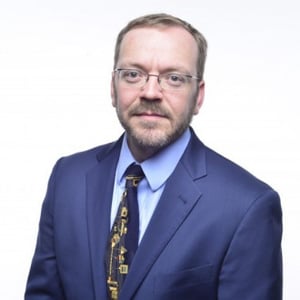
Timothy Sandefur is the Vice President for Legal Affairs at the Goldwater Institute’s Scharf-Norton Center for Constitutional Litigation and holds the Duncan Chair in Constitutional Government. He litigates to promote economic liberty, private property rights, free speech, and other crucial values in states across the country.
Timothy is the author of nine books, including most recently You Don’t Own Me: Individualism and the Culture of Liberty (2025), and Freedom’s Furies: How Isabel Paterson, Rose Wilder Lane, and Ayn Rand Found Liberty in an Age of Darkness (2022), as well as more than 50 scholarly articles on a wide variety of legal subjects. A frequent guest on radio and television, he is well known to radio audiences as “Tim the Lawyer” on The Armstrong & Getty Show, and his writings have appeared in Reason, National Review, The Weekly Standard, The Wall Street Journal, and The Objective Standard, where he is a contributing editor. He has taught classes at Pepperdine University, McGeorge School of Law, George Mason University’s Antonin Scalia Law School, and Arizona State University, where he held the 2023-24 Barry Goldwater Chair in American Institutions.
He is an Adjunct Scholar with the Cato Institute and is a graduate of Hillsdale College and Chapman University School of Law.
Senior Vice President for Legal Studies, Cato Institute
Biography
Clark Neily is senior vice president for legal studies at the Cato Institute. His areas of interest include constitutional law, overcriminalization, civil forfeiture, police accountability, and gun rights. Neily is the author of Terms of Engagement: How Our Courts Should Enforce the Constitution’s Promise of Limited Government. His writing has appeared in the Wall Street Journal, Forbes, and National Review Online, as well as various law reviews, including the Harvard Journal of Law and Public Policy, George Mason Law Review, Georgetown Journal of Law and Public Policy, NYU Journal of Law and Liberty, and Texas Review of Law and Politics. Neily is a frequent guest speaker and lecturer for the Federalist Society, Institute for Humane Studies, and American Constitution Society.
Before joining Cato in 2017, Neily was a senior attorney and constitutional litigator at the Institute for Justice and director of the Institute’s Center for Judicial Engagement. He is also an adjunct professor at the University of Texas School of Law, where he teaches constitutional litigation and public-interest law.
Neily served as co-counsel in District of Columbia v. Heller, the historic case in which the Supreme Court held for the first time that the Second Amendment protects an individual right to own a gun for self-defense.
Neily began his legal career as a law clerk to Judge Royce Lamberth on the U.S. District Court for the District of Columbia. After that he spent four years in the trial department of the Dallas-based firm Thompson & Knight. Neily received his undergraduate and law degrees from the University of Texas, where he was Chief Articles Editor of the Texas Law Review.
Roger Clegg is a Board Member at and former President and General Counsel of the Center for Equal Opportunity. He focuses on legal issues arising from civil rights laws--including the regulatory impact on business and the problems in higher education created by affirmative action. A former Deputy Assistant Attorney General in the Reagan and Bush administrations, Clegg held the second highest positions in both the Civil Rights Division (1987-91) and in the Environment and Natural Resources Division (1991-93). He has held several other positions at the U.S. Justice Department, including Assistant to the Solicitor General (1985-87), Associate Deputy Attorney General (1984-85), and Acting Assistant Attorney General in the Office of Legal Policy (1984). Clegg is a graduate of Yale University Law School (1981).
Associate Professor of Law, University of Miami School of Law
Speaker Information
Douglas Laycock
Robert E. Scott Distinguished Professor of Law Emeritus, University of Virginia School of Law; Alice McKean Young Regents Chair in Law Emeritus, University of Texas
Biography
Douglas Laycock is perhaps the nation’s leading authority on the law of religious liberty and also on the law of remedies. He has taught and written about these topics for more than four decades at the University of Chicago, the University of Texas, the University of Michigan and the University of Virginia. He retired from teaching at UVA Law School in May 2023.
Laycock has testified frequently before Congress and has argued many cases in the courts, including the U.S. Supreme Court, where he has served as lead counsel in six cases and has also filed influential amicus briefs. He is the author (co-author in the most recent edition) of the leading casebook Modern American Remedies, the award-winning monograph The Death of the Irreparable Injury Rule and many articles in leading law reviews. He co-edited a collection of essays, Same-Sex Marriage and Religious Liberty.
His many writings on religious liberty have been republished in a five-volume collection:
Religious Liberty Volume One: Overviews and History
Religious Liberty Volume Two: The Free Exercise Clause
Religious Liberty Volume Three: Religious Freedom Restoration Acts, Same-Sex Marriage Legislation, and the Culture Wars
Religious Liberty Volume Four: Federal Legislation After the Religious Freedom Restoration Act, with More on the Culture Wars
Religious Liberty Volume Five: The Free Speech and Establishment Clauses
Laycock resigned from the council and as first vice president of the American Law Institute to become co-reporter for the Restatement (Third) of Torts: Remedies. He is a fellow of the American Academy of Arts and Sciences. He earned his B.A. from Michigan State University and his J.D. from the University of Chicago.