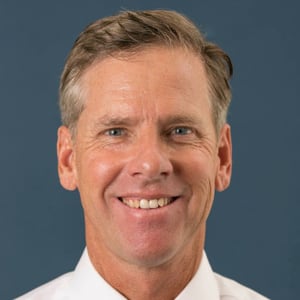
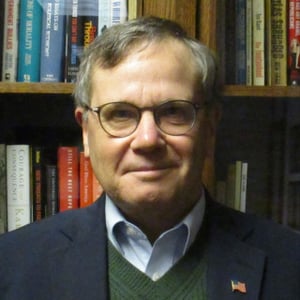
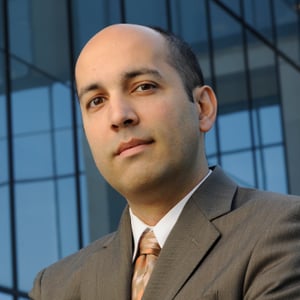
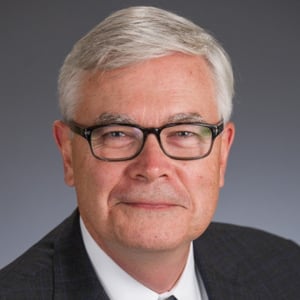
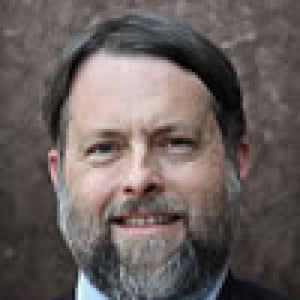
David (Dave) Breemer developed a passion for liberty while reading classics such as John Locke’s Two Treatises of Government and Thomas Paine’s The Rights of Man, as he pursued a Master’s Degree in American Political Theory at University of California, Davis. During this time, Dave began to believe that individual freedom and choice is a God-given and inviolable gift that cannot be taken away through governmental power.
Dave then traveled throughout North America for several years as an adventure tour guide, discussing American ideas of freedom with groups of young people form Europe, Australia, and Japan while rafting, skydiving, and hiking in places like Monument Valley, Las Vegas, and Alaska.
In 1998, Dave went to law school at the University of Hawaii where he studied and co-authored several property rights-oriented law reviews with Professor David L. Callies, a noted land use authority. In 2001, Dave graduated summa cum laude from law school, second in his class, and returned to California to work as an attorney for PLF.
Since joining PLF, Dave has worked as an attorney in PLF’s property rights group. In that capacity, he has litigated numerous federal and state court cases vindicating constitutional rights, particularly those related to the ability to use and enjoy private property. Examples include: Knick v. Township of Scott, U.S. Supreme Court No. 17-647; MVA v. Minnesota, U.S. Supreme Court, No. 16-1435; Levin v. City and County of San Francisco, 71 F. Supp. 3d 1072 (N.D. Cal., 2014); Sansotta v. Town of Nags Head, 724 F.3d 533 (4th Cir. 2013); Severance v. Patterson, 390 S.W.3d 705 (Tex. 2012); Severance v. Patterson, 566 F.3d 490 (5th Cir. 2009); Crown Point Dev., Inc. v. City of Sun Valley, 506 F.3d 851 (9th Cir. 2007).
In his time at PLF, Dave has also written many law review articles about the Supreme Court’s property rights jurisprudence. He continues to believe that property rights are vital to securing other rights—such as privacy, self-expression, and financial freedom—and as a result, he continues to be passionate about securing the right to use and enjoy property for all Americans in the courts of this nation.
Senior Fellow in Constitutional Jurisprudence, Independence Institute
Biography
Professor Robert G. Natelson is a constitutional scholar and author.
Rob’s constitutional scholarship has been cited repeatedly by justices and parties at the U.S. Supreme Court—as well as by federal appeals courts, and at least 18 state supreme courts.
Rob’s research into the Constitution’s original meaning has carried him to libraries throughout the United States and in Britain, including four months at Oxford University. His books and articles span many different parts of the Constitution, including groundbreaking studies of the Necessary and Proper Clause, the Indian Commerce Clause, federalism, Founding-Era interpretation, regulation of elections, and the amendment process of Article V. He created the first-ever online bibliography for 18th century materials used in constitutional research. He is a contributing author to the Encyclopedia of the Supreme Court of the United States (on Magna Carta). He contributed eight essays to the third edition of the Heritage Guide to the Constitution: five on the amendment procedure and one each on the Guarantee Clause, the Postal Clause, and the Recess Appointments Clause.
U.S. Supreme Court justices have relied explicitly on Rob’s research in 41 citations in 13 separate cases.
Professor of Law, Villanova University Charles Widger School of Law
Biography
Tuan Samahon teaches and writes in the areas of federal courts and constitutional law. His articles have been published in the Stanford Law Review, Ohio State Law Journal, Hastings Law Journal, William & Mary Bill of Rights Journal, University of Chicago Legal Forum, Denver Law Review, and Villanova Law Review, among others.
Beyond his scholarship, Tuan is engaged in interpreting and fashioning federal constitutional law. He has testified before the U.S. Senate Judiciary Committee, Subcommittee on the Constitution, and has served as counsel in separation-of-powers and Freedom of Information Act litigation in federal trial and appellate courts. Recently, Tuan prevailed against the CIA in a civil action for the release of the draft fifth volume of its secret history of the 1961 Bay of Pigs operation. In addition to representing others, for a book he is researching, Tuan successfully sued the FBI for the release of agency records detailing high-ranking executive and judicial officers' abuses of power.
Tuan received his B.A. from Brigham Young University and his J.D. from Georgetown University Law Center, where he was an Olin Law and Economics Research Fellow and was co-awarded the Olin Prize in Law and Economics. Prior to entering teaching, he clerked for U.S. District Judge Raymond A. Jackson on the Eastern District of Virginia and for U.S. Circuit Judge Jay S. Bybee on the Ninth Circuit. He also practiced in the Washington, D.C. office of Covington & Burling. Professor Samahon was named "Professor of the Year" by his students at the University of Nevada, Las Vegas. He teaches civil procedure, federal courts, and constitutional law subjects.
During spring 2017, Tuan served as a Fulbright scholar with the law faculty at the University of Zagreb, Croatia.
Charles Kesler is a Senior Fellow of the Claremont Institute, Editor of the Claremont Review of Books, host of Claremont’s The American Mind video series, and the Dengler-Dykema Distinguished Professor of Government at Claremont McKenna College.
Dr. Kesler also teaches in the Claremont Institute’s Publius Fellows Program and Lincoln Fellows Program. He received his B.A. in Social Studies and his M.A. and Ph.D. in Government from Harvard University. From 1989 to 2008, Dr. Kesler was director of CMC’s Henry Salvatori Center for the Study of Individual Freedom in the Modern World.
He is the recipient of the prestigious 2018 Bradley Prize, a high honor bestowed upon distinguished individuals who have influenced American scholarship and debate.
From September 2000 to March 2001, he served as vice chairman of the Advisory Committee to the U.S. Congress's James Madison Commemoration Commission.
He was selected in June 2000 as a member of the Scholars Commission on the Jefferson-Hemings Issue sponsored by the Thomas Jefferson Heritage Society.
Dr. Kesler is the author of I Am the Change: Barack Obama and the Crisis of Liberalism (Broadside Books); the editor of Saving the Revolution: The Federalist Papers and the American Founding (Free Press); co-editor, with John B. Kienker, of Life, Liberty, and the Pursuit of Happiness: Ten Years of the Claremont Review of Books (Rowman & Littlefield); and co-editor, with William F. Buckley, Jr., of Keeping the Tablets: Modern American Conservative Thought (HarperCollins). He has written extensively on American constitutionalism and political thought, and his edition of The Federalist Papers (Signet Classics) is the best-selling edition in the country.
Senior Vice President for Legal Studies, Cato Institute
Biography
Clark Neily is senior vice president for legal studies at the Cato Institute. His areas of interest include constitutional law, overcriminalization, civil forfeiture, police accountability, and gun rights. Neily is the author of Terms of Engagement: How Our Courts Should Enforce the Constitution’s Promise of Limited Government. His writing has appeared in the Wall Street Journal, Forbes, and National Review Online, as well as various law reviews, including the Harvard Journal of Law and Public Policy, George Mason Law Review, Georgetown Journal of Law and Public Policy, NYU Journal of Law and Liberty, and Texas Review of Law and Politics. Neily is a frequent guest speaker and lecturer for the Federalist Society, Institute for Humane Studies, and American Constitution Society.
Before joining Cato in 2017, Neily was a senior attorney and constitutional litigator at the Institute for Justice and director of the Institute’s Center for Judicial Engagement. He is also an adjunct professor at the University of Texas School of Law, where he teaches constitutional litigation and public-interest law.
Neily served as co-counsel in District of Columbia v. Heller, the historic case in which the Supreme Court held for the first time that the Second Amendment protects an individual right to own a gun for self-defense.
Neily began his legal career as a law clerk to Judge Royce Lamberth on the U.S. District Court for the District of Columbia. After that he spent four years in the trial department of the Dallas-based firm Thompson & Knight. Neily received his undergraduate and law degrees from the University of Texas, where he was Chief Articles Editor of the Texas Law Review.
Doug Bandow is a senior fellow at the Cato Institute, specializing in foreign policy and civil liberties. He worked as special assistant to President Reagan and editor of the political magazine Inquiry. He writes regularly for leading publications such as Fortune magazine, National Interest, Wall Street Journal, and Washington Times. Bandow speaks frequently at academic conferences, on college campuses, and to business groups. Bandow has been a regular commentator on ABC, CBS, NBC, CNN, Fox News Channel, and MSNBC. He holds a J.D. from Stanford University.
Distinguished University Professor, Antonin Scalia Law School, George Mason University
Biography
University Professor Nelson Lund is the author of Rousseau’s Rejuvenation of Political Philosophy: A New Introduction. He has also written widely in the field of constitutional law, including articles on constitutional interpretation, federalism, separation of powers, the Second Amendment, the Commerce Clause, the Speech or Debate Clause, the Equal Protection Clause, and the Uniformity Clause. In addition, he has published articles in the fields of employment discrimination and civil rights, the legal regulation of medical ethics, and the application of economic analysis to legal institutions and legal ethics.
Professor Lund graduated from St. John's College in Annapolis, Maryland, after which he received an MA in philosophy from the Catholic University of America and a PhD in political science from Harvard University. He left the faculty of the University of Chicago to attend its law school, where he served as executive editor of the University of Chicago Law Review and chapter chairman of the Federalist Society for Law and Public Policy Studies. After law school, he held positions at the United States Department of Justice in the Office of the Solicitor General and the Office of Legal Counsel. He also served as a law clerk to the Honorable Patrick E. Higginbotham of the United States Court of Appeals for the Fifth Circuit and to the Honorable Sandra Day O'Connor of the United States Supreme Court. Following his clerkship with Justice O'Connor, Professor Lund served in the White House as associate counsel to the president from 1989 to 1992.
Since joining the faculty at George Mason University's Antonin Scalia Law School, Professor Lund has taught Constitutional Law, Legislation, Federal Election Law, Employment Discrimination, State and Local Government, and seminars on the Second Amendment and on a variety of topics in Jurisprudence.