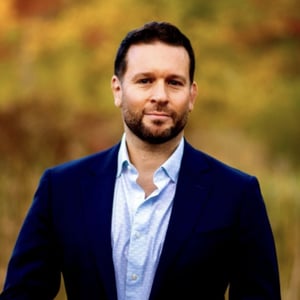
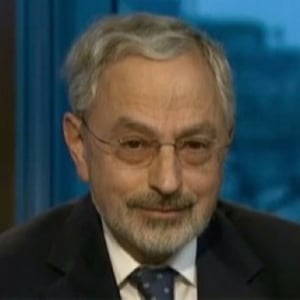
Earl Warren Professor of Public Law (Emeritus), UC Berkeley School of Law
Biography
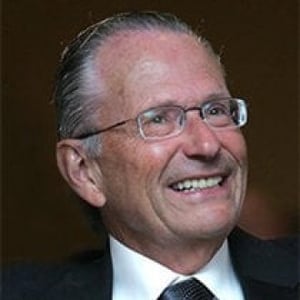
Jesse Choper served as law clerk to Chief Justice Earl Warren of the U.S. Supreme Court following graduation from law school. He taught at the Wharton School of the University of Pennsylvania from 1957 to 1960, and at the University of Minnesota Law School from 1961 to 1965. He joined the Berkeley Law faculty in 1965. Choper has been a visiting professor at Harvard Law School, Fordham Law School, University of Milan, Free University in Amsterdam, Autonoma University in Barcelona, University of New South Wales in Sydney, University of Lucerne in Switzerland, and Catholic University of Portugal in Lisbon and Porto. He served as Berkeley Law’s dean from 1982 to 1992.
From 1979 to 1998, Choper was one of the three major lecturers at U.S. Law Week’s Annual Constitutional Law Conference in Washington, D.C. He has delivered 20 titled lectures at major universities throughout the country, including the Cooley Lectures at Michigan, the Stevens Lecture at Cornell, the Baum Lecture at Illinois, and the Lockhart Lecture at Minnesota. He has served on the executive committee of the Association of American Law Schools, and on the executive council of the American Academy of Arts and Sciences (of which he was vice president for more than ten years). He was national president of the Order of the Coif and is a member of the American Law Institute. In 1998 he received the UC Berkeley Distinguished Teaching Award and the Rutter Award for Teaching Distinction at Berkeley Law in 2006. In 2005 the Berkeley Law Alumni Association presented Choper with the Faculty Lifetime Achievement Award and the University of Pennsylvania Law School gave him the James Wilson Award, its highest award for alumni.
Choper’s major publications include the books, Judicial Review and the National Political Process: A Functional Reconsideration of the Role of the Supreme Court, which received the Order of the Coif Triennial Book Award in 1982, and Securing Religious Liberty: Principles for Judicial Interpretation of the Religion Clauses. His recent publications include the thirteenth edition of his Constitutional Law casebooks; the eighth edition of his Corporations casebook; the second edition of The Supreme Court and Its Justices; “The Political Question Doctrine: Suggested Criteria,” in Duke Law Journal (2005); “Wartime Process: A Dialogue on Congressional Power to Remove Issues From the Federal Courts,” in California Law Review (2007) (co-author); and “Who’s Afraid of the Eleventh Amendment? The Limited Impact of the Court’s Sovereign Immunity Rulings,” in Columbia Law Review (2006) (co-author).
Emanuel S. Heller Professor of Law, University of California at Berkeley; Senior Research Fellow, School of Civic Leadership, Civitas Institute, University of Texas at Austin; Nonresident Senior Fellow, American Enterprise Institute
Biography
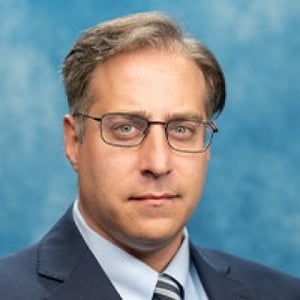
John Yoo is the Emanuel Heller Professor of Law. He is also Distinguished Visiting Scholar, School of Civic Leadership and Senior Research Fellow, Civitas Institute, at the University of Texas at Austin. He is also a Nonresident Senior Fellow at the American Enterprise Institute.
His most recent book, The Politically Incorrect Guide to the Supreme Court, co-authored with Robert Delahunty, was published in 2023. Professor Yoo’s other books include Defender-in-Chief: Trump’s Fight for Presidential Power;Striking Power: How Cyber, Robots, and Space Weapons Change the Rules for War, Point of Attack: Preventive War, International Law, and Global Welfare, and Crisis and Command: A History of Executive Power from George Washington to George Bush.
Professor Yoo has published more than 100 articles in academic journals on subjects including national security, constitutional law, international law, and the Supreme Court. He also regularly contributes to the editorial pages of the Wall Street Journal, New York Times, Washington Post, Los Angeles Times, and National Review, among others.
Professor Yoo has served in all three branches of government. He was an official in the U.S. Department of Justice, where he worked on national security and terrorism issues after the 9/11 attacks. He served as general counsel of the U.S. Senate Judiciary Committee. He has been a law clerk for Supreme Court Justice Clarence Thomas and federal appeals Judge Laurence Silberman. He has been a visiting professor at Seoul National University in South Korea, the Interdisciplinary Center in Israel, Keio University in Japan, Trento University in Italy, the University of Chicago, and the Free University of Amsterdam.
Professor Yoo supervises the Public Law and Policy Program and the California Constitution Center. He also serves on the boards of the Pacific Legal Foundation, the Federalist Society’s Separation of Powers and Federalism Division, the Universidad Cientifica del Sur Law School, and the Asia-Pacific Law Institute at Seoul National University. He is a winner of the Federalist Society’s Paul Bator award and been the Edwin Meese III Originalism Lecturer at the Heritage Foundation.
Professor Yoo graduated from Yale Law School and summa cum laude from Harvard College.
Senior Vice President for Legal Studies, Cato Institute
Biography
Clark Neily is senior vice president for legal studies at the Cato Institute. His areas of interest include constitutional law, overcriminalization, civil forfeiture, police accountability, and gun rights. Neily is the author of Terms of Engagement: How Our Courts Should Enforce the Constitution’s Promise of Limited Government. His writing has appeared in the Wall Street Journal, Forbes, and National Review Online, as well as various law reviews, including the Harvard Journal of Law and Public Policy, George Mason Law Review, Georgetown Journal of Law and Public Policy, NYU Journal of Law and Liberty, and Texas Review of Law and Politics. Neily is a frequent guest speaker and lecturer for the Federalist Society, Institute for Humane Studies, and American Constitution Society.
Before joining Cato in 2017, Neily was a senior attorney and constitutional litigator at the Institute for Justice and director of the Institute’s Center for Judicial Engagement. He is also an adjunct professor at the University of Texas School of Law, where he teaches constitutional litigation and public-interest law.
Neily served as co-counsel in District of Columbia v. Heller, the historic case in which the Supreme Court held for the first time that the Second Amendment protects an individual right to own a gun for self-defense.
Neily began his legal career as a law clerk to Judge Royce Lamberth on the U.S. District Court for the District of Columbia. After that he spent four years in the trial department of the Dallas-based firm Thompson & Knight. Neily received his undergraduate and law degrees from the University of Texas, where he was Chief Articles Editor of the Texas Law Review.
Interim Dean, Florida International University College of Law
Biography
Dan Epstein was Vice President at America First Legal and an Associate Professor of Law at St. Thomas University in Miami, Florida. He also advises individuals and small businesses in affirmative and defensive actions against government overreach. Previously, he advised startups on regulatory matters as Director at a venture capital firm. His federal service includes being a Special Assistant to and Senior Associate Counsel to the President and a counsel for the House of Representatives Committee on Oversight and Government Reform. Earlier in his career, Mr. Epstein founded and ran Cause of Action, where he represented clients in government investigations and litigated regulatory, constitutional, political, and public law matters.
He holds a Ph.D. from George Washington University in Political Economy, a J.D. from Emory University School of Law, and a B.A. from Kenyon College. He is active in the Palm Beach community as a member of the Fourth Court of Appeals Judicial Nominating Commission in Florida, a transition team member to Florida Attorney General James Uthmeier, and the Chairman and Trustee of Palm Beach State College.
Deputy Director - Center for Effective Public Management; Senior Fellow - Governance Studies, The Brookings Institution
Biography
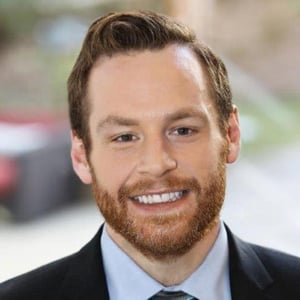
John Hudak is deputy director of the Center for Effective Public Management and a senior fellow in Governance Studies. His research examines questions of presidential power in the contexts of administration, personnel, and public policy. Additionally, he focuses on campaigns and elections, legislative-executive interaction, and state and federal marijuana policy.
John’s 2016 book, Marijuana: A Short History, offers a unique, up-to-date profile of how cannabis emerged from the shadows of counterculture and illegality to become a serious, even mainstream, public policy issue and source of legal revenue for both businesses and governments. In it, he describes why attitudes and policy have changed, and what those changes mean for marijuana's future place in society.
His 2014 Presidential Pork: White House Influence over the Distribution of Federal Grants demonstrates that pork-barrel politics occurs beyond the halls of Congress. Presidents capitalize on their discretionary funding authority to target federal dollars to swing states in advance of presidential elections. His other work explores how agency staffing, expertise, and institutional structure facilitate or hinder presidential power and influence. This research explores the balance between political control and bureaucratic expertise in the delivery of public policy.
John’s work has been recognized for its quality and contribution by the Midwest Political Science Association and the American Political Science Association’s Presidency Research Group. His work has been supported by institutions including the National Science Foundation.
Prior to joining Brookings, John served as the program director and as a graduate fellow at the Center for the Study of Democratic Institutions. He holds a B.A. in political science and economics from the University of Connecticut and an M.A. and Ph.D. in political science from Vanderbilt University.
He invests in and advises companies and entrepreneurs in SAAS, Defense, AI, and entertainment. The companies he founded or serves on the corporate board of have raised over $100 million in funding with his direct participation in the process. Those investors include Microsoft, Flexport, Sony, Qualcomm, Rakuten, Baidu, Airbus, and top global financial services and venture capital funds including Greycroft, Social Capital, General Catalyst, Lux Capital, Bullpen Capital, Bay Bridge Ventures, Teamworthy Ventures, Operate Studio, TenOneTen, Temasek, Macquarie Group, Graph Ventures and many others. The companies he advises have raised substantially more funding, in part due to his advice and mentorship.
He is a tenured Professor of Law and Public Policy at Pepperdine University and a faculty member with the Palmer Center for Entrepreneurship and the Law and teaches courses in technology, public policy, internet, and privacy law.
As a public policy and legal expert, Greg has worked with the White House, the Department of Defense, the State Department, and independent regulatory agencies on matters related to technology, law and policy. He has on multiple occasions testified before Congress and state legislatures about entrepreneurship and emerging technology and has aided state legislators, cities, municipalities, and executive branch officials in drafting legislation and ordinances related to technological advances and has been appointed by Cabinet officials to serve on Federal Rulemaking Committees.
He is a frequent keynote speaker at industry events and academic conferences related to technology, law, and public policy. He advises venture capital firms and other investors, start-ups, law enforcement, consulting firms, and Fortune 500 companies about the legal and regulatory issues associated with emerging technologies.
He regularly appears on television and radio to discuss technology and business, wrote a column on business and technology for Forbes and has authored Op-Eds for the New York Times, the Washington Post, and The Washington Times, among others. In his early career he worked on national security, international criminal law and counterterrorism matters and served as an Army officer.
Senior Vice President for Legal Studies, Cato Institute
Biography
Clark Neily is senior vice president for legal studies at the Cato Institute. His areas of interest include constitutional law, overcriminalization, civil forfeiture, police accountability, and gun rights. Neily is the author of Terms of Engagement: How Our Courts Should Enforce the Constitution’s Promise of Limited Government. His writing has appeared in the Wall Street Journal, Forbes, and National Review Online, as well as various law reviews, including the Harvard Journal of Law and Public Policy, George Mason Law Review, Georgetown Journal of Law and Public Policy, NYU Journal of Law and Liberty, and Texas Review of Law and Politics. Neily is a frequent guest speaker and lecturer for the Federalist Society, Institute for Humane Studies, and American Constitution Society.
Before joining Cato in 2017, Neily was a senior attorney and constitutional litigator at the Institute for Justice and director of the Institute’s Center for Judicial Engagement. He is also an adjunct professor at the University of Texas School of Law, where he teaches constitutional litigation and public-interest law.
Neily served as co-counsel in District of Columbia v. Heller, the historic case in which the Supreme Court held for the first time that the Second Amendment protects an individual right to own a gun for self-defense.
Neily began his legal career as a law clerk to Judge Royce Lamberth on the U.S. District Court for the District of Columbia. After that he spent four years in the trial department of the Dallas-based firm Thompson & Knight. Neily received his undergraduate and law degrees from the University of Texas, where he was Chief Articles Editor of the Texas Law Review.
Senior Vice President for Legal Studies, Cato Institute
Biography
Clark Neily is senior vice president for legal studies at the Cato Institute. His areas of interest include constitutional law, overcriminalization, civil forfeiture, police accountability, and gun rights. Neily is the author of Terms of Engagement: How Our Courts Should Enforce the Constitution’s Promise of Limited Government. His writing has appeared in the Wall Street Journal, Forbes, and National Review Online, as well as various law reviews, including the Harvard Journal of Law and Public Policy, George Mason Law Review, Georgetown Journal of Law and Public Policy, NYU Journal of Law and Liberty, and Texas Review of Law and Politics. Neily is a frequent guest speaker and lecturer for the Federalist Society, Institute for Humane Studies, and American Constitution Society.
Before joining Cato in 2017, Neily was a senior attorney and constitutional litigator at the Institute for Justice and director of the Institute’s Center for Judicial Engagement. He is also an adjunct professor at the University of Texas School of Law, where he teaches constitutional litigation and public-interest law.
Neily served as co-counsel in District of Columbia v. Heller, the historic case in which the Supreme Court held for the first time that the Second Amendment protects an individual right to own a gun for self-defense.
Neily began his legal career as a law clerk to Judge Royce Lamberth on the U.S. District Court for the District of Columbia. After that he spent four years in the trial department of the Dallas-based firm Thompson & Knight. Neily received his undergraduate and law degrees from the University of Texas, where he was Chief Articles Editor of the Texas Law Review.
David B. Smith has over 35 years of white collar criminal experience. He has litigated scores of cases and argued more than one hundred federal criminal appeals as a federal prosecutor and defense attorney, including extensive experience with civil and criminal litigation in the Supreme Court of the United States. Mr. Smith has been repeatedly named in the list of preeminent lawyers in the field of white collar criminal defense by Best Lawyers in America (2012-2021) and Virginia Super Lawyers (2009-2020), and has received the President’s Commendation for outstanding service from the National Association of Criminal Defense Lawyers in 1993, 1994, and 2004. He served for nine years on the Board of the NACDL and has been Chair of its Forfeiture Committee since 1990. He is also a Vice-Chair of its Amicus Committee.
For nearly a decade prior to entering private practice, Mr. Smith was a prosecutor in the Criminal Division of the United States Department of Justice and at the United States Attorney’s Office for the Eastern District of Virginia, where he was involved in complex white collar criminal investigations, trials, and appeals involving defense procurement fraud, congressional bribery, espionage, tax evasion, mail fraud, false claims and other crimes. In 1995-1996, Mr. Smith served as an Associate Independent Counsel in the investigation of Michael Espy, the former secretary of agriculture.
Mr. Smith is regarded as the foremost expert in the country on asset forfeiture law and practice. He is the author of the leading two-volume legal treatise on forfeiture, Prosecution and Defense of Forfeiture Cases (2020), published by Matthew Bender, and co-author of Civil RICO (2020), also published by Matthew Bender. He has testified before congressional committees several times with respect to forfeiture, restitution, and money laundering legislation. Mr. Smith has regularly counseled the Senate and House Judiciary Committees on forfeiture legislation, and was heavily involved in drafting the Civil Asset Forfeiture Reform Act of 2000. He has also assisted the federal advisory committees in writing the procedural rules governing criminal and civil forfeiture proceedings. In 2000-2001, Mr. Smith was appointed by Senator Richard Shelby (R. Ala.), the Chairman of the Senate Intelligence Committee, to serve as a Commissioner with the Judicial Review Commission on Foreign Asset Control.