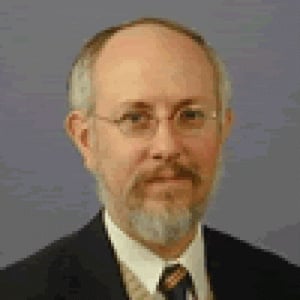
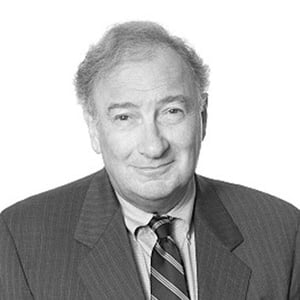
Steve Klein, a partner at Barr & Klein PLLC, is an experienced free speech attorney who has successfully fought for the First Amendment rights of his clients against local, state and federal regulators. As a lobbyist, Steve’s advocacy has led to the successful amendment of state laws to respect political engagement and prevented the enactment of laws that burden it. Steve has published articles in several legal journals, and his commentary has appeared in The Wall Street Journal, The Washington Times, The Detroit News, and other outlets. Steve earned a bachelors degree in politics at Hillsdale College and a law degree from Ave Maria School of Law, where he served as Managing Editor of the Ave Maria Law Review. He is licensed to practice law in the District of Columbia, Illinois and Michigan.
Senior Fellow, Governance Studies, The Brookings Institution
Biography
Jonathan Rauch, a contributing editor of National Journal and The Atlantic, is the author of several books and many articles on public policy, culture, and economics. He is winner of the 2005 National Magazine Award for columns and commentary and the 2010 National Headliner Award for magazine columns.
His latest book is Gay Marriage: Why It Is Good for Gays, Good for Straights, and Good for America, published in 2004 by Times Books (Henry Holt). It makes the case that same-sex marriage would benefit not only gay people but society and the institution of marriage itself. Although much of his writing has been on public policy, he has also written on topics as widely varied as adultery, agriculture, economics, gay marriage, height discrimination, biological rhythms, number inflation, and animal rights.
His multiple-award-winning column, “Social Studies,” was published in National Journal (a Washington-based weekly on government, politics, and public policy) from 1998 to 2010, and his features appeared regularly both there and in The Atlantic. Among the many other publications for which he has written are The New Republic, The Economist, Reason, Harper’s, Fortune, Reader’s Digest, U.S. News & World Report, The New York Times newspaper and magazine, The Wall Street Journal, The Washington Post, The Los Angeles Times, The New York Post, Slate, The Chronicle of Higher Education, The Public Interest, The Advocate, The Daily, and others.
Mr. Rauch was born and raised in Phoenix, Arizona, and graduated in 1982 from Yale University. He went on to become a reporter for the Winston-Salem Journal in North Carolina before moving to Washington in 1984. From 1984-89 he covered fiscal and economic policy for National Journal. In 1990 he spent six months in Japan as a fellow of the Japan Society Leadership Program, and in 1996 he was awarded the Premio Napoli alla Stampa Estera for his coverage, in The Economist, of the European Parliament. His articles appear in The Best American Magazine Writing 2005 and The Best American Science and Nature Writing 2004 and 2007. In 2011 he won the National Lesbian and Gay Journalists Association prize for excellence in opinion writing. He has also won two second-place prizes (2000 and 2001) in the National Headliner Awards. He has appeared as a guest on many television and radio programs.
Professor of Law, South Texas College of Law Houston
Biography
Josh Blackman is a national thought leader on constitutional law and the United States Supreme Court. Josh’s work was quoted during two presidential impeachment trials. He has testified before Congress and advises federal and state lawmakers. Josh regularly appears on TV, including NBC, CBS, ABC, Fox, and the BBC. Josh is also a frequent guest on NPR and other syndicated radio programs. He has published commentaries in the New York Times, Wall Street Journal, Washington Post, and leading national publications.
Since 2012, Josh has served as a professor at the South Texas College of Law Houston. He holds the Centennial Chair of Constitutional Law. Josh is an Adjunct Fellow at the Manhattan Institute. Josh has written more than seven dozen law review articles that have been cited more than a thousand times. Josh was selected as the Jurist of the Year by the Texas Journal of Law & Public Policy, received the inaugural Meese III Originalism Award, and was awarded the Inaugural Joseph Story Award. Josh was selected by Forbes Magazine for the “30 Under 30” in Law and Policy. Josh is the President of the Harlan Institute, and founded FantasySCOTUS, the Internet’s Premier Supreme Court Fantasy League. He blogs at the Volokh Conspiracyand posts@JoshMBlackman.
Linda Chavez is Chairman of the Center for Equal Opportunity. She has published opinions and columns in newspapers across the country and appears regularly on cable news. Chavez is the author of the three books: Out of the Barrio: Toward a New Politics of Hispanic Assimilation, An Unlikely Conservative: The Transformation of an Ex-Liberal, and Betrayal: How Union Bosses Shake Down Their Members and Corrupt American Politics. She has been honored by the Library of Congress as a "Living Legend" and as nominee for Secretary of Labor by President George W. Bush.
Chavez has held many appointed positions and has served on numerous corporate and nonprofit boards. Among her appointed positions has been Chairman, National Commission on Migrant Education (1988-1992); White House Director of Public Liaison (1985); Staff Director of the U.S. Commission on Civil Rights (1983-1985); and member of the Administrative Conference of the United States (1984-1986). Chavez was also the Republican nominee for U.S. Senator from Maryland in 1986 and was elected by the United Nations' Human Rights Commission to serve a four-year term as U.S. Expert to the U.N. Sub-commission on the Prevention of Discrimination and Protection of Minorities.
Chavez earned her BA from the University of Colorado.
Co-chairman, Team America PAC, and President, Rocky Mountain Foundation
Biography
Tom Tancredo represented Colorado's 6th Congressional District from 1999 until 2009 where he chaired the 100+ member bipartisan Immigration Reform Caucus. He currently serves as co-chairman of Team America PAC and president of the Rocky Mountain Foundation. He authored "In Mortal Danger: The Battle for America's Border and Security".
Speaker Information
David F. Forte
Garwood Visiting Professor and Visiting Fellow, James Madison Pr, Cleveland-Marshall College of Law
Biography
David F. Forte is Professor of Law at Cleveland State University, where he was the inaugural holder of the Charles R. Emrick, Jr.- Calfee Halter & Griswold Endowed Chair. This fall, Professor Forte will be the Garwood Visiting Professor at Princeton University in the Department of Politics, and Visiting Fellow at the James Madison Program in American Ideals and Institutions. He holds degrees from Harvard College, Manchester University, England, the University of Toronto and Columbia University.
During the Reagan administration, Professor Forte served as chief counsel to the United States delegation to the United Nations and alternate delegate to the Security Council. He has authored a number of briefs before the United States Supreme Court, and has frequently testified before the United States Congress and consulted with the Department of State on human rights and international affairs issues. His advice was specifically sought on the approval of the Genocide Convention, on world-wide religious persecution, and Islamic extremism. He has appeared and spoken frequently on radio and television, both nationally and internationally. In 2002, the Department of State sponsored a speaking tour for Professor Forte in Amman, Jordan, and he was also a featured speaker to the Meeting of Peoples in Rimini, Italy, a meeting which gathers over 500,000 people from all over Europe. He has also been called to testify before the state legislatures of Ohio, Kansas, and Idaho as well as the New York City Council. He has assisted in drafting a number of pieces of legislation for the Ohio General Assembly dealing with abortion, international trade, and federalism. He has sat as acting judge on the municipal court of Lakewood Ohio and was chairman of Professional Ethics Committee of the Cleveland Bar Association. He has received a number of awards for his public service, including the Cleveland Bar Association’s President’s Award, the Cleveland State University Award for Distinguished Service, the Cleveland State University Distinguished Teaching Award, and the Cleveland-Marshall College of Law Alumni Award for Faculty Excellence. He served as Consultor to the Pontifical Council for the Family under Pope St. John Paul II and Pope Benedict XVI. In 2003, Dr. Forte was a Distinguished Fulbright Chair at the University of Trento and returned there in 2004 as a Visiting Professor. For the academic year, 2008-2009, Professor Forte was Senior Visiting Scholar at the Center for the Study of Religion and the Constitution in at the Witherspoon Institute in Princeton, New Jersey. He was the Robert E. Henderson Constitution Day Lecturer at the Ashbrook Center at Ashland University, and he has given over 300 invited addresses and papers at more than 100 academic institutions. His work has been cited by the U.S. Supreme Court.
Professor Forte was a Bradley Scholar at the Heritage Foundation, and Visiting Scholar at the Liberty Fund. He has been President of the Ohio Association of Scholars, was on the Board of Directors of the Philadelphia Society, and is also adjunct Scholar at the Ashbrook Center. He has been appointed to the Ohio State Advisory Committee to the U.S. Commission on Civil Rights. He has also been a Civil War re-enactor and a Merit Badge Counselor for the Boy Scouts.
He writes and speaks nationally on topics such as constitutional law, religious liberty, Islamic law, the rights of families, and international affairs. He served as book review editor for the American Journal of Jurisprudence and has edited a volume entitled, Natural Law and Contemporary Public Policy, published by Georgetown University Press. His book, Islamic Law Studies: Classical and Contemporary Applications, has been published by Austin & Winfield. He is Senior Editor of The Heritage Guide to the Constitution (2006), 2d edition (2014), published by Regnery & Co, a clause by clause analysis of the Constitution of the United States.
His teaching competencies include Constitutional Law, the First Amendment, Islamic Law, Jurisprudence, Natural Law, International Law, International Human Rights, the Presidency, and Constitutional History.
University Professor of Law and Religion and Director of the Eleanor H. McCullen Center for Law, Religion and Public Policy, Villanova University Charles Widger School of Law
Biography
Michael P. Moreland was appointed University Professor of Law and Religion and Director of the Eleanor H. McCullen Center for Law, Religion and Public Policy at Villanova University in 2017. Professor Moreland joined the Villanova faculty in 2006 and served as Vice Dean from 2012 to 2015. His research is primarily in the areas of torts, law and religion, constitutional law, and Catholic social thought, and he regularly teaches Torts, First Amendment, seminars in law and religion, and undergraduate courses in ethics.
Professor Moreland is the co-editor of Christianity and Private Law (Routledge, 2021), and his most recent publications include: “The Authority of Tradition: John Henry Newman and Legal Theory” in Christianity and the Making of Irish Law (Routledge, 2025); “Christianity and Torts” in The Oxford Handbook on Christianity and Law, (Oxford University Press, 2023); “Germaneness and Religious Liberty” in the Notre Dame Law Review (2023); “Contingency and Contestation in Christianity and Liberalism” in the Notre Dame Law Review (2023); “Friendship as the Primary Purpose of Law” in The American Journal of Jurisprudence 279 (2022); and “The Moral of Torts” (with Jeffrey Pojanowski) in Christianity and Private Law (Routledge, 2021).
Professor Moreland was a Visiting Professor of Law at the University of Notre Dame and the Mary Ann Remick Senior Visiting Fellow at the Notre Dame Center for Ethics and Culture from 2015 to 2017. He was the Forbes Visiting Fellow at Princeton University in the James Madison Program during academic year 2010-11. He has served as the project leader for grants from the John Templeton Foundation and the Charles Koch Foundation. He serves as the Chair of the Federalist Society’s Religious Liberties Practice Group Executive Committee and the Chair of the Board of Trustees of the Institute for Advanced Catholic Studies at the University of Southern California.
Professor Moreland received his BA in philosophy from the University of Notre Dame, his MA and PhD in theological ethics from Boston College, and his JD from the University of Michigan Law School. Following law school, Professor Moreland clerked for the Honorable Paul J. Kelly Jr., of the United States Court of Appeals for the Tenth Circuit and was an associate at Williams & Connolly LLP in Washington, DC, where he represented clients in First Amendment, professional liability, and products liability matters. Before coming to Villanova, he served as Associate Director for Domestic Policy at the White House under President George W. Bush, where he worked on a range of legal policy issues, including criminal justice, immigration, civil rights, and liability reform.
Judge, United States Court of Appeals, Fifth Circuit
Biography
Andrew Oldham is a Circuit Judge on the United States Court of Appeals for the Fifth Circuit. Before ascending to the bench, Judge Oldham served as General Counsel to Texas Governor Greg Abbott, where he advised the Governor on a range of issues under federal and state law and managed litigation in which the Governor was an interested party. Before that he served as Deputy Solicitor General for the State of Texas, where he represented Texas in federal courts across the country, including twice before the United States Supreme Court. Before moving to Texas, Judge Oldham was an attorney at Kellogg Hansen Todd Figel & Frederick in Washington, D.C. His practice focused on appellate litigation in federal courts of appeals throughout the country. Before entering private practice, Judge Oldham served as a law clerk to Justice Samuel A. Alito, Jr., at the Supreme Court of the United States and to Judge David B. Sentelle of the U.S. Court of Appeals for the District of Columbia Circuit. He also worked as an attorney-adviser in the Office of Legal Counsel at the U.S. Department of Justice from 2006 to 2008. Judge Oldham earned a B.A. from the University of Virginia with highest honors, a Truman Scholarship for graduate school, an M. Phil., first class (with distinction), from Cambridge University, and a J.D., magna cum laude, from Harvard Law School.
Matt Sharp serves as senior counsel and state government relations national director with Alliance Defending Freedom, where he focuses on state and local legislative matters.
Since joining ADF in 2010, Sharp has authored federal and state legislation, regularly provides testimony and legal analysis on how proposed legislation will impact constitutional freedoms, and advises governors, legislators, and state and national policy organizations on the importance of laws and policies that protect First Amendment rights. He has testified before the United States Congress on the importance of the Religious Freedom Restoration Act.
Sharp has also worked on important cases advancing religious freedom and free speech. He has won cases upholding the rights of students to form religious clubs, invite classmates to church, and even perform a religious song at a school talent show. He authored an amicus brief to the U.S. Supreme Court on behalf of nearly 9,000 students, parents, and community members asking the Court to uphold students’ right to privacy against government intrusion.
Sharp earned his J.D. in 2006 from the Vanderbilt University School of Law. A member of the bar in Georgia and Tennessee, he is also admitted to practice in several federal courts.
Wayne A. Abernathy is a former U.S. Treasury Assistant Secretary for Financial Institutions under President George W. Bush, receiving the Alexander Hamilton Award in recognition of his service. In that office he was also a member of the Board of Directors of the Securities Investor Protection Corporation. Prior to his work at the Treasury, Mr. Abernathy served as Staff Director of the Senate Banking Committee, under Chairman Phil Gramm.
Following his service at the Treasury, Mr. Abernathy worked for 15 years on the staff of the American Bankers Association, as Executive Vice President for Financial Institutions Policy and Regulatory Affairs.
Previous experience with the Senate Banking Committee includes serving as Staff Director of the Subcommittee on Securities during 1995-1998. From 1989 until 1994, Mr. Abernathy was a Republican economist for the committee. He previously worked as a senior legislative assistant for Senator Gramm during 1987-1989 and as an economist for the Banking Committee’s Subcommittee on International Finance and Monetary Policy during 1981-1986, under Chairman Jake Garn.
Mr. Abernathy earned his bachelor’s degree in International Studies from The Johns Hopkins University in 1978. In 1980, he received a master’s degree in International Studies from the School of Advanced International Studies of The Johns Hopkins University.
Jerry Loeser is of counsel in the Chicago office of Winston & Strawn, and his practice focuses on banking regulation. He has extensive experience in counseling financial services clients on, among other things, bank acquisitions, privacy, financial modernization, the USA PATRIOT Act, Basel II and III, lending limits, capital, trust, affiliate transactions, and Federal Reserve, OCC, FDIC, and CFPB regulations.
Prior to working at large corporate law firms, Jerry was chief regulatory and compliance counsel for Comerica Bank, where he also served as senior vice president and deputy general counsel and as general counsel of its retail bank division. Before that, he served as chief regulatory in-house counsel at Wells Fargo & Co. Jerry began his legal career advising the Board of Governors of the Federal Reserve System in Washington, D.C.