Professor Emerita of Law, George Mason University Antonin Scalia School of Law
Biography
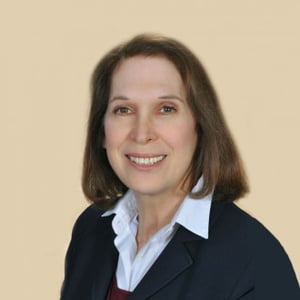
Professor Emerita Joyce Lee Malcolm is an historian and constitutional scholar active in the area of constitutional history, focusing on the development of individual rights in Great Britain and America. She is the author of eight books, most recently The Tragedy of Benedict Arnold: An American Life, May 2018. Professor Malcolm has written many books and articles on gun control, the Second Amendment, and individual rights. Her work was cited several times in the recent U.S. Supreme Court opinion in District of Columbia v. Heller.
Professor Malcolm has previously taught at Princeton University, Bentley College, Boston University, Northeastern University and Cambridge University. She was also a Senior Advisor at the Massachusetts Institute of Technology Security Studies Program, a Visiting Scholar at Massachusetts Center for Renaissance Studies, and is a Bye Fellow at Robinson College, Cambridge University.
Her seventh book, Peter's War: A New England Slave Boy and the American Revolution, was published by Yale University Press in 2009. "Magna Carta in America: Entrenched," a chapter authored by Professor Malcolm, appears in Magna Carta: The Foundation of Freedom 1215-2015 (Nicholas Vincent, Third Millennium Publishing). Her essays have appeared in The Wall Street Journal, The Financial Times, USA Today, The Boston Globe and other newspapers.
Paul DeCamp is a Shareholder in the Washington, D.C. Region office of Jackson Lewis P.C. and leader of the firm’s Wage and Hour Practice Group. His practice focuses exclusively on management-side wage and hour law.
Mr. DeCamp devotes much of his practice to complex litigation, including class, collective, and hybrid actions. He has served as lead or co-counsel in scores of class and putative class cases around the country involving such industries as restaurants, pharmaceutical sales, financial services, retail, medical supplies, security, health care, information technology, and aerospace. Mr. DeCamp also defends federal and state agency investigations, conducts preventive compliance reviews, and provides day-to-day advice and counsel regarding such issues as exempt/non-exempt classification, permissible pay deductions, measuring working time, regular rate calculations for premium overtime pay, determining proper pay and duties for tipped employees, complying with state laws concerning meal and rest periods, and independent contractor status. He has provided extensive wage and hour guidance in a variety of industries including restaurants and hospitality, retail, wholesale distribution, health care, financial services, oil and gas, and government contracting.
Before joining Jackson Lewis, Mr. DeCamp served as Administrator of the U.S. Department of Labor’s Wage and Hour Division, the chief federal officer responsible for interpreting and enforcing the Nation’s wage and hour laws on behalf of roughly 135 million workers in 7.3 million workplaces around the country. Appointed by the President, he was in charge of a federal agency with close to 1,300 employees in more than 220 offices nationwide, operating on an annual budget of more than $170 million.
Mr. DeCamp has testified in Congress on a variety of wage and hour topics, most recently in 2014. He is a frequent speaker at seminars and conferences across the country, as well as an author of numerous articles and book chapters regarding wage and hour law and litigation. He is a member of the American Employment Law Council and the editorial advisory board for Thompson Publishing Group’s four Fair Labor Standards Act publications. Since 2011, Mr. DeCamp has been listed as one of the country's leading labor and employment lawyers in Chambers USA: America's Leading Lawyers for Business. He has also been selected for inclusion in Virginia Super Lawyers since 2013, after having been listed twice in Virginia Super Lawyers Rising Stars. OS Restaurant Partners (now Bloomin’ Brands), which operates Outback Steakhouse and Carrabba’s Italian Grill, among other restaurant concepts, has twice recognized Mr. DeCamp’s team at Jackson Lewis as “Purveyor of the Year.”
Mr. DeCamp received his A.B. in Government, magna cum laude, from Harvard College in 1992. In 1995, he earned his J.D. from the Columbia University School of Law, where he was a Notes Editor for the Columbia Law Review and the Director of the First-Year Moot Court Program. After law school, he clerked for the Honorable Alan E. Norris of the U.S. Court of Appeals for the Sixth Circuit.
Wayne A. Abernathy is a former U.S. Treasury Assistant Secretary for Financial Institutions under President George W. Bush, receiving the Alexander Hamilton Award in recognition of his service. In that office he was also a member of the Board of Directors of the Securities Investor Protection Corporation. Prior to his work at the Treasury, Mr. Abernathy served as Staff Director of the Senate Banking Committee, under Chairman Phil Gramm.
Following his service at the Treasury, Mr. Abernathy worked for 15 years on the staff of the American Bankers Association, as Executive Vice President for Financial Institutions Policy and Regulatory Affairs.
Previous experience with the Senate Banking Committee includes serving as Staff Director of the Subcommittee on Securities during 1995-1998. From 1989 until 1994, Mr. Abernathy was a Republican economist for the committee. He previously worked as a senior legislative assistant for Senator Gramm during 1987-1989 and as an economist for the Banking Committee’s Subcommittee on International Finance and Monetary Policy during 1981-1986, under Chairman Jake Garn.
Mr. Abernathy earned his bachelor’s degree in International Studies from The Johns Hopkins University in 1978. In 1980, he received a master’s degree in International Studies from the School of Advanced International Studies of The Johns Hopkins University.
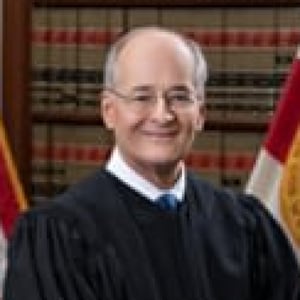
Justice Charles Canady was born in Lakeland, Florida, in 1954. He is married to Jennifer Houghton, and they have two children. He received his B.A. from Haverford College in 1976 and his J.D. from the Yale Law School in 1979.
Justice Canady practiced law with the firm of Holland and Knight in Lakeland from 1979 through 1982. He practiced with the firm of Lane, Trohn, et al., from 1983 through 1992.
From November 1984 to November 1990, Justice Canady served three terms in the Florida House of Representatives, and from January 1993 to January 2001, he served four terms in the United States House of Representatives. Throughout his service in Congress, Justice Canady was a member of the House Judiciary Committee. For three terms, from January 1995 to January 2001, Justice Canady was the Chairman of the House Judiciary Subcommittee on the Constitution.
Upon leaving Congress, Justice Canady became General Counsel to Governor Jeb Bush. He was appointed by Governor Bush to the Second District Court of Appeal for a term beginning November 20, 2002.
On August 28, 2008, Justice Canady was appointed to the Florida Supreme Court by Governor Charlie Crist and took office on September 8, 2008. He served as Chief Justice from July 2010 through June 2012. In March 2018, he was elected by his colleagues to serve as Chief Justice for a second time, with his two-year term starting July 1, 2018, and a third time starting July 1, 2020.
Professor of Law, Antonin Scalia Law School, George Mason University
Biography
Eric R. Claeys is Professor of Law at the Antonin Scalia Law School, George Mason University. He has written widely in the fields of property, private law, and constitutional law. Professor Claeys’s current research interests focus on flourishing- and labor-based natural rights justifications for property—in American property theory, in intellectual property, and in contemporary regulation of shale gas exploration and hydraulic fracturing. He is a member of the American Law Institute, he serves on the ALI’s Members’ Consultative Group for the first Restatement of Copyright, and he also serves as an adviser to the Restatement (Fourth) of the Law of Property.
Professor Claeys received his JD from the University of Southern California Gould School of Law. He received his AB from Princeton University, and he is a former visiting fellow and current member of Princeton’s Politics Department’s James Madison Program in American Ideals and Institutions. After law school, Professor Claeys clerked for the Hon. Melvin Brunetti, U.S. Court of Appeals for the Ninth Circuit, and the Hon. William H. Rehnquist, Chief Justice of the United States.
Professor Claeys’s main teaching interests include Property, Torts, Jurisprudence, and Intellectual Property. In recent years, he has also taught Water Law, Remedies, Estates and Trusts, Trade Secrecy, Constitutional Law, Torts, and Oil and Gas law. Spring 2018, he is teaching Torts and Jurisprudence as a Visiting Professor at Harvard Law School.
Attorneys' Title Professor, Florida State University College of Law
Biography
Professor Hannah Wiseman’s research explores the role of regulation in protecting the character of living spaces and environmental quality, from the sublocal to the national level. As a law student, Professor Wiseman was a managing editor of the Yale Journal on Regulation and received the Israel H. Peres prize for the best student note or comment appearing in the Yale Law Journal in 2007. Professor Wiseman clerked for the Honorable Patrick E. Higginbotham of the U.S. Court of Appeals for the Fifth Circuit. She joined the Florida State University College of Law in 2012 and teaches Energy Law, Environmental Law and Land Use Regulation.
Vice President, Edwin Meese III Institute for the Rule of Law, Advancing American Freedom
Biography
John G. Malcolm oversees Advancing American Freedom’s work to increase understanding of the Constitution and the rule of law as Vice President of the organization’s Edwin Meese III Institute for the Rule of Law. Malcolm brings to the challenge a wealth of legal expertise and experience in both the public and private sectors.
Prior to joining Advancing American Freedom in 2025, Malcolm was the Vice President of the Institute for Constitutional Government and the Director of the Meese Center for Legal and Judicial Studies at the Heritage Foundation. Prior to joining Heritage in 2012, Malcolm was general counsel at the U.S. Commission on International Religious Freedom, as well as a distinguished practitioner in residence at Pepperdine Law School. From 2004 to 2009, Malcolm was executive vice president and director of worldwide anti-piracy operations for the Motion Picture Association.
Malcolm served as a deputy assistant attorney general in the Department of Justice’s Criminal Division from 2001 to 2004, where he oversaw sections on computer crime and intellectual property, domestic security, child exploitation and obscenity, and special investigations. Immediately prior to that, he was a founding partner in the Atlanta law firm of Malcolm & Schroeder, LLP.
From 1990 to 1997, Malcolm was an assistant U.S. attorney in Atlanta, assigned to the fraud and public corruption section, and also an associate independent counsel, investigating fraud and abuse in the Department of Housing and Urban Development. He was honored with the Director’s Award for Superior Performance for his work in connection with the successful prosecution of Walter Leroy Moody Jr., who assassinated an 11th Circuit judge and the head of the Savannah chapter of the NAACP.
A graduate of Harvard Law School and Columbia College, Malcolm began his career as a law clerk to a federal district court judge and a federal appellate court judge, and as an associate at the Atlanta-based law firm of Sutherland, Asbill & Brennan (new Eversheds Sutherland). Malcolm, who resides in Washington, D.C., serves on the Board of Trustees of the Washington National Opera and is a Senate-confirmed member of the Board of Directors of the Legal Services Corporation, the largest funder of civil legal aid in the United States.
Professor of Law, South Texas College of Law Houston
Biography
Josh Blackman is a national thought leader on constitutional law and the United States Supreme Court. Josh’s work was quoted during two presidential impeachment trials. He has testified before Congress and advises federal and state lawmakers. Josh regularly appears on TV, including NBC, CBS, ABC, Fox, and the BBC. Josh is also a frequent guest on NPR and other syndicated radio programs. He has published commentaries in the New York Times, Wall Street Journal, Washington Post, and leading national publications.
Since 2012, Josh has served as a professor at the South Texas College of Law Houston. He holds the Centennial Chair of Constitutional Law. Josh is an Adjunct Fellow at the Manhattan Institute. Josh has written more than seven dozen law review articles that have been cited more than a thousand times. Josh was selected as the Jurist of the Year by the Texas Journal of Law & Public Policy, received the inaugural Meese III Originalism Award, and was awarded the Inaugural Joseph Story Award. Josh was selected by Forbes Magazine for the “30 Under 30” in Law and Policy. Josh is the President of the Harlan Institute, and founded FantasySCOTUS, the Internet’s Premier Supreme Court Fantasy League. He blogs at the Volokh Conspiracyand posts@JoshMBlackman.
Patrick Hotung Professor of Constitutional Law, Georgetown University Law Center
Biography
Randy Barnett is the Patrick Hotung Professor of Constitutional Law at Georgetown University Law Center. He has argued before the United States Supreme Court, tried murder cases to juries as a prosecutor in Chicago, and appeared as a prosecutor in the feature film Inalienable. He is the author of numerous books, including Restoring the Lost Constitution, The Structure of Liberty, Our Republican Constitution, and The Original Meaning of the Fourteenth Amendment. He has published two memoirs, A Life for Liberty: The Making of an American Originalist, and Felony Review: Tales of True Crime and Corruption in Chicago. He is currently working on a new book, Freedom and Flourishing: Libertarianism for the Real World.