

This event has concluded.
Lunch with Teresa Stanton
Capital City Club 201 Monroe St #2100Montgomery, Alabama

Here are the latest events.




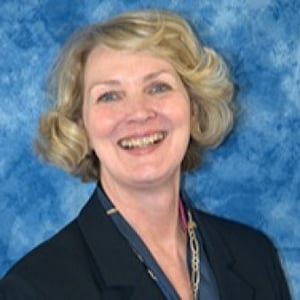
Professor and Director, Prolife Center, University of St. Thomas School of Law
Teresa Collett, J.D., is professor at the University of St. Thomas School of Law, where she serves as director of the school's Prolife Center. Collett received her doctorate at the University of Oklahoma College of Law. As a well-known advocate for the protection of human life and the family, Collett specializes in the subjects of marriage, religion and bioethics in her research.
Collett has published numerous legal articles and is the co-author of a law casebook on professional responsibility and co-editor of a collection of essays exploring “catholic” and “Catholic” perspectives on American law. She is an elected member of the American Law Institute, and has testified before committees of the U.S. Senate and House of Representatives, as well as before legislative committees in several states.
In 2009, Pope Benedict XVI appointed Collett to a five-year term on the Pontifical Council for the Family. Her appointment was renewed by His Holiness Pope Francis until 2016 when the responsibilities of the Council were assumed by the Dicastery for the Laity, Family and Life. In 2013, she served as a delegate to the International Conference on Population and Development (ICPD) for the Mission of the Holy See to the United Nations.
She represented Congressman Ron Paul and various medical groups in the defense of the U.S. federal ban of partial-birth abortion, and the governors of Minnesota and North Dakota defending the N.H. requirement of state parental involvement prior to performance of an abortion on a minor before the U.S. Supreme Court. Collett is often asked to represent the interests of government officials before federal appellate courts. She has served as special attorney general for the states of Oklahoma and Kansas, as well as assisting other state attorneys general in defending laws protecting human life and marriage. Prior to joining St. Thomas in 2003, Collett taught at the South Texas College of Law, where she established the nation's first annual symposium on legal ethics.
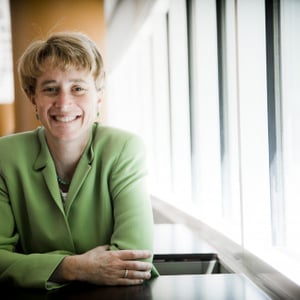
Clinical Professor of Law, Emory Law School
As Director of the International Humanitarian Law Clinic, Laurie Blank teaches international humanitarian law and works directly with students to provide assistance to international tribunals, non-governmental organizations, and law firms around the world on cutting-edge issues in humanitarian law and human rights. Professor Blank is the co-author of International Law and Armed Conflict: Fundamental Principles and Contemporary Challenges in the Law of War, a casebook on the law of war (with G. Noone, Aspen Publishing 2013). She is also the co-director of a multi-year project on military training programs in the law of war and the co-author of Law of War Training: Resources for Military and Civilian Leaders (USIP 2008, with G. Noone, second edition 2013). In addition, she is the series editor of the ICRC’s teaching supplements on IHL, a member of the American Bar Association’s Advisory Committee to the Standing Committee on Law and National Security, and a member of the Public Interest Law and Policy Group’s High Level Working Group on Piracy. Before coming to Emory, Professor Blank was a program officer in the Rule of Law Program at the United States Institute of Peace. At USIP, she directed the Experts’ Working Group on International Humanitarian Law, in particular a multi-year project focusing on New Actors in the Implementation and Enforcement of International Humanitarian Law.
She is the author of numerous articles and opinion pieces on topics in international humanitarian law, including, most recently, "Extending Positive Identification from People to Places: Terrorism, Armed Conflict and the Identification of Military Objectives" (Utah Law Review); "Losing the Forest for the Trees: Syria, Law and the Pragmatics of Conflict Recognition" (Vanderbilt Journal of Transnational Law); "Targeted Strikes: The Consequences of Blurring the Armed Conflict and Self-Defense Justifications" (William Mitchell Law Review); "After Top Gun: How Drone Strikes Impact the Law of War" (University of Pennsylvania Journal of International Law); "A Square Peg in a Round Hole: Stretching Law of War Detention Too Far" (Rutgers Law Review); "Defining the Battlefield in Contemporary Conflict and Counterterrorism: Understanding the Parameters of the Zone of Combat" (Georgia Journal of International and Comparative Law); and "The Application of IHL in the Goldstone Report: A Critical Commentary" (Yearbook of International Humanitarian Law).
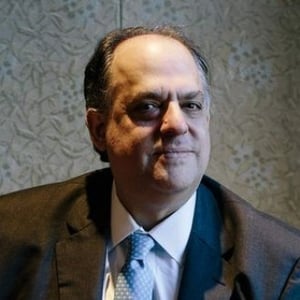
Director of Litigation and Senior Attorney, Hamilton Lincoln Law Institute
Theodore H. Frank is director at the Hamilton Lincoln Law Institute and the Center for Class Action Fairness. Frank founded and ran CCAF as a non-profit, public interest law firm in 2009.
Frank has won several landmark appeals and tens of millions of dollars for consumers and other plaintiffs through his class action work. Adam Liptak of The New York Times calls Frank “the leading critic of abusive class action settlements” and the American Lawyer Litigation Daily referred to him as “the indefatigable scourge of underwhelming class action settlements.”
Previously, Frank clerked for the Honorable Frank H. Easterbrook on the Seventh Circuit Court of Appeals, and was a litigator at firms in Washington and Los Angeles and a resident fellow at the American Enterprise Institute. Frank is a frequent public speaker and has testified before Congress multiple times on legal issues. He has been profiled by The Wall Street Journal, Forbes, GQ, and the ABA Journal, among other publications.
In 2008, Frank was elected to membership in the American Law Institute. He also serves on the Executive Committee of the Federalist Society Litigation Practice Group. Frank graduated from The University of Chicago Law School in 1994 with high honors and as a member of the Order of the Coif and the Law Review. He is a member of the District of Columbia Bar and the state bars of California and Illinois.

Senior Fellow and Director of Constitutional Studies, Manhattan Institute
Ilya Shapiro is a senior fellow and director of constitutional studies at the Manhattan Institute and a contributing editor of City Journal. Previously he was executive director and senior lecturer at the Georgetown Center for the Constitution, and before that a vice president of the Cato Institute.
Shapiro is the author of Lawless: The Miseducation of America’s Elites (2025) and Supreme Disorder: Judicial Nominations and the Politics of America’s Highest Court (2020), coauthor of Religious Liberties for Corporations? (2014), and editor of 11 volumes of the Cato Supreme Court Review (2008-18). He has contributed to a variety of academic, popular, and professional publications, including the Wall Street Journal, Harvard Journal of Law & Public Policy, Washington Post, Los Angeles Times, USA Today, National Review, and Newsweek. He also regularly provides commentary for various media outlets, writes the Shapiro’s Gavel newsletter on Substack, and once appeared on the Colbert Report.
Shapiro has testified many times before Congress and state legislatures and has filed more than 500 amicus curiae “friend of the court” briefs in the Supreme Court. He lectures regularly on behalf of the Federalist Society, is a member of the board of fellows of the Jewish Policy Center, was an inaugural Washington Fellow at the National Review Institute, and has been an adjunct law professor at the George Washington University and University of Mississippi. He is also the chairman of the board of advisers of the Mississippi Justice Institute, a barrister in the Edward Coke Appellate Inn of Court, and a former member of the Virginia Advisory Committee to the U.S. Commission on Civil Rights.
Earlier in his career, Shapiro was a special assistant/adviser to the Multi-National Force in Iraq on rule-of-law issues and practiced at Patton Boggs and Cleary Gottlieb. Before entering private practice, he clerked for Judge E. Grady Jolly of the U.S. Court of Appeals for the Fifth Circuit. He holds an AB from Princeton University, an MSc from the London School of Economics, and a JD from the University of Chicago Law School.
Special Counsel, Hunton & Williams
Mr. Meisburg is a former National Labor Relations Board Member and General Counsel.
Prior to joining Hunton & Williams LLP, Ronald co-chaired the labor-management relations practice at an international law firm. Over the course of his 40-year career, which began with the Office of the Solicitor of the US Department of Labor, Mr. Meisburg has handled matters arising under federal labor and employment law in complex business transactions before federal agencies and courts.
Mr. Meisburg joined the NLRB in 2004, following a recess appointment by President George W. Bush. Two years later, President Bush appointed him to a four-year term as NLRB General Counsel, a position independent from the Board. Serving under the Bush and Obama Administrations as the chief prosecutor under the National Labor Relations Act and chief administrator of the agency’s 32 regional offices, he oversaw a $280 million budget and 1,200 staff.
Ronald has been quoted as a labor law authority by numerous national publications and news organizations, including The New York Times, The Wall Street Journal, The Washington Times, SHRM Online, Associated Press, Corporate Counsel Magazine, Bloomberg, Reuters, Employment Law 360 and BNA. He is a frequent speaker at national conferences sponsored by trade associations, professional groups and educational institutions, including the US Chamber of Commerce, numerous elite law schools and universities around the world, the Council on Labor Law Equality, Committee for a Democratic Workplace, Labor and Employment Research Association, Equal Employment Advisory Council, Human Resources Policy Association, Labor Relations Advisory Committee, National Retail Federation, Retail Leaders Industry Association, Energy and Mineral Law Foundation, American Arbitration Association and numerous bar associations. Mr. Meisburg has also been recognized by Legal500 USA.
Mr. Meisburg is admitted to practice in the United States Courts of Appeals for the Second, Third, Fourth, Fifth, Sixth, Seventh, Ninth and District of Columbia Circuits, and the Supreme Court of the United States.
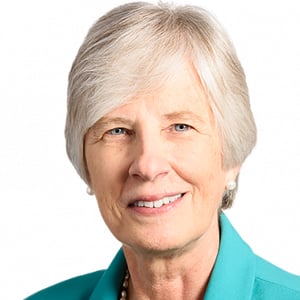
Ronald Reagan Distinguished Fellow, The Heritage Foundation
Becky Norton Dunlop, a prominent leader, strategist, and counselor in the conservative movement, is The Heritage Foundation’s Ronald Reagan Distinguished Fellow.
Dunlop, who joined the leading think tank in 1998, holds the only policy chair in the country to be officially named for the 40th president. She succeeds Ed Meese, the U.S. attorney general under Reagan, who assumed emeritus status.
Dunlop oversees special projects, travels as an ambassador for Heritage, and works tirelessly to assure that the legacy of principles, policies, and practices represented by the life and service of Ronald Reagan remain in the hearts and minds of Americans.
Previously, Dunlop was Heritage’s vice president for external relations from 1998 until May 2016. She served on the Trump Transition team.
Dunlop was a senior official in the Reagan administration from 1981-1989 inside the White House, at the Justice Department, and at the Interior Department.
She served from 1994-1998 as Secretary of Natural Resources for the Commonwealth of Virginia in the Cabinet of then-Virginia Gov. George Allen.
As political director for the American Conservative Union from 1973- 1977, she was instrumental in organizing grass-roots activists for Reagan’s unsuccessful 1976 race for the Republican nomination and advised his successful 1980 nomination and general election campaigns.
From Reagan’s first inauguration in 1981 to 1985, her White House posts included Deputy Assistant to the President for Presidential Personnel and Special Assistant to the President and Director of his Cabinet office. During Reagan’s second term, Dunlop served as senior special assistant to Meese, then attorney general, in charge of managing Cabinet-level domestic policy issues. She oversaw major policy reports on the environment, the family, federalism, tort reform, privatization, and welfare reform.
She completed her service in the Reagan administration as deputy undersecretary of the Interior Department and as assistant interior secretary for fish, wildlife, and parks.
Dunlop is one of the few of the insiders from the beginnings of the Reagan era who remain active in public policy leadership.
As Virginia’s natural resources chief, Dunlop worked to streamline, decentralize, and down-size agencies while protecting and improving the environment. She is one of the few “free-market environmentalists” to have headed a state agency and put ideas into action. Her book, “Clearing the Air” (Alexis de Tocqueville Institute, 2000), chronicles some of her experiences in advancing those principles.
In 2002, President George W. Bush appointed her to a part-time post as chairwoman of the Federal Service Impasses Panel. The seven-member panel resolves disputes between federal agencies management and labor unions. Under her leadership, it took on several hundred cases and eliminated backlogs.
Other current leadership roles include the boards of the Virginia Institute for Public Policy, the Reagan Ranch Board of Governors, the Reagan Alumni Association, the Association for American Educators and the AAE Foundation, the Council for National Policy and the American Conservative Union.
In addition to topics addressing conservative principles and their roots in the nation’s founding, Dunlop is a sought-after public speaker on the idea that personnel is policy; on energy, natural resources and the environment (including free market environmentalism); on federalism as a former member of a governor’s Cabinet; Capitalism and the Rule of Law, and on the Reagan administration (including the 40th president’s effective leadership style).
A graduate of Miami University in Ohio, she currently resides in Arlington, Virginia, with her husband, George S. Dunlop. The Dunlops are members of Oakland Baptist Church in Alexandria, Virginia.
Executive Director, republicEn, Energy and Enterprise Initiative at George Mason
Walter J. Blum Professor of Law and Senior Fellow, the Computation Institute of the University of Chicago and Argonne National Laboratory
David Weisbach received his BS in Mathematics from the University of Michigan in 1985; a Masters in Advance Study (Mathematics) from Wolfson College, Cambridge in 1986; and a JD from Harvard Law School in 1989. After graduating from law school, Weisbach clerked for Judge Joel M. Flaum of the U.S. Court of Appeals for the Seventh Circuit and worked as an associate in the law firm of Miller & Chevalier. In 1992, Weisbach joined the Department of Treasury where he worked as an attorney-advisor in the Office of the Tax Legislative Counsel and, subsequently, as associate tax legislative counsel. In 1996, Weisbach was appointed Associate Professor of Law at Georgetown Law Center and joined the Chicago faculty in 1998. He is also a Senior Fellow at the University of Chicago Computation Institute and Argonne National Laboratories and an International Research Fellow at the Said School of Business, Oxford University. Weisbach is primarily interested in issues relating to federal taxation and to climate change.
Associate Professor of Law, Cumberland School of Law, Samford University
Brannon P. Denning is Associate Professor of Law at Samford University’s Cumberland School of Law in Birmingham, Alabama. Prior to joining the Cumberland School of Law in 2003, Professor Denning taught at the Southern Illinois University School of Law in Carbondale, Illinois for four years. At Cumberland, Professor Denning teaches Constitutional Law I & II, the First Amendment, and Professional Responsibility. During the Summer of 2005, he was a visiting professor at the University of Tennessee College of Law.
Professor Denning has written extensively on the Commerce Clause, the dormant Commerce Clause doctrine, the constitutional amending process, the confirmation process, the Second Amendment, and on foreign affairs matters. His articles have appeared in the American Journal of International Law, Constitutional Commentary, Foreign Affairs, the Minnesota Law Review, the William and Mary Law Review, and the Wisconsin Law Review, among other journals and periodicals. He has also collaborated with Yale law professor Boris I. Bittker on a treatise on the Commerce Clause and is co-editor of a one-of-a-kind coursebook on gun control and gun rights.
Professor Denning earned a B.A. in political science, magna cum laude, from the University of the South in Sewanee, Tennessee. He received a J.D., magna cum laude, from the University of Tennessee in 1995, and an LL.M. from Yale University in 1999.
The University of Tennessee College of Law, Visiting Professor, 2005. Taught Constitutional Law during the Summer Term.
Cumberland School of Law, Samford University, Associate Professor, 2003-present. Tenure awarded Spring, 2005.
Southern Illinois University School of Law, Assistant Professor, 1999-2003.
Taught constitutional law, legal ethics, Illinois constitutional law, and Introduction to Legislative and Administrative Process. Tenure awarded Spring, 2003.
Yale Law School, Research Associate & Senior Fellow, 1997-1998.
Collaborated with Professor Boris I. Bittker researching and writing Bittker on the Regulation of Interstate and Foreign Commerce (Aspen Law & Business).
Baker, Donelson, Bearman & Caldwell, P.C., Associate, 1995-1997.
Member of health law group in the Memphis, Tennessee office of the state’s largest law firm.
Yale Law School, LL.M., 1999
The University of Tennessee College of Law, J.D., magna cum laude, Order of the Coif, 1995
The University of the South, Sewanee, Tennessee, B.A., magna cum laude, Phi Beta Kappa, 1992
Ronald Reagan Distinguished Fellow, The Heritage Foundation
Becky Norton Dunlop, a prominent leader, strategist, and counselor in the conservative movement, is The Heritage Foundation’s Ronald Reagan Distinguished Fellow.
Dunlop, who joined the leading think tank in 1998, holds the only policy chair in the country to be officially named for the 40th president. She succeeds Ed Meese, the U.S. attorney general under Reagan, who assumed emeritus status.
Dunlop oversees special projects, travels as an ambassador for Heritage, and works tirelessly to assure that the legacy of principles, policies, and practices represented by the life and service of Ronald Reagan remain in the hearts and minds of Americans.
Previously, Dunlop was Heritage’s vice president for external relations from 1998 until May 2016. She served on the Trump Transition team.
Dunlop was a senior official in the Reagan administration from 1981-1989 inside the White House, at the Justice Department, and at the Interior Department.
She served from 1994-1998 as Secretary of Natural Resources for the Commonwealth of Virginia in the Cabinet of then-Virginia Gov. George Allen.
As political director for the American Conservative Union from 1973- 1977, she was instrumental in organizing grass-roots activists for Reagan’s unsuccessful 1976 race for the Republican nomination and advised his successful 1980 nomination and general election campaigns.
From Reagan’s first inauguration in 1981 to 1985, her White House posts included Deputy Assistant to the President for Presidential Personnel and Special Assistant to the President and Director of his Cabinet office. During Reagan’s second term, Dunlop served as senior special assistant to Meese, then attorney general, in charge of managing Cabinet-level domestic policy issues. She oversaw major policy reports on the environment, the family, federalism, tort reform, privatization, and welfare reform.
She completed her service in the Reagan administration as deputy undersecretary of the Interior Department and as assistant interior secretary for fish, wildlife, and parks.
Dunlop is one of the few of the insiders from the beginnings of the Reagan era who remain active in public policy leadership.
As Virginia’s natural resources chief, Dunlop worked to streamline, decentralize, and down-size agencies while protecting and improving the environment. She is one of the few “free-market environmentalists” to have headed a state agency and put ideas into action. Her book, “Clearing the Air” (Alexis de Tocqueville Institute, 2000), chronicles some of her experiences in advancing those principles.
In 2002, President George W. Bush appointed her to a part-time post as chairwoman of the Federal Service Impasses Panel. The seven-member panel resolves disputes between federal agencies management and labor unions. Under her leadership, it took on several hundred cases and eliminated backlogs.
Other current leadership roles include the boards of the Virginia Institute for Public Policy, the Reagan Ranch Board of Governors, the Reagan Alumni Association, the Association for American Educators and the AAE Foundation, the Council for National Policy and the American Conservative Union.
In addition to topics addressing conservative principles and their roots in the nation’s founding, Dunlop is a sought-after public speaker on the idea that personnel is policy; on energy, natural resources and the environment (including free market environmentalism); on federalism as a former member of a governor’s Cabinet; Capitalism and the Rule of Law, and on the Reagan administration (including the 40th president’s effective leadership style).
A graduate of Miami University in Ohio, she currently resides in Arlington, Virginia, with her husband, George S. Dunlop. The Dunlops are members of Oakland Baptist Church in Alexandria, Virginia.
Executive Director, republicEn, Energy and Enterprise Initiative at George Mason
Walter J. Blum Professor of Law and Senior Fellow, the Computation Institute of the University of Chicago and Argonne National Laboratory
David Weisbach received his BS in Mathematics from the University of Michigan in 1985; a Masters in Advance Study (Mathematics) from Wolfson College, Cambridge in 1986; and a JD from Harvard Law School in 1989. After graduating from law school, Weisbach clerked for Judge Joel M. Flaum of the U.S. Court of Appeals for the Seventh Circuit and worked as an associate in the law firm of Miller & Chevalier. In 1992, Weisbach joined the Department of Treasury where he worked as an attorney-advisor in the Office of the Tax Legislative Counsel and, subsequently, as associate tax legislative counsel. In 1996, Weisbach was appointed Associate Professor of Law at Georgetown Law Center and joined the Chicago faculty in 1998. He is also a Senior Fellow at the University of Chicago Computation Institute and Argonne National Laboratories and an International Research Fellow at the Said School of Business, Oxford University. Weisbach is primarily interested in issues relating to federal taxation and to climate change.
Director of Litigation and Senior Attorney, Hamilton Lincoln Law Institute
Theodore H. Frank is director at the Hamilton Lincoln Law Institute and the Center for Class Action Fairness. Frank founded and ran CCAF as a non-profit, public interest law firm in 2009.
Frank has won several landmark appeals and tens of millions of dollars for consumers and other plaintiffs through his class action work. Adam Liptak of The New York Times calls Frank “the leading critic of abusive class action settlements” and the American Lawyer Litigation Daily referred to him as “the indefatigable scourge of underwhelming class action settlements.”
Previously, Frank clerked for the Honorable Frank H. Easterbrook on the Seventh Circuit Court of Appeals, and was a litigator at firms in Washington and Los Angeles and a resident fellow at the American Enterprise Institute. Frank is a frequent public speaker and has testified before Congress multiple times on legal issues. He has been profiled by The Wall Street Journal, Forbes, GQ, and the ABA Journal, among other publications.
In 2008, Frank was elected to membership in the American Law Institute. He also serves on the Executive Committee of the Federalist Society Litigation Practice Group. Frank graduated from The University of Chicago Law School in 1994 with high honors and as a member of the Order of the Coif and the Law Review. He is a member of the District of Columbia Bar and the state bars of California and Illinois.
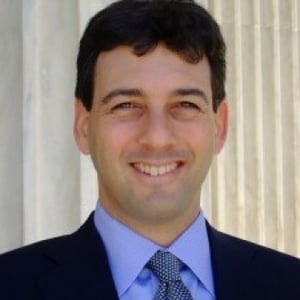
Vice President for Litigation, Institute for Free Speech
Alan joined the Institute for Free Speech as Vice President for Litigation in February 2021. In this role, Alan directs the Institute’s litigation and legal advocacy, leads our in-house legal team, and manages and works to expand our network of volunteer attorneys.
Prior to joining the Institute, Alan litigated complex federal matters for twenty years, in his own practice and as a partner in various Washington-area firms. He argued and won landmark constitutional cases in the United States Supreme Court and has appeared before numerous appellate and district courts throughout the country. Alan often speaks at law schools and continuing legal education seminars. He also teaches strategic/public interest litigation as an adjunct professor at the Georgetown University Law Center.
Alan began his career clerking for the Hon. Terrence W. Boyle, United States District Judge for the Eastern District of North Carolina. He has also served as a Deputy Attorney General for the State of California, a litigation associate at the Washington office of Sidley Austin, and as counsel to the United States Senate Judiciary Committee.
Alan earned his J.D. at Georgetown (1995) and his B.A. at Cornell University (1992). He is an active member in good standing of the Virginia, District of Columbia, and California bars, the Bar of the United States Supreme Court, and various federal appellate and district court bars.