

This event has concluded.

Here are the latest events.


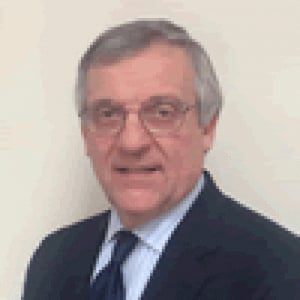
Senior Fellow, Administrative Conference of the United States
Paul D. Kamenar is a Washington, D.C. public policy and appellate attorney who counsels clients on legal, regulatory, and public policy matters. He is also a Senior Fellow of the Administrative Conference of the United States and guest lectures at the U.S. Naval Academy on National Security Law. He has been a speaker at several conferences across the country on overcriminalization and regulatory enforcement, including those sponsored by the American Bar Association, George Mason University Law School, S.J. Quinney College of Law-University of Utah, American University Washington College of Law, Northwestern University School of Law, and the Cleveland Chapter of the Federalist Society. He also has briefed Members of Congress and their staff on overcriminalization issues along with representatives from the National Association of Criminal Defense Lawyers and the Heritage Foundation. He and his clients have also testified before congressional committees on these issues. He was Senior Executive Counsel of the Washington Legal Foundation, Clinical Professor of Law at George Mason University Law School from 1999-2005, and adjunct professor at Georgetown University Law Center teaching a separation of powers/appellate advocacy seminar. He is a graduate of Georgetown Law and received his undergraduate degree from Rutgers College.
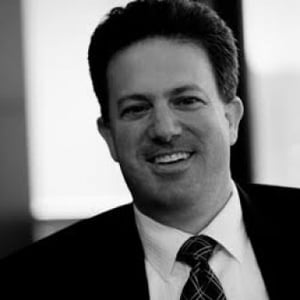
Partner, MoloLamken
Jeff Lamken, founder of MoloLamken, is a nationally recognized appellate practitioner, has argued 22 cases before the U.S. Supreme Court and briefed dozens more on a wide range of topics, including administrative law, the First Amendment, antitrust, bankruptcy, civil rights, criminal procedure, energy law, intellectual property, search and seizure law, separation of powers, and telecommunications law. He has also handled matters in virtually all the federal courts of appeals and many state appellate courts. Mr. Lamken also develops, briefs, and argues critical motions in significant trial matters.
Before founding MoloLamken, Mr. Lamken headed Baker Botts' Supreme Court and Appellate Practice in Washington, D.C. Mr. Lamken has served as an Assistant to the Solicitor General in the United States Department of Justice, and was a partner in the Washington D.C. litigation boutique Kellogg Huber & Hansen.
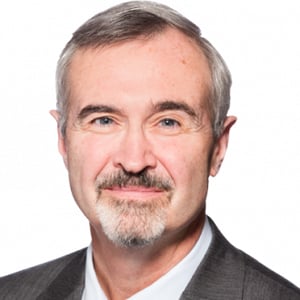
Vice President, Edwin Meese III Institute for the Rule of Law, Advancing American Freedom
John G. Malcolm oversees Advancing American Freedom’s work to increase understanding of the Constitution and the rule of law as Vice President of the organization’s Edwin Meese III Institute for the Rule of Law. Malcolm brings to the challenge a wealth of legal expertise and experience in both the public and private sectors.
Prior to joining Advancing American Freedom in 2025, Malcolm was the Vice President of the Institute for Constitutional Government and the Director of the Meese Center for Legal and Judicial Studies at the Heritage Foundation. Prior to joining Heritage in 2012, Malcolm was general counsel at the U.S. Commission on International Religious Freedom, as well as a distinguished practitioner in residence at Pepperdine Law School. From 2004 to 2009, Malcolm was executive vice president and director of worldwide anti-piracy operations for the Motion Picture Association.
Malcolm served as a deputy assistant attorney general in the Department of Justice’s Criminal Division from 2001 to 2004, where he oversaw sections on computer crime and intellectual property, domestic security, child exploitation and obscenity, and special investigations. Immediately prior to that, he was a founding partner in the Atlanta law firm of Malcolm & Schroeder, LLP.
From 1990 to 1997, Malcolm was an assistant U.S. attorney in Atlanta, assigned to the fraud and public corruption section, and also an associate independent counsel, investigating fraud and abuse in the Department of Housing and Urban Development. He was honored with the Director’s Award for Superior Performance for his work in connection with the successful prosecution of Walter Leroy Moody Jr., who assassinated an 11th Circuit judge and the head of the Savannah chapter of the NAACP.
A graduate of Harvard Law School and Columbia College, Malcolm began his career as a law clerk to a federal district court judge and a federal appellate court judge, and as an associate at the Atlanta-based law firm of Sutherland, Asbill & Brennan (new Eversheds Sutherland).
Malcolm, who resides in Washington, D.C., serves on the Board of Trustees of the Washington National Opera and is a Senate-confirmed member of the Board of Directors of the Legal Services Corporation, the largest funder of civil legal aid in the United States.
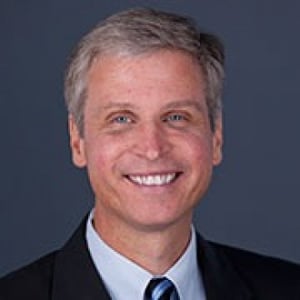
Frank Edwards Tyler Distinguished Professor of Law, University of Kansas School of Law
Stephen Ware is the author of five books, over 60 law review articles and many other publications. His writings have been cited by the Supreme Court of the United States and in at least 37 other cases. Ware teaches and writes on:
each with an international or comparative dimension. An experienced teacher of lawyering skills exercises in which student groups negotiate, mediate, and draft legal documents, Professor Ware takes this approach in his Transnational Dispute Resolution course, which he has customized for universities from Beijing to Istanbul to Kansas.
Ware has testified before both houses of the U.S. Congress, several state legislatures and, as an expert witness, in court. He is a frequent guest lecturer and speaker at academic and professional conferences—having given such presentations throughout the U.S. and in several other countries. He has appeared on numerous television and radio stations and been quoted in The New York Times, Wall Street Journal, USA Today, Financial Times, National Law Journal and many other news outlets. He is an elected member of the American Law Institute (ALI) and has served, at various times in his career, on the editorial board of the Journal of Legal Education and as an arbitrator for the American Arbitration Association.
Ware was named as the Frank Edwards Tyler Distinguished Professor of Law in 2019.
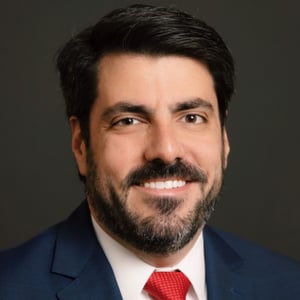
House Majority Leader, Georgia House of Representatives
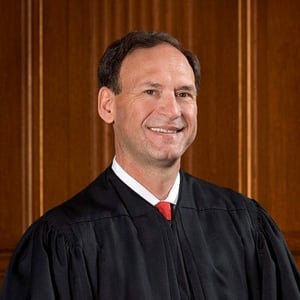
Associate Justice, United States Supreme Court
Samuel A. Alito, Jr., Associate Justice, was born in Trenton, New Jersey, April 1, 1950. He married Martha-Ann Bomgardner in 1985, and has two children - Philip and Laura. He served as a law clerk for Leonard I. Garth of the United States Court of Appeals for the Third Circuit from 1976–1977. He was Assistant U.S. Attorney, District of New Jersey, 1977–1981, Assistant to the Solicitor General, U.S. Department of Justice, 1981–1985, Deputy Assistant Attorney General, U.S. Department of Justice, 1985–1987, and U.S. Attorney, District of New Jersey, 1987–1990. He was appointed to the United States Court of Appeals for the Third Circuit in 1990. President George W. Bush nominated him as an Associate Justice of the Supreme Court, and he took his seat January 31, 2006.
Frank Edwards Tyler Distinguished Professor of Law, University of Kansas School of Law
Stephen Ware is the author of five books, over 60 law review articles and many other publications. His writings have been cited by the Supreme Court of the United States and in at least 37 other cases. Ware teaches and writes on:
each with an international or comparative dimension. An experienced teacher of lawyering skills exercises in which student groups negotiate, mediate, and draft legal documents, Professor Ware takes this approach in his Transnational Dispute Resolution course, which he has customized for universities from Beijing to Istanbul to Kansas.
Ware has testified before both houses of the U.S. Congress, several state legislatures and, as an expert witness, in court. He is a frequent guest lecturer and speaker at academic and professional conferences—having given such presentations throughout the U.S. and in several other countries. He has appeared on numerous television and radio stations and been quoted in The New York Times, Wall Street Journal, USA Today, Financial Times, National Law Journal and many other news outlets. He is an elected member of the American Law Institute (ALI) and has served, at various times in his career, on the editorial board of the Journal of Legal Education and as an arbitrator for the American Arbitration Association.
Ware was named as the Frank Edwards Tyler Distinguished Professor of Law in 2019.

Professor of Law, South Texas College of Law Houston
Josh Blackman is a national thought leader on constitutional law and the United States Supreme Court. Josh’s work was quoted during two presidential impeachment trials. He has testified before Congress and advises federal and state lawmakers. Josh regularly appears on TV, including NBC, CBS, ABC, Fox, and the BBC. Josh is also a frequent guest on NPR and other syndicated radio programs. He has published commentaries in the New York Times, Wall Street Journal, Washington Post, and leading national publications.
Since 2012, Josh has served as a professor at the South Texas College of Law Houston. He holds the Centennial Chair of Constitutional Law. Josh is an Adjunct Fellow at the Manhattan Institute. Josh has written more than seven dozen law review articles that have been cited more than a thousand times. Josh was selected as the Jurist of the Year by the Texas Journal of Law & Public Policy, received the inaugural Meese III Originalism Award, and was awarded the Inaugural Joseph Story Award. Josh was selected by Forbes Magazine for the “30 Under 30” in Law and Policy. Josh is the President of the Harlan Institute, and founded FantasySCOTUS, the Internet’s Premier Supreme Court Fantasy League. He blogs at the Volokh Conspiracyand posts@JoshMBlackman.
Chairman, Department of Economics, George Mason University
Legal Method & Communication Fellow, Elon University School of Law
U.S. Court of Appeals, Second Circuit
Judge Calabresi was appointed United States Circuit Judge in July, 1994, and entered into duty on September 16, 1994. Prior to his appointment, he was Dean and Sterling Professor at the Yale Law School where he began teaching in 1959. He continues to serve as a member of that faculty as Sterling Professor Emeritus and Professorial Lecturer.
Judge Calabresi received his B.S. degree, summa cum laude, from Yale College in 1953, a B.A. degree with First Class Honors from Magdalen College, Oxford University, in 1955, an LL.B. degree, magna cum laude, in 1958 from Yale Law School, and an M.A. in Politics, Philosophy and Economics from Oxford University in 1959. A Rhodes Scholar and member of Phi Beta Kappa and Order of the Coif, Judge Calabresi served as the Note Editor of the Yale Law Journal, 1957-58, while graduating first in his law school class.
Following graduation, Judge Calabresi clerked for Justice Hugo Black of the United States Supreme Court. He has been awarded more than thirty honorary degrees from universities in the United States and abroad, and is the author of four books and over eighty articles on law and related subjects.
Judge Calabresi is a member of the Connecticut Bar.
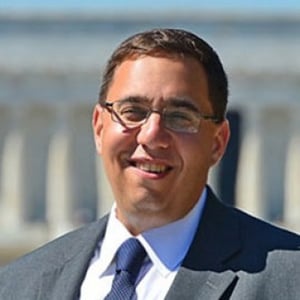
Partner, Consovoy McCarthy Park PLLC
Mr. Consovoy assists clients on a broad range of litigation and appellate issues primarily before the Supreme Court of the United States and federal appellate and district courts, as well as before federal agencies. Mr. Consovoy represents clients in cases involving constitutional issues, interpretation and enforcement of federal statutes, administrative law, civil rights disputes, and a variety of other civil litigation issues. Mr. Consovoy recently argued two cases—Spokeo v. Robbins and Evenwel v. Abbott—before the Supreme Court of the United States.
Mr. Consovoy is a former law clerk to Supreme Court Justice Clarence Thomas, Judge Edith H. Jones of the United States Court of Appeals for the Fifth Circuit, and the 17th Judicial Circuit of Virginia. Mr. Consovoy is a member of the Edward Coke Appellate Inn of Court and was named by Law360 as a “rising star” in appellate law for 2013. Since 2011, Mr. Consovoy has been the co-director of the Supreme Court Clinic at the Antonin Scalia Law School at George Mason University, where he also is the co-director of the Administrative Law Clinic.
Mr. Consovoy earned his B.A. from Monmouth University, and his J.D. magna cum laude from George Mason University School of Law. Mr. Consovoy is a member of the Virginia and District of Columbia bars.
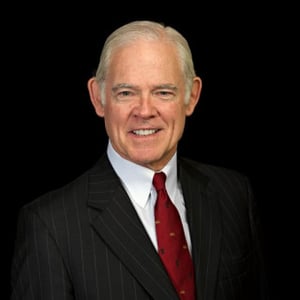
Founding Partner, Cooper & Kirk PLLC
Charles J. Cooper is a founding member and the chairman of Cooper & Kirk, PLLC, “one of the Nation’s leading litigation boutiques” (Above The Law 2017). The National Law Journal recently wrote that Mr. Cooper’s “brilliant legal career has so far spanned five decades and thrust Cooper into the spotlight in some of the most historic moments of the country’s modern history.” He has argued nine cases before the United States Supreme Court and scores of appeals before each of the 13 federal courts of appeals and several state supreme courts. He has been lead trial counsel in numerous complex, weeks-long trials in federal courts throughout the country. Named by the National Law Journal as one of the 10 best litigators in Washington D.C., Mr. Cooper’s work has been reported in numerous press accounts, and he has been called a “powerhouse attorney” (Fortune 2015), “a hard-nosed litigator” (Washington Post 2017), and “one of the country’s most in-demand civil litigators and a Washington legal institution unto himself” (The American Spectator 2014).
After graduating from the University of Alabama School of Law in 1977, where he ranked first in his class and served as Editor-in-Chief of the Alabama Law Review, Mr. Cooper began his career as a law clerk to Judge Paul Roney on the Fifth Circuit Court of Appeals and to Justice William H. Rehnquist in 1978–79. He then practiced law in Atlanta for two years before joining the Civil Rights Division of the U.S. Department of Justice, where he served as the Deputy Assistant Attorney General in charge of, among other things, appellate matters. In 1985 President Reagan appointed him to the position of Assistant Attorney General for the Office of Legal Counsel, which is the office responsible for providing legal opinions and advice to the White House, the Attorney General, and Executive Branch departments and agencies on issues covering the full spectrum of federal constitutional, statutory, and regulatory law.
In 1988 he returned to private practice as a litigation partner in the Washington, D.C. office of McGuireWoods. From 1990 until the founding of Cooper & Kirk in 1996, he was a partner at Shaw Pittman (now Pillsbury Winthrop Shaw Pittman), where he headed the firm’s Constitutional and Government Litigation Group.
Mr. Cooper has represented a wide range of public and private clients in highly complex constitutional, civil rights, antitrust, healthcare, banking, intellectual property, elections, campaign finance, administrative, commercial, and government contract cases. He has led trial teams in cases that have won judgments and settlements valued in the billions of dollars and that have established ground-breaking constitutional precedents.
Much of Mr. Cooper’s practice has involved representing high-profile clients in nationally prominent matters, including: the State of Florida in a First Amendment suit brought by the Disney Company concerning its autonomous regulatory authority over its Disney World property; the Commonwealth of Virginia in a suit seeking to enjoin the removal of noncitizens from its voter rolls; 38 members of the Duke Lacrosse team falsely accused of rape by officials of Duke University and the City of Durham; Harper Lee in a copyright dispute with the heirs of Gregory Peck; high-ranking former government officials such as former Attorneys General John Ashcroft, Jeff Sessions, and William Barr, and Ambassador John Bolton; several Governors and United States Senators; over 100 Members of Congress; and many state, territorial, and local government bodies and officials. He has also represented and advised government officials and public figures in connection with sensitive private issues that needed to be, and were, resolved discreetly without becoming matters of public record.
In 1998 Chief Justice Rehnquist appointed Mr. Cooper to the Standing Committee on Rules of Practice and Procedure of the Judicial Conference of the United States, where he served for three terms. He also served as a Public Member, appointed by President George H.W. Bush, of the National Commission on Judicial Discipline and Removal. He is a member of numerous professional associations, including the American Law Institute (since 1993) and the American Academy of Appellate Lawyers (since 1996). He is also an active member of the Federalist Society and the Republican National Lawyers Association, which in 2010 named him Republican Lawyer of the Year and in 2016 honored him with its Edwin Meese III Award.
Mr. Cooper has published scores of articles and spoken extensively on constitutional and legal policy topics. He has appeared before congressional committees on 26 occasions, testifying as an expert on a wide variety of legal issues, including the Chevron doctrine of judicial deference to administrative agencies, the diversity of citizenship jurisdiction of federal courts, statehood bills for Puerto Rico and the District of Columbia, and the impeachment of President Clinton.
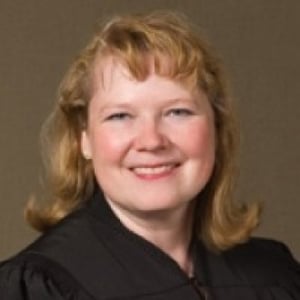
U.S. Court of Appeals, 10th Circuit
Allison Hartwell Eid is a judge on the United States Court of Appeals for the 10th Circuit. She joined the court in 2017 after a nomination from President Donald Trump.
Prior to her service on the Tenth Circuit, Judge Eid was a justice on the Colorado Supreme Court. She was the 95th justice to serve on the court, serving from 2006 to 2017. Before joining the Court, Judge Eid was the Solicitor General of the State of Colorado, serving as the chief legal officer to the Colorado Attorney General and representing Colorado officials and agencies in state and federal court. She was also a tenured Associate Professor of Law at the University of Colorado School of Law, teaching Constitutional Law, Legislation, and Torts, and writing on the topic of constitutional federalism.
Prior to joining the faculty of the University of Colorado School of Law, Judge Eid practiced commercial and appellate litigation with the Denver office of the national law firm of Arnold & Porter. She clerked for the Honorable Clarence Thomas, Associate Justice of the United States Supreme Court, and for Judge Jerry E. Smith of the United States Court of Appeals for the Fifth Circuit in Houston, Texas.
Judge Eid earned her bachelor’s degree in American Studies (With Distinction and Phi Beta Kappa) from Stanford University in 1987. She then served as a Special Assistant and Speechwriter to U.S. Secretary of Education William J. Bennett. In 1991, she graduated with High Honors from The University of Chicago Law School, where she was Articles Editor of The University of Chicago Law Review and was elected to the Order of the Coif. In 2002, President George W. Bush appointed her to serve on the Permanent Committee for the Oliver Wendell Holmes Devise, established by Congress in 1955 to prepare the history of the U.S. Supreme Court. She is a member of the American Law Institute and studied comparative law in London as a Temple Bar Scholar.
Judge Eid grew up in Spokane, Washington. She and her husband Troy, an attorney, have two children.
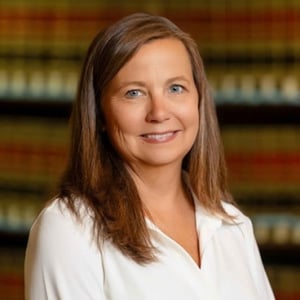
John P. Murphy Foundation Professor of Law and Associate Dean for External Engagement, University of Notre Dame Law School
Nicole Stelle Garnett is the John P. Murphy Foundation Professor of Law at Notre Dame Law School, where she also serves as the Associate Dean for External Engagement and directs the Notre Dame Education Law Project. Her teaching and research focus on education law and policy, religious liberty, and topics related to property law (especially land use and urban development policies). In addition to dozens of articles on these subjects, she is the author of Lost Classroom, Lost Community: Catholic Schools' Importance in Urban America (University of Chicago Press, 2014) and Ordering the City: Land Use, Policing and the Restoration of Urban America (Yale University Press, 2009).
Garnett received her B.A. with distinction in Political Science from Stanford University and her J.D. from Yale Law School. After law school, she clerked for the Honorable Morris S. Arnold of the United States Court of Appeals for the Eighth Circuit and for Associate Justice Clarence Thomas of the Supreme Court of the United States. Before joining the law school faculty in 1999, she worked for two years as a staff attorney at the Institute for Justice, a non-profit public-interest law firm in Washington, D.C., where she helped to defend the constitutionality of the nation's first private-school-choice programs.
At Notre Dame, Garnett is a faculty fellow in the Institute for Educational Initiatives, Kellogg Institute for International Studies, Fitzgerald Institute for Real Estate, and deNicola Center for Ethics and Culture. She also is an elected member of the American Law Institute and a Senior Fellow at the Manhattan Institute.
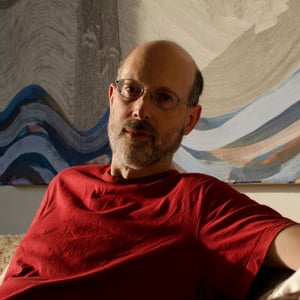
Maurice and Hilda Friedman Professor of Law, Columbia Law School; CEO, New Civil Liberties Alliance
Philip Hamburger is the Maurice and Hilda Friedman Professor of Law at Columbia Law School, and Chief Executive Officer at the New Civil Liberties Alliance. Before coming to Columbia, he was the John P. Wilson Professor at the University of Chicago Law School.
He writes on constitutional law and its history—with particular emphasis on religious liberty, freedom of speech and the press, judicial office, administrative power, and unconstitutional conditions.
His books are Separation of Church and State (Harvard 2002), Law and Judicial Duty (Harvard 2008), Is Administrative Law Unlawful? (Chicago 2014), The Administrative Threat (Encounter 2017), and Liberal Suppression: Section 501(c)(3) and the Taxation of Speech (Chicago 2018). A forthcoming book is Purchasing Submission: Conditions, Power, and Freedom (Harvard 2021).
He is a member of the American Academy of Arts and Sciences, and he has served on the board of directors of the American Society for Legal History. He has twice received the Sutherland Prize for the most significant contribution to English legal history, and has been awarded the Henry Paolucci - Walter Bagehot Book Award, the Hayek Book Prize, and the Bradley Prize.
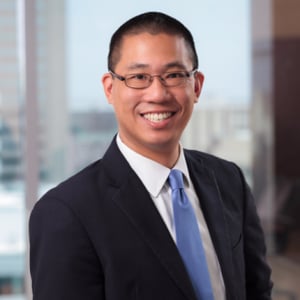
Chair, Issues & Appeals, Hunton Andrews Kurth LLP
The former Solicitor General of West Virginia, Mr. Lin has been on the front lines of many precedent-setting cases in appellate courts across the country, including in a US Supreme Court victory that George Will called “the court’s most severe rebuke of a president” since the Truman administration. Having argued more than 60 appeals, he brings to clients a well-honed ability to identify the most persuasive issues for appeal and a practiced understanding of how best to frame complex legal questions in appellate courts.
With experience in the private sector and multiple branches of government, Mr. Lin’s practice has spanned a wide range of issues, including major questions of constitutional and administrative law at the federal and state levels. On behalf of more than two dozen states, he won a stay from the US Supreme Court of the EPA’s Clean Power Plan. Described by the New York Times as an “unprecedented” order, the stay was the first time the Supreme Court had ever put a regulation on hold before review by a federal appeals court. In that same case, Elbert argued before the en banc DC Circuit in an historic proceeding that one commenter quoted in E&E News compared to “the NBA All-Star Game.” At the state level, Elbert led the effort that persuaded the West Virginia Supreme Court of Appeals to overturn an injunction of the state’s right-to-work law.
In 2013, Mr. Lin was appointed the Solicitor General of West Virginia. During his four-and-a-half year tenure, he served as a member of the Attorney General’s senior management team, oversaw all civil and criminal appeals, and argued nearly two dozen cases in federal and state appellate courts. He authored more than twenty-five briefs in the US Supreme Court and more than forty-five formal Opinions of the Attorney General.
Earlier in his career, Mr. Lin served as a trial attorney in the Federal Programs Branch of the US Department of Justice’s Civil Division, where he received a Special Service Award. He has also been a law clerk at all three levels of the federal judiciary: for Justice Clarence Thomas on the US Supreme Court; for Judge William H. Pryor Jr. on the US Court of Appeals for the Eleventh Circuit; and for Senior Judge Robert E. Keeton on the US District Court for the District of Massachusetts.
Mr. Lin speaks regularly on a wide variety of topics, including constitutional law, administrative law, environmental law, state and federal relations, the US Supreme Court, and appellate practice. He has testified before Congress, and has spoken at the national conventions of the American Bar Association, the Association of Corporate Counsel, the National Asian Pacific American Bar Association, the Federalist Society, Americans for Prosperity, and the American Legislative Exchange Council. He is an elected member of the American Law Institute, a public member of the Administrative Conference of the United States, and a fellow of the American Academy of Appellate Lawyers.
Mr. Lin is admitted to practice in the following federal courts: the Supreme Court of the United States; the First, Second, Third, Fourth, Fifth, Sixth, Seventh, Eighth, Ninth, Eleventh, D.C., and Federal Circuits; the District of Massachusetts; the Northern and Southern Districts of West Virginia; and the Eastern and Western Districts of Virginia.
Professor of Law; Co-director, National Security and U.S. Foreig, The George Washington University Law School
Gregory E. Maggs joined the George Washington University Law School faculty in 1993. He is a a Co-director of the law school’s National Security and U.S. Foreign Relations LLM program. He was the Interim Dean of the law school from 2010-2011 and from 2013-2014 and the Senior Associate Dean for Academic Affairs from 2008-2010. He teaches mainly in the areas of commercial law, constitutional law, contracts, and counter-terrorism law, and he has written extensively on these subjects. By vote of the graduating class, he received the law school’s Distinguished Faculty Service Award in 1997, 1998, 2004, 2005, 2011, 2012, 2013, and 2014. In 2012, the university gave him the George Washington Award for outstanding service.
Professor Maggs is a graduate of Harvard College and Harvard Law School. He was a law clerk for Justices Clarence Thomas (1991-1992) and Anthony M. Kennedy (1989-1990) of the U.S. Supreme Court and for the late Judge Joseph T. Sneed of the U.S. Court of Appeals for the Ninth Circuit (1988-1989). He also taught for two years as an assistant professor at the University of Texas School of Law. His other past experience includes service as a special master for the U.S. Supreme Court, a consultant to Independent Counsel Kenneth Starr in the Whitewater Investigation, and an assistant to Robert H. Bork in private practice and research. He is a member of the Advisory Board for the Heritage Foundation's Center for Legal and Judicial Studies and a member of the American Law Institute.
Professor Maggs is a colonel in the U.S. Army Reserve, Judge Advocate General’s Corps. He was commissioned in 1990, and has been assigned as a trial or appellate military judge since 2007. He is a graduate of U.S. Army War College, the Military Judge Course, the Command and General Staff Officer Course, the Judge Advocate Officer Advanced and Basic Courses, the Air Assault School, and the Infantry Weapons Specialist Course. He was called to active duty in 2007-2008. In 2002, he received the Judge Advocates Association's Outstanding Career Armed Services Attorney Award.
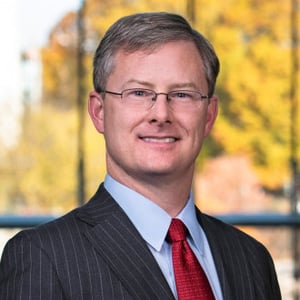
Partner, Jones Day
Kevin Marshall provides clients analysis, strategy, and advocacy involving novel or complex legal issues, particularly in white collar and other compliance matters and in civil litigation arising out of criminal matters or alleged fraud. This includes appeals, dispositive and other critical motions, and prelitigation analyses.
Kevin oversaw trial and appellate briefing, and argued on appeal, in the successful defense of lawsuits arising out of the wiretapping prosecution of a private investigator who had served Jones Day's clients. He also has overseen briefing of, and successfully argued, motions for R.J. Reynolds in connection with arbitration under the Federal Arbitration Act, and the partial settlement, of billion dollar disputes with states under the Master Settlement Agreement. His assistance with investigations and related litigation has included the Foreign Corrupt Practices Act, false claims acts, RICO, civil and criminal fraud, reckless manslaughter, and the intersection of products liability and bankruptcy. Kevin was part of the team representing the National Federation of Independent Business in challenging the constitutionality of the Patient Protection and Affordable Care Act before the Eleventh Circuit and U.S. Supreme Court. He also has advised on and briefed issues under the Consumer Product Safety Improvement Act (CPSIA).
Before joining Jones Day, Kevin was a deputy assistant attorney general in the U.S. Department of Justice's Office of Legal Counsel. He provided authoritative written legal opinions and other legal advice, throughout the executive branch, on the Constitution, treaties, international law including the law of war, and federal statutes and regulations. He also testified three times before Congress.
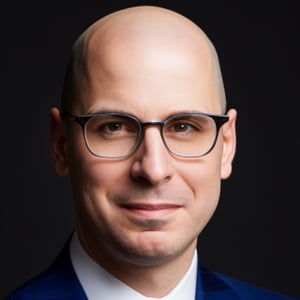
Partner and Lecturer
Adam Mortara graduated from the University of Chicago in 1996 with a B.Sc. in chemistry. He then attended Magdalene College, Cambridge, where he received a masters degree in astrophysics on a British Marshall Scholarship.
Mr. Mortara graduated from the University of Chicago Law School with highest honors in 2001. Following graduation, he clerked for Judge Patrick Higginbotham of the U.S. Court of Appeals for the Fifth Circuit and then for Justice Clarence Thomas of the Supreme Court of the United States. After his clerkships, he was a Temple Bar Scholar of the American Inns of Court.
From 2003 to 2020, Mr. Mortara was with Bartlit Beck LLP where he tried high stakes intellectual property cases and, more notably, Students For Fair Admissions v. Harvard. He retired from Bartlit Beck and founded Lawfair LLC, a civil and voting rights firm. He has been a Lecturer in Law at the University of Chicago Law School since 2007, where he teaches Federal Habeas Corpus, Federal Jurisdiction, Criminal Procedure, and Writing for the Judiciary.
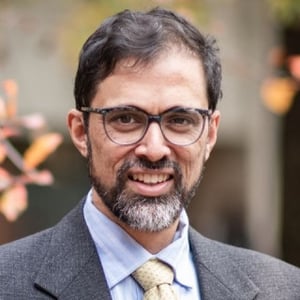
James Monroe Distinguished Professor of Law and Albert Clark Tate, Jr., Professor of Law, University of Virginia School of Law
Professor Saikrishna Prakash’s scholarship focuses on separation of powers, particularly executive powers. He teaches Constitutional Law, Foreign Relations Law and Presidential Powers at the Law School.
Prakash’s most recent book, “The Living Presidency: An Originalist Argument Against Its Ever-Expanding Powers,” was published by Harvard Belknap Press in 2020. He also authored “Imperial from the Beginning: The Constitution of the Original Executive” (Yale University Press, 2015). The former book focuses on the modern presidency while the latter considers the presidency of the Founders.
Prakash has authored over 75 law review articles. Among them are “Of Synchronicity and Supreme Law” in the Harvard Law Review, “The Indefensible Duty to Defend” in the Columbia Law Review, and “50 States, 50 Attorneys General and 50 Approaches to the Duty to Defend” and “The Executive Power Over Foreign Affairs” in the Yale Law Journal.
Prakash has published op-eds in The New York Times, The Wall Street Journal and the Los Angeles Times. At the request of Democrats and Republicans, he has testified before Congress on matters of presidential removal, the Mueller Report and how Congress might better check the presidency. He is currently a Miller Center Senior Fellow. In 2015, he received the Roger Traynor award for faculty scholarship. In the same year, he received an honorable mention from the American Society of Legal Writers for his book “Imperial from the Beginning.” He has given named lectures at William & Mary Law School, Princeton University and Toledo Law School, and keynote addresses at several conferences.
Prakash majored in economics and political science at Stanford University. At Yale Law School, he served as senior editor of the Yale Law Journal and received the John M. Olin Fellowship in Law, Economics and Public Policy. He subsequently clerked for Judge Laurence H. Silberman of the U.S. Court of Appeals for the District of Columbia Circuit and for Justice Clarence Thomas of the U.S. Supreme Court. After practicing in New York for two years, he served as a visiting professor at the University of Illinois College of Law and as an associate professor at Boston University School of Law. He then spent several years at the University of San Diego School of Law as the Herzog Research Professor of Law. Prakash has been a visiting professor at Northwestern University and the University of Chicago. He also has served as a James Madison Fellow at Princeton University and Visiting Research Fellow at the Hoover Institution of War & Peace at Stanford University.

Chief Judge, United States Court of Appeals, Eleventh Circuit
William H. Pryor Jr. serves as Chief Circuit Judge on the United States Court of Appeals for the Eleventh Circuit.
In 2013–18, he served on the United States Sentencing Commission and, in 2017–18, served as Acting Chair.
He has taught as a visiting professor at the University of Alabama School of Law and previously taught as an adjunct professor at the Cumberland School of Law of Samford University.
He served as the 45th Attorney General of Alabama from 1997 to 2004. When he took office, he was the youngest attorney general in the nation. In his reelection, he received the highest percentage of votes of any statewide candidate.
He graduated magna cum laude from Tulane Law School where he finished first in the common-law curriculum and was editor in chief of the Tulane Law Review. He then served as a law clerk for Judge John Minor Wisdom of the U.S. Court of Appeals for the Fifth Circuit.
He is a member of The American Law Institute and an Adviser for the RESTATEMENT OF THE LAW THIRD, CONFLICT OF LAWS. He is a coauthor with Bryan Garner, Justices Gorsuch and Kavanaugh, and several other judges of a treatise, THE LAW OF JUDICIAL PRECEDENT. He has published in the Yale Law Journal, Columbia Law Review, Virginia Law Review, Notre Dame Law Review, Harvard Journal of Law & Public Policy, Yale Law & Policy Review, George Mason Law Review, Florida Law Review, Alabama Law Review, Case Western Reserve Law Review, and Tulane Law Review. He has published op-eds in The Wall Street Journal, The New York Times, National Review, and USA Today. He has debated at National Lawyers’ Conventions of the Federalist Society (including on National Public Radio) and at the Oxford Union in the United Kingdom. And he is listed among several “widely admired judicial writers” in Bryan Garner’s The Redbook: A Manual on Legal Style.
He is a member of the Tulane Law School Hall of Fame and has received the Defender of the Constitution Award from the Heritage Foundation, the Jurist of the Year Award from the Texas Review of Law & Politics, and the St. Thomas More Award from the St. Thomas More Society of Atlanta. Judge Pryor is also a proud member of the National Society of the Sons of the American Revolution.

Judge, United States Court of Appeals, District of Columbia Circuit
Judge Rao was appointed to the United States Court of Appeals for the District of Columbia Circuit in March 2019. She graduated from Yale College in 1995 and the University of Chicago Law School in 1999. Following graduation, she served as a law clerk to Judge J. Harvie Wilkinson III of the U.S. Court of Appeals for the Fourth Circuit and, in the 2001 October Term, as law clerk to Justice Clarence Thomas of the U.S. Supreme Court. Between her clerkships, Judge Rao served as counsel for nominations and constitutional law to the U.S. Senate Committee on the Judiciary. In 2002, she joined the international arbitration group of Clifford Chance LLP in London, England. From 2005-2006, she served as Special Assistant and Associate White House Counsel to President George W. Bush. From 2006 to 2017, Judge Rao was a professor at the Antonin Scalia Law School at George Mason University, where she taught constitutional law, legislation and statutory interpretation, and the history and foundations of the administrative state. In 2014, she founded the Center for the Study of the Administrative State, a non-profit Center that promotes academic scholarship and public policy debates about administrative law. In July 2017, she was appointed to serve as the Administrator of the Office of Information and Regulatory Affairs in the Office of Management Budget. She served in this position until her appointment to the D.C. Circuit.
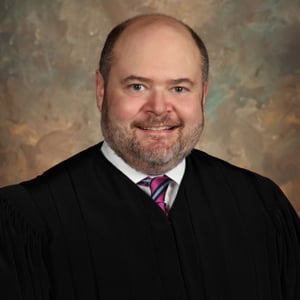
Judge, United States Court of Appeals, Eighth Circuit
David Stras became a judge on the United States Court of Appeals for the Eighth Circuit on January 31, 2018. Before serving on the Eighth Circuit, Judge Stras was an Associate Justice of the Minnesota Supreme Court, a position he occupied from July 1, 2010 until his appointment to the Eighth Circuit.
Prior to becoming a judge, Stras was a member of the faculty of the University of Minnesota Law School from 2004 through 2010. He taught and wrote in the areas of federal courts and jurisdiction, constitutional law, criminal law, and law and politics.
Judge Stras received his Bachelor of Arts degree, with highest distinction, in 1995 and his Master of Business Administration in 1999, both from the University of Kansas. He also received his law degree from the University of Kansas School of Law in 1999, where he served as Editor-in-Chief of the Criminal Procedure Edition of the Kansas Law Review.
Following law school, Stras clerked for The Honorable Melvin Brunetti of the United States Court of Appeals for the Ninth Circuit and then for The Honorable J. Michael Luttig of the United States Court of Appeals for the Fourth Circuit.
From 2001 to 2002, he practiced white-collar criminal and appellate litigation with the Washington, D.C., office of Sidley Austin Brown & Wood. Following his year in practice, he clerked for The Honorable Clarence Thomas of the Supreme Court of the United States.
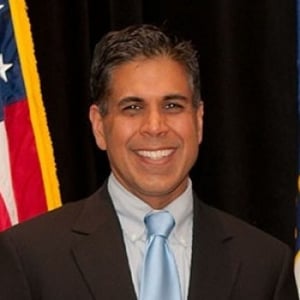
Judge, United States Court of Appeals, Sixth Circuit
Amul R. Thapar serves as a judge on the United States Court of Appeals for the Sixth Circuit. His judicial career began in 2007 when President George W. Bush nominated him to serve on the Eastern District of Kentucky, making him the first South Asian Article III judge in American history. In 2017, he became President Donald J. Trump’s first appellate court nominee.
Before joining the bench, Judge Thapar served as the United States Attorney for the Eastern District of Kentucky. While United States Attorney, Judge Thapar worked on the Attorney General’s Advisory Committee (“AGAC”) and chaired the AGAC’s Controlled Substances and Asset Forfeiture subcommittee. He also served on the Terrorism and National Security subcommittee, the Violent Crime subcommittee, and the Child Exploitation working group.
Judge Thapar has worked in private practice, at Williams & Connolly in Washington, D.C., and Squire, Sanders & Dempsey in Cincinnati, Ohio. He also served as an Assistant United States Attorney in both the Southern District of Ohio and the District of Columbia.
Judge Thapar received his undergraduate degree from Boston College and his law degree from the University of California, Berkeley. After graduating, Judge Thapar worked as a law clerk to the Honorable S. Arthur Spiegel of the United States District Court for the Southern District of Ohio, and the Honorable Nathaniel R. Jones of the United States Court of Appeals for the Sixth Circuit.
Judge Thapar has also published in the Yale Law Journal, Michigan Law Review, and Catholic University Law Review. He teaches courses on originalism, the Federalists and Anti-Federalists, and legal writing at Notre Dame Law School, the University of Virginia School of Law, and Vanderbilt Law School.
Professor of Law, Fordham University School of Law
Professor Andrew Kent teaches and writes about constitutional law, foreign relations law, federal courts and procedure, national security law, public international law, professional responsibility and legal ethics. He received the Dean’s Distinguished Research Award (2016-17) for his scholarship.
After graduating from Yale Law School, Professor Kent clerked for the Hon. Robert A. Katzmann of the U.S. Court of Appeals for the Second Circuit and the Hon. Carol B. Amon of the U.S. District Court for the Eastern District of New York. Before joining Fordham’s faculty, he was a Climenko Fellow at Harvard Law School and an attorney at both Sullivan & Cromwell and WilmerHale.
From 2014-2015, Professor Kent served as Senior Counsel to the Solicitor General, State of New York, Office of the Attorney General.
Professor Kent is a member of the New York City Bar’s Professional Responsibility Committee. He provides appellate representation to the indigent as a member of the Pro Bono Panel of the U.S. Court of Appeals for the Second Circuit.
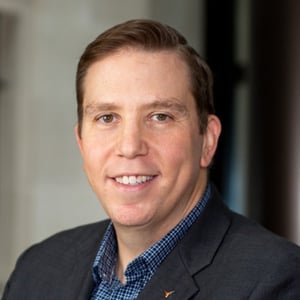
Agnes Williams Sesquicentennial Professor of Federal Courts, Georgetown Law
Stephen I. Vladeck is a professor of law at the Georgetown University Law Center, and is a nationally recognized expert on the federal courts; the Supreme Court; national security law; and military justice.
Vladeck is author of the New York Times bestselling book, “The Shadow Docket: How the Supreme Court Uses Stealth Rulings to Amass Power and Undermine the Republic,” which won the 2023 Writers’ League of Texas Book Award for Non-Fiction and was a finalist for the 2024 ABA Silver Gavel Award for Media and the Arts. Vladeck is also a highly regarded appellate advocate, having argued three cases before the U.S. Supreme Court and over a dozen before various lower federal civilian and military courts. He has received numerous awards for his influential and widely cited legal scholarship, his prolific popular writing, his teaching, and his service to the legal profession—including the 2024 University of Texas President’s Research Impact Award and his selection by the Order of the Coif to serve as its Distinguished Visiting Professor for 2025.
Vladeck is CNN’s Supreme Court analyst and editor and author of “One First,” a popular weekly newsletter about the Supreme Court. Together with Bobby Chesney, Vladeck co-hosts the popular and award-winning “National Security Law Podcast.” He is also a co-author of Aspen Publishers’ leading national security law and counterterrorism law casebooks. And he is a member of the Board of Trustees of EarthJustice—the nation’s premier nonprofit public interest environmental law organization.
Vladeck graduated from Yale Law School in 2004—where he was executive editor of the Yale Law Journal and won the Harlan Fiske Stone Prize for outstanding moot court oralist and shared the Potter Stewart Prize for best moot court team performance. After law school, he clerked for the Honorable Marsha S. Berzon on the U.S. Court of Appeals for the Ninth Circuit and the Honorable Rosemary Barkett on the U.S. Court of Appeals for the Eleventh Circuit. He earned a B.A. summa cum laude with Highest Distinction in History and Mathematics from Amherst College in 2001—where he wrote his senior thesis on “Leipzig’s Shadow: The War Crimes Trials of the First World War and Their Implications from Nuremberg to the Present.” A native New Yorker and hopeless Mets fan, Vladeck lives in the District with his wife, Karen (Founder and Managing Partner of Risepoint Search Partners); their daughters, Madeleine and Sydney; and their eleven-year-old pug, Roxanna.