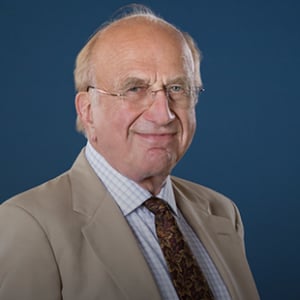
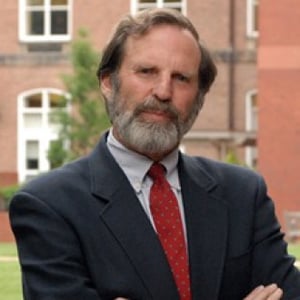
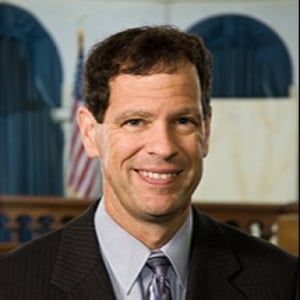
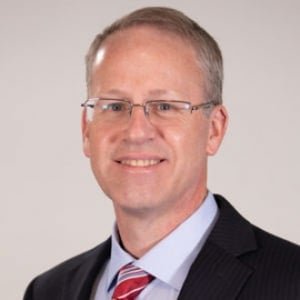
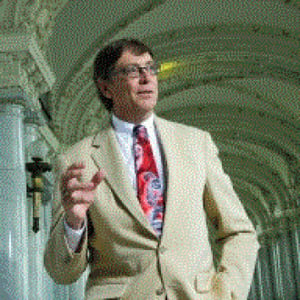
David Dorsen is Of Counsel with Sedgwick, LLP. He served as an Assistant US Attorney in New York under Robert M. Morgenthau, and later as Assistant Chief Counsel of the Senate Watergate Committee under Senator Sam Ervin. He has taught at Duke University, North Carolina, Georgetown University Law Center, Washington DC, and George Washington University Law School, Washington DC. His book, Henry Friendly, Greatest Judge of his Era (with Richard A. Posner, 2012), won the Green Bag Award for Exemplary Legal Writing.
Adjunct Professor, George Washington University Law School
Biography
Alan B. Morrison was for more than 16 years the Lerner Family Associate Dean for Public Interest & Public Service Law at George Washington University Law School where he headed up the Law School’s efforts to increase pro bono opportunities for its students. He is currently an adjunct professor at GW where he teaches civil procedure and the basic constitutional law course, He previously taught at Harvard, NYU, Stanford, Hawaii, & American University law schools. For most of his career Professor Morrison worked for the Public Citizen Litigation Group, which he co-founded with Ralph Nader in 1972 and directed for over 25 years. He has argued 20 cases in the Supreme Court, including victories in Goldfarb v. Virginia State Bar; Virginia State Board of Pharmacy v. Virginia Citizens Consumer Council; and INS v. Chadha. He is currently litgating a range of cases challenges actions of the Trump administration, with a particular focus on the Trump tariffs.
Warren Distinguished Professor of Law, University of San Diego School of Law
Biography
Michael D. Ramsey is Warren Distinguished Professor of Law at the University of San Diego School of Law, where he teaches and writes in the areas of Constitutional Law, Foreign Relations Law and International Law. He is the author of The Constitution’s Text in Foreign Affairs (Harvard University Press), co-editor of International Law in the U.S. Supreme Court: Continuity and Change (Cambridge University Press), and co-author of two casebooks, Transnational Law and Practice (2d ed., Aspen) and International Business Transactions: A Problem-Oriented Coursebook (14th ed., West). His scholarly articles have appeared in publications such as the Yale Law Journal, the University of Chicago Law Review, the Georgetown Law Journal and the American Journal of International Law. He received his B.A. magna cum laude from Dartmouth College and his J.D. summa cum laude from Stanford Law School. Prior to teaching, he served as a judicial clerk for Judge J. Clifford Wallace of the United States Court of Appeals for the Ninth Circuit and for Justice Antonin Scalia of the United States Supreme Court, and practiced law with the law firm of Latham & Watkins, where he specialized in international finance and investment. He has taught as a visiting professor at the University of California, San Diego, in the Department of Political Science and at the University of Paris – Sorbonne, in the Department of Comparative Law.
George C. Dix Professor in Constitutional Law, Northwestern University Pritzker School of Law
Biography
John O. McGinnis is a graduate of Harvard College and Harvard Law School where he was an editor of the Harvard Law Review. He also has an MA degree from Balliol College, Oxford, in philosophy and theology. Professor McGinnis clerked on the U.S. Court of Appeals for the District of Columbia. From 1987 to 1991, he was deputy assistant attorney general in the Office of Legal Counsel at the Department of Justice. He is the author of Accelerating Democracy: Transforming Government Through Technology (Princeton 2013) and Originalism and the Good Constitution (Harvard 2013) (with M. Rappaport). He is a past winner of the Paul Bator award given by the Federalist Society to an outstanding academic under 40. He has been listed by the United States on the roster of panelists who may be called upon to decide World Trade Organization Disputes.
Steve Simpson joined PLF in 2019 to head up its Separation of Powers practice group.
Steve’s career in public interest law started at the Institute for Justice in 2001, where he litigated free speech, campaign finance, and economic liberty cases. Among other high-profile cases in which Steve was involved, he was co-counsel in Arizona Free Enterprise Club’s Freedom Club PAC v. Bennett, IJ’s successful Supreme Court challenge to Arizona’s public financing law for political campaigns. He was the lead litigator in SpeechNow.org v. FEC, a joint effort between IJ and the Institute for Free Speech that led to the creation of super PACs. And he was co-counsel in Swedenburg v. Kelly, IJ’s successful Supreme Court challenge to New York’s ban on the interstate shipping of wine.
In 2013, Steve moved into the policy arena as the Ayn Rand Institute’s director of Legal Studies, where he spent five years writing and speaking on a wide variety of legal and cultural issues. From there, he moved back into law as senior litigation counsel at the New Civil Liberties Alliance in Washington, D.C.
Steve has spoken and written on a wide variety of legal and policy issues. He has testified in Congress and briefed congressional staffers. He has been interviewed on scores of television and radio programs, including PBS News Hour, Stossel, and The Rubin Report. His writings have appeared in many publications, including The Wall Street Journal and The Washington Post. In 2014, Steve was a Lincoln Fellow at the Claremont Institute. He is the editor of Defending Free Speech (ARI Press, 2016).
Steve earned his law degree magna cum laude from New York Law School in 1994. Following law school, he clerked for a federal district judge in the Southern District of Florida and spent several years as a litigator at Shearman & Sterling.
When he’s not at work or spending time with his wife and three daughters, Steve can usually be found mucking around in the woods at his cabin on Shenandoah Mountain.
Jordan Lorence is Senior Counsel in FLI’s Washington, D.C. office, where he represents First Liberty in strategic efforts promoting religious liberty, and works on important First Amendment projects and litigation, including those at the U.S. Supreme Court.
Lorence has a long career of litigating religious liberty cases since 1984. He has worked for many public interest law firms, including Alliance Defending Freedom, Home School Legal Defense Association, the North Star Legal Center and Concerned Women for America.
He has worked on important religious liberty cases. Lorence worked on school choice cases at the Supreme Court, such as Witters v. Washington Department of Services for the Blind (1986), and Trinity Lutheran (2016), which laid the foundation for First Liberty’s crucial win in Carson v. Makin (2022), requiring Maine to include religious schools in its school choice program.
Lorence argued before the U.S. Supreme Court in Regents of the University of Wisconsin v. Southworth (2000). He represented prolife Christian law students from the University of Wisconsin Law School who objected to the University’s requirement that they pay a mandatory student fee that funded the advocacy of student pro-abortion groups. Other Supreme Court cases Lorence has worked on include NIFLA v. Becerra (2018), protecting prolife pregnancy centers from a California statute requiring them to post signs explaining how pregnant women could obtain state-funded abortions; Masterpiece Cakeshop (2017), involving a Christian cake artist sued by the State of Colorado for declining to design a case celebrating the wedding of a same-sex couple and other cases such as Christian Legal Society v. Martinez (2012), Rosenberger v. University of Virginia (1995), Hurley v. GLIB (1995) and Lamb’s Chapel v. Center Moriches Center Moriches School District (1993).
Churches and other religious groups in New York City obtained the right to rent vacant public schools on weekends to conduct worship services after Lorence’s tenacious 20 years of litigation in Bronx Household of Faith. Lorence won protection for churches facing eviction from discriminatory zoning ordinances in Minnesota in Cornerstone Bible Church v. City of Hastings, Minnesota (1991). He also argued at the New Mexico Supreme Court one of the first cases in the nation defending a Christian wedding photographer charged by the State of New Mexico with discrimination for declining to create photos celebrating the commitment ceremony of a lesbian couple in Elane Photography v. Willock (2013).
Lorence defended home schooling families from intrusive school officials during his time working at Home School Legal Defense Association (HSLDA) in the 1980s and 1990s. HSLDA also tasked Lorence with establishing a sister organization in Canada to protect home schooling families there. He traveled extensively in Canada from British Columbia to Prince Edward Island speaking to families how they could protect their right to home school under relevant Canadian law.
Lorence earned his undergraduate degree in journalism from Stanford University and his law degree from the University of Minnesota, his home state. Lorence was born and raised in Minnesota, where he worked one summer building Mighty Dump trucks at Tonka Toys in Mound, Minnesota. For two years immediately after he graduated from law school, Lorence served as the head administrator for a Minnesota Senate committee.
He speaks extensively on First Amendment and other legal issues. Lorence has spoken at least 75 law schools and many legal conferences. Prominent publications such as the Wall Street Journal, the Washington Post and others have printed his opinion pieces on key legal issues involving religious liberty and freedom of speech. He has appeared on such media outlets as Fox News, CNN, National Public Radio, NBC’s Today Show, BBC radio and many others.
Lorence and his wife Marilyn have been married 40 years. They live in the Washington, D.C. area where they raised their seven children.
Patrick Hotung Professor of Constitutional Law, Georgetown University Law Center
Biography
Randy Barnett is the Patrick Hotung Professor of Constitutional Law at Georgetown University Law Center. He has argued before the United States Supreme Court, tried murder cases to juries as a prosecutor in Chicago, and appeared as a prosecutor in the feature film Inalienable. He is the author of numerous books, including Restoring the Lost Constitution, The Structure of Liberty, Our Republican Constitution, and The Original Meaning of the Fourteenth Amendment. He has published two memoirs, A Life for Liberty: The Making of an American Originalist, and Felony Review: Tales of True Crime and Corruption in Chicago. He is currently working on a new book, Freedom and Flourishing: Libertarianism for the Real World.
Constitutional, Appellate, and Political Speech Lawyer
Biography
Randy Elf, a Jamestown, New York, native, attended Jamestown Public Schools and Southwestern Central School.
After graduating as valedictorian from Southwestern, he graduated with honors from Duke University and was Duke’s first guest teacher at Landheim Schondorf, a German-language boarding school in Schondorf am Ammersee, Germany.
Thereafter, he held a one-year position as a German teacher at Southwestern, was an assistant to authors and lecturers Drs. Russell Kirk and Annette Kirk, and covered education and federal and state affairs for The Post-Journal in Jamestown, where his reporting was instrumental in completing Interstate 86 in Chautauqua County.
He graduated as president of his law-school class at Syracuse University—where he co-founded a chapter of the Federalist Society—and clerked for two federal judges: Brevard Hand of the U.S. District Court for the Southern District of Alabama in Mobile, and Alice Batchelder of the U.S. Court of Appeals for the Sixth Circuit in Medina, Ohio.
He twice ran for the New York state Assembly against a long-term incumbent in Chautauqua County.
Dr. Elf has practiced law, both at the Federal Election Commission and privately. Since 2010, no one in the country has had more experience briefing and conducting hearings on the constitutionality of political-speech law. Much of his experience is reflected in his 2016 Regent University Law Review article, at https://ssrn.com/abstract=5283417, and his 2020 Advocates for Balance at Chautauqua presentation, at https://www.youtube.com/watch?v=h3ebymA7xOo .
He explored seeking the Republican and Conservative parties’ nominations for New York attorney general in 2018, has written a regular newspaper column since 2020, and was his Mom’s caregiver for eight years.
He has been active in several organizations and enjoys swimming, snowmobiling, traveling, golf, tennis, and rooting for the Buffalo Bills and Sabres.
A 13th great-grandson of King Gustav Eriksson Vasa of Sweden, he and the former Hilary Anne Kurtz, who he later learned is his ninth cousin twice removed, were married (#KurtzElfWedding) on December 28, 2019. Mrs. Elf and their two children, Ryan and Margaret, are in Heaven.
Judge, United States Court of Appeals for the Ninth Circuit
Biography
Anthony Johnstone serves as a judge on the United States Court of Appeals for the Ninth Circuit. Judge Johnstone previously served as the Helen and David Mason Professor of Law and an affiliated Professor of Public Administration at the University of Montana, Alexander Blewett III School of Law in Missoula since 2011. As a professor he taught federal and state constitutional law and legislation, as well as a federal judicial clinic. Johnstone also has served as trial and appellate counsel in federal and state courts, including the Ninth Circuit and the Supreme Court of the United States, most recently with Johnstone PLLC. He served the Montana Department of Justice as state solicitor from 2008 to 2011 and assistant attorney general from 2004 to 2008. Johnstone entered practice as an associate at Cravath, Swaine & Moore in New York from 2000 to 2003. Born to Montanans in Minneapolis, Minnesota, Johnstone received his Bachelor of Arts from Yale University in 1995 and his Juris Doctor, with honors, from the University of Chicago Law School in 1999. Following law school, he clerked for Ninth Circuit Judge Sidney R. Thomas in Billings, Montana from 1999 to 2000.
Doug Bandow is a senior fellow at the Cato Institute, specializing in foreign policy and civil liberties. He worked as special assistant to President Reagan and editor of the political magazine Inquiry. He writes regularly for leading publications such as Fortune magazine, National Interest, Wall Street Journal, and Washington Times. Bandow speaks frequently at academic conferences, on college campuses, and to business groups. Bandow has been a regular commentator on ABC, CBS, NBC, CNN, Fox News Channel, and MSNBC. He holds a J.D. from Stanford University.
Professor of Law, University of California Hastings College of the Law
Biography
Professor Rory Little began teaching at UC Hastings in 1994 after a distinguished 12-year career as a practicing litigator, criminal defense and prosecution lawyer, and appellate lawyer. He is today a nationally recognized authority on criminal litigation ethics, federal criminal law, appellate litigation, and constitutional issues. On three occasions he has been awarded the “Best Professor” designation by the UC Hastings third-year class.
Professor Little chairs and serves on various committees in the American Bar Association and Federal Bar Association; annually publishes a Review of the Supreme Court’s Term: Criminal Cases for the ABA; and serves as Reporter to the ABA’s Task Force to Revise the Criminal Justice Standards, Prosecution and Defense Functions. He also occasionally serves as an expert witness in litigation matters; provides commentary on current legal issues for various print and electronic media; and maintains an Of Counsel position for appellate matters with the international law firm of McDermott, Will & Emery.
After graduating from Yale Law School, Professor Little served as law clerk to U.S. District Judge Louis F. Oberdorfer (Washington DC); Justice Potter Stewart (ret.), working on matters before the First, Third and Sixth Circuit Courts of Appeal; and Justice William J. Brennan, Jr. Professor Little also clerked for Justices Powell, Stevens, and Chief Justice Burger—a unique one-year experience.
Professor Little then practiced privately at Miller, Cassidy, Larroca & Lewin in Washington D.C. In 1987, he joined the U.S. Department of Justice’s Organized Crime & Racketeering Strike Force as a Trial Attorney. In 1989, he became the Appellate Chief for the U.S. Attorney’s Office in the Northern District of California, and has now argued over 60 federal and state appeals while briefing many more. In 1996 to 1997, Professor Little took a leave of absence from UC Hastings to serve as an Associate Deputy Attorney General in Washington D.C. under Attorney General Janet Reno and Deputy AG Jamie Gorelick.