Section 230
Duke Student Chapter
210 Science Dr
Durham, NC 27708
*******
As always, the Federalist Society takes no position on particular legal or public policy issues; all expressions of opinion are those of the speaker.
*******
As always, the Federalist Society takes no position on particular legal or public policy issues; all expressions of opinion are those of the speaker.
Lecturing Fellow and Supervising Attorney, First Amendment Clinic, Duke University School of Law
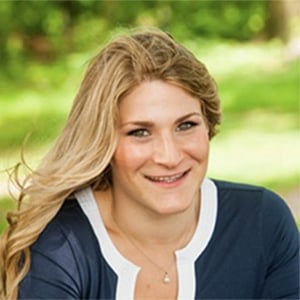
Nicole Ligon joined the Duke Law faculty in 2018 as a Lecturing Fellow and the Supervising Attorney of the First Amendment Clinic. In this capacity, she teaches First Amendment law in a clinical setting as well as Entertainment law. Through her work with the First Amendment Clinic, Ligon mentors students in honing their practical litigation skills and oversees their casework on behalf of clients who claim infringements of their free speech rights. While at Duke and in private practice, Ligon has represented and advocated on behalf of many individuals who have been discriminated against or otherwise targeted for expressing their viewpoints or opinions. She has also filed numerous amicus briefs in the U.S. Supreme Court and state courts in cases involving First Amendment and media law issues.
Ligon frequently contributes expert analysis and commentary to news stories involving First Amendment concerns. She has also published articles in outlets across the political spectrum concerning free expression. Some of her most recent works have focused on the constitutionality of statutes banning revenge pornography, campus speech issues, and the intersection between human rights laws and free speech rights with regard to casting practices. Ligon has also guest lectured on First Amendment law in the Summer Institute for Law, Language, & Culture (SILLC) and undergraduate workshops.
Ligon is a member of the Legal Network for Gender Equity, where she supervises students assisting individuals seeking guidance on speaking openly and publicly about their stories of sexual harassment while shielding against defamation concerns. She has been an invited webinar speaker on defamation claims related to sexual harassment for the Network.
Before joining Duke Law, Ligon was an attorney with Cahill Gordon & Reindel in New York City. She was a member of the firm’s litigation department, and her practice focused on First Amendment and media law matters. While in private practice, Ligon was honored by the Center for Appellate Litigation (CAL) for her work in helping its Books Beyond Bars project challenge proposed state packaging restrictions that would have prevented people incarcerated in New York prisons from receiving donated books by mail. Ligon’s extensive pro bono practice also included handling matters on issues related to reporter’s privilege, defamation, right of access, and other free speech concerns. Ligon also served on the board of a non-profit organization, Jazz Choreography Enterprises, from 2017-2018.
Ligon received her J.D. from Duke University School of Law, where she served as a Notes Editor for the Duke Law Journal. She received her B.A. from Emory University.
Ligon is licensed to practice law in New Jersey, New York, North Carolina, and South Carolina.
Professor at Louis D. Brandeis School of Law, University of Louisville
Professor Russell L. Weaver graduated cum laude from the University of Missouri School of Law in 1978. He was a member of the Missouri Law Review, was elected to the Order of the Coif, and won the Judge Roy Harper Prize. After law school, Professor Weaver was associated with Watson, Ess, Marshall & Enggas in Kansas City, Missouri, and worked for the U.S. Department of Energy's Office of General Counsel in Washington, D.C.
Professor Weaver began teaching at the Louis D. Brandeis School of Law in 1982, and holds the rank of Professor of Law and Distinguished University Scholar. He teaches Constitutional Law, Advanced Constitutional Law, Remedies, Administrative Law, Criminal Law, and Criminal Procedure. He has received the Brandeis School of Law's awards for teaching, scholarship, and service, including the Brown Todd & Heyburn Fellowship. He has been awarded the President's Award (University of Louisville) for Outstanding Research, Scholarship and Creative Activity in the Field of Social Science, the President's Award for Outstanding Research, Scholarship and Creative Activity in the Career Achievement Category, and the President's Award for Distinguished Service. He is the Executive Director and past president of the Southeastern Conference of the Association of American Law Schools. He is an Honorary Associate of Macquarie University (Sydney, Australia).
Professor Weaver is a prolific author who has written dozens of books and articles over the last twenty-five years. He was named the Judge Spurgeon Bell Distinguished Visiting Professor at South Texas College of Law (affiliated with Texas A & M University) during the 1998-99 academic year, and he held the Herbert Herff Chair of Excellence at the Cecil C. Humphreys School of Law, University of Memphis, during 1992-93. In addition, he has been asked to speak at law schools and conferences around the world, and has been a visiting professor at law schools in France, England, Germany, Japan, Australia and Canada.
Professor Weaver is particularly noted for his work in the constitutional law area. He has served as a consultant to the constitutional drafting commissions of Belarus and Kyrghyzstan and as a commentator on the Russian Constitution. His constitutional law writings have focused on free speech issues, particularly those relating to the U.S. Supreme Court's landmark decision in N.Y. Times Co. v. Sullivan, and include a constitutional law case-book and two anthologies (The First Amendment Anthology and The Constitutional Law Anthology). He has a First Amendment casebook in progress.
Professor Weaver is also noted for his writings on legal education and his work in the administrative law area. In 1992 and 1993, he served as a consultant to the Administrative Conference of the United States. His writings have focused on agency interpretations of statutes and regulations, and he is co-author of one of the leading administrative law casebooks.
Professor Weaver has served on many community and professional committees. He served on the Louisville Bar Association's (LBA) Professional Responsibility Committee, and as Chair of the Association of American Law Schools' (AALS) Criminal Justice Section and serves on the AALS Planning Committee for the New Law Teacher's Workshop. He has also served on the American Civil Liberties Union of Kentucky's Legal Panel and Board of Directors.