
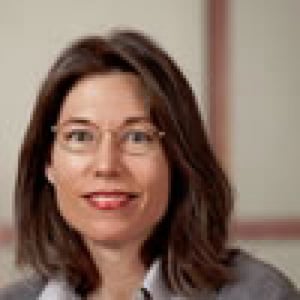
Visiting Associate Professor of Law and Research Fellow for the Study of Objectivism
An accomplished scholar on Objectivism and privacy law, Professor Amy Peikoff has served as a faculty member at universities around the country over the past decade, teaching and writing in the areas of Contemporary Moral Problems, Contracts, Ethics, Information Privacy Law, Morality and Business, Philosophy of Law, Political Philosophy and Professional Responsibility. She served as a visiting lecturer at the University of Texas at Austin in 2003, a visiting assistant professor at the University of North Carolina at Chapel Hill in 2004, an assistant and associate professor at the U.S. Air Force Academy from 2005 to 2008, and as a visiting fellow at Chapman University School of Law from 2008 to 2012.
She joined Southwestern’s adjunct faculty in January 2013, also serving as a research fellow, and was appointed as Visiting Associate Professor and Research Fellow for the Study of Objectivism at Southwestern in July 2014. She is teaching courses in Law and Literature, Education Law and Jurisprudence Seminar. In her role as a Research Fellow, Professor Peikoff will engage in scholarly work related to the philosophy and writings of Ayn Rand. The Fellowship is funded by the Anthem Foundation for Objectivist Scholarship.
In trying to convey to her students some effective ways to approach their studies, Professor Peikoff shares what she found to be true in her own law school career. “If you care about what the law says about a particular issue, you will remember it and do better on exams,” she says. “Always try to connect what you're learning in school to things and people you value.”
Professor Peikoff’s articles have been published in a variety of scholarly journals such as Brandeis Law Journal, NYU Journal of Law & Liberty, St. John’s Law Review and Virginia Journal of Social Policy & The Law, among others. She has lectured and served as a panelist on privacy issues and individual rights at dozens of Objectivist conferences and scholarly forums around the country, including DePaul College of Law, Keck Graduate Institute, Stanford, UCLA and University of Texas at Austin, as well as the Liberty Conference in Brazil.
Professor Peikoff finds the most exciting aspect of her area of interest to be “seeing a problem and coming up with a solution that can affect something you care about.” For example, after writing about privacy issues for many years, she found her interest waning, until the 2012 Supreme Court decision in United States v. Jones inspired her to solve the problem of the "third-party doctrine" and, one year later, “Edward Snowden's revelations made that solution more relevant than ever.”
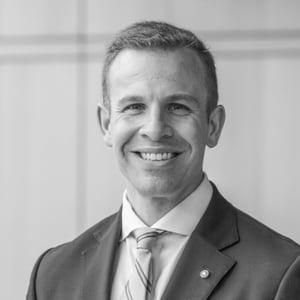
Senior Counsel, Becket Fund for Religious Liberty
William J. Haun is Senior Counsel at the Becket Fund for Religious Liberty and a Nonresident Fellow at the American Enterprise Institute (AEI). At Becket, Will litigates nationwide in defense of religious liberty for all faith traditions, particularly before the U.S. Supreme Court and in other federal and state appellate courts. His litigation includes being a member of the U.S. Supreme Court team that prevailed 9-0 for Catholic Social Services in Fulton v. City of Philadelphia, arguing before multiple federal appellate courts, federal district courts, and the Supreme Court of Texas. At AEI, Will writes and researches on constitutionalism and self-government’s prerequisites, especially the role of religion in securing and preserving freedom.
Before joining Becket and AEI, Will practiced appellate and antitrust law at two international law firms—Shearman & Sterling and Hunton & Williams. He also served as a law clerk to Judge Janice Rogers Brown of the U.S. Court of Appeals for the D.C. Circuit and Judge Claude Hilton of the U.S. District Court for the Eastern District of Virginia. Will often writes on constitutional law issues, including in the Harvard Journal of Law & Public Policy, the Catholic University Law Review, National Affairs, Law & Liberty, National Review Online, the Wall Street Journal, and the Washington Post. He also speaks on these topics, including at the Catholic University of America, Columbus School of Law, Princeton University, the University of Virginia School of Law, and the University of Chicago Law School. He received his J.D. from the Catholic University of America, cum laude, where he was a published member of the Law Review. He received his B.A. from American University in political science, cum laude. He lives in Maryland with his wife and children, where they enjoy sailing, cheering on their favorite baseball teams, and discovering the great traditions of their Catholic faith.
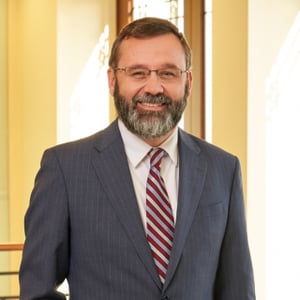
Senior Associate, Alston & Bird LLP
Brian Boone has represented clients before the U.S. Supreme Court, federal and state appellate and trial courts, and arbitration panels in cases involving constitutional law, antitrust, RICO, the False Claims Act, health care, securities and state consumer fraud laws. Brian has argued before federal and state appellate courts in cases involving complex commercial disputes.
In December 2014, Brian and fellow Alston & Bird litigator Nowell Berreth convinced the U.S. Supreme Court to grant review in Dart Cherokee Basin Operating Co., LLC v. Owens, No. 13-719, and then to rule in their clients’ favor on the merits. That victory prompted Law360 to name Nowell and Brian to its weekly list of “Legal Lions.” Brian also recently argued and won a complex appeal before the Second Circuit, securing a $10 million judgment for his clients.
Brian served as a judicial clerk to the Honorable Karen J. Williams of the Fourth Circuit. He graduated with high honors from Emory University School of Law, where he was the Sol I. Golden Scholar. Brian received his undergraduate degree, summa cum laude, in political science and history from King College.
In 2014, 2015 and 2016, Brian was named a North Carolina Super Lawyers “Rising Star” in Litigation.
Professorial Lecturer in Law, George Washington University Law School
Randall D. Eliason spent twelve years as an Assistant United States Attorney for the District of Columbia, working in various areas including misdemeanors, grand jury, narcotics, general felonies, and the Violent Crime Unit. For more than eight years, he specialized in white collar crime as a member of the Public Corruption/Government Fraud section. From 1999 to 2001, he served as Chief of that section, supervising a staff of eleven AUSA’s prosecuting white collar cases in federal court.
Professor Eliason is the recipient of numerous awards and commendations from the U.S. Department of Justice, Federal Bureau of Investigation, Washington D.C. Metropolitan Police Department, and other law enforcement agencies. While at the U.S. Attorney’s office, he lectured at the Department of Justice National Advocacy Center in South Carolina and at the Attorney General’s Advocacy Institute in Washington, D.C. He also served as the Professional Responsibility Officer (ethics advisor) for the Criminal Division.
He is a frequent media commentator on issues related to corporate and white collar crime, and has appeared on PBS’s Frontline, NBC’s Nightly News, NPR’s Morning Edition, CNN, MSNBC, and elsewhere. His writings on federal criminal law have been published in law reviews, legal periodicals, and newspapers including the Washington Post and the Chicago Tribune.
Prior to joining the U.S. Attorney's Office, Professor Eliason was in private practice at the Washington, D.C. law firms of Hogan & Hartson and Zuckerman, Spaeder, where his practice involved civil litigation in a wide variety of areas.
He received his J.D. cum laude in 1985 from Harvard Law School, where he served as an editor and as co-chair of the Developments Office of the Harvard Law Review. He received his B.A. summa cum laude from the University of North Dakota in 1982.

Topics
Supreme Court Preview: American Farm Bureau Federation v. EPA
At its February 19th conference, the Supreme Court will consider whether to hear American Farm...
Topics
What are Climate Reductions Worth to Americans?
Americans deserve to know how federal regulations may affect them. Yet, by using a global...
Heffernan v. City of Paterson - Post-Argument SCOTUScast
SCOTUScast 2-10-16 featuring Adele Keim
On January 19, 2016, the Supreme Court heard oral argument in Heffernan v. City of...
Should the government be able to read your emails?
Amy Peikoff
Short Video on Private Servers and the 4th Amendment in the Information Age featuring Amy Peikoff
Southwestern Law School’s Visiting Associate Professor Amy Peikoff explains the Third Party Doctrine of the...
State Court Docket Watch News Clips: 2/10/2016
Massachusetts Supreme Judicial Court Justice Fernande Duffly has announced an early retirement from the court....
Topics
Supreme Court Puts Brakes on EPA Effort to "Aggressively Transform" Domestic Energy Industry
It is no secret that climate change policy has been at the top of the...
Supreme Court to Consider Honest-Services Fraud: Robert F. McDonnell v. United States - Podcast
William J. Haun, Brian D. Boone, Randall D. Eliason
Criminal Law & Procedure Practice Group Podcast
On January 15, 2015, the U.S. Supreme Court granted certiorari in Robert F. McDonnell v....
Topics
Should the government be able to read your emails?
[VIDEO]: Southwestern Law School’s Visiting Associate Professor Amy Peikoff explains the Third Party Doctrine of...
Topics
Congress should protect American innovators, not Chinese infringement
Erik Telford writes for the Hill: China is “killing us” on trade, as Donald Trump...
Topics
ABA Endorses Nationalized Bar Exam
The National Law Journal reports that the American Bar Association endorsed a national, uniform bar examination...