
Associate, MoloLamken LLP
James Barta’s practice focuses on complex civil litigation, white-collar matters, and appellate litigation.
Before joining MoloLamken, Mr. Barta clerked for the Honorable Raymond M. Kethledge of the U.S. Court of Appeals for the Sixth Circuit. He also clerked for the Honorable Stephen J. Murphy, III, of the U.S. District Court for the Eastern District of Michigan. During law school, Mr. Barta interned at the Indiana Solicitor General’s Office and the U.S. Department of Justice.
President and CEO, Goldwater Institute
Darcy Olsen is President of the Goldwater Institute, a research and legal center that Pulitzer Prize-winning columnist George Will heralded as “simply in the liberty business and there’s no institution in the country that performs that business better.”
Ms. Olsen’s leadership has been critical to the Institute’s success, including the development and enactment of hundreds of reforms and the protection of multiple constitutional rights in state and federal courts.
When Ms. Olsen took the helm of the Goldwater Institute in 2001, it was struggling to stay afloat. She revamped the Institute’s organizational structure to parallel a private-sector company focused on results. Shortly after, her colleagues presented her with a life-sized replica of Darth Vader, symbolizing her willingness to terminate non-performers and face down critics.
Ms. Olsen’s vision has made the Goldwater Institute a national leader in the movement to restore America as a compound republic, where states exercise their constitutional authority to check and limit federal power.
Under Ms. Olsen’s direction, the Goldwater Institute developed Save Our Secret Ballot initiative, a successful nationwide effort to protect businesses from labor union card-check. Despite strong-arm tactics from the federal government, the Institute beat back a legal challenge brought by the National Labor Relations Board against Save Our Secret Ballot. “These aren’t merely symbolic victories,” hailed the Wall Street Journal. “States can protect their economies from the NLRB with initiatives like [Save Our Secret Ballot].”
The Goldwater Institute also designed the nation’s first education savings accounts. Parents use the accounts to pay for a range of education expenses, including private school tuition, educational therapies, and even college. The New York Times highlighted the accounts as a national model for states as they reform public education. When the education unions sued over the program, the Goldwater Institute stepped in and won, paving the way for children nationwide to benefit.
The Goldwater Institute is currently spearheading the Right to Try initiative, a state-level measure that will give terminally ill patients access to potentially life-saving medicines. Under the current system, terminally ill patients have to wait to gain access to new treatments, which can take over a decade to make it to market. This lifesaving measure is moving through several states.
An authority on education reform, economic policy, and government reform, Ms. Olsen is a regular guest on national media programs. Her opinions have been widely published in outlets such as the Wall Street Journal, USA Today, and National Review.
Ms. Olsen has received numerous awards and recognitions including a 2014 Bradley Prize, which recognizes individuals of extraordinary talent and dedication who seek to preserve and defend the institutions of free government and private enterprise, and the national Roe Award for achievement in public policy. One of her most unexpected awards was when Hockey Magazine named her the “64th most powerful person in hockey” for her leading role in blocking a multi-million-dollar subsidy to an NHL team.
A graduate of Georgetown University and New York University, Olsen unofficially started her public policy career at 11 years old, when she went door-to-door gathering signatures on a homemade petition to stop animal abuse. Born in Vermont, raised in Utah, Olsen resides in Arizona. She is a foster mother and an adoptive mother of three.
Associate Professor, Northern Illinois University
Evan Bernick joined the NIU Law faculty in 2021. He teaches courses in constitutional law, criminal law, criminal procedure, administrative law and legislation.
From 2020 to 2021, Professor Bernick was a visiting professor at the Georgetown University Law Center and the executive director of the Georgetown Center for the Constitution. Before that, he served as a clerk to Judge Diane S. Sykes of the United States Court of Appeals for the Seventh Circuit. From April 2017 to April 2019, he was a visiting lecturer at Georgetown and a resident fellow of the Center for the Constitution.
His scholarship covers a range of topics, from constitutional law, to philosophy of law, to social movements, to law enforcement. He has published with the Georgetown Law Journal, the Notre Dame Law Review, the William and Mary Law Review and the George Mason Law Review, among other journals. His book, The Original Meaning of the Fourteenth Amendment: Its Letter and Spirit (2021), with Randy E. Barnett, was published by Harvard University Press under its Belknap imprint "for books of long-lasting importance, superior in scholarship and physical production, chosen whether or not they might be profitable."
Professor Bernick received his bachelor's degree in 2008 from the University of Chicago, where he studied philosophy and graduated with honors. He received his juris doctorate in 2011 from the University of Chicago Law School.

Vice President, Edwin Meese III Institute for the Rule of Law, Advancing American Freedom
John G. Malcolm oversees Advancing American Freedom’s work to increase understanding of the Constitution and the rule of law as Vice President of the organization’s Edwin Meese III Institute for the Rule of Law. Malcolm brings to the challenge a wealth of legal expertise and experience in both the public and private sectors.
Prior to joining Advancing American Freedom in 2025, Malcolm was the Vice President of the Institute for Constitutional Government and the Director of the Meese Center for Legal and Judicial Studies at the Heritage Foundation. Prior to joining Heritage in 2012, Malcolm was general counsel at the U.S. Commission on International Religious Freedom, as well as a distinguished practitioner in residence at Pepperdine Law School. From 2004 to 2009, Malcolm was executive vice president and director of worldwide anti-piracy operations for the Motion Picture Association.
Malcolm served as a deputy assistant attorney general in the Department of Justice’s Criminal Division from 2001 to 2004, where he oversaw sections on computer crime and intellectual property, domestic security, child exploitation and obscenity, and special investigations. Immediately prior to that, he was a founding partner in the Atlanta law firm of Malcolm & Schroeder, LLP.
From 1990 to 1997, Malcolm was an assistant U.S. attorney in Atlanta, assigned to the fraud and public corruption section, and also an associate independent counsel, investigating fraud and abuse in the Department of Housing and Urban Development. He was honored with the Director’s Award for Superior Performance for his work in connection with the successful prosecution of Walter Leroy Moody Jr., who assassinated an 11th Circuit judge and the head of the Savannah chapter of the NAACP.
A graduate of Harvard Law School and Columbia College, Malcolm began his career as a law clerk to a federal district court judge and a federal appellate court judge, and as an associate at the Atlanta-based law firm of Sutherland, Asbill & Brennan (new Eversheds Sutherland).
Malcolm, who resides in Washington, D.C., serves on the Board of Trustees of the Washington National Opera and is a Senate-confirmed member of the Board of Directors of the Legal Services Corporation, the largest funder of civil legal aid in the United States.
Former Deputy Attorney General for Virginia
Kennerly Davis has over forty years of experience in corporate management, public service, and the private practice of law. He has held senior executive positions in a Fortune 500 electric and gas company. He has served as Deputy Attorney General for the Commonwealth of Virginia, and as a legislative aide to a U.S. Senator and a U.S. Congressman. He practiced law for 25 years with Hunton Andrews Kurth LLP.
Davis is active in the Federalist Society as a member of the Regulatory Process Working Group of the Regulatory Transparency Project, and as a member of the Execuitve Committee of the Administrative Law and Regulation Practice Group. He is active in the national Alumni Free Speech Alliance, and involved in AFSA-chapter initiatives, including litigation, to publicize and correct the serious legal problems created by university Diversity, Equity, and Inclusion programs and the anonymous bias reporting systems used to enforce those DEI programs.
Davis writes and speaks on a wide variety of topics, including those related to the Founding of America, the natural rights foundation of our Republic, the constitutional rule of law, equal protection and free speech, DEI programs and bias reporting systems, capitalism, regulation and regulatory reform, and economic development. His articles have appeared in The Wall Street Journal, the Washington Examiner, the Richmond Times-Dispatch, The Federalist Society Review, the FedSoc Blog, Real Clear Energy, Townhall, the Daily Caller, reports of the Center for Strategic & International Studies, and other publications. He appears frequently on radio, podcasts, and television.
Davis graduated with honors from Cornell University with an A.B. degree in Government. He earned an M.A. degree from Pembroke College, Oxford, in Philosophy, Politics, and Economics. He was awarded a J.D. degree from Harvard Law School, and an M.B.A. degree from Virginia Commonwealth University.
Davis lives in Richmond, Virginia. He can be contacted by email: j.kendavis@verizon.net, and by phone: (804) 624-8525.
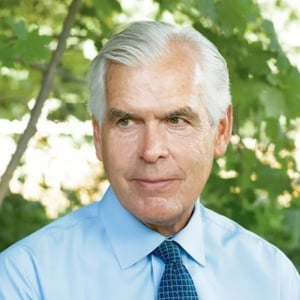
Senior Counsel, Covington & Burling LLP and Founder & Chair, Common Good
Philip K. Howard is a well-known leader of government and legal reform in America. He is Chair of Common Good and a bestselling author, and has advised both parties on needed reforms. In his new book, Not Accountable (Rodin Books, 2023), he argues that public employee unions undermine democratic governance and should be unconstitutional.
Philip is the author of the bestseller The Death of Common Sense (Random House, 1995), The Collapse of the Common Good (Ballantine Books, 2002), Life Without Lawyers (W.W. Norton, 2009), The Rule of Nobody (W.W. Norton, 2014), and Try Common Sense (W.W. Norton, 2019). His commentaries are published frequently in major media outlets.
In 2002, Philip formed Common Good, a nonpartisan coalition dedicated to simplifying laws so that Americans can use common sense in daily choices. His 2010 TED Talk has been viewed by more than 750,000 people. His 2015 report, “Two Years, Not Ten Years,” exposed the economic and environmental costs of delayed infrastructure approvals, and its proposals have since been incorporated into federal law. Philip has appeared often on television and radio, including several times on Jon Stewart’s “The Daily Show.”
The son of a minister, Philip got his start working summers at the Oak Ridge National Laboratory for Nobel laureate Eugene Wigner. He has been active in public affairs his entire adult life. He is Senior Counsel at the law firm Covington & Burling, LLP. A graduate of Yale College and the University of Virginia Law School, Philip lives in Manhattan with his wife Alexandra. They have four children.
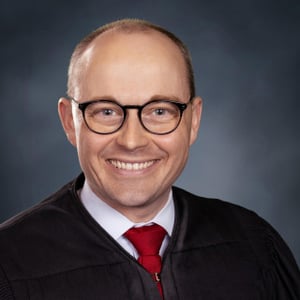
Judge, Illinois 18th Judicial Circuit
Judge Kenton Skarin serves on the Illinois 18th Judicial Circuit, a trial court of general jurisdiction that serves almost one million people in the western suburbs of Chicago.
Judge Skarin graduated first in his class from Northwestern University School of Law and summa cum laude from North Central College in Naperville, Illinois.
Earlier in his career, Judge Skarin clerked for Associate Justice Clarence Thomas at the United States Supreme Court and for Judge J. Harvie Wilkinson III at the United States Court of Appeals for the Fourth Circuit. Judge Skarin also practiced appellate law in the Chicago office of Jones Day and served as Deputy General Counsel to the Governor of Illinois.
Judge Skarin is a lifelong native of Wheaton, Illinois, where he lives with his wife and children.
Judge, United States District Court for the Eastern District of North Carolina
A native of Kingston, Jamaica, Myers was a Chancellors Scholar at the UNC School of Law, where he graduated with high honors in 1998. Upon graduation from law school, he clerked in Washington, D.C., for the Hon. David Sentelle on the United States Court of Appeals for the D.C. Circuit, and then entered private practice as a litigator for O'Melveny & Myers, LLP, in Los Angeles California. After two years with the White Collar Criminal Law and Environmental and regulatory Compliance Practice Group, he left private practice in January 2002 to become an Assistant United States Attorney in the Central District of California. In September, 2002, he transferred to the Eastern District of North Carolina in Raleigh, where he prosecuted white collar and violent crimes, and headed the district's Violent Crimes Task Force for Wilmington and New Hanover and Pender Counties.
Myers joined the UNC Law School faculty in July 2004, where he taught Criminal Law, Criminal Procedure, Ethics, and a seminar on White Collar Crime. He was confirmed to the United States District Court for the Eastern District of North Carolina in 2019.

Topics
Simple Question re: Evenwel v. Abbott
Roger Clegg writes for National Review: By a vote of 8–0 yesterday in Evenwel v....
Topics
Free Speech for All*
The Supreme Court’s anti-climactic order affirming the Ninth Circuit’s ruling in Friedrichs v. California Teachers...
Nichols v. United States - Post-Decision SCOTUScast
James Barta
SCOTUScast 4-7-16 featuring James Barta
On April 4, 2016, the Supreme Court decided Nichols v. United States. Petitioner Nichols, a...
Topics
Selective Fear of Foreign Influence: Applying FEC Commissioner Weintraub's Latest Citizens United Proposal to Unions
Steve Klein at Pillar of Law writes: In the New York Times last week, Commissioner Ellen Weintraub...
The Right to Try: America's Drug Approval Regime - Podcast
Darcy Olsen, Evan D. Bernick
Civil Rights Practice Group Podcast
Should you need the government’s permission to try to save your own life? Today, the...
Luis v. U.S. - Post-Decision SCOTUScast
John G. Malcolm
SCOTUScast 4-6-16 featuring John Malcolm
On March 30, 2016, the Supreme Court decided Luis v. U.S. In 2012, a grand...
Is Modern Bureaucracy a Necessary Evil, or Just Evil? - Podcast
John Kennerly Davis, Philip K. Howard
Administrative Law & Regulation Practice Group Podcast
Is America strangling on red tape? Regulations have become voluminous and complex, and many claim...
Topics
Justice Ginsburg Goes Originalist
The Wall Street Journal reports: The Supreme Court took the safe route Monday in declining...
CRST Van Expedited, Inc. v. EEOC - Post-Argument SCOTUScast
Kenton J. Skarin
SCOTUScast 4-5-16 featuring Kenton J. Skarin
On February 22, 2016, the Supreme Court heard oral argument in CRST Van Expedited, Inc....
Welch v. United States - Post-Argument SCOTUScast
Richard E. Myers
SCOTUScast 4-5-16 featuring Richard E. Myers II
On March 30, 2016, the Supreme Court heard oral argument in Welch v. United States....