

Managing Attorney of the Washington Office, Institute for Justice
William R. Maurer is the Managing Attorney of the Washington state office of the Institute for Justice, which engages in litigation in the areas of economic liberty, private property rights, educational choice, & freedom of speech.
Maurer is an advocate against the criminalization of poverty and the governmental use of the criminal and civil enforcement systems to raise revenue. He was lead counsel in a class action challenging the use of tickets to raise revenue in the city of Pagedale, Missouri. The suit resulted in a federal consent decree that reformed the city’s ticketing and municipal court system. He regularly speaks, teaches, and writes about the abuse of fines and fees in the criminal justice system. He was a participant in summits on taxation by citation put on by the White House and Department of Justice during the Obama Administration. His work on the issue includes serving as an advisory board member of the Fines and Fees Justice Center.
In addition to his work on criminal and civil justice reform, Maurer is a First Amendment litigator. In 2011, he successfully argued before the U.S. Supreme Court that Arizona’s punitive campaign financing regime was unconstitutional. Before the Washington Supreme Court, he successfully argued against efforts to classify radio commentary as a contribution under the state’s campaign finance law.
His cases and advocacy have been covered in the Washington Post, the New York Times, the Economist, the Wall Street Journal, and other major media outlets.
Maurer was named a “Washington Superlawyer” by Washington Law & Politics Magazine for several years. He is a chapter author in numerous legal reference works and has written several articles for law reviews and legal publications across the country.
Prior to joining IJ-WA, Maurer clerked for Washington Supreme Court Justice Richard Sanders and then practiced law at Perkins Coie LLP. Maurer received his law degree in 1994 from the University of Wisconsin – Madison, where he was an editor of the Wisconsin Law Review. He received his BA from Bard College in 1989.

Vice President of Domestic and Economic Policy, The Heritage Foundation
Roger Severino is Vice President of Economic and Domestic Policy, and the Joseph C. and Elizabeth A. Anderlik Fellow at The Heritage Foundation.
Severino is a national authority on civil rights, conscience and religious freedom, the administrative state, and information privacy, particularly as applied to health care law and policy. Find his tweets at @RogerSeverino_.
Severino spearheaded the HHS Accountability Project while a Senior Fellow at EPPC from 2021 to 2023. Previously, Severino was Director of HHS’ Office for Civil Rights, where he led a team of over 250 staff enforcing our nation’s civil rights, conscience and religious freedom, and health information privacy laws. He served from 2017 to 2021 and was the longest-serving OCR director of the past three decades.
Prior to joining HHS, Severino served for two years as Director of the DeVos Center for Religion and Civil Society at Heritage, advocating for life, family, and religious-freedom policies. Before that, he was a trial attorney for seven years at the U.S. Department of Justice’s Civil Rights Division where he enforced the Fair Housing Act and the Civil Rights Act of 1964. Severino started his legal career at the Becket Fund for Religious Liberty, where he was Legal Counsel and Chief Operations Officer and defended the rights of people of all faiths under federal and international law.
Severino has been profiled in The New York Times, The Atlantic, The Wall Street Journal, and The Hill and has appeared on Fox News, CNN, MSNBC, NPR, and PBS, among others. In 2020, The New York Times dubbed him and his wife Carrie, “a conservative power couple” to be reckoned with.
Severino holds a JD from Harvard Law School, a master’s degree in public policy, with highest distinction, from Carnegie Mellon University, and a bachelor’s degree in business from the University of Southern California. He was appointed by President Trump to the Administrative Conference of the United States and is a member of the District of Columbia and the Commonwealth of Virginia bars.
As OCR director, Severino founded the federal government’s first division dedicated exclusively to conscience and religious freedom compliance and enforcement. He enforced the Weldon Amendment for the first time against a state (California) after it coerced families and religious organizations into paying for abortion insurance coverage, leading to a $200 million federal funding disallowance. He also enforced laws protecting pro-life pregnancy resource centers from discrimination by states hostile to their message and enforced laws prohibiting forced participation in abortions by medical professionals.
With respect to civil rights, Severino protected older persons and people with disabilities from being denied life-saving care due to discriminatory “quality of life” judgments, especially during the COVID-19 pandemic. He also achieved a landmark sexual harassment resolution with Michigan State University in the wake of the Larry Nassar sexual assault scandal and protected the rights of non-English speakers to have equal access to health and human services.
In the area of health privacy, he secured the largest HIPAA monetary settlement in history and achieved the largest number of enforcement resolutions both in a single year and across four years. He also facilitated the transformational use of Skype, Zoom, and Facetime for delivery of telehealth during the COVID-19 pandemic and beyond.
His regulatory reform activities resulted in a comprehensive conscience protection regulation and proposed a life-affirming disability rights regulation. He achieved regulatory savings of $3.6 billion in health care industry costs over five years and identified and proposed an additional $3.2 billion in cost savings from the repeal of ineffective and unnecessary regulatory burdens.
Severino is a Spanish speaker who teaches salsa and west coast swing in his spare time.

Director of Policy Studies & Senior Fellow, The Free State Foundation
Seth L. Cooper is Director of Policy Studies & Senior Fellow at The Free State Foundation. His work on federal communications and technology policy at the Free State Foundation began in 2009.
With Randolph May, Mr. Cooper is the co-author of Modernizing Copyright Law for the Digital Age: Constitutional Foundations for Reform (2020) and Constitutional Foundations of Intellectual Property: A Natural Rights Perspective (2015), both published by Carolina Academic Press. Along with Mr. May, Mr. Cooper also co-authored A Reader on Net Neutrality and Restoring Internet Freedom (2018) and #CommActUpdate: A Communications Law Fit for the Digital Age (2017), both published by Free State Foundation Press. He previously contributed to two chapters in Communications Law and Policy in the Digital Age (2012), published by Carolina Academic Press. Mr. Cooper's work has also appeared in such publications as CommLaw Conspectus, the San Jose Mercury News, Forbes.com, the Des Moines Register, the Baltimore Sun, the Washington Examiner, and the Washington Times.
Mr. Cooper previously served as Director to the Telecommunications and Information Technology Task Force at the American Legislative Exchange Council (ALEC). Mr. Cooper served as judicial clerk to the Honorable James Johnson at the Washington State Supreme Court. His co-writings about the Washington Supreme Court have appeared in the Gonzaga Law Review and in Federalist Society publications. He has worked in law and policy staff positions at the Washington State Senate and at the Discovery Institute's Center for Science & Culture. Mr. Cooper is a 2009 Lincoln Fellow at the Claremont Institute. He also has worked in private practice in the State of Washington, handling civil legal matters involving personal injuries, small business, contracts, and wills, trusts, and estates.
Mr. Cooper earned his B.A. degree in Political Science from Pacific Lutheran University and received his J.D. from Seattle University School of Law.
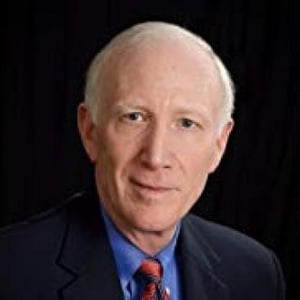
President, The Free State Foundation
Randolph J. May is Founder and President of The Free State Foundation. The Free State Foundation is an independent, non-profit free market-oriented think tank founded in 2006.
From October 1999-May 2006, May was a Senior Fellow and Director of Communications Policy Studies at The Progress & Freedom Foundation, a Washington, DC-based think tank. Prior to joining PFF, he practiced communications, administrative, and regulatory law as a partner at major national law firms. From 1978 to 1981, May served as Assistant General Counsel and Associate General Counsel at the Federal Communication Commission.
May has held numerous leadership positions in bar associations. He is a past Chair of the American Bar Association’s Section of Administrative Law and Regulatory Practice. He is a Fellow of the National Academy of Public Administration. Mr. May also has served as a Public Member of the Administrative Conference of the United States and currently is a Senior Fellow at ACUS.
Mr. May has published more than two hundred articles and essays on communications, administrative and constitutional law topics. He is author of A Call for a Radical New Communications Policy: Proposals for Free Market Reform, and co-author of #CommActUpdate: A Communications Law Fit for the Digital Age and The Constitutional Foundations of Intellectual Property. Mr. May is editor of two books, Communications Law and Policy in the Digital Age: The Next Five Years and New Directions in Communications Policy. In addition, he is the co-editor of two other books, Net Neutrality or Net Neutering: Should Broadband Internet Services Be Regulated? and Communications Deregulation and FCC Reform. In the past, Mr. May has written regular columns on legal and regulatory affairs for Legal Times and the National Law Journal, leading national legal periodicals.
He received his A.B. from Duke University and his J.D. from Duke Law School, where he serves as a member of the Board of Visitors.

Professor of Law, South Texas College of Law Houston
Josh Blackman is a national thought leader on constitutional law and the United States Supreme Court. Josh’s work was quoted during two presidential impeachment trials. He has testified before Congress and advises federal and state lawmakers. Josh regularly appears on TV, including NBC, CBS, ABC, Fox, and the BBC. Josh is also a frequent guest on NPR and other syndicated radio programs. He has published commentaries in the New York Times, Wall Street Journal, Washington Post, and leading national publications.
Since 2012, Josh has served as a professor at the South Texas College of Law Houston. He holds the Centennial Chair of Constitutional Law. Josh is an Adjunct Fellow at the Manhattan Institute. Josh has written more than seven dozen law review articles that have been cited more than a thousand times. Josh was selected as the Jurist of the Year by the Texas Journal of Law & Public Policy, received the inaugural Meese III Originalism Award, and was awarded the Inaugural Joseph Story Award. Josh was selected by Forbes Magazine for the “30 Under 30” in Law and Policy. Josh is the President of the Harlan Institute, and founded FantasySCOTUS, the Internet’s Premier Supreme Court Fantasy League. He blogs at the Volokh Conspiracyand posts@JoshMBlackman.

Executive Vice President, The Federalist Society
Dean Reuter is Executive Vice President at the Federalist Society for Law and Public Policy Studies. He has served in two federal government agency Offices of the Inspector General, as Counsel to the Inspector General and Deputy Inspector General, responsible for policing the use of federal funds granted and contracted through those agencies. As such, he helped conduct and oversee criminal investigations across the country. He is the principal author of the non-fiction book, The Hidden Nazi: The Untold Story of America's Deal with the Devil, and editor of Liberty’s Nemesis: The Unchecked Expansion of the State and Confronting Terror: 9/11 and the Future of American National Security. He was appointed by the President and served as Vice-Chairman of the Board of Directors of the Corporation for National and Community Service, and recently served as an appointee on the U.S. Commission on Presidential Scholars. He is a graduate of Hood College (BA with Honors) and the University of Maryland School of Law.
United States Senate, Alaska
Dan Sullivan was sworn in as Alaska’s eighth United States Senator on January 6, 2015. Sullivan serves on four Senate committees vital to Alaska: the Commerce, Science and Transportation Committee; the Armed Services Committee; the Environment and Public Works Committee; and the Veterans' Affairs Committee.
Prior to his election to the U.S. Senate, Sullivan served as Alaska’s Attorney General and Commissioner of the Alaska Department of Natural Resources. As Alaska's Attorney General, Sullivan’s number one priority was protecting Alaskans, their physical safety, financial well-being, and individual rights – particularly Alaska’s most vulnerable. During his tenure he spearheaded a comprehensive statewide strategy – the “Choose Respect” campaign – to combat Alaska’s high rates of domestic violence and sexual assault. Under Sullivan’s leadership, the Department of Law also undertook an aggressive strategy of initiating and intervening in litigation aimed at halting federal government overreach into the lives of Alaskans and their economy.
As Commissioner of the Alaska Department of Natural Resources, Sullivan managed one of the largest portfolios of oil, gas, minerals, renewable energy, timber, land, and water in the world. Working closely with Alaska’s Governor and state legislature, Sullivan developed numerous strategies that spurred responsible resource development, energy security, and a dramatic increase in good-paying jobs across a number of critical sectors in the Alaska economy. He also developed a comprehensive plan to streamline and reform the state’s regulatory and permitting system.
Sullivan is one of a select number of Alaskan attorneys who has held judicial clerkships on both the highest federal and state courts in Alaska. He served as a judicial law clerk for Judge Andrew Kleinfeld of the United States Court of Appeals for the Ninth Circuit in Fairbanks, Alaska and for Chief Justice Warren Matthews of the Alaska Supreme Court in Anchorage, Alaska. Sullivan also served as a judicial law clerk/intern for Judge James L. Buckley on the United States Court of Appeals for the District of Columbia Circuit.
Sullivan has a distinguished record of military and national security service. He is currently an infantry officer and Lieutenant Colonel in the U.S. Marine Corps Reserves. Over the past 21 years, Sullivan has served in a variety of command and staff billets on active duty and in the reserves, including: TRAP Force Commander and 81mm mortar Platoon Commander, 31st Marine Expeditionary Unit (Special Operations Capable); Weapons Company Executive Officer, Second Battalion, Fifth Marines; Commanding Officer, Delta Company, Anti-Terrorism Battalion; Executive Officer, Echo Company, Fourth Reconnaissance Battalion; and Commanding Officer, 6thAir Naval Gunfire Liaison Company (ANGLICO). In 2004, Sullivan was recalled to active duty for a year and a half to serve as a staff officer to the Commander of U.S. Central Command, General John Abizaid, spending substantial time deployed in the Middle East, the Horn of Africa, and Central Asia. In July 2013, Sullivan was recalled to active duty to serve with a Joint Task Force in Afghanistan focusing on dismantling terrorist networks and criminalizing the Taliban insurgency.
Sullivan served in the Administration of President George W. Bush as the U.S. Assistant Secretary of State for Economic, Energy, and Business under Secretary of State Condoleezza Rice. He focused on fighting terrorist financing, and implementing policies relating to international energy, economic, trade, finance, transportation, telecommunications, and Arctic issues. Sullivan also served as a Director in the International Economics Directorate of the National Security Council staff at the White House.
Sullivan earned a B.A. in Economics from Harvard University in 1987 and a joint law and Masters of Science in Foreign Service from Georgetown University in 1993. Dan and his wife Julie Fate Sullivan were married over 20 years ago in Julie’s hometown of Fairbanks, Alaska. They have three teenage daughters: Meghan, Isabella and Laurel.
Executive Vice President, The Federalist Society
Dean Reuter is Executive Vice President at the Federalist Society for Law and Public Policy Studies. He has served in two federal government agency Offices of the Inspector General, as Counsel to the Inspector General and Deputy Inspector General, responsible for policing the use of federal funds granted and contracted through those agencies. As such, he helped conduct and oversee criminal investigations across the country. He is the principal author of the non-fiction book, The Hidden Nazi: The Untold Story of America's Deal with the Devil, and editor of Liberty’s Nemesis: The Unchecked Expansion of the State and Confronting Terror: 9/11 and the Future of American National Security. He was appointed by the President and served as Vice-Chairman of the Board of Directors of the Corporation for National and Community Service, and recently served as an appointee on the U.S. Commission on Presidential Scholars. He is a graduate of Hood College (BA with Honors) and the University of Maryland School of Law.
United States Senate, Alaska
Dan Sullivan was sworn in as Alaska’s eighth United States Senator on January 6, 2015. Sullivan serves on four Senate committees vital to Alaska: the Commerce, Science and Transportation Committee; the Armed Services Committee; the Environment and Public Works Committee; and the Veterans' Affairs Committee.
Prior to his election to the U.S. Senate, Sullivan served as Alaska’s Attorney General and Commissioner of the Alaska Department of Natural Resources. As Alaska's Attorney General, Sullivan’s number one priority was protecting Alaskans, their physical safety, financial well-being, and individual rights – particularly Alaska’s most vulnerable. During his tenure he spearheaded a comprehensive statewide strategy – the “Choose Respect” campaign – to combat Alaska’s high rates of domestic violence and sexual assault. Under Sullivan’s leadership, the Department of Law also undertook an aggressive strategy of initiating and intervening in litigation aimed at halting federal government overreach into the lives of Alaskans and their economy.
As Commissioner of the Alaska Department of Natural Resources, Sullivan managed one of the largest portfolios of oil, gas, minerals, renewable energy, timber, land, and water in the world. Working closely with Alaska’s Governor and state legislature, Sullivan developed numerous strategies that spurred responsible resource development, energy security, and a dramatic increase in good-paying jobs across a number of critical sectors in the Alaska economy. He also developed a comprehensive plan to streamline and reform the state’s regulatory and permitting system.
Sullivan is one of a select number of Alaskan attorneys who has held judicial clerkships on both the highest federal and state courts in Alaska. He served as a judicial law clerk for Judge Andrew Kleinfeld of the United States Court of Appeals for the Ninth Circuit in Fairbanks, Alaska and for Chief Justice Warren Matthews of the Alaska Supreme Court in Anchorage, Alaska. Sullivan also served as a judicial law clerk/intern for Judge James L. Buckley on the United States Court of Appeals for the District of Columbia Circuit.
Sullivan has a distinguished record of military and national security service. He is currently an infantry officer and Lieutenant Colonel in the U.S. Marine Corps Reserves. Over the past 21 years, Sullivan has served in a variety of command and staff billets on active duty and in the reserves, including: TRAP Force Commander and 81mm mortar Platoon Commander, 31st Marine Expeditionary Unit (Special Operations Capable); Weapons Company Executive Officer, Second Battalion, Fifth Marines; Commanding Officer, Delta Company, Anti-Terrorism Battalion; Executive Officer, Echo Company, Fourth Reconnaissance Battalion; and Commanding Officer, 6thAir Naval Gunfire Liaison Company (ANGLICO). In 2004, Sullivan was recalled to active duty for a year and a half to serve as a staff officer to the Commander of U.S. Central Command, General John Abizaid, spending substantial time deployed in the Middle East, the Horn of Africa, and Central Asia. In July 2013, Sullivan was recalled to active duty to serve with a Joint Task Force in Afghanistan focusing on dismantling terrorist networks and criminalizing the Taliban insurgency.
Sullivan served in the Administration of President George W. Bush as the U.S. Assistant Secretary of State for Economic, Energy, and Business under Secretary of State Condoleezza Rice. He focused on fighting terrorist financing, and implementing policies relating to international energy, economic, trade, finance, transportation, telecommunications, and Arctic issues. Sullivan also served as a Director in the International Economics Directorate of the National Security Council staff at the White House.
Sullivan earned a B.A. in Economics from Harvard University in 1987 and a joint law and Masters of Science in Foreign Service from Georgetown University in 1993. Dan and his wife Julie Fate Sullivan were married over 20 years ago in Julie’s hometown of Fairbanks, Alaska. They have three teenage daughters: Meghan, Isabella and Laurel.

Professor of Law, University of San Diego School of Law (Retired)
Gail Heriot is a recently retired law professor from the University of San Diego. She also served as a member of the U.S. Commission on Civil Rights from 2007 to 2025. She is also the chairman of the board of the American Civil Rights Project and the chair emerita of the Civil Rights practice group at the Federalist Society for Law & Public Policy.
Professor Heriot is a prolific writer in the area of civil rights. She is the author of many law review articles. She is also the editor (along with Maimon Schwarzschild) of the 2021 anthology, A Dubious Expediency: How Race Preferences Damage Higher Education. Her upcoming book is entitled, Why We Walk on Eggshell: How Our Civil Rights Laws Helped Bring About the Woke Era—And the Trump Era, Too.
Her writings for a general audience have appeared in the Wall Street Journal, the San Diego Union-Tribune, the National Review and many other newspapers and magazines.
In 1996, she co-chaired the successful “Yes on Proposition 209” campaign, which amended the California Constitution to prohibit state-sponsored discrimination or preferential treatment based on race, sex, color, ethnicity or national origin. In 2020, she co-chaired the “No on Proposition 16” campaign, which successfully prevented Proposition 209’s repeal.
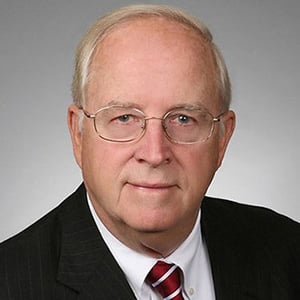
Of Counsel, Kirkland & Ellis LLP
John focuses his practice on labor and employment litigation and counseling employers on mergers, acquisitions and consolidations, downsizing, plant relocations, union representation elections, labor negotiations, strikes and lockouts, NLRB unfair labor practices, arbitration, wage and hour, wrongful discharge and equal employment. John, a former NLRB General Counsel and Labor Department official, was selected as a global leader in the field of employment & labor law in The International Who's Who of Labor and Employment Lawyers by Law Business Research, The Best Lawyers in America, and Super Lawyers.
John earned his B.A. from Brown University and both his J.D. and LL.M. from Georgetown.

Attorney at Law
James P. Scanlan is an attorney specializing in the use of statistics in litigation. He has published about 60 articles on legal or public policy issues. About half have pertained to the use of statistics in the law and the social and medical sciences, especially regarding the patterns by which standard measures of differences between outcome rates tend to be systematically affected by the prevalence of an outcome. Most notably, the rarer an outcome the greater tends to be the relative difference in experiencing and the smaller tends to be the relative difference in avoiding it, a pattern termed “Scanlan’s Rule” by scholars in the UK. Thus, for example, improvements in health or healthcare tend to decrease relative differences in favorable health outcomes, while increasing relative differences in the corresponding adverse outcomes; increasing loan approval rates tends to decrease relative differences in approval rates while increasing relative differences in rejection rates. Without recognizing this and related patterns it is not possible to soundly interpret data on group differences in outcome rates.

CEO, Sharf & Associates
As EEOC's Chief Psychologist in the mid-1970s, Jim drafted the Uniform Guidelines on Employee Selection Procedures He subsequently returned to government to serve as Special Assistant to EEOC's Chairman for whom he drafted the "race norming" prohibition in the Civil Rights Act of 1991.
Jim has successfully defended the validity generalization (VG) of measures of cognitive ability (Taylor v. James River Corp., 1989 WL 165953 (S.D. Ala. 1989; McCoy v. Willamette Industries, Inc. U.S. District Court for the Southern District of Georgia, Savannah Dicision, Civil Action No. CV401-075 (2001)) - his VG reasoning having been affirmed by the Fifth Circuit (Bernard v. Gulf Oil Corp., 890 F.2d. 735, 744 (5th Cir. 1989). Jim has also successfully defended validity generalization challenged by OFCCP (TIMKEN) and EEOC (SMECO).
For four years, Jim was industrial psychology's expert writing the licensing exam required of all psychologists in the U.S. and Canada. Jim was awarded the M. Scott Myers Award for Applied Research in the Workplace by the Society for Industrial/ Organizational Psychology for developing the valid, legally defensible employment tests used by TSA to hire fifty-thousand airport security screeners.
With Metrics Reporting, Inc., Jim and the Competency Validation Center team are now partnering with the Hope Street Group nonprofit network both to document and to assess legally defensible, job-related competencies in the healthcare and manufacturing sectors. GOALS: Employers will be able to communicate Talent Supply Chain competencies; Individuals will accumulate stackable credentials documenting their competencies; and Talent Suppliers will align competency-based education with employer requirements.
Professor of Law, University of San Diego School of Law (Retired)
Gail Heriot is a recently retired law professor from the University of San Diego. She also served as a member of the U.S. Commission on Civil Rights from 2007 to 2025. She is also the chairman of the board of the American Civil Rights Project and the chair emerita of the Civil Rights practice group at the Federalist Society for Law & Public Policy.
Professor Heriot is a prolific writer in the area of civil rights. She is the author of many law review articles. She is also the editor (along with Maimon Schwarzschild) of the 2021 anthology, A Dubious Expediency: How Race Preferences Damage Higher Education. Her upcoming book is entitled, Why We Walk on Eggshell: How Our Civil Rights Laws Helped Bring About the Woke Era—And the Trump Era, Too.
Her writings for a general audience have appeared in the Wall Street Journal, the San Diego Union-Tribune, the National Review and many other newspapers and magazines.
In 1996, she co-chaired the successful “Yes on Proposition 209” campaign, which amended the California Constitution to prohibit state-sponsored discrimination or preferential treatment based on race, sex, color, ethnicity or national origin. In 2020, she co-chaired the “No on Proposition 16” campaign, which successfully prevented Proposition 209’s repeal.
Of Counsel, Kirkland & Ellis LLP
John focuses his practice on labor and employment litigation and counseling employers on mergers, acquisitions and consolidations, downsizing, plant relocations, union representation elections, labor negotiations, strikes and lockouts, NLRB unfair labor practices, arbitration, wage and hour, wrongful discharge and equal employment. John, a former NLRB General Counsel and Labor Department official, was selected as a global leader in the field of employment & labor law in The International Who's Who of Labor and Employment Lawyers by Law Business Research, The Best Lawyers in America, and Super Lawyers.
John earned his B.A. from Brown University and both his J.D. and LL.M. from Georgetown.
Attorney at Law
James P. Scanlan is an attorney specializing in the use of statistics in litigation. He has published about 60 articles on legal or public policy issues. About half have pertained to the use of statistics in the law and the social and medical sciences, especially regarding the patterns by which standard measures of differences between outcome rates tend to be systematically affected by the prevalence of an outcome. Most notably, the rarer an outcome the greater tends to be the relative difference in experiencing and the smaller tends to be the relative difference in avoiding it, a pattern termed “Scanlan’s Rule” by scholars in the UK. Thus, for example, improvements in health or healthcare tend to decrease relative differences in favorable health outcomes, while increasing relative differences in the corresponding adverse outcomes; increasing loan approval rates tends to decrease relative differences in approval rates while increasing relative differences in rejection rates. Without recognizing this and related patterns it is not possible to soundly interpret data on group differences in outcome rates.
CEO, Sharf & Associates
As EEOC's Chief Psychologist in the mid-1970s, Jim drafted the Uniform Guidelines on Employee Selection Procedures He subsequently returned to government to serve as Special Assistant to EEOC's Chairman for whom he drafted the "race norming" prohibition in the Civil Rights Act of 1991.
Jim has successfully defended the validity generalization (VG) of measures of cognitive ability (Taylor v. James River Corp., 1989 WL 165953 (S.D. Ala. 1989; McCoy v. Willamette Industries, Inc. U.S. District Court for the Southern District of Georgia, Savannah Dicision, Civil Action No. CV401-075 (2001)) - his VG reasoning having been affirmed by the Fifth Circuit (Bernard v. Gulf Oil Corp., 890 F.2d. 735, 744 (5th Cir. 1989). Jim has also successfully defended validity generalization challenged by OFCCP (TIMKEN) and EEOC (SMECO).
For four years, Jim was industrial psychology's expert writing the licensing exam required of all psychologists in the U.S. and Canada. Jim was awarded the M. Scott Myers Award for Applied Research in the Workplace by the Society for Industrial/ Organizational Psychology for developing the valid, legally defensible employment tests used by TSA to hire fifty-thousand airport security screeners.
With Metrics Reporting, Inc., Jim and the Competency Validation Center team are now partnering with the Hope Street Group nonprofit network both to document and to assess legally defensible, job-related competencies in the healthcare and manufacturing sectors. GOALS: Employers will be able to communicate Talent Supply Chain competencies; Individuals will accumulate stackable credentials documenting their competencies; and Talent Suppliers will align competency-based education with employer requirements.

Topics
Bank of America Penalty Thrown Out in Crisis-Era 'Hustle' Case
Yesterday, the Court of Appeals for the 2nd Circuit threw out major penalties levied against...
Book Review: Dark Money and Plutocrats United
William R. Maurer
Federalist Society Review, Volume 17, Issue 2
Note from the Editor: This book review takes a critical look at two recent books that...
Zubik v. Burwell - Post-Decision SCOTUScast
Roger Severino
SCOTUScast 5-23-16 featuring Roger Severino
On May 16, 2016, the Supreme Court decided Zubik v. Burwell, the lead case in...
Topics
Bank settlements include 'donations' to 'community development' organizations
Nicholas Rosenkranz writes for the Volokh Conspiracy: The Justice Department has celebrated its settlements with...
The FCC Threatens the Rule of Law: A Focus on Agency Enforcement and Merger Review Abuses
Seth L. Cooper, Randolph May
Federalist Society Review, Volume 17, Issue 2
Note from the Editor: This article discusses enforcement and merger review activities of the Federal...
House of Representatives Wins Round One of Obamacare Challenge: U.S. House of Representatives v. Burwell - Podcast
Josh Blackman
Administrative Law & Regulation Practice Group Podcast
On Thursday, May 12, a United States District Court Judge upheld a constitutional challenge to...
Address by Senator Dan Sullivan
Dean Reuter, Dan Sullivan
Fourth Annual Executive Branch Review Conference
United States Senator Dan Sullivan of Alaska delivered this address during the Fourth Annual Executive...
Address by Senator Dan Sullivan
Dean Reuter, Dan Sullivan
Fourth Annual Executive Branch Review Conference
United States Senator Dan Sullivan of Alaska delivered this address during the Fourth Annual Executive...
Disparate Impact: Reducing Innovation in the Workplace?
Gail L. Heriot, John S. Irving, James Scanlan, James Sharf
Fourth Annual Executive Branch Review Conference
The slogan "Personnel is policy" reflects the principle that hiring the right people is one...
Disparate Impact: Reducing Innovation in the Workplace?
Gail L. Heriot, John S. Irving, James Scanlan, James Sharf
Fourth Annual Executive Branch Review Conference
The slogan "Personnel is policy" reflects the principle that hiring the right people is one...