
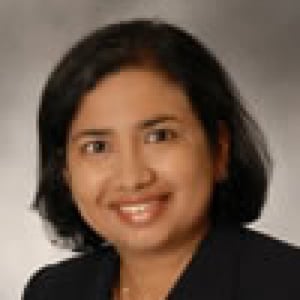
Attorney
Maya M. Noronha is a civil rights attorney.
As special counsel for external affairs at First Liberty Institute, Maya worked for the largest legal organization in the United States dedicated exclusively to defending religious liberty for all Americans.
Previously, Maya worked at the U.S. Department of Health and Human Services, as acting chief of staff of the Administration for Children and Families; principal advisor to the Commissioner of the Administration on Children, Youth, and Families; and senior advisor to the Director of the Office for Civil Rights and regulatory reform officer. She provided advice on federal civil rights laws that prohibit discrimination on the basis of conscience, religion, race, color, national origin, limited English proficiency, sex, disability, age, and health information in both health care and human services.
In the area of election law, Maya has advised officials elected to or candidates for President, U.S. Senate, U.S. House of Representatives, Governor, state legislature, city council, and magisterial district judge. She practiced law at Baker Hostetler LLP, where she was on the Political Law and Federal Advocacy Teams, advising clients on voting rights, redistricting, election integrity, campaign finance, financial reporting, ethics compliance, as well as conducting trial and appellate litigation. She also has delivered legislative testimony, planned continuing legal education conferences on election law, and published about voting rights and election administration.
In addition to addressing the Federalist Society, she has delivered remarks to the White House Initiative on Asian American Pacific Islanders, United States Senate, Women in Government Relations, Georgetown University, George Mason University School of Law, the Columbus School of Law at the Catholic University of America, and Arizona State University Cronkite School of Journalism.
Maya is in Phi Beta Kappa, a member of the Alpha Sigma Nu Jesuit Honor Society, and a John Carroll Scholar. Forbes Magazine recognized Maya as one of its 30 under 30 in Law and Public Policy.
She serves concurrently on the Federalist Society’s Free Speech & Election Law Executive Committee and the American Bar Association’s Standing Committee on Election Law.
Education
· J.D., Georgetown University Law Center, 2011
· A.B., Georgetown University, 2005
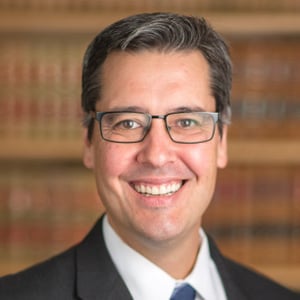
Associate Dean for Faculty; Charles W. Ebersold and Florence Whitcomb Ebersold Professor of Constitutional Law, The Ohio State University Mortiz College of Law
Professor Daniel Tokaji is an authority on the law of elections and democracy. He teaches courses on Election Law, Civil Rights, Civil Procedure, Comparative Law, Constitutional Law, Federal Courts, Legislation and Regulation, and the U.S. Legal System. His scholarship addresses questions of voting rights, racial justice, free speech, and the role of the courts in American democracy.
Professor Tokaji is the author of Election Law in a Nutshell (2d ed. 2016), and co-author of Election Law: Cases and Materials (6th ed. 2017) and The New Soft Money (2014). He has written numerous articles and book chapters on a wide variety of election and voting issues, including voting rights, voter ID, voter registration, redistricting, campaign finance regulation. Recent articles include “Gerrymandering and Association,” 59 William & Mary Law Review 2159 (2018), and “Denying Systemic Equality: The Last Words of the Kennedy Court,” 13 Harvard Law & Policy Review 539 (2019). His current research focuses on the challenges facing democracies around the globe, including the free speech issues surrounding digital disinformation and the need for trustworthy electoral institutions.
Media outlets frequently seek Professor Tokaji’s expertise on election and voting issues. He has been quoted in The New York Times, Los Angeles Times, The Columbus Dispatch, USA TODAY, and appeared on TODAY, FOX News, NBC News, and National Public Radio and many other media outlets.
A graduate of Harvard College and the Yale Law School, Professor Tokaji clerked for the Honorable Stephen Reinhardt of the U.S. Court of Appeals for the Ninth Circuit. Before arriving at Ohio State, he was a staff attorney with the ACLU Foundation of Southern California and Chair of California Common Cause.
Professor Tokaji has litigated many civil rights, civil liberties, and election law cases. He was lead counsel in a case that struck down an Ohio law requiring naturalized citizens to produce a certificate of naturalization when challenged at the polls. He also served as counsel in litigation challenging the state’s voting purges. He was also an attorney for plaintiffs in cases that kept open the window for simultaneous registration and early voting in Ohio’s 2008 general election, and that challenged punch-card voting systems in Ohio and California after the 2000 election.
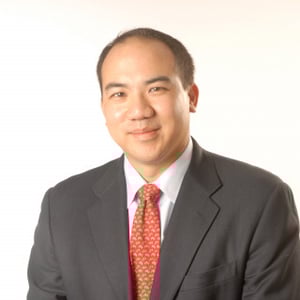
Maurice A. Deane Distinguished Professor of Constitutional Law and Faculty Director of International Programs, Hofstra University School of Law
Professor Ku’s primary research interest is the relationship of international law to constitutional law. He has also conducted academic research on a wide range of topics including international dispute resolution, international criminal law, and China’s relationship with international law. He teaches courses such as U.S. constitutional law, U.S. foreign affairs law, transnational law, and international trade and business law. Since 2014, he has served as the faculty director of international programs, overseeing Hofstra Law’s study abroad, exchange and LL.M. programs. Professor Ku also teaches Constitutional Law in our online degree programs: Master of Laws in American Law and Master of Arts in American Legal Studies. He has also been selected as the John DeWitt Gregory Research Scholar and as a Hofstra Law Research Fellow. He is a member of the American Law Institute.
He is the co-author, with John Yoo, of Taming Globalization: International Law, the U.S. Constitution, and the New World Order (Oxford University Press 2012). He also has published more than 40 law review articles, book chapters and symposia essays. He has given dozens of academic lectures and workshops at major universities and conferences in the United States, Europe and Asia.
He co-founded the leading international law weblog Opinio Juris, which is read daily by thousands worldwide. His essays and op-eds have been published in major news publications such as the Wall Street Journal, the Los Angeles Times, and the NYTimes.com. He has been frequently interviewed for television news programs and quoted in print and electronic media. He has also signed or submitted amicus briefs to national and international courts and served as an expert witness in both domestic and international proceedings.
Before joining the Hofstra Law faculty, Professor Ku served as a law clerk to the Honorable Jerry E. Smith of the U.S. Court of Appeals for the Fifth Circuit and as an Olin Fellow and Lecturer in Law at the University of Virginia Law School. Professor Ku also practiced as an associate at the New York City law firm of Debevoise & Plimpton, specializing in litigation and arbitration arising out of international disputes. He has been a visiting professor at the College of William & Mary Marshall- Wythe School of Law in Williamsburg, Virginia; a Fulbright Distinguished Lecturer in Law at East China University of Political Science and Law in Shanghai, China; and a Taiwan Fellow at National Taiwan University in Taipei, Taiwan. He is a member of the New York Bar and a graduate of Yale College and Yale Law School.
Professor in the Stockton Center for the Study of International, U.S. Naval War College
James Kraska is Howard S. Levie Professor in the Stockton Center for the Study of International Law at the U.S. Naval War College in Newport, Rhode Island. He is also a Distinguished Fellow at the Law of the Sea Institute, University of California Berkeley School of Law and Senior Fellow at the Center for Oceans Law and Policy at the University of Virginia School of Law. He is a permanent Member of the Council on Foreign Relations and a Senior Fellow at the Foreign Policy Research Institute. Previously, he served as an endowed visiting scholar at Duke University Marine Laboratory and Fellow in residence at the Marine Policy Center, Woods Hole Oceanographic Institution. His publications include numerous scholarly articles and books, including Maritime Power and Law of the Sea (Oxford) and co-author of the treatise, International Maritime Security Law (Brill).
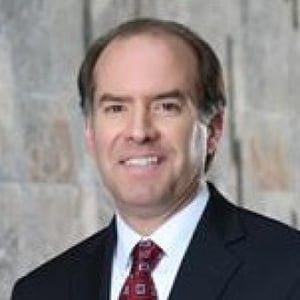
Founder & CEO, Strategic Policy Counsel, PLLC
Alex Dahl has nearly three decades of experience in law and advocacy, having served in all three branches of the federal government as counsel to the Senate Judiciary Committee, a federal prosecutor, and a law clerk to a federal district court judge, as well as working in private practice as a lobbyist and civil litigator.
Alex serves as outside General Counsel to Lawyers for Civil Justice, a national coalition of corporations, law firms and defense lawyer organizations, promoting excellence and fairness in the civil justice system. LCJ is the corporate and defense bar voice for reforms aimed at securing the just, speedy and inexpensive determination of civil cases, notably including the 2015 Amendments to the Federal Rules of Civil Procedure which established “proportionality” in the scope of discovery and created a uniform standard for judicial handling of the loss of electronically stored information (ESI). Alex works with LCJ’s member experts to: (1) promote balance and fairness in the civil justice system; (2) reduce costs and burdens associated with litigation; and (3) promote more predictability and efficiency in litigation.
Prior to founding the firm, Alex was a shareholder at Brownstein Hyatt Farber Schreck, the second largest lobbying firm in Washington, D.C., for over 11 years. Alex represented companies and associations before Congress and the Executive Branch on a variety of policy issues.
Alex served as the Deputy Staff Director and Senior Counsel to the Senate Judiciary Committee, where he spent five years working for then-Chairman Orrin G. Hatch (R-UT) on legislative strategy concerning a wide variety of bills and constitutional amendments within the Committee's jurisdiction, which includes legal reform, antitrust, intellectual property, immigration policy and criminal law.
Alex also worked as an Assistant U.S. Attorney in the District of Columbia, where he prosecuted felony drug distribution and firearms cases in DC Superior Court. He was specially assigned to handle criminal intellectual property cases involving illegal sales of pirated DVD movies and music CDs.
Prior to his government service, Alex was a commercial litigator at Parsons Behle & Latimer in Salt Lake City, Utah, where he handled a variety of civil matters relating to electric utilities, securities and contract disputes.
Alex began his legal career as a law clerk for the Honorable Dee V. Benson, U.S. District Court Judge for the District of Utah.
Alex currently serves on the Board of Trustees of the University of Utah’s S.J. Quinney College of Law.
Earle K. Shawe Professor of Law, University of Virginia School of Law
An expert in the field of civil procedure and federal jurisdiction, Professor A. Benjamin Spencer joined the University of Virginia School of Law in 2014. Spencer has authored two books in the area of civil procedure, Acing Civil Procedure and Civil Procedure: A Contemporary Approach. Both are used widely by professors and students throughout the country. Spencer previously served as professor, associate dean for research and director of the Frances Lewis Law Center at Washington and Lee University School of Law. He is a member of the American Law Institute and a member of the West Academic Law School Advisory Board. He serves on the Virginia State Bar Council and has served as a special assistant U.S. attorney for the Western District of Virginia, occasionally handling appellate cases in the Fourth Circuit on behalf of the government on a pro bono basis. In 2007, he was awarded the Virginia State Council of Higher Education “Rising Star” award, given to the most promising junior faculty member among all academic fields at all colleges and universities in Virginia. He was the first law professor to receive this award.
Prior to joining the Washington and Lee faculty, Spencer was an associate professor of law at the University of Richmond School of Law. He also formerly worked as an associate in the law firm Shearman & Sterling and as a law clerk to Judge Judith W. Rogers of the U.S. Court of Appeals for the D.C. Circuit. He visited Virginia Law during the 2011-12 school year.
Spencer holds a B.A. from Morehouse College, a J.D. from Harvard Law School and a master of science from the London School of Economics, where he was a Marshall Scholar. He also serves as an officer in the Judge Advocate General's Corps of the U.S. Army (Reserve).
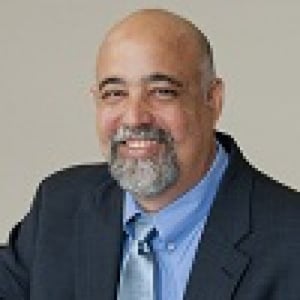
Judge, United States District Court for the Eastern District of North Carolina
A native of Kingston, Jamaica, Myers was a Chancellors Scholar at the UNC School of Law, where he graduated with high honors in 1998. Upon graduation from law school, he clerked in Washington, D.C., for the Hon. David Sentelle on the United States Court of Appeals for the D.C. Circuit, and then entered private practice as a litigator for O'Melveny & Myers, LLP, in Los Angeles California. After two years with the White Collar Criminal Law and Environmental and regulatory Compliance Practice Group, he left private practice in January 2002 to become an Assistant United States Attorney in the Central District of California. In September, 2002, he transferred to the Eastern District of North Carolina in Raleigh, where he prosecuted white collar and violent crimes, and headed the district's Violent Crimes Task Force for Wilmington and New Hanover and Pender Counties.
Myers joined the UNC Law School faculty in July 2004, where he taught Criminal Law, Criminal Procedure, Ethics, and a seminar on White Collar Crime. He was confirmed to the United States District Court for the Eastern District of North Carolina in 2019.
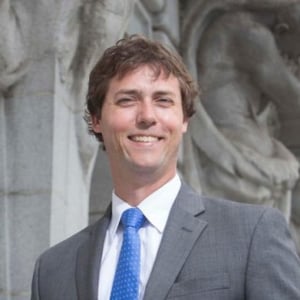
Professor of Law, The College of the Law, University of California San Francisco
Professor Zachary Price has taught at UC Law SF since 2013 and currently holds the Eucalyptus Foundation Endowed Chair. He joined UC Law SF following a fellowship at the Stanford Constitutional Law Center, and before entering academics, he served for three years as an attorney in the U.S. Justice Department’s Office of Legal Counsel. He has also worked as a litigator in private practice and clerked for Judge Catherine C. Blake of the U.S. District Court for the District of Maryland, Judge David S. Tatel of the U.S. Court of Appeals for the District of Columbia Circuit, and Justice Anthony M. Kennedy of the U.S. Supreme Court. He graduated from Harvard Law School magna cum laude and from Stanford University with honors and distinction.
Professor Zachary S. Price teaches and writes about constitutional law, administrative law, and criminal and civil law enforcement. His book Constitutional Symmetry: Judging in a Divided Republic is forthcoming with Cambridge University Press in summer 2024. His scholarly articles include “Faithful Execution in the Fifty States” in the Georgia Law Review, “Congress’s Power Over Military Offices” in the Texas Law Review, “Funding Restrictions and Separation of Powers” in the Vanderbilt Law Review, “Enforcement Discretion and Executive Duty” in the Vanderbilt Law Review, and “NAMUDNO’s Non-Existent Principle of State Equality” in the New York University Law Review Online. Professor Price has also contributed to publications including the Wall Street Journal, Washington Post, Scotusblog, Notice and Comment, Administrative and Regulatory News, Law and Liberty, Balkinization, the Supreme Court of California Blog, the State and Local Government Blog, and the Take Care Blog. In fall 2023, Professor Price was the Bruce Bromley Visiting Professor of Law at Harvard Law School.
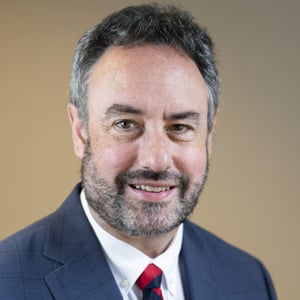
Research Director, Independence Institute
David B. Kopel is Research Director at the Independence Institute; Adjunct Scholar at the Cato Institute; and Senior Fellow at the University of Wyoming College of Law, Firearms Research Center. He received his B.A. in history with Highest Honors from Brown University and his J.D. magna cum laude from the University of Michigan Law School.
He is the author of over 20 books, including the textbook Firearm Law and the Second Amendment: Regulation, Rights, and Policy (Aspen Pubs. 4th ed. forthcoming 2026). His scholarship and briefs have been cited 7 Supreme Court cases--including Heller, McDonald, and Bruen--and in 140 lower courts opinions. He is the author of 120 scholarly articles. His shorter articles often appear on The Volokh Conspiracy blog, hosted by Reason magazine. His topics of interest include the right to arms throughout history, the Colorado Constitution, and law enforcement policy.
Olin-Darling Fellow, Stanford Law School
Lance Sorenson is currently the Olin-Darling Fellow at Stanford Law School.. He has a law degree from Pepperdine University and is a PhD candidate in Legal History at the University of Nevada Las Vegas. He is interested in legal systems and structures, particularly in the American West. His dissertation analyzes iterations of United States’ federalism as part of westward expansion.

Harris v. Arizona Independent Redistricting Commission - Post-Decision SCOTUScast
SCOTUScast 8-22-16 featuring Mark F. Hearne II
On April 20, 2016, the Supreme Court decided Harris v. Arizona Independent Redistricting Commission. In...
Voter ID: A Debate - Podcast
Maya Noronha, Daniel P. Tokaji
Free Speech & Election Law Practice Group Podcast
Recent North Carolina, North Dakota, Texas, and Wisconsin court decisions have invalidated voter ID laws...
Topics
Roundtable at APSA 2016: Congress, Delegation, and the Administrative State
The Federalist Society's Faculty Division will host a roundtable discussion, titled "Congress, Delegation, and the...
Topics
Sign Crimes
Entrepreneurs wishing to advertise new products or services are often thwarted by local ordinances that...
When Lines in The Sea Fail: China Dismisses Hague Arbitration Court Ruling - Podcast
Julian Ku, James Kraska
International & National Security Law Practice Group Podcast
The Chinese Supreme People’s Court and the Chinese government have denounced the Permanent Court of...
Changing the Rules of Discovery - Podcast
Alexander R. Dahl, A. Benjamin Spencer
Litigation Practice Group Podcast
A “requester pays” amendment to the Federal Rules of Civil Procedure (FRCP) would require that...
Mathis v. United States - Post-Decision SCOTUScast
Richard E. Myers
SCOTUScast 8-18-16 featuring Richard E. Myers II
On June 23, 2016, the Supreme Court decided Mathis v. United States. The Armed Career...
Dollar General Corporation v. Mississippi Band of Choctaw Indians - Post-Decision SCOTUScast
Zachary Price
SCOTUScast 8-18-16 featuring Zachary Price
On June 23, 2016, the Supreme Court decided Dollar General Corporation v. Mississippi Band of...
Voisine v. United States - Post-Decision SCOTUScast
David B. Kopel
SCOTUScast 8-18-16 featuring David Kopel
On June 27, 2016, the Supreme Court decided Voisine v. United States. Stephen Voisine was...
Puerto Rico v. Sanchez Valle - Post-Decision SCOTUScast
Lance Sorenson
SCOTUScast 8-18-16 featuring Lance Sorenson
On June 9, 2016, the Supreme Court decided Puerto Rico v. Sanchez Valle. Sanchez Valle...