
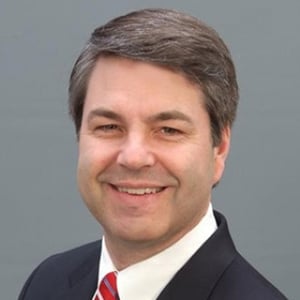
Partner and Co-Chair, Public Policy Group, Shook Hardy & Bacon LLP
Mark Behrens co-chairs Shook's Washington, DC-based Public Policy Practice Group and is a leading national expert on civil justice issues with over thirty years of experience. A substantial part of his practice is working to improve the civil litigation environment through state and federal legislation; in the courts through amicus curiae briefs; through legal scholarship and judicial education; and in the court of public opinion.
Mark is actively involved in civil justice reform efforts at the federal and state levels. He has testified before the U.S. Congress and most state legislatures on behalf of business and civil justice organizations. Mark also has an active amicus brief practice specializing in tort liability and civil justice issues. He has authored or co-authored over 150 amicus briefs in cases before the United States Supreme Court and federal and state appellate courts on behalf of business, civil justice, and defense lawyer organizations. In addition, Mark routinely files comments on behalf of business, civil justice, and defense lawyer organizations regarding potential changes to federal and state court rules. He chairs the International Association of Defense Counsel’s (IADC) Civil Justice Response Committee and serves on the Board of Directors of Lawyers for Civil Justice (LCJ).
Mark is a member of the American Law Institute (ALI). He received his J.D. in 1990 from Vanderbilt University Law School, where he was a member of the Vanderbilt Law Review. He received his B.A. in economics from the University of Wisconsin in 1987.
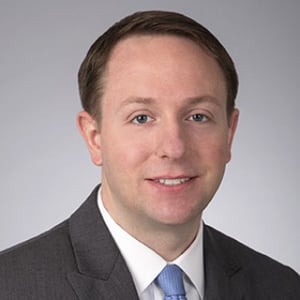
Of Counsel, Shook Hardy & Bacon LLP
Chris’ public policy work focuses on tort law and civil justice system reform. His work is generally divided among legislative efforts, appellate litigation, and liability counseling. Chris has drafted model legislation to be introduced on the state and federal level, testified on numerous legislative initiatives, and authored amicus briefs to state supreme courts and federal appellate courts, including the U.S. Supreme Court. He also serves as an adviser to various business groups and trade associations interested in tort liability issues and civil justice system reform.
In addition, Chris is an elected member of the American Law Institute (ALI), and has assisted in the development of a variety of ALI projects implicating liability law. He has also been a recurrent guest lecturer at the U.S. Department of Justice and Wake Forest University School of Law, as well as a speaker at numerous legal conferences and industry group meetings, on issues related to tort law. Chris has additionally produced significant scholarship in the area of liability law. He has authored more than 50 legal publications on a wide range of liability issues, including articles in the Harvard Journal of Law & Public Policy, UPenn Journal of Business Law, and Duke Journal of Constitutional Law & Public Policy, and has served as a contributor to tort casebooks.

Richard and Frances Mallery Professor of Law and Faculty Director, Constitutional Law Center, Stanford Law School
Michael W. McConnell is the Richard and Frances Mallery Professor and Faculty Director of the Constitutional Law Center at Stanford Law School, and a Senior Fellow at the Hoover Institution. From 2002 to 2009, he served as a Circuit Judge on the United States Court of Appeals for the Tenth Circuit. He was nominated by President George W. Bush, a Republican, and confirmed by a Democratic Senate by unanimous consent. McConnell has previously held chaired professorships at the University of Chicago and the University of Utah, and visiting professorships at Harvard and NYU. He teaches courses on constitutional law, constitutional history, First Amendment, and interpretive theory. He has published widely in the fields of constitutional law and theory, especially church and state, equal protection, and separation of powers. His book, “The President Who Would Not Be King: Executive Power Under the Constitution,” was published by Princeton University Press in 2020, based on the Tanner Lectures in Human Values, which he delivered at Princeton in 2019. His latest book, co-authored with Nathan Chapman, “Agreeing to Disagree: How the Establishment Clause Protects Religious Diversity and Freedom of Conscience,” was published by Oxford University Press in mid-2023. McConnell has argued sixteen cases in the United States Supreme Court, most recently Carney v. Adams (2020). defending a provision of the Delaware Constitution requiring political balance on that state’s courts. More recently, he was co-counsel in Gonzalez v. Google. He earned his B.A. from Michigan State University and his J.D. from the University of Chicago, and has received honorary degrees from Notre Dame University and Michigan State. He served as law clerk to Supreme Court Justice William J. Brennan, Jr. and D.C. Circuit Chief Judge J. Skelly Wright. He has been Assistant General Counsel of the Office of Management & Budget, Assistant to the Solicitor General of the Department of Justice, and a member of the President’s Intelligence Oversight Board. He is Senior of Counsel to the law firm Wilson, Sonsini, Goodrich & Rosati, and is co-chair of Meta’s Oversight Review Board.

Assistant Professor of Law, Northern Illinois University College of Law
Daniel McConkie joined the NIU Law faculty in 2015. He teaches courses in criminal law, criminal procedure, and professional responsibility. His primary research interest is criminal procedure.
Professor McConkie was a prosecutor in California for eight years, first for the state and then for the federal government. As a federal prosecutor, he specialized in taking down large drug trafficking organizations and served as his office’s ethics advisor. As a scholar, he now writes about plea bargaining, which has almost entirely replaced jury trials in our justice system.
Professor McConkie holds an Honors B.A. degree in history from the University of Utah (2001), where he graduated cum laude, and a J.D. degree from Stanford Law School (2004), where he was a Public Interest Fellow. From 2013 to 2015, Professor McConkie was a visiting professor at the J. Reuben Clark Law School at Brigham Young University.

Assistant Professor, George Mason University School of Law
Assistant Professor Christopher M. Newman graduated magna cum laude from the University of Michigan Law School in 1999, where he served as book review editor for the Michigan Law Review and received Michigan's highest law school award, the Henry M. Bates Memorial Scholarship. He also holds a BA in classical liberal arts awarded by St. John's College in Annapolis, Maryland.
Following law school, Professor Newman was a clerk for the Honorable Alex Kozinski of the U.S. Court of Appeals for the Ninth Circuit, with whom he co-published What's So Fair About Fair Use?, 46 J. Copyright Soc'y 513 (1999). From 2000-2007, he was a litigation associate with Irell & Manella LLP in Los Angeles, where he represented clients in disputes involving contracts, business torts, intellectual property, corporate and securities litigation, and appellate matters, as well as pro bono family and criminal law matters. Professor Newman left practice at the beginning of 2007 to serve an Olin/Searle Fellowship in Law at the UCLA School of Law, where he focused on his research and writing in the areas of property theory and intellectual property, and from January 2008 until his arrival at Mason Law served as a research fellow of UCLA's Intellectual Property Project.
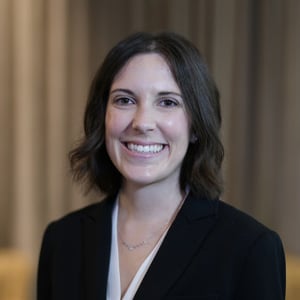
Director, Faculty Relations, The Federalist Society
Katie McClendon is the Director of Faculty Relations at the Federalist Society, where she has worked since 2015.
Katie holds a J.D. from the University of Pennsylvania Law School and a B.A. in Political Science from Biola University, where she was a member of the Torrey Honors Institute. She is a fellow of the John Jay Institute and the Blackstone Legal Fellowship. Katie is originally from Los Angeles, and she now lives with her husband and four children in Atlanta.

State Court Docket Watch News Clips: 8/3/2016
The Delaware Supreme Court has ruled that the state's capital punishment law is unconstitutional. The...
The ABA Plan to Politically Purify the Legal Profession
Justice Samuel Alito got it right. Dissenting from the Supreme Court’s same-sex marriage decision and responding...
RSVP to Fed Soc Faculty SEALS Reception, Aug. 5
Once again, The Federalist Society’s Faculty Division will host a reception for attendees of the...
Topics
Liberty of Contract and the Free Market Foundations of IP
Continuing the project that began with the publication in September 2015 of our book, “The...
2015 Civil Justice Update
Mark A. Behrens, Christopher Appel
White Paper
This paper recaps key civil justice reforms that occurred in 2015. Part I focuses on...
Zubik v. Burwell: Post-Decision
Michael W. McConnell
Short video featuring Michael W. McConnell
Prof. Michael W. McConnell, Director of the Stanford Constitutional Law Center and Senior Fellow at...
Topics
Congress Tries To Restrict Executive Actions
The Separation of Powers Restoration and Second Amendment Protection Act, H.R. 4321, is before the...
Ross v. Blake - Post-Decision SCOTUScast
Daniel McConkie
SCOTUScast 7-28-16 featuring Daniel McConkie
On June 6, 2016, the Supreme Court decided Ross v. Blake. While being moved to...
Kirtsaeng v. John Wiley & Sons - Post-Decision SCOTUScast
Christopher Newman
SCOTUScast 7-28-16 featuring Christopher Newman
On June 16, 2016, the Supreme Court decided Kirtsaeng v. John Wiley & Sons. Academic...
The Federalist Paper, Summer 2016
Katie McClendon
The Supreme Court just wrapped up its 2015-2016 Term, and the Federalist Society has been...