

Clinical Professor of Law, Emory Law School
As Director of the International Humanitarian Law Clinic, Laurie Blank teaches international humanitarian law and works directly with students to provide assistance to international tribunals, non-governmental organizations, and law firms around the world on cutting-edge issues in humanitarian law and human rights. Professor Blank is the co-author of International Law and Armed Conflict: Fundamental Principles and Contemporary Challenges in the Law of War, a casebook on the law of war (with G. Noone, Aspen Publishing 2013). She is also the co-director of a multi-year project on military training programs in the law of war and the co-author of Law of War Training: Resources for Military and Civilian Leaders (USIP 2008, with G. Noone, second edition 2013). In addition, she is the series editor of the ICRC’s teaching supplements on IHL, a member of the American Bar Association’s Advisory Committee to the Standing Committee on Law and National Security, and a member of the Public Interest Law and Policy Group’s High Level Working Group on Piracy. Before coming to Emory, Professor Blank was a program officer in the Rule of Law Program at the United States Institute of Peace. At USIP, she directed the Experts’ Working Group on International Humanitarian Law, in particular a multi-year project focusing on New Actors in the Implementation and Enforcement of International Humanitarian Law.
She is the author of numerous articles and opinion pieces on topics in international humanitarian law, including, most recently, "Extending Positive Identification from People to Places: Terrorism, Armed Conflict and the Identification of Military Objectives" (Utah Law Review); "Losing the Forest for the Trees: Syria, Law and the Pragmatics of Conflict Recognition" (Vanderbilt Journal of Transnational Law); "Targeted Strikes: The Consequences of Blurring the Armed Conflict and Self-Defense Justifications" (William Mitchell Law Review); "After Top Gun: How Drone Strikes Impact the Law of War" (University of Pennsylvania Journal of International Law); "A Square Peg in a Round Hole: Stretching Law of War Detention Too Far" (Rutgers Law Review); "Defining the Battlefield in Contemporary Conflict and Counterterrorism: Understanding the Parameters of the Zone of Combat" (Georgia Journal of International and Comparative Law); and "The Application of IHL in the Goldstone Report: A Critical Commentary" (Yearbook of International Humanitarian Law).
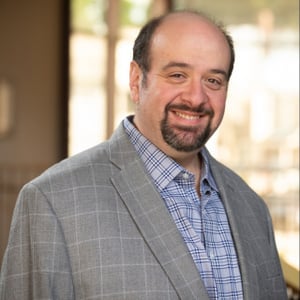
Associate Professor, UNH Franklin Pierce School of Law
Zvi S. Rosen is an Associate Professor at UNH Franklin Pierce School of Law and the Faculty Director of the Franklin Pierce Society for Intellectual Property. He has served as a Assistant Professor at the Southern Illinois University School of Law, as a Visiting Assistant Professor at the Maurice A. Deane School of Law at Hofstra University, and as a Visiting Scholar and Professorial Lecturer in Law at George Washington University School of Law.
In 2015-2016, he was the Abraham L. Kaminstein Scholar in Residence at the U.S. Copyright Office. Mr. Rosen received his J.D. from Northwestern University School of Law in 2005 and LLM in Intellectual Property in 2006 from the George Washington University Law School. He has practiced at Fried, Frank, Harris, Shriver & Jacobson LLP as well as smaller firms and his own practice, and clerked for the Hon. Thomas B. Bennett of the U.S. Bankruptcy Court for the Northern District of Alabama. He has written extensively on the development of modern copyright and trademark law, as well as on bankruptcy law.

Special Counsel, Hunton & Williams
Mr. Meisburg is a former National Labor Relations Board Member and General Counsel.
Prior to joining Hunton & Williams LLP, Ronald co-chaired the labor-management relations practice at an international law firm. Over the course of his 40-year career, which began with the Office of the Solicitor of the US Department of Labor, Mr. Meisburg has handled matters arising under federal labor and employment law in complex business transactions before federal agencies and courts.
Mr. Meisburg joined the NLRB in 2004, following a recess appointment by President George W. Bush. Two years later, President Bush appointed him to a four-year term as NLRB General Counsel, a position independent from the Board. Serving under the Bush and Obama Administrations as the chief prosecutor under the National Labor Relations Act and chief administrator of the agency’s 32 regional offices, he oversaw a $280 million budget and 1,200 staff.
Ronald has been quoted as a labor law authority by numerous national publications and news organizations, including The New York Times, The Wall Street Journal, The Washington Times, SHRM Online, Associated Press, Corporate Counsel Magazine, Bloomberg, Reuters, Employment Law 360 and BNA. He is a frequent speaker at national conferences sponsored by trade associations, professional groups and educational institutions, including the US Chamber of Commerce, numerous elite law schools and universities around the world, the Council on Labor Law Equality, Committee for a Democratic Workplace, Labor and Employment Research Association, Equal Employment Advisory Council, Human Resources Policy Association, Labor Relations Advisory Committee, National Retail Federation, Retail Leaders Industry Association, Energy and Mineral Law Foundation, American Arbitration Association and numerous bar associations. Mr. Meisburg has also been recognized by Legal500 USA.
Mr. Meisburg is admitted to practice in the United States Courts of Appeals for the Second, Third, Fourth, Fifth, Sixth, Seventh, Ninth and District of Columbia Circuits, and the Supreme Court of the United States.
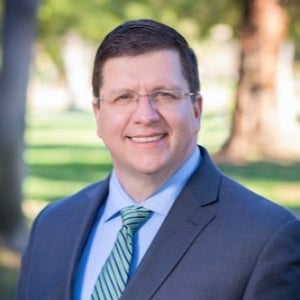
Vice President and Senior Counsel, The Becket Fund for Religious Liberty
Eric Rassbach is Vice President and Senior Counsel at the Becket Fund for Religious Liberty, where he has served since 2003. He has briefed over 90 cases at the United States Supreme Court and has led or been a part of Becket litigation teams in each of Becket’s pathbreaking victories there, including Hosanna-Tabor, Hobby Lobby, Holt v. Hobbs, Zubik v. Burwell, Agudath Israel of America v. Cuomo, and Fulton v. Philadelphia. In 2020, Eric argued Our Lady of Guadalupe School v. Morrissey-Berru to the Supreme Court, garnering a 7-2 win for his Catholic school clients. Eric has also briefed and argued cases in federal appeals courts and state supreme courts across the nation. Eric has also represented clients in appeals to the European Court of Human Rights in Strasbourg, France and in the highest courts of several other countries.
Eric believes passionately in the right of all people to the full measure of religious liberty and has represented members of almost every religious group present in the United States, including Buddhists, Christians, Hindus, Jains, Jews, Muslims, Native Americans, Santeros, and Sikhs, as well as many governmental entities targeted for accommodating religion.
Eric frequently comments on church-state issues in the media, including the New York Times, the Washington Post, the Wall Street Journal, and other major press outlets. He has published legal scholarship in the Harvard Law Review Forum, the Tennessee Law Review, the Illinois Law Review, the Cato Supreme Court Review, and other legal journals, and often speaks to law school audiences.
Before joining Becket, Eric worked at Baker Botts LLP in Houston, where he worked in international project finance. He also served as a law clerk to United States District Court Judge Lee Rosenthal in Houston, Texas.
Eric graduated from Haverford College with a degree in Comparative Literature, is a member of Fitzwilliam College, University of Cambridge, and is a graduate of Harvard Law School. Eric was a 2012-2013 Wasserstein Public Interest Fellow at Harvard Law School. He is Visiting Professor and Executive Director of The Hugh and Hazel Darling Foundation Religious Liberty Clinic at Pepperdine University Caruso School of Law in Malibu, where he leads students in litigating cases in American courts. He is also an Associated Scholar with the Centre for Religious Freedom at Jagiellonian University in Kraków, Poland. Eric is admitted in Texas, DC, California, and Ireland.
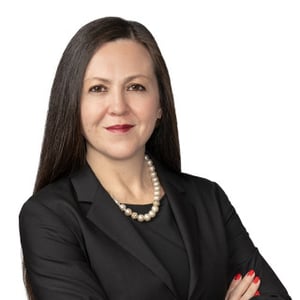
Partner, Axinn, Veltrop & Harkrider LLP
Koren Wong-Ervin is a recognized thought leader on competition issues who has testified before Congress on domestic and international issues in antitrust policy. She has more than eighteen years of experience in government, private practice, and as in-house counsel, including representing defendants and plaintiffs in high-stakes litigations and representing companies in domestic and foreign investigations. While at the Federal Trade Commission (FTC), Koren served as an Attorney Advisor to Commissioner Joshua Wright and Counsel for Intellectual Property & International Antitrust.
The combination of Koren's experience representing defendants—along with her experience at the FTC and as a former plaintiffs class action attorney—gives her insights into the thinking on both sides of cases, including complex multi-district litigations, allowing her to develop both effective offensive and defensive strategies. On top of this, her in-house experience as the Director of Antitrust Litigation & Policy at a major technology company gives her a first-hand understanding of how companies work and unique insight into the needs of clients. Koren also has a deep understanding of economics, as evidenced by the fact that she has trained over 500 foreign judges and enforcers on a variety of economic topics.
Koren’s scholarship has been cited by courts and the Department of Justice. She has authored over sixty articles, including on vertical mergers and restraints, acquisitions of potential competitors, consummated mergers, multisided platforms, the intersection of antitrust and intellectual property, incremental innovations or “product hopping,” optimal penalties, extraterritoriality, methodologies for calculating patent infringement damages, and international due process and convergence. She has spoken at over 200 domestic and international events.

Founding Partner, Lodestar Law and Economics PLLC
Josh is the founder of Lodestar Law and Economics, PLLC. On January 1, 2013, the U.S. Senate unanimously confirmed Wright as a Commissioner of the Federal Trade Commission (FTC). He is a leading scholar in antitrust law, economics, intellectual property, regulation, and consumer protection, and has published more than 100 articles and book chapters, co-authored a leading antitrust casebook, and edited several book volumes focusing on these issues. Commentators have recognized Wright as “widely considered his generation’s greatest mind on antitrust law,” and his academic work ranks him as one of the most cited antitrust academics in the world. Wright was also awarded the Paul M. Bator Award by the Federalist Society in 2014 to “an academic who demonstrated excellence in legal scholarship, a commitment to teaching, a concern for students, and who has made a significant public impact.” Wright also served as the Executive Director of the Global Antitrust Institute, the world’s premiere academic institute focused upon antitrust education for judges and regulators and has taught hundreds of judges and thousands of regulators from dozens of countries.
Wright’s practice focuses upon helping clients solve complex competition, consumer protection, and regulatory problems by providing legal and economic analysis, strategic advice and counseling, and economic expert testimony.
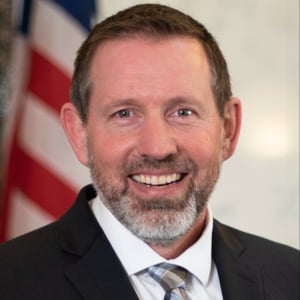
Judge, United States Court of Appeals, Ninth Circuit
Lawrence VanDyke serves as a circuit judge on the U.S. Court of Appeals for the Ninth Circuit. Prior to that appointment in January 2020, he served as a Deputy Assistant Attorney General in the Environment and Natural Resources Division of the United States Department of Justice. Before that, he served consecutively as the Solicitor General of two western states – Nevada and Montana. At the beginning of his legal career, he worked as an attorney in the Appellate and Constitutional Issues practice group at Gibson Dunn & Crutcher, LLP.
Judge VanDyke received his law degree magna cum laude from Harvard Law School, where he was an editor on the Harvard Law Review. He has engineering and theology undergraduate degrees and a masters degree in engineering management. He served as a law clerk to the Honorable Janice Rogers Brown of the United States Court of Appeals for the District of Columbia Circuit. Judge VanDyke and his wife Cheryl live in Reno, Nevada, and they have three children.
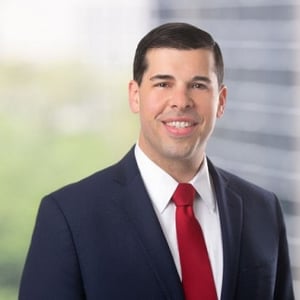
Partner, Boies Schiller Flexner LLP
Jesse, the former third-ranking official at the U.S. Department of Justice, helps clients with their most difficult litigation and regulatory issues─whether that means defending against an enforcement action, pursuing high-stakes litigation and appeals, navigating regulatory thickets at federal and state agencies, or crafting a comprehensive strategy to manage a crisis. He approaches these problems with the knowledge gained both from his broad private-practice experience and from having served at the highest levels of federal and state government.
Jesse has experience across a range of substantive and regulatory areas. He has sued the federal government and has also been one of its top law-enforcement officials; he has represented states and has also navigated their regulatory agencies on behalf of clients; and he has represented companies in business disputes, both as defendants and plaintiffs.
Before joining the firm, Jesse was the Acting Associate Attorney General at the United States Department of Justice. In that role, he oversaw the civil and criminal work of the Antitrust, Civil, Civil Rights, Environment and Natural Resources, and Tax Divisions. During Jesse’s tenure, the Associate’s office closely managed the Department’s most significant litigation, including matters involving large financial institutions, healthcare companies, automakers, energy companies, and state and local governments. In addition, Jesse served as Chair of DOJ’s Regulatory Reform Task Force and Vice Chair of DOJ’s Task Force on Market Integrity and Consumer Fraud. Jesse regularly provided legal and strategic advice to the highest-level decision makers in the federal government, including the Attorney General and Deputy Attorney General, general counsels across the spectrum of federal agencies, and White House officials.
Jesse served for three years as the secretary of Florida’s labor, economic-development, and land-use agency, the Florida Department of Economic Opportunity. Before that, he served as Governor (now Senator) Rick Scott’s general counsel.
Jesse maintains offices in both Washington D.C. and Florida. From Washington, he focuses on federal litigation and crisis management. In Florida, in addition to federal litigation, Jesse employs his knowledge of state government and regulation to help clients in courts across the state, from trial through the Florida Supreme Court.
Jesse currently serves on the Florida Supreme Court Judicial Nominating Commission, the body that provides the governor with nominees for appointment to the Florida Supreme Court. Jesse is also a fellow at the Center for the Study of the Administrative State at the Scalia Law School at George Mason University, where he writes and speaks about administrative law.

Senior Fellow and Academic Director, Penn Carey Law School
Gus Hurwitz is a Senior Fellow and the Academic Director of the Center for Technology, Innovation & Competition and the University of Pennsylvania Carey Law School where he is working to develop academic and scholarly programs at the intersecution of law, technology, and policy.
He is also Director of Law & Economics Programs at the International Center for Law & Economics (ICLE), a think tank based in Portland, Oregon, where he directs its law and economics-focused research program and helps to translate academic research into applied policy issues.
Hurwitz's research focuses on the regulation of technology, including administrative and regulatory law, antitrust law, torts and products liability, and media law - alongside cognate fields. Inrecent years he has worked on an AI standardization initiative with Seoul National University, a UNICEF-organized study of broadband deployment to public schools in Rwanda, and a book on conglomerate and ecosystems theories of antitrust.
He has published over 30 articles and book chapters, two books (one on cybersecurity law & policy, one on media regulation in the digital era) and have two more in process, over 100 shorter writings (op-eds, shorter analyses, blog posts, &c), hosted over 100 podcast episodes, and regularly appear or am quoted in popular media (including the NY Times, Wall Street Journal, Washington Post, and Associated Press). His work has been cited by legislators, federal courts of appeals, and federal regulatory agencies.
He was previously a full professor and founding director of the Governance & Technology Center at the University of Nebraska, prior to which he was the inaugural research fellow at the Center for Technology, Innovation & Competition (CTIC). From 2007 to 2010, he was a trial attorney with the U.S. Department of Justice Antitrust Division in the Telecommunications and Media Enforcement Section.
He also is, or has been, affiliated with the Classical Liberal Institute at New York University School of Law, the National Security Institute at George Mason University, and the American Enterprise Institute (AEI).
Before attending law school, Hurwitz worked at Los Alamos National Lab and interned at the Naval Research Lab. During this time his work was recognized by the Federal Laboratory Consortium, Los Alamos National Lab, IEEE & ACM, Corporation for Education Network Initiatives in California, R&D Magazine, and even the Guinness Book of World Records.
A current list of Hurwitz’s publications is available on his website: GusHurwitz.net.

Topics
SCOTUS order updates
This afternoon the Supreme Court issued an order granting certiorari in seven cases, three of which were...
The Siege of Aleppo and War Crimes - Podcast
Laurie R. Blank
International & National Security Law Practice Group Podcast
For months, Syrian and Russian warplanes have bombed Aleppo, killing and wounding residents. Russian officials have referred...
Star Athletica, LLC v. Varsity Brands, Inc. - Post-Argument SCOTUScast
Zvi Rosen
SCOTUScast 12-1-16 featuring Zvi Rosen
On October 31, 2016, the Supreme Court heard oral argument in Star Athletica, LLC v....
Joint Employment Update - Podcast
Ronald E. Meisburg
Labor & Employment Law Practice Group Podcast
Ronald Meisburg, former National Labor Relations Board Member and General Counsel, joined us to discuss...
Are Religious Healthcare Systems “Churches”?
Eric Rassbach
Short video featuring Eric Rassbach
What are the limits of what constitutes a “church” under ERISA, the Employee Retirement Income...
Intellectual Property and Standard Setting
Koren Wong-Ervin, Joshua D. Wright
Federalist Society Review, Volume 17, Issue 3
Note from the Editor: This article discusses the controversial topic of intellectual property in standard...
Topics
Marijuana Use and Firearm Ownership
On November 8th, voters approved recreational marijuana initiatives in California, Massachusetts, Maine, and Nevada, and...
Courthouse Steps: Overtime Regulation - Podcast
Lawrence VanDyke, Jesse Panuccio, D Hancock
Litigation and Labor & Employment Practice Groups Podcast
In May, the Department of Labor announced a new overtime regulation, which would require all...
Topics
Right to Work laws at the polls and in the courts
Right to Work laws prohibit requirements that workers pay union dues as a condition of...
Should the Government Set Internet Prices?
Justin (Gus) Hurwitz
Short video featuring Gus Hurwitz
Can price discrimination be good Internet policy? Professor Gus Hurwitz of the Nebraska College of...