
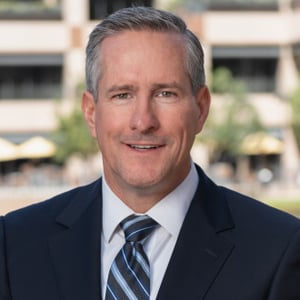
Managing Partner, Brown Wegner LLP
Mr. Brown leads a law firm in California focused on trials and appeals in intellectual property and other complex commercial disputes. Previously, he practiced for more than a decade in the Intellectual Property Group at Jones Day, was an Adjunct Professor at Chapman University School of Law, and served a judicial law clerk to a federal district judge in Los Angeles. Mr. Brown has been named a Southern California Super Lawyer for ten years, was listed among the Top 50 Lawyers in Orange County several years. He is a Master in the Howard T. Markey Intellectual Property American Inn of Court.
Education

George C. Dix Professor in Constitutional Law, Northwestern University Pritzker School of Law
John O. McGinnis is a graduate of Harvard College and Harvard Law School where he was an editor of the Harvard Law Review. He also has an MA degree from Balliol College, Oxford, in philosophy and theology. Professor McGinnis clerked on the U.S. Court of Appeals for the District of Columbia. From 1987 to 1991, he was deputy assistant attorney general in the Office of Legal Counsel at the Department of Justice. He is the author of Accelerating Democracy: Transforming Government Through Technology (Princeton 2013) and Originalism and the Good Constitution (Harvard 2013) (with M. Rappaport). He is a past winner of the Paul Bator award given by the Federalist Society to an outstanding academic under 40. He has been listed by the United States on the roster of panelists who may be called upon to decide World Trade Organization Disputes.
Partner, Kirkland & Ellis LLP
Mr. Jay Lefkowitz is a leading partner in Kirkland’s litigation practice and a member of the Firm’s Global Executive Management Committee. He is also an adjunct professor at Columbia Law School, where he teaches a seminar on Supreme Court advocacy. Mr. Lefkowitz has served as lead trial and appellate counsel in a wide variety of substantive areas, including shareholder disputes, antitrust, product liability, litigation against the FDA and False Claims Act matters. He has also conducted numerous internal investigations for public companies and audit committees.
In its 2013 release of “The 100 Most Influential Lawyers in America,” The National Law Journal describes Mr. Lefkowitz as “a leading voice on school choice issues” and “a no-nonsense appellate and antitrust lawyer for an array of blue-chip clients.” The Legal 500 U.S. noted that Mr. Lefkowitz “provides a depth of understanding and influence in some of the highest courts of our country,” and in Chambers USA, America’s Leading Lawyers for Business, clients say, “‘Jay is brilliant; there is no other way to put it.’” Mr. Lefkowitzwas also named a Law360 “MVP of the Year” in 2011 for his Appellate practice, and in 2012, 2013, 2014 and 2015 for his Life Sciences work. Mr. Lefkowitz is one of only three of the 189 MVPs named to the list five years in a row. The American Lawyer named him its “Lawyer of the Week” in December 2012 for his role in winning an antitrust lawsuit in the pharmaceutical industry.
Mr. Lefkowitz takes on groundbreaking work for high-profile clients, representing more than a dozen major pharmaceutical, medical device and health care companies in important and frequently precedent-setting matters. Mr. Lefkowitz has won two landmark 5-4 decisions at the U.S. Supreme Court in favor of the pharmaceutical industry overturning the decision of three Circuit Courts of Appeal. In Pliva v. Mensing in 2011, on behalf of Teva and Actavis, Mr. Lefkowitz convinced the Court to reject the views of the FDA and the Solicitor General and establish that generic drug companies may no longer be sued for “failure to warn claims,” finding that federal law preempts state law under the Constitution’s supremacy clause. His victory in Mutual v. Bartlett in 2013, overturned a $21 million verdict on behalf of Sun Pharmaceuticals, and extended the Mensing ruling to cover design defect claims.

Founding Partner, Boyden Gray & Associates
Ambassador C. Boyden Gray is the founding partner of Boyden Gray & Associates, a law and strategy firm in Washington, D.C., focused on constitutional and regulatory issues.
Mr. Gray worked in the White House for twelve years, first as counsel to the Vice President during the Reagan administration and then as White House Counsel to President George H.W. Bush. In the Reagan administration, he was Counsel to the Presidential Task Force on Regulatory Relief, for which he wrote the original Executive Order 12291 requiring cost-benefit analysis and White House review of regulations (later renumbered as current EO 12866). In the George H.W. Bush Administration, Mr. Gray was in charge of judicial selection and was also instrumental in the enactment of the Clean Air Act Amendments of 1990, the Energy Policy Act of 1992, and a cap-and-trade system for acid rain emissions. In 1993, he received the Presidential Citizens Medal. Under President George W. Bush, Mr. Gray was U.S. Ambassador to the European Union and U.S. Special Envoy to Europe for Eurasian Energy.
Mr. Gray practiced law for 25 years at the law firm of Wilmer, Cutler & Pickering and was chairman of the Administrative Law and Regulatory Practice Section of the American Bar Association from 2000 to 2002. Early in his career, Mr. Gray helped to develop the Business Roundtable and served as its first counsel. He is an adjunct professor at Antonin Scalia Law School and a former adjunct professor at NYU Law School (teaching energy and environmental law). Mr. Gray is on the Board of Directors of the Atlantic Council, the Federalist Society, Reason Foundation, and the Trust for the National Mall.
Mr. Gray earned his A.B. magna cum laude from Harvard, where he was an editor of the Crimson, and his J.D. with high honors from the University of North Carolina at Chapel Hill, where he was editor-in-chief of the Law Review. Mr. Gray served in the United States Marine Corps, and after law school, he clerked for Earl Warren, Chief Justice of the United States Supreme Court.
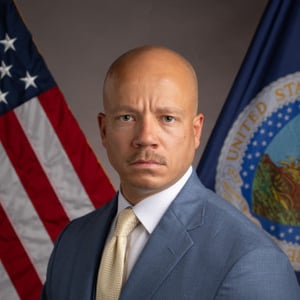
Assistant Secretary for Civil Rights, U.S. Department of Agriculture
Devon Westhill is the Assistant Secretary for Civil Rights at the U.S. Department of Agriculture. The U.S. Senate confirmed President Donald Trump’s nomination of Westhill on October 7, 2025.
Westhill returns to the USDA where he previously headed the civil rights office as Deputy Assistant Secretary in President Trump’s first term. His previous government appointments also include service at the U.S. Department of Labor, liaison to the Administrative Conference of the U.S., and liaison to the White House Initiative on Historically Black Colleges and Universities. Prior to returning to government service, Westhill was President and General Counsel of a nonprofit civil rights organization.
Westhill has testified on civil rights matters before Congress, federal agencies, and as an expert witness in federal court. He has spoken hundreds of times at college campuses, conferences, and on radio and TV programs, and he is frequently quoted in print publications, and his writing has appeared in numerous national outlets. A U.S. Navy veteran, Westhill earned his BA from the University of North Carolina at Chapel Hill and his JD from the University of Florida.
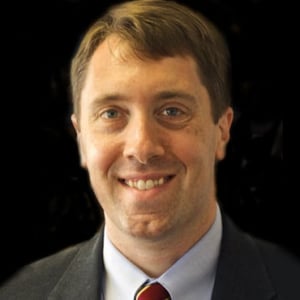
Professor of Law, Antonin Scalia Law School, George Mason University
Eric R. Claeys is Professor of Law at the Antonin Scalia Law School, George Mason University. He has written widely in the fields of property, private law, and constitutional law. Professor Claeys’s current research interests focus on flourishing- and labor-based natural rights justifications for property—in American property theory, in intellectual property, and in contemporary regulation of shale gas exploration and hydraulic fracturing. He is a member of the American Law Institute, he serves on the ALI’s Members’ Consultative Group for the first Restatement of Copyright, and he also serves as an adviser to the Restatement (Fourth) of the Law of Property.
Professor Claeys received his JD from the University of Southern California Gould School of Law. He received his AB from Princeton University, and he is a former visiting fellow and current member of Princeton’s Politics Department’s James Madison Program in American Ideals and Institutions. After law school, Professor Claeys clerked for the Hon. Melvin Brunetti, U.S. Court of Appeals for the Ninth Circuit, and the Hon. William H. Rehnquist, Chief Justice of the United States.
Professor Claeys’s main teaching interests include Property, Torts, Jurisprudence, and Intellectual Property. In recent years, he has also taught Water Law, Remedies, Estates and Trusts, Trade Secrecy, Constitutional Law, Torts, and Oil and Gas law. Spring 2018, he is teaching Torts and Jurisprudence as a Visiting Professor at Harvard Law School.
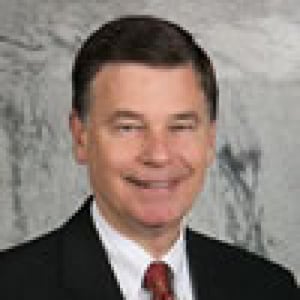
Partner, Stone Pigman Walther Wittmann LLC
Mr. Thomson concentrates his practice in white collar criminal defense, government investigations, and corporate compliance. He has tried over 50 criminal trials to verdict in federal and state courts, and has experience in appellate litigation. His practice also includes civil litigation and information security. Prior to joining Stone Pigman, Mr. Thomson had a 23 year career as a federal prosecutor with the U.S. Department of Justice. He served on special assignment with the National Security Agency, where he worked on matters involving information assurance and intelligence collection.
Prior to private practice, Mr. Thomson was recognized numerous times by government agencies, including a Special Commendation Award given by the U.S. Attorney General for completing the Justice Department's Leadership Excellence and Achievement Program; Special Commendation by FBI Director for outstanding performance for successful corruption prosecution after Hurricane Katrina; Special Award from the U.S. Postal Service for prosecution of corrupt employee; Special Award by New Orleans Police Department, ATF and U.S. Department of Justice for his contributions to Project Exile; and Special Awards for Outstanding Contributions to Drug Law Enforcement from the Drug Enforcement Administration.
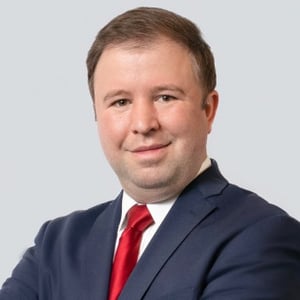
Partner, Wiley Rein LLP
Tom has over 15 years’ experience in private practice and public service at the federal and state levels representing clients in high-stakes appellate and regulatory litigation matters. Tom has argued appeals in the Fourth, Fifth, Ninth, D.C. and Federal Circuits, and the West Virginia Supreme Court of Appeals.
Prior to joining Wiley, Tom was the General Counsel at the Federal Communications Commission (FCC), where he served as the agency’s chief legal officer and briefed dozens of appeals – personally arguing two – in the federal courts of appeals in constitutional and administrative law challenges to the FCC’s orders. Tom managed a team of over 70 attorneys and staff and provided consultation and advice on a wide range of practice areas relating to the FCC’s work, including administrative law, appellate and trial litigation, bankruptcy, ethics, fiscal law, fraud, labor and employment, and public records requests. He has spent his career advising clients on all stages of federal agency rulemaking, adjudication, and litigation, in fields ranging from communications to environmental law to securities to labor and employment. He frequently speaks and writes on legal issues and his articles have appeared in the Wall Street Journal, Washington Post, National Review, Forbes, and Newark Star-Ledger.

Topics
SCOTUS Opinions and Orders Update
OPINIONS (1) County of Los Angeles v. Mendez: By a vote of 8-0 the judgment...
Courthouse Steps Decision: TC Heartland LLC v. Kraft Foods Group Brands LLC - Podcast
William J. Brown, J Hartline
Intellectual Property Practice Group Podcast
On May 22, 2017, the Supreme Court handed down its unanimous opinion in the closely-watched...
Campaign Finance & Free Speech
John O. McGinnis
Short video featuring John O. McGinnis
What are the limits on campaign financing under the First Amendment? Professor John O. McGinnis...
Update: In re Fosamax (Alendronate Sodium) Products Liability Litigation - Podcast
Jay Lefkowitz
Litigation Practice Group Podcast
In a recent decision, the Third Circuit held that hundreds of state-law claims alleging that...
The Regulatory Transparency Project: What and Why?
C. Boyden Gray, Devon Westhill
Regulatory Transparency Project Teleforum
We have grown accustomed to modern government issuing and enforcing new rules to protect certain...
Topics
Fix Venue - Fix Patent Litigation, Part III
For nearly 30 years, courts have held that a patent holder can bring an infringement...
What is a Regulatory Taking?
Eric R. Claeys
Short video featuring Eric Claeys
How does the Takings Clause apply to regulations? Prof. Eric Claeys, Professor of Law at...
Topics
SCOTUS Opinions & Orders
OPINIONS (1) Cooper v. Harris: By a vote of 5-3 the judgment of the three-judge...
Weaver v. Massachusetts - Post-Argument SCOTUScast
Peter M. Thomson
SCOTUScast 5-22-17 featuring Peter M. Thomson
On April 19, 2017, the Supreme Court heard oral argument in Weaver v. Massachusetts. Kentel...
Legal Challenge to the President's Executive Order on Reducing Regulation and Controlling Regulatory Costs - Podcast
Thomas M. Johnson
Administrative Law & Regulation Practice Group Podcast
On January 30, 2017, President Trump issued an Executive Order entitled Reducing Regulation and Controlling...