
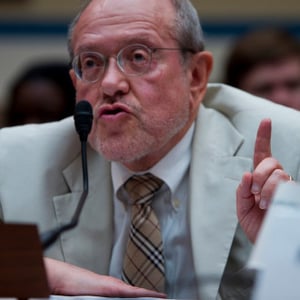
Fellow, The Constitution Project at the Project On Government Oversight
Morton Rosenberg was a senior legal analyst with the Congressional Research Service (CRS) for 35 years specializing in the areas of constitutional law , administrative law and process, congressional practice and procedure, and labor law, and in the problems raised by the interface of Congress and the Executive which involved the scope of congressional oversight and investigative prerogatives, the validity of claims of executive and common law privileges before committees, enforcement of subpoenas, and issues raised by the presidential exercise of temporary and recess appointment. He also served extended details as legal counsel for a special investigative committee and as a legal advisor to the House General Counsel.
Since his retirement from CRS in 2008 he has undertaken a variety of consulting projects and assignments that have tapped into his experience and expertise in constitutional, congressional and administrative law, practice and procedure. This has included an engagement by the Constitution Project to research and write a monograph on congressional investigative oversight in 2009 which was updated and expanded and published in May 2017 entitled "When Congress Comes Calling: A Study on the Principles, Practices. and Pragmatics of Legislative Inquiry." He also served as a consultant to the general counsel of the Public Company Accounting Oversight Board (PCAOB) and its private counsel in the preparation of briefs and for oral argument before the Supreme Court in Free Enterprise Fund v. PCAOB (2010); and in preparing and submitting an amicus brief to the Supreme Court in NLRB v. SW General (2017) which was cited five times by the majority opinion. He is presently of counsel to the law firm Barnett Sivon & Natter, Washington, D.C. and a Constitution Project Fellow.
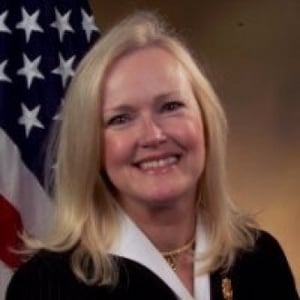
Founder, Law Office of Eileen J. O'Connor PLLC
After nearly 30 years as a national tax specialist with the IRS and major accounting firms, Eileen J. O’Connor, now an attorney in private practice, was Assistant Attorney General for the Justice Department’s Tax Division for six years during the administration of President George W. Bush and a member of then-President-elect Trump’s Treasury Department Transition Team. She focuses on federal administrative and tax law.
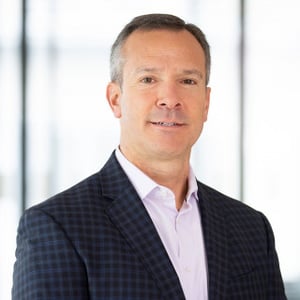
Shareholder, Brownstein Hyatt Farber Schreck, LLP
As co-chair of the firm’s Government Relations Department, Will Moschella leverages his experience in the Justice Department and Congress to counsel clients on a range of matters, including antitrust, financial services, legal reform, intellectual property and criminal law.
Will served at the Justice Department as principal associate deputy attorney general and as assistant attorney general in the Office of Legislative Affairs. In Congress, Will served on the House Judiciary Committee as chief oversight counsel, and chief legislative counsel and parliamentarian. He was involved in numerous high-profile legislative efforts, including the enactment of the Patriot Act, Intelligence Reform and Terrorism Prevention Act, and Prosecutorial Remedies and Other Tools to end the Exploitation of Children Today (PROTECT) Act.
In 2008, Will received the Edmund J. Randolph Award for Outstanding Service, the highest award that can be bestowed on a Justice Department official.
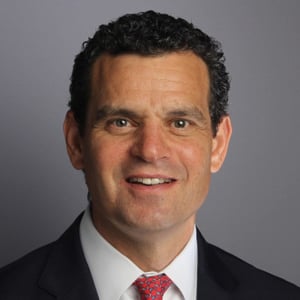
Partner, Wilmer Cutler Pickering Hale and Dorr LLP
David Cohen, who leads the firm's Financial and Business Integrity Group, provides clients with anti-money laundering, financial and trade sanctions advice; represents US and foreign-based clients in matters implicating national security, including CFIUS and cybersecurity; conducts internal investigations; and defends clients facing government investigations. His practice has a strong emphasis on disputes involving US and foreign regulators and enforcement agencies, often involving cross-border issues, as well as proceedings in US and foreign adjudicative venues.
Before rejoining the firm in 2017, Mr. Cohen served for eight years in senior presidentially appointed positions. From 2015–2017, Mr. Cohen was Deputy Director of the Central Intelligence Agency (CIA), where he helped manage the Agency's domestic and worldwide operations, oversee its strategic modernization, and lead foreign intelligence collection, all-source analysis, covert action, counter-intelligence and foreign liaison relationships. Mr. Cohen also directed special projects on the impact of new technologies on the Agency and on how best to work with US companies to advance the CIA's mission. At the conclusion of his tenure, Mr. Cohen was awarded the Distinguished Intelligence Medal, the CIA's highest honor.
Previously, Mr. Cohen served for four years in the US Department of the Treasury as Under Secretary for Terrorism and Financial Intelligence, where he managed the department's policy, regulatory, enforcement and intelligence functions aimed at combating illicit finance, including money laundering and other financial crime, and disrupting financial support to nations, organizations and individuals posing a threat to national security. He directly supervised the Office of Foreign Assets Control (OFAC), which implements financial and economic sanctions, and the Financial Crimes Enforcement Network (FinCEN), the anti-money laundering regulatory and enforcement agency. Mr. Cohen was instrumental in developing and implementing sanctions against Iran, Russia, North Korea, ISIS, al Qa'ida and other terrorist organizations, for which he was described as “President Obama's favorite combatant commander” and as the administration's “financial Batman.”
Mr. Cohen previously served for two years as Assistant Secretary of the Treasury for Terrorist Financing, overseeing policy development related to sanctions and money laundering. Earlier in his career, Mr. Cohen served in Treasury's general counsel's office, where he helped craft legislation that formed the basis of Title III of the USA PATRIOT Act, the post-9/11 legislation that provided new tools to prevent money laundering and the financing of terrorism.
Prior to his most recent government service, Mr. Cohen practiced law in Washington DC for nearly 20 years, including as a partner at WilmerHale. His practice at WilmerHale focused on complex civil litigation, white-collar criminal defense, internal investigations, and anti-money laundering and sanctions compliance advice.
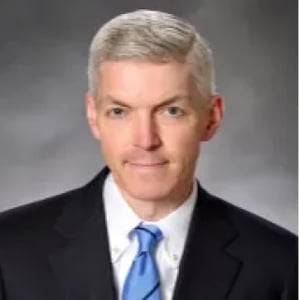
Executive Vice President, Chief Legal Officer, Gates Corporation
Matthew R. A. Heiman joined the Company in May 2026 and has served as the Company’s Chief Legal Officer and Corporate Secretary since June 2026. As Chief Legal Officer, Mr. Heiman is responsible for all legal functions for Gates, including securities and corporate governance, M&A, litigation, commercial, regulatory, compliance, patents and trademarks, real estate, employment and labor, sustainability and environmental matters. Prior to joining Gates, Mr. Heiman held senior legal leadership roles at Waystar, where he served as Chief Legal & Administrative Officer from 2023 to 2025 and as General Counsel and Corporate Secretary from 2020 to 2023. Prior to that, he was with Johnson Controls, where he served as Vice President, Corporate Secretary, and Associate General Counsel. Mr. Heiman has been a Senior Fellow for the National Security Institute at George Mason University’s Antonin Scalia School of Law since 2018.
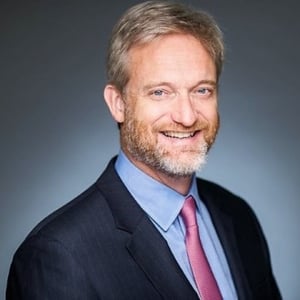
Principal in the International, BGR Group
Lester Munson is a Principal in the International at BGR Group, a leading government relations firm in Washington, D.C., where he consults with foreign governments, corporations and advocacy groups. He also serves as adjunct faculty at Johns Hopkins University and speaks regularly on the foreign policy role of Congress and on U.S. foreign assistance issues. He is a member of the Executive Committee of the Modernizing Foreign Assistance Network, a Visiting Fellow at George Mason’s National Security Institute and a commentator on Fox News Channel and the China Global Television Network.
Mr. Munson joined BGR Group in November 2015 after a 26-year career on Capitol Hill and in the Executive Branch. He was most recently Staff Director of the Senate Foreign Relations Committee, where he led policy, oversight, legislative and communications efforts for a staff of 25 and negotiated committee priorities with the White House, the State Department and Congressional leadership.
Previously, Mr. Munson was Chief of Staff for Senator Mark Kirk of Illinois. During his tenure, Senator Kirk became the leading Republican voice in the Senate on Iran and other national security issues.
During the Bush Administration, Mr. Munson served as Deputy Assistant Administrator at the U.S. Agency for International Development, where he focused on legislative affairs as well as global health issues. He led legislative efforts to develop and implement the President’s Emergency Plan for AIDS Relief (PEPFAR) and won an award for his contribution to the creation of the President’s Malaria Initiative.
Mr. Munson is a 1989 graduate of the University of Chicago and holds a Master’s degree from St. John’s College in Annapolis. He is married with two children.
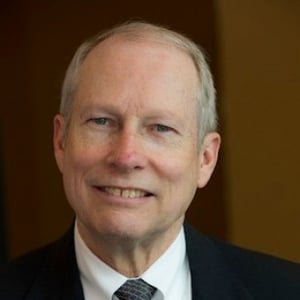
L. Q. C. Lamar Professor of Law, Emory University School of Law
Thomas C. Arthur holds degrees from Yale Law School and Duke University, where he was an Angier B. Duke Scholar and a member of Phi Beta Kappa. Before coming to Emory, he practiced law for eleven years with the Washington, DC office of Kirkland & Ellis. In 1982, he left his law firm partnership to join the Emory Law faculty.
Arthur teaches antitrust, civil procedure, and administrative law, and he has been active on the executive committee of the Antitrust Section of the Association of American Law Schools. His articles in the California and Tulane law reviews have been credited with the founding of a new, "statutory" school of antitrust analysis. His 1991 Emory Law Journal article (co-authored with Professor Richard D. Freer) provoked a nationally noted debate over an important new statute governing the jurisdiction of federal courts. A major antitrust article, "The Costly Quest for Perfect Competition: Kodak and Nonstructural Market Power," was published in the New York University Law Review (vol. 69, April 1994).
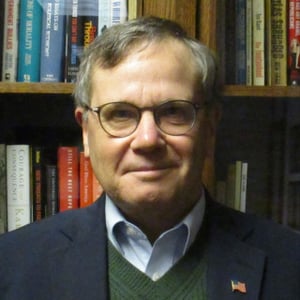
Senior Fellow in Constitutional Jurisprudence, Independence Institute
Professor Robert G. Natelson is a constitutional scholar and author.
Rob’s constitutional scholarship has been cited repeatedly by justices and parties at the U.S. Supreme Court—as well as by federal appeals courts, and at least 18 state supreme courts.
Rob’s research into the Constitution’s original meaning has carried him to libraries throughout the United States and in Britain, including four months at Oxford University. His books and articles span many different parts of the Constitution, including groundbreaking studies of the Necessary and Proper Clause, the Indian Commerce Clause, federalism, Founding-Era interpretation, regulation of elections, and the amendment process of Article V. He created the first-ever online bibliography for 18th century materials used in constitutional research. He is a contributing author to the Encyclopedia of the Supreme Court of the United States (on Magna Carta). He contributed eight essays to the third edition of the Heritage Guide to the Constitution: five on the amendment procedure and one each on the Guarantee Clause, the Postal Clause, and the Recess Appointments Clause.
U.S. Supreme Court justices have relied explicitly on Rob’s research in 41 citations in 13 separate cases.
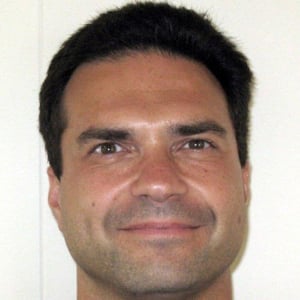
Assistant Attorney General & Senior Trial Counsel to the Criminal Bureau, Massachusetts Attorney General
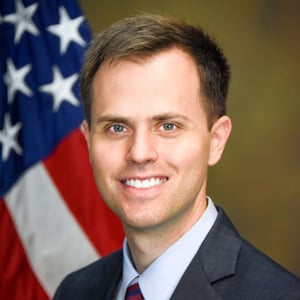
Deputy Chief, Felony Major Crimes Section, United States Attorney's Office for the District of Columbia
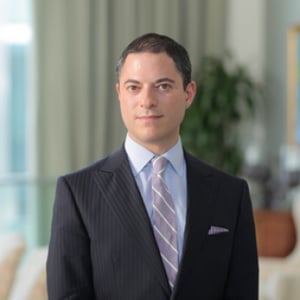
Partner, BakerHostetler, Adjunct Fellow, The Manhattan Institute
Andrew Grossman leads BakerHostetler’s Appellate and Major Motion team. He has appeared before the U.S. Supreme Court, nearly all the federal courts of appeals, as well as some state appellate courts, litigating high-profile and complex commercial, administrative and constitutional issues.
Andrew works with practice groups across BakerHostetler to identify and tackle complex issues, advise on administrative law and strategy, tee up issues for appeal and tackle appeals. He has developed and implemented litigation and administrative strategies for clients in several fields and industries.
In addition to his practice, Andrew advises members of Congress on matters of constitutional and administrative law, having testified more than a dozen times before the House and Senate Judiciary Committees. He has been a frequent legal commentator on radio and television, having appeared on Fox News, CNN, MSNBC, CNBC, NPR and its affiliates, CBN and elsewhere. His legal commentary has also appeared in dozens of magazines and newspapers, including The Wall Street Journal, USA Today, The Washington Post, The Washington Times and many others.
Andrew is a Senior Legal Fellow at the Buckeye Institute, an Adjunct Fellow the Manhattan Institute and a member of the leadership of the Federalist Society. He previously served as an adjunct scholar at the Cato Institute’s Robert A. Levy Center for Constitutional Studies and a legal fellow at the Heritage Foundation’s Meese Center for Legal and Judicial Studies. He clerked for Judge Edith H. Jones on the U.S. Court of Appeals for the Fifth Circuit.

Topics
Trump Administration Withdraws Guidance on Affirmative Action In Admissions
On Wednesday, July 3, the Departments of Education and Justice announced that they withdrew a...
Topics
Another Important Confirmation
While Washington focuses on the looming struggle over a U.S. Supreme Court nominee, another important...
Exploring Federalist 51: Separation of Powers
Article I Initiative Video
How does the U.S. Constitution promote liberty? This video essay explores the insights from Federalist...
Necessary & Proper Episode 22: Balancing Interests in Congressional Oversight
Morton Rosenberg, Eileen J. O'Connor, William Moschella
Recorded in June, this podcast offers a balanced representation of the competing interests between the...
The JCPOA Withdrawal
David S. Cohen, Matthew R. A. Heiman, Lester Munson
International & National Security Law Practice Group Teleforum
In 2015, the United States, along with China, France, Germany, Russia, the United Kingdom, and...
Can Fake News Be Regulated? [POLICYbrief]
Thomas Carlton Arthur
Short video featuring Thomas C. Arthur
On April 11, 2018, Facebook CEO Mark Zuckerberg testified at a congressional hearing regarding questionable...
Did the Constitution Grant the Federal Government Eminent Domain Power?: Using Eighteenth Century Law to Answer Constitutional Questions
Robert G. Natelson
Federalist Society Review, Volume 19
Note from the Editor: This article asks whether the Constitution granted eminent domain power to...
Courthouse Steps Decision: Carpenter v. United States
Dean A. Mazzone
Criminal Law & Procedure Practice Group Teleforum
In Carpenter, arrests made in an armed robbery case occurred because the Federal Bureau of...
Courthouse Steps Decision: Currier v. Virginia
John L. Hill
Criminal Law & Procedure Practice Group Teleforum
In Currier v. Virginia, Justice Gorsuch, writing for a 5-4 majority, held that where a...
Courthouse Steps: Husted v. A. Philip Randolph Institute Decided
Andrew Grossman
Free Speech & Election Law Practice Group Teleforum
With more than 10 percent of Americans moving each year, how can states ensure that...