
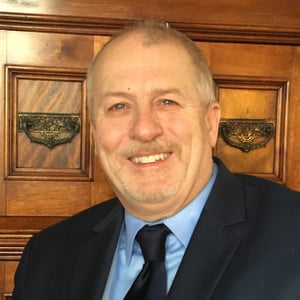
Founder, President, and General Counsel, Wisconsin Institute for Law & Liberty
Rick Esenberg is the founder and current President and General Counsel of the Wisconsin Institute for Law & Liberty, a rapidly expanding law and policy organization headquartered in Milwaukee. Under Rick’s leadership, WILL has grown into one of the more active state-based think tanks and litigation centers in the country. Rick is a frequent litigator in state and federal courts and nationally recognized scholar and commentator on constitutional law, particularly the First Amendment’s guarantees of freedom of speech and religion. He is one of the leading experts on the Wisconsin Constitution and a frequent advocate before the Wisconsin Supreme Court. Rick’s work seeks to advance the rule of law and individual liberty, formed by a robust civil society that forms individual and community character, preserving the wisdom of the past and an openness to the future.
Rick’s commentary has been featured in such outlets as the Wall Street Journal, National Review, Weekly Standard, Real Clear Politics, Milwaukee Journal Sentinel and Washington Examiner. Formerly on the faculty of Marquette University Law School, his scholarship has appeared in such publications as the Harvard Law Review, Harvard Journal of Law & Public Policy, Wake Forest Law Review and William & Mary Bill of Rights Journal. Back when they were a thing, he operated a blog called Shark and Shepherd where he tried to suggest something about the duality of man – “the Jungian thing.”
Rick holds a J.D., magna cum laude, from Harvard Law School, where he was an editor of the Harvard Law Review, and a B.A., summa cum laude, in political science from the University of Wisconsin-Milwaukee. In addition to service on the Marquette Faculty, he was formerly a litigation partner at Foley & Lardner and General Counsel of an international manufacturing firm headquartered in Wisconsin. He lives in Mequon Wisconsin with his wife Karen, golden retrievers Cooper and Riley and more books than he can find places for.
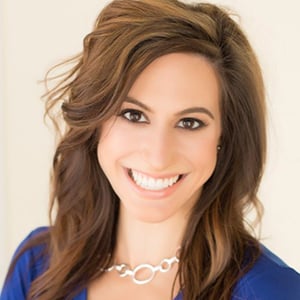
Executive Vice President, Goldwater Institute
Christina Sandefur is the Executive Vice President at the Goldwater Institute. She develops policies and litigates cases advancing healthcare freedom, free enterprise, private property rights, free speech, and taxpayer rights.
Christina is a co-drafter of the Right to Try initiative, now federal law, which protects terminally ill patients' right to try safe investigational treatments that have been prescribed by their physician but are not yet FDA-approved. She has won important victories for property rights in Arizona and works nationally to promote the Institute's Private Property Rights Protection Act, a state-level reform that requires government to pay owners when regulations destroy property rights and reduce property values.
Christina is the co-author of the book Cornerstone of Liberty: Private Property Rights in 21st Century America (2016). She is a frequent guest on national television and radio programs, has provided expert legal testimony to various legislative committees, and is a frequent speaker at conferences. She is the recipient of the 2018 Buckley Award in recognition of her leadership in the freedom movement, and she is an Advisory Board Member of the Network of enlightened Women. Christina serves on the board of the Phoenix Lawyers Chapter of the Federalist Society and is a member of the executive committee for the Federalist Society's Regulatory Transparency Project: FDA & Health.
Christina is a graduate of Michigan State University College of Law and Hillsdale College.
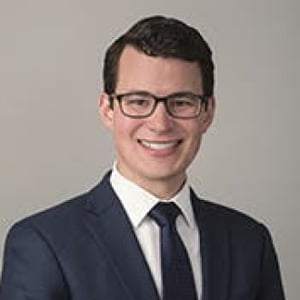
Associate Attorney, Gibson Dunn
David Casazza is an associate in the Washington, D.C. office of Gibson, Dunn & Crutcher. He practices in the firm’s Appellate and Constitutional Law, and Administrative Law and Regulatory Practice groups.
Mr. Casazza has represented clients in appellate and regulatory litigation before the Supreme Court of the United States, federal appellate courts, and federal district courts. These cases have involved a wide range of subjects including separation of powers, federal rulemaking challenges, data privacy protections, anti-terrorism claims and foreign sovereign immunity, energy infrastructure permitting, and a variety of First Amendment speech and religious liberty claims. He has also represented clients in complex litigation, obtaining dismissal with prejudice of consumer class actions attacking major brand names. He has been named by Best Lawyers as a 2021 and 2022 “One to Watch” in Appellate Practice.
He graduated magna cum laude from Harvard Law School, where he served as a Managing Editor for the Harvard Journal of Law and Public Policy and as Executive Vice President of the Harvard Federalist Society. Mr. Casazza received an A.B. magna cum laude in history from Princeton and an M.A. in history from the Johns Hopkins University.
Mr. Casazza served as a law clerk to Justice Samuel Alito on the Supreme Court of the United States and for Judge Jennifer Walker Elrod on the United States Court of Appeals for the Fifth Circuit.
He is a member of the bars of New York and the District of Columbia and is admitted to practice in the United States Courts of Appeals for the Third, Fourth, Fifth, and Ninth Circuits and in the United States District Court for the District of Columbia.

Assistant Professor, Paul Weber Endowed Chair in Politics, Science & Religion, University of Louisville
David Buckley is Associate Professor of Political Science, and Paul Weber Endowed Chair in Politics, Science & Religion at the University of Louisville. David recently concluded a term as a Senior Advisor in the State Department’s Secretary’s Office of Religion and Global Affairs (S/RGA), where he served as a Council on Foreign Relations International Affairs Fellow from August 2016-July 2017. David’s research focuses on religion and international affairs, and in particular the influence of religious actors on democratic politics. David’s book, Faithful to Secularism: The Religious Politics of Democracy in Ireland, Senegal and the Philippines (Columbia University Press, 2017) was awarded the 2018 Religion and International Relations Book Award by the International Studies Association. His research and writing has appeared in leading journals of political science and media outlets including the New York Times, Washington Post and Wall Street Journal. David holds a PhD in Government from Georgetown University, an M.A. in Comparative Ethnic Conflict from Queen’s University Belfast, where he studied as a George C. Mitchell Scholar, and a B.A. in Political and Social Thought from the University of Virginia.
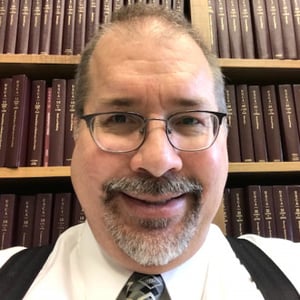
Attorney-Adviser, Office of Legal Counsel, The Justice Department
Nathan A. Forrester currently works at the Office of Legal Counsel in the Department of Justice and previously served as Solicitor General of Alabama under then-Attorney General William H. Pryor Jr. He clerked for Associate Supreme Court Justice Anthony M. Kennedy from 1993-1994 and Judge J. Harvie Wilkinson III of the U.S. Court of Appeals for the Fourth Circuit from 1992-1993. He is a 1992 graduate of the University of Chicago Law School.
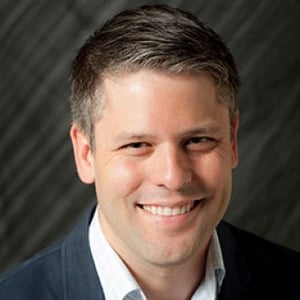
Judge, U.S. Court of Appeals, District of Columbia Circuit
Justin R. Walker is a judge on the U.S. Court of Appeals for the D.C. Circuit. He was nominated to the court by President Donald Trump on May 4, 2020, and confirmed by the United States Senate on June 18, 2020. He is a former United States District Judge of the Western District of Kentucky.

Topics
Liberty Month Revisited: The Separation of Powers, Stare Decisis, and the Constitution
This month we are sharing a selection of paired pieces from The Federalist Society's Liberty...
Topics
Liberty Month Revisited: Stare Decisis and the Separation of Powers
This month we are sharing a selection of paired pieces from The Federalist Society's Liberty...
Wisconsin Supreme Court Upholds Academic Freedom
Rick M. Esenberg
Free Speech & Election Law Practice Group Teleforum
Like most private universities, Marquette University guarantees academic freedom to its faculty. John McAdams, a...
Free Speech & Off-Label Branding [POLICYbrief]
Christina Sandefur
Short video featuring Christina Sandefur
While the prescription of medicine for off-label use is legal, the FDA prohibits pharmaceutical companies...
Topics
Another Court Rules Against Regulation-by-Litigation in Climate Change Public Nuisance Lawsuits
On July 19, the U.S. District Court for the Southern District of New York dismissed...
Topics
Liberty Month Revisited: Separation of Powers - A Primer
This month we are sharing a selection of pieces from The Federalist Society's Liberty Month...
Topics
Chevron Deference v. The United States Constitution
Two decades of controversy over Federal Communications Commission (FCC) attempts to regulate the Internet across...
Gill v. Whitford - Post-Decision SCOTUScast
David W. Casazza
SCOTUScast featuring David Casazza
On June 18, 2018, the Supreme Court decided Gill v. Whitford, a case considering claims...
Topics
The Dangers of Independence for Executive Branch Agencies
In a decision filed on July 16, a three judge panel of the 5th Circuit...
The Establishment Clause Overseas
David T. Buckley, Nathan A. Forrester, Justin Reed Walker
Religious Liberties Practice Group Teleforum
How much, if at all, does the First Amendment’s Establishment Clause constrain what the United...